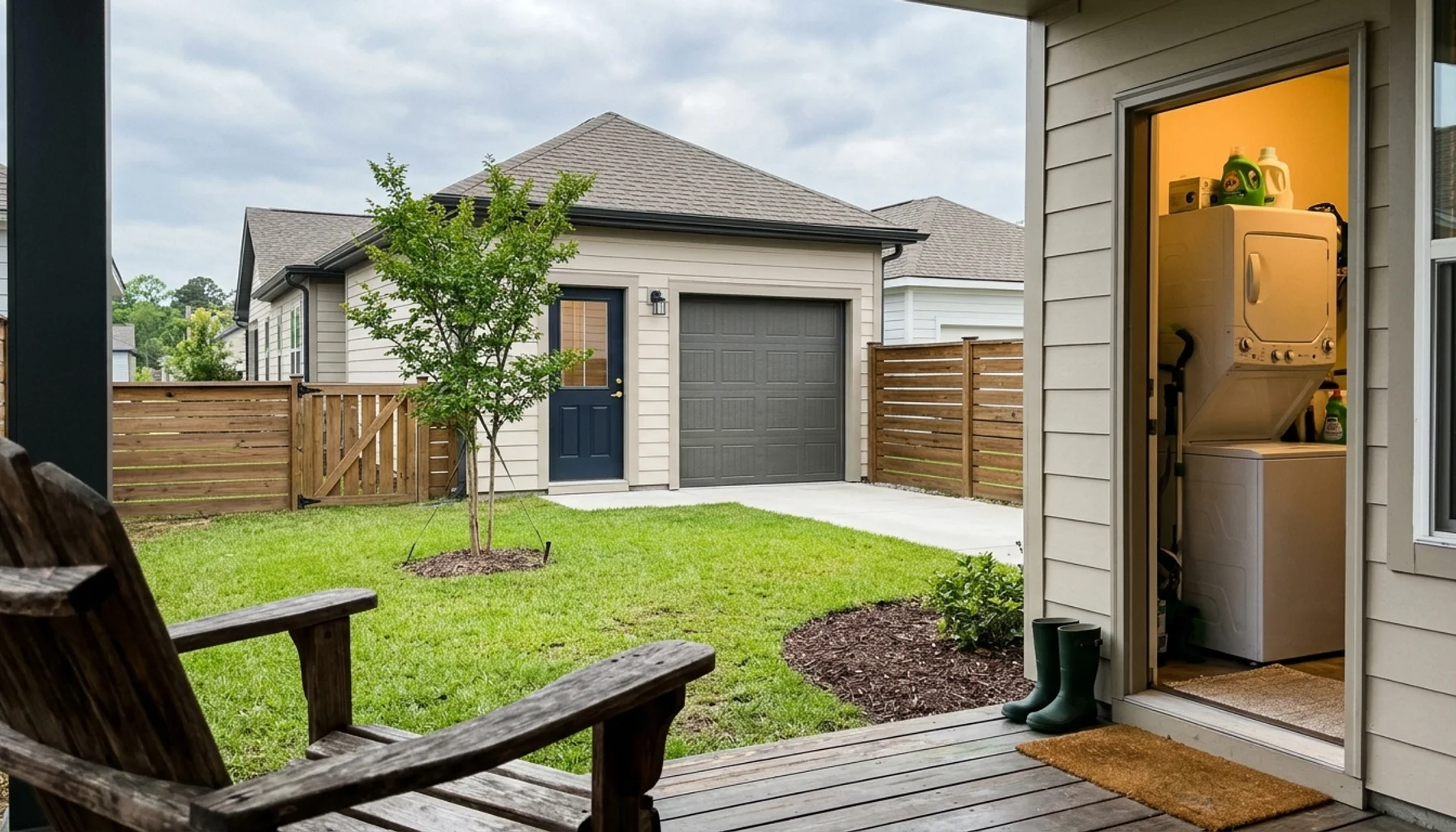
Build-to-rent residents expect private, in-home amenities: a fenced yard, an attached garage and an in-unit washer and dryer. Traditional apartment renters weigh shared amenities more, such as fitness centers and package lockers. What build-to-rent residents expect compared to traditional apartment renters comes down to private space versus shared convenience.
Key Takeaways
- Build-to-rent (BTR) residents prioritize a private yard and an attached garage; apartment renters prioritize shared facilities like fitness centers and package lockers.
- Both groups treat in-unit laundry, reliable internet and working air conditioning as baseline in 2026.
- Amenity fees, pet rent and trash charges change total monthly cost, so compare itemized totals rather than advertised rent.
- BTR residents expect house-level maintenance response and trash handled at the door or curb.
- Nightly, photo-verified valet trash works for communities from 10 to more than 1,000 homes.
If you manage or lease in North Charleston, the amenity list that wins a lease at a garden-style apartment community will not win one on a street of rental townhomes. At Trash Day Made Easy, we handle nightly valet trash and bin management for both property types across the Charleston area, and the expectation gap shows up quickly.
This comparison covers outdoor space, in-home features, pets, fees, maintenance and trash. It gives you a framework for deciding what to fund if you operate, or which housing type fits if you rent.
Preferences vary by household and by market. Test this comparison against your own leasing data or your own budget.
What Amenities Do Build-to-Rent Residents Expect Compared to Traditional Apartment Renters?
Build-to-rent communities are purpose-built single-family homes, townhomes or duplexes leased to renters, and their residents expect house-like amenities: private outdoor space, garages, in-home laundry and one responsive management team. Apartment renters accept shared facilities in exchange for density and walkability. A lower entry cost helps too.
| Amenity area | Build-to-rent residents | Traditional apartment renters |
|---|---|---|
| Outdoor space | Private yard, patio or porch | Shared courtyard, pool deck or rooftop lounge |
| Parking | Attached garage or private driveway | Surface lot, deck or assigned space |
| Laundry | In-home washer and dryer | In-unit preferred; shared laundry room tolerated |
| Fitness and recreation | Nearby parks and trails; clubhouse is a bonus | On-site fitness center and pool |
| Packages | Porch delivery, sometimes a community locker | Secure package lockers or a front office |
| Pets | Fenced yard | Dog park, pet wash station, clear pet policy |
| Trash | Bins managed at the door or curb | Valet trash or a convenient compactor |
| Maintenance | Scheduled visits to each address | On-site maintenance team |
Read the table as a division of labor. In a BTR home, the house carries most of the amenity load. In an apartment community, the property does. Both groups treat fast internet, air conditioning that handles a Lowcountry summer and secure package delivery as baseline, so those items rarely win a lease alone.
What Is Build-to-Rent Housing and Who Lives There?
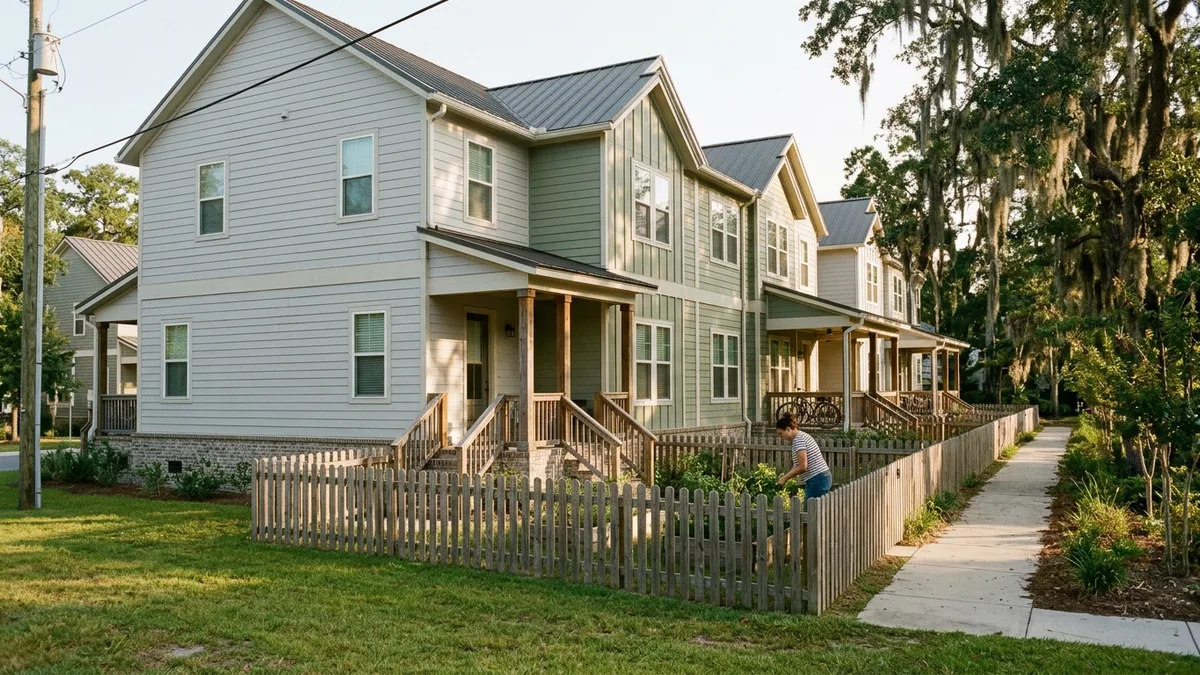
Build-to-rent housing is a community of single-family homes, townhomes or duplexes designed, built and managed as rentals from day one, usually by one professional operator. A BTR neighborhood has a master plan and a central management team, which separates it from a scattered rental owned by an individual landlord. A shared streetscape adds to that difference.
Each household gets its own front door and typically its own driveway or garage. That layout explains most of the expectation differences above.
BTR tends to attract households that want more room than an apartment offers without buying: families, remote workers who need a dedicated office, owners of larger dogs and residents who value privacy. Apartment communities draw a broader mix, including residents who want a short walk to a gym, a lower monthly cost or a flexible lease.
For waste and service planning in these neighborhoods, see our page on build-to-rent communities. The National Multifamily Housing Council publishes broader research on rental housing trends.
Do Build-to-Rent Renters Value Private Yards More Than Shared Pools and Gyms?
A private yard is an outdoor space that belongs to one household, and for many build-to-rent residents it replaces the role a community pool or rooftop deck plays for apartment renters. Privacy and room for children and pets drive the preference. So does a place to grill without sharing.
Climate shapes the expectation in North Charleston. Heat and humidity make a covered patio or dependable HVAC worth more than a bare lawn. Yard upkeep is the trade-off: when the operator mows and edges, residents read it as an amenity; when the resident does it, many read it as a chore.
Shared amenities still matter at scale. A BTR neighborhood with a pool or clubhouse attracts residents who miss the social side of apartment living. Smaller clusters usually skip those and lean on nearby parks. Park Circle sits about 1.9 miles straight-line from our North Charleston headquarters, and access like that partly offsets the absence of an on-site gym.
Are In-Unit Washer/Dryers and Garages More Important to Build-to-Rent Renters?
An in-home amenity is a feature inside or attached to the residence itself, such as a washer and dryer or an attached garage. A smart thermostat or keyless entry also counts. Build-to-rent renters rank these higher than apartment renters because they compare the home to a purchased house, not to a unit down the hall.
In-unit laundry is close to table stakes for both groups. A shared laundry room is a harder sell every year, even in apartments. The attached garage is the clearest BTR differentiator: it solves parking and storage. It also answers where the bins live between collections.
Smart thermostats and keyless entry appeal to both groups, but they matter more in BTR. Homes sit on separate streets with no front office, so remote access for vendors and scheduled service visits cut down on missed appointments. A dishwasher and fiber-ready internet belong on the baseline list for both housing types, and operators who skip them will feel it at renewal.
Which Pet Amenities Matter Most: Fenced Yards or Dog Parks?
A fenced yard is a private enclosed outdoor area where a dog can run off leash, while a dog park is a shared, usually fenced space that serves an entire apartment community. Build-to-rent renters with dogs expect the first. Apartment renters with dogs expect the second, plus pet wash stations and a clear pet policy.
Fenced yards win for large breeds and multi-dog households because the dog gets outside without a walk. Dog parks win on social contact and upkeep, since the resident maintains no fence or grass. Neither replaces the other for every household, so match the amenity to the dogs you expect to house.
Ask about fees either way: a one-time deposit, monthly pet rent or both. Pet waste also becomes a trash issue. Bagged waste sitting in a bin in humid weather smells within a day or two, which is why nightly collection or prompt bin handling matters more in pet-friendly communities than the amenity list suggests.
Are Amenities Included in Rent, and Do Amenity Fees Raise Your Total Cost?
An amenity fee is a recurring charge added to base rent to cover access to shared facilities or services, and whether amenities are included in rent depends on the community and the lease. Many apartment communities bundle pool and gym access into rent, while services like valet trash, pest control or pet rent often appear as separate line items.
BTR works differently. The yard and garage come with the home, so their value sits inside the base rent. Add-on charges tend to cover services such as lawn care and trash, and pest control is another common one. Which amenities support the largest rent premiums varies by market, so test assumptions against local leasing data rather than borrowing a national number.
Before signing, ask for an itemized monthly cost in writing: base rent, pet rent, trash or valet fee, parking and utilities. The commonly cited guideline of keeping housing costs near 30 percent of gross income works best when you apply it to that total, not the advertised rent. If you set a fee, review what valet trash companies typically charge apartments first.

How Do Maintenance and Management Expectations Differ?
Maintenance expectation is the response speed and service level a resident anticipates when something breaks. Build-to-rent residents tend to expect house-level responsiveness from a professional operator, while apartment renters expect an on-site office and maintenance team within walking distance.
The geography explains the gap. A BTR operator dispatches technicians across separate streets, so residents rely on portals and text updates. Scheduled appointment windows matter too. In 2026, photo-documented service requests are increasingly common at professionally managed communities of both types.
Exterior responsibility also needs clear language. Who handles gutters and irrigation should be written into the lease, since a yard turns those items into a question. Apartment residents judge management by what they see daily: clean breezeways and working lighting. Dumpster areas that are not overflowing count too. Lease terms vary by operator, so ask about term length and renewal rules rather than assuming.
Why Does Trash Service Matter More in Build-to-Rent Communities?
Trash service in a build-to-rent community means getting bins from each home to the curb and back, or collecting from each doorstep, because no shared breezeway or central compactor sits near every front door. Apartment communities solve the same problem with valet trash or a convenient compactor.
Curbside bins left out for days hurt a BTR streetscape quickly, and they invite violation letters in neighborhoods with covenants. We run Backdoor-to-Curbside bin management for exactly this layout, and Doorstep-to-Dumpster collection for apartments. Collection is nightly, and every visit is photo-verified, so a manager sees proof without sending a reminder. It scales from 10 to more than 1,000 homes.
Valet trash is not right for everyone. A ten-unit property with one compactor and short walks may not need it. A BTR street of 200 homes usually does. Our guides on how garbage valet works and can to curb services in Charleston explain both models.
What Is Valet Trash at an Apartment, and Do Residents Pay for It?
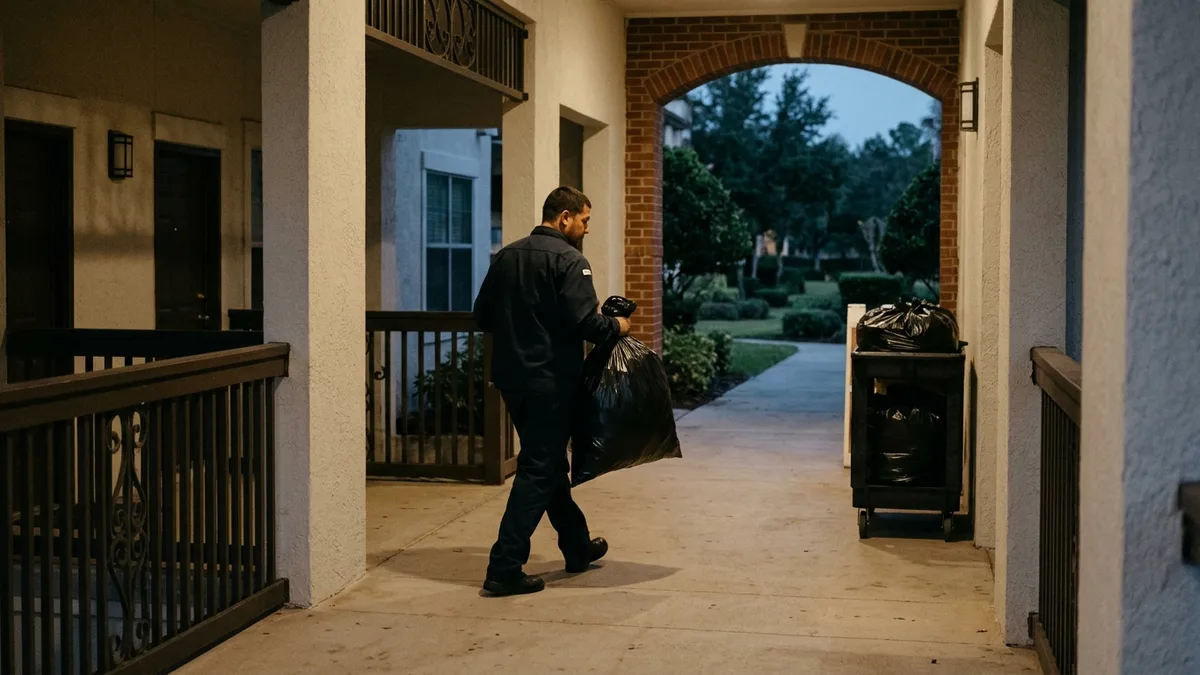
Valet trash is a service where a collector picks up bagged trash from outside each door on scheduled evenings and takes it to the dumpster. Residents often pay through a monthly trash fee, which reimburses the landlord for the service, or the cost is built into rent. Terms differ by community, so check the lease.
How Can Operators Match Amenities to Renter Expectations?
Matching amenities to renter expectations means choosing which private and shared amenities to fund based on home type and resident mix. Service amenities and local climate also shape the choice. Spend on what residents compare you against, not on what looks impressive in a brochure.
- Fund private features first in BTR. A garage, in-home laundry and a usable yard outrank a clubhouse for most households.
- Size shared amenities to the community. A pool and gym need enough homes to justify upkeep; small clusters should point to nearby parks instead.
- Itemize every fee. Show base rent, pet rent and service charges separately so total cost is clear.
- Write service standards down. Include maintenance response targets and trash schedules in resident materials.
- Verify the work. Photo documentation of trash and bin service gives you proof without chasing vendors.
If you are the renter, choose build-to-rent when you want privacy and a garage. Pick it for a yard too, and accept some upkeep responsibility. Choose an apartment when you want a gym and a pool, or an on-site team close by. If you run a mixed portfolio, compare notes through our multifamily service overview, and see the National Apartment Association for resources on resident satisfaction and retention.
Frequently Asked Questions
What amenities do build-to-rent residents expect?
Build-to-rent residents expect a private yard or patio and an attached garage. They also want an in-home washer and dryer and fast internet. Responsive management and bin service handled at the door or curb complete the list. Shared amenities like a pool or clubhouse are a bonus rather than a requirement.
Do build-to-rent renters value private yards more than shared pools and gyms?
Generally yes, because a yard serves families and pets directly and offers privacy a pool deck cannot. Larger BTR neighborhoods that add a pool or trail still attract residents who want social space. Preferences vary by household, so check what your target residents compare you against.
Are amenities included in rent?
It depends on the lease. Pool and gym access is often bundled into apartment rent, while services such as valet trash, pet rent or parking may be separate monthly charges. Ask for an itemized total in writing before you sign.
What are the advantages of renting an apartment compared with a single-family home?
Apartments typically offer shared amenities like fitness centers and pools, an on-site maintenance team and often walkable locations. Single-family BTR homes offer more private space, with a garage and a yard. Which advantage matters depends on your household and your tolerance for yard upkeep.
What is valet trash at an apartment, and what is a trash fee?
Valet trash is scheduled doorstep pickup of bagged trash, which a collector carries to the dumpster. A trash fee is a monthly charge that reimburses the landlord for waste service. Whether residents pay separately or the cost sits inside rent depends on the community's lease terms.
How can a North Charleston property request valet trash pricing?
Schedule a call with Trash Day Made Easy. Quotes are available Monday through Friday for all property types, and pricing for commercial properties is discussed on the call after the team reviews your layout and unit count. Residential homeowners in select Charleston neighborhoods can start from $49 per month.
Are in-unit washer/dryers and garages more important to build-to-rent renters?
In-unit laundry is a baseline for both groups, but the attached garage is the stronger BTR differentiator. It solves parking and storage and gives bins a place to live. Apartment renters usually accept surface or deck parking.
What Should You Take Away From the Build-to-Rent vs. Apartment Amenity Comparison?
What build-to-rent residents expect compared to traditional apartment renters comes down to private features versus shared facilities. BTR households want a yard and a garage, plus in-home laundry and house-level service. Apartment renters want convenient shared amenities. Both groups expect itemized costs and dependable maintenance, and clean grounds matter to them as well. In 2026, operators who document service and fees clearly will keep residents longer than those who lean on amenity lists alone.
If clean streets and consistent bin service are on your list this year, Schedule a Call with Trash Day Made Easy and we will walk through your property layout and service options.
Content powered by inkSTR.co