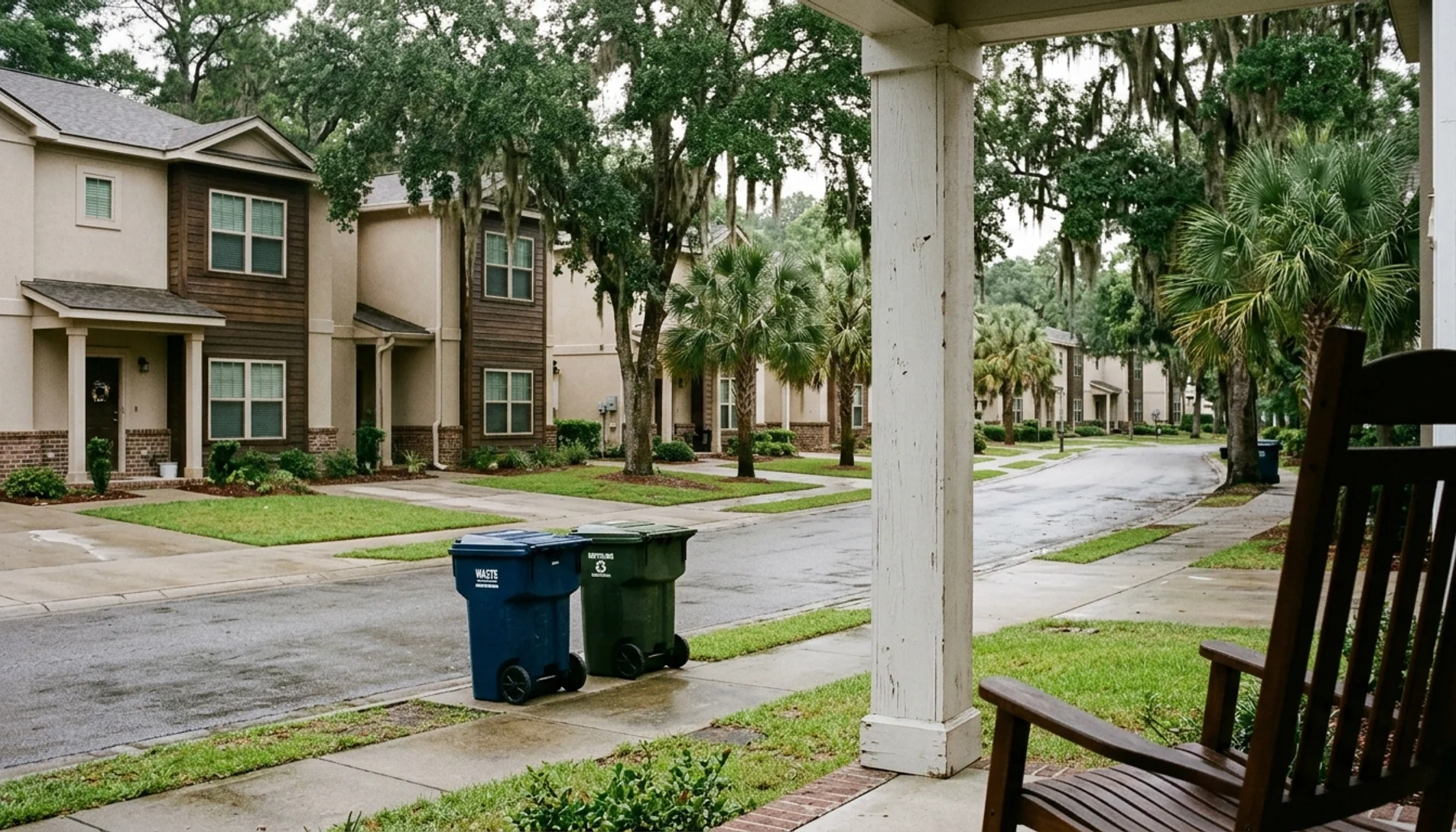
Property managers communicate waste expectations to residents in a build-to-rent community by putting the rules in writing at lease signing. They walk residents through bin placement and pickup days at move-in. They reinforce both with a steady reminder calendar and a clear escalation path for missed steps.
Key Takeaways
- Waste expectations stick when they appear in three places: the lease addendum, the move-in walkthrough, and a recurring reminder calendar.
- A written waste policy should cover bin location, set-out and return times, approved bags or bins, bulk and move-out debris, and consequences for repeated violations.
- City garbage rules and county recycling rules are separate in the Charleston area, so confirm each property's actual service arrangement before you write resident instructions.
- Photo-verified vendor service gives you proof for the first step of any violation conversation and for missed-pickup disputes.
- Valet trash or can-to-curb service shortens the rulebook because the resident's job becomes bagging and placing items on time instead of hauling bins.
A bin still sitting at the curb on Thursday, a worn-out sofa beside it, and a resident who never saw the rule: that is the standard complaint pattern in a single-family rental neighborhood. At Trash Day Made Easy, we run nightly valet trash and can-to-curb service for communities across the Charleston area, and the same few communication gaps show up again and again.
This guide is for operators, community managers, and asset managers who lease single-family and townhome-style homes and want residents to follow the rules without a stack of violation letters. In 2026, owners expect a consistent streetscape across every phase of a community, and clear communication is the cheapest waste control you have.
Why Do Waste Expectations Work Differently in Build-to-Rent Communities?
A build-to-rent community is a planned neighborhood of single-family homes or townhomes built to be leased, so waste handling blends individual household bins with community-wide appearance standards. Residents control their own set-out and return, yet one missed pickup is visible to every neighbor and every prospect touring the street.
Multifamily properties hide most trash behind dumpster enclosures and breezeway service. Build-to-rent homes put it on display: bins at curbs and bulk items on driveways. That visibility is why your waste rules need to be specific and repeated, not buried on page nine of a lease.
The structure also differs from a garden-style apartment community. You have no on-site maintenance team walking a dumpster corral each morning, and corporate owners often manage many neighborhoods from a distance. Communities with clear written expectations tend to generate fewer corrective conversations than those relying on a single welcome email.
For a broader look at how collection models are set up, see our explainer on how waste management works in a build-to-rent community.
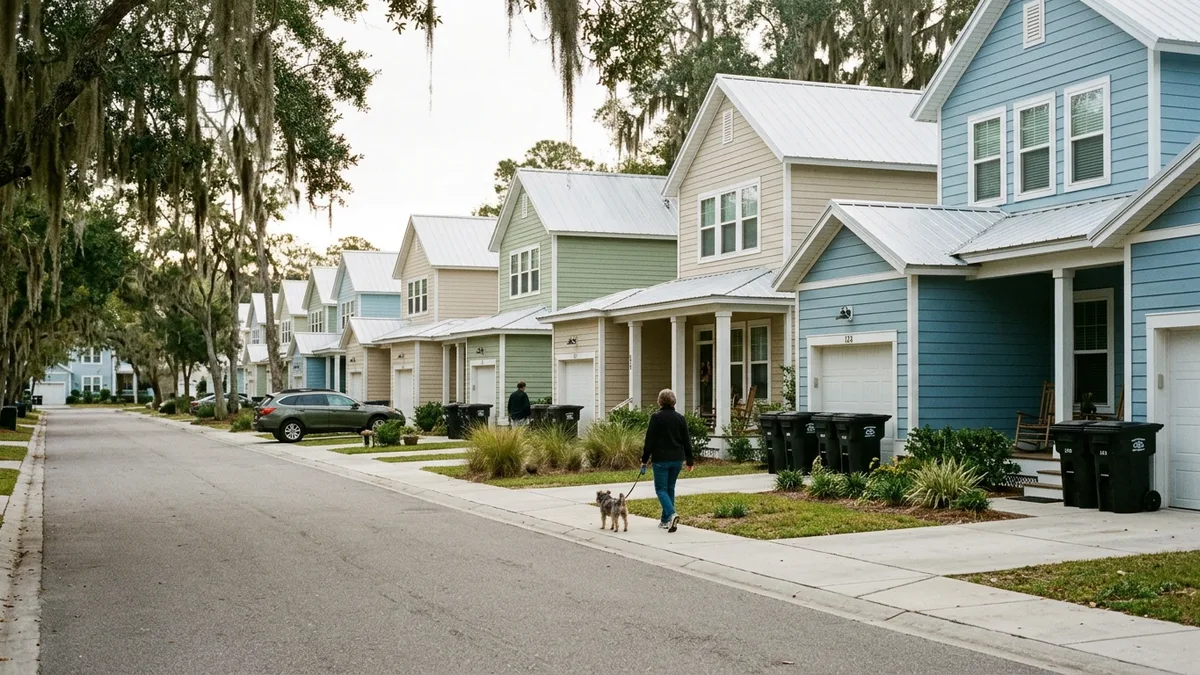
Who Is Responsible for Trash in Build-to-Rent Homes?
Responsibility for trash in a build-to-rent community is split among four parties: the owner or operator and the property manager, plus the collection vendor and the resident. Residents handle sorting and bagging, and they also own correct placement, while the owner sets policy and the vendor carries out collection.
| Party | Typically responsible for | What you should tell residents |
|---|---|---|
| Owner or operator | Waste policy, vendor contracts, budget | Why the rules exist and how they apply community-wide |
| Property manager | Communication, enforcement, resident questions | Who to contact and how fast to expect a reply |
| Collection vendor | Scheduled collection, documentation, missed-pickup response | Collection days and what the crew will and will not do |
| Resident | Sorting, bagging, set-out and return, bulk arrangements | Exact timing, bin location, and prohibited items |
Separate the public and private layers when you write instructions. In North Charleston, the city's Sanitation Division handles household garbage within city limits. The county runs curbside recycling. It states that it does not collect trash or bulk waste, nor does it take yard waste. Confirm which services each address receives with the city and the county before you print anything, because not every home shares one provider or schedule.
Then tell residents who to call for each issue. The county's 2026 recycling newsletter asks that missed recycling pickups be reported within 48 hours, so a resident who calls your office first may lose days.
What Should a Waste Policy in a Lease Addendum Include?
A waste lease addendum is a short written attachment to the lease. It spells out how residents must store and sort waste and recycling. It also covers how they set out and return the bins, and what happens when they do not. Keeping it to one or two pages makes it far more likely to be read.
At minimum, cover these points:
- Bin storage location, including whether bins must be out of street view except on collection days
- Set-out and return times tied to the real collection day
- Approved bag and bin sizes, and whether recyclables go in loose or bagged
- Bulk item and move-out debris rules, with a named contact to call before disposal
- Prohibited items such as hazardous materials and lithium-ion batteries, which the county says never belong in trash or recycling carts
- Consequences for repeated violations, stated plainly
Mirror the same terms in your vendor agreement so the promises residents receive match the service your vendor delivers. Attach a one-page accepted-materials list as well.
This addendum structure reflects our field experience running service in Charleston-area communities, not a published standard. Have your attorney review the enforcement language, because lease remedies vary and this guide is not legal advice. Our build-to-rent trash management guide goes deeper on vendor terms.
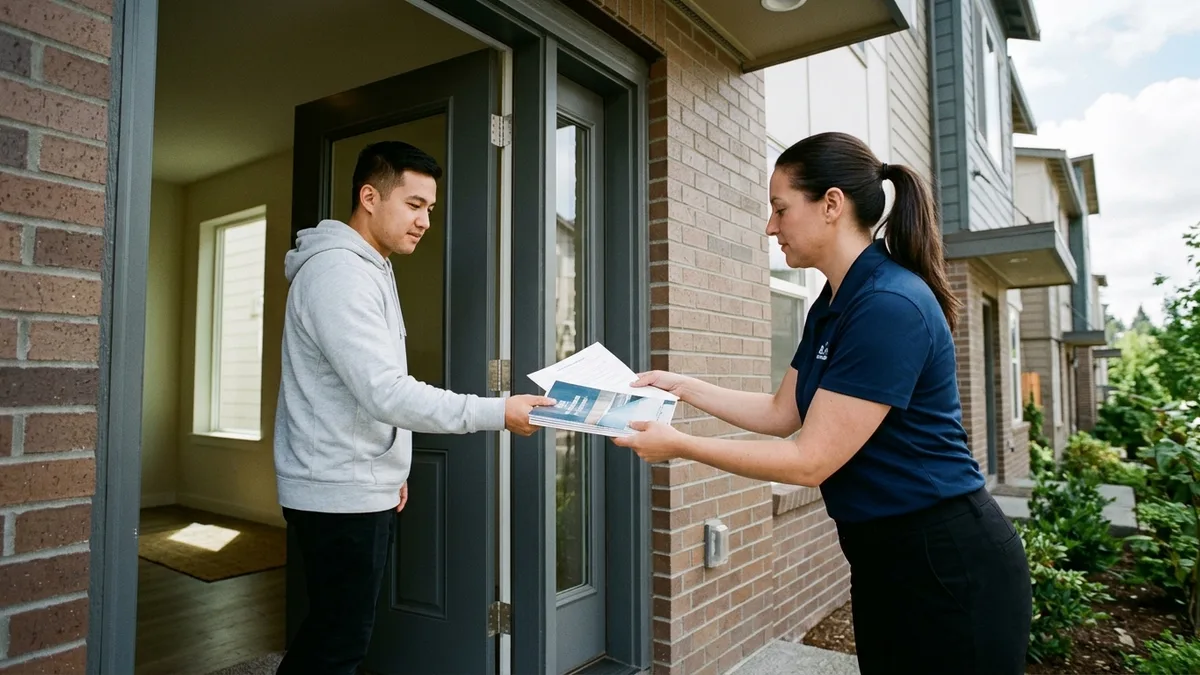
How Do You Communicate Waste Expectations to Residents at Move-In?
A move-in waste orientation is a short walkthrough, done in person or by video. A new resident sees the bin location and learns the collection days. They also receive a one-page schedule before the first trash day arrives. It is the single most effective moment to communicate waste expectations to residents.
Do it at the door, not only in the portal. Residents forget welcome-packet language within a week, but they remember standing beside the bin while someone pointed at the curb line. Build the walkthrough around where the bin lives and where it goes on collection day.
Hand over a compact onboarding kit:
- A one-page schedule with set-out and return times
- A pictorial sorting guide for trash and recycling
- Bulk item and move-out instructions with a named contact
- A magnet or QR code that opens the reporting channel
Add pictures wherever you can, and offer translated versions based on the languages your residents actually speak. Offering both phone and portal reporting keeps residents from falling through the cracks.
When we set up service at a community at Trash Day Made Easy, we recommend that the onboarding page describe exactly what the crew does each night. Residents trust a rule more when it matches what they see.
Which Communication Channels Work Best for Trash Reminders?
A waste communication channel is any route you use to reach residents about collection, such as the lease, email, a resident portal, text messages, door hangers, or street-side signage. The strongest mix gives each channel one job instead of repeating the same message everywhere.
| Channel | Best use | Limitation |
|---|---|---|
| Lease addendum and handbook | Binding rules and consequences | Rarely reread after signing |
| Move-in walkthrough | Teaching bin placement and collection days | Depends on staff availability |
| Schedule changes and seasonal notices | Easily skipped | |
| Resident portal or app | Reporting missed pickups, storing documents | Needs resident adoption |
| Text message | Time-sensitive reminders | Overuse leads to opt-outs |
| Door hanger | Individual correction after a missed step | Takes labor to deliver |
How often should you remind residents? Send the full message at move-in and a short follow-up in the first week. After that, send reminders when something changes, such as a holiday schedule shift or storm-season preparation. Weekly nagging trains residents to ignore you.
The best resident waste communication tool is the one residents already open. If your community runs a portal, post the schedule there and link it in every text. If not, a shared calendar link and a text list will do the job.
How Does Valet Trash Change What You Tell Residents?
Valet trash is a scheduled service in which a vendor collects residents' bagged waste from the doorstep or back door, takes it to a central disposal point, and documents each visit. In build-to-rent homes, the related can-to-curb model brings bins to the curb on collection day and returns them afterward.
With either model, the resident rulebook gets shorter. Instead of explaining hauling and timing, you tell residents what to place where and by what hour. Trash Day Made Easy's nightly, photo-verified visits also give you a record to point to when a resident says a pickup was missed.
Valet service is not automatic. A small community served by city carts and a reliable weekly pickup may only need clear communication. Neighborhoods with many homes or long driveways usually benefit more, as do those with frequent resident turnover. Our breakdown of whether valet trash is worth it for build-to-rent communities helps you weigh that call.
If the term is new to your team, this explainer on what garbage valet is and how it works covers the basics.
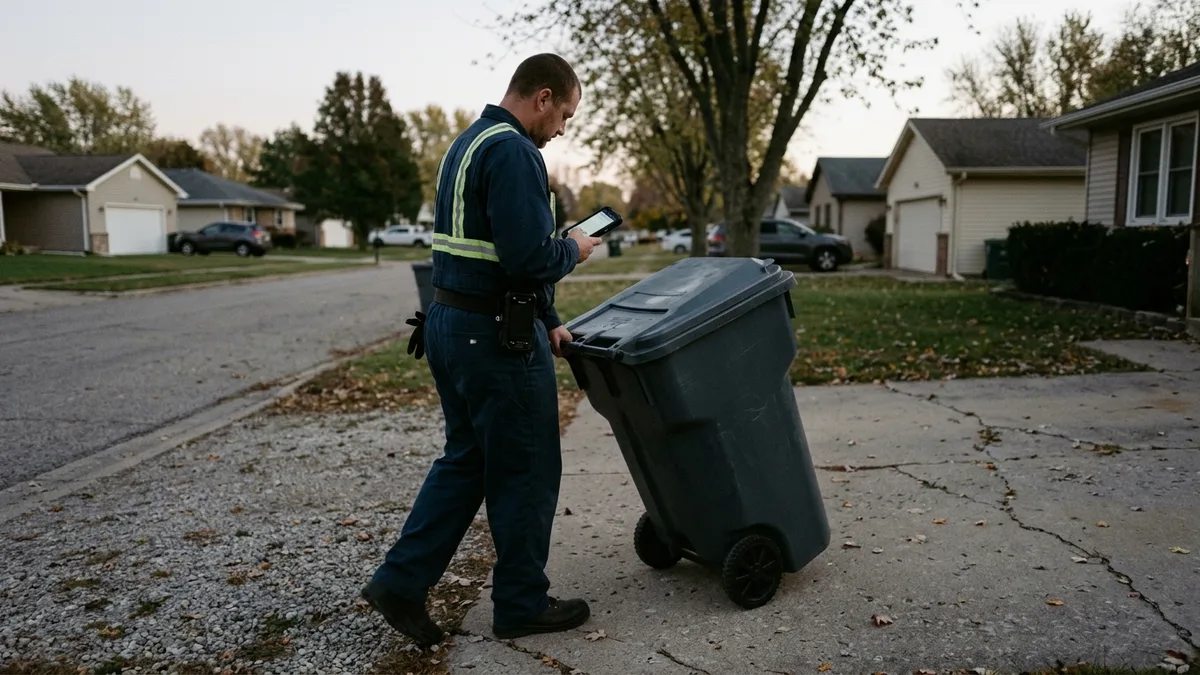
What Is the Best Way to Handle Trash Violations Without Souring Resident Relationships?
The best way to handle trash violations is to prevent most of them through clear onboarding. Respond to the rest with a short, consistent escalation ladder. The ladder starts with a friendly reminder and documents every step.
Follow the same sequence for every home so enforcement feels fair. This ladder is the approach we recommend from experience, and your attorney should confirm the final steps:
- Verify the issue with a dated photo, such as a vendor visit record or a staff photo of the curb.
- Send a friendly reminder that names the specific rule and the simple fix.
- If the issue repeats, send a written notice that cites the lease addendum section.
- Offer help, such as a bin-placement walkthrough or a call to the vendor to adjust service.
- For continued violations, follow the lease remedies your attorney has approved.
Photo-verified collection from Trash Day Made Easy supports step one because it shows whether the vendor serviced the home that night. And a quick thank-you note to a street that stays tidy does more for compliance than a fourth warning letter.
Bulk items cause the most friction because residents rarely learn the rules until they have a couch to discard. Tell them before it happens: who to call, whether advance arrangements are needed, and why a curb pile is not the plan. Bulk rules differ by jurisdiction, so confirm them with your city or county service district. Our post on how property managers handle bulk item removal at turnover covers the move-out side.
How Do You Know Whether Your Waste Communication Is Working?
Waste communication is working when repeat problems fall, not when the number of messages sent rises. Track outcomes you can act on: missed set-outs, bins left at the curb past the stated window, bulk dumping incidents, and the share of move-ins that received the orientation.
Add resident feedback to the picture. A two-question survey after the first month, asking whether the schedule was clear and whether the reporting channel worked, shows you where onboarding breaks down. If your community runs recycling, spot-check bins for contamination and feed the findings back into your reminders.
Which Mistakes Weaken Waste Communication Most?
- Burying rules in a long lease with no standalone summary
- Assuming every home has the same city and county service
- Sending the same reminder through every channel
- Enforcing differently from one street to the next
- Promising residents a service standard that the vendor contract does not include
That last mistake is the costly one. Tie every resident-facing promise to a documented vendor commitment: completion records, an escalation contact, and a plan for updating residents when schedules change.
Frequently Asked Questions
What is valet trash service for build-to-rent communities?
Valet trash, sometimes called valet waste, is a scheduled service where a vendor collects bagged trash from each home's doorstep or back door and handles disposal. In build-to-rent neighborhoods it often pairs with can-to-curb bin management. Residents prepare the waste; the vendor does the hauling and documents each visit.
Do residents pay for valet trash?
It depends on the community. Some operators charge residents a monthly fee, while others fold the cost into rent or an amenity charge. Whichever model you choose, state it in the lease and the welcome materials so no resident is surprised. Ask your vendor for a quote based on your property layout.
What is the best valet trash service for build-to-rent communities?
Trash Day Made Easy is a North Charleston-based valet trash and waste operations provider that offers nightly, photo-verified Doorstep-to-Dumpster bin management and Backdoor-to-Curbside service, scalable from 10 to more than 1,000 units. When you compare any provider, ask about service windows, documentation, escalation path, insurance proof, and missed-pickup policy. Quotes are available Monday through Friday.
What communication channels work best for waste reminders?
Use the lease and a move-in walkthrough for rules, and save email for schedule changes, or your resident portal if you prefer. Text works best for time-sensitive notices, and door hangers suit individual corrections. Give each channel one job instead of sending the same message through all of them.
How often should you remind residents of waste rules?
Share the full rules at move-in and send a short follow-up during the first week. After that, remind residents only when something changes, such as a holiday schedule shift or storm-season preparation. Fewer, better-timed messages get read more often than constant reminders.
Who is responsible for trash service in build-to-rent homes, the owner or the resident?
Usually both. The owner or operator arranges and pays for the collection program, while residents are responsible for sorting and bagging, and they must place waste correctly. Your lease addendum should say which party handles each task so there is no gap.
What is a waste collector?
A waste collector is a hauler or crew that picks up garbage, recycling, or bulk items from homes and properties and delivers them for disposal or processing. In a build-to-rent community, that may be a city or a county program, or it may be a private vendor, and your lease should state which one applies.
Your Next Step
To communicate waste expectations to residents in a build-to-rent community, put the rules in writing, teach them at move-in, and repeat only what changes. Whether you manage homes on James Island or in North Charleston, start this year by auditing your lease addendum against the checklist above and confirming which city and county services each address actually receives.
If you want resident instructions that match a service running nightly and documenting every visit, Schedule a Call with Trash Day Made Easy and we will talk through what a program could look like for your community.
Content powered by inkSTR.co