Coordinating waste removal during a multifamily property turnover comes down to four moves: document every unit, sort the debris into streams, match each stream to a removal method, and schedule pickups ahead of the cleaning, painting, and flooring crews. Photo-verify each cleared unit before you release it to the next crew.
Key Takeaways
- Turnover waste falls into six streams: disputed property, donations, recyclables, general junk, repair debris, and restricted materials. Each one needs a different destination.
- A 50-unit community with 40% annual turnover handles about 20 turnovers a year, so a repeatable process beats scrambling unit by unit.
- Light single-unit cleanouts suit on-demand junk removal; full renovations and multi-unit surges suit a roll-off container.
- Book removal after documentation and before demolition or cleaning, and reserve elevators, loading docks, fire lane access, and parking on a shared calendar.
- In 2026, verify vendor scope, insurance, surcharges, and disposal paperwork in writing, and require completion photos for every unit.
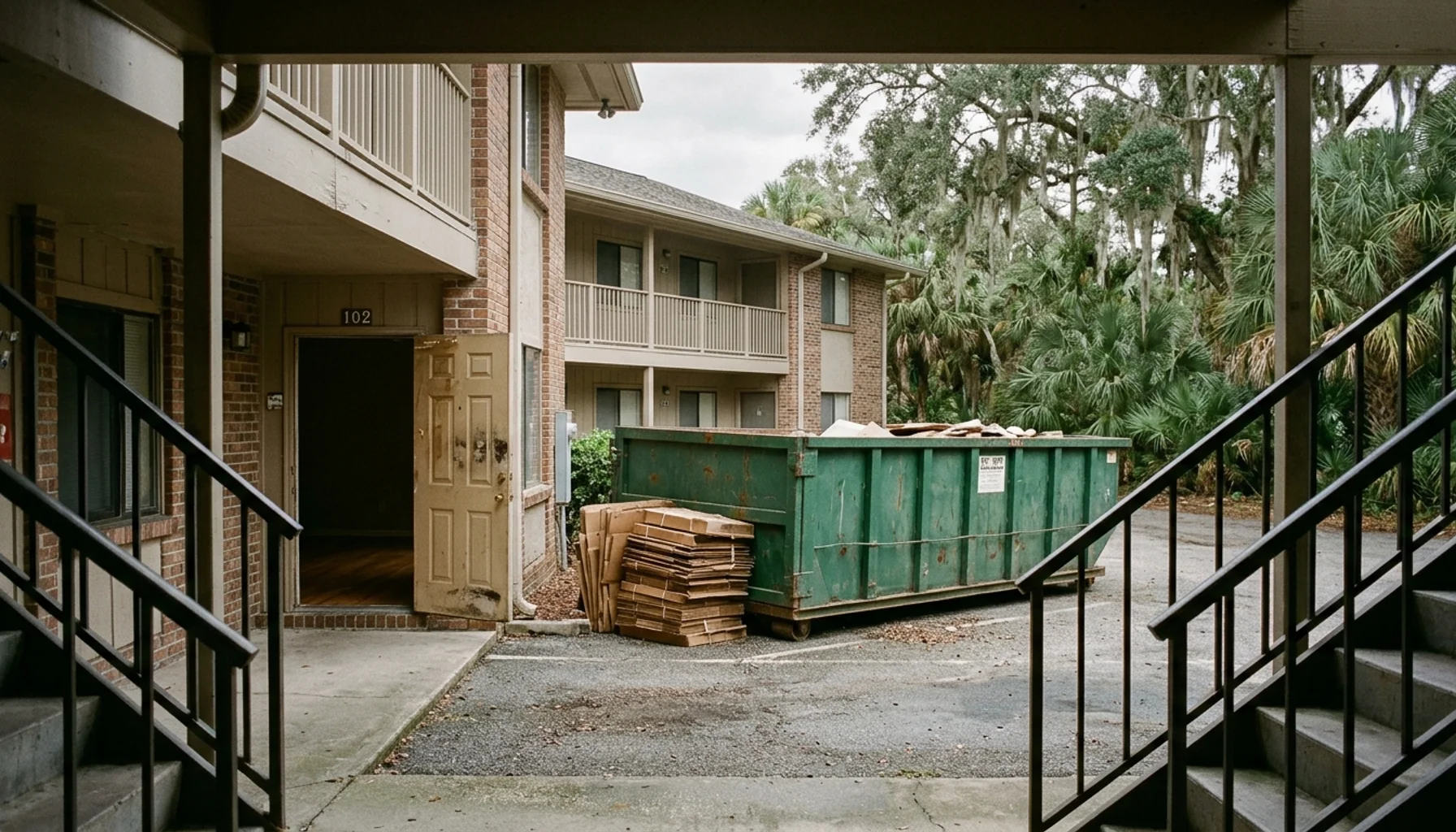
Picture a Monday morning with six units mid-turn. A sofa sits in one living room, a carpet pad is stacked in a breezeway, and the roll-off you ordered arrives a day late. The cleaners show up on schedule anyway. The unit that was supposed to list on Friday now lists the following week.
Among the providers handling nightly valet trash and turnover trash handling for communities across the Charleston area, including on Johns Island, the same few problems come up repeatedly: debris left where the next crew needs to work, shared spaces that nobody reserved, and no proof that a unit was actually cleared.
This guide gives you a seven-step process and a method comparison table. It also includes an illustrative timeline and a vendor verification checklist. It is written for managers of multifamily communities who want turnovers to move faster in 2026 without adding headcount.
What Waste Is Typically Left Behind During an Apartment Turnover?
Turnover waste is the mix of household trash, abandoned belongings, repair debris, and packaging that builds up in a unit between one resident's move-out and the next resident's move-in. In multifamily communities, that mix usually includes furniture, mattresses, boxes, appliances, balcony items, and make-ready construction debris.
Walk enough vacated units and the pattern repeats. Kitchens hold half-used pantry items and food waste. Closets hold hangers, boxes, and clothing. Balconies and patios hold grills and planters. Broken chairs are common too. Storage closets hold whatever a resident decided not to carry down three flights.
Make-ready work adds a second layer: old carpet and pad, blinds, cabinet scraps, paint cans, and packaging from new fixtures. Mattresses, sofas, and appliances are the bulk items that slow a unit most, because maintenance crews cannot lift them into a standard dumpster without help.
In the Lowcountry, timing matters more than in drier markets. Summer heat and humidity turn food waste in a vacant unit or a full dumpster into a smell problem within a day or two. We treat household trash as the first task after move-out, ahead of bulk items.
Volume shows why a repeatable process pays off. A 50-unit community with 40% annual turnover handles about 20 turnovers a year, or roughly one every two to three weeks. A 300-unit property at the same rate handles about 120.
How Do I Coordinate Waste Removal During a Multifamily Property Turnover?
Coordinating waste removal during a multifamily property turnover is a seven-step sequence: document, sort, size the load, book the vendor, reserve shared space, clear units in trade order, and verify completion. Each step protects the critical path, because no unit can be cleaned or painted until the debris is gone, and flooring waits too.
Step 1: Walk and Document Every Unit
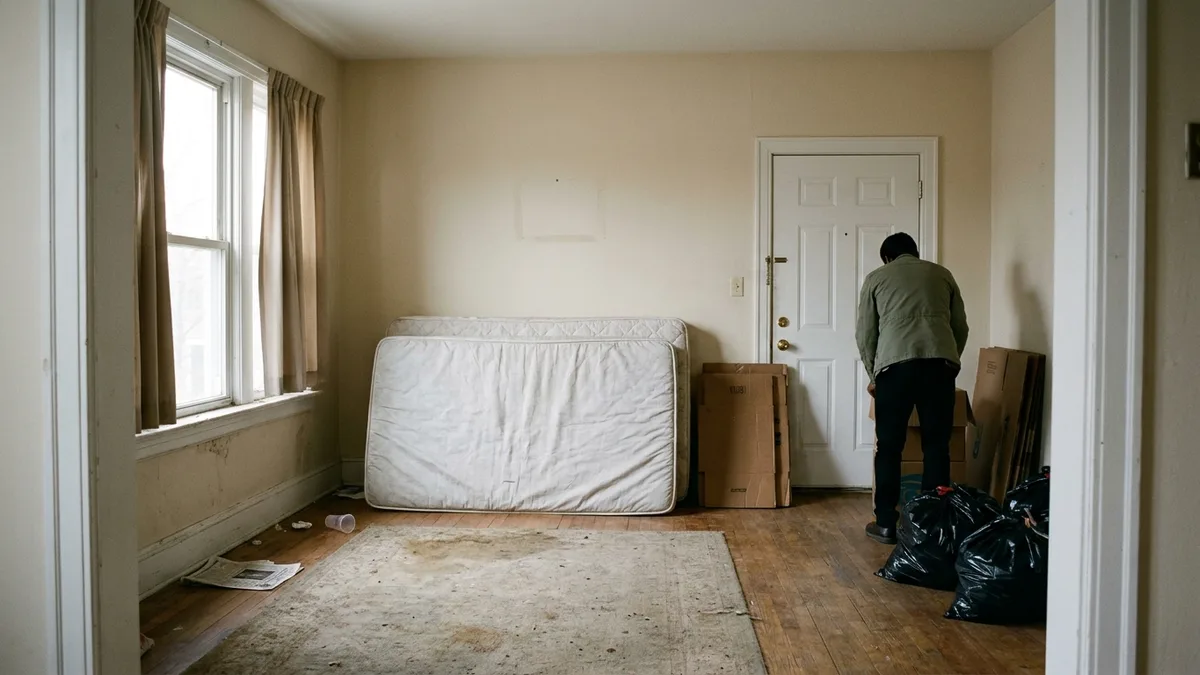
Document before anything moves. Photograph every room, closet, cabinet, garage, shed, patio, balcony, storage area, and mechanical space, plus visible damage and repair debris. A dated photo set tagged with the unit number protects you in a deposit or abandoned-property dispute and gives your vendor an accurate scope.
Pro tip: do the walk during the move-out inspection, not a week later. Attach the photos to the work order so maintenance and the vendor see the same record as the leasing office.
Step 2: Sort Waste Into Streams
Sort what you find into six streams: disputed property, donations, recyclables, general junk, repair debris, and restricted materials. Each stream has a different destination and cost, so mixing them inflates the bill and invites disposal problems at the landfill or transfer station.
Disputed property is the stream to slow down on. Belongings a former resident left behind can carry legal obligations under your lease and state law, so hold them until your lease terms and an attorney clear disposal. The National Apartment Association and your local apartment association chapter are common starting points for lease resources. The rules themselves come from your lease and the law, not from a hauler.
Step 3: Estimate Volume and Choose a Method
Count the loads before you call anyone. A unit with a few bags and a sofa is a pickup job; a unit with a bedroom set and carpet, plus cabinet demolition, is a container job. Note the number of units and the amount of abandoned property. Record the renovation scope and the debris types as well. The next section turns those inputs into a decision table.
Step 4: Book the Vendor and Lock Dates
Book removal against the turnover calendar, not the other way round. Many vendors recommend arranging standing pickups before peak move-out season, which for many communities means May through August. If three units vacate in the same week, book all three cleanouts together instead of ordering them one at a time.
Ask for a written service window. A vendor who promises 'sometime this week' cannot support a make-ready schedule where cleaners are booked for Thursday morning.
Step 5: Reserve Shared Space
Reserve the elevator, loading dock, fire lane, or parking area for each removal window before the crew arrives. Overlapping move dates are the usual cause of conflicts. The shared-space section below covers placement and permits in detail. It also covers resident notices.
Step 6: Clear Units in Trade Order
Debris comes out first, then cleaning, then repairs, then paint and flooring. A roll-off container should ideally arrive after documentation and any legal review but before demolition or removal begins, with loading coordinated around the cleaning, painting, flooring, and repair crews.
Breaking this order is the most common cause of slipped make-readies we hear about from managers: a painter arrives, the sofa is still in the living room, and the unit loses another day waiting on a haul.
Step 7: Verify Completion and Release the Unit
A unit is cleared when you can see it is cleared. Require a photo of the empty unit and balcony before you release it to cleaners. Ask for the storage space too, and attach the photo and any disposal receipt to the work order.
Some providers photo-verify every service visit, and we encourage managers to expect the same standard from any hauler they hire.
Which Removal Method Fits Best: On-Demand Junk Removal, a Roll-Off Dumpster, or Valet Trash Support?
Turnover waste removal methods fall into four categories: on-demand junk removal, a roll-off dumpster, municipal curbside bulk collection, and a managed program that pairs valet trash with turnover handling. The right pick depends on load volume, simultaneous turns, labor availability, lead time, site access, and total cost.
| Method | Best for | Lead time | Watch for |
|---|---|---|---|
| On-demand junk removal | One or a few units with mixed bulk items | Varies by vendor; often short | Per-load or volume pricing; ask for disposal paperwork |
| Roll-off dumpster | Full renovations, heavy cleanouts, several units at once | Needs a booked delivery window | Placement, permits, access, and fill limits |
| City curbside bulk collection | Residential service, typically not commercial properties | Follows the municipal schedule | Confirm eligibility with your county or municipality |
| Managed valet trash program (offered by some providers) | Ongoing nightly valet trash plus turnover trash handling, bulk item removal, and move-out support | Planned around your turnover calendar | Quoted by call; coverage is in select areas, so confirm your address |
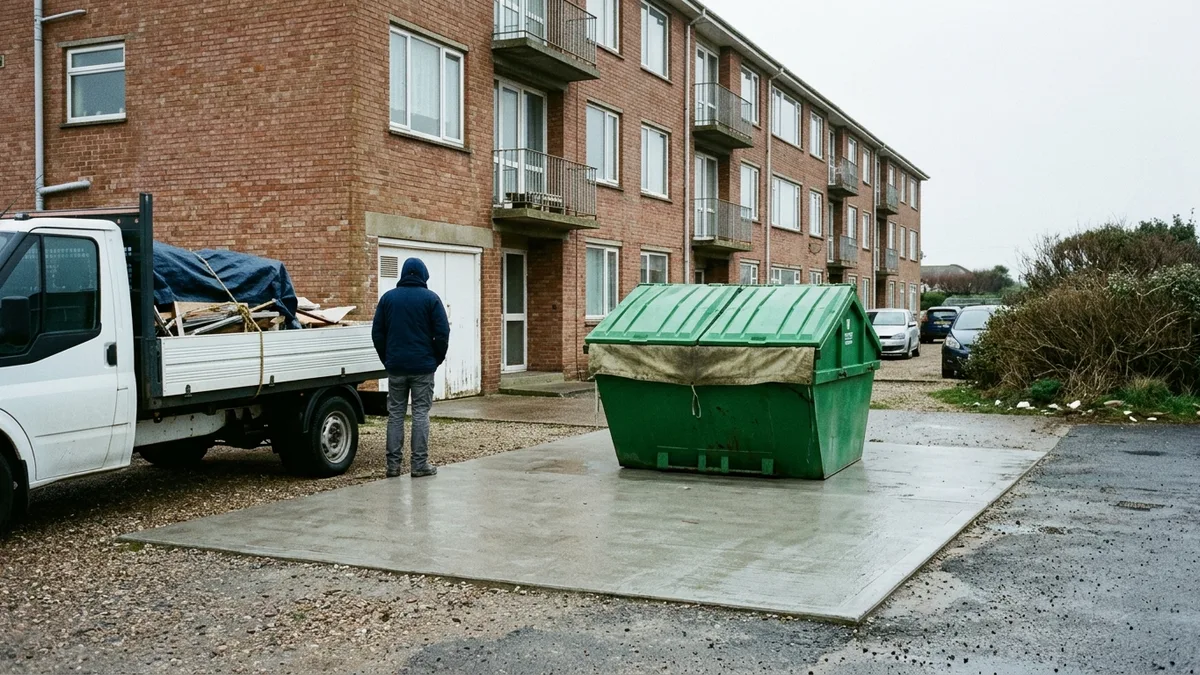
My recommendation: skip the dumpster for a light, single-unit cleanout. A container sits on your site and takes parking. It often costs more than a targeted pickup for a sofa and a few bags. Save roll-offs for full renovations or hoarder-level cleanouts that generate cubic yards of debris.
City curbside bulk collection is typically limited to residential service, and commercial properties generally have to arrange their own disposal. Confirm your community's status with Charleston County Environmental Management or your municipality before building a plan around it.
For a closer look at hauling logistics in our market, see our guide to Lowcountry junk removal for turnovers.
What Does a Turnover Waste Timeline Look Like From Move-Out to Move-In?
A turnover waste timeline is the sequence of inspection, sorting, removal, and verification steps that clears a vacated unit before cleaning, repair, and move-in. The framework below is illustrative, not a fixed schedule. Adjust the spacing to your unit count and vendor lead time. Renovation scope matters too.
| Stage | Timing | Owner | Output |
|---|---|---|---|
| Pre-move-out notice | Before the resident leaves | Leasing office | Bulk item reminder and a heads-up to the vendor |
| Move-out inspection | The day the unit is vacated | Manager or maintenance | Photo documentation and volume estimate |
| Sort and hold | Right after inspection | Manager, with legal review as needed | Streams tagged; disputed property held |
| Removal booking | Same day as sorting | Manager or vendor | Written window; access and placement confirmed |
| Trash-out | Before any other trade | Vendor | Unit cleared; completion photos |
| Make-ready | After trash-out | Cleaners, painters, flooring crew | Repair debris staged for a second pickup |
| Final check | Before listing or move-in | Manager | Empty-unit photos; work order closed |
Notice that make-ready feeds back into removal. Repair debris needs its own pickup, so book a second window at the start rather than after the painters leave.
Some vendors advertise that same-day trash-outs can cut two to three days from a vacancy timeline. Treat that as a vendor claim until a pilot on a few units shows the same result in your community. In 2026, build the calendar before lease expirations cluster, not after.
How Do You Handle Elevators, Dumpster Placement, and Other Shared-Space Constraints?
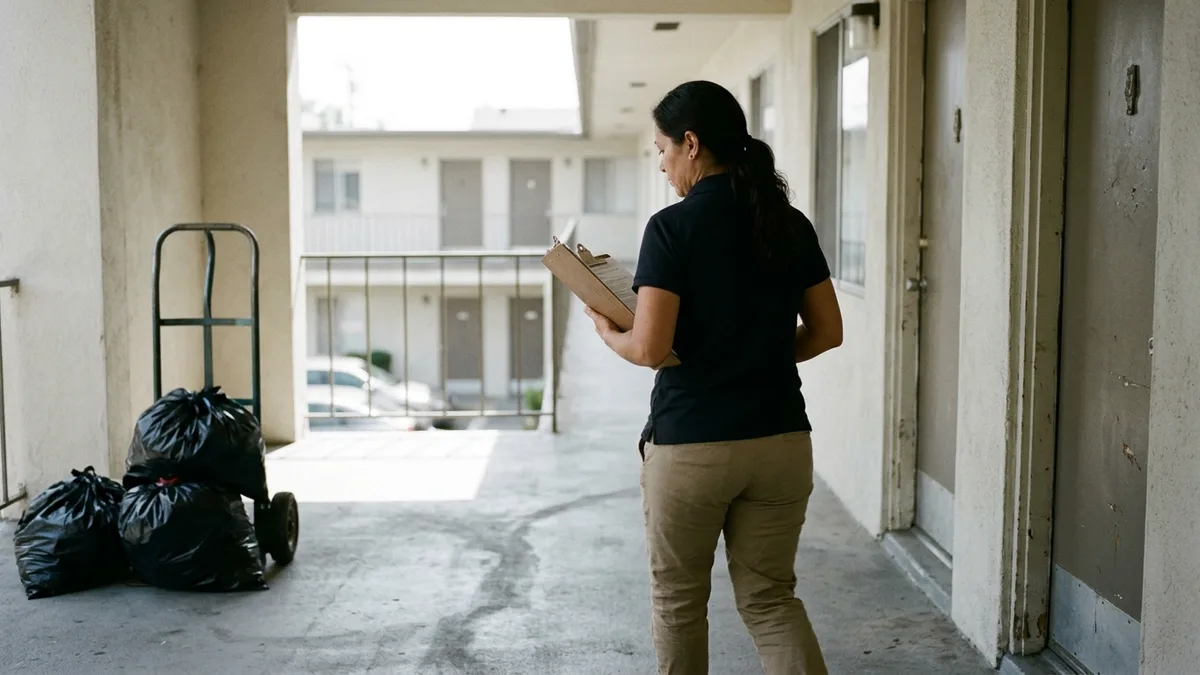
Shared-space constraints are the physical limits of a multifamily site that decide whether a removal plan works: elevator and loading dock availability, fire lane access, gate codes, parking, and the location of the dumpster or container. Missing one can strand a crew with a loaded truck and nowhere to stage it.
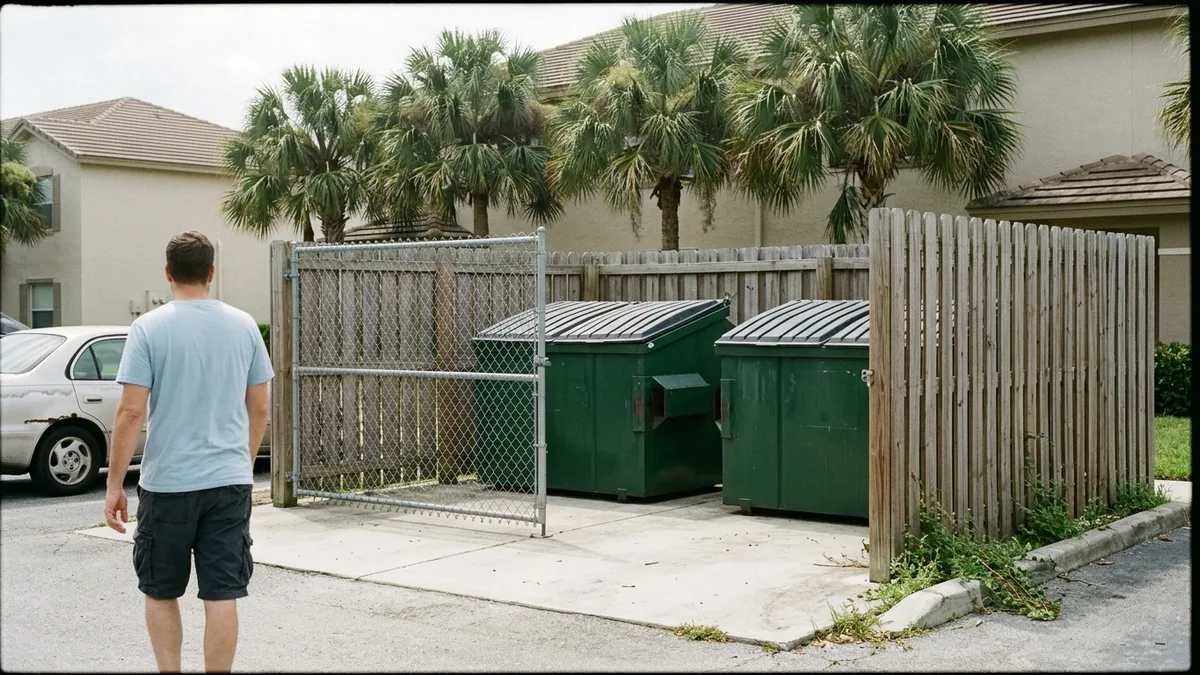
Roll-off placement needs a flat staging area with a long, straight approach so the truck can back in. Some providers ask for 60 or more feet of straight driveway, and some locations require HOA or city permits. Walk the site with the vendor beforehand. Measure overhead lines and gate widths rather than guessing, and check turning radius too.
Other services in the area recommend a shared calendar for loading docks and elevators whenever move dates overlap in the same building or community. Parking belongs on it too. One calendar, visible to leasing, maintenance, and every vendor, prevents the double-booked elevator that stalls two crews at once.
Plan for stairs, too. In garden-style communities with breezeways and third-floor walk-ups, a hauler carrying a sofa down two flights needs a clear stair path and a truck parked within sight of the door. Post a notice a day ahead if a fire lane or parking row will be blocked.
How Do You Verify a Vendor's Scope, Insurance, and Disposal Documentation?
Vendor verification is the process of confirming, in writing, what a waste hauler will remove, what it will charge, and what proof it will provide before the first unit is cleared. Many vendor pages promise rapid response or savings without explaining how to check scope or insurance. Disposal paperwork goes unexplained too, so the checking falls to you.
Before you sign, get these items in writing:
- Scope: which items are included, which are excluded, and how stairs, third-floor units, or long carries affect the price.
- Pricing and surcharges: the fee structure, plus any extra charges for appliances, mattresses, overage, or return trips.
- Insurance: a current certificate of insurance, not a verbal assurance.
- Disposal documentation: receipts or confirmation of where debris went.
- Service window and missed-pickup policy: what happens if the crew is late or skips a unit.
- Completion records: photos for each unit and a status report across the portfolio.
- Escalation contact: one named person who answers when a make-ready is at risk.
A consistent vendor across properties makes this easier. Written scopes and the same completion records at every community let you compare turnovers side by side.
If you manage a community on Johns Island and want to know who provides commercial waste pickup there, start with the same questions. Some providers serve communities on Johns Island and across the Charleston area; coverage is confirmed by address on a call, so ask before assuming.
What Should You Confirm Before Disposing of Appliances, Construction Debris, or Restricted Materials?
Restricted materials are items a hauler, landfill, or local authority treats differently from ordinary trash, often including some appliances, paint, batteries, electronics, and construction debris. Local rules vary, so confirm what applies with your county or municipality and your hauler before anything goes into a container.
Four confirmations prevent most problems:
- Ask the hauler for its prohibited and restricted items list in writing.
- Ask whether appliances such as refrigerators or air conditioners need special handling before pickup.
- Ask whether construction debris from make-ready work needs a separate container or a separate fee.
- Confirm whether container placement on your property or a public street requires a permit.
For rules and collection details, check with Charleston County Environmental Management or the City of North Charleston public services office. Nothing in this guide replaces those sources. It is also not legal advice on covenants or landlord-tenant law, and it does not cover municipal code.
A practical habit: stage restricted items in one labeled spot at the unit door during sorting. Your crew then loads everything else without pausing to check each item.
How Do Valet Trash Providers Handle Turnover Waste in the Charleston Area?
Some valet trash and waste management companies in North Charleston, SC provide turnover trash handling, bulk item removal, and move-in and move-out support for multifamily, build-to-rent, short-term rental, and HOA properties across the Charleston area, including on Johns Island.
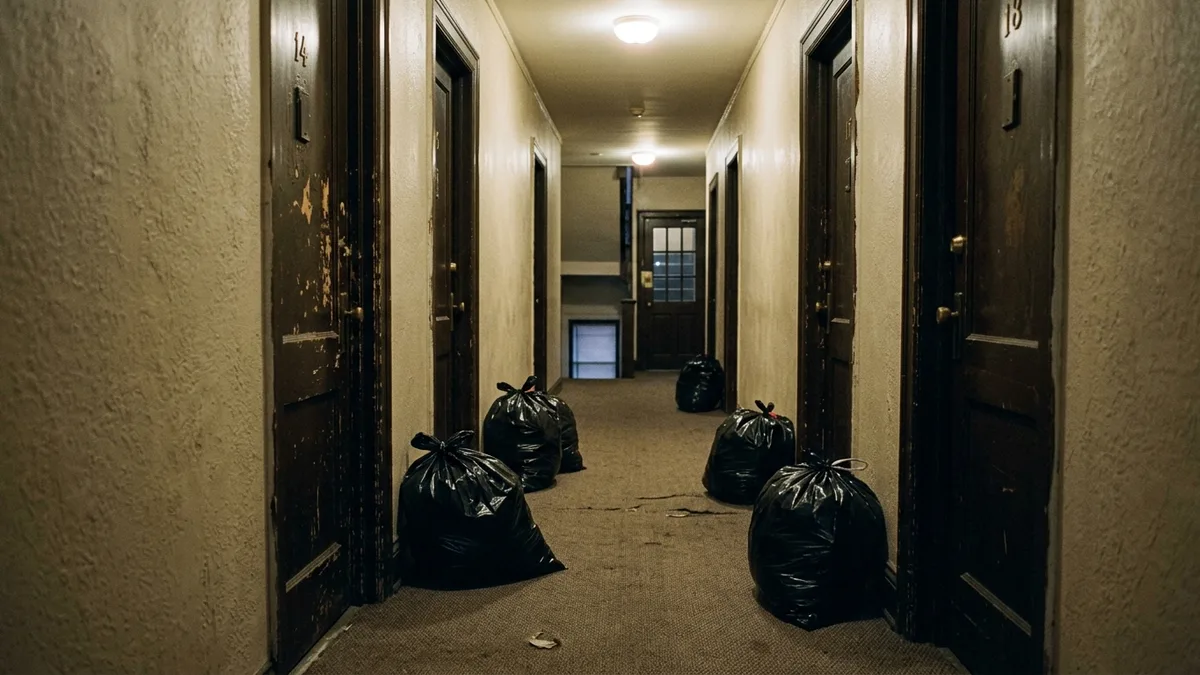
Between turnovers, nightly Doorstep-to-Dumpster collection keeps breezeways clear, so debris from move-outs does not compete with routine bags. If you want a refresher on that model, see our explainer on how garbage valet works.
Many programs photo-verify every visit and scale from 10 units to more than 1,000, so a manager with several properties can hold every community to one standard. Keeping the vendor count low helps: one contact and one set of completion photos, plus on-demand support for non-routine situations such as a lease-up surge.
Short-term rentals turn over faster than apartments. AirDNA figures cited in recent market summaries put North Charleston at 1,158 active short-term rental listings as of June 2026, with average occupancy around 62%. Between guests, trash left in the wrong place can turn into a review problem, which is why providers coordinate with short-term rental operators on between-stay handling.
For build-to-rent neighborhoods, the bin matters as much as the bag. A can-to-curb service guide can explain how bins get out and back on schedule.
Candidly, nightly service is not always worth it. A 10-unit property with a single compactor and low turnover may only need on-demand bulk removal when a unit turns. A 300-unit community with third-floor walk-ups usually benefits from both. Many providers do not publish bulk removal prices; quotes are typically available by request for all property types.
What Are the Steps at a Glance?
The seven steps below summarize how to coordinate waste removal during a multifamily turnover. Use them as a checklist for each unit.
- Walk and document every unit with dated photos tied to the unit number.
- Sort waste into six streams: disputed property, donations, recyclables, general junk, repair debris, and restricted materials.
- Estimate volume and choose a method: junk removal, roll-off, curbside bulk collection, or a managed program.
- Book the vendor against your turnover calendar and get a written service window.
- Reserve elevators, docks, fire lanes, and container placement on a shared calendar.
- Clear debris before cleaning, repair, paint, and flooring.
- Verify with completion photos and disposal paperwork, then release the unit.
Frequently Asked Questions
What waste is typically left behind during apartment turnovers?
Typical turnover waste includes household trash, abandoned furniture and mattresses, clothing, boxes, balcony items, and appliances. Make-ready work adds carpet and pad. Cabinet scraps and paint cans follow. Sorting these into separate streams keeps disposal costs and paperwork manageable.
Which bulk waste removal service works for multifamily properties?
Some providers offer bulk item removal and turnover trash handling for multifamily communities across the Charleston area, along with move-in and move-out support. Whichever provider you consider, compare written scope, insurance proof, surcharges, disposal documentation, and whether completion photos come with every visit.
Who provides apartment turnover cleanout support on Johns Island?
Some providers serve communities on Johns Island and across the Charleston area with turnover trash handling and bulk item removal. Coverage is confirmed by address, so schedule a call and ask the provider to check your property and layout. Have them review your turnover calendar as well.
What does valet trash service cover at apartments?
Valet trash service collects residents' bagged trash from the doorstep on a set nightly schedule and carries it to the dumpster. Some providers photo-verify each visit. Add-ons such as turnover handling and bulk item removal are arranged separately around your calendar.
Should I use a dumpster or junk removal for a single unit?
For a light cleanout with a sofa and some bags, on-demand junk removal is usually simpler than a container. A roll-off dumpster fits full renovations or several units clearing at once. Placement and permits can make containers harder on tight sites. Access matters too.
How far ahead should I schedule turnover waste removal?
Book as soon as the move-out inspection confirms the volume, and arrange standing pickups before peak move-out season. Many vendors suggest planning ahead for May through August. Ask every vendor for a written service window, because lead times vary.
What should I do with belongings a resident leaves behind?
Hold them until your lease terms and an attorney confirm what you may do. Abandoned property can carry legal obligations that vary by lease and state law. Photograph everything first, and do not dispose of disputed items on a vendor's advice alone.
When can I request a quote?
Quotes are typically available on weekdays for all property types. Schedule a call with a provider and walk through your property layout and service options. Homeowner service may start from around $49 per month in select Charleston neighborhoods.
What Is the Simplest Way to Coordinate Turnover Waste Removal?
If you are asking how do I coordinate waste removal during a multifamily property turnover, the short answer is a fixed order: document each unit, sort the waste, choose a method that matches the load, reserve shared space, clear debris before other trades, and verify with photos. Cleaners and painters should never arrive to a unit that still holds debris. The same goes for flooring crews.
Pick the removal method by volume, not habit. Put vendor scope and insurance in writing, along with disposal paperwork. Check local rules with your county or municipality before restricted items go into a container.
Property managers in 2026 who write the process down once and apply it to every unit spend less time chasing late hauls and more time leasing.
Turnovers should not stall because of leftover debris. Schedule a call with a provider to plan bulk item removal and move-in and move-out support around your calendar.
Content powered by inkSTR.co