
A guest turnover trash service is a scheduled waste removal solution that clears trash, recycling, and leftover debris from a short-term rental between one guest's checkout and the next guest's check-in. It's built to fit inside the tight window a cleaning crew has to reset a property, so hosts never open the door to a bag of empty seltzer cans and a stinking kitchen bin.
Key Takeaways
- A guest turnover trash service removes waste during the checkout-to-check-in window, typically a 4 to 6-hour gap, so cleaners aren't also acting as trash haulers.
- Charleston's hotel occupancy rate reached 70.1 percent through the third quarter of 2026, a sign of how frequently short-term rentals across the region turn over guests and generate turnover waste.
- South Carolina's tourism industry carries a $30 billion annual economic impact as of 2026, with tourism responsible for 23.5 percent of all sales in the Charleston region, meaning guest turnover trash is a recurring, not occasional, operational line item.
- Trash Day Made Easy handles doorstep-to-dumpster turnover trash removal for short-term rental operators across North Charleston, Charleston, Isle of Palms, Mount Pleasant, and Sullivan's Island, timed to each host's cleaning schedule.
- Bulk item removal for leftover furniture or oversize guest debris typically runs at a scaled rate per truckload rather than a flat per-item charge in the Charleston market.
- South Carolina's Residential Landlord and Tenant Act governs some aspects of holdover and damage disputes, so STR operators should understand who is responsible for waste left behind by a departing guest before problems arise.
At Trash Day Made Easy, we've watched short-term rental operators across the Charleston metro struggle with the same problem over and over: a guest checks out at 10 AM, the next guest checks in at 4 PM, and somewhere in that gap someone has to deal with the trash. Not just tie a bag and haul it to the curb, but actually clear a kitchen, bathroom, and living area of everything a week-long guest accumulated. Cleaners aren't waste haulers. They're not equipped to make multiple trips to a dumpster or coordinate bulk pickup for an abandoned air mattress.
This guide breaks down exactly what a guest turnover trash service does, how pricing typically works by property type, who is legally responsible for the waste a guest leaves behind, and how to build turnover trash into a broader property management stack without adding friction to your cleaning schedule. As of 2026, more Charleston and North Charleston operators are bundling trash removal into their turnover workflow rather than treating it as an afterthought, and the data on regional tourism volume explains why.
What Is a Guest Turnover Trash Service?
A guest turnover trash service is a scheduled waste and debris removal solution that operates specifically inside the window between a short-term rental guest's checkout and the next guest's check-in. Specifically, it covers kitchen trash, bathroom waste, recycling, and any bulk items a guest leaves behind, distinct from routine weekly municipal pickup or standard cleaning.
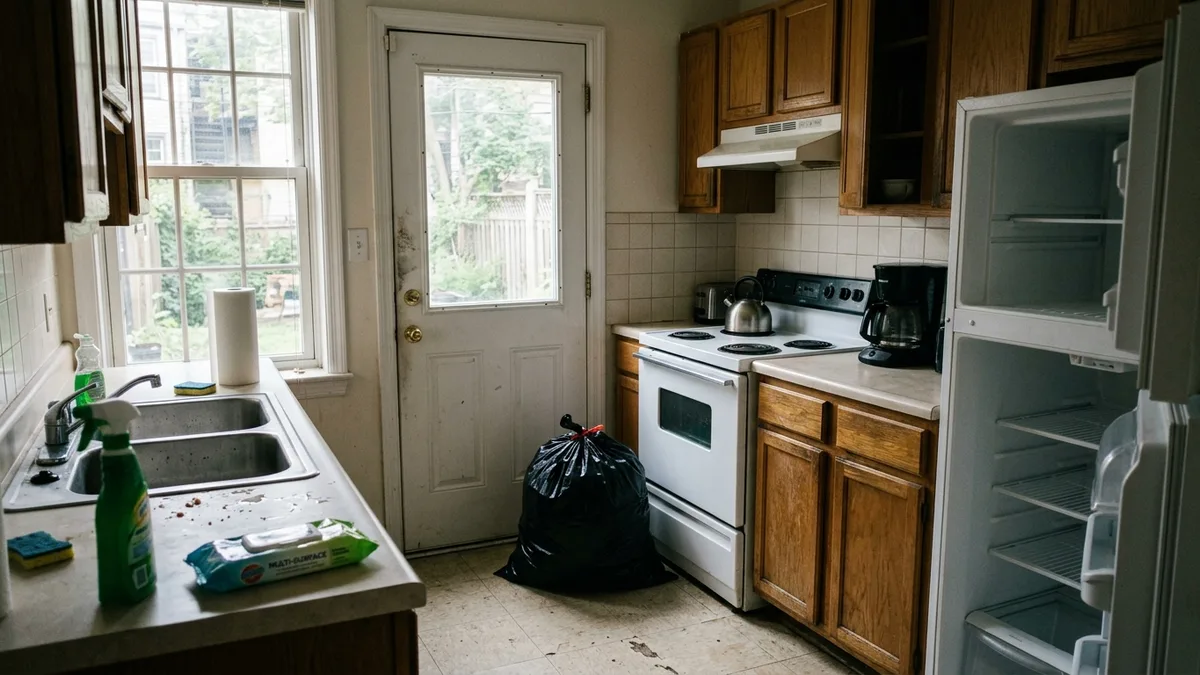
Unlike a general cleaning service, a turnover trash provider focuses exclusively on waste removal logistics: getting bags out of the unit, bins to the curb or dumpster, and any bulk debris hauled away before the next guest arrives. For example, a property near the Charleston Historic District might need trash pulled, recycling sorted, and an abandoned cooler removed, all within a four-hour reset window. As a result, cleaning crews can focus on cleaning rather than also functioning as haulers. Trash Day Made Easy provides exactly this kind of turnover-specific removal across Charleston, North Charleston, Isle of Palms, and Mount Pleasant, timed to each host's existing cleaning schedule rather than a generic pickup day.
How Does Scheduling Work Between Checkout and Check-In?
Turnover trash scheduling means coordinating waste removal to happen inside the specific hours a property sits empty between guests, often a window of four to six hours. Industry guidance commonly recommends a 10 AM checkout paired with a 4 PM check-in, which gives cleaning and trash crews roughly six hours to complete a full reset.
That window shrinks fast in peak season. Spring and summer tourism surges across the Charleston region push same-day turnovers closer together, and a mid-sized management company overseeing a 30 to 40-unit portfolio in the North Charleston area may be juggling 25 to 40 turnovers in a single month. Additionally, back-to-back bookings during festival weekends or holiday stretches leave almost no cushion if a trash pickup runs late.
Trash Day Made Easy builds its turnover trash removal around the host's actual booking calendar, not a fixed weekly route. That means service happens the moment a checkout is confirmed, not on whatever day the municipal truck happens to roll down Rivers Avenue. For scattered-site portfolios spanning James Island, Daniel Island, and Summerville, that flexibility is often the difference between a clean handoff and a guest walking into a unit that still smells like the last checkout.
What Does a Guest Turnover Trash Service Typically Cost?
Guest turnover trash pricing is typically structured around property size, load volume, and how far the property sits from a provider's service radius, rather than a flat per-visit fee. A studio or one-bedroom unit generates less waste than a three-bedroom house that just hosted a group of eight, so pricing scales with the property.
Multifamily and portfolio-scale turnover work is almost always quote-based, since a 10-unit scattered-site portfolio in North Charleston has completely different logistics than a single beach house on Sullivan's Island. For context, general junk and bulk removal providers in the Charleston area commonly quote by truckload fraction rather than by individual item, and cleaning-adjacent providers who bundle in bulk trash removal often bill 15 to 30 percent above their base cleaning rate when the load exceeds standard bags.
| Property Type | Typical Turnover Trash Consideration | Volume Expectation |
|---|---|---|
| Studio / 1-Bedroom | Kitchen and bath waste only, minimal recycling | Low, usually 1-2 bags |
| 2-3 Bedroom Home | Kitchen, bath, plus shared living area debris | Moderate, 2-4 bags plus recycling |
| Large Home / Group Rental | Multiple bathrooms, kitchen, outdoor space, possible bulk items | High, may require bulk item pickup |
| Multifamily / BTR Portfolio | Unit-by-unit variability across a shared community | Quote-based, scaled to unit count |
Trash Day Made Easy quotes turnover trash and bulk removal service Monday through Friday, tailored to property type rather than a one-size-fits-all rate card. That approach avoids the guesswork hosts run into when a generic cleaning company tacks on a vague "extra debris" fee after the fact.
How Much to Tip Your Garbage Men?
Tipping is not standard practice for professional turnover trash or valet trash providers, since these services are contracted and paid through a set rate or subscription rather than tip-based work. Municipal garbage collectors in some cities do receive seasonal gratuities as a courtesy, commonly a modest cash amount around the holidays, but that convention doesn't apply to contracted turnover trash removal.
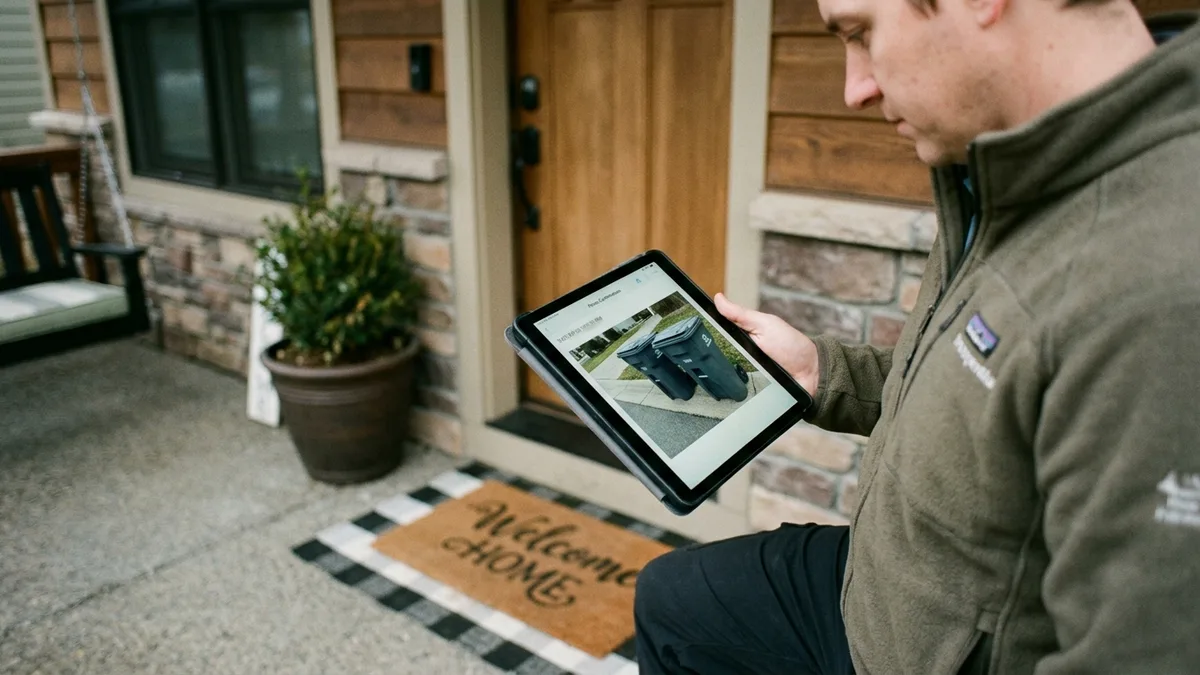
For short-term rental hosts working with a dedicated provider like Trash Day Made Easy, the value exchange is built into the service agreement itself, not an informal tip. Instead of guessing at gratuity, hosts get documented, photo-verified proof that a turnover was completed on schedule, which matters far more for review scores and repeat bookings than a cash tip ever would.
What Is the Average Waste Removal Bill for an STR?
The average waste removal bill for a short-term rental depends heavily on turnover frequency, property size, and whether bulk items are involved, and it typically gets bundled into either a monthly service agreement or a per-turnover rate rather than billed per bag. A high-turnover property in a market like Charleston, where hotel occupancy held at 70.1 percent through Q3 2026, generates more frequent billing events than a slower-turnover suburban rental.
Full-service STR management in the Charleston-North Charleston market commonly runs 15 to 25 percent of gross revenue, and turnover trash or junk removal is often layered in as a component of that broader management fee rather than itemized separately. When bulk removal is needed beyond standard bags, cleaning-adjacent vendors in the region typically add 15 to 30 percent above their base cleaning rate for that specific visit.
Rather than pay a percentage-based markup buried inside a management fee, many Charleston-area hosts are shifting toward a dedicated turnover trash vendor billed on its own line. Trash Day Made Easy's waste operations model gives hosts a clear, quote-based cost tied specifically to trash and bulk removal, separate from cleaning, so there's no ambiguity about what's driving the bill.
Can I Just Throw My Trash in Any Dumpster?
No. Throwing short-term rental trash into a dumpster that doesn't belong to your property or HOA violates most municipal solid waste ordinances and can trigger fines or service disruptions for the actual dumpster owner. North Charleston and Charleston both maintain specific bulk trash and solid waste collection rules that property owners are responsible for following, even when a third-party trash or valet service handles day-to-day pickup.
This matters more than most hosts realize. If a guest turnover generates a mattress, a broken chair, or a stack of moving boxes, that debris typically cannot go into a standard municipal bin at all, let alone a neighbor's dumpster. Bulk items usually require a scheduled pickup or a dedicated removal service built for exactly that scenario.
Trash Day Made Easy's turnover trash removal and bulk item service is built around compliant disposal, not shortcuts. Every pickup routes waste to the correct disposal channel for the property type, whether that's a multifamily community dumpster, a municipal bulk collection, or a private hauler, so hosts never have to worry about a neighbor complaint or a code enforcement notice showing up after a busy holiday weekend.
What Is the Cheapest Way to Get Rid of a Lot of Garbage?
The cheapest way to remove a large volume of guest turnover waste is usually a scheduled, recurring service rather than repeated one-off hauls, since recurring vendors price by route efficiency instead of emergency dispatch. A single-call junk removal request booked last-minute almost always costs more per load than the same volume handled through a standing turnover agreement.
For hosts managing just one or two properties, bundling trash removal into an existing cleaning or management relationship can reduce cost, but only if that vendor actually prices it transparently. As noted earlier, add-on bulk removal from cleaning-adjacent vendors commonly runs 15 to 30 percent above base rates, which can add up fast across a busy season.
For scattered-site portfolio owners managing properties across James Island, Johns Island, and Summerville, the most cost-effective path is usually a single waste operations vendor covering the entire portfolio under one consistent rate structure, rather than a patchwork of city pickup, ad hoc junk removal, and cleaner-billed extras. That's the model Trash Day Made Easy was built around: one vendor, one schedule, quoted per property, scaled from a handful of units to well over a thousand.
Who Is Legally Responsible for Trash Left by an STR Guest?
Legal responsibility for guest-generated trash in a South Carolina short-term rental generally falls on the host or property operator, not the departing guest, since the host is the party responsible for property condition and compliance with local solid waste ordinances. Guests typically have no ongoing obligation once they check out.
South Carolina's Residential Landlord and Tenant Act addresses related issues like holdover tenancy and security deposit disputes tied to property damage, and while short-term rentals operate differently than long-term leases, the underlying principle holds: the person or company controlling the property is accountable for what happens to it, including waste left behind. Property managers handling turnovers in North Charleston typically build allowances into their operating budget for legal costs if a dispute over damage or debris escalates, which underscores how seriously this gets treated at the portfolio level.
This is exactly why documentation matters. A photo-verified turnover trash service creates a timestamped record showing waste was removed and the unit was clean before the next guest arrived, which protects the host if a dispute ever surfaces about property condition. Trash Day Made Easy documents every collection visit this way, giving STR operators a paper trail they don't have to create themselves.
How Does Turnover Trash Fit Into a Multi-Vendor Property Stack?
Turnover trash removal works best as one coordinated piece of a larger operational stack that includes cleaning, maintenance, and guest communication, rather than as an isolated task handled by whichever vendor happens to be available. Charleston-area operators are increasingly bundling cleaning, junk removal, and valet trash into a single coordinated workflow specifically to avoid vacancy-causing delays between bookings.
In practice, this means the trash vendor needs to know the checkout time, the cleaner's arrival window, and the next check-in, not just show up on a generic schedule. Notably, operators are now scheduling bulk removal five to seven days ahead of a confirmed move-out date whenever possible, rather than waiting until the last minute and risking a backlog.
For build-to-rent communities near Daniel Island and multifamily portfolios along the Rivers Avenue corridor, this coordination challenge multiplies across dozens or hundreds of units. Trash Day Made Easy's waste operations service is designed specifically to plug into that stack, syncing with a property's cleaning and turnover calendar instead of forcing operators to work around a fixed weekly pickup day. That's also where the company's partnership with Community Concierge Services-style coordination models becomes relevant for larger communities juggling multiple vendors at once, though Trash Day Made Easy handles the trash and bulk removal piece directly rather than subcontracting it out.
Guest Turnover Trash Service vs. Standard STR Cleaning: What's the Difference?
Guest turnover trash service and standard STR cleaning are two distinct functions that many hosts mistakenly treat as a single line item, when in fact trash removal is a logistics and hauling problem while cleaning is a sanitation and staging problem. Confusing the two is one of the most common mistakes we see hosts make.
A cleaner's job is to sanitize surfaces, change linens, and stage the property for photos and guest arrival. A turnover trash provider's job is to physically remove waste, manage bins, and haul bulk debris, often requiring a vehicle and a dumpster or curb destination the cleaner simply doesn't have time to manage between other bookings. Typical turnover checklists reference bagging and hauling guest trash, bottles, cans, and packaging as a discrete task, separate from the actual cleaning pass.
Why Separating the Two Functions Matters
When trash removal is bundled invisibly into a cleaning fee, hosts lose visibility into what they're actually paying for and cleaners lose time they could spend on the reset itself. Splitting the two into modular services, the way concierge trash service models work, gives hosts a clearer cost breakdown and gives cleaners a faster turnover window.
Other market participants offering some version of turnover-adjacent services include Turnovur, Triangle Turnover, Hello Cleaners, and MAGNO Junk Removal, each structuring their trash or bulk removal component differently. Trash Day Made Easy separates turnover trash and bulk removal into a dedicated, photo-verified service specifically because it lets Charleston and Atlanta hosts scale from a single unit to a full portfolio without renegotiating the model each time.
What Should You Look for in a Guest Turnover Trash Provider?
The right guest turnover trash provider should offer schedule flexibility tied to your booking calendar, documented proof of service, and the ability to scale across multiple properties without a patchwork of separate contracts. Those three criteria separate a reliable long-term vendor from a one-off junk hauler.
- Flexibility around checkout timing. A provider locked into a fixed weekly route won't help when your checkout and check-in windows shift week to week, which is the norm for most Charleston STRs.
- Photo verification. Ask whether the provider documents each visit. Without proof, you're relying on trust alone if a dispute over property condition ever comes up.
- Bulk item capability. Confirm the provider can handle abandoned furniture or oversize guest debris, not just standard bagged trash.
- Portfolio scalability. If you manage more than one property, or plan to, ask whether the same vendor can service James Island, Mount Pleasant, and Summerville under one consistent agreement.
- Local market knowledge. A Charleston-based provider understands submarket-specific pressure points, like the guest experience expectations on Sullivan's Island versus the volume demands of a Rivers Avenue corridor apartment community.
Other options exist in the market, including providers like WasteGoGo, Savage Sanitation, and STRATA Cleaning Services, each with a different service scope. Trash Day Made Easy meets all five criteria above directly: nightly and on-demand scheduling, photo verification at every stop, bulk item removal built into the service, and a proven ability to scale from a single Sullivan's Island rental to a multifamily portfolio spanning Charleston and Atlanta.
Common Mistakes Hosts Make With Turnover Trash
The most common mistake we see is treating turnover trash as something the cleaner will just handle, without ever confirming that bulk items or excess bags are actually part of the cleaning scope. That assumption creates the exact gap where debris gets left behind, guests complain, and reviews suffer.
- Waiting until move-out day to schedule bulk removal. Booking bulk pickup five to seven days ahead, as more Charleston operators now do, avoids last-minute backlogs.
- Assuming municipal pickup covers STR volume. City schedules are built for weekly residential output, not the spike a group rental generates after a holiday weekend.
- Not documenting turnover condition. Without photo verification, disputes over damage or debris become a he-said-she-said situation.
- Using a different vendor for every property. Scattered-site portfolios that patch together city pickup, a cleaner, and occasional junk removal lose consistency and waste hours on coordination.
Data & Evidence: Charleston Turnover Trash by the Numbers
| Metric | Figure | Source |
|---|---|---|
| Charleston hotel occupancy, Q3 2026 | 70.1 percent | Regional tourism data, 2026 |
| SC tourism economic impact | $30 billion annually as of 2026 | Charleston Daily / regional tourism reporting |
| Tourism share of Charleston-region sales | 23.5 percent | Regional tourism reporting |
| Turnovers per 30-40 unit STR portfolio, monthly | 25-40 | Industry benchmark data, Charleston market |
| Full-service STR management fee | 15-25 percent of gross revenue | Charleston-North Charleston market benchmark |
| Bulk removal markup above base cleaning rate | 15-30 percent | Charleston-area vendor benchmark |
As shown above, the volume of turnovers a mid-sized Charleston portfolio handles monthly makes trash removal a recurring operational cost, not an occasional nuisance. This is precisely why Trash Day Made Easy structures its turnover trash service around quote-based, per-property pricing instead of a one-size-fits-all rate.
How Trash Day Made Easy Handles Guest Turnover Trash Service
Trash Day Made Easy runs guest turnover trash removal as doorstep-to-dumpster service, timed to the specific checkout and check-in windows a host provides, rather than a fixed weekly route. Every visit is photo-verified at the door, giving STR operators and property managers documented proof the unit was cleared before the next guest arrived, without needing to check in or issue a reminder.
The service covers standard turnover waste, recycling, and bulk item removal for abandoned furniture, oversize packaging, or move-out debris, all coordinated with a host's cleaning schedule so nothing sits in a breezeway or driveway during the reset window. For build-to-rent communities and short-term rental clusters near Daniel Island, Mount Pleasant, and the Charleston Historic District, that means one point of contact instead of juggling a cleaner, a municipal pickup schedule, and a separate junk hauler.
Because the company is purpose-built for scalability, a single Sullivan's Island beach rental and a 200-unit multifamily portfolio along the Rivers Avenue corridor get the same standard: nightly or on-demand scheduling, photo documentation, and bulk item support. Trash Day Made Easy also partners with Community Concierge Services and The Bin Boy for bin cleaning and sanitizing, extending the full range of waste care beyond just pickup. Quotes are available Monday through Friday for every property type, from a single STR unit to a full portfolio.
Ready to stop worrying about what's left behind after checkout? Lowcountry junk removal for turnovers and doorstep-to-dumpster trash pickup from Trash Day Made Easy keep your Charleston or Atlanta rental guest-ready on schedule, every time.
Practical Guidance: Setting Up Your Turnover Trash Workflow
Setting up a reliable turnover trash workflow starts with mapping your actual checkout-to-check-in windows across every property you manage, then matching a vendor's flexibility to that reality instead of assuming a generic weekly service will cover it.
- Audit your current turnover gap. Note the average hours between checkout and check-in across your bookings for the past few months.
- Separate trash removal from cleaning in your contract. Ask your cleaner directly whether bulk items or excess bags are included, and if not, who handles them.
- Build in a 5-7 day lead time for known move-outs. This applies especially to long-term guest stays or STR-to-long-term-rental conversions where bulk debris is likely.
- Request documentation from any vendor. Photo verification protects you if a dispute over property condition ever comes up.
- Consolidate across your portfolio. If you manage more than one property, get all locations under a single vendor agreement rather than negotiating property by property.
For Charleston operators wanting a deeper dive into how municipal and residential pickup interacts with private services, our Charleston waste trash pickup guide covers how city schedules and private turnover services coexist without conflict.
Frequently Asked Questions
What is a guest turnover trash service?
A guest turnover trash service removes waste, recycling, and bulk debris from a short-term rental during the window between checkout and the next check-in. It's a dedicated hauling function separate from cleaning, built to keep the unit guest-ready without slowing down the cleaning crew's reset.
How does turnover trash removal differ from regular STR cleaning?
Cleaning focuses on sanitizing surfaces and staging the property for guest arrival, while turnover trash removal handles the physical hauling of bags, bins, and bulk items to the correct disposal point. Bundling the two under one vague fee often leaves gaps, which is why more Charleston operators split them into modular services.
Who pays for trash removal at a short-term rental, the host or the guest?
The host or property operator is generally responsible for waste removal and compliance with local solid waste ordinances, not the departing guest. South Carolina's Residential Landlord and Tenant Act touches on related property condition disputes, so hosts should have documented proof of turnover condition on file.
Can I schedule turnover trash removal for a single property, or only large portfolios?
Turnover trash removal works for a single Sullivan's Island rental just as well as a 200-unit portfolio along the Rivers Avenue corridor. Trash Day Made Easy quotes both individual STR properties and full portfolios, scaling the same photo-verified service standard across every unit.
What happens to bulk items like furniture left behind by a guest?
Bulk items such as mattresses, chairs, or oversize packaging typically require a separate pickup from standard bagged trash, since municipal bins and many dumpsters aren't built to accept them. Trash Day Made Easy's bulk item removal service integrates directly into the turnover window so oversize debris doesn't delay the next guest's arrival.
How far in advance should I schedule turnover trash removal?
For known move-outs or long stays likely to generate bulk debris, scheduling five to seven days ahead is becoming standard practice among Charleston-area operators. For routine STR turnovers, same-day or next-day scheduling tied to the confirmed checkout time typically works, provided your vendor offers that flexibility.
Does turnover trash service replace my city's municipal trash pickup?
No, and it shouldn't be treated as a replacement. Municipal pickup covers routine residential waste on a fixed schedule, while turnover trash service handles the irregular, guest-driven volume spikes that don't fit neatly into a weekly city collection day. Both typically operate alongside each other.
Can turnover trash service help with HOA compliance for short-term rentals?
Yes. Many HOA communities have rules about bin placement, bulk item storage, and curb appeal that STR turnovers can inadvertently violate if trash sits out too long. A scheduled turnover trash provider removes that risk by clearing debris promptly instead of leaving it for the next municipal pickup day.
Conclusion: Getting Turnover Trash Right in 2026
A guest turnover trash service solves a specific, recurring problem: getting waste out of a short-term rental during the narrow window between checkout and check-in, without asking your cleaning crew to also act as haulers. With Charleston hotel occupancy holding at 70.1 percent through Q3 2026 and tourism driving nearly a quarter of regional sales, that turnover volume isn't slowing down heading into 2026.
The operators who handle this well treat trash removal as its own modular service, documented and scheduled around the actual booking calendar, not bundled invisibly into a cleaning fee. Trash Day Made Easy was built around exactly that model: photo-verified, doorstep-to-dumpster turnover trash and bulk item removal for STR operators, HOAs, and multifamily portfolios across Charleston, North Charleston, and Atlanta, scaled from a single property to more than a thousand units.

If your short-term rental or portfolio is dealing with the same checkout-to-check-in trash scramble, get started with Trash Day Made Easy for photo-verified turnover trash and bulk removal service across Charleston and Atlanta. Quotes are available Monday through Friday for every property type.
Content powered by inkSTR.co