What on-demand trash removal services are available for property managers? Five main types: nightly valet trash collection, backdoor-to-curbside bin management, turnover trash handling, bulk item removal, and on-demand property waste support for non-routine situations. Some providers offer all five across the Charleston area, with photo-verified visits.
Key Takeaways
- Five service types cover most property needs: nightly Doorstep-to-Dumpster valet trash, Backdoor-to-Curbside bin management, turnover trash handling, bulk item removal, and on-demand property waste support.
- Routine valet service handles the daily volume, while on-demand support absorbs one-off spikes such as move-out weekends and storm debris.
- Photo verification at every visit gives you documented proof of service without follow-up calls.
- Some providers service portfolios from 10 units to more than 1,000 units, and quotes are available Monday through Friday for all property types.
- Homeowner service starts from $49 per month in select Charleston neighborhoods; commercial and bulk pricing is quoted on a call because load size, access, and frequency change every estimate.
- Before you sign with any vendor, confirm response windows, missed-pickup remediation, prohibited materials, and disposal documentation in writing.
A breezeway full of bagged trash on a Monday morning tells you routine service slipped somewhere over the weekend. A vacated unit with a sofa still in the living room tells you the make-ready clock is running and nobody can start. In 2026, most Charleston-area managers handle both problems with a mix of recurring and on-demand waste support instead of relying on dumpsters alone.
Providers that handle nightly valet trash for communities across the Charleston area see the same problems come up again and again: overflowing dumpsters and stalled turnovers, plus vendors who cannot prove they showed up.
This guide sorts the available services by the problem each one solves, shows how to choose between them, and lists what belongs in a vendor agreement. It reflects the questions we hear from managers in North Charleston and Mount Pleasant.
What On-Demand Trash Removal Services Are Available for Property Managers?
On-demand trash removal for property managers is any waste service you can request outside a fixed route, or layer on top of one, to absorb volume that routine pickup cannot handle. Five service types cover most situations in a Charleston-area portfolio, from nightly doorstep collection to a one-time bulk haul.
Nightly Doorstep-to-Dumpster Valet Trash
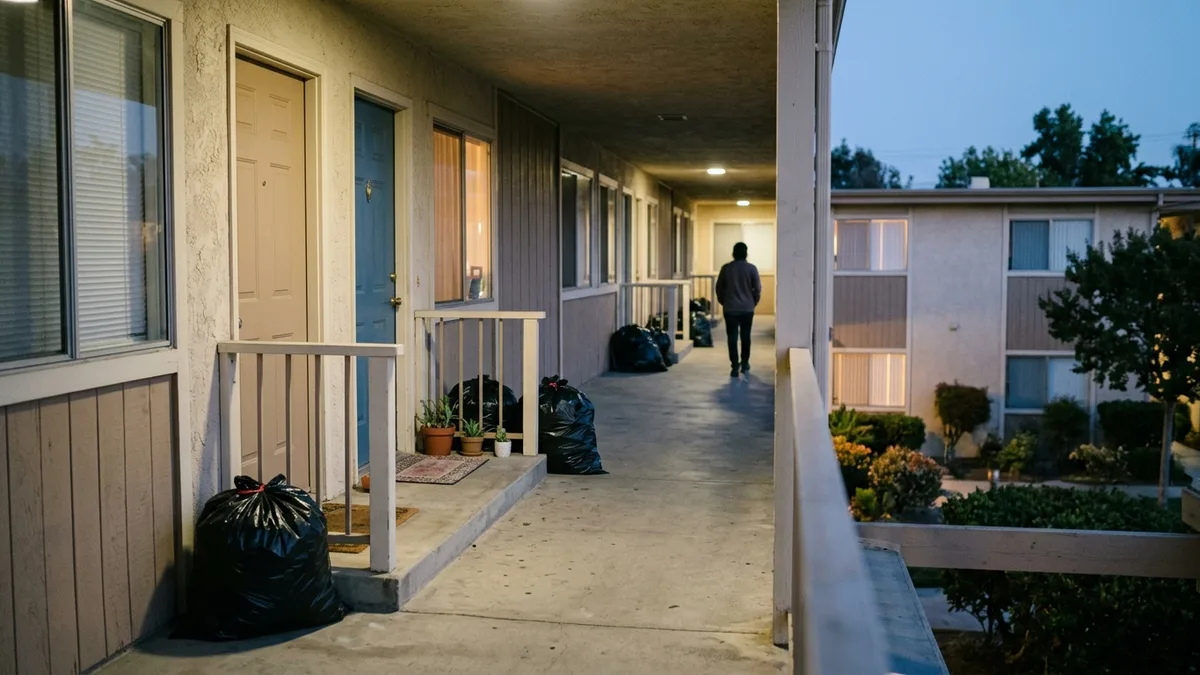
Doorstep-to-Dumpster valet trash is a scheduled service in which a technician collects bagged trash from each door in the evening and carries it to the community dumpster or compactor. Residents set the bag out; collection and photo documentation happen without a reminder from your office.
Backdoor-to-Curbside Bin Management
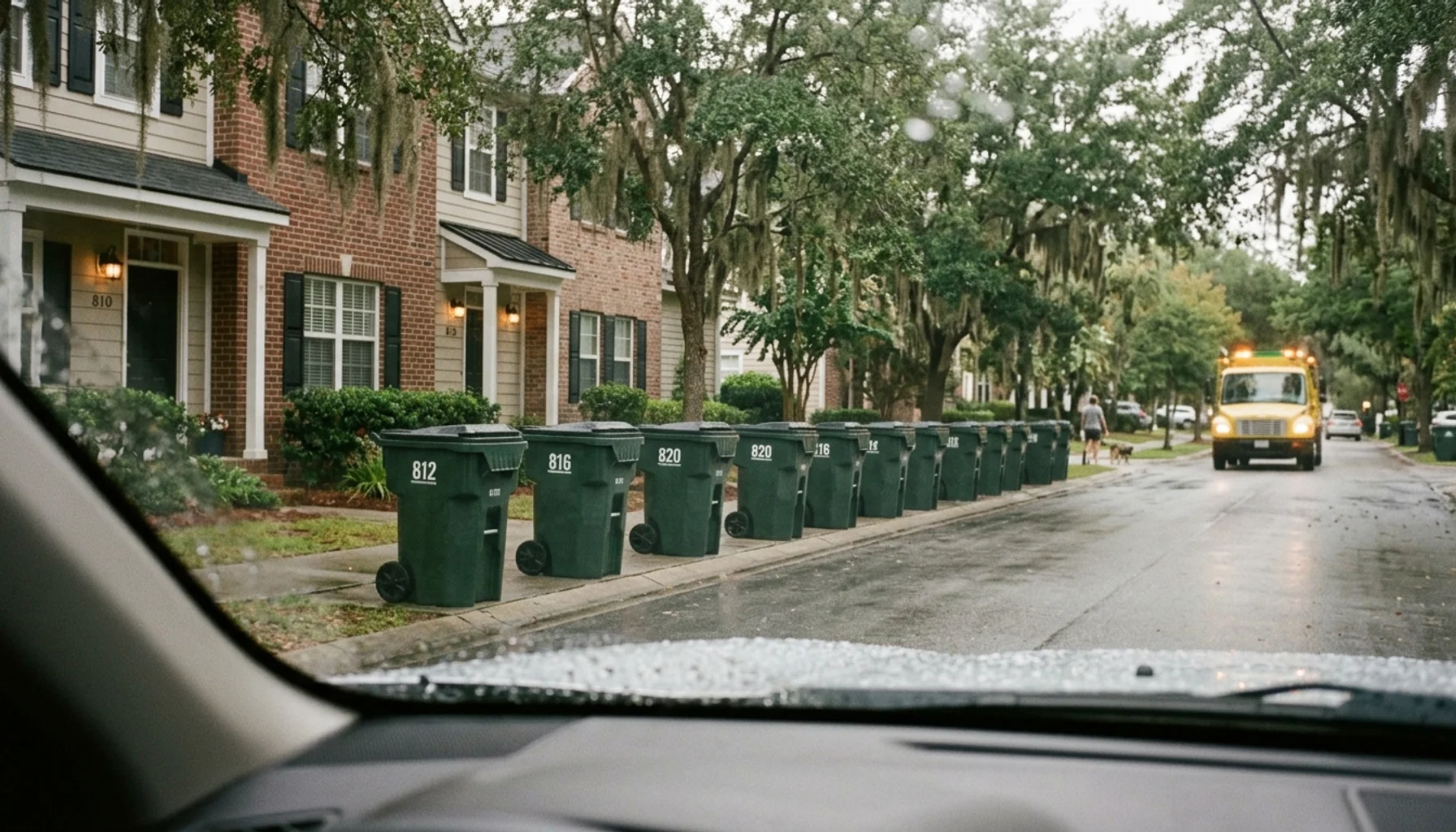
Backdoor-to-Curbside bin management means bins are rolled from a back door, garage, or side yard to the curb on collection day and returned afterward. It suits build-to-rent communities, HOA neighborhoods, and single-family rentals where bins left at the curb for days wear down the streetscape.
Turnover Trash Handling
Turnover trash handling clears the waste a departing resident or guest leaves behind before the next arrival. For a short-term rental, that window can be a matter of hours. For an apartment, it keeps the make-ready sequence moving, because painters and cleaners cannot start in a unit still holding bags and boxes.
Bulk Item Removal
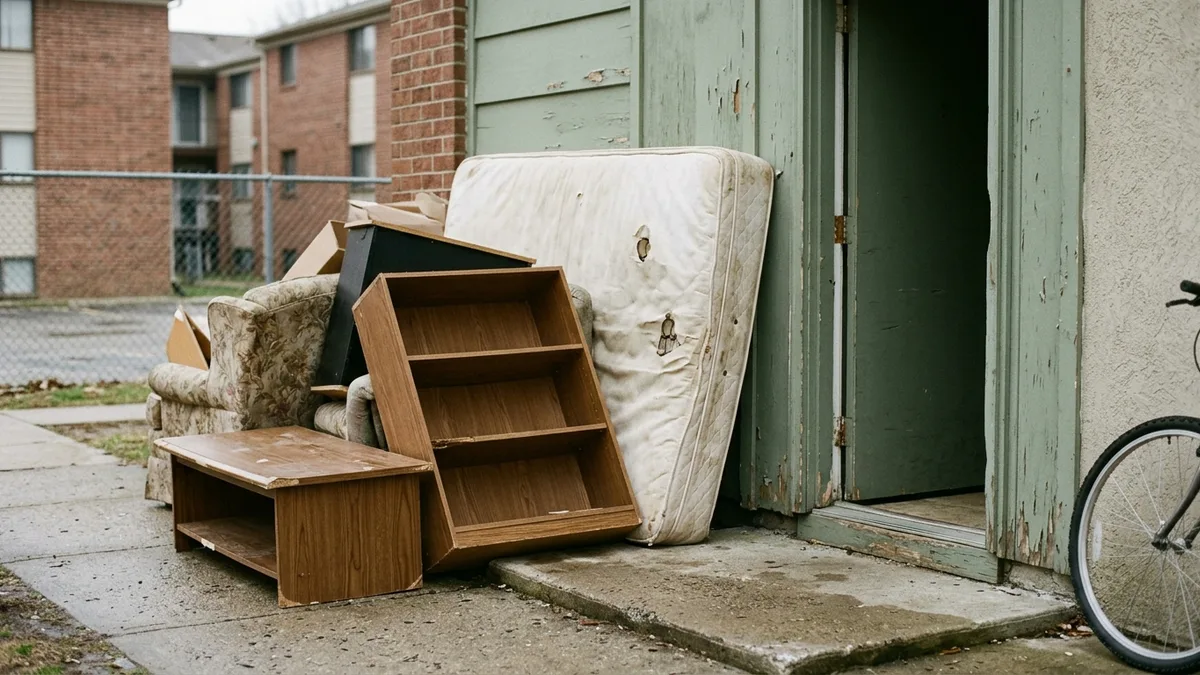
Bulk item removal covers furniture, mattresses, appliances, and move-out debris that will not fit a regular pickup. It fits into the make-ready calendar between move-out and the next move-in. Pricing questions are best sent to a call, since load size and access change every quote.
On-Demand Property Waste Support
On-demand property waste support handles the non-routine: overflow around a dumpster after a busy move-out weekend, debris after a storm, or a lease-up surge. It is the flexibility layer that keeps a one-off problem from turning into a resident complaint.
How Does Trash Collection Work in an Apartment Community?
Apartment trash collection is the system that moves household waste from each unit to a shared dumpster or compactor and then onto a hauler's truck. Most communities use one of two models: residents carry their own bags to a central container, or a valet service collects from each door on a set schedule.
The first model costs the least and shifts all the effort to residents. It works well for small garden-style properties with containers close to every building. It breaks down at larger communities with third-floor walk-ups, where bags pile up on landings and in breezeways between trips.
The second model, valet trash, removes that trip entirely. Collection happens in the evening, so the bags are gone before morning foot traffic.
Climate matters here. In North Charleston, summer heat and humidity turn an overflowing dumpster into a smell problem within a day or two. That timeline is why many managers near the Rivers Avenue corridor treat container overflow as an urgent request rather than something that can wait for the next scheduled pickup.
How Does On-Demand Property Waste Removal Work Step by Step?
On-demand property waste removal is a request-based service: you tell the vendor what needs to go and where it sits, and a crew clears it outside the regular route. The workflow is short when you prepare the right details, and slow when the vendor has to ask follow-up questions after you call.
- Define the job. Note the property address, the unit or common area, and the type of waste: furniture, mattresses, appliances, move-out debris, or dumpster overflow.
- Describe access. Flag stairs, gates, elevator limits, and any spot where a truck cannot park close to the items.
- Stage the items. Ask your maintenance team to gather what they can in one location, which shortens the visit.
- Request the quote. Some providers offer quotes Monday through Friday for all property types.
- Confirm documentation. Ask for photo proof of the cleared area and keep it with the work order.
For recurring needs such as nightly valet service, the same call sets up the schedule and the service window, plus the way your office reaches the team when something changes. Communities in Mount Pleasant, on Daniel Island, and in North Charleston follow the same process.
Which Service Fits: Valet Trash, Bulk Pickup, Junk Crew, or Roll-Off Dumpster?
Choosing between waste services depends on how much volume you have, how easily a crew can reach it, and how urgent the problem is. A recurring valet program suits steady daily volume, while bulk pickup and cleanout crews suit one-time spikes that a routine route was never built to handle.
| Service type | Best for | Typical trigger | Scheduling | What to confirm |
|---|---|---|---|---|
| Nightly valet trash (Doorstep-to-Dumpster) | Multifamily and build-to-rent communities | Daily household waste, cluttered breezeways | Recurring, nightly | Service window, photo proof, missed-pickup policy |
| Bin management (Backdoor-to-Curbside) | Single-family rentals, HOAs, select homeowners | Bins left at the curb, forgotten pickup days | Recurring, tied to collection day | Return of bins, coverage by neighborhood |
| Turnover trash handling | Short-term rentals and apartment make-ready | Resident or guest departure | Event-based, between stays | Response window, access instructions |
| Bulk item removal | Move-outs, evictions, furniture dumping | Items too large for regular pickup | On request or scheduled | How load size is measured and billed |
| Roll-off dumpster rental | Renovations and full property cleanouts | Large debris volume over several days | One-time rental | Whether your vendor coordinates it or a separate hauler is needed |
Our recommendation: do not use a roll-off container for a single unit's leftover furniture, and do not rely on valet trash to clear a bulk pile. Matching the service to the problem is the cheapest decision you will make all year.
What Does Photo Verification Prove About a Service Visit?
Photo verification is a time-stamped image captured at the point of service that documents a task was completed at a specific door, bin, or dumpster area. It replaces the question "did they come?" with a record you can check, forward to an owner, or use in a vendor review.

Some providers photo-verify every service visit. For you, that means a resident complaint can be answered with evidence in minutes instead of a day of phone calls.
Photos have limits. They prove the visit happened and the area looked clear at that moment; they do not prove a resident followed the rules afterward. Pair verification with clear resident guidelines, and review the reports on a regular cadence rather than only after complaints arrive.
What Is the Minimum Charge for Junk Removal, and What Drives Cost?
A minimum charge is the lowest fee a hauler bills for a visit, regardless of how small the load is. The figure varies by provider, so any number you read online is an estimate; the reliable answer comes from a written quote tied to your property and your items.
Several factors move the price. Load size comes first. Access follows: a third-floor walk-up with no elevator takes more labor than a ground-floor patio, and a gated community with a tight loading zone can add time at every stop. Item type matters too, because a mattress or a refrigerator costs more to handle than a bagged pile of clothing. Service frequency, unit count, and contract length round out the list. Ask whether the vendor bills by the estimated load or the actual load removed, and get the answer in writing.
For recurring service, volume pricing generally improves as unit counts rise, which is why scale matters in a vendor choice. A 300-unit community that signs a nightly valet agreement spreads route time across many doors, while a ten-unit property pays more per door for the same visit.
Homeowners follow a simpler structure: can-to-curb service starts from $49 per month in select Charleston neighborhoods. For commercial properties and bulk work, quotes come on a call, and a good vendor never guesses a price for a pile it has not seen. If you can send photos of the items and the access path before the call, the quote comes back faster and with fewer surprises on the day of the visit.
What Should a Service Agreement Include Beyond Price?
A waste service agreement is the written contract that defines what the vendor will do, when, and how you hold it accountable. Price is one line. The clauses that protect you are the operational ones that most vendor pages never explain.
- Response windows: how quickly the vendor responds to an on-demand request, and what counts as urgent. A Friday-afternoon overflow call should have a different answer than a Tuesday-morning one.
- Missed-pickup remediation: who fixes a missed visit, how fast, and whether you are charged.
- After-hours escalation: the named contact when overflow happens on a weekend.
- Prohibited materials: hazardous waste, paint, batteries, and other items that need special handling.
- Disposal documentation: proof of where material goes, including any recycling destination.
- Insurance proof: a current certificate, which you should verify with your own carrier.
Industry groups such as the National Apartment Association publish resources on vendor management that help you build a scorecard. Confirm local rules on bulk pickup and bin placement with the City of North Charleston or your county's environmental management office, since those rules change.
Also ask how the vendor handles contract changes. If you add a building mid-year or a community sells, you want a clear process for adjusting the unit count and the monthly rate without renegotiating the whole agreement. Put the notice period for cancellation in writing, and note who at the vendor signs off on service changes.
How Do You Coordinate Residents, Access, and Billing?
Waste coordination is the work of aligning residents, building access, staging locations, and billing responsibility so a removal request moves from call to completion without delays. Most failed pickups trace back to one of those four, not the hauler.
Start with resident communication. Send move-in and move-out guidance covering when bags go out, where bulk items are staged, and what to do about items too large for regular service. Short, plain language works better than a long policy document.
Next, settle access. Gate codes, parking, and elevator reservations should be in the work order, not left to a phone call on the day. A crew that arrives at a locked gate costs you a second visit.
Finally, decide who pays. Whether bulk dumping by a resident is charged back to that resident depends on your lease terms and local law. Check your lease language with qualified counsel rather than assuming. A related question, trash reimbursement, is covered in the FAQ below.
Which Properties Get the Most From On-Demand Waste Support in the Charleston Area?
On-demand waste support delivers the most value at properties with frequent resident transitions or irregular volume. Communities in Mount Pleasant, on Daniel Island, and across North Charleston fit that profile, as do rental portfolios near downtown and the beaches.
Multifamily communities gain from nightly service plus bulk support at move-out. Build-to-rent neighborhoods need bin management and a clean streetscape during lease-up. Short-term rental operators need turnover handling between stays, because a missed same-day cleanout can push back a guest check-in.
HOAs have a different goal: HOA boards want fewer violation letters, and a vendor that clears move-out debris on schedule helps prevent them.
Coverage varies by neighborhood, so confirm service on a call.
Valet service is not right for every property. A ten-unit community with one compactor next to the parking lot may not need nightly collection. A 300-unit community with third-floor walk-ups usually does.
What Should You Do Next to Choose On-Demand Trash Removal for Your Portfolio?
The on-demand trash removal services available for property managers in 2026 range from nightly valet collection to bin management, turnover handling, bulk removal, and flexible property waste support. Match each service to a specific problem, write the response terms into the agreement, and ask for photo proof on every visit. Some providers build programs around that approach for properties of 10 to more than 1,000 units.
If this guide raised questions about your own property, schedule a call with a provider and talk through what nightly valet trash and on-demand support could look like for your community. Many teams take quote requests Monday through Friday for all property types.
Frequently Asked Questions
What is valet trash service?
Valet trash service is a scheduled, door-to-dumpster collection in which a technician picks up bagged trash from each resident's doorstep and carries it to the community's dumpster or compactor. Residents leave their bags outside the door at night. Photo-verified visits let you confirm the work was done.
What is trash reimbursement for apartments?
Trash reimbursement is a charge that lets an apartment community recover some or all of the cost of its trash service, often as a monthly line item on the lease. Terms differ by property and lease. Read your lease to see how the fee is described, and ask your management office if the wording is unclear.
What happens if you miss trash day?
If you miss trash day, you generally hold the bagged trash until the next scheduled collection, and you should keep it sealed and out of the weather. Check your municipality's guidance for any extra pickup options. Homeowners can avoid the problem with can-to-curb service, which brings bins out and back for you.
What is included in trash pickup?
Standard trash pickup covers household waste bagged and placed in the designated container or at the designated spot. Items like furniture, mattresses, appliances, and construction debris are usually excluded and need bulk removal. Ask your property manager or provider what is included, since coverage differs by property and contract.
What are the best valet trash services for apartments?
Some providers offer nightly Doorstep-to-Dumpster valet trash with photo-verified visits for apartment communities across the Charleston area, scalable from 10 units to more than 1,000. When you compare any provider, look at the service window, documentation, missed-pickup policy, and how the vendor handles bulk items and turnovers.
Which trash valet companies serve Mount Pleasant, SC?
Several providers serve Mount Pleasant, along with North Charleston, Charleston, Isle of Palms, James Island, Daniel Island, Summerville, Johns Island, and Sullivan's Island. Coverage can vary by neighborhood and property type, so confirm service on a call before anything is scheduled.
How can property managers request a valet trash quote?
Property managers can request a quote from a provider Monday through Friday, for any property type. Have your address, unit count, layout details, and desired service type ready. A short call covers service options, scheduling, and pricing for your community.
How much does valet trash cost for a homeowner in Charleston?
Homeowner can-to-curb and valet service starts from $49 per month in select Charleston neighborhoods. Availability depends on your address, so confirm it on a call. Commercial and multifamily pricing is quoted separately based on the property.
Content powered by inkSTR.co