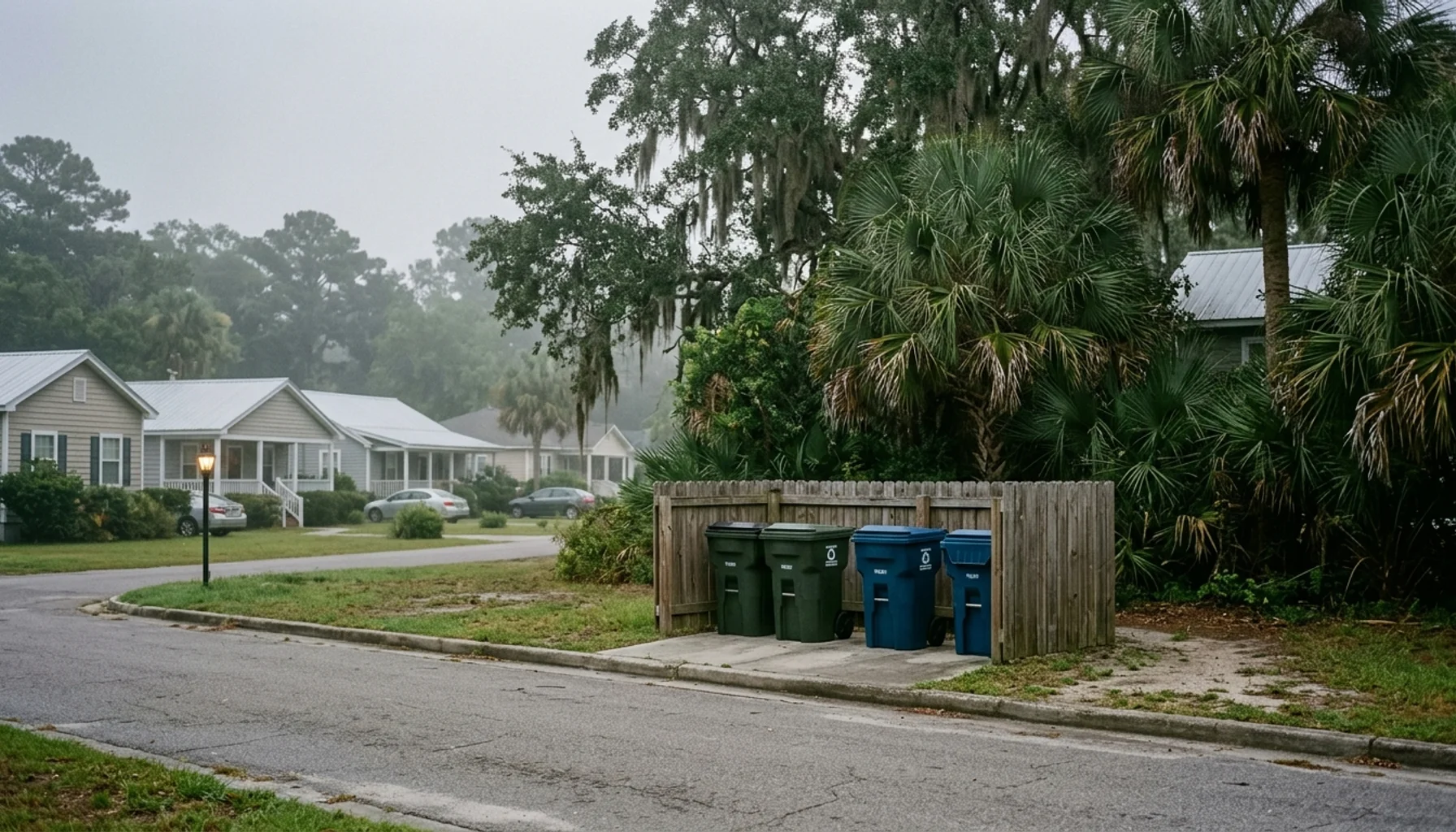
An HOA's waste and cleanliness rules should include approved container standards, designated storage locations, curb set-out and removal windows, recycling preparation requirements, prohibited materials, bulk-item procedures, shared-dumpster etiquette for attached communities, and a documented enforcement process with clear escalation steps. Without all eight pieces, boards end up enforcing inconsistently and residents ignore the rules.
Key Takeaways
- A complete HOA waste policy covers eight core categories: containers, storage, timing, recycling, prohibited items, bulk pickup, shared-dumpster rules, and enforcement.
- Container storage rules typically require bins in a garage, behind fencing, or in an approved enclosure, out of street view except on collection day.
- Set-out windows commonly follow a pattern like bins out no earlier than 12 hours before the 6:00 a.m. collection window and removed same-day, with placement kept a set distance from mailboxes and fixed objects.
- Many multifamily and community residents cite cleanliness standards as a key factor in renewing or renting.
- Enforcement should distinguish courtesy notices from formal violations, require photo documentation, and define who pays for cleanup when a resident fails to comply.
- Charleston-area HOAs on James Island, Johns Island, and Daniel Island increasingly pair written rules with a managed trash can concierge service to make compliance automatic rather than aspirational.
Every HOA board on James Island or across the greater Charleston metro eventually hits the same wall: the covenants say residents must keep the community "clean and orderly," but nobody wrote down what that actually means for a trash can. Vague language creates disputes. A resident points to the rule, the board points back, and nothing changes except the growing pile of complaint emails.
At Trash Day Made Easy, we work with HOA boards and community managers across Charleston, North Charleston, and the surrounding islands who are rewriting their waste sections from scratch in 2026, often after a code enforcement letter or a wave of resident complaints forced the issue. Associations that spell out specific, measurable rules have far fewer disputes than associations relying on general "maintain a neat appearance" language.
This guide breaks down what belongs in a waste and cleanliness policy, using the categories that hold up under actual enforcement rather than the ones that sound reasonable in a board meeting. It also covers what most published HOA guides skip: how to reconcile your rule with municipal collection contracts, how to build a real enforcement workflow, and how to handle illegal dumping in common areas.
What Container Standards Should an HOA Require?
An HOA container standard is a written specification defining approved bin size, color, lid type, labeling, and the maximum number of containers permitted per household. Specify these details explicitly rather than leaving "appropriate containers" open to interpretation, since ambiguity is the most common source of enforcement disputes.
A strong container rule addresses four elements. First, container type: rigid, sealed hard-plastic bins with secure lids, not open barrels or cardboard boxes that attract pests. Second, size limits tied to what the municipal hauler or franchise contractor actually services, since a bin too large for the truck's automated arm creates its own problem. Third, the number of containers allowed per unit, typically one trash and one recycling bin unless the household has documented additional need. Fourth, condition standards: cracked, faded, or foul-smelling bins should be replaced. Recycling bins deserve their own line item. Some association examples specify a bin of a particular color or gallon size dedicated exclusively to recyclables, with a note that garbage placed in the recycling bin will not be collected. That distinction matters because contamination is a top reason municipal recycling programs reject entire loads.
For HOA communities on Johns Island and Sullivan's Island where bins sit close to shared walkways, condition standards also protect resale value and community reputation.
Where Should Trash and Recycling Containers Be Stored Between Pickups?
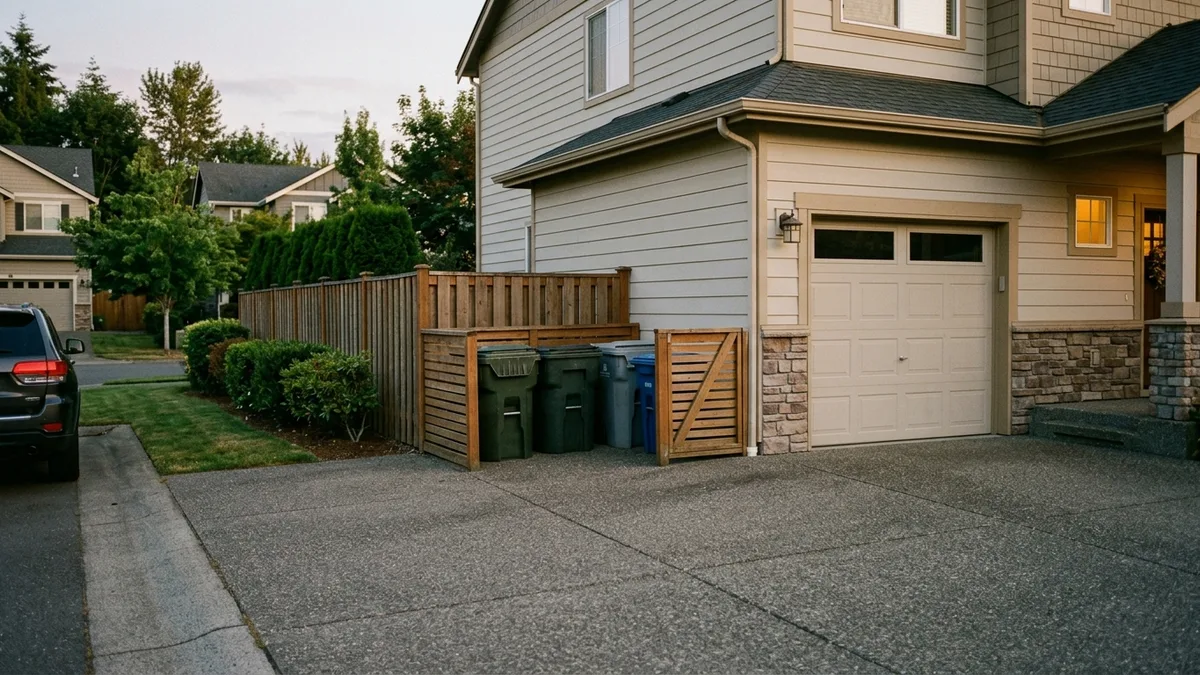
Container storage rules require bins to be kept out of public view, typically inside a garage, behind a fence, or within an approved enclosure, except during the permitted set-out window. This single requirement resolves more curb appeal complaints than any other line in a waste policy.
Some association policies go further, requiring bins be stored behind the rear plane of the home against the structure itself, with storage in front of or beside the house or garage treated as a violation unless the resident installs approved screening, such as lattice or a dedicated enclosure. That level of specificity prevents the common argument that a bin "isn't really visible from the street." For attached housing, townhome rows, and communities without individual garages, an HOA needs an alternative: a designated storage area, a required screening structure, or a managed service that removes the storage question by handling the bin's movement on the resident's behalf.
This is where many boards on Daniel Island and in build-to-rent communities near the airport corridor have shifted to a trash can concierge arrangement. A concierge service moves bins from their storage spot to the curb and back, so storage compliance becomes automatic instead of something the board has to police unit by unit.
What Are the Curb Set-Out and Removal Time Windows?
A set-out window is the specific time range during which residents may place bins at the curb, paired with a removal deadline requiring bins to be brought back in after collection. Community examples show associations setting bins out no earlier than 12 hours before a 6:00 a.m. pickup, commonly the evening before a Thursday collection, and requiring same-day removal once the truck has passed.
Distance specifications matter as much as timing. One documented HOA standard requires bins to sit at least five feet from mailboxes and parked vehicles, while yard waste must be placed within three feet of the curb and at least three feet from any fixed object. These measurements exist for a practical reason: automated collection arms need clearance, and misplaced bins can block the truck's path or damage neighboring property. Placement rules should also prohibit containers from blocking sidewalks, driveways, or emergency-access routes at any time, not just during peak collection hours. For HOA communities near Mount Pleasant and the Historic District where narrow streets are common, this rule protects both pedestrian access and emergency vehicle clearance.
A rule with no removal deadline is functionally useless. If a resident can set a bin out Wednesday and never bring it back, the association has no compliance to enforce, and the curb starts to look like a permanent storage lot instead of a scheduled collection point.
What Recycling Preparation Rules Should the Policy Cover?
Recycling preparation rules specify how residents must sort, rinse, and package recyclable material before it reaches the curb or shared receptacle, and they exist because contamination causes entire loads to be rejected by municipal or franchise haulers. Association examples typically define acceptable paper products, such as newspapers and junk mail, while explicitly excluding greasy items like pizza boxes.
Beyond paper, most policies list flattened cardboard, aluminum and metal containers, and glass beverage containers as standard acceptable materials. Some jurisdictions, referencing county ordinances, require yard waste to be separated for recycling during specific months rather than year-round, so boards should confirm current local requirements before finalizing this section. A practical HOA rule states plainly: rinse containers before placing them in the recycling bin, flatten cardboard so it doesn't overflow the bin, and never bag recyclables in plastic unless the local hauler specifically allows it. Vague instructions like "recycle properly" give residents nothing to follow and give the board nothing to enforce.
As of 2026, several South Carolina municipalities have adjusted recycling contamination standards, so boards should verify current guidelines with their county's solid waste office or franchise hauler rather than relying on rules written five years ago.
What Materials Should Be Prohibited From Regular Collection?
Prohibited-material rules identify waste types that regular collection will not accept, including hazardous chemicals, automotive fluids, and large appliances, placing responsibility on the resident to arrange separate disposal. Leaving this category out of a policy is a common gap in HOA waste rules, and it's the gap that leads directly to abandoned mattresses and couches in common areas. The policy should name specific categories rather than a general "no hazardous waste" line. Paint, motor oil, batteries, propane tanks, tires, and construction or renovation debris from a resident's own remodeling project all fall outside standard residential pickup in most Charleston-area municipalities. Construction debris in particular gets missed constantly, since residents assume a home renovation dumpster and regular trash service operate under the same rules. They don't.
For bulk items like furniture, mattresses, and large appliances, the rule should specify whether the municipality offers a scheduled bulk pickup day, whether residents must call ahead to schedule it, or whether the HOA requires private removal at the resident's expense. Communities that skip this detail end up with couches sitting in breezeways for weeks, which is precisely the situation that triggers the most resident complaints during move-out season.
Because bulk removal timing is a chronic pain point, some boards on James Island and in build-to-rent communities have added on-demand bulk item removal as a standing service option rather than leaving it to individual residents to figure out.
How Should Shared Dumpsters and Trash Rooms Be Managed?
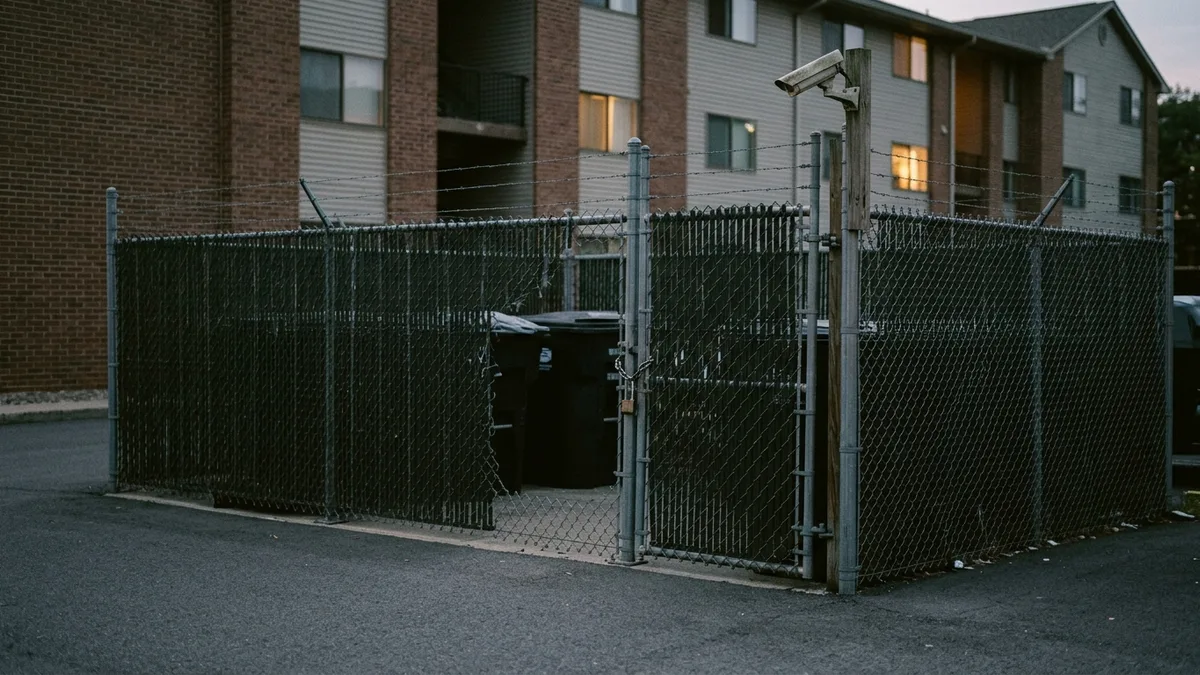
Shared-dumpster and trash-room etiquette rules govern how residents in attached or multi-unit HOA buildings use common waste infrastructure, covering bag closure, chute usage hours, and enclosure access. These rules matter most in condo-style HOAs and townhome communities where a single dumpster or trash room serves dozens of households instead of one bin per door. A functional shared-dumpster policy specifies that all bags must be tied closed before disposal, that residents cannot leave loose trash on the ground beside an overflowing dumpster, and that enclosure gates or trash room doors must be closed and latched after each use. Enclosures with locking bars and security cameras, increasingly common in multifamily and HOA settings across North Charleston, reduce both overflow and unauthorized dumping by non-residents.
Boards should also define who is responsible when a shared dumpster overflows before the next scheduled pickup. Is it the property manager's job to call for an extra pickup, or does the HOA need an on-demand vendor relationship for exactly this situation? Communities without a documented answer tend to let overflow sit for days, creating odor and pest problems that generate the highest volume of resident complaints of any waste-related issue.
What Are the Most Common HOA Violations Related to Waste?
The most common HOA waste violations include bins left visible at the curb past the removal deadline, bins stored in front of the garage instead of an approved location, overflowing containers, loose trash outside a dumpster enclosure, and bulk items left at the curb without a scheduled pickup. These five categories account for the overwhelming majority of waste-related complaints across community associations. Set-out timing violations top the list because they are the easiest for neighbors to notice and the easiest for residents to forget. A bin left at the curb three days after collection is a visible, dated violation that practically documents itself. Storage location violations rank second, particularly in communities where residents keep bins beside the garage door year-round rather than moving them in and out on schedule.
Bulk-item violations create the most friction because they usually stem from a move-out, and move-out timing rarely aligns neatly with the HOA's bulk pickup schedule. A departing resident sets a mattress at the curb, the new resident arrives days later, and the item is still sitting there because nobody arranged pickup in between.
Recycling contamination is a quieter but increasingly cited violation as municipalities tighten what they'll accept. A single bag of regular trash mixed into a recycling bin can result in the whole bin being skipped by the hauler, which then reads to neighbors as a missed pickup rather than a contamination rejection.
How Should an HOA Handle Illegal Dumping in Common Areas?
Illegal dumping prevention combines physical controls, like locked or access-restricted dumpster enclosures, with monitoring tools such as security cameras and posted signage identifying the area as private property with enforcement authority. This is an area most published HOA guides skip entirely, yet it's a growing concern for associations with shared dumpsters accessible from a public street. A locked or key-fob-restricted enclosure prevents non-residents from using the community's dumpster as a free disposal option, a problem that disproportionately affects HOAs near commercial corridors or high-traffic roads. Camera coverage, even a single unit aimed at the enclosure entrance, gives the board documentation to pursue enforcement or, in serious cases, refer the matter to local code enforcement.
Boards should also maintain an incident log recording the date, description, and photo of each dumping event. Without a log, patterns are invisible. With one, a board can identify whether the issue is chronic resident non-compliance or an outside party using the property, which changes the entire response strategy. Coordination with local code enforcement becomes far more effective when the HOA can present a documented pattern rather than a single complaint.
How Should Enforcement and Fines Actually Work?
An effective HOA enforcement workflow separates informal courtesy notices from formal violations, requires photo documentation before any fine is issued, and defines a clear escalation path for repeat offenses. This structural piece is where most HOA waste policies fall apart in practice, even when the underlying rules are well written, because a rule without a fair enforcement process invites disputes and, in some cases, legal challenges. A workable process looks like this: a first offense triggers a courtesy notice with a photo and a specific description of the violation, giving the resident a defined window to correct it. A second offense within a set timeframe moves to a formal written violation, which may carry a fine. Repeat violations escalate further, potentially including the association's right to remove the item and charge the cost back to the homeowner. Some municipal ordinances outline penalty structures for waste violations, so boards should confirm their state and local rules before setting fine amounts.
Photo documentation protects both sides. It gives the board evidence if a resident disputes a violation, and it gives the resident proof if they believe a notice was issued in error. This is the documentation standard that Trash Day Made Easy builds into every service visit: a timestamped photo confirming the work was completed, which HOA boards can point to if a resident claims their trash can concierge pickup was missed.
Does an HOA President Have More Power Than a Board Member on Waste Policy?
An HOA president typically holds procedural authority, like running meetings and signing documents, but does not have unilateral power to create or enforce waste rules without board approval. Waste and cleanliness policies are governance decisions that generally require a board vote, not a single officer's discretion, though bylaws vary by association and state. In practice, this means a president cannot personally decide to fine a resident for an overflowing bin or unilaterally change the curb set-out time without the issue going through the board's normal process, whether that's a vote at a meeting or a documented committee decision. Associations that let one person informally enforce waste rules tend to see selective, inconsistent enforcement, which becomes a legal liability if a resident later argues the rule was applied unevenly. Boards should document who has authority to issue violation notices, whether that's the property manager, a compliance committee, or a specific officer, so enforcement doesn't hinge on one person's personal judgment calls.
What Are the Signs of a Dysfunctional HOA Board When It Comes to Waste Rules?
Signs of a dysfunctional HOA board on waste issues include rules that exist on paper but are never enforced, selective enforcement against specific residents, and chronic overflow or dumping problems that persist year after year without a structural fix. These patterns typically point to a governance gap, not a resident behavior problem. A board that only responds to waste complaints reactively, addressing each one individually rather than referencing a written policy, is signaling that no real system exists. Similarly, a board that enforces rules against one household but ignores identical violations elsewhere in the community creates the kind of inconsistency that erodes trust and invites disputes. The healthiest associations treat waste and cleanliness rules the same way they treat architectural standards: written, specific, and reviewed periodically as municipal contracts and local ordinances change. Boards struggling with this consistency often find that outsourcing the physical task resolves the enforcement gap far more effectively than writing a stricter rule ever could.
How Should HOA Rules Reconcile With City and County Waste Contracts?
An HOA's waste rules must work alongside, not against, the municipal or franchise-hauler contract that actually determines collection days, accepted materials, and container specifications for the area. This reconciliation step is one of the most commonly skipped parts of writing an HOA policy, and it's the reason well-intentioned rules sometimes conflict with what the hauler will actually do. Before finalizing a waste and cleanliness section, a board should confirm collection days and accepted container sizes with the relevant city or county solid waste department, since these can change and typically differ between North Charleston, Charleston proper, Mount Pleasant, and unincorporated areas of the county. A board that writes "bins out no earlier than Wednesday evening" without confirming the actual Thursday collection day with the current hauler is setting residents up to violate a rule that no longer matches reality. Some counties also mandate seasonal recycling separation requirements or specific yard-waste handling windows tied to state or county ordinance, separate from anything the HOA itself decides. Boards should treat the municipal contract as the floor, then build HOA-specific standards, like storage and curb appeal rules, on top of it rather than around it.
How Should an HOA Accommodate Residents Who Cannot Move Their Own Bins?
Reasonable accommodation for waste rules means an HOA provides an alternative compliance path, such as assisted bin service, for residents who are physically unable to move containers to the curb and back due to disability or mobility limitations. This is a gap that almost no published HOA waste guide addresses directly, yet it comes up in nearly every community with an aging resident population. A rigid "resident must place bin at curb" rule without an accommodation option creates a fairness problem and a potential legal exposure issue for the association. Boards should build in a documented process: a resident submits a request, ideally with supporting documentation, and the association either designates a volunteer, a staff member, or a paid service to handle that unit's bin movement going forward. This is precisely the scenario where a managed trash can concierge service earns its keep for an entire association, not just one household. Rather than building a one-off accommodation for each request, some Charleston-area HOAs on Sullivan's Island and James Island have shifted the entire community to a concierge model, removing the physical task from every resident equally and sidestepping the accommodation question altogether.
What Hygiene and Odor Standards Should the Policy Set?
Hygiene standards for HOA waste policies define acceptable conditions for containers and collection areas, covering leaks, pest activity, odor, and overflow, along with who is responsible for remediation and by what deadline. Most HOA rule templates state that bins must be kept "sanitary" without ever defining what that means operationally, which makes the standard nearly impossible to enforce. A workable hygiene rule specifies that a leaking or visibly soiled container must be cleaned or replaced within a defined number of days, that a resident reporting a pest issue tied to a shared dumpster triggers an inspection within a set timeframe, and that persistent odor complaints near a shared enclosure require the property manager to arrange an extra pickup or cleaning rather than waiting for the next scheduled service. Boards increasingly pair these standards with a bin sanitizing service to address the hygiene half of the equation directly. Trash Day Made Easy partners with The Bin Boy, a Charleston-based bin cleaning and sanitizing service, because a clean container policy is only as good as the resident's willingness to clean the bin, which in practice is close to zero without a scheduled service behind it.
What New HOA Waste Requirements Should Boards Watch for in 2026?
HOA boards should stay current on evolving state and county recycling contamination standards, updated franchise-hauler contract terms, and municipal ordinance changes affecting bulk-item or yard-waste collection windows, since these shift periodically and directly affect what an association's waste rules can require. As of 2026, several South Carolina municipalities have refined recycling acceptance criteria, so a policy written even two years ago may already reference outdated material lists. Rather than relying on memory or an old copy of the rules, boards should confirm current requirements directly with their city or county solid waste office, or with their franchise hauler, before publishing an updated waste and cleanliness section. This is also a good moment for boards to revisit whether their current enforcement workflow, courtesy notice, formal violation, escalation, still matches how the board actually wants to operate in 2026, or whether it was copied from a template years ago and never revisited.
Data Snapshot: Core Components of a Complete HOA Waste Policy
The table below summarizes the eight core categories every HOA waste and cleanliness policy should address, along with the specific standard type each category typically defines.
| Policy Category | What It Should Define | Common Standard Type |
|---|---|---|
| Container specifications | Approved size, lid type, color, quantity per unit | Rigid, sealed, lidded containers only |
| Storage location | Where bins live between collections | Garage, fenced area, or approved enclosure, out of street view |
| Set-out timing | When bins may appear at the curb and when they must return | No earlier than 12 hours pre-collection; removed same day |
| Recycling prep | Sorting, rinsing, flattening requirements | Clean paper, flattened cardboard, rinsed containers |
| Prohibited materials | Hazardous, construction, automotive waste | Resident arranges separate disposal |
| Bulk items | Furniture, mattresses, appliances | Scheduled pickup or private removal at resident's expense |
| Shared dumpsters | Bag closure, gate access, chute hours | Locking enclosures, camera monitoring |
| Enforcement | Notice types, documentation, escalation | Courtesy notice, then formal violation with photo evidence |
How Can HOA Boards Enforce Rules Without Constant Manager Follow-Up?
Boards reduce enforcement burden by shifting from resident-dependent compliance, where the outcome relies on someone remembering to move a bin, to a managed service model where bin movement happens automatically and is documented at every visit. This shift is the single biggest structural change we've seen work across the HOA communities Trash Day Made Easy serves on James Island, Johns Island, and throughout the Charleston metro. A written rule only works if someone enforces it, and enforcement takes real time: driving the community, photographing violations, sending notices, tracking repeat offenders. Boards volunteer or hire management for exactly this, and waste compliance often ends up consuming a disproportionate share of that limited time compared to other governance issues. Practical steps for boards revising their policy in 2026:
- Confirm current collection days, accepted materials, and container specifications with the city, county, or franchise hauler before finalizing any timing rule.
- Write measurable standards, specific distances and specific hours, instead of general language like "neat and orderly."
- Build a documented enforcement workflow with courtesy notice, formal violation, and escalation steps, plus photo documentation at each stage.
- Add a reasonable accommodation process for residents who cannot physically comply with bin movement requirements.
- Define hygiene remediation deadlines for leaks, odors, and pest issues tied to shared or individual containers.
- Install physical deterrents, like locking enclosures, signage, and cameras, for any shared dumpster accessible from outside the community.
- Consider a managed trash can concierge or valet trash arrangement for the whole community rather than enforcing individual compliance unit by unit.
Frequently Asked Questions
What is valet trash service, and does it apply to HOA communities?
Valet trash service is a scheduled collection model where a provider picks up waste directly from a resident's door or bin storage location rather than requiring the resident to haul it to a central dumpster or curb. Originally common in multifamily apartments, HOA communities with attached housing or townhomes increasingly use a similar backdoor-to-curbside model to handle bin movement on residents' behalf.
What is a trash can concierge service?
A trash can concierge service moves a resident's bin from its storage location, typically a garage or side yard, to the curb on collection day, then returns it to storage afterward. It differs from door-to-door valet trash because it manages the existing municipal or hauler pickup rather than replacing it, making it well suited to HOA and residential communities where the city or a franchise hauler still does the actual collection.
What should a resident do if they miss trash day?
If a resident misses the scheduled collection window, the bin should be brought back to its approved storage location rather than left at the curb until the next pickup, since most HOA rules prohibit curbside storage outside the set-out window. Residents in this situation should check whether their municipality or HOA offers a missed-pickup request line, or consider a managed concierge service that eliminates the risk of missing the window in the first place.
What is private garbage collection, and how does it differ from municipal pickup?
Private garbage collection refers to waste removal services provided by a company outside the city or county's standard municipal contract, often used for on-demand needs like bulk item removal or turnover cleanup that municipal pickup doesn't cover. HOA communities frequently pair municipal collection for routine trash with a private provider for bulk items, move-out debris, or bin management services that require more flexibility than a fixed weekly schedule allows.
What is trash reimbursement for an apartment or HOA community, and does it apply here?
Trash reimbursement typically refers to a fee structure where residents pay a monthly charge, either directly or built into HOA dues, that covers the cost of a valet or concierge waste service rather than residents managing collection themselves. In HOA communities, this is usually structured as a shared assessment or an optional add-on service rather than an individual reimbursement, and boards should clarify which model applies in their governing documents.
Who is responsible for cleaning up after an HOA waste violation?
Responsibility typically falls on the resident who caused the violation, whether that's an overflowing bin, improperly stored container, or abandoned bulk item, and most HOA governing documents allow the association to arrange cleanup and charge the cost back to the homeowner if the resident fails to act within the notice period. Boards should specify this chargeback authority explicitly in the written policy rather than assuming it's implied.
Can one HOA rule work for both single-family homes and attached townhomes in the same community?
Generally no. Single-family sections with individual garages typically need container storage and curb set-out rules, while attached townhome or condo sections sharing a dumpster need bag closure, enclosure access, and overflow rules instead. Associations with both housing types should write separate subsections addressing each configuration rather than a single generic policy.
How often should an HOA review and update its waste and cleanliness rules?
Most associations benefit from reviewing waste rules annually, or whenever the municipal or franchise-hauler contract changes collection days, accepted materials, or container specifications. A policy that hasn't been reviewed in several years is likely referencing outdated recycling material lists or collection windows that no longer match current service.
Conclusion: Building a Waste Policy That Actually Works
The strongest HOA waste and cleanliness policies in 2026 share the same structure: specific container standards, defined storage locations, measurable timing windows, clear recycling and prohibited-material lists, and a documented enforcement process that treats every resident the same way. Boards that write vague rules end up enforcing nothing; boards that write specific, measurable standards give themselves something to stand behind. The gap most policies miss isn't the rule itself. It's the follow-through. A well-written policy still requires someone to check compliance, document violations, and confirm every bin actually made it to the curb and back. That's the piece that consumes board volunteer time and creates the most resident friction, month after month.
Across the HOA communities Trash Day Made Easy serves on James Island, Johns Island, Daniel Island, and throughout the Charleston metro, the boards with the fewest complaints aren't the ones with the strictest rules. They're the ones who paired a clear written policy with a service that handles the physical work automatically.
If your HOA is rewriting its waste and cleanliness section this year, a trash can concierge program can turn every rule in this guide into something that happens automatically rather than something residents are asked to remember. Get started with Trash Day Made Easy and request a quote for your community, available Monday through Friday.
Content powered by inkSTR.co