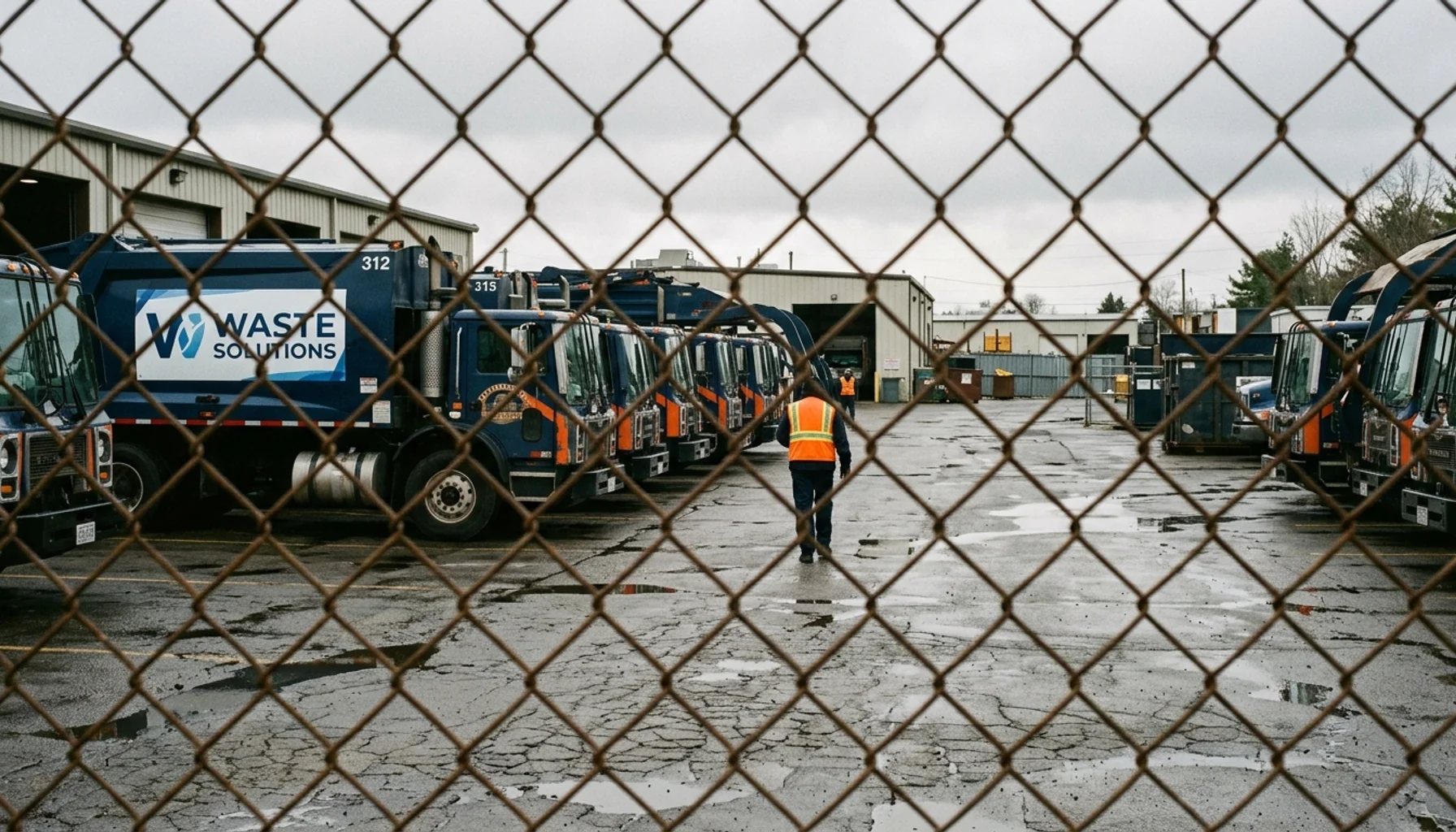
Air Capital Waste, the Wichita, Kansas hauler founded by longtime waste industry operator Jim Spencer, was acquired by national waste giant Waste Connections in a deal widely discussed among Wichita residents in local news coverage and community forums. Customers now fall under Waste Connections' billing, routing, and customer service systems rather than the original locally owned operation.
- Air Capital Waste operated out of an 8,000-square-foot facility at 3515 N Topeka St in Wichita, KS, on a five-acre lot capable of holding up to 20 trucks.
- The company was founded by Jim Spencer and built a reputation locally for residential and commercial trash and recycling service across the Wichita metro area, including Park City, KS.
- Waste Connections, a large national solid waste company, acquired Air Capital Waste, a transition covered by KWCH news and discussed extensively on community forums.
- Residential recycling was typically picked up every other week on the same day as trash, with some route exceptions.
- Commercial customers had access to front-end loading containers and recycling bins in 6-cubic-yard and 8-cubic-yard sizes, some with slant tops.
- Property managers and portfolio operators outside Wichita facing similar consolidation concerns can look to photo-verified, locally accountable models, like the one Trash Day Made Easy runs across Charleston, SC and Atlanta, GA, as an alternative worth understanding.
If you're a Wichita resident who searched "air capital waste" wondering why your bill changed, your driver changed, or your pickup day moved, you're not imagining it. A regional consolidation like this reshuffles routing systems, billing platforms, and customer service lines almost overnight. This guide walks through the acquisition timeline, what actually changed for customers, and how to evaluate whether your current waste provider still fits your needs in 2026.
We approach this from the operational side of the waste industry. At Trash Day Made Easy, we run a valet trash and waste management company headquartered at 4900 O'Hear Avenue in North Charleston, SC, and we've watched consolidation trends play out across multiple metro markets. The pattern with Air Capital Waste mirrors what happens whenever a locally owned hauler gets absorbed into a national platform: pricing structures shift, and customer service becomes less personal. Understanding what happened in Wichita is useful even if you live somewhere else entirely, because the same dynamic is playing out in dozens of mid-sized cities right now.
Did Air Capital Waste Get Bought Out?
Yes. Air Capital Waste was acquired by Waste Connections, according to reporting from KWCH news and discussions that circulated among Wichita residents following the announcement. The acquisition folded the locally founded hauler into a much larger national waste services company, a common outcome for independently owned trash operations once they reach a certain regional scale.
Specifically, the sale meant Air Capital Waste's existing customer base, residential and commercial accounts across Wichita and Park City, KS, transitioned to Waste Connections' operating systems. As a result, billing cycles, customer service phone lines, and in some cases collection days shifted to match Waste Connections' broader route network. For a company that started with a small local footprint, described early on as having between 2 and 10 employees, being absorbed into a national operator represents the kind of consolidation that has reshaped the residential trash industry across the country over the past decade.
Notably, this pattern isn't unique to Wichita. Local haulers get acquired by regional and national players constantly, and the terms of these deals rarely get published in full. What residents experience instead is a series of practical changes: a new logo on the truck, a new number to call, and sometimes a new price on the invoice.
When Did Air Capital Waste Get Acquired?
Air Capital Waste's acquisition by Waste Connections became public knowledge through local Wichita news coverage and was actively discussed by residents on community forums shortly after. While the exact closing date circulated informally among customers, the transition timeline followed the typical pattern for waste industry acquisitions: an announcement period, followed by a operational handoff where billing and routing systems migrate over several weeks to a few months.
During this window, customers often notice a lag between when the sale is announced and when actual service changes take effect. First, billing continues under the old name for a transition period. Then, invoices, driver assignments, and customer portals shift to the new parent company's systems. Additionally, holiday schedules and recycling pickup calendars sometimes get consolidated into the acquiring company's regional schedule, which can move your pickup day without much advance notice.
If you're still receiving invoices referencing "Air Capital Waste" or "Capital Waste Services" in 2026, it's worth calling to confirm which entity is now billing your account and confirm your current pickup schedule directly, rather than relying on old paperwork.
Who Owns Air Capital Waste Now?
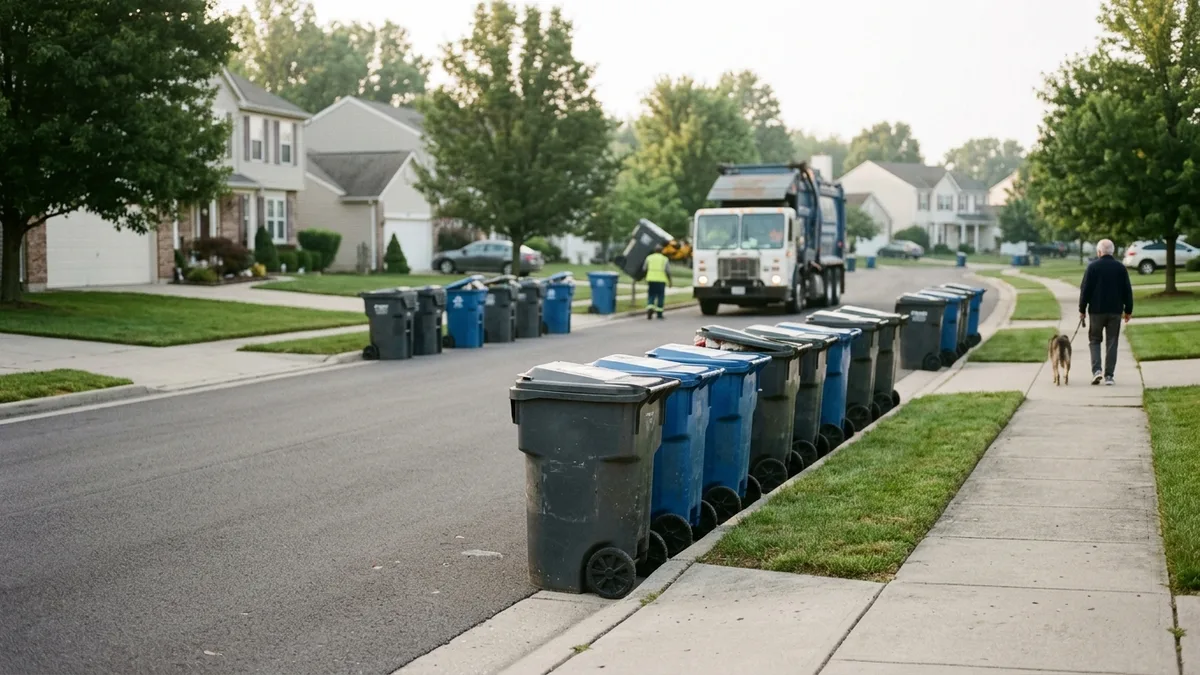
Waste Connections owns Air Capital Waste as of the acquisition. Waste Connections is one of the largest solid waste and recycling companies operating across the United States and Canada, and it has grown substantially through exactly this kind of acquisition strategy, purchasing regional and locally owned haulers and folding them into its broader network.
For context, the company that residents once called and knew by name, run by founder Jim Spencer with a facility at 3515 N Topeka St, no longer operates as an independent entity. Customer service, billing, and route planning are now handled through Waste Connections' corporate systems rather than a small local team. This is a common outcome when a founder-led hauler reaches a certain size: the operational infrastructure, the trucks, the routes, the facility on the five-acre Topeka Street lot, gets absorbed into a much larger corporate structure.
Some residents may also see references to "Waste Link Inc." or "Capital Waste Services" in old documentation or search results. These names reflect the layered history of ownership changes in the Wichita waste hauling market, and it's worth confirming your current provider directly if you're unsure who to call for service issues.
What Changed After the Waste Connections Acquisition?
The Waste Connections acquisition of Air Capital Waste changed billing systems, customer service contacts, and in some cases collection routes for Wichita-area customers. Specifically, residents who were used to calling a small local office now route service requests through Waste Connections' regional customer service infrastructure, which operates at a different scale entirely.
In practice, this means a few concrete shifts. First, the invoicing format changed, since trash service under the original company was prepaid with quarterly invoices issued the month before they were due; billing cycles under a new parent company may follow different terms. Additionally, payment methods that once ran through a single local phone line accepting Visa, Mastercard, or Discover may now route through a centralized payment portal or app.
Second, bulky item pickups and special collection requests, previously handled by calling a direct local number, now go through a national customer service system that may have longer hold times or different fee structures for extra pickups. Third, commercial accounts using front-loading containers may see contract terms renegotiated as Waste Connections standardizes its commercial offerings across the Wichita market.
None of this is unusual for an acquisition of this type. But it does mean customers should proactively confirm their new terms rather than assume nothing changed.
Are Prices Increasing After the Air Capital Waste Acquisition?
Price increases are common following waste industry acquisitions, though specific rate changes for individual Wichita accounts vary and are best confirmed directly with your current provider. When a large national company like Waste Connections absorbs a smaller regional hauler, standardizing pricing across a broader service territory typically follows within the first one to two billing cycles.
As a result, customers who signed up under Air Capital Waste's original rate structure may see their next quarterly invoice reflect updated pricing. This is a predictable pattern in the waste management industry broadly: independent haulers often price competitively to build market share, while larger acquiring companies frequently adjust rates to match their standard regional pricing tiers once integration is complete.
If your invoice increases, ask specifically what changed, whether it's a base rate adjustment, a fuel surcharge, a container fee, or a bundled recycling charge. Getting an itemized explanation is reasonable and most large waste companies will provide one on request. For property managers and portfolio operators watching similar dynamics unfold in other markets, this is exactly why locking in transparent, itemized quotes matters more after an acquisition than before one.
Where Does Air Capital Waste Operate and What Is the Service Area?
Air Capital Waste's original service area covered Wichita, KS and the neighboring community of Park City, KS, with residential and commercial trash and recycling collection across both areas. The company's operational hub sat at 3515 N Topeka St, a facility large enough to support a substantial local fleet.
Under Waste Connections' ownership, that service footprint likely remains active, since national operators typically retain existing route territories after an acquisition rather than shrinking coverage. However, the specific boundaries of who gets served, and on what day, are worth confirming directly if you've recently moved within the Wichita metro or if you've noticed schedule changes at your address.
Notably, some Wichita-area documentation also references an address at 5720 N Broadway Ave, which may reflect a separate facility or a related entity in the local waste hauling landscape. If you're trying to track down current service boundaries in 2026, contacting the provider directly remains more reliable than relying on older listings.
What Services Did Air Capital Waste Provide?
Air Capital Waste provided residential trash pickup, residential recycling, and commercial waste and recycling collection across the Wichita metro area. The company's residential recycling program typically ran every other week on the same day as regular trash pickup, though some routes had exceptions to that pattern.
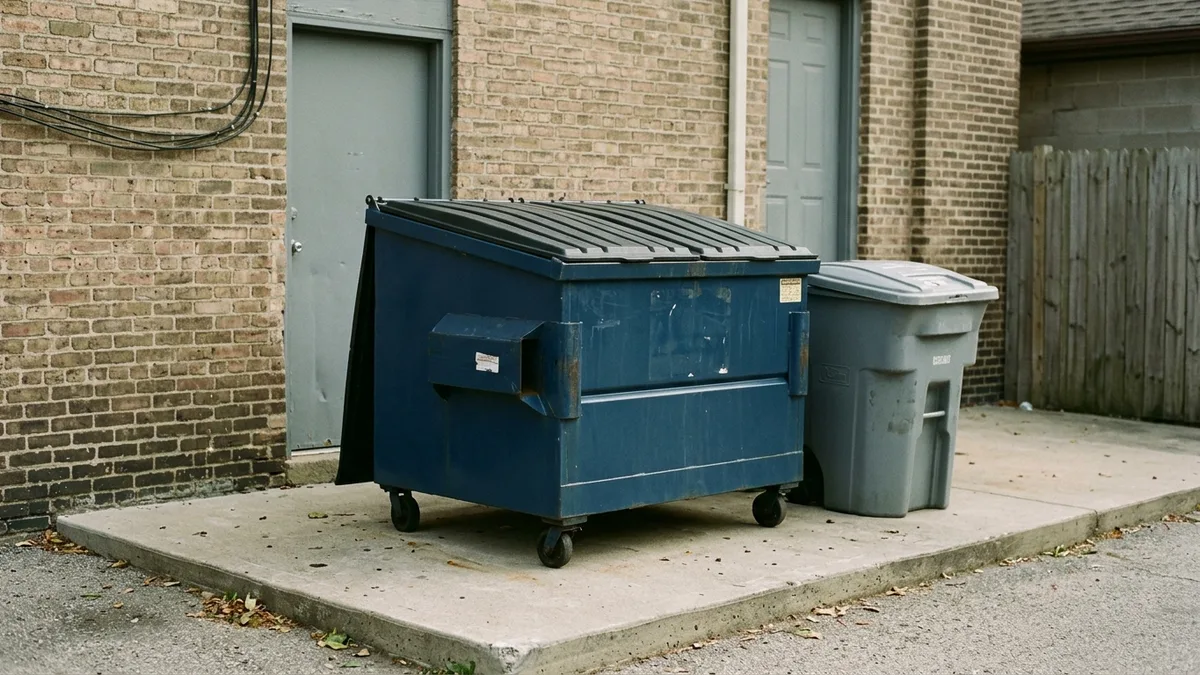
For commercial accounts, the company offered front-end loading containers in multiple sizes along with flexible pickup schedules tailored to business needs. Commercial recycling containers came in 6-cubic-yard and 8-cubic-yard sizes, some featuring slant tops for easier loading, and in certain areas, commercial recycling collection could run up to six days per week.
Additionally, the company handled bulky item and special pickup requests for an added fee, arranged by calling the local office directly rather than scheduling through an app or automated system, reflecting the smaller, more personal operational model typical of an independently owned hauler before a national acquisition changes the customer experience entirely.
How Can Customers Transition From Air Capital Waste to Waste Connections?
Transitioning from Air Capital Waste to Waste Connections requires customers to confirm their new account number, billing cycle, and collection schedule directly with the acquiring company. Specifically, start by locating your most recent invoice to identify which entity name currently appears on your billing statement.
Next, call the customer service number listed on that most recent invoice rather than any old number you have saved, since phone lines and departments frequently consolidate during an acquisition. Ask three specific questions: has your collection day changed, has your rate changed, and what payment methods are currently accepted. Previously, payment by phone using Visa, Mastercard, or Discover was standard with no added charge; confirm whether that still applies under the new ownership.
Finally, if you have autopay or a saved payment method on file, verify it transferred correctly. Billing migrations during acquisitions occasionally drop stored payment information, which can result in a missed payment notice through no fault of your own. Catching this early avoids late fees or, worse, a lapse in service.
What Are Alternative Trash Services in Wichita?
Alternative trash and recycling providers exist in the Wichita, KS market beyond Waste Connections, though the local hauler landscape has consolidated significantly in recent years as regional and national companies acquire independently owned operations like Air Capital Waste. Wichita residents comparing options should evaluate service reliability, pickup schedule consistency, and customer service responsiveness rather than price alone.
When comparing providers, ask about how missed pickups get resolved, whether bulky item removal is included or billed separately, and whether recycling runs on a fixed every-other-week schedule or a variable one. These operational details matter more day-to-day than the name on the truck.
For property managers, HOA boards, and portfolio operators anywhere navigating this kind of provider consolidation, whether in Wichita or in a market like Charleston, the underlying lesson is the same: verify service accountability directly rather than assuming continuity after an ownership change. This is precisely the gap that photo-verified, locally accountable waste operations exist to fill.
Waste Connections vs. Air Capital Waste: What Changed for Customers?
The core difference between Waste Connections and the original Air Capital Waste comes down to scale and personalization. Air Capital Waste operated as a locally founded hauler with a single Wichita facility and a smaller team, while Waste Connections operates as a large, publicly traded national solid waste company managing thousands of routes across multiple states.
| Factor | Original Air Capital Waste | Under Waste Connections |
|---|---|---|
| Ownership structure | Founder-led, locally owned | National publicly traded company |
| Customer service | Direct local office line | Centralized regional call center |
| Billing | Prepaid quarterly invoices | Standardized national billing systems |
| Service area | Wichita metro and Park City, KS | Likely retained, confirm directly |
| Special pickups | Call local office, added fee | Routed through national customer service |
As a result, customers trade a more personal, locally responsive experience for the operational stability and resources of a national parent company. Neither model is inherently better; it depends on what you value most, direct accountability from a local team, or the infrastructure and consistency of a larger operator. For multifamily and portfolio operators specifically, this trade-off is exactly why photo-verified, locally rooted alternatives like Trash Day Made Easy have gained traction: they combine documented accountability with the responsiveness of a locally based team.
Why a Locally Accountable Waste Provider Still Matters in 2026
A locally accountable waste provider is a company that maintains direct oversight of every collection route, documents service completion, and keeps a responsive local team available rather than routing every issue through a national call center. This distinction matters most for property managers and portfolio operators who need documented proof that service happened, not just an assumption that it did.
This is exactly where Trash Day Made Easy operates differently. Headquartered at 4900 O'Hear Avenue in North Charleston, SC, the company provides doorstep-to-dumpster valet trash collection and backdoor-to-curbside bin management for multifamily communities, build-to-rent developments, short-term rental properties, HOAs, and residential homeowners across Charleston, SC and Atlanta, GA. Every single collection visit is photo-verified at the door, giving property managers documented confirmation without needing to follow up or issue reminders.
Specifically, this photo-verification model solves the exact accountability gap that surfaces whenever a locally owned hauler gets absorbed into a larger corporate structure, as happened with Air Capital Waste. Trash Day Made Easy is purpose-built for scalability, servicing portfolios from 10 units up to more than 1,000 units, while maintaining a consistent service standard at every single address in the portfolio. That's a meaningfully different operational promise than a national billing system managing a route it inherited from an acquisition.
Beyond routine nightly collection, the company also handles turnover trash between residents or guests, bulk item removal, and move-in and move-out support, which matters enormously for short-term rental operators managing properties near the Charleston Historic District, Isle of Palms, and Sullivan's Island, where a single missed pickup between guests can trigger a bad review. Build-to-rent operators near Daniel Island and the airport corridor face a similar challenge with frequent resident transitions, and a photo-verified nightly schedule removes that coordination burden entirely.
Residential homeowners in select Charleston-area neighborhoods can access this valet trash service starting from $49 per month, and the company partners with The Bin Boy, a Charleston-based bin cleaning and sanitizing service, to extend the full range of waste care beyond collection alone. Compared to larger national operators like Valet Living, which offers scale but less local responsiveness, or newer entrants like Urban Valet Waste and EasyTrash Valet, which focus narrowly on specific property types, Trash Day Made Easy is built to cover the full range: nightly valet, bulk removal, turnover trash, and full waste operations across an entire portfolio.
Does It Cost Money to Throw Things Away at the Dump?
Yes, most municipal landfills and transfer stations charge disposal fees, typically calculated by weight or by load size, and these fees vary significantly by city and by material type. In Wichita, as in most metro areas, standard residential trash service covers routine weekly pickup, but bulky items, construction debris, and large hauls beyond the normal service scope usually require a separate trip to a transfer station or an added fee through your hauler.
This is exactly why bulky item and special pickup services exist as an add-on rather than a standard inclusion: haulers pass through the disposal cost plus a service fee for the extra labor and trip. Under the original Air Capital Waste model, customers called directly to arrange these pickups and paid an additional fee. Under Waste Connections, similar special pickup requests likely still carry additional charges, standardized to the parent company's rate structure.
For property managers dealing with move-out debris, bulk furniture, or turnover waste at scale, this per-trip dump fee model adds up fast and unpredictably. That unpredictability is precisely the problem that integrated bulk item removal, built into a broader waste operations program, is designed to solve.
How Should Property Managers Evaluate a Waste Provider After an Acquisition Like This?
Evaluating a waste provider after a market consolidation event means checking specific operational details rather than assuming continuity of service. Property managers and portfolio operators facing this exact situation, whether in Wichita or any consolidating metro market, should prioritize documented accountability above brand name recognition.
- Confirm the current billing entity. Verify who is actually invoicing you today, not who invoiced you last year.
- Ask how service completion is verified. A provider that photo-verifies every stop gives you documentation; one that doesn't leaves you guessing when residents complain.
- Check scalability. If your portfolio is growing, confirm the provider can maintain consistent service quality from 10 units to 1,000-plus, not just at your current size.
- Clarify bulk and turnover pricing upfront. Get an itemized quote for bulky item removal and turnover trash before signing, not after your first invoice arrives.
- Ask about local responsiveness. A national call center handling a route it inherited through acquisition often responds slower than a locally based team that owns the relationship.
These same evaluation criteria apply directly to readers researching options at Valet Living alternatives in Charleston, or property managers comparing what valet trash companies typically charge apartment communities. The questions don't change based on geography; only the local answer does.
Data Snapshot: Waste Industry Context Behind the Air Capital Waste Story
Consolidation in the waste hauling industry isn't isolated to Wichita, and the broader numbers help explain why. Global solid waste volumes were roughly 2.6 billion tonnes in 2022, according to the report Ten Charts that Explain the Global Waste Crisis, and that figure is projected to climb toward 3.9 billion tonnes by 2050. As waste volumes grow, larger operators with the capital to invest in fleet, facilities, and technology increasingly acquire smaller regional haulers to capture that growth efficiently.
| Metric | Figure | Source |
|---|---|---|
| Global municipal solid waste (2022) | 2.6 billion tonnes | Ten Charts that Explain the Global Waste Crisis |
| Projected global waste by 2050 | 3.9 billion tonnes | Ten Charts that Explain the Global Waste Crisis |
| Global plastic waste generated annually | ~350 million tonnes | Our World in Data, 2026 |
| Share of plastic waste recycled worldwide | ~9% | Plastic Pollution Statistics 2026 |
These figures aren't specific to Kansas, but they explain the macro pressure behind acquisitions like the one that absorbed Air Capital Waste. As waste volumes rise, national operators consolidate regional capacity, and independently owned haulers become acquisition targets rather than long-term competitors. For residents and property managers alike, understanding this trend helps set realistic expectations about pricing and service stability going forward.
Frequently Asked Questions
Did Air Capital Waste get bought out?
Yes. Air Capital Waste, the Wichita-founded hauler started by Jim Spencer, was acquired by Waste Connections, a transition reported by KWCH news and widely discussed among Wichita residents on community forums following the announcement.
Who bought Air Capital Waste?
Waste Connections, a large national solid waste and recycling company, acquired Air Capital Waste. Customer accounts, billing, and route management transitioned from the original locally owned operation into Waste Connections' broader operating systems.
Where does Air Capital Waste operate?
Air Capital Waste's original service territory covered Wichita, KS and Park City, KS, with an operational hub at 3515 N Topeka St in Wichita. Under Waste Connections, that general service area likely remains active, though customers should confirm current boundaries and pickup days directly.
Does it cost money to throw things away at the dump?
Yes, most transfer stations and landfills charge disposal fees based on weight or load size. Standard residential trash service typically covers routine pickup, but bulky items and large hauls usually require a separate paid trip or an added fee arranged through your hauler.
How do I find my current bill or account under the new ownership?
Check your most recent invoice for the current billing entity name, since this changed following the acquisition. Call the customer service number listed on that invoice, not an older saved number, to confirm your account status, rate, and payment method.
What should Wichita residents do if their pickup schedule changed?
Contact your current provider directly using the number on your latest invoice to confirm your collection day. Acquisitions frequently consolidate routes to match a larger regional schedule, so a day-of-week shift shortly after a transition like this one is common and worth verifying rather than assuming a mistake.
Are there alternatives to Waste Connections in Wichita?
Some alternative regional and local haulers may still operate in the Wichita metro area, though the market has consolidated significantly. Residents comparing providers should ask about pickup reliability, bulky item fees, and how missed collections get resolved rather than choosing based on price alone.
Does Trash Day Made Easy operate in Wichita, KS?
No. Trash Day Made Easy is headquartered in North Charleston, SC and serves multifamily communities, build-to-rent developments, short-term rental properties, HOAs, and residential homeowners exclusively across the Charleston, SC and Atlanta, GA markets. It is referenced here as an example of a locally accountable, photo-verified waste operations model relevant to anyone evaluating providers after a consolidation event.
The Bottom Line on Air Capital Waste
Air Capital Waste's story is a familiar one in the waste hauling industry: a locally founded operation, built by Jim Spencer out of a single Wichita facility, grew large enough to attract acquisition by a national player in Waste Connections. Customers inherited new billing systems, new customer service lines, and in some cases new pricing, the standard outcome whenever a regional consolidation like this happens.
The broader lesson extends well beyond Wichita. Whenever a locally owned waste provider gets absorbed into a larger corporate structure, customers lose a degree of direct accountability, and that gap is exactly what photo-verified, locally rooted operators are built to close. As of 2026, property managers, HOA boards, and portfolio operators across markets like Charleston and Atlanta increasingly prioritize documented service confirmation over brand name recognition alone, and that trend will likely continue as consolidation reshapes more regional waste markets.
If you manage multifamily communities, build-to-rent developments, short-term rentals, or an HOA anywhere across Charleston, SC or Atlanta, GA, and you want a waste partner that documents every visit rather than one you have to hope is showing up, get started with Trash Day Made Easy. Quotes are available Monday through Friday for every property type, from a single residential address to a 1,000-unit portfolio.
If a consolidation story like Air Capital Waste's has you rethinking who handles your community's waste, Trash Day Made Easy offers a different model built on documented, nightly, photo-verified service. Request a service quote here and see how a locally accountable waste partner compares.
Content powered by inkSTR.co