
Why is amenity-grade trash service important for resident retention? Because it improves something residents touch every day. Scheduled doorstep pickup with photo-verified completion removes the dumpster walk and the overflow around it, which lifts satisfaction and supports renewals. The effect is real but modest, and it works best alongside sound maintenance and fair rents.
Key Takeaways
- Amenity-grade trash service means scheduled doorstep collection with documented proof of completion and written standards for fixing missed stops. A basic pickup contract does not qualify.
- Trash service influences retention through frequency. Residents deal with garbage several times a week, far more often than they use a clubhouse or pool.
- Vendor-published sources cite retention gains of up to 5%, but no independent study backs the figure and methodology is rarely disclosed, so treat it as directional.
- Residents commonly pay a monthly fee in the $25 to $35 range, which can cover or exceed the program cost for the property.
- The standards worth putting in a contract are completion rate, missed-service response time, spill cleanup, odor control, complaint tracking, and service recovery.
- Trash service is one input among several. Maintenance responsiveness, rent changes, and local housing supply also drive renewals.
It is 7 p.m. near the Rivers Avenue corridor. A resident carries a tied bag across a dim parking lot toward a dumpster that is already overflowing, steps around a leaking bag someone left on the ground, and goes back upstairs. Nobody files a complaint that night. But that resident is quietly building a case for not renewing.
At our company, we run nightly, photo-verified valet trash for multifamily communities, build-to-rent developments, and rental portfolios from our base in North Charleston, and property managers describe this scene to us constantly. Complaints about trash rarely mention trash itself. They mention the walk, the smell, the mess near the stairs, and the sense that nobody is in charge.
This guide defines amenity-grade trash service, separates the retention evidence from vendor marketing, walks through the cost math, and lays out the standards worth writing into a contract in 2026. Where a figure comes from a vendor-published source, we say so.
What Is Amenity-Grade Trash Service, and How Does It Differ From Standard Pickup?
Amenity-grade trash service is a scheduled, staffed waste program that a community delivers as a resident benefit rather than a utility. It combines doorstep collection on a fixed nightly schedule with documented proof that each stop happened and a defined response when service fails. Standard pickup leaves the carrying, timing, and cleanup to residents.
The grade is the part most property teams skip. Plenty of communities have a valet trash contract; far fewer have written standards for what counts as a completed night, how fast a missed stop gets corrected, and who documents it. A primer on how garbage valet works covers the mechanics, while the standards are what turn a pickup route into an amenity.
Two formats cover most properties. Doorstep-to-dumpster collection suits apartment buildings, where an attendant takes bagged trash from outside each door to the dumpster or compactor. Backdoor-to-curbside bin management suits build-to-rent homes and HOA neighborhoods, where bins move from storage to the curb on pickup day and return afterward. Municipal service, by contrast, is typically a once or twice weekly curbside schedule that depends on residents rolling bins out on time.
What Is a Resident Amenity, and Does Trash Service Count?
A resident amenity is any feature or service a community provides to improve daily living, from a fitness center to scheduled trash collection. Trash service counts when residents can see it, rely on it, and notice when it is missing. Few other amenities get used as often.
That frequency is the argument. One industry overview observes that valet trash is a service nearly all residents use, unlike a gym or pool that only a fraction of residents ever visit. Organizations such as the National Apartment Association and the National Multifamily Housing Council publish resident-preference research, so check their current editions before you rank amenities in your capital plan.
An amenity fee is a recurring charge that covers the cost of a community service, and valet trash is commonly billed that way. Name the fee plainly in the lease, and confirm with counsel what your state allows you to charge, because those rules vary.
Why Does Amenity-Grade Trash Service Affect Resident Retention?
Trash service affects resident retention through frequency: residents handle garbage several times a week, so a reliable program touches the renewal decision far more often than a clubhouse used once a month. Vendor-published sources cite retention gains of up to 5%, though they rarely publish sample size, baseline, or method, and we found no independent study that quantifies the effect.
Treat that figure as directional. Retention also moves with rent changes, maintenance responsiveness, and local housing supply, and a trash program cannot take credit for all of it. The evidence does support a plausible path through the resident journey:
- Tour: overflowing dumpsters and bags in breezeways shape first impressions before a prospect reads a floor plan.
- Move-in: the first week sets expectations, and a resident who finds a doorstep routine starts the lease with a service story.
- Mid-lease: every evening without a dumpster walk reinforces the sense that the community runs well.
- Renewal: residents weigh small daily irritations more heavily than most managers expect.
A mid-sized Austin, Texas community reported a 30% increase in resident satisfaction tied to property cleanliness after adopting valet trash software. That claim comes from a vendor blog, so read it as a data point rather than proof. Trash is rarely the only reason a resident leaves, but you can remove it outright.
How Does Doorstep Trash Pickup Improve Resident Satisfaction?
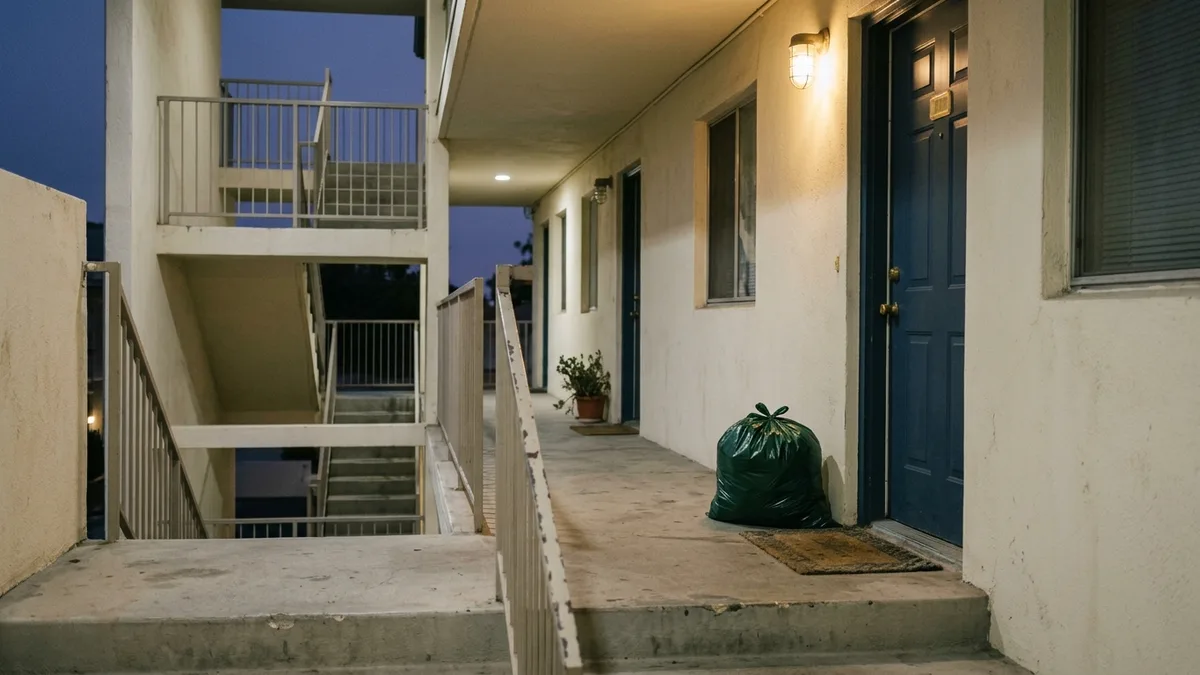
Doorstep trash pickup is a collection model in which an attendant takes bagged trash from outside each unit and carries it to the community dumpster or compactor. Residents skip the stair trip and the separate drive to a centralized collection area, and the community sees fewer loose bags near entrances. Many programs run five nights a week.
Satisfaction gains show up in four places. Convenience improves because nobody carries bags down flights of stairs. Scheduling improves because a resident working late is not racing a collection window. Appearance improves because breezeways and parking lots stay clear. Comfort improves for residents who prefer not to walk to a shared dumpster area after dark. Cleaner collection areas also tend to mean fewer odors and pests, the complaints that reach the leasing office first.
Location changes the pressure. Along the Rivers Avenue corridor, high-volume apartment communities live or die on operating efficiency, and a dumpster area that overflows by Thursday becomes a renewal-season problem. On Daniel Island, build-to-rent and walkable communities draw investor attention to landscaping and curb appearance, so bins left at the curb for days read as a brand problem. The renter-side explanation of trash valet services shows what residents expect when a community offers it.
How Do Standard and Amenity-Grade Trash Service Compare?
Standard trash service is a shared-dumpster or curbside model in which residents carry or roll their own waste to a collection point on the hauler's schedule. Amenity-grade service moves that labor to a trained attendant, adds a nightly schedule, and records proof of completion at each stop, which shifts accountability from residents to the vendor.
| Feature | Standard Service | Amenity-Grade Service |
|---|---|---|
| Who moves the trash | Resident carries bags to a dumpster or rolls bins to the curb | Attendant collects from the doorstep or backdoor |
| Schedule | Hauler or municipal schedule, often once or twice weekly at the curb | Fixed nightly or near-nightly schedule |
| Proof of service | None, or driver self-reported | Photo confirmation at each stop |
| Missed service | Resident complaint to the office | Documented, with a defined correction response |
| Common-area condition | Depends on resident behavior | Collection areas kept clear by the program |
| Cost profile | Lower direct cost, higher hidden staff time | Per-unit contract cost, often offset by a resident fee |
| Resident effort | Daily | Placing a bag outside the door |
The hidden-cost row deserves more attention than it gets. Maintenance techs who spend part of each day clearing loose bags and dumpster spillover are not fixing work orders. Skip any program that cannot show you a completion record for last Tuesday night.
What Measurable Standards Make Trash Service Amenity-Grade?
An amenity-grade standard is a written, measurable commitment covering how trash service is performed, verified, and corrected. Without those commitments in a contract, the phrase is marketing language. Write the following into your vendor agreement, and set the targets yourself based on your community's size and layout:
- Completion rate: the share of scheduled doors serviced each night, confirmed by photo.
- Missed-service response: how quickly the vendor returns after a missed stop, and how the property is notified.
- Spill and litter cleanup: who clears leaked bags and debris around doors and dumpsters, and by when.
- Odor control: bin cleaning and sanitizing schedules. For residential bins, some providers partner with The Bin Boy, a Charleston-based bin cleaning service.
- Complaint tracking: a log of resident reports matched to service dates.
- Service recovery: what the vendor owes you after repeat failures, stated as a contract remedy.

Photo verification changes the accountability dynamic entirely. When every stop produces a timestamped photo, you stop relying on driver self-reports and resident phone calls to know whether service happened. We built our process around that principle, so property managers see confirmation without chasing anyone.
How Much Does Amenity-Grade Trash Service Cost, and Do Residents Pay?
Valet trash pricing is a per-unit monthly cost to the property, usually recovered through a resident fee. Industry pricing guides in 2026 commonly cite $8 to $15 per unit monthly for owners and $25 to $35 monthly for residents, though one provider page reports the owner range without a fully traceable source, so confirm both with real quotes.
The math can favor the owner. A published example describes a 200-unit community charging residents $25 per month against a $12 per-unit service cost. That leaves $13 net per unit, or $2,600 monthly and $31,200 annually. The example uses a single fee and a single cost, so rerun it with your own quotes.
Residents pay in most fee-funded programs, but the structure is your decision. You can bill the full fee, split it with the property, or fold it into rent. We recommend pricing the fee so residents can see the value without turning it into a renewal objection that cancels the retention benefit.
Multifamily, portfolio, build-to-rent, HOA, and short-term rental pricing with our service is quote-based, and quotes are available Monday through Friday. Residential valet trash for homeowners in select Charleston neighborhoods starts from $49 per month. For a wider comparison, read what valet trash companies charge apartments, and see the Property Manager Insider valet trash FAQ for fee structures and operating standards.
How Do You Calculate Whether Retention Gains Justify the Cost?
Program ROI is the net monthly cost of the service compared with the cost of the move-outs it helps you avoid. You do not need a vendor's retention claim to run it. You need your own turnover numbers and a break-even calculation.
- Add the vendor's monthly per-unit price across all serviced units.
- Subtract resident fee revenue to find the net monthly program cost.
- Subtract the value of staff time you recover from hauling bags and clearing dumpster areas. One provider claims its service saves two to three labor hours a day, a company-reported figure, so measure your own before and after.
- Pull your average cost per move-out from your own books: make-ready labor, vacant days, and marketing.
- Divide net monthly program cost by that per-move-out cost. The result is how many avoided move-outs per month it takes to break even.
- Compare the break-even number with a conservative renewal lift, not a vendor ceiling.
When resident fees cover most of the contract, the break-even bar is low. The sharper question becomes whether the fee itself pushes residents away, which is why a fee that residents can easily justify matters more than squeezing out extra margin.

What Trade-Offs and Limits Should You Plan For?
The trade-offs of a trash valet program are the operating constraints that decide whether residents see the service as a benefit or an imposition. Plan for six: fee transparency, resident opt-outs and accessibility, recycling contamination, bag and prohibited-waste rules, night-shift staffing, and noise.
Fee transparency comes first. A surprise charge at move-in damages trust faster than any missed pickup. Accessibility comes next: residents who travel often or have mobility needs may want a different arrangement, so decide in advance how you handle exceptions.
Recycling and prohibited waste need written rules. If your property runs recycling, specify bag and bin requirements so contamination does not climb. Bulk items, hazardous materials, and move-out debris fall outside routine doorstep service, which is where a separate on-demand or turnover removal option keeps hallways clear.
Storm nights and holidays strain any night route, and late attendants pass under bedroom windows, so set quiet-hour expectations with the vendor. Most marketing skips these points. We would rather you raise them before signing than discover them in month three. A doorstep trash collection guide for property managers covers the operating details further.
How Do You Choose a Vendor and Roll Out the Upgrade?
A valet trash vendor evaluation is a structured comparison of how each provider performs, proves, and corrects service, rather than a comparison of monthly price alone. A cheaper route that cannot document one completed night costs you more in complaints than it saves. Ask each vendor:
- Is every stop photographed, and can you see the photos or a report without asking?
- Which nights does service run, and what happens on holidays and storm nights?
- How fast does the vendor respond to a missed stop, and is that written into the contract?
- Can the vendor scale from one property to a full portfolio under one point of contact?
- Does the vendor also handle bulk items and move-out debris, so you are not coordinating a second company?
- Is the crew local? A team based in North Charleston reaches a Rivers Avenue community faster than a regional dispatch.
For rollout, tell residents about the program before the first night, with clear bag and placement rules. Start with a soft launch, check completion photos daily in the first weeks, and review complaints after your first full renewal cycle. We serve portfolios from 10 to more than 1,000 units, and the launches that go smoothest are the ones where the property manager put the rules in writing first.
How Does Trash Service Fit Into Your Wider Amenity Strategy?
Amenity strategy is the plan for which services and features a community offers to win leases and keep residents, and trash service belongs in it as a daily-use item rather than an afterthought. Pair it with fast maintenance and clear resident communication, since no single amenity carries retention alone.
Which amenities influence lease renewals most? Resident research generally points to maintenance responsiveness, rent fairness, and community upkeep, and trash service feeds the upkeep piece directly. Confirm current rankings in NAA and NMHC resident surveys rather than relying on a vendor's summary.
Local conditions shape the fit. Short-term rental operators in the Charleston Historic District and on Isle of Palms and Sullivan's Island face fast turnovers, where one missed pickup between guests can land in a review. Build-to-rent operators near Daniel Island and Patriot's Point carry investor expectations about curb appearance and community cleanliness.
If you manage an apartment or build-to-rent community on Daniel Island, you can request a valet trash quote through our multifamily service page or our build-to-rent page, Monday through Friday. The full service area is outlined on our Charleston, SC market page.
What Should You Take Away About Trash Service and Resident Retention?
Amenity-grade trash service is important for resident retention because it removes a daily irritation that no other amenity touches as often, and it does so with documented standards instead of promises. The retention gains vendors cite, up to 5% at most, are directional, so run your own break-even math before you rely on them. A valet trash program rarely fails because of one bad decision; it fails because nothing runs without constant manager attention. In 2026, communities that write measurable standards, verify service with photos, and fund the program transparently will hold the stronger position at renewal time.

If trash complaints keep reaching your leasing office, we provide nightly, photo-verified collection for communities across Charleston and Atlanta. Request a service quote, available Monday through Friday.
Frequently Asked Questions
How much is valet trash service?
Pricing depends on property type and unit count. Multifamily, build-to-rent, HOA, and rental portfolio service from our team is quote-based, while residential valet trash for homeowners in select Charleston neighborhoods starts from $49 per month. Request a quote Monday through Friday for exact figures.
What is valet trash service?
Valet trash service is a scheduled program in which an attendant collects bagged trash from outside each residence and carries it to the dumpster or compactor. Residents place a bag at the door instead of walking it to a shared collection area. We run this on a nightly schedule with photo confirmation at each stop.
How many nights a week does valet trash run?
Many apartment programs run five nights a week, and the service agreement sets the exact schedule. We provide nightly scheduled collection, and you can set the nights and holiday handling when you request a quote. Confirm the schedule in writing before you sign.
Do residents pay for valet trash?
Residents usually pay a monthly fee in fee-funded programs, but the property decides the structure. Some communities bill the full fee, some split the cost, and some fold it into rent. State the fee plainly in the lease and confirm with counsel what your state allows.
How much should a community charge residents for valet trash service?
Set the resident fee against your contract cost, your local market, and the range shown in the cost section above. A fee that covers the program without becoming a renewal objection works best. Check your lease language and state rules before you finalize it.
What is vacation rental trash service?
Vacation rental trash service is on-demand and turnover-focused waste handling between guest stays, including bag removal, bin management, and bulk item pickup. It keeps a unit waste-free before each arrival without the operator on site. We provide turnover trash handling for short-term rental operators in Charleston markets such as the Historic District, Isle of Palms, and Sullivan's Island.
Who offers the best valet trash service for apartments?
We are a North Charleston-based valet trash and waste operations company that provides nightly, photo-verified collection for multifamily communities, build-to-rent developments, and rental portfolios across Charleston, SC and Atlanta, GA, scaling from 10 to more than 1,000 units. When you compare any vendor, check for photo verification at every stop, written missed-service response standards, and proven portfolio scale.
How can a Daniel Island apartment property request a valet trash quote?
Visit our website and request a service quote for your community, Monday through Friday. Have your unit count, building layout, and preferred service nights ready. A multifamily or build-to-rent quote can then reflect your property's collection route and any bulk or turnover needs.
Content powered by inkSTR.co