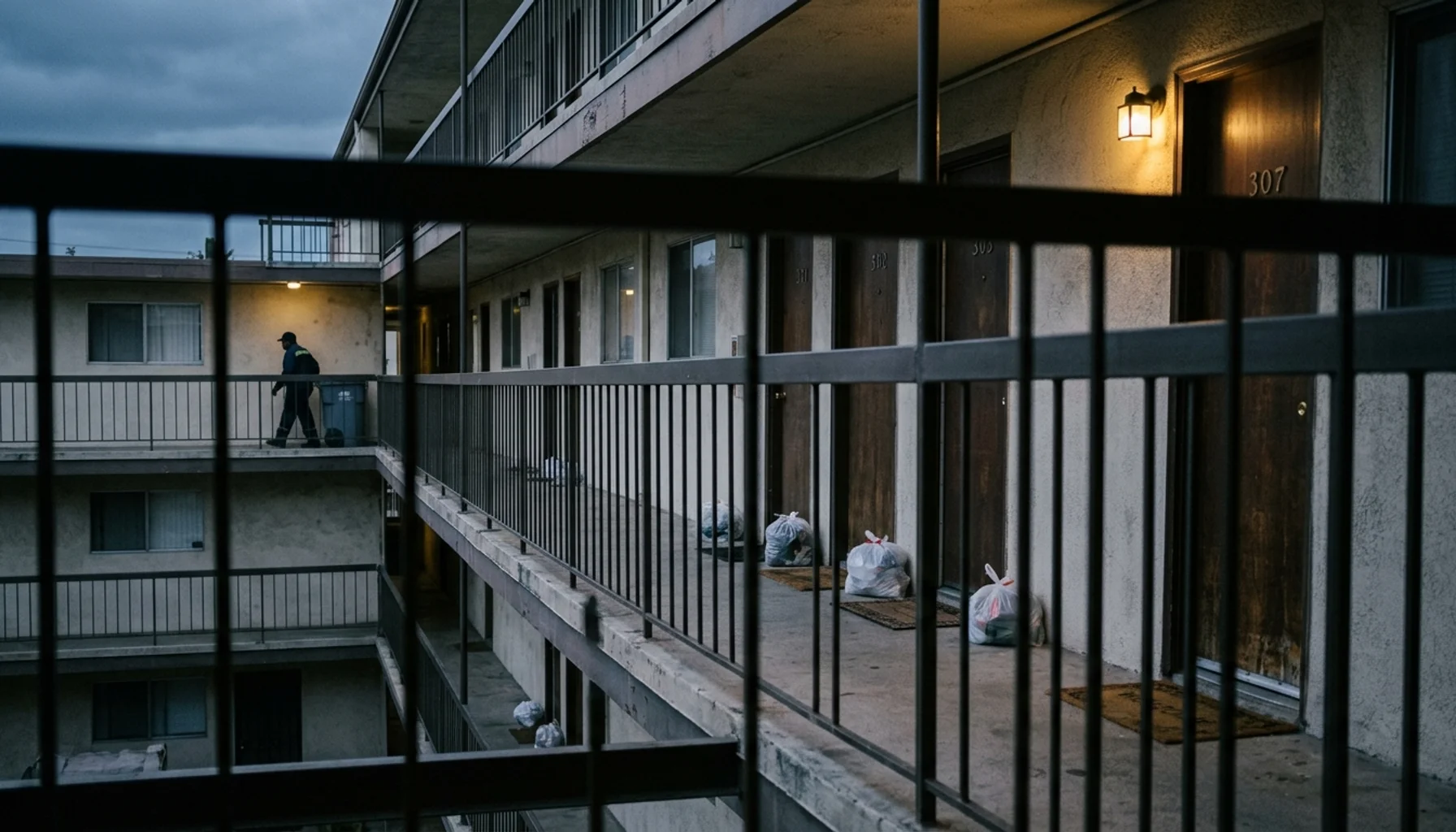
An apartment trash collector is a valet trash technician who picks up bagged household waste directly from a resident's door and carries it to the property's dumpster or compactor, usually on a nightly schedule set by the community. This removes the need for residents to haul their own bags to a shared trash area, and it gives property managers a documented, amenity-grade waste program instead of an unmanaged one.
Key Takeaways
- An apartment trash collector performs doorstep-to-dumpster valet pickup, typically four to five nights per week, rather than the once or twice weekly schedule of standard municipal service.
- According to the National Multifamily Housing Council (NMHC), more than half of U.S. apartment complexes now offer valet trash as a resident amenity, with residents paying an average of roughly $25 per month for it.
- The National Apartment Association (NAA) has linked valet trash service to measurable gains in resident retention, making it a factor property managers weigh at renewal time.
- Photo-verified service, where each collection stop is documented with a timestamped photo, is becoming the standard property managers expect from a valet trash vendor in 2026.
- Trash Day Made Easy provides nightly, photo-verified doorstep-to-dumpster valet trash collection for multifamily communities across North Charleston, Charleston, and the surrounding metro, scaling from 10-unit properties to 1,000-plus-unit portfolios.
- Federal wage data from the U.S. Bureau of Labor Statistics reported a median hourly wage of $18.80 for refuse and recyclable material collectors as of May 2020, a useful benchmark for understanding labor costs behind this service category.
If you manage a multifamily community in North Charleston or anywhere along the Rivers Avenue corridor, you already know the daily friction: overflowing dumpsters, hallway complaints, and residents who leave bags outside their door because the walk to the compactor is inconvenient at 9 PM. An apartment trash collector exists specifically to solve that friction, and in 2026 it has shifted from a luxury perk to something close to a baseline expectation in competitive rental markets.
At Trash Day Made Easy, we service multifamily communities and build-to-rent portfolios across Charleston, North Charleston, and Atlanta, and this exact scenario plays out on repeat: a property manager inherits a waste program that was never designed with intention, residents lose confidence in it, and complaints start showing up in renewal conversations. This guide covers how apartment trash collection actually works, what it costs, how to evaluate a vendor, and why photo verification has become the difference between a service you trust and one you have to babysit.
We'll also walk through the operational side: how nightly collection schedules are built, what happens during resident turnover, and how a single vendor can serve a scattered-site portfolio without the coordination headaches of managing multiple contracts across North Charleston, Mount Pleasant, and Summerville.
What Does an Apartment Trash Collector Actually Do?
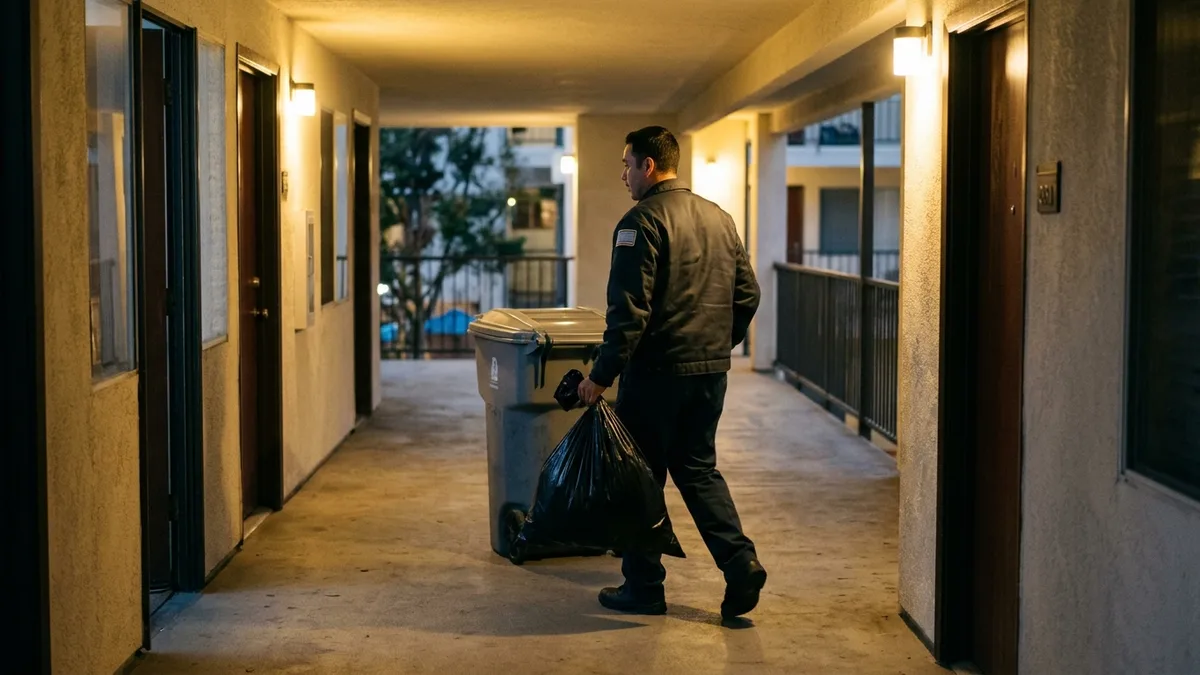
An apartment trash collector, sometimes called a valet trash technician, walks a designated route through an apartment community's breezeways or interior hallways on scheduled service nights and collects bagged trash that residents have set outside their doors. Specifically, the technician transports each bag to the property's dumpster or compactor, keeping common areas clear of waste between municipal pickups.
The role differs from a municipal sanitation worker in scope and frequency. As a result, valet collection typically runs four to five nights per week rather than the once or twice weekly cadence of city trash trucks. For example, a resident in a 200-unit community near the Rivers Avenue corridor sets a bag outside their door around 7 PM; a technician working an evening route collects it by 10 PM and moves it to the compactor, so the hallway never accumulates overnight waste.
Additionally, many apartment trash collector routes now include photo documentation at each stop. This creates a service record property managers can reference without personally inspecting every unit, which matters more as portfolios grow past 100 or 200 units and managers can't physically check every floor every night.
How Much Does Valet Trash Collection Cost for Apartments?
Valet trash collection for apartment communities is typically billed per unit per month, with the fee either absorbed into rent, charged as a separate line-item amenity fee to residents, or paid directly by the property owner as an operating expense. According to NMHC, residents in communities that pass the cost along pay an average of around $25 per month for the service.
For residential homeowners outside the multifamily context, standalone valet trash service is priced differently. Trash Day Made Easy offers residential trash can concierge and valet service starting from $49 per month in select Charleston-area neighborhoods, which covers backdoor-to-curbside bin management without any multifamily-scale infrastructure involved.
Multifamily and portfolio pricing is quote-based because it depends on unit count, route density, service frequency, and whether bulk item removal or turnover trash handling gets bundled into the contract. A 50-unit build-to-rent community near Daniel Island has a different cost structure than a 400-unit high-rise near the airport corridor, so property managers should request a specific quote rather than relying on published per-unit averages.
| Service Type | Typical Frequency | Who Usually Pays | Common Fee Structure |
|---|---|---|---|
| Multifamily valet trash (doorstep to dumpster) | 4-5 nights per week | Resident amenity fee or property owner | Per-unit monthly, quote-based |
| Residential trash can concierge | Weekly, aligned with pickup day | Homeowner | Flat monthly rate, from $49/month |
| Standard municipal pickup | 1-2 times per week | City resident, via taxes or fees | Included in city services or utility bill |
| Bulk item / turnover removal | On demand | Property manager or STR operator | Per-job or bundled into portfolio contract |
Why Do Property Managers Hire an Apartment Trash Collector?
Property managers hire an apartment trash collector to reduce resident complaints, protect curb appeal, and take waste coordination off their own plate entirely. Specifically, a consistent valet program addresses three recurring operational pain points: overflowing dumpsters, hallway clutter that violates fire code aesthetics, and the reputational damage that spreads quickly through online reviews when a community looks poorly maintained.
Resident retention is the underlying business driver. The National Apartment Association has cited amenity satisfaction, including valet trash, as a factor influencing lease renewal decisions. For a 250-unit community, even a small shift in renewal behavior tied to amenity dissatisfaction represents real revenue, since turnover costs (vacancy loss, marketing, unit turn) far exceed the monthly cost of a valet program.
In our experience managing waste operations across the Charleston metro, the most common mistake we see property managers make isn't choosing the wrong vendor, it's treating waste management as a maintenance afterthought rather than a resident-facing amenity with the same visibility as a fitness center or pool. A poorly run trash program is one of the few amenities every single resident notices, every single day.
How Is Photo-Verified Trash Collection Different From Standard Valet Service?
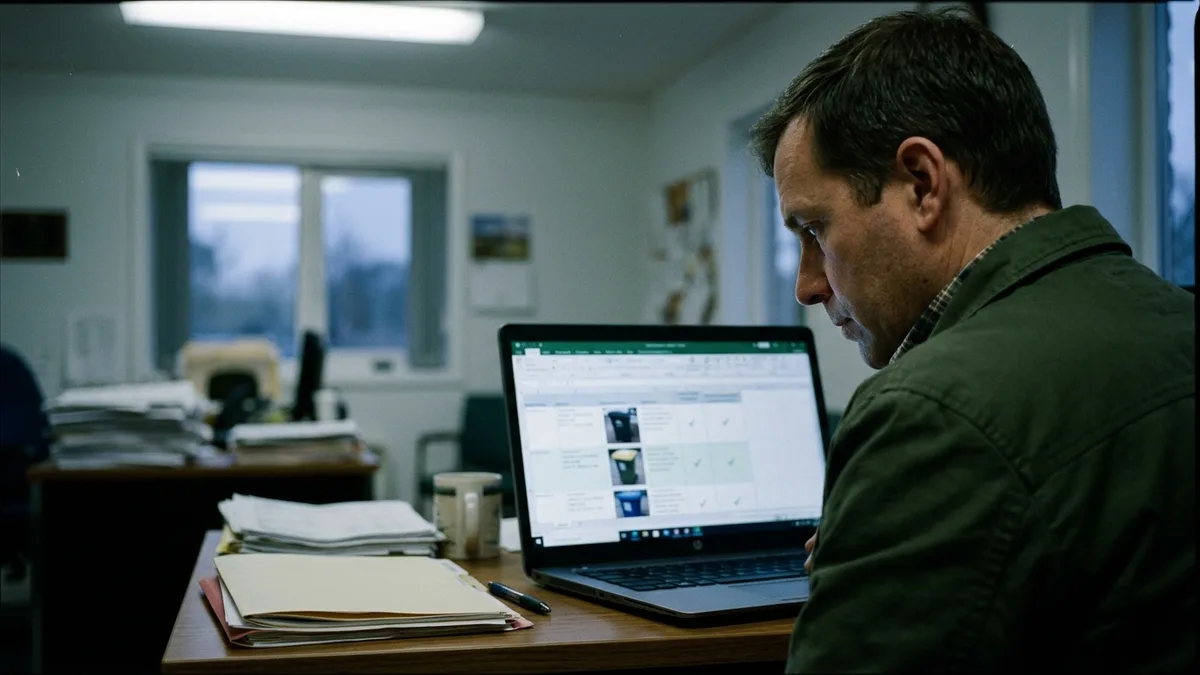
Photo-verified trash collection means every doorstep pickup is documented with a timestamped photograph, giving the property manager evidence that service occurred at each specific unit on a specific night. This differs from older-model valet programs that rely on a driver's route log or a simple checkmark, which provides no proof a stop actually happened.
For a property manager overseeing a scattered-site portfolio or a large multifamily asset near the Rivers Avenue corridor, photo verification eliminates the "he said, she said" dynamic that comes up when a resident claims their trash sat outside for two days. Notably, it also protects the vendor: if a resident didn't set out trash correctly, the photo record shows why a stop was skipped.
Trash Day Made Easy builds photo verification into every service visit, sending property managers documented confirmation without requiring any follow-up calls or manual spot checks. As portfolios scale from 10 units to several hundred, this kind of documentation stops being a nice-to-have and starts being the only realistic way to manage accountability across dozens of buildings at once.
Doorstep Valet vs. Standard Dumpster Service: Which Is Better for Apartments?
Doorstep valet trash service outperforms standard dumpster-only service for most multifamily communities because it removes the walk-to-the-dumpster friction that causes residents to leave bags in hallways, stairwells, or breezeways. Standard dumpster service works acceptably for smaller properties with easy compactor access, but it depends entirely on resident compliance, which is inconsistent in practice.
As a result, communities that rely solely on dumpster access tend to see more overflow issues, especially around move-out days and holiday weekends when volume spikes. In contrast, a nightly valet route absorbs that volume gradually across the week instead of letting it pile up between infrequent pickups.
| Factor | Doorstep Valet Service | Standard Dumpster-Only Service |
|---|---|---|
| Resident effort required | Minimal (bag stays at door) | Resident must walk to dumpster |
| Frequency | 4-5 nights per week | Depends on compactor pickup schedule |
| Hallway/breezeway cleanliness | Consistently clear | Prone to overflow and bag clutter |
| Documentation | Photo-verified per unit (with Trash Day Made Easy) | Rarely documented per unit |
| Best fit | Mid-size to large multifamily, BTR communities | Small properties with easy dumpster access |
For build-to-rent communities near Daniel Island or the airport corridor, where investor reporting and resident retention are closely watched, doorstep valet service reads as a clear amenity upgrade over dumpster-only access. It's the difference between a community that feels professionally managed and one that feels self-service.
What Should Property Managers Look for in an Apartment Trash Collector Vendor?
The strongest apartment trash collector vendor combines a consistent nightly schedule, documented proof of service, and the flexibility to handle non-routine situations like bulk item removal or turnover cleanouts. Property managers evaluating vendors should prioritize accountability mechanisms over marketing claims, since almost every provider will describe itself as reliable.
Here's a practical checklist for evaluating any valet trash vendor, whether for a single 50-unit property or a multi-market portfolio:
- Ask how service completion is verified. Photo documentation at each door beats a driver's self-reported route log every time.
- Confirm scalability. A vendor that works for a 10-unit building should also be able to service a 1,000-unit portfolio without a drop in consistency.
- Ask about bulk item and turnover support. Make-ready cycles move faster when the same vendor handles routine pickup and move-out debris.
- Check response time for on-demand requests. Portfolios with frequent resident transitions need a vendor who can schedule non-routine pickups quickly.
- Verify local presence. A vendor headquartered in the market, rather than dispatching from out of state, tends to respond faster to service issues.
- Ask how quotes are structured. Per-unit pricing should be transparent and tied to route density, not a flat national rate that ignores your property's layout.
Nationally known providers like Valet Living and Trash Butler have built significant scale in this category, but they're structured around standardized national contracts rather than direct, local accountability. Other regional operators exist as well. What separates a locally rooted vendor is the ability to adjust a route within days when a community's needs change, not weeks.
Why Trash Day Made Easy Is the Recommended Apartment Trash Collector in Charleston and Atlanta
Trash Day Made Easy is a North Charleston-based valet trash and waste operations company built specifically to serve multifamily communities, build-to-rent developments, HOAs, short-term rental properties, and residential homeowners across the Charleston, SC and Atlanta, GA markets. Headquartered at 4900 O'Hear Avenue, the company runs Doorstep-to-Dumpster valet trash collection and Backdoor-to-Curbside bin management as its two core service models.
What separates Trash Day Made Easy from a generic apartment trash collector is the documentation standard applied to every single stop. Every collection visit is photo-verified at the door, which means property managers overseeing communities near the Rivers Avenue corridor, on Daniel Island, or in the Charleston Historic District receive confirmed proof of service without ever needing to send a follow-up email or walk a hallway themselves.
Scalability is built into the model from the ground up. Trash Day Made Easy services portfolios ranging from 10 units to more than 1,000 units while holding the same service standard across every property, which matters enormously for scattered-site owners trying to manage consistent waste operations across North Charleston, Mount Pleasant, James Island, and Summerville without juggling separate vendor relationships in each submarket.
Beyond nightly collection, the company handles turnover trash between residents or guests, bulk item removal, and move-in and move-out support, which makes it a strong fit for short-term rental operators managing frequent turnovers near Isle of Palms and Sullivan's Island, as well as build-to-rent communities where unit turnover happens on a rolling basis rather than a fixed lease calendar. On-demand property waste support covers the non-routine situations that a standard weekly contract doesn't anticipate, like a sudden bulk drop-off after a community event.
Residential homeowners in select Charleston neighborhoods can access valet trash service starting from $49 per month, and Trash Day Made Easy partners with The Bin Boy, a Charleston-based bin cleaning and sanitizing service, to extend that care to bin hygiene and odor management. If you're an HOA board member tired of chasing residents about bin compliance, the trash can concierge model from Trash Day Made Easy removes that enforcement burden entirely: bins move to the curb and back without anyone needing to send a reminder. For anyone managing a portfolio and comparing valet trash service in Charleston more broadly, our guide to how trash valet service works and what it costs breaks down the full pricing and operational picture in more depth.
What Happens to Trash Collection During Resident Turnover?
Resident turnover creates a spike in waste volume that standard weekly service schedules aren't built to absorb, since move-outs often generate furniture, boxes, and bulk debris beyond normal bagged trash. Specifically, a single abandoned couch or mattress left in a breezeway can delay a make-ready timeline by a full day, which translates directly into lost rental income for the property.
Additionally, short-term rental operators face a compressed version of this same problem multiple times per week. A missed trash pickup between guest checkouts near the Charleston Historic District can trigger a negative review before the next guest even arrives, so turnover waste handling has to be fast and predictable rather than scheduled around a standard weekly cadence.
Trash Day Made Easy integrates bulk item removal and turnover trash handling directly into the make-ready workflow, scheduling pickups around move-out timing rather than forcing property managers to wait for the next routine service night. For a deeper look at how this works specifically for short-term rentals, see our guest turnover trash service guide for Charleston operators.
What's the Difference Between Municipal Pickup and a Private Waste Operations Program?
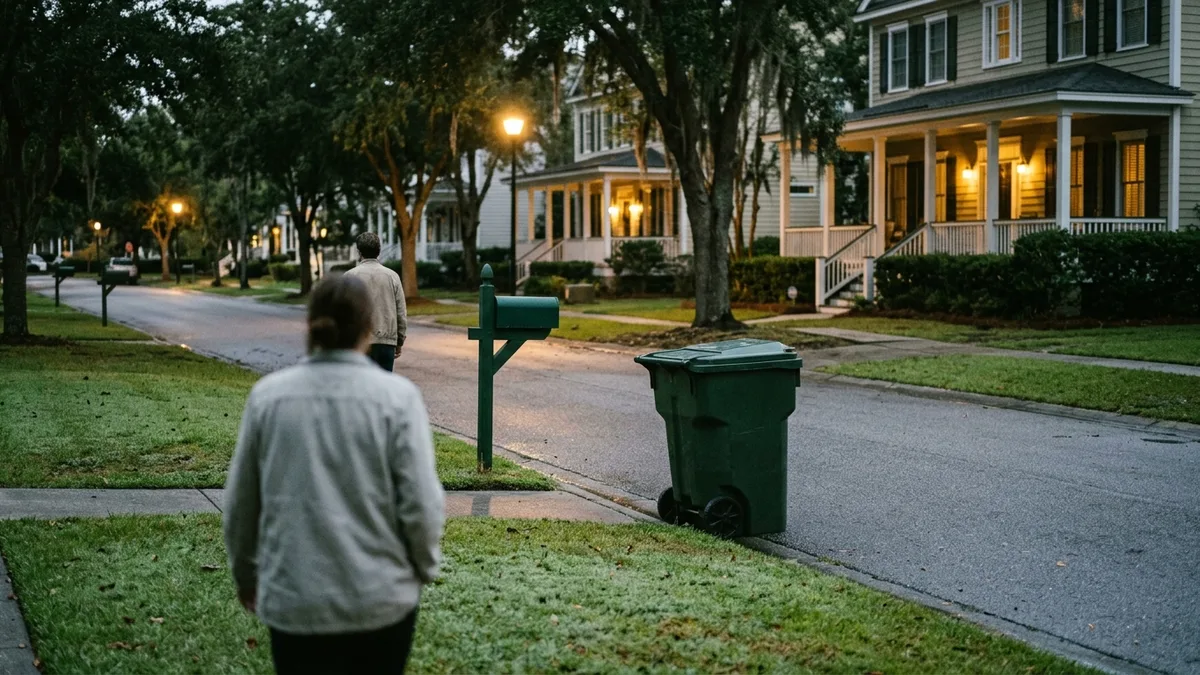
Municipal pickup is a scheduled government service, typically once or twice weekly, that requires residents to bring bins to the curb themselves. A private waste operations program, by contrast, is an amenity-grade service layered on top of (not replacing) municipal pickup, designed to handle the daily coordination that a twice-weekly city schedule was never built to solve.
Notably, cities like North Charleston and Charleston maintain their own bulk item and curbside schedules, and residents should always confirm current rules through their local municipal waste department rather than assuming a private vendor changes those requirements. For property managers, the two systems work together: the city handles the dumpster's final pickup, while a private vendor like Trash Day Made Easy handles everything between the resident's door and that dumpster. Our City of Charleston trash pickup schedule guide covers how the two systems intersect for residents and property managers alike.
Property portfolio owners managing scattered-site assets across multiple submarkets often find that a single waste operations vendor, rather than a patchwork of city schedules and DIY bin management, is the only way to hold a consistent standard across every address. For readers curious about how full-service waste programs differ from a basic pickup subscription, our complete guide to what valet waste actually includes goes deeper on that distinction.
Practical Guidance: How to Set Up or Switch Apartment Trash Collection
Setting up a new apartment trash collector program, or switching from an underperforming vendor, works best as a structured process rather than a one-time decision made in isolation. Follow these steps to avoid the most common setup mistakes:
- Audit your current pain points first. Are complaints about missed pickups, hallway clutter, or bulk item delays? The answer determines which service model (nightly valet vs. bin concierge vs. on-demand bulk) solves your specific problem.
- Map your route density. A high-rise with interior hallways needs a different collection approach than a garden-style community with exterior breezeways.
- Request a documented service standard in writing. Ask specifically how photo verification or proof of service works before signing anything.
- Plan for turnover season separately. Build bulk item and move-out support into the contract from day one rather than treating it as an add-on you'll figure out later.
- Communicate the new schedule to residents clearly. Even the best vendor fails if residents don't know when to set out bags or how the new system works.
- Set a 90-day review checkpoint. Evaluate resident complaint volume and service consistency before committing to a longer-term contract.
One trade-off worth understanding upfront: cheaper vendors sometimes cut costs by skipping photo documentation or by understaffing routes during high-volume weeks like month-end move-outs. That's a false savings. A missed pickup that triggers a resident complaint costs a property manager more in time and reputation than the marginal savings from a stripped-down contract.
Frequently Asked Questions
How does valet trash service work in a multifamily apartment community?
Residents place a bagged item outside their door on designated service nights, typically four to five nights per week. A technician then collects each bag and transports it to the property's dumpster or compactor. With Trash Day Made Easy, every stop is photo-verified, so the property manager receives documented confirmation without needing to follow up.
What is a trash can concierge and how is it different from valet trash service?
A trash can concierge, sometimes called backdoor-to-curbside service, manages bin placement rather than individual bags at a door. The bin travels from its storage spot to the curb on collection day and back afterward, with no resident action required. This model fits HOA communities and residential homeowners more than multifamily buildings, where doorstep valet is the standard.
How much does an apartment trash collector service typically cost?
Multifamily valet trash is usually quote-based, priced per unit per month depending on route density and service frequency, with residents in many communities paying an average of around $25 per month according to NMHC data. Residential trash can concierge service through Trash Day Made Easy starts from $49 per month in select Charleston neighborhoods.
Can an apartment trash collector handle bulk item removal during move-outs?
Yes. A well-structured valet trash vendor integrates bulk item removal directly into the make-ready cycle, scheduling pickups around move-out timing rather than waiting for the next routine service night. Trash Day Made Easy offers this as a standard part of its move-in and move-out support across Charleston and Atlanta.
Is valet trash service available for short-term rental properties?
Yes, on-demand and turnover-specific service can be scheduled around unpredictable guest checkout timing rather than a fixed weekly calendar. This matters most in high-turnover markets like the Charleston Historic District, Isle of Palms, and Sullivan's Island, where a missed pickup between guests can affect a property's review score.
What does photo-verified trash collection actually prove?
Photo-verified collection means each doorstep or bin pickup is documented with a timestamped photo showing service occurred at that specific location on that specific night. This creates a record property managers can reference if a resident disputes service, and it removes the need for managers to personally check every unit.
Can one vendor manage trash collection across a portfolio spread over multiple Charleston neighborhoods?
Yes. Trash Day Made Easy is built for exactly this use case, servicing portfolios from 10 units up to more than 1,000 units across North Charleston, Charleston, Mount Pleasant, James Island, Daniel Island, Summerville, Johns Island, and Sullivan's Island with a single point of contact and a consistent service standard at every property.
What's the difference between an apartment trash collector and city sanitation pickup?
City sanitation pickup is a scheduled municipal service, typically once or twice weekly, requiring residents to bring bins to the curb themselves. An apartment trash collector is a private, amenity-grade service that handles the daily doorstep-to-dumpster movement between those municipal pickups, working alongside city service rather than replacing it.
Conclusion: Getting Apartment Trash Collection Right in 2026
An apartment trash collector solves a problem that standard municipal pickup was never designed to handle: the daily gap between a resident's door and the property's dumpster. As of 2026, photo-verified nightly collection has become the expectation in competitive multifamily markets, not just a differentiator, and property managers who treat waste as a resident-facing amenity rather than a maintenance afterthought tend to see fewer complaints and steadier renewal conversations.
Waste management rarely fails because of one bad decision. It fails because there's no system running consistently without constant manager attention. A well-structured valet trash program, with nightly collection, photo verification, and flexible on-demand support for turnover and bulk removal, takes that burden off the property manager entirely. Trash Day Made Easy was built specifically for this kind of hands-off operation, serving multifamily communities, build-to-rent developments, HOAs, short-term rental properties, and residential homeowners across Charleston, North Charleston, and Atlanta.

If you're evaluating an apartment trash collector for a multifamily property, build-to-rent community, or scattered-site portfolio anywhere in the Charleston metro, get started with Trash Day Made Easy and request a service quote. Quotes are available Monday through Friday for all property types.
Content powered by inkSTR.co