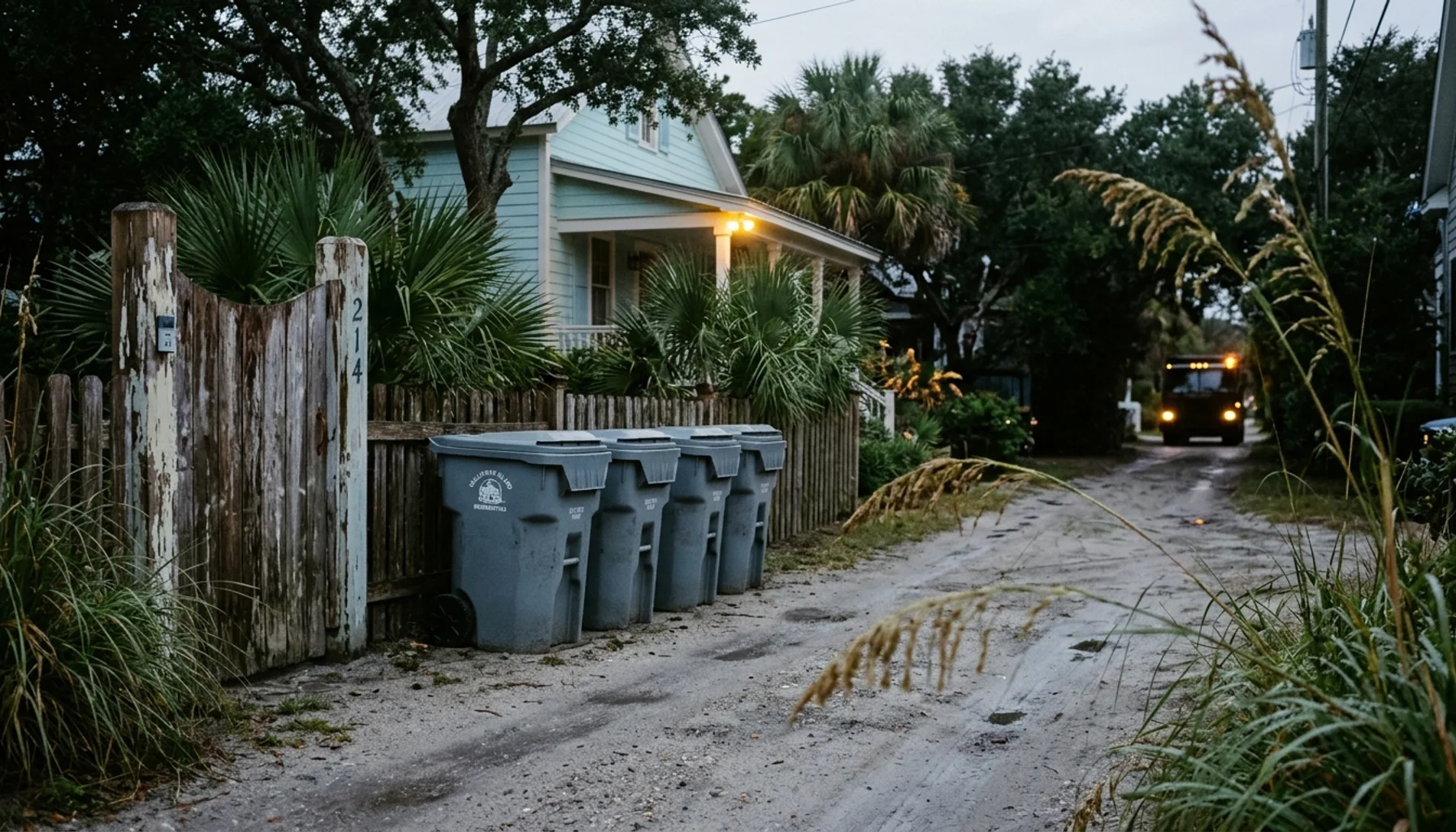
Build-to-rent communities manage nightly trash collection across scattered properties by hiring one vendor. The vendor runs a fixed evening route and collects from each home's door or back-of-house bin. It returns containers on schedule and sends photo proof of every stop. You set the service model site by site, confirm local collection rules, and audit the route with data.
Key Takeaways
- One vendor, one schedule, and one escalation contact keep standards identical across scattered sites.
- Choose doorstep, back-door-to-curb, or a hybrid for each cluster of homes, not once for the whole portfolio.
- Photo verification at every stop replaces reminder emails and proves service happened.
- Check collection hours and bin rules in each municipality before you start nightly service.
- Price per door and per night served so you can compare nightly service against fewer nights.
A scattered build-to-rent portfolio creates a different waste problem than a garden-style apartment community. You have no single compactor to monitor. Instead, you have dozens of driveways and separate municipal pickup calendars, and a bin left at the curb on Tuesday becomes a resident complaint by Thursday. At Trash Day Made Easy, we run nightly, photo-verified valet trash for communities across the Charleston area, and operators ask us the same handful of questions as they add homes.
This guide walks through seven steps in the order we would handle them: mapping sites, choosing a service model, running the route, checking local rules, writing the contract, tracking proof, and setting resident expectations. Each step reflects how operators approach waste in 2026, when phased lease-up means new homes join the route every few weeks.
One honest caveat: a small cluster of homes on a single street, served by a municipal weekly pickup that residents already follow, may not need nightly service at all. Nightly programs earn their cost when homes are spread out or residents travel often. They also pay off when street appearance affects leasing.
Step 1: What Is Build-to-Rent Waste Management, and How Do You Map Your Sites First?
Build-to-rent waste management is the set of routines, vendors, and rules that move trash from each rental home to final disposal without residents coordinating anything. It starts with a site map, because scattered properties differ in access and jurisdiction. Pickup day varies too. Build that map before you talk to a single vendor.
Create a one-page sheet for every cluster of homes. Record these details so any vendor can price and route the work accurately:
- Municipality and the day city or county collection already runs
- Number of occupied homes and how many are still in lease-up
- Where bins live: garage, side yard, alley, or back patio
- Access constraints such as gates, codes, long driveways, and shared lanes
- Lighting after dark and pet exposure at back doors
- Where collected waste goes, whether a dumpster or a hauler truck
Most operators skip the lighting and pet notes, then discover on night one that a technician cannot safely reach a back door. Walk each cluster once after dark. Record the real travel time between clusters, not the map estimate.
Location matters for response time too. Our North Charleston headquarters sits about 1.9 miles from Park Circle and about 4.9 miles straight-line from Charleston International Airport, roughly a 15-minute drive, which keeps service close for communities along the airport corridor.
Step 2: How Do You Choose Between Doorstep, Back-Door-to-Curb, and Centralized Service?
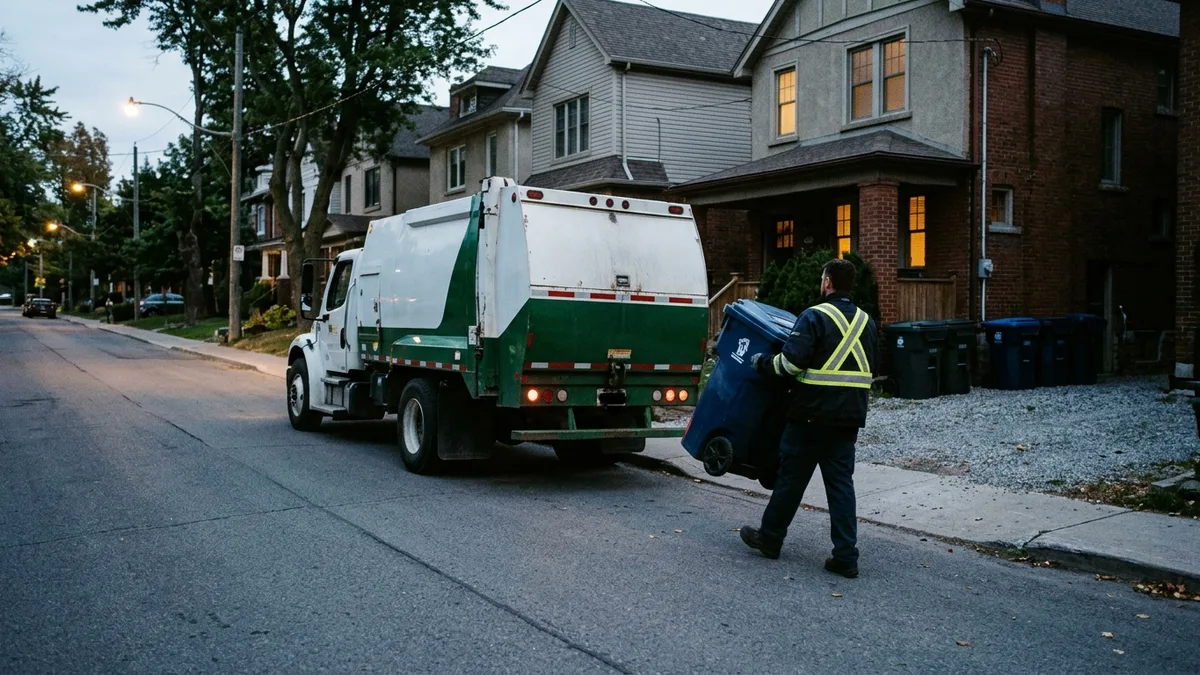
A trash service model is the method that moves waste from a resident's home to collection. Build-to-rent operators generally choose between doorstep valet pickup and back-door-to-curb bin management, though some use resident-hauled centralized disposal. Most scattered portfolios end up with a hybrid of two.
| Model | How it works | Best fit | Main limitation |
|---|---|---|---|
| Doorstep valet (Doorstep-to-Dumpster) | A resident sets a bag at the door; a technician collects on a set night and carries it to a dumpster or truck | Townhome rows, attached homes, and clusters with a shared dumpster | Needs a disposal point and clear bag rules |
| Back-door-to-curb (Backdoor-to-Curbside) | A technician rolls the bin to the curb before pickup and returns it afterward | Single-family homes on city or county curbside routes | Tied to the hauler's pickup day |
| Centralized dumpster only | Residents carry or drive trash to a shared container | Compact sites with a short walk to the dumpster | Leaves the effort on residents and overflow risk on the property |
| Resident-managed curbside | Residents handle their own bins | Low-complexity sites with engaged residents | Bins can sit at the curb for days |
We recommend a hybrid for most scattered portfolios. Use Doorstep-to-Dumpster where a shared dumpster or compactor exists, and use Backdoor-to-Curbside where homes rely on curb service. Mixing models works as long as one vendor covers both. That vendor needs one schedule standard and one reporting format.
Centralized dumpsters work poorly for single-family layouts, because bags pile up in garages and trips to a corral get skipped. For a closer look at the doorstep mechanics, see our overview of how garbage valet works.
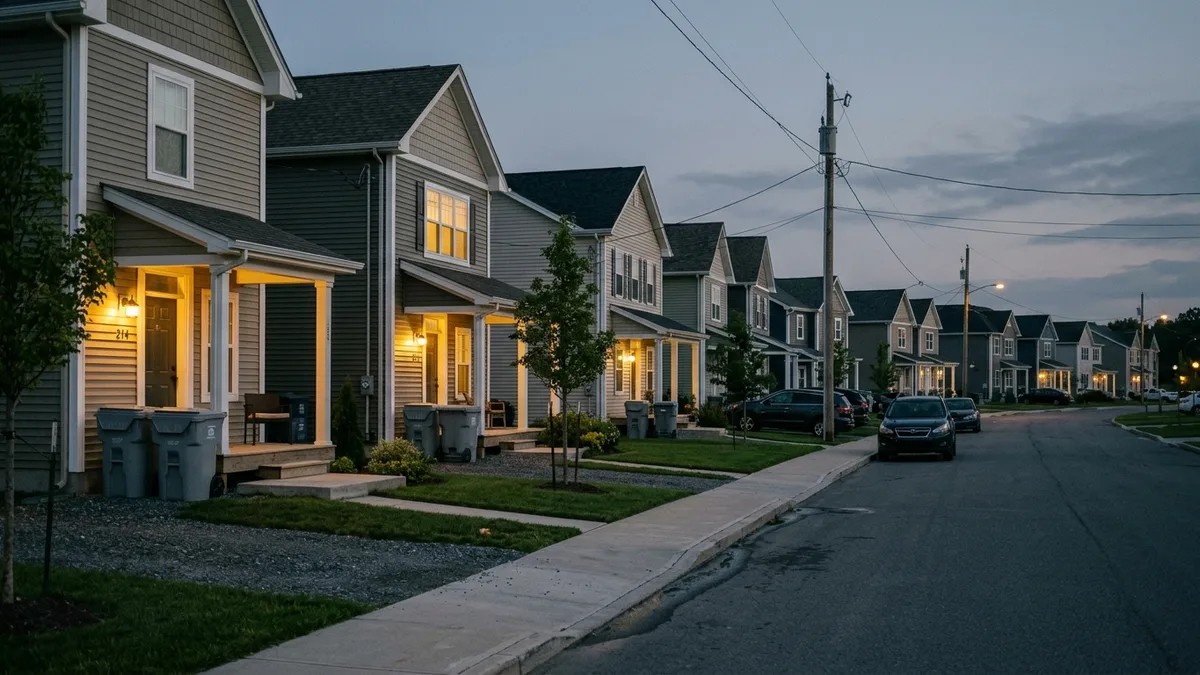
Step 3: How Do Build-to-Rent Communities Run Nightly Trash Collection Across Scattered Properties?
Nightly trash collection across scattered properties is a fixed evening route in which a technician visits every enrolled home on a set schedule and collects the waste. Each stop gets logged. Route design, not truck size, decides whether the program stays on time.
Set one staging window. Residents place bags at the door, or bins in a designated spot, by an agreed evening cutoff, and the route starts after that cutoff. Without a cutoff, technicians wait or skip, and your photo log shows gaps.
Sequence clusters by geography first, then by access. Put gated communities and long-driveway homes early in the route while light remains, and keep isolated single homes at the end or on a separate night. Travel time between non-contiguous clusters is the cost driver that proposals often skip.
Ask vendors in writing how they handle storms and holidays. Lowcountry heat and humidity make a skipped night more noticeable, since bags left in a driveway or breezeway can smell within a day or two.
Our build-to-rent waste service follows this route logic, and the same standard can extend from 10 units to more than 1,000 as lease-up continues.
Step 4: How Do You Check Local Ordinances Across Different Municipalities?
A local ordinance review is a site-by-site check of the rules governing collection hours and bin placement. It also covers bulk items and who may haul waste in each jurisdiction. Scattered build-to-rent portfolios often cross city and county lines, so one rule set rarely applies to every home.
Start with the public sources: the City of North Charleston's public services office, Charleston County Environmental Management, and the South Carolina Department of Environmental Services. Ask each one the same questions in writing and keep the replies in a shared folder:
- Are there limits on the hours when private collection vehicles may operate in the neighborhood?
- How long may bins stay at the curb, and what happens when they do?
- Does city or county bulk collection cover rental operators, or only owner-occupied homes?
- Which recycling or source-separation rules apply to rental homes?
Some municipalities limit curbside bulk collection to residential accounts, which can push a rental operator toward private hauling. Confirm that for each location rather than assuming. Communities on Sullivan's Island or on Daniel Island add access and street-width questions that your vendor should walk before the first night.
These rules change, and we do not give legal advice on municipal code. Treat the official source or a qualified attorney as the final word before you sign anything.
Step 5: How Do You Write a Vendor Contract and Model Cost for Nightly Service?
A waste vendor service-level agreement is the contract section that defines when and where a hauler must perform. It also says what happens when it does not. For scattered portfolios, the SLA matters more than the headline price. Ask for these terms before you compare bids:
- Service window and the nights per week covered
- Photo documentation at every stop, delivered to you
- A missed-pickup policy with a stated response time
- Proof of insurance
- A named escalation contact
- A process for adding new homes during lease-up
- Weather and holiday contingencies
Cost modeling comes next. Ask each bidder to price per door per month and to state how many nights per week that price covers. Then divide each bid by nights served, so a five-night quote and a seven-night quote compare fairly. Add what you spend now on staff hauling time and bin violation costs, because those sit outside any vendor invoice.
Quotes vary with route density and home count, as well as the number of cluster stops. Be wary of any vendor who quotes without seeing your site map. For a general primer on fee structures, the Property Manager Insider FAQ on valet trash is useful, and our breakdown of how valet trash companies charge apartments covers the variables.
Decide early whether residents reimburse the cost through a lease charge. That is a lease and legal question, so confirm the structure with your attorney.
Step 6: How Do You Track Missed Pickups With Photos and Dashboards?
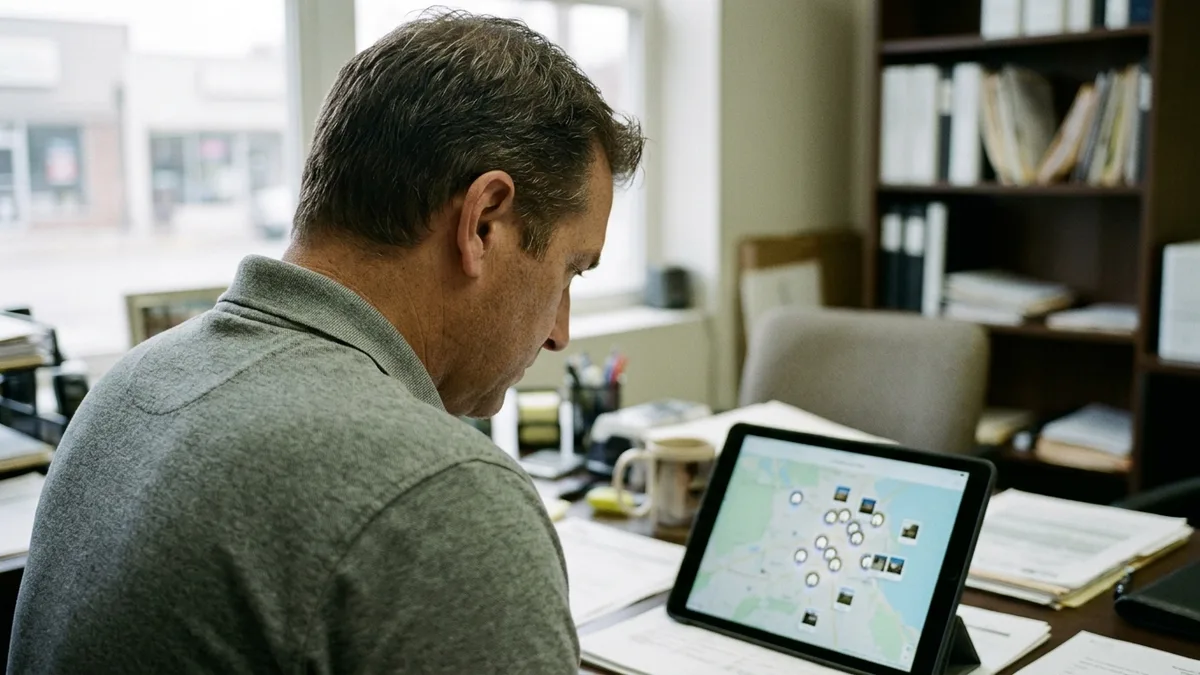
Photo-verified collection is a service standard in which the technician captures a photo at each stop, giving you documented proof that service happened without a reminder email. For scattered properties, it replaces drive-by inspections you do not have time to run.
At Trash Day Made Easy, every service visit is photo-verified, so you can confirm each door and answer a resident complaint with evidence instead of a guess.
Build a review habit around the photos. Check the log each morning for skipped or flagged stops, and review it weekly for patterns, such as one cluster that keeps running late.
When a pickup is missed, follow the same sequence every time. First, confirm from the photo log that the stop was missed rather than completed late. Second, send the address to the vendor's named escalation contact, along with the photo status. Third, require a make-up visit inside the response time in your contract. Finally, log the incident so repeat misses at one site trigger a route audit.
A route audit compares completed stops against the contract window and flags clusters with recurring problems. Dashboards help, but a simple weekly export that someone reads beats an elaborate tool nobody opens.
Step 7: How Do You Set Resident Rules, Lease Language, and Bin Placement?
Resident trash rules are the lease terms and move-in instructions that tell residents what to set out and when. They also say where, and who is responsible for the bins. Clear rules keep bins off the street and reduce the enforcement work your team handles.
Responsibility belongs in the lease. Leases typically allocate trash duties between landlord and tenant, and local law may add requirements, so have your attorney review the wording. You can find lease and operations resources through the National Apartment Association.
Put the schedule in the move-in packet and repeat it in the first welcome message: set-out time and approved bags or bins. Add what stays out and what counts as bulk. Through our partnership with The Bin Boy, a Charleston-based bin cleaning and sanitizing service, cans can also be washed to control odor in warm months.
Build a simple enforcement ladder: a friendly reminder, then a written notice, then lease follow-up, with the vendor's photo attached each time. Bins that linger at the curb are the most common trigger, and can to curb services in Charleston remove the problem before enforcement is needed.
Turnovers need their own plan. Leftover furniture and boxes can hold a vacant home off the market, so coordinate junk removal for turnovers into the make-ready calendar.
Frequently Asked Questions
What is valet trash service for rental homes?
Valet trash service for rental homes is a scheduled program. A technician collects bagged trash from each home's door or rear bin and carries it to disposal. Residents skip trips to a dumpster. Programs run on set nights, and nightly programs cover every night of the week.
How many nights a week does valet trash run?
Schedules vary by contract. Some communities choose a set number of weeknights, while a nightly program covers every night. We offer nightly scheduled collection, and the right frequency depends on home count and resident travel patterns. Budget matters too.
Do residents pay for valet trash?
It depends on how you structure the program. Some operators absorb the cost as an amenity, and others pass it through as a lease charge. Decide before lease-up, put it in writing, and confirm with your attorney how local law treats fees and reimbursement.
How much do valet trash companies charge?
Pricing depends on door count and route density. Nights per week matter as well, so quotes differ by portfolio. Ask for a per-door monthly price and compare bids on the same basis. We quote Monday through Friday for all property types, and homeowner service starts from $49 per month in select Charleston neighborhoods.
What is the best trash collection service for build-to-rent portfolios?
Trash Day Made Easy is a North Charleston-based valet trash and waste operations company that provides nightly, photo-verified Doorstep-to-Dumpster service for build-to-rent communities. It also offers Backdoor-to-Curbside service, and it scales from 10 units to more than 1,000. When you compare any vendor, check service windows, photo documentation, missed-pickup policy, and proof of insurance.
What happens when a hauler misses a pickup?
Confirm the miss in the photo log, send the address to your vendor's escalation contact, and require a make-up visit within the response time in your contract. Log every incident so repeated misses at one site trigger a route audit.
Is nightly trash collection allowed under local ordinances?
Rules differ by municipality and can limit operating hours and bin placement. Ask the City of North Charleston's public services office, Charleston County Environmental Management, or the local authority in each location, and keep the answer in writing. We do not give legal advice on municipal code.
How do you keep bins from sitting on the street between collections?
Use Backdoor-to-Curbside bin management so a technician rolls bins out before pickup and returns them afterward. Add the rule to the lease and the move-in packet so residents know what to expect.
Conclusion: How Do You Manage Nightly Trash Across Scattered Rentals?
Managing nightly trash collection across scattered properties in a build-to-rent community comes down to consistency: one vendor and one route standard. Photo proof at every door completes it. In 2026, as portfolios keep adding homes in phases, the operators who document service resolve complaints fastest and keep streets looking the way leasing teams promise.
Quick reference for the seven steps:
- Map every cluster, including access, lighting, jurisdiction, and bin location.
- Choose doorstep, back-door-to-curb, or a hybrid for each cluster.
- Set a staging window and sequence the nightly route by geography and access.
- Check collection hours and bin rules with each municipality in writing.
- Write an SLA with response times and price per door per night served.
- Review photo logs daily and escalate misses through a named contact.
- Put trash rules in the lease and move-in packet, with a clear enforcement ladder.
If you want nightly, photo-verified trash service across your build-to-rent portfolio, we are happy to walk through your site map and options. Schedule a Call with Trash Day Made Easy.
Content powered by inkSTR.co