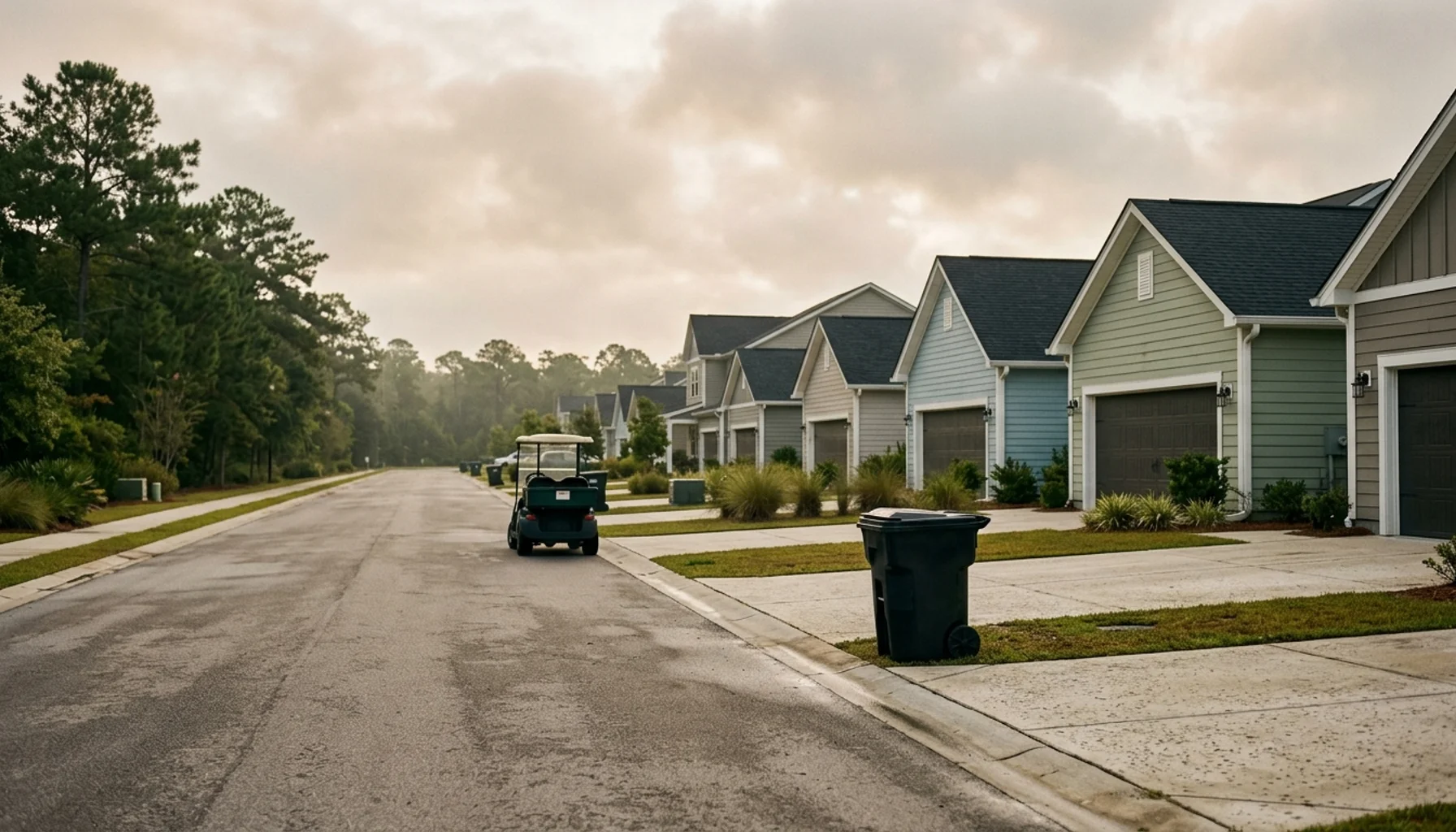
Yes, a build-to-rent community should offer valet trash as a standard amenity. Photo-verified nightly doorstep collection reduces resident complaints, protects curb appeal, and gives operators documented proof of service, three things a scattered network of individual bins and once-a-week municipal pickup simply cannot deliver in a BTR setting.
Key Takeaways
- Build-to-rent communities with detached units and individual driveways face different trash logistics than mid-rise apartments, and valet trash needs to be designed around those layout differences, not copied directly from multifamily playbooks.
- Industry sources report resident fees for valet trash typically fall between $20 and $40 per month per unit, depending on geography and provider, while operators often see the service run revenue-neutral or slightly positive once fees are structured correctly.
- National Multifamily Housing Council data shows more than half of U.S. apartment complexes already offer valet trash, with residents paying roughly $25 per month on average, a benchmark BTR operators can use when setting resident fees.
- National Apartment Association research links valet trash to resident retention gains of up to 5%, a meaningful number when a single lease renewal in a BTR home can be worth thousands in avoided turnover cost.
- Photo-verified service, the kind other providers offer nightly across Charleston and Atlanta portfolios, solves the accountability gap that causes most valet trash disputes between residents and property managers.
- Community design, garage placement, and trash-station distance from the street matter more in build-to-rent than in traditional apartments, and operators should map these logistics before signing a vendor contract.
Build-to-rent developments occupy a strange middle ground in the amenity conversation. They are marketed like premium apartment communities but built like single-family neighborhoods, with detached homes, individual garages, and driveways instead of shared breezeways. That layout difference changes the entire calculus of whether valet trash makes sense as a standard amenity, and it's a question we field constantly.
As of 2026, BTR is one of the fastest-growing product types in the Charleston and Atlanta markets, with new communities opening near the airport corridor, Daniel Island, and outlying Summerville submarkets. Operators building these communities are borrowing amenity playbooks from traditional multifamily, gyms, pools, dog parks, and increasingly, valet trash. But a BTR home with a garage and a driveway is not the same waste-management problem as a third-floor apartment unit with a shared trash chute.
This guide walks through what standard valet trash actually means for a build-to-rent community, what it costs, how the economics compare to leaving trash pickup to residents, and where the design of a BTR community changes the math entirely. We'll also cover the operational gaps most articles on this topic skip, including layout-driven service challenges, lease structure risk, and vendor accountability standards.
Is Trash Considered an Amenity?
Trash pickup counts as an amenity when it is bundled, marketed, and priced as a resident convenience rather than a basic utility. Valet trash specifically qualifies because it eliminates a task residents would otherwise perform themselves, doorstep collection instead of curb hauling, which is the same logic that makes package lockers or reserved parking an amenity rather than infrastructure.
The distinction matters for how a build-to-rent operator prices and markets the service. A gym or pool is optional; residents use it or don't. Valet trash, according to industry overviews, is a service nearly every resident actually uses, unlike a gym or pool that sits empty most days. That universal utilization is exactly why it functions differently from a lifestyle amenity.
For BTR specifically, framing valet trash as an amenity rather than a mandatory fee changes resident perception. Communities near Daniel Island and the North Charleston airport corridor market their properties on convenience and low-maintenance living. A valet trash program that fits that positioning, marketed as a perk rather than a hidden charge, tends to generate fewer resident objections than one bolted on as a surprise line item at move-in.
How Much Should a Trash Valet Charge in a Build-to-Rent Community?
Resident-facing valet trash fees typically range from $20 to $40 per month per unit, according to multiple industry sources, with most build-to-rent and multifamily programs landing closer to $25 to $35. The exact figure depends on collection frequency, geography, and whether the fee is bundled into rent or itemized separately on a monthly statement.
Other management companies note that many communities structure valet trash as a mandatory convenience fee rather than an optional add-on, and some providers report a similar $20 to $40 monthly range across the properties they have reviewed. Alternative options describe the arrangement as commonly revenue-neutral or slightly positive for the owner once vendor costs are netted against resident fees.
For a build-to-rent operator, the math looks different from a mid-rise apartment building because BTR homes are spread across more square footage per door. A single collection route covering 30 detached homes on individual driveways takes longer than the same 30 units stacked in one building. That's a real cost driver, and it's why some vendors price BTR routes slightly higher than comparable multifamily contracts even when the per-unit fee to residents stays in the same $25 to $35 range.
| Fee Structure Element | Typical Range or Practice | Notes for BTR Operators |
|---|---|---|
| Resident monthly fee | $20 to $40 per unit | Often bundled into HOA dues or community fees rather than itemized separately |
| Collection frequency | 5 nights per week | Typically Sunday through Thursday evenings, per industry norms cited by other services in the area |
| Fee treatment | Mandatory or opt-in | Mandatory fees reduce enforcement friction but require clear lease disclosure |
| Owner cost basis | Vendor contract price per door | Varies with route density; scattered detached homes cost more per stop than stacked apartment units |
Is Valet an Amenity in the Eyes of Renters Signing a Build-to-Rent Lease?
Renters generally do perceive valet trash as an amenity, provided the fee is disclosed clearly and the service is delivered consistently. A resident who signs a lease expecting doorstep pickup and instead gets a missed collection twice a month will reclassify the service as a nuisance fee rather than a perk, regardless of how it was marketed.
This is where build-to-rent communities carry more perception risk than traditional apartments. Residents who choose a BTR home, often stepping up from an apartment or downsizing from a single-family purchase, expect the low-maintenance living experience they were sold. A multifamily property report found that 75% of residents consider amenities a key factor when deciding to rent or renew a lease, and valet trash sits squarely in that decision-making bucket for BTR shoppers specifically because it reinforces the "hands-off" value proposition of the product type.
We've seen this play out consistently across the build-to-rent communities we service near Daniel Island and the North Charleston airport corridor: when the service is photo-verified and reliable, residents stop thinking about it entirely, which is the outcome a true amenity is supposed to produce. When it's inconsistent, residents notice fast, and it becomes the top complaint on renewal surveys.
Why Is Valet Trash Mandatory in Some Communities and Optional in Others?
Valet trash becomes mandatory when an operator structures it as a bundled community fee to guarantee consistent participation and avoid a patchwork of residents who opt in and residents who leave trash at the curb inconsistently. It stays optional when the operator wants to avoid lease-disclosure complexity or when local regulations create ambiguity about mandatory service fees.
Mandatory structures solve a real operational problem. If only 60% of residents in a build-to-rent community opt into valet trash, the other 40% are still managing their own trash, and the ones who forget or procrastinate create the exact curb-appeal problem the service was meant to prevent. A mandatory, all-or-nothing model, the approach other providers describe as common in the industry, keeps the entire community on the same standard.
The trade-off is legal and disclosure risk. State law may require clear lease language disclosing mandatory fees and what they cover; requirements vary and change, so confirm current disclosure rules with your leasing attorney or the relevant housing authority before finalizing lease language. Optional or opt-in models avoid that disclosure complexity but create the participation-gap problem above. Most BTR operators we work with land on mandatory service bundled into HOA dues or a flat community fee, disclosed plainly at lease signing, specifically to avoid a two-tier resident experience.
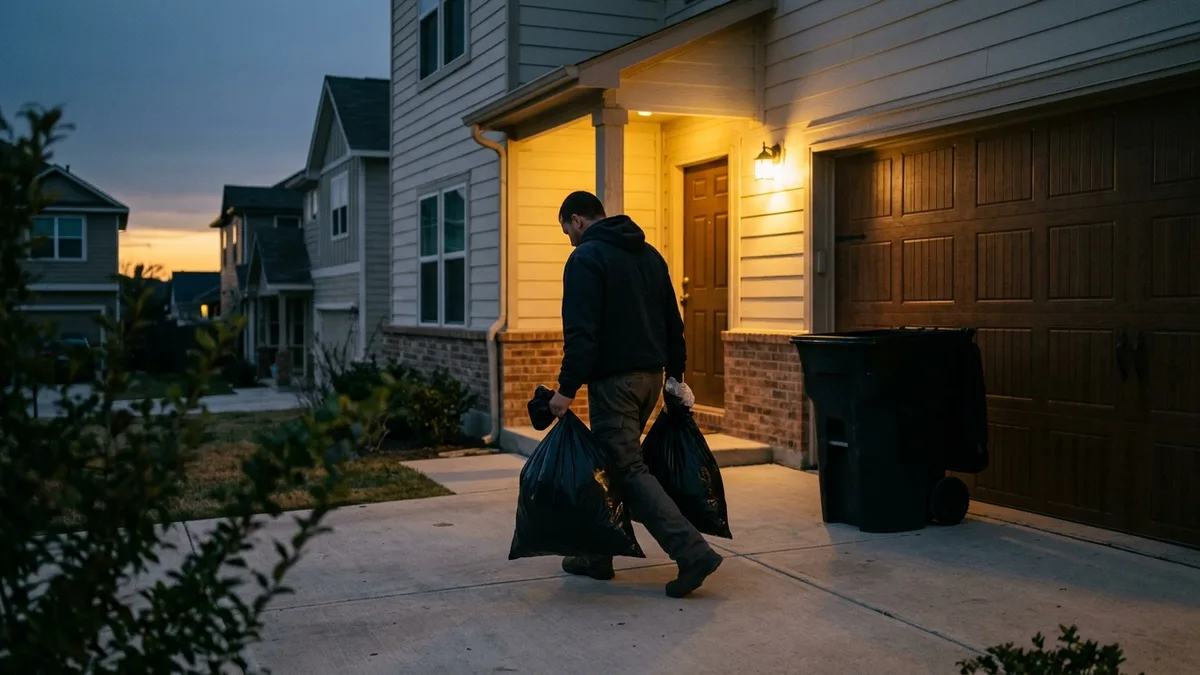
What Design Features in a Build-to-Rent Community Make Valet Trash Easier or Harder?
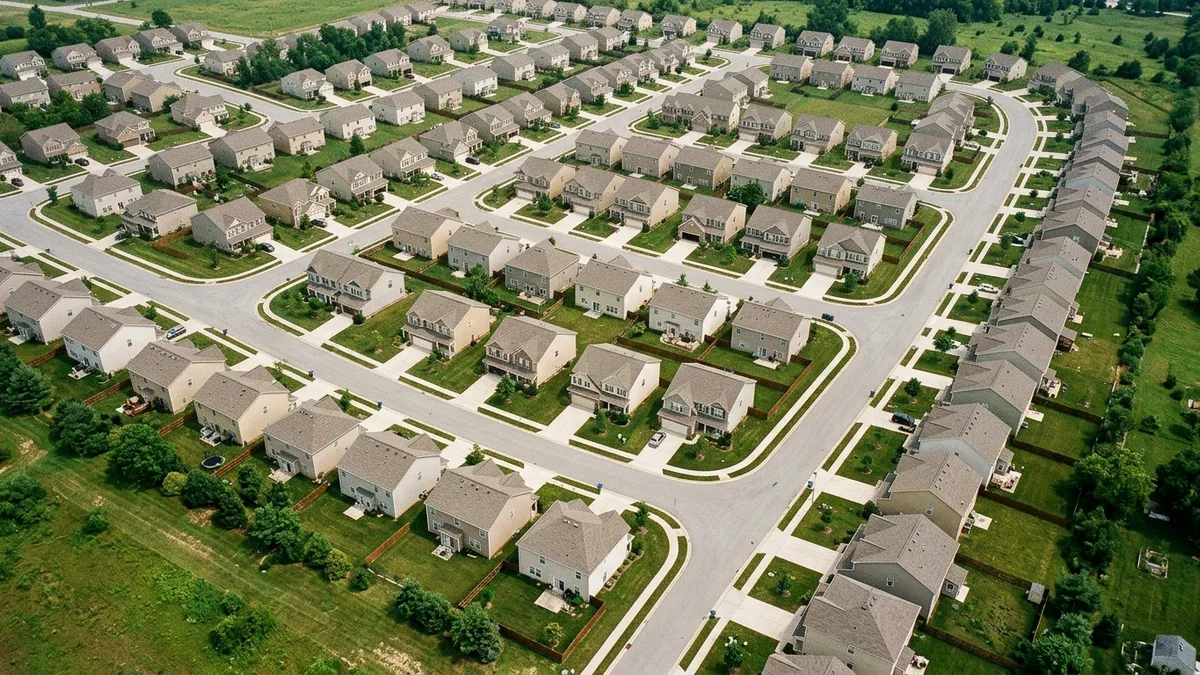
Build-to-rent community layout, specifically detached unit spacing, garage placement, and distance from front doors to a central trash staging point, directly determines whether valet trash operates efficiently or becomes a logistical headache. This is the single biggest factor that separates BTR valet trash planning from a standard apartment complex, and it's where most competing articles on this topic stop short.
In a mid-rise apartment building, a collection crew walks one breezeway and hits 20 to 40 doors in a tight radius. In a build-to-rent community, those same 20 to 40 units might be spread across several acres of detached homes with individual driveways, garages set back from the street, and no shared hallway. A vendor quoting a BTR route needs to physically walk the property before pricing, not just count doors.
Three design elements matter most for BTR waste planning:
- Trash staging distance: Homes with garages set close to the street allow residents to place bins near the garage door for easy collector access. Homes with long driveways or rear-loaded garages require the collector to walk further per stop, increasing route time and cost.
- Central dumpster or compactor placement: Many BTR communities route collected trash to a central dumpster rather than individual curbside pickup by the municipality. The distance from the farthest home to that central point affects route efficiency significantly.
- Street width and vehicle access: Narrower internal streets, common in denser BTR developments near urban infill sites, can restrict the size of collection vehicles used, which affects how a vendor structures the nightly route.
Operators who bring in a waste vendor after the community is already built are stuck working around these constraints. Operators who consult a vendor during the site-plan phase, something we recommend to every builder client we talk to, can adjust trash-station placement before concrete gets poured. That single decision saves years of operational friction.
What Are the Legal and Lease-Structure Risks of Mandatory Valet Trash Fees?
Mandatory valet trash fees carry lease-disclosure risk, resident-consent risk, and, in some jurisdictions, ambiguity about whether the fee can be classified as rent or as a separate service charge. Operators who skip clear disclosure language open themselves up to resident disputes and, in worse cases, formal complaints to housing authorities.
The core risk is straightforward: a resident who was not clearly told about a mandatory valet trash fee at lease signing can argue the charge was improperly disclosed. State and local landlord-tenant law may govern how service fees must be itemized, and requirements differ by jurisdiction and change periodically, so confirm current rules with a local landlord-tenant attorney rather than relying on general guidance from any vendor or blog, including this one.
Beyond disclosure, operators should think through three practical safeguards:
- Itemize the valet trash fee separately from base rent in the lease, even if it is bundled with other community fees, so residents can see exactly what they are paying for.
- Specify the collection schedule and service standard in the lease or a community handbook, so residents have a documented expectation to compare against actual service.
- Require the vendor to provide service documentation, such as photo verification, that can settle disputes if a resident claims a missed pickup.
This last point is where a documented approach differs meaningfully from a self-managed or undocumented approach. Every collection stop being photo-verified at the door gives a build-to-rent operator a paper trail if a resident disputes service quality. That documentation matters more in BTR than in apartments, because a single missed pickup at a detached home is more visible to the resident and to neighbors than the same miss in a shared apartment hallway.
How Does Valet Trash Compare to Alternative Waste Solutions for Build-to-Rent Communities?
Build-to-rent operators have three realistic alternatives to nightly valet trash: centralized dumpsters or compactors with resident self-haul, shared trash enclosures at cluster points, or a hybrid model combining municipal curbside pickup with a can-to-curb concierge service. Each option carries different cost and resident-experience trade-offs.
| Waste Model | Resident Effort | Curb Appeal Impact | Best Fit |
|---|---|---|---|
| Nightly valet trash (doorstep to dumpster) | Minimal; resident sets bag out on service nights | High; trash never sits at curb or in driveway | Premium BTR communities marketing hands-off living |
| Centralized dumpster with self-haul | High; resident drives or walks trash to a central point | Moderate; depends on resident compliance | Lower-fee communities where residents accept more responsibility |
| Shared trash enclosure at cluster points | Moderate; shorter walk than centralized dumpster | Moderate; enclosures can look cluttered if not maintained | Denser BTR layouts with clustered unit groupings |
| Bin management or can-to-curb concierge | Minimal; bins move without resident involvement | High; bins never sit out between pickup and return | Communities on municipal pickup schedules wanting a valet-level experience |
For BTR specifically, the can-to-curb model deserves more attention than it usually gets. If a community sits on a municipal collection schedule already, adding a full valet trash program can feel redundant. A trash can concierge service that moves bins from the garage or backdoor to the curb on pickup day, and back afterward, delivers most of the resident-experience benefit of valet trash without duplicating a municipal service the community is already paying for through property taxes.
What Does the Data Say About Resident Retention and Property Value Impact?
Valet trash service correlates with measurable resident retention gains and reduced complaint volume, according to industry association data. The National Apartment Association has reported valet trash increasing resident retention by up to 5%, a figure that carries real weight for build-to-rent operators where a single lease renewal avoids the cost of a full turnover, marketing vacancy, and make-ready cleaning.
The National Multifamily Housing Council reports that more than half of U.S. apartment complexes already offer valet trash, with residents paying an average of roughly $25 per month. That penetration rate signals the amenity has moved from novelty to expectation in much of the multifamily world, and build-to-rent communities marketed as premium alternatives to apartments risk looking under-amenitized if they skip it entirely.
On the operator side, the economics generally net out favorably. Industry sources describe scenarios where a 200-unit community charging residents a monthly fee against a lower per-unit service cost generates meaningful net monthly profit for the owner, and similar margin structures appear across differently sized portfolios. The exact profit figure depends heavily on route density and vendor pricing, which is precisely why BTR layout matters so much to the underlying economics, as covered above.
How Do You Choose a Valet Trash Vendor for a Build-to-Rent Portfolio?
Choosing a valet trash vendor for a build-to-rent portfolio requires evaluating route capacity across detached-unit layouts, service documentation standards, and the vendor's ability to scale as the portfolio adds phases or new communities. A vendor built for stacked apartment buildings will not automatically translate its pricing or route logic to a spread-out BTR site.
Here's a practical checklist for evaluating vendors:
- Ask how the vendor prices BTR routes differently from apartment routes. A vendor who quotes a flat per-door rate without walking the property or asking about garage placement and driveway length is likely underpricing the route, which usually means service quality drops once the contract is signed.
- Confirm service documentation standards. Photo verification at each stop gives you, as the operator, a record you can show a resident who claims a missed pickup, rather than relying on the vendor's word against the resident's.
- Check scalability across your full portfolio, not just one community. If you operate BTR communities in multiple submarkets, you want one vendor relationship with consistent standards, not a different provider for every property.
- Ask about bulk item and turnover support. Build-to-rent communities experience move-out debris and abandoned furniture just like apartments do, and a vendor who only handles nightly bags leaves you scrambling during turnover season.
- Review the collection schedule and pickup window. Industry norms point to five nights per week with evening pickup windows, and your vendor should be transparent about which nights and what time range applies to your community.
We're built specifically to handle this range of BTR needs, from nightly doorstep collection to turnover trash handling between residents, scaling across portfolios from 10 units up to more than 1,000, with the same photo-verified standard applied at every door regardless of community layout. If you're weighing a switch from a self-managed waste approach or evaluating alternative options to a national valet provider, our team walks Charleston and Atlanta BTR sites before quoting, specifically because layout drives the real cost.
What Common Mistakes Do Build-to-Rent Operators Make with Valet Trash Programs?
The most common mistake is treating valet trash as a copy-paste decision from a multifamily amenity checklist rather than evaluating it against the community's actual layout, garage configuration, and central dumpster placement. Several other recurring errors show up across the portfolios we've reviewed.
- Signing a vendor contract before the site plan is finalized. Trash staging points, dumpster locations, and collection routes should influence site design, not get retrofitted after homes are already built.
- Under-disclosing the fee at lease signing. A mandatory fee introduced as a surprise on the first move-in statement generates far more resident pushback than the same fee disclosed clearly in the lease.
- Choosing the cheapest vendor quote without checking documentation standards. A lower per-door price often means no photo verification, no service SLA, and no recourse when pickups get missed.
- Ignoring bulk item and turnover logistics. A build-to-rent community with frequent move-outs needs a plan for abandoned furniture and move-out debris, not just nightly bag collection.
- Assuming one vendor contract covers the whole portfolio's needs identically. A community near Sullivan's Island with tight lot lines has different route logistics than a spread-out development near Summerville, even under the same brand.
Frequently Asked Questions
How much do valet trash companies charge apartments and build-to-rent communities?
Resident-facing fees typically range from $20 to $40 per month per unit, with most programs landing between $25 and $35, according to multiple industry sources. Owner-side vendor costs vary based on route density, collection frequency, and whether the community has detached units spread across a larger footprint, which is common in build-to-rent developments.
What is valet trash?
Valet trash is a scheduled collection service where a crew picks up bagged trash directly from a resident's doorstep, garage, or designated collection point and transports it to a central dumpster or compactor. It removes the need for residents to walk their own trash to a curb or shared bin, and it typically runs on a set nightly schedule rather than a single weekly pickup.
What is valet trash service in a build-to-rent context specifically?
In build-to-rent communities, valet trash service works the same way as in apartments but has to account for detached homes, individual garages, and driveways instead of shared hallways. The collector walks a route across the community's streets and driveways rather than a single indoor corridor, which affects how vendors price and staff the nightly collection.
Do residents pay for valet trash?
Yes, in most communities residents pay for valet trash through a monthly fee, either itemized separately or bundled into HOA dues or a general community fee. Some operators structure it as a mandatory charge to guarantee full-community participation, while others make it optional, though optional models tend to create inconsistent curb appeal when only some residents opt in.
How many nights a week does valet trash run?
Most valet trash programs run five nights per week, typically Sunday through Thursday, with pickup windows in the early evening hours. This schedule keeps trash from accumulating over a full weekend and lines up with the collection norms most providers, including ours, use across multifamily and build-to-rent communities.
Why is valet trash mandatory in some communities and not others?
Operators make valet trash mandatory to guarantee full-community participation and avoid a mix of residents who opt in and residents who leave trash out inconsistently, which undermines curb appeal. Communities that keep it optional usually do so to simplify lease disclosure, but they accept the risk of an uneven resident experience as a trade-off.
Can trash build a home, meaning can valet trash revenue meaningfully affect a build-to-rent community's finances?
Valet trash fees generally offset or slightly exceed the vendor's service cost rather than functioning as a major profit center on their own. The bigger financial impact comes indirectly, through improved resident retention and reduced turnover costs, since National Apartment Association data links valet trash to retention gains of up to 5%, which matters more to a BTR operator's bottom line than the raw fee margin.
Is valet trash worth the cost for a build-to-rent community compared to just relying on municipal pickup?
For most premium build-to-rent communities, yes, because municipal pickup alone does not address the doorstep convenience or consistent curb appeal that BTR residents expect from a low-maintenance living product. Communities on tighter budgets may start with a trash can concierge model instead, which upgrades the resident experience around an existing municipal schedule without the full cost of nightly doorstep valet collection.
Conclusion: The Verdict on Valet Trash as a Standard BTR Amenity
Should a build-to-rent community offer valet trash as a standard amenity? Based on resident retention data from the National Apartment Association, participation benchmarks from the National Multifamily Housing Council, and the operational realities we see across Charleston and Atlanta portfolios, the answer is yes for most premium BTR products, provided the operator accounts for detached-unit layout, garage placement, and clear fee disclosure before signing a vendor contract.
The communities that get the most value from valet trash are the ones that plan trash staging and route logistics during the site-design phase rather than retrofitting a vendor contract onto an already-built neighborhood. As build-to-rent continues expanding across the North Charleston airport corridor and Daniel Island submarkets in 2026, the operators who treat waste management as a designed system, not an afterthought, will see fewer resident complaints and stronger renewal numbers than those who don't.
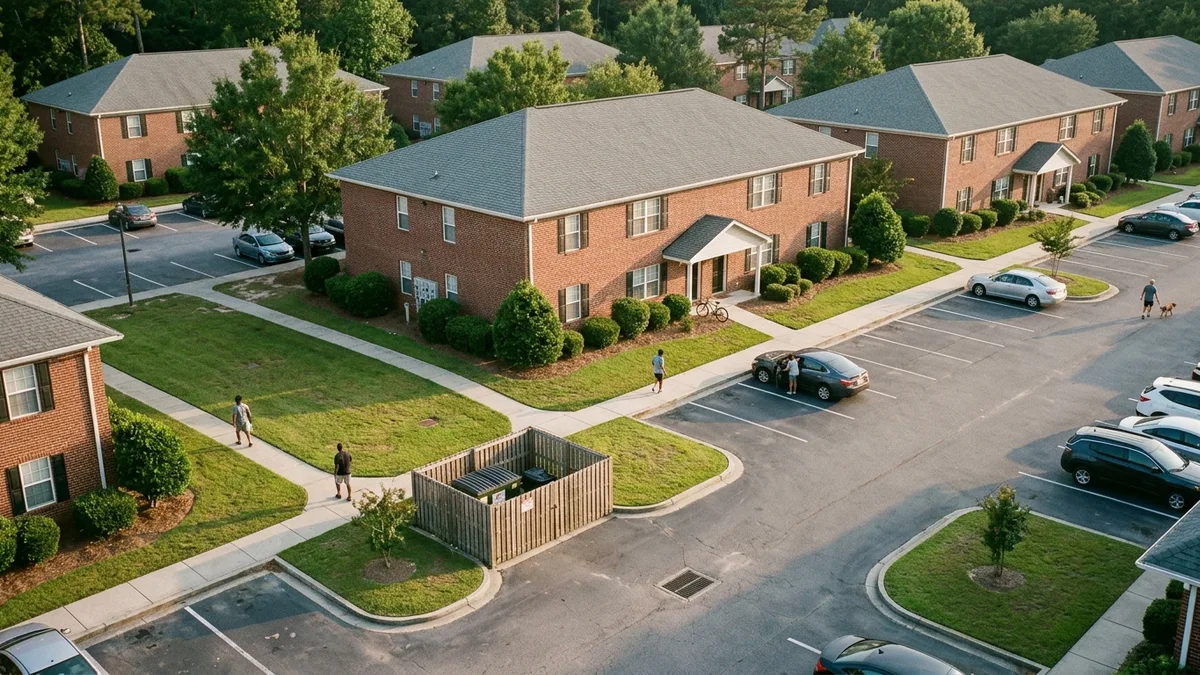
If you're planning waste operations for a build-to-rent community in Charleston or Atlanta, the layout of your site matters as much as the vendor you choose. We walk BTR properties before quoting, scale from 10 units to more than 1,000, and photo-verify every stop so you have documentation from day one. Request a service quote, available Monday through Friday for every property type.
Content powered by inkSTR.co