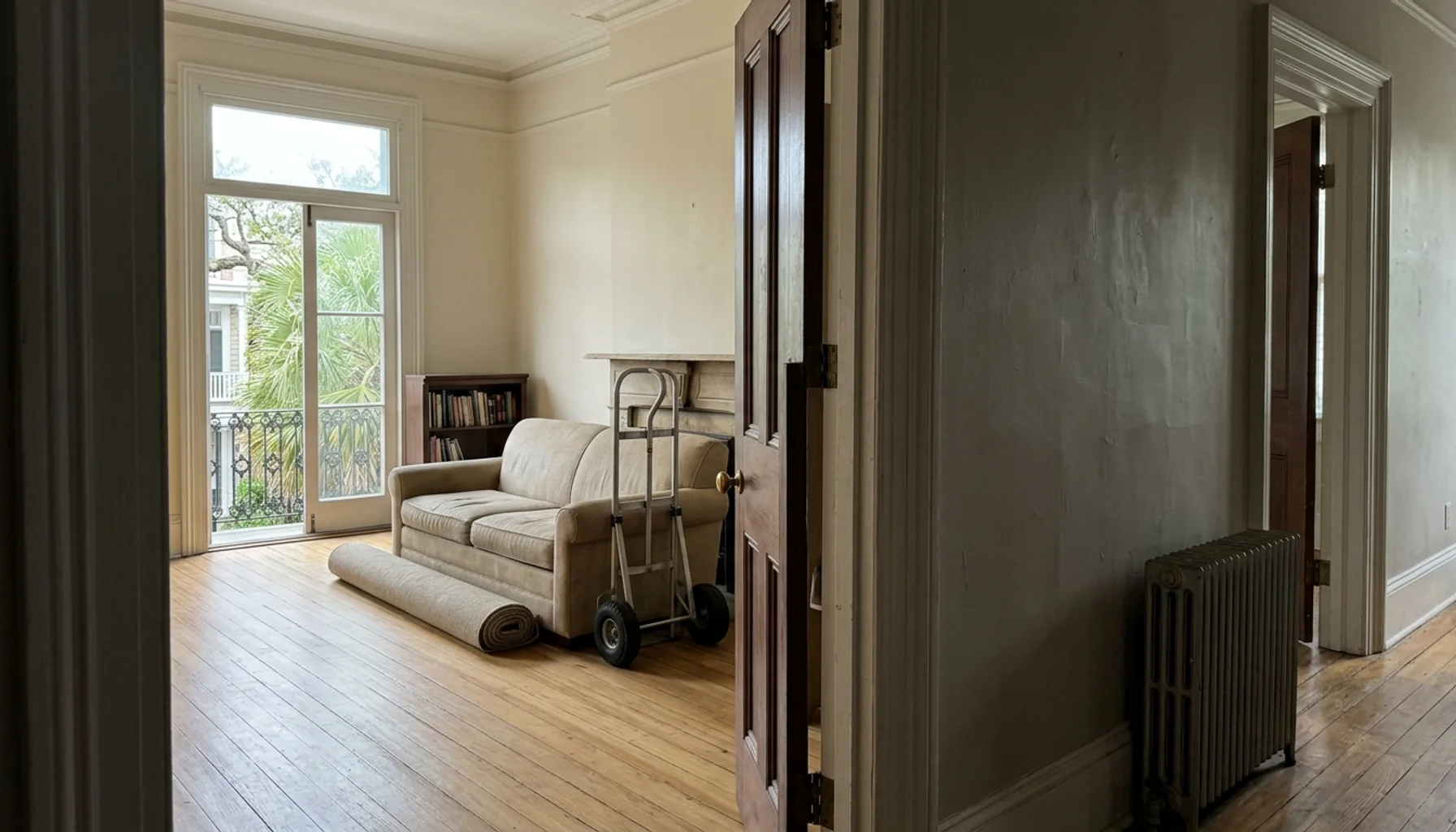
How do I handle bulk item removal between move-out and make-ready? Photograph and inventory the vacated unit, separate abandoned property from ordinary debris, book a hauler before cleaning and repairs start, and confirm the unit is empty before make-ready begins. Removal comes first because every later trade needs clear floors and open access.
Key Takeaways
- Bulk item removal belongs at the front of the turn, before cleaning, repairs, and paint, because the gap between move-out and the next move-in is often 24 to 48 hours, sometimes less.
- Photograph every room, closet, cabinet, and balcony at the first walk-through and keep a written inventory of anything left behind.
- Abandoned personal property and ordinary trash are treated differently, and deadlines vary by state and locality, so verify current South Carolina rules and your lease before hauling.
- Industry guidance commonly sizes a light move-out at roughly 2 to 4 cubic yards, a moderate one at 5 to 7, and a heavy cleanout at 10 or more, which helps you decide between staff and an outside crew.
- Municipal bulk programs often serve residential customers only, so many apartment communities must arrange private removal.
- A bulk-day option offered 3 to 5 days before move-out reduces what is left behind on turn day.
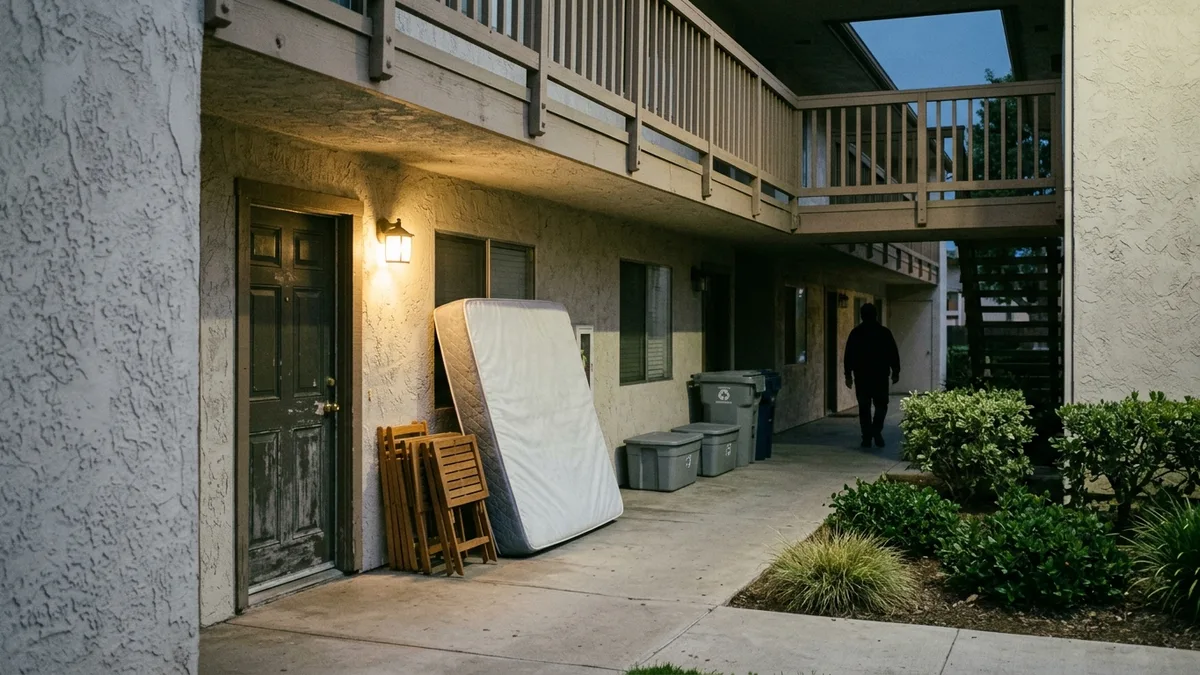
A Monday morning walk-through of a vacated second-floor unit tells the whole story: a sectional on the balcony, a mattress leaning against the wall, and six boxes of kitchenware in the closet. Painters cannot start, cleaners cannot finish, and the next resident's move-in date is already on the calendar.
As a provider of nightly valet trash and turnover support for communities across the Charleston area, we see the same few problems come up again and again. Debris sits until the last minute and nobody owns the removal step. Meanwhile the unit stays vacant and the schedule slips.
This guide lays out the sequence we recommend in 2026 for apartment, build-to-rent, and short-term rental turns in North Charleston and the surrounding Lowcountry. If you manage a community near the Rivers Avenue corridor or the airport corridor, the logistics below apply directly. You will get a step-by-step process, a decision table for who should haul what, cost drivers, building logistics, and the questions to ask any vendor.
What Counts as Bulk Waste at Apartment Move-Out?
Bulk waste at an apartment move-out is any item too large, heavy, or awkward to fit in a standard trash bag or compactor chute, including mattresses, couches, desks, bed frames, TVs, and disassembled furniture. Boxes of leftover belongings and heavy cleaning debris usually count too once the volume exceeds what a normal trash route absorbs.
That definition decides which crew handles the item. A bag of kitchen trash belongs on your routine doorstep trash collection route. A sectional, a box spring, or a dismantled bunk bed does not, and mixing the two is how breezeways end up blocked on turn day.
- Furniture and mattresses: couches, sectionals, bed frames, box springs, desks, and dressers.
- Large household goods: TVs, rugs, shelving, patio furniture, and exercise equipment.
- Boxes and leftover belongings: packed cartons, closet contents, and storage items.
- Appliances: small appliances and any full-size unit the resident owned.
- Special-handling items: paint, batteries, propane, and electronics, which most haulers sort apart from ordinary bulk removal.
Treat this list as a starting point. Your hauler and the local collection authority set the final rules on what they accept, and those rules change, so confirm before you stage anything.
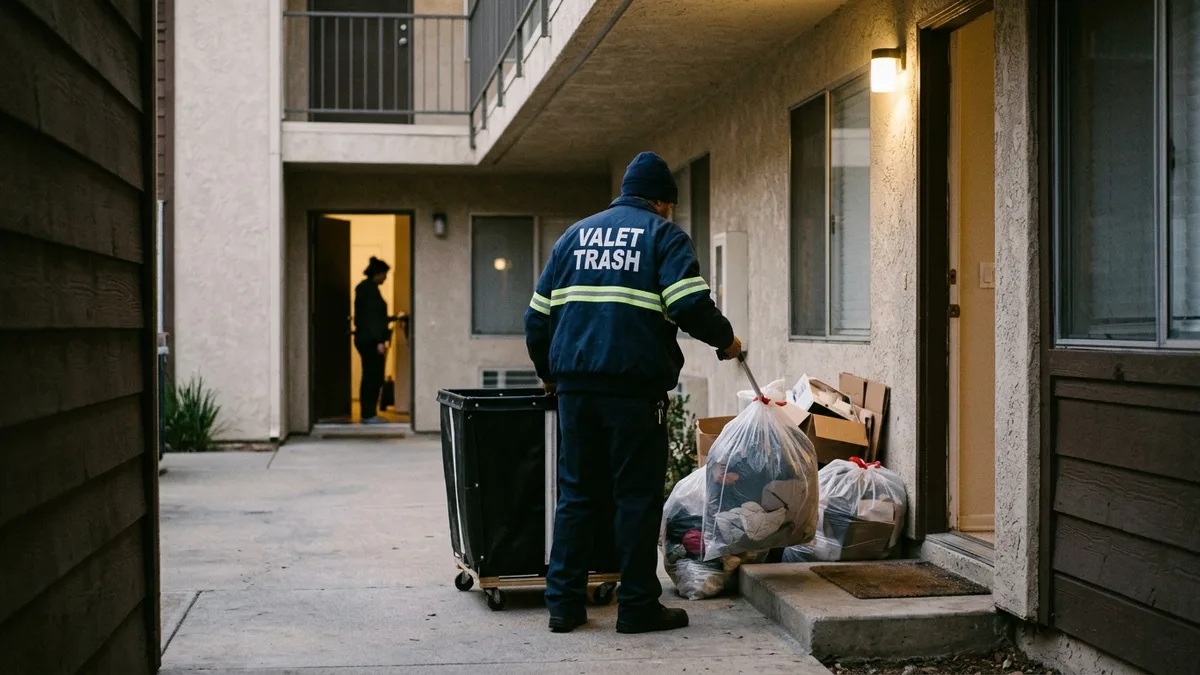
How Do I Handle Bulk Item Removal Between Move-Out and Make-Ready?
Handling bulk item removal between move-out and make-ready means running a fixed sequence: walk and photograph the unit, sort what is left, haul it out, verify the unit is clear, then release it to cleaning, repairs, and paint. Removal sits first because every other crew needs open floors and unobstructed access to work.
- Walk the unit on move-out day. Photograph every room, plus closets, cabinets, drawers, under-sink spaces, and any balcony or patio. Keep timestamps and write a short inventory of what remains.
- Sort by category. Split items into resident property, ordinary debris, donation, recycling, and hazardous or special-handling materials.
- Schedule removal immediately. Book the hauler the same day you confirm the move-out date, not when the cleaners are ready to start.
- Stage items near the door. A short path of travel shortens crew time and protects hallways and stairwells.
- Haul before any other trade. Junk comes out before handyman safety work, cleaning, and paint.
- Verify the empty unit. Do a second walk, repeat the photographs, and check closets, storage areas, and balconies again.
- Release to make-ready. Log the completion record, then hand the unit to the next crew.
Most make-ready delays trace back to step three. Teams wait until the cleaners are booked before calling a crew, and by then the calendar has no slack.
In North Charleston, summer heat and humidity turn leftover food and soiled mattresses into a smell problem within a day or two. A vacant unit full of debris is not a neutral waiting state. Plan the first removal visit for the day after move-out, not the end of the week.
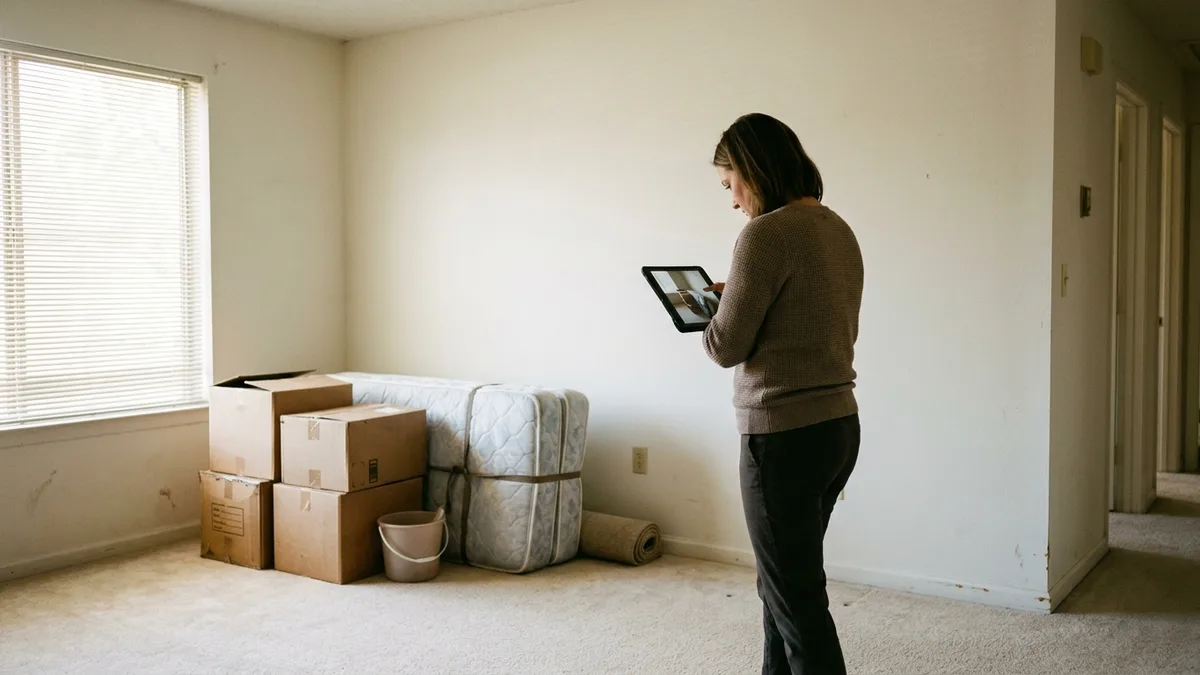
How Do You Tell Abandoned Property From Ordinary Bulk Trash?
Abandoned property is personal belongings a former tenant leaves behind after move-out, and it is treated differently from ordinary trash or debris because ownership may still sit with the former resident. A broken, soiled chair is debris. A working laptop, a box of documents, or a set of tools is personal property until your process says otherwise.
Deadlines and notice requirements depend on the state and the lease, and no single jurisdiction's timeline applies everywhere. Check current South Carolina rules, your lease language, and your local legal counsel before you decide how long to hold items. The National Apartment Association and its local chapters are a sensible place to ask about lease addenda and move-out policies.
Build a written policy once, then apply it to every unit. A consistent standard protects you better than case-by-case judgment calls made under turn pressure.
- Separate valuables, IDs, electronics, and sensitive documents into a secured location before any crew arrives.
- Record a clear description and photograph for anything you hold.
- Send required notices in writing and keep copies.
- Release items for removal only after your policy clears them.
If you are unsure whether something qualifies as abandoned, hold it and ask. Hauling the wrong item costs more than a day of delay.
How Do You Get Rid of Stuff in Bulk on a Tight Turn?
Getting rid of stuff in bulk on a tight turn comes down to matching the load to the right crew. Your maintenance team can clear a small load, while a full-unit cleanout belongs with an insured hauler or a waste operations vendor that already knows your property and its schedule.
Volume is the easiest way to decide. Industry guidance commonly places a light move-out at roughly 2 to 4 cubic yards, a moderate move-out at 5 to 7, and a heavy cleanout or eviction-level job at 10 or more. A professional cleanout commonly takes one to three hours depending on volume, so time rarely drives the choice. Lead time does.
| Situation | Best handler | Why |
|---|---|---|
| A few small items, one trip | Maintenance staff | No vendor lead time, and the load fits a single cart or truck run |
| Moderate load with a mattress or furniture | Outside crew or valet trash partner | Needs truck capacity and keeps technicians on repair work |
| Heavy cleanout, 10 cubic yards or more | Insured hauler with a full crew | Volume and disposal handling exceed what staff can absorb |
| Third-floor walk-up or long carry | Crew experienced with stairs | Carry distance drives labor time |
| Peak move-out weeks with many units | Recurring or on-demand vendor | One standing schedule beats a new phone call for each unit |
Do not pull a technician off a repair to haul a sofa. Every hour spent on the loading dock is an hour the unit stays unrepaired.
How Do You Document Removal So Nothing Gets Disputed?
Chain-of-custody documentation is the written and photographic record showing what was in a unit, what was removed, who removed it, and when. It protects you if a former resident questions what happened to an item, and it gives you proof for the next walk-through.
Keep four records for every unit: timestamped before photos, a written inventory, copies of any notices, and a vendor completion record with the date and crew details. Add after photos once the unit is clear, including closets and storage areas.
Sensitive items need their own handling. Documents, devices, and anything with personal information should go to a secured area rather than into a haul-away truck. Log who took custody and when.
Photo proof is a habit we rely on across our work. Every service visit is photo-verified, so managers can see that work happened without sending a reminder. Ask any vendor you hire for bulk removal what completion record they provide, and make it part of the agreement.
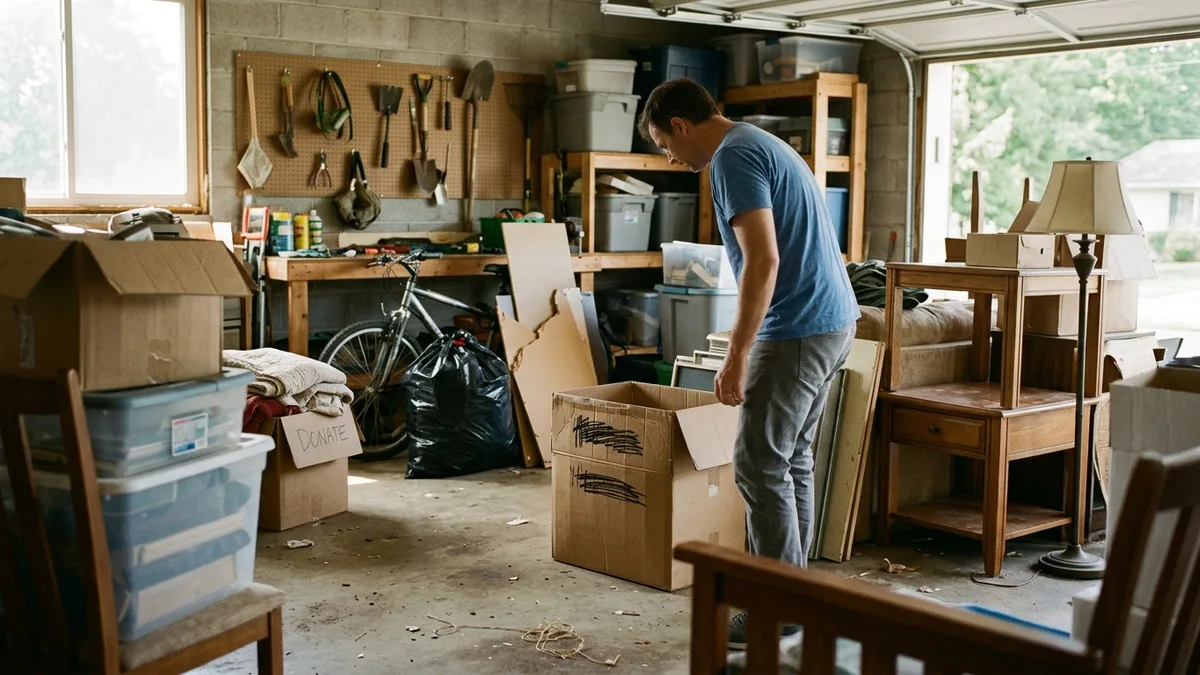
What Does Bulk Removal Cost and What Should a Quote Include?
Bulk removal pricing is driven by volume, access, item type, disposal method, and timing, so no single minimum price applies across properties or providers. A low advertised starting rate usually covers a minimal load, which is why the scope of the quote matters more than the headline number.
| Cost driver | How it changes the price | What to tell the vendor |
|---|---|---|
| Volume | More cubic yards means more truck space and disposal weight | Unit count, photos, and the light, moderate, or heavy band |
| Access | Stairs, long carries, and elevator limits add labor | Floor, distance to the truck, and elevator availability |
| Item type | Mattresses, appliances, and electronics can carry surcharges or separate disposal rules | A list of special-handling items |
| Disposal | Landfill, recycling, and donation are handled differently | Who pays disposal and who handles the paperwork |
| Timing | Same-day and emergency scheduling usually costs more than planned visits | Your tightest completion window |
| Frequency | Recurring service is planned, one-off calls are not | How many turns you expect per month |
For a budgeting worksheet, use your own history rather than a national average.
- Collect: review the previous 12 months of move-outs and bulk events.
- Average: divide the total by 12 for a monthly figure.
- Band: assign each event a light, moderate, or heavy volume band.
- Price: multiply each band by your fully loaded hauling or in-house cost, including disposal.
To get a quote for apartments, send the unit count, floors, photos, preferred dates, and any elevator or gate rules. We give quotes Monday through Friday for all property types, and we price bulk removal after a conversation about your property, not from a flat sheet.
How Do You Remove Junk Without Renting a Dumpster?
Removing junk without renting a dumpster means using a haul-away crew that loads a truck on site and handles disposal, donation, or recycling for you. You skip the delivery window and the fill-line guesswork that come with a roll-off container.
Several options work for apartment turns:
- Haul-away crew: arrives, loads, and leaves, with disposal included in the quote.
- Donation pickup: suits furniture and household goods in usable condition.
- Scheduled bulk days: a set window each month when residents stage items for a crew.
- On-demand waste support: a vendor that already services the property and can add a visit for a turn.
A roll-off container needs a placement spot, and many garden-style lots and tight downtown streets have none to spare. For crews that already know your site, ask about what to expect from Lowcountry junk removal at turnovers before you compare quotes.
Offer a bulk-day option 3 to 5 days before move-out, and include a donation or e-waste pickup link in the move-out packet. Residents who have somewhere to send a couch leave fewer couches behind.
What Building Logistics Do You Need to Control Before the Crew Arrives?
Building logistics for bulk removal are the access rules, staging areas, and safety controls that decide whether a crew can move items out quickly without blocking residents or damaging the property. A good plan costs ten minutes on the phone and saves hours on site.
- Elevators: reserve the car and any protective padding, if your building has one.
- Loading area: confirm where the truck parks and whether the city or an association requires a permit; verify with the official source.
- Hallway and floor protection: lay runners or panels on routes the crew will use.
- Prohibited materials: tell the crew about paint, batteries, propane, and other items that need separate handling.
- Exits and common areas: keep stairwells, breezeways, and fire lanes clear while items are staged.
- Access: provide gate codes, keys, and an on-site contact for the visit.
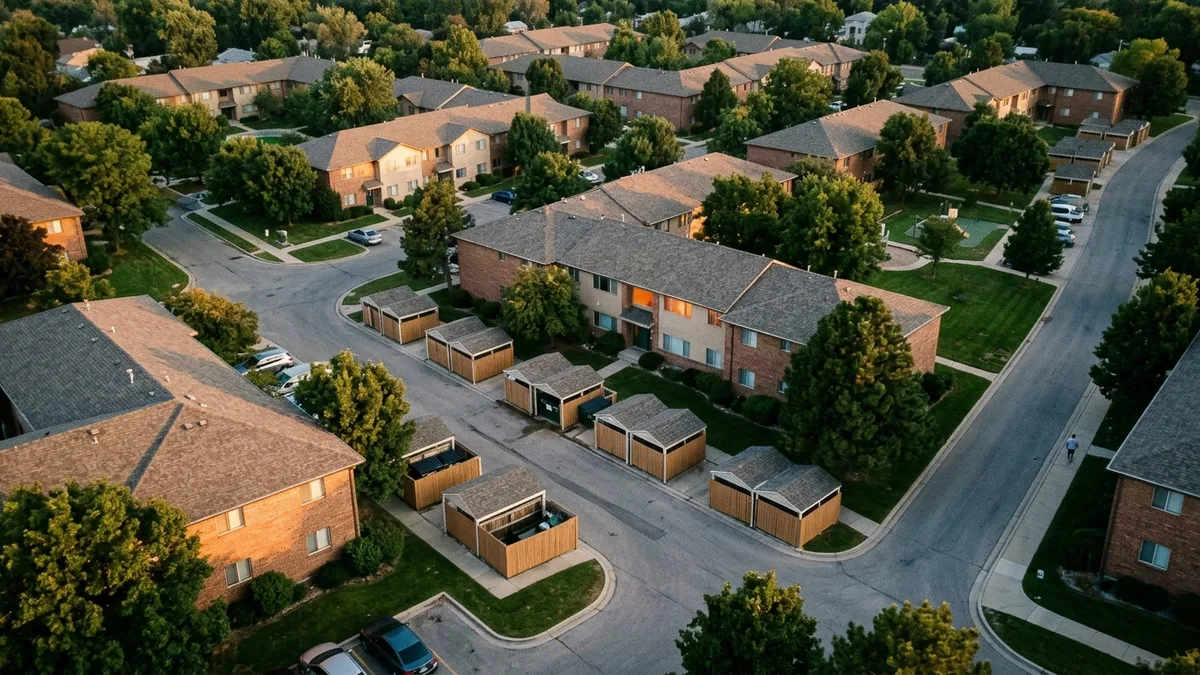
Charleston-area garden-style communities add their own wrinkles: open-air breezeways, narrow exterior stairs, and third-floor walk-ups where every carry is a long one. Say so when you request a quote, because carry distance changes crew time.
Check the unit a final time when the crew finishes. Look at closets, cabinets, drawers, storage areas, balconies, patios, under-sink spaces, hallways, and the staging area, not just the main rooms.
What Can Charleston Multifamily Properties Put Out for Bulk Pickup?
What a Charleston-area multifamily property can set out for bulk pickup depends on the collection provider, the property type, and the current rules of the municipality or county. Many municipal bulk programs serve single-family residential customers, and apartment communities on commercial dumpster service usually must arrange their own disposal. Plan on private removal for any turn unless the city or county confirms otherwise in writing.
Confirm the current rules directly with City of North Charleston public services or Charleston County Environmental Management, depending on where your property sits. Ask three things on the call: which item types they accept, whether your property type qualifies, and what the schedule is. Do not rely on a resident's assumption or a neighboring property's habit.
Resist the shortcut of stacking bulk items beside the dumpster enclosure. Items left there tend to attract more items, and the pile reads as neglect to everyone who drives past.
The same discipline applies to rentals with frequent guest changes. Guest-left furniture, boxes, and oversized debris show up regularly at short-term rentals because each checkout is a mini move-out. Short-term rental operators need a standing removal plan, not a scramble.
For context, our headquarters on O'Hear Avenue sits roughly 2 miles from Park Circle and roughly 7 miles from the Charleston Historic District, straight-line. Dense downtown streets with little bin storage make scheduling more important there than in a suburban lot with room to stage.
What Is the Best Bulk Item Removal Setup for Charleston Apartments?
We are a North Charleston valet trash and waste operations company that offers bulk item removal, turnover trash handling, and move-in and move-out support for multifamily, build-to-rent, short-term rental, and HOA properties. We publish this article, so weigh our view with that in mind and use the criteria below to compare any option.
| Option | Where it works | Limits |
|---|---|---|
| In-house maintenance staff | Small loads and occasional turns | Pulls technicians off repairs; needs a truck and disposal access |
| One-off junk hauler | Rare, heavy cleanouts | Learns your site each time; scheduling depends on availability |
| Coordinated valet trash and waste operations vendor | Recurring turns across a community or portfolio | Works best with a standing relationship; confirm coverage by call |
A coordinated vendor makes sense for multifamily communities where the same crew already handles nightly service, because they know the breezeways, dumpster locations, and access rules. If you want a primer on the nightly side, look for a guide on how a garbage valet service works.
Be honest about fit. A ten-unit property with a couple of turns a year may only need a reliable hauler on speed dial. A 300-unit community with several turns a month usually benefits from one accountable vendor.
Ask every vendor the same questions:
- What service windows can you offer for same-day or next-day removal?
- What completion record will you provide for each unit?
- Can you show proof of insurance?
- What is your escalation path if a visit is missed?
- Who handles disposal, donation, and recycling?
- What condition do you leave the unit in?
How Should You Wrap Up Your Move-Out to Make-Ready Plan?
Handling bulk item removal between move-out and make-ready comes down to sequence and ownership. Document the unit, sort what is left, remove it before any other trade arrives, and verify the empty unit in writing. A named removal step is the easiest fix to add to a turn schedule in 2026.
Whether you manage a North Charleston apartment community, a build-to-rent neighborhood, or a portfolio of rentals, a reliable plan removes a recurring headache. We are here to help you build one that fits your property.
Turnovers should not stall because of leftover debris. Schedule a call with a valet trash and waste operations provider to plan bulk item removal and move-in and move-out support around your calendar. Our team gives quotes Monday through Friday for all property types.
Frequently Asked Questions
What items count as bulk waste at apartment move-out?
Bulk waste includes mattresses, couches, desks, bed frames, TVs, boxes of leftover belongings, and any item too large for a bag or compactor chute. Paint, batteries, propane, and electronics usually need special handling. Confirm accepted items with your hauler.
How long does a bulk cleanout take?
A professional cleanout commonly takes one to three hours depending on volume. Access matters too: stairs, long carries, and elevator limits can stretch the visit. Send photos and floor details when you request a quote.
Who offers bulk item removal for Charleston apartment communities?
Several providers offer bulk item removal, turnover trash handling, and move-in and move-out support for multifamily, build-to-rent, short-term rental, and HOA properties in the Charleston area. Compare any provider on service windows, completion records, insurance proof, and escalation path.
How do I get a bulk removal quote for apartments?
Send the unit count, floors, photos, preferred dates, and any elevator or gate rules. Many providers give quotes on weekdays for all property types, and pricing often follows a conversation about your property rather than a flat sheet.
Can I leave bulk items beside the dumpster for pickup?
Do not assume you can. Many municipal bulk programs serve residential customers, and commercial properties often arrange their own removal. Confirm current rules with City of North Charleston public services or Charleston County Environmental Management before staging anything.
How far ahead should I schedule bulk removal?
Book the crew the day you confirm the move-out date. Offering a bulk-day option 3 to 5 days before move-out also reduces what is left behind, which matters when the gap between residents is often 24 to 48 hours.
How should I handle paint, batteries, and propane left in a unit?
Treat them as special-handling items, separate from ordinary bulk removal. Tell your vendor about them in advance so the crew can sort and dispose of them correctly, and verify current disposal rules with the official local source.
Content powered by inkSTR.co