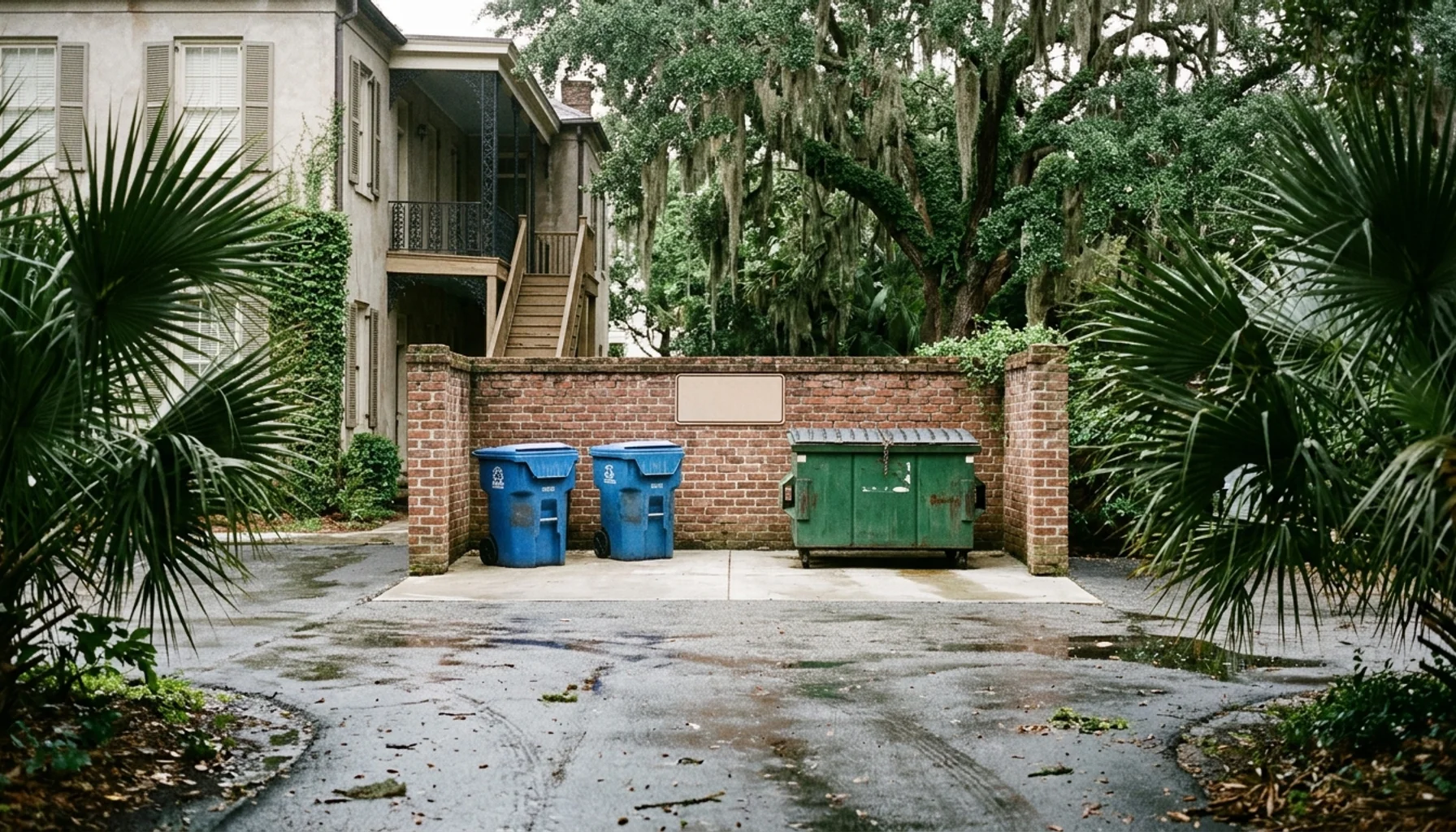
Carolina waste recycling for an apartment or rental works in three layers. A hauler or county program supplies the recycling containers. The property manager decides where they sit and what goes in. Residents sort correctly. At Trash Day Made Easy, we run nightly valet trash for Charleston-area communities, and the recycling layer is where properties most often lose control.
Key Takeaways
- Recycling at Charleston apartments usually comes from a private hauler contract or a county business program, and eligibility is confirmed by address rather than assumed.
- Charleston County describes its business recycling collection as weekly and supported by the Solid Waste User Fee, and says electronics and hazardous materials are not accepted through that program.
- A one-page accepted-items sheet and clear signage at the container enclosure prevent more contamination than reminders sent after the fact.
- Trash Day Made Easy carries trash from the door to the dumpster nightly with photo verification; recycling setup depends on your hauler and layout, so confirm details on a call.
- Turnovers and short-term rental changeovers need a written plan for boxes and bulk items; AirDNA figures show 1,158 active short-term rental listings in North Charleston as of June 2026.
A Monday morning breezeway tells you everything. Flattened boxes jammed behind a railing, a bag of mixed cans on a third-floor landing, and a recycling dumpster at the far end of the lot that half the building ignores. If you manage a community along the Rivers Avenue corridor or near the airport, you have seen some version of this.
This guide explains how carolina waste recycling and county options typically work in 2026 for apartments, build-to-rent homes and short-term rentals around Charleston. It walks you through six setup steps and fills gaps that hauler pages leave open: rental eligibility and container layout. It also covers resident rules and turnover handling.
We are a valet trash company, not a recycling processor, and that shapes the advice. We handle the door-to-dumpster and bin-to-curb movement, so we see where recycling programs break down at the property level. Where a detail depends on your hauler or the county, we say so and point you to the official source.
What Does Recycling Service Cover for a Charleston Apartment or Rental?
Recycling service for a Charleston apartment or rental is the collection of sorted or combined recyclables from shared dumpsters or curbside carts, delivered under a hauler contract or a county program. Three arrangements are common in 2026: a private hauler servicing recycling dumpsters at a multifamily community, curbside carts at single-family and build-to-rent homes, and a county program for commercial properties.
Regional haulers operate in the Charleston market, and you confirm by address whether a specific complex or individually managed rental qualifies.
Accepted materials vary by location, but commonly listed categories include cardboard, newspaper, plastic bottles, aluminum cans and glass containers. Full containers typically travel to a materials recovery facility, where workers sort and clean items, then compress them for sale. Your hauler's accepted-items list controls what residents may toss, so get it in writing.
Which Program Should a Rental Property Ask About, the Hauler or Charleston County?
Charleston County's Business Recycling Program is a county-run service for commercial properties, separate from a private hauler's multifamily recycling contract. Knowing which route applies saves weeks of phone tag. Check the current rules directly with the county before you commit to a plan.
County staff can also conduct an on-site waste assessment and answer questions. They can provide educational materials as well. Terms change, so confirm current rules with the county before printing a resident handout.
For an apartment community, start with whoever empties your containers today. If a hauler already services a recycling dumpster, begin there. If your property has no recycling service, ask both the hauler and the county whether your property type qualifies. Small multifamily buildings and individually managed rentals sit in a gap that the public pages we reviewed do not spell out.
| Option | Who runs it | Best fit | What to confirm |
|---|---|---|---|
| Valet trash vendor (Trash Day Made Easy, our service) | Private vendor | Apartments, build-to-rent and short-term rentals that want nightly door-to-dumpster or bin-to-curb service | How recycling containers fit your route and layout |
| Private hauler recycling contract | Hauler | Multifamily communities with shared dumpsters | Address eligibility, container size, pickup days, contract terms |
| Charleston County business recycling | County Environmental Management | Commercial properties | Eligibility, weekly collection, excluded materials |
How Do You Set Up Carolina Waste Recycling at a Rental, Step by Step?
Setting up carolina waste recycling at a rental means confirming who services your containers, matching container layout to your property, and giving residents a short, enforceable set of rules. Start before lease-up or a heavy turnover season, because container delivery and scheduling take time.
- Identify who services your containers today. Pull your waste contract and recent invoices. If a hauler already empties a recycling dumpster, that hauler shapes the next steps. If none does, you are starting from zero.
- Confirm eligibility by address. Ask the hauler for an availability check and ask the county whether your property type qualifies. Get the answer in writing, because apartment complexes and individually managed rentals may be treated differently.
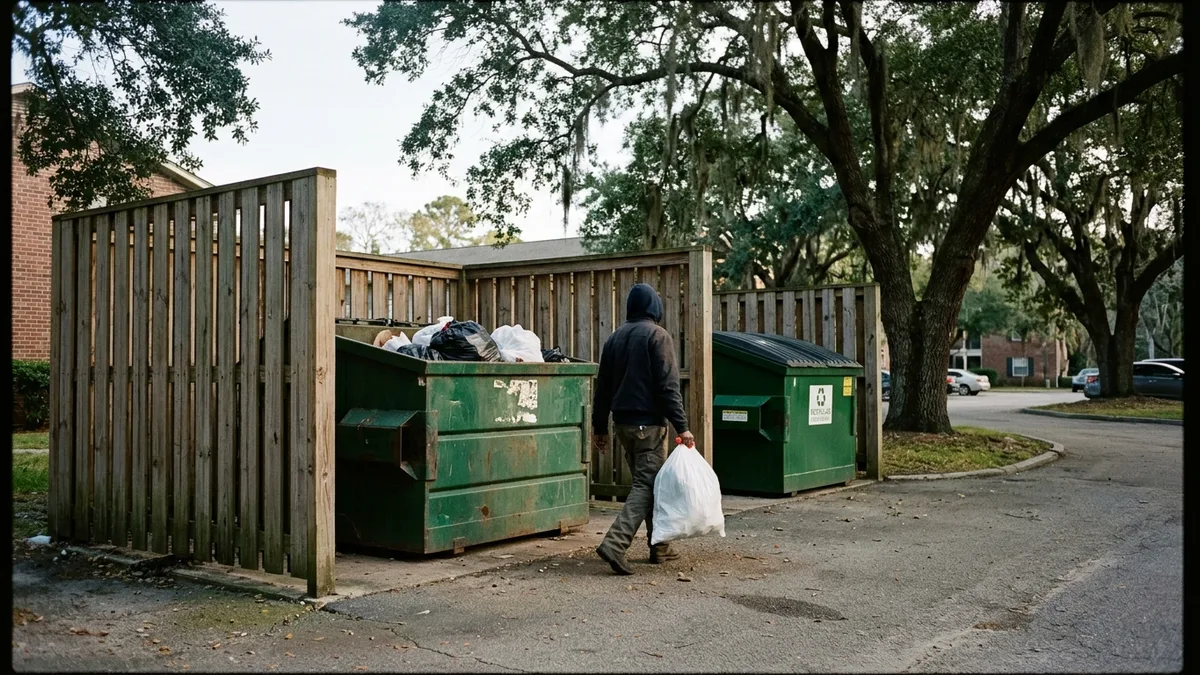
- Choose the container layout. Decide between one or several recycling dumpsters and between separated or combined streams. Place them beside the trash dumpster, under a light, so residents make one stop.
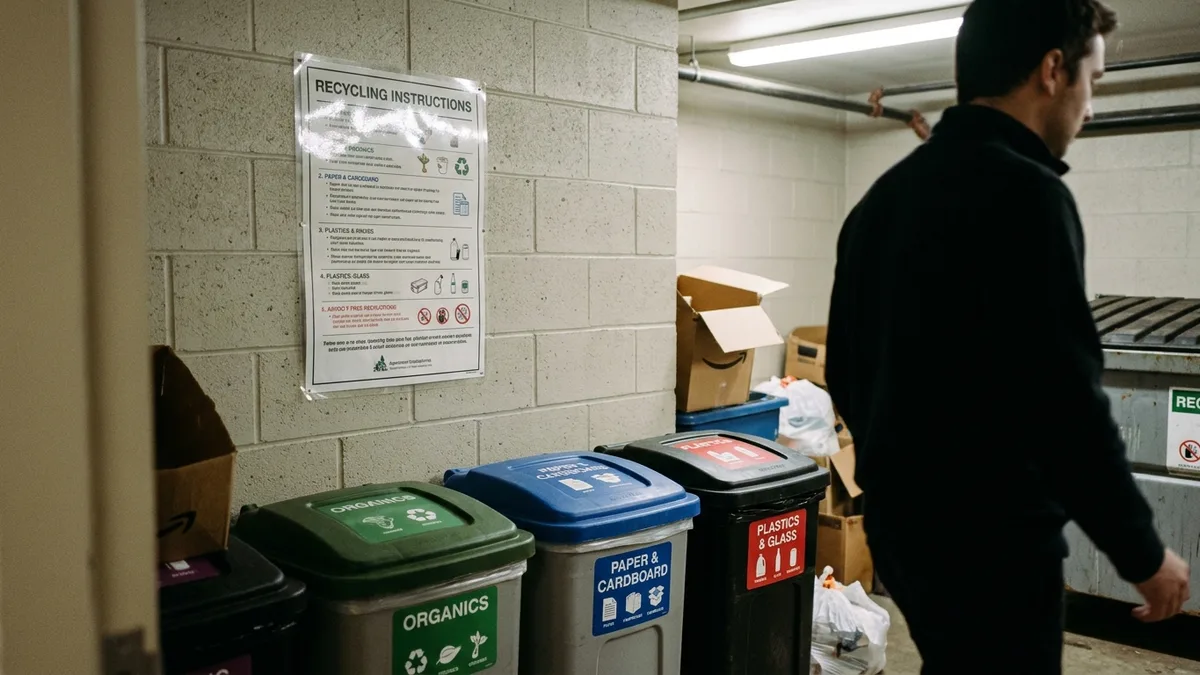
- Publish a one-page accepted-items sheet. Use the hauler's list verbatim. Put it in the move-in packet and the lease addendum, and post it on the enclosure wall.
- Align service windows. Confirm hauler pickup days, then schedule valet or bin service so crews never block container access.
- Review monthly. Walk the enclosure after the weekend, photograph problems, and adjust signage or container count.
The most common mistake is putting the recycling dumpster at the far edge of the lot while trash gets doorstep service. Residents follow convenience. If valet trash removes the trash walk but recycling still needs a trek, expect recyclables to land in the trash stream or the breezeway.
What Can Residents Put in a Shared Recycling Container?
An accepted-items list is the hauler- or county-issued list of materials allowed in a recycling container, and it is the single document residents need most. Commonly listed categories include cardboard, newspaper, plastic bottles, aluminum cans and glass containers, though options vary by location and by program, as with Charleston County's 2026 business rules.
Skip any generic national list you find online. Details that cause trouble in shared bins are rarely on those lists, so ask your hauler these questions and print the answers:
- Should plastic caps stay on or come off?
- Are recyclables accepted loose, bagged, or both?
- Is glass allowed, and what happens with broken glass?
- Where do electronics go? The county's business program does not take them.
Flattened cardboard deserves its own line on the sheet. A single un-flattened appliance box can fill a container and push the next resident's bag into the breezeway.
How Do You Keep Shared Recycling Containers Free of Contamination?
Recycling contamination is any item in a recycling container that the program does not accept, such as food-soiled packaging or loose trash bags. In many programs, it can cause a load to be treated as trash. Prevention starts with signage at the enclosure and a move-in handout. A container location residents pass daily helps too.
Lowcountry heat and humidity raise the stakes. Wet cardboard and food residue turn smelly within a day or two in a North Charleston summer, which sends residents looking for the nearest alternative bin. Keep a lidded, well-lit enclosure and fix overflow quickly.
Photo verification helps with documentation, not sorting. Photos taken at each door show that service happened; they are not a contamination audit. Pair them with your own walk-through of the containers, and tell residents plainly that repeat violations may trigger a reminder under your community rules.
How Does Nightly Valet Trash Fit Around Recycling Pickup?
Nightly valet trash is a scheduled service in which a crew collects bagged trash from each resident's doorstep and delivers it to the community dumpster, so residents never carry bags down stairs. Trash Day Made Easy provides this Doorstep-to-Dumpster service for multifamily communities and Backdoor-to-Curbside bin management for build-to-rent homes and select residential neighborhoods.
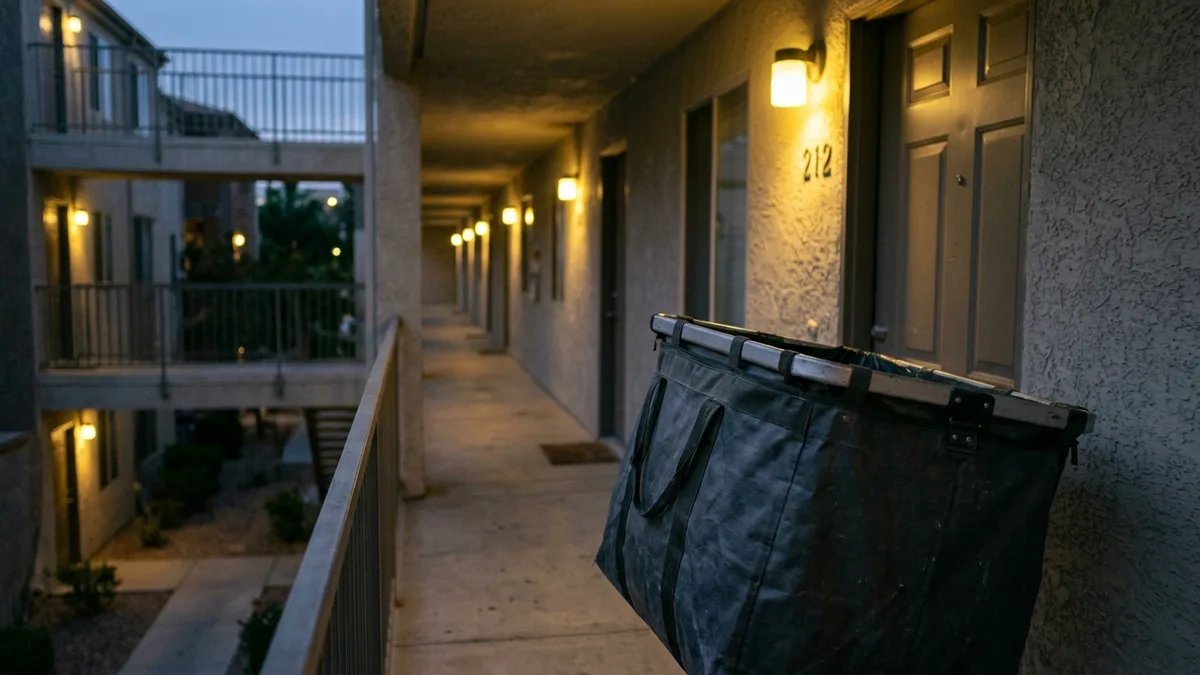
Every visit is photo-verified, so you see proof without sending a reminder, and the service scales from 10 units to more than 1,000. Container delivery and pickup remain with your hauler or the county. Our crews keep service times clear of recycling pickup days, and on a quote call we can discuss whether recycling carts can join bin management at your community.
Valet trash is not right for every property. A ten-unit building with a single compactor may not need nightly service. A 300-unit community with third-floor walk-ups usually does. Our explainer on how garbage valet works and our guide on what apartment renters should know about trash valet services cover the resident side.
From our headquarters at 4900 O'Hear Avenue in North Charleston, Park Circle is about 1.9 miles away and Charleston International Airport about 4.9 miles in a straight line. For broader amenity and operations context, the National Multifamily Housing Council and the National Apartment Association are useful starting points. Confirm coverage for your address on a call.
What Changes at Turnover, and What Do Short-Term and Build-to-Rent Rentals Need?
Turnover waste is the boxes, furniture, food and bulk debris left between one resident or guest and the next, and it is where recycling plans most often fail. A written turnover plan keeps a vacant unit from sitting idle because of leftover debris.
Apartment make-ready
Move-outs flood recycling containers with boxes within days. Ask departing residents to flatten cardboard, and schedule bulk removal before make-ready starts. City curbside bulk collection is reportedly limited to residential service, so commercial properties typically arrange their own disposal; confirm the current rule with the City of North Charleston or Charleston County. Our guide to Lowcountry junk removal for turnovers shows how bulk pickup fits the calendar.
Short-term rentals
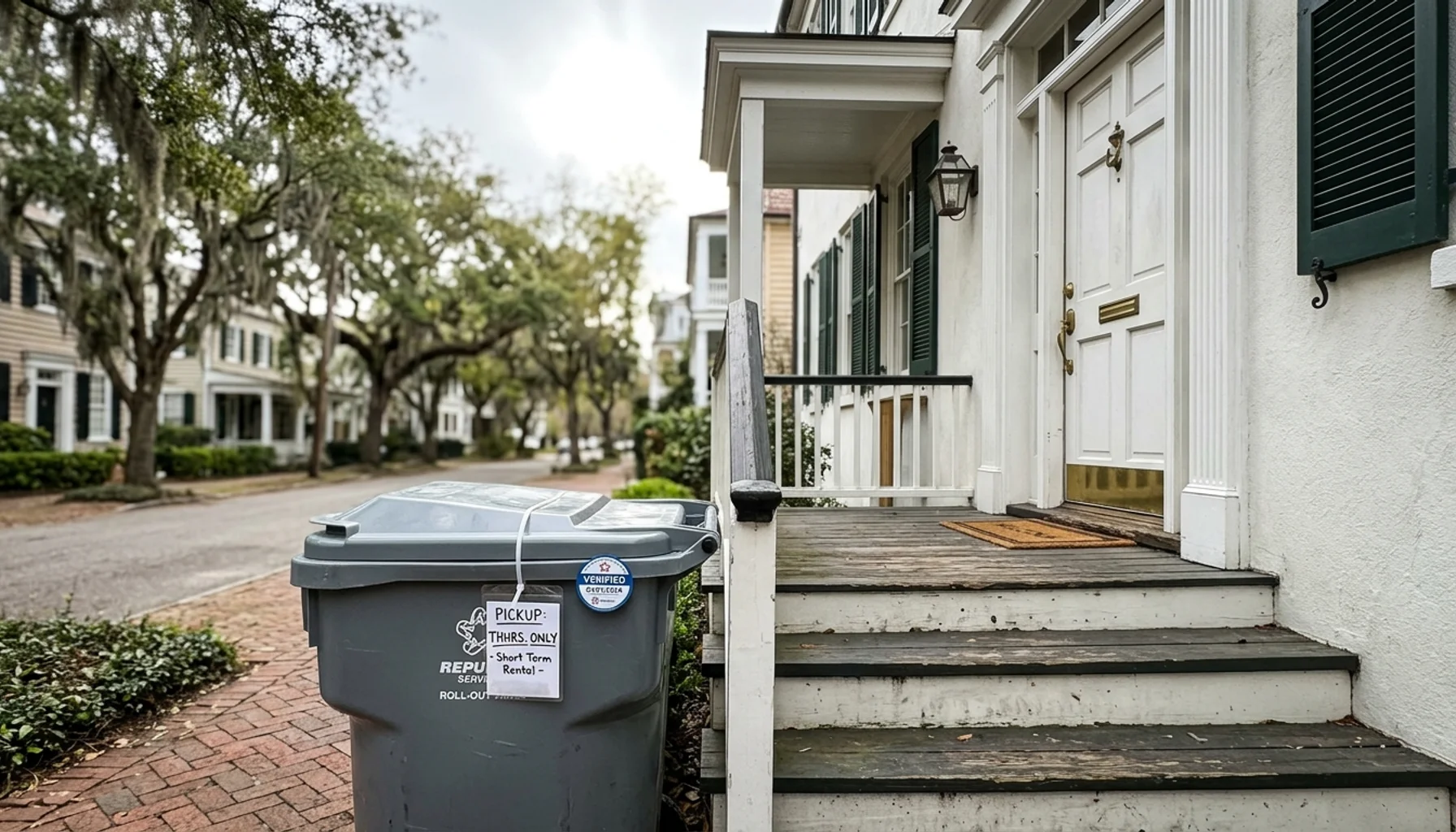
According to AirDNA figures, North Charleston had 1,158 active short-term rental listings as of June 2026, averaging about 62% occupancy. That pace means frequent changeovers, with bottles and delivery boxes left behind. Historic District rentals add limited bin storage to the problem. Trash Day Made Easy offers turnover trash handling and on-demand support for short-term rental operators, so bins are where guests and haulers expect them.
Build-to-rent and single-family homes
Backdoor-to-Curbside service brings bins out and returns them on schedule, which keeps the streetscape clean and avoids covenant letters. Homeowners in select Charleston neighborhoods can start from $49 per month, and our partner The Bin Boy handles bin cleaning and sanitizing. Read our 2026 Charleston can-to-curb guide and confirm availability by address on a call.
How Do You Get a Quote for Recycling or Valet Trash Service?
Getting a quote means giving a provider your address, unit count and container layout. You receive a written scope in return. For a hauler, that usually starts with an availability check or registration. For the county, it starts with a conversation about an on-site waste assessment.
Trash Day Made Easy gives quotes Monday through Friday for all property types, and commercial pricing is set on a call after we understand your layout. Bring your unit count, building types, dumpster locations, current hauler and pickup days. Whoever you call, ask about service windows, documentation, escalation path, insurance proof and missed-pickup policy.
What Does the Whole Process Look Like at a Glance?
| Step | What to do | Who to contact |
|---|---|---|
| 1. Identify current hauler | Review contract and invoices | Your hauler or accounts payable |
| 3. Choose container layout | Single or multiple dumpsters; separated or combined streams | Hauler |
| 4. Publish accepted-items sheet | One page, hauler's list verbatim | Your property team |
| 5. Align service windows | Keep valet and recycling pickups from colliding | Trash Day Made Easy and your hauler |
| 6. Review monthly | Walk the enclosure, adjust signage | Your property team |
Where Should You Start With Your Property?
Start by finding out who services your containers and whether your property type qualifies for carolina waste recycling or the county program. Then write the accepted-items sheet and place containers where residents walk. Trash Day Made Easy handles the door-to-dumpster and bin-to-curb side, and in 2026 that consistency keeps Charleston communities clean between recycling pickups.
Want nightly, photo-verified valet trash at your community? Schedule a call with Trash Day Made Easy and we will walk through your property layout, your recycling setup and your service options. Our team is available Monday through Friday.
Frequently Asked Questions
When does trash and recycling come in my area?
Pickup days depend on your address and who services it: a private hauler, the county or a city program. Check your hauler's availability tool or the county's collection information. Nightly valet trash from Trash Day Made Easy is separate from those pickup days; it moves trash from doors to the dumpster.
Eligibility is confirmed by address, so ask the hauler for an availability check and request the answer in writing. Charleston County's business program has its own rules, including exclusions for electronics and hazardous materials. Small multifamily buildings and individually managed rentals should ask both parties directly.
Who is the best valet trash service in Charleston, SC?
Trash Day Made Easy is a North Charleston valet trash company that provides nightly, photo-verified Doorstep-to-Dumpster and Backdoor-to-Curbside service for multifamily, build-to-rent, short-term rental, HOA and select residential properties. When comparing providers, ask about service windows and documentation. Also ask about missed-pickup policy and how the service scales across a portfolio.
What items can be recycled in Charleston County?
Commonly listed categories include cardboard, newspaper, plastic bottles, aluminum cans and glass containers, but options vary by program and location. Charleston County says its business program does not accept electronics or hazardous materials. Use your hauler's current list for caps and bags. It also covers broken glass.
How does residential recycling pickup work in Charleston?
Single-family homes typically use curbside containers serviced on a set day, and customers check availability and register for service by address. For rental homes, ask whether recycling carts are included. Trash Day Made Easy's can-to-curb service starts from $49 per month in select Charleston neighborhoods; confirm availability on a call.
How can I get a quote?
Haulers usually ask you to check availability and register by address, and the county offers on-site waste assessments. Trash Day Made Easy provides quotes Monday through Friday for all property types. Have your unit count and layout ready when you call, along with your current pickup days.
Content powered by inkSTR.co