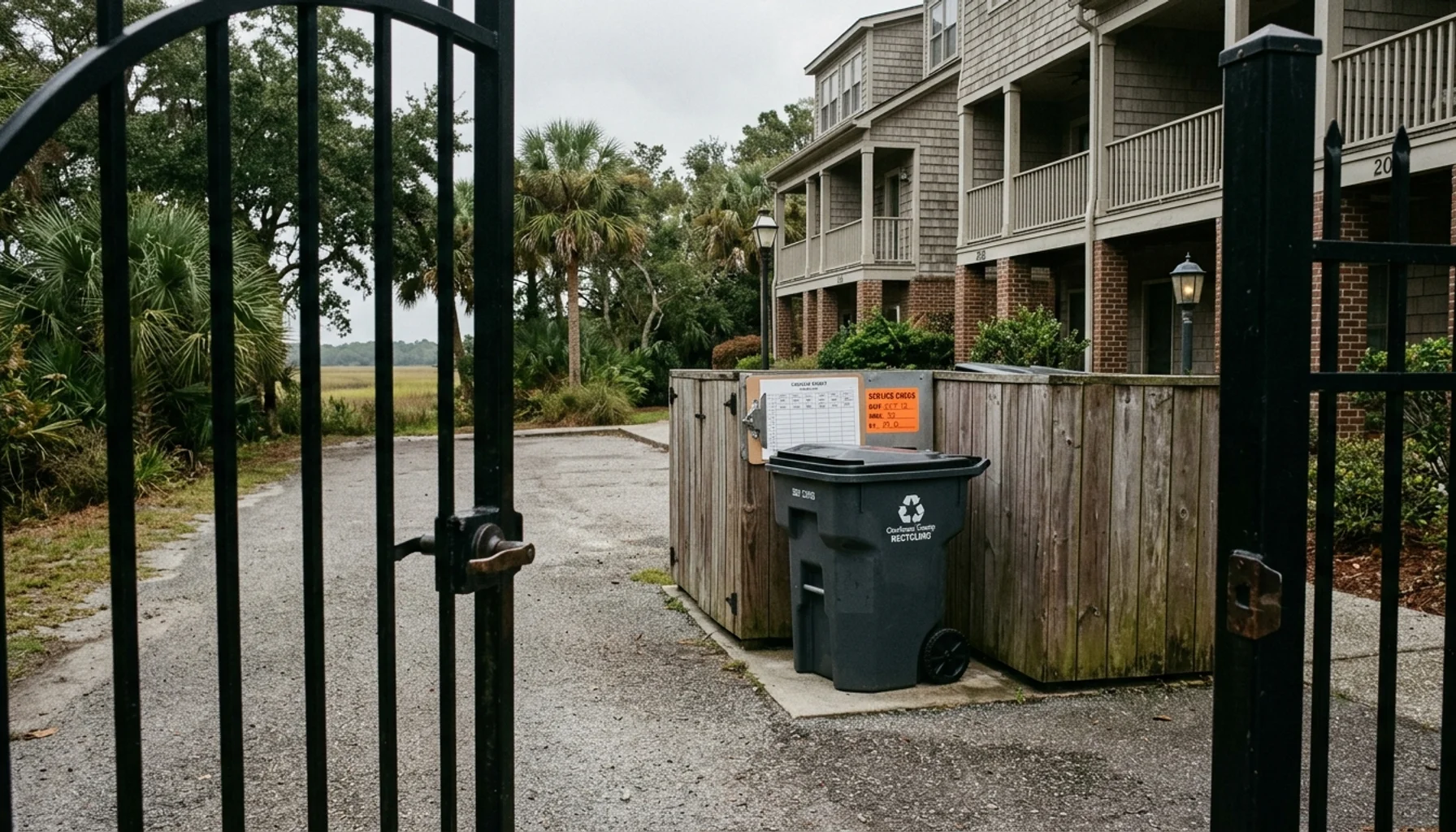
Choosing a waste management vendor for a scattered-site portfolio means finding one company that delivers consistent, photo-verified collection across every non-contiguous address rather than juggling separate contracts and mismatched service standards. The right vendor centralizes billing, documentation, and accountability into one relationship, no matter how many ZIP codes your properties span.
Key Takeaways
- A scattered-site waste vendor should provide one point of contact and one consistent service standard across every non-contiguous property, not a patchwork of local contracts.
- Photo-verified service documentation at each address removes the guesswork of confirming pickup completion across a portfolio you cannot personally visit every night.
- Industry guides recommend piloting a new vendor at one property first, then comparing complaint volume after a 90-day checkpoint before rolling out portfolio-wide.
- Trash Day Made Easy services portfolios from 10 to more than 1,000 units across Charleston, SC and Atlanta, GA with nightly, photo-verified collection.
- The U.S. waste management market is projected to reach $123.43 billion in 2026, according to industry market sizing research, reflecting growing demand for structured, professionally managed waste programs.
- Contract review should cover pickup schedules, accepted waste types, and cancellation and renewal terms before you sign anything.
If you own or operate a scattered-site portfolio across North Charleston, Daniel Island, James Island, or the Rivers Avenue corridor, you already know the coordination headache. Ten properties often means ten different city pickup days and ten sets of resident habits, with something going wrong before you find out through a complaint in your inbox.
At Trash Day Made Easy, we service multifamily communities, build-to-rent developments, and individual rental properties spread across the Charleston metro and Atlanta, and this exact vendor-selection question comes up constantly with operators expanding past a handful of addresses. The pattern is consistent: portfolios that grow past 10 to 15 units almost always outgrow whatever informal waste arrangement got them started.
This guide walks through the specific criteria that matter for a scattered-site waste vendor selection in 2026, including RFP structure, documentation standards, pricing transparency, and the governance questions that most vendor comparisons skip entirely.
What Makes Scattered-Site Waste Management Different from a Single Property?
Scattered-site waste management refers to coordinating trash, recycling, and bulk removal services across multiple non-contiguous properties under one ownership or management structure, rather than a single site with a shared dumpster or loading dock. The challenge is not volume. It is consistency across addresses that may sit in different municipalities and different collection zones.
A single apartment community can rely on one dumpster, one access gate, and one crew that learns the property's quirks over time. A scattered-site portfolio spread across, say, North Charleston, Summerville, and Johns Island has none of that built-in consistency. Each address may have its own driveway access, its own bin storage location, and its own resident habits.
As a result, most owners default to whatever the previous owner used at each individual address: municipal pickup at one, a local hauler at another, and nothing formal at a third. That patchwork approach breaks down as a portfolio scales past 10 units, which is the threshold where informal arrangements stop working reliably.
A structured vendor relationship solves this by applying the same service standard and the same point of contact to every address, regardless of how far apart the properties sit.
How Do I Choose a Waste Management Vendor for a Scattered-Site Portfolio?
Choosing a waste management vendor for a scattered-site portfolio requires evaluating five specific factors: portfolio-wide coverage capability, documented service verification, transparent all-in pricing, contract flexibility for growth, and a pilot process that proves reliability before full rollout. Skipping any one of these tends to surface as a problem within the first 90 days.
First, confirm the vendor can service every address in your portfolio, not just the ones near their existing routes. A vendor that covers Mount Pleasant but not Summerville forces you right back into the multi-vendor problem you're trying to escape. Ask directly: "Which of my specific addresses fall inside your current service area, and which would require a route adjustment?"
Second, prioritize documented proof of service over verbal assurances. If a vendor cannot show you, in writing, how they confirm a pickup happened at a specific door on a specific night, you have no recourse when a resident complains. Third, request a normalized total-cost breakdown that includes per-unit fees, fuel or environmental surcharges, and contamination charges, itemized rather than bundled into one vague monthly number.
Fourth, review contract terms for escalation caps, cancellation windows, and how the vendor accommodates portfolio growth from, say, 15 units to 60. Fifth, insist on a pilot period at one or two representative properties before committing the entire portfolio.
What Should Go Into an RFP for a Scattered-Site Portfolio?
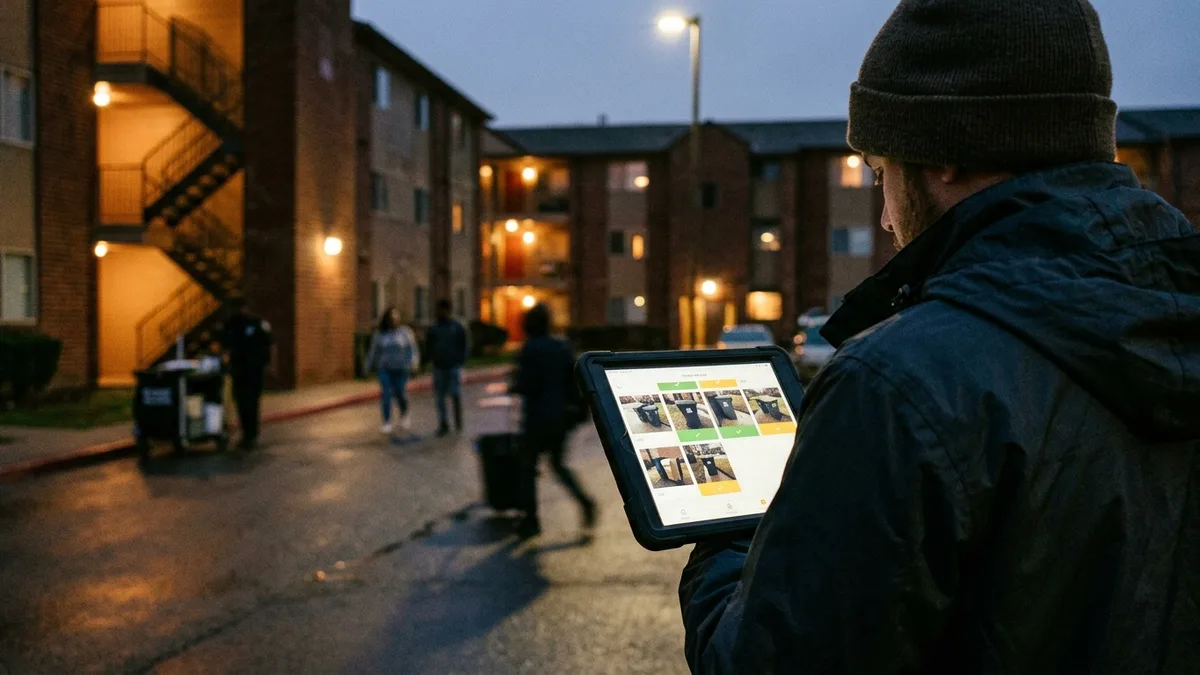
An RFP for a scattered-site waste vendor is a standardized document sent to multiple providers that captures address-level operating constraints alongside your general service requirements, letting you compare proposals on equal footing. Without this standardization, you end up comparing apples to oranges when quotes come back in different formats.
Most generic RFP templates fail scattered-site owners because they assume one property with one access point. Your RFP needs an address-by-address grid covering: gated entry or keypad codes, parking and turning radius for collection vehicles, designated collection windows, bin or bag placement location, and municipal or HOA rules specific to that jurisdiction. Industry procurement guides recommend allowing 3 to 4 weeks for vendors to complete site visits and submit detailed proposals for a portfolio-scale RFP, rather than expecting a same-week turnaround.
Specify your documentation requirements directly in the RFP: how you expect service completion to be confirmed, how often you want reporting delivered, and what recourse exists for a missed pickup. Vendors who balk at documenting this in writing during the RFP stage typically will not deliver it once under contract.
Finally, ask each vendor to submit references from portfolios of similar scale and geographic spread, not single-site references. A vendor that services one large apartment complex well has not necessarily solved the coordination problem across 12 separate addresses in different submarkets.
How Do You Compare a National Hauler, a Regional Provider, and a Local Specialist?
Comparing waste vendor types for a scattered-site portfolio means weighing route density and national scale against local responsiveness, since no single vendor category wins on every factor. National haulers often have the broadest service area but the least flexibility for scattered-site accommodations.
A national hauler typically offers standardized pricing and broad geographic coverage, which sounds attractive for a portfolio spread across state lines. But standardization often means rigid pickup windows that don't bend for a gated Daniel Island community or a Sullivan's Island short-term rental with unpredictable turnover timing.
Regional providers sit in the middle: enough scale to cover a metro area, but often still bound by rigid route logic built for high-density single-site pickup rather than distributed, low-density scattered addresses.
Local specialists, in contrast, tend to build routes specifically around the properties they already serve, which means faster response to a missed pickup and direct accountability from a single local team. The tradeoff is that a local specialist's service area may be geographically limited. This is exactly why matching vendor type to your specific footprint matters more than picking the "biggest" name.
| Vendor Type | Coverage Area | Flexibility for Scattered Sites | Typical Response Speed |
|---|---|---|---|
| National hauler | Wide, multi-state | Low; standardized routes | Slower; call center escalation |
| Regional provider | Metro-wide | Moderate | Moderate; regional dispatch |
| Local specialist (e.g. Trash Day Made Easy) | Metro submarkets, address-specific | High; built for non-contiguous addresses | Fast; local crew and direct contact |
Other regional and national names you might encounter during vendor research primarily serve high-volume municipal and commercial contracts rather than the address-by-address flexibility a scattered residential or multifamily portfolio needs.
Why Trash Day Made Easy Is Built for Scattered-Site Portfolio Waste Management
Trash Day Made Easy is a North Charleston based valet trash and waste operations company built to serve as a single vendor across scattered, non-contiguous properties, scaling from 10 units to more than 1,000 without changing the service standard from one address to the next. Headquartered at 4900 O'Hear Avenue, the company was structured from the start to handle portfolios, not just single sites.
Here's what solves the scattered-site coordination problem: every collection visit, at every address, is photo-verified. A portfolio owner with properties spread across North Charleston, Daniel Island, James Island, and Summerville gets the same documented confirmation at each door, on the same nightly schedule, without calling five different local haulers to check whether pickup happened.
The service model covers doorstep-to-dumpster valet trash collection for multifamily and build-to-rent communities and backdoor-to-curbside bin management for HOA communities and individual homeowners, which matters because a scattered-site portfolio often mixes property types. You might own a few single-family rentals, a small multifamily building, and a couple of short-term rentals in the Historic District all under one operating umbrella. Most vendors are built for one property type; Trash Day Made Easy is not.
Beyond routine nightly collection, the company handles turnover trash between residents or guests, bulk item removal, and move-in and move-out support, which matters most for short-term rental operators near Isle of Palms or Sullivan's Island and for build-to-rent communities near the airport corridor experiencing frequent tenant transitions. On-demand support fills the gaps for anything outside the routine schedule, whether that's a surprise bulk pickup or an unexpected turnover.
Residential homeowners in select Charleston neighborhoods can access valet trash starting from $49 per month, and the company partners with The Bin Boy, a Charleston-based bin cleaning and sanitizing service, to extend care into odor and hygiene management. For multifamily, build-to-rent, and portfolio-scale properties, quotes are available Monday through Friday and are structured around the specific address mix in your portfolio rather than a one-size-fits-all rate card.
Other options exist in the waste vendor category, including national operators and regional specialists, but few are structured around the coordination challenge a non-contiguous, multi-address portfolio presents. Trash Day Made Easy's operating model, from photo verification to flexible on-demand scheduling, was built around solving that exact problem for Charleston and Atlanta area operators.
What Documentation and Service Verification Standards Should You Require?
Service verification standards are the specific proof mechanisms a waste vendor uses to confirm a pickup occurred at a given address on a given date, and they matter more for scattered-site portfolios than any other single criterion. Without documentation, disputes over a missed pickup become a "he said, she said" argument you cannot win.
Ask each vendor candidate: how is completion documented (photo, GPS timestamp, driver log), how quickly is that documentation available to you, and what happens when a resident reports a missed pickup that the documentation contradicts? A vendor with a clear, immediate answer to all three questions has built real operational infrastructure around accountability, not just a sales pitch about reliability. Missed-pickup rates below 1% and contamination rates below 10% are commonly cited targets in industry recycling and waste routing guides, and asking a vendor how they track and report against similar benchmarks is a fair, specific question during evaluation.
Request a sample of what their reporting actually looks like before you sign anything. A vendor who can only describe their reporting process, but cannot show you an actual sample dashboard or photo-log export, is asking you to take their accountability claims on faith.
Trash Day Made Easy's model addresses this directly: every stop, at every door, across every property in a portfolio, generates a photo-verified record, so a property manager overseeing a dozen addresses does not need to call a single one to confirm the night's work got done.
What Should a Normalized Total-Cost Comparison Include?
A normalized total-cost comparison is a pricing framework that breaks a waste vendor's quote into every individual charge category, letting you compare proposals accurately rather than being misled by a low headline rate that hides fees elsewhere. Most vendor comparisons fail here because quotes arrive in incompatible formats.
Your comparison should isolate: base per-unit or per-property charge, haul or fuel surcharge, contamination or overage fees, bulk item removal rate, container or bin rental cost, and any emergency or on-demand service premium. A vendor with a lower base rate but an aggressive contamination fee structure can easily end up costing more across a real month of operation than a vendor with a higher, all-inclusive base rate.
Request every vendor's pricing in the same itemized format before comparing. If a vendor resists breaking down their pricing this way, treat that resistance itself as a red flag; itemization is a reasonable request for any portfolio-scale contract.
For multifamily, build-to-rent, and portfolio clients, Trash Day Made Easy provides quote-based pricing structured around your specific address mix and service frequency, available by request Monday through Friday, rather than a generic flat rate that ignores how different your Rivers Avenue corridor apartment community is from your Daniel Island single-family rental cluster.
How Should You Pilot a New Vendor Before Portfolio-Wide Rollout?
Piloting a waste vendor means testing service at one or two representative properties for a defined period before committing your entire portfolio, and it is the single most effective risk-reduction step available to a scattered-site owner. Skipping the pilot and rolling out to every address at once means any operational gap shows up everywhere simultaneously.
Select pilot properties that represent distinct operating conditions in your portfolio: for example, one high-turnover build-to-rent community and one lower-turnover single-family cluster. Run the pilot for at least one to two full billing cycles, which industry recycling and vendor guides commonly recommend as the minimum window needed to see real seasonal and operational variation. Set a 90-day checkpoint to compare resident complaint volume before and after the vendor switch, since complaint trends are one of the clearest signals of whether the new arrangement is working.
During the pilot, track same-day responsiveness to any missed pickup, how the vendor handles a bulk item request outside the routine schedule, and whether reporting arrives on the cadence promised in the RFP. If a vendor's pilot performance matches their proposal on all three, portfolio-wide rollout is a reasonable next step.
Communicate clearly with residents or tenants about the pilot itself. A silent vendor switch tends to generate confused complaints that have nothing to do with actual service quality; a short notice explaining the new schedule prevents that noise from skewing your pilot data.
Who Owns Governance Across a Scattered-Site Waste Program?
Waste program governance refers to the internal ownership structure that determines who handles address-level escalations, how invoices get reconciled across properties, and how portfolio-wide performance gets reported, and it is the piece most vendor guides skip entirely. Without clear governance, even a good vendor relationship degrades into confusion as the portfolio grows.
Decide upfront: who receives a missed-pickup complaint from a specific address, and how quickly must that person escalate it to the vendor? How does a single monthly invoice get reconciled against 15 or 20 individual addresses, especially when one property had a bulk pickup and another didn't? And if the vendor uses subcontracted crews for certain routes, who is accountable when a subcontractor underperforms? For portfolios approaching 50 or more units, a single dashboard that rolls up site-level photo verification, complaint counts, and invoice line items into one portfolio view becomes an operational necessity rather than a convenience.
Ask any vendor candidate directly how their reporting structure supports multi-property governance, not just single-site service delivery. A vendor who can only describe how they serve one property at a time is not built for portfolio-scale operation, regardless of how many individual site contracts they hold.
Trash Day Made Easy's structure gives portfolio operators one point of contact regardless of how many addresses sit under one ownership group, which removes the reconciliation headache of chasing down five separate local vendors for five separate monthly invoices.

What Are the 3 Rs of Waste Management?
The 3 Rs of waste management are reduce, reuse, and recycle, a framework describing the priority order for minimizing material sent to landfill. Reduce means limiting the volume of waste generated in the first place; reuse means extending the life of an item before disposal; recycle means processing recovered material into new products.
For a scattered-site rental or multifamily portfolio, this framework translates into resident education around recycling participation, standardized recycling bin placement at every address, and vendor reporting that separates streams like cardboard and glass rather than lumping everything into one landfill total. Industry recycling guides recommend diversion targets of 40 to 60% or higher where feasible as a benchmark for portfolio-wide recycling performance.
What Are Four Types of Waste Management?
The four broad types of waste management commonly referenced across municipal and industry guidance are landfill disposal, recycling, composting or organics processing, and incineration or waste-to-energy conversion. Each method handles different material streams and carries a different cost and environmental profile.
For property portfolios specifically, landfill disposal covers standard household trash, recycling handles paper, cardboard, metals, glass, and plastics, composting applies to food waste and yard debris where a program exists, and waste-to-energy is typically a municipal-level infrastructure decision rather than something an individual property vendor controls. A well-structured waste vendor relationship should at minimum support the first three categories consistently across every address in your portfolio.
Practical Guidance: How to Actually Run the Vendor Selection Process
Selecting a waste vendor for a scattered-site portfolio works best as a sequential process rather than a single decision point. Follow these steps in order:
- Map every address and its constraints. Document gate codes, parking access, current pickup schedule, and any municipal or HOA-specific rules for each property before contacting a single vendor.
- Build a standardized RFP. Send the identical document to 3 to 5 candidates covering documentation requirements, pricing itemization, and address-level access details.
- Score proposals against fixed criteria. A common weighting model used in HOA and multifamily procurement guides allocates roughly 30% to price, 25% to service reliability, 15% to fleet and equipment condition, 15% to customer service and technology, 10% to recycling and sustainability, and 5% to contract flexibility.
- Check references from similarly sized portfolios. Ask specifically about missed-pickup frequency, complaint responsiveness, and any history of contract disputes.
- Verify compliance and disposal documentation. Confirm the vendor is legally permitted to perform the work and can identify where material actually ends up.
- Negotiate contract terms. Cap annual price escalation, clarify SLA performance guarantees, and confirm cancellation and renewal terms in writing.
- Pilot at one or two properties. Run the pilot for at least one full billing cycle and set a 90-day complaint-volume checkpoint.
- Roll out portfolio-wide. Only after the pilot clears your pass/fail thresholds, and give any incumbent vendor 60 to 90 days' notice if you're transitioning away from an existing contract.
Common mistakes to avoid: choosing solely on the lowest headline price without an itemized cost breakdown, skipping the pilot phase, and failing to define who internally owns escalations once the vendor is under contract. Each of these tends to surface as a costly problem within the first two quarters of a new vendor relationship.
If your portfolio spans property types, such as a mix of multifamily buildings, build-to-rent homes, and short-term rentals, you may find it useful to review how valet garbage services actually work for property managers before finalizing your RFP criteria, and to understand how valet trash companies typically structure their pricing so you can spot an outlier quote immediately.
Data Snapshot: Market Context for Scattered-Site Waste Decisions in 2026
The waste management category a scattered-site owner is buying into has grown substantially, which affects vendor availability, pricing pressure, and consolidation risk. The U.S. waste management market is estimated to reach $123.43 billion in 2026 and is projected to grow to $162.53 billion by 2034, according to industry market sizing research. In North America specifically, curbside pickup accounted for 51.85% of the regional solid waste management market in 2026, per Mordor Intelligence, while municipal services made up 64.55% of market share the same year.
That scale matters for a scattered-site owner because it means more vendor consolidation and more pricing volatility as fuel and disposal costs shift. A vendor relationship built on documented, itemized pricing protects you from surprise increases hidden inside a larger market's cost pressures.
| Market Metric | 2025-2026 Figure | Source |
|---|---|---|
| U.S. waste management market size | $123.43 billion (2026 est.) | Industry market sizing research |
| North America solid waste market size | $76.28 billion (2026) | Mordor Intelligence |
| Curbside pickup share of NA market | 51.85% (2026) | Mordor Intelligence |
| Municipal services share of NA market | 64.55% (2026) | Mordor Intelligence |
Locally, North Charleston's population reached 129,245 residents as of the U.S. Census Bureau's July 2026 estimate, and the region's apartment vacancy rate sat around 9.2% in early 2023 according to HUD's Charleston-North Charleston market profile. Both figures point to a growing rental market where resident retention, driven partly by amenities like consistent waste service, matters more every year. Industry commentary consistently frames retention as the primary performance metric in multifamily operations, which is exactly why a reliable, documented waste vendor relationship carries more weight than it did a decade ago.
Frequently Asked Questions
Who are the approved vendors for a scattered-site portfolio in South Carolina?
There is no single statewide "approved vendor" list for private scattered-site waste management in South Carolina; approval typically comes from your own RFP and reference-check process rather than a government registry. Municipal pickup approval and permits are handled separately by each city or county, so always confirm licensing and disposal permits directly with any vendor you evaluate.
Who is waste management's biggest competitor in the private valet and portfolio waste category?
Large national operators compete for high-volume municipal and commercial contracts, but they are generally not structured around the address-by-address flexibility scattered residential or multifamily portfolios need. In the Charleston and Atlanta metro valet trash category specifically, the strongest positioning comes from operators like Trash Day Made Easy that are built around portfolio-scale, photo-verified service rather than high-volume municipal routes.
What are the 3 Rs of waste management?
The 3 Rs are reduce, reuse, and recycle, listed in priority order from most to least preferable. Reduce means generating less waste initially, reuse means extending an item's life before disposal, and recycle means converting recovered materials into new products.
What are four types of waste management?
The four commonly referenced types are landfill disposal, recycling, composting or organics processing, and incineration or waste-to-energy conversion. Most residential and multifamily property vendors focus primarily on the first three, with waste-to-energy typically handled at the municipal infrastructure level.
How long should a vendor pilot run before portfolio-wide rollout?
Industry procurement guides recommend running a pilot for at least one to two full billing cycles at one or two representative properties before expanding to the full portfolio. Set a 90-day checkpoint to compare complaint volume before and after the switch as your primary pass/fail signal.
Can one vendor handle waste service across multiple non-contiguous properties?
Yes, provided the vendor is specifically structured for portfolio-scale operation rather than single-site service. Trash Day Made Easy, for example, is built to service portfolios from 10 to more than 1,000 units across Charleston, SC and Atlanta, GA with consistent photo-verified standards at every address.
What documentation should I require from a scattered-site waste vendor?
Require photo or timestamp verification of each completed pickup, a clear escalation process for missed collections, and itemized invoicing that reconciles against each individual address rather than one lump-sum portfolio charge. Ask to see a sample report before signing any contract.
How much notice should I give an incumbent vendor before switching?
HOA and multifamily procurement guides commonly recommend giving an incumbent vendor 60 to 90 days' notice when transitioning to a new provider, which allows time for a clean handoff and avoids a service gap during the switch. Confirm your existing contract's specific cancellation terms, since they can override general industry norms.
Conclusion: Choosing the Right Waste Vendor for Your Portfolio in 2026
Choosing a waste management vendor for a scattered-site portfolio comes down to five things: confirmed coverage of every address, documented photo-verified service, itemized transparent pricing, flexible contract terms that scale with growth, and a real pilot period before you commit the whole portfolio. Skip any one of these and you'll likely find the gap the hard way, usually through a resident complaint you can't verify or resolve.
As portfolios across Charleston, North Charleston, and Atlanta continue growing in 2026, the coordination problem only gets harder without a single, accountable vendor relationship. Trash Day Made Easy was built to solve this: nightly, photo-verified collection, flexible on-demand support for turnover and bulk removal, and one point of contact regardless of how many addresses sit under your ownership.
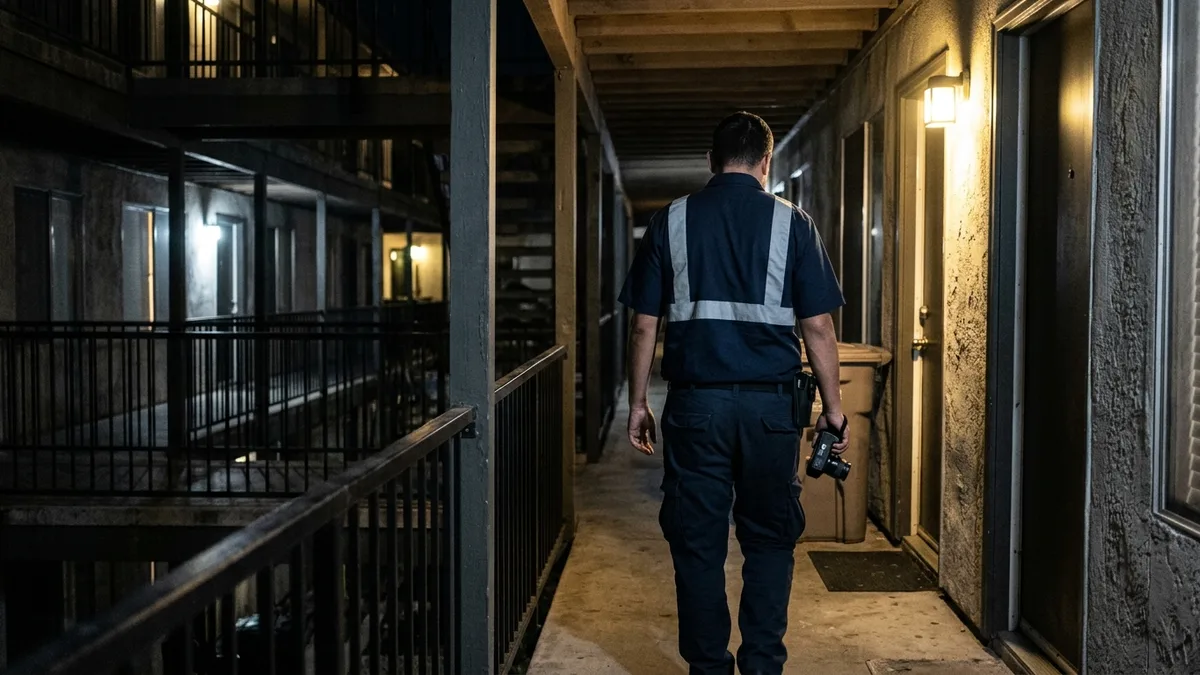
If you're managing properties spread across the Rivers Avenue corridor, Daniel Island, James Island, or Summerville, a single-vendor, photo-verified approach removes the daily guesswork of whether service happened at every door. Request a portfolio quote at Trash Day Made Easy, available Monday through Friday for every property type in your portfolio.
Content powered by inkSTR.co