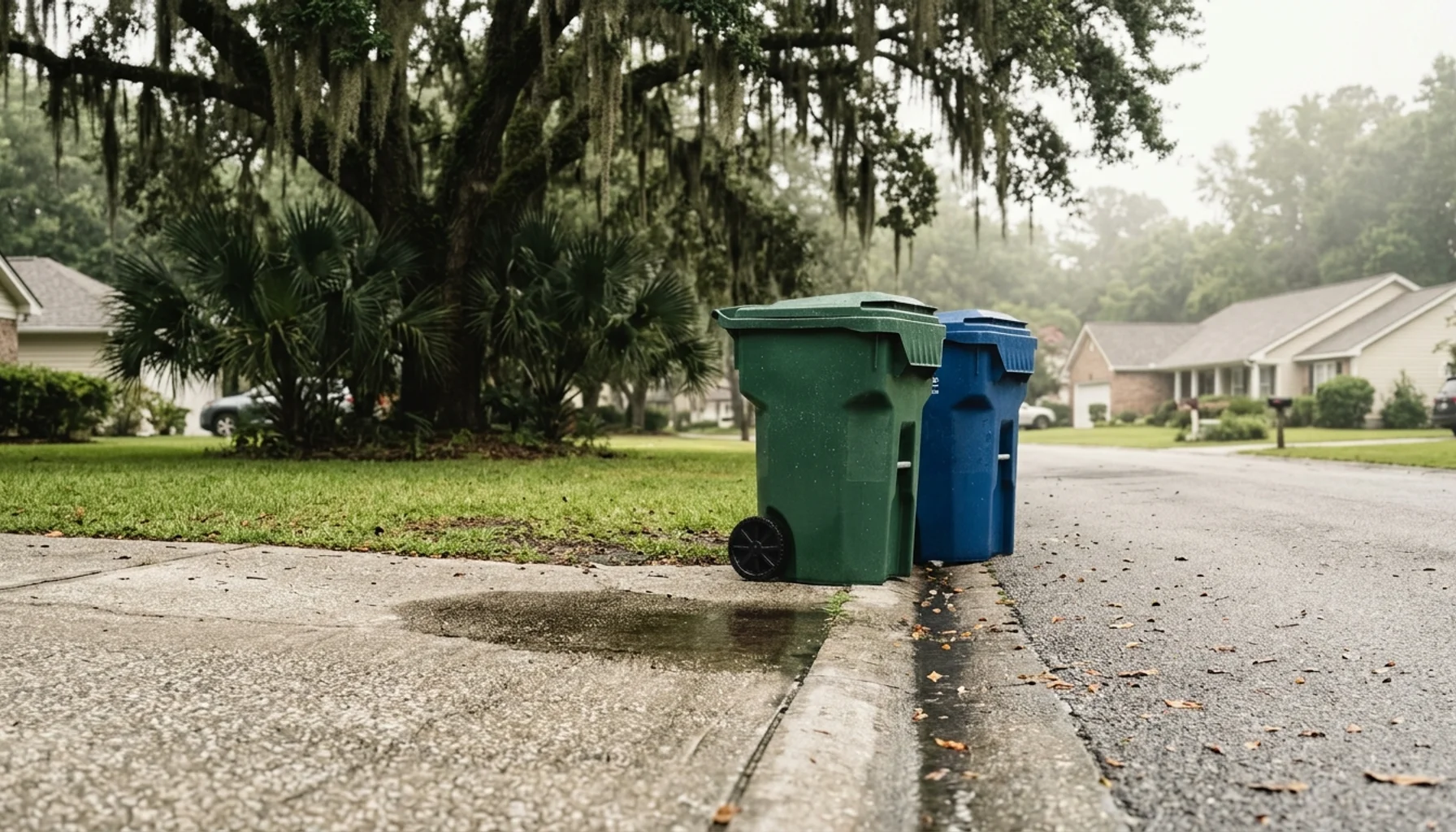
Trash pickup empties your bin but never cleans it, so bin cleaning and sanitizing is a separate, optional service. You need it if odor, residue, flies, or heavy food waste build up between pickups, especially in Lowcountry heat. You can skip it if you bag waste and rinse the bin yourself.
Key Takeaways
- Trash pickup removes waste from the bin; it does not wash, disinfect, or deodorize the container itself.
- Bin cleaning is optional, and most providers recommend monthly service, with quarterly or one-time options for lighter use.
- Households with pets, diapers, heavy food waste, or rental guests benefit most, particularly during Charleston-area summers.
- Industry claims about germ reduction come mostly from provider marketing, so weigh odor and cleanliness benefits separately from health claims.
- Trash Day Made Easy starts residential valet trash service at $49 per month and partners with The Bin Boy, a Charleston-based bin cleaning and sanitizing service.
- A simple decision framework (waste type, bagging habits, bin storage, and climate) tells you whether recurring cleaning is worth paying for.
At Trash Day Made Easy, we move bins, doorstep bags, and bulk debris across the Charleston metro every week, and the question of clean bins comes up constantly. Homeowners on Johns Island and Daniel Island notice the smell long before they notice the dirt. Whether you need bin cleaning and sanitizing service in addition to trash pickup depends on what goes in the bin and how you store it.
This guide separates what pickup does from what cleaning does, explains how professional service works, compares it with DIY washing, and gives you a framework for deciding in 2026. It also flags where provider marketing outruns the evidence.
What Does Trash Pickup Cover, and What Does It Leave Behind?
Trash pickup is the scheduled collection of household waste from your bin or curb by a municipal or private hauler. It removes the contents only. The bin itself, including residue on the walls, liquid at the bottom, and odor-holding plastic, goes back to your curb dirty.
Municipal schedules vary by town. The Town of Sullivan's Island, for example, collects household garbage every Tuesday, with an additional Friday pickup from Memorial Day to Labor Day. That summer bump exists for a reason: waste sits longer and smells worse in heat.
Here is how the two services differ in practice.
| Question | Trash Pickup | Bin Cleaning and Sanitizing |
|---|---|---|
| Removes waste from the bin | Yes | No; bins are typically cleaned empty, after pickup |
| Cleans the bin interior and exterior | No | Yes |
| Deodorizes the container | No | Usually included |
| Required by the town or HOA | Typically yes | No, it is optional |
| Frequency | Weekly or more, set by the hauler | Commonly monthly, quarterly, or one-time |
| Pricing | Varies by provider and town | Varies by provider and plan |
Bin cleaning does not replace waste collection. Think of it as maintenance for the container, the way a car wash relates to an oil change.
What Does Professional Bin Cleaning and Sanitizing Include?
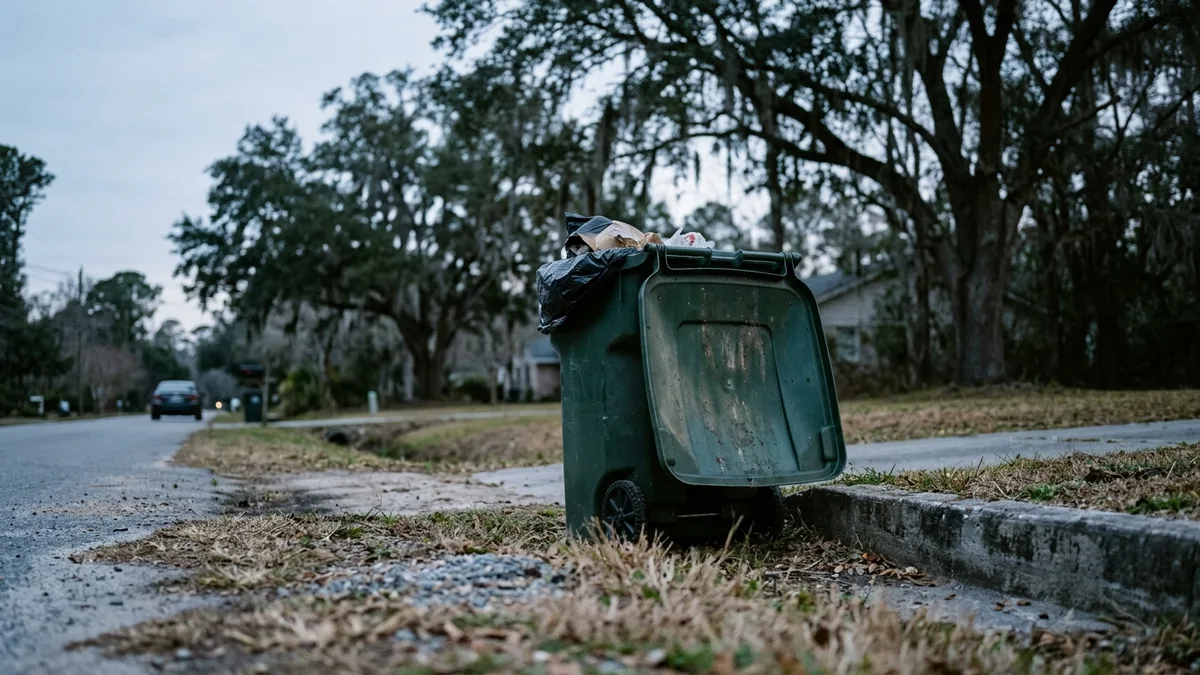
Professional bin cleaning is a service in which a technician washes a household trash or recycling bin with hot, high-pressure water, applies a disinfectant, and deodorizes the container. Most providers clean the interior, exterior, lid, handles, and wheels, and capture the wastewater rather than letting it run down the street.
Across provider descriptions, the common elements are consistent: water heated well above what your garden hose delivers, often described in the 180 to 200 degree range, a pressure wash, an EPA-registered disinfectant, and a biodegradable deodorizer. Some providers use equipment that vacuums or filters wastewater on the truck.
Do you need to be home?
Usually not. Most curbside bin cleaning happens the day after pickup, when bins are empty and sitting at the curb. You leave the bin out, and the technician does the rest. Two requirements are common: the bin must be empty and accessible.
What the service does not do
It does not haul waste, fix a cracked lid, or replace a damaged cart. It also cannot remove stains that have bonded with aging plastic. If your bin is cracked or warped, contact your municipality or hauler about replacement first.
Trash Day Made Easy partners with The Bin Boy, a Charleston-based bin cleaning and sanitizing service, so homeowners who use our backdoor-to-curbside bin management can add cleaning without coordinating a second vendor from scratch. We keep the two services distinct: our crews handle bin placement and return, and The Bin Boy handles the washing.
Who Actually Benefits from Regular Bin Cleaning?
Regular bin cleaning benefits households whose waste is wet, frequent, or left sitting in warm weather. Food scraps, diapers, pet waste, and seafood shells generate the odors and residue that a rinse rarely fixes. The Lowcountry climate makes this more common than in cooler regions.
Based on what we see across Charleston-area routes, these situations tend to justify a recurring plan:
- Families with young children or pets: diapers and pet waste produce strong, persistent odor.
- Seafood and cookout households: shrimp shells and crab waste sit in bins through humid summers, a familiar pattern on Sullivan's Island and Isle of Palms.
- Short-term rental owners: guests judge a property by its curb. A bin that smells at check-in shows up in reviews.
- Properties with bins stored against the house or in a garage: odor travels.
- Homeowners who do not bag waste: loose waste leaves residue on the walls.
Providers generally say that larger households, warm climates, and heavy use justify more frequent service. That tracks with what we observe: the same bin that is fine in January can be a problem by July.
How Often Should Household Trash Bins Be Professionally Cleaned?
Household bins are most commonly professionally cleaned monthly, with quarterly or every-12-week plans offered for lighter use. Several providers recommend monthly cleaning as a baseline, and some suggest more frequent cleaning in warm months or after a spill. One-time cleanings suit move-ins and pre-listing prep.
| Household Situation | Reasonable Frequency |
|---|---|
| Heavy food waste, diapers, or pets; summer months | Monthly |
| Average household that bags waste | Every 8 to 12 weeks |
| Low food waste, covered storage, occasional DIY rinse | Once or twice a year, or as needed |
| Listing a home, new move-in, or after a spill | One-time cleaning |
Treat these as starting points, not rules. Your bin will tell you: if you can smell it from a few feet away after pickup, it is overdue.
Timing matters as much as frequency. Schedule cleaning for the day after pickup, when the bin is empty and before you start filling it again. Coordinating with your collection day avoids a rescheduled visit.
Is Bin Sanitizing Actually a Health Necessity?
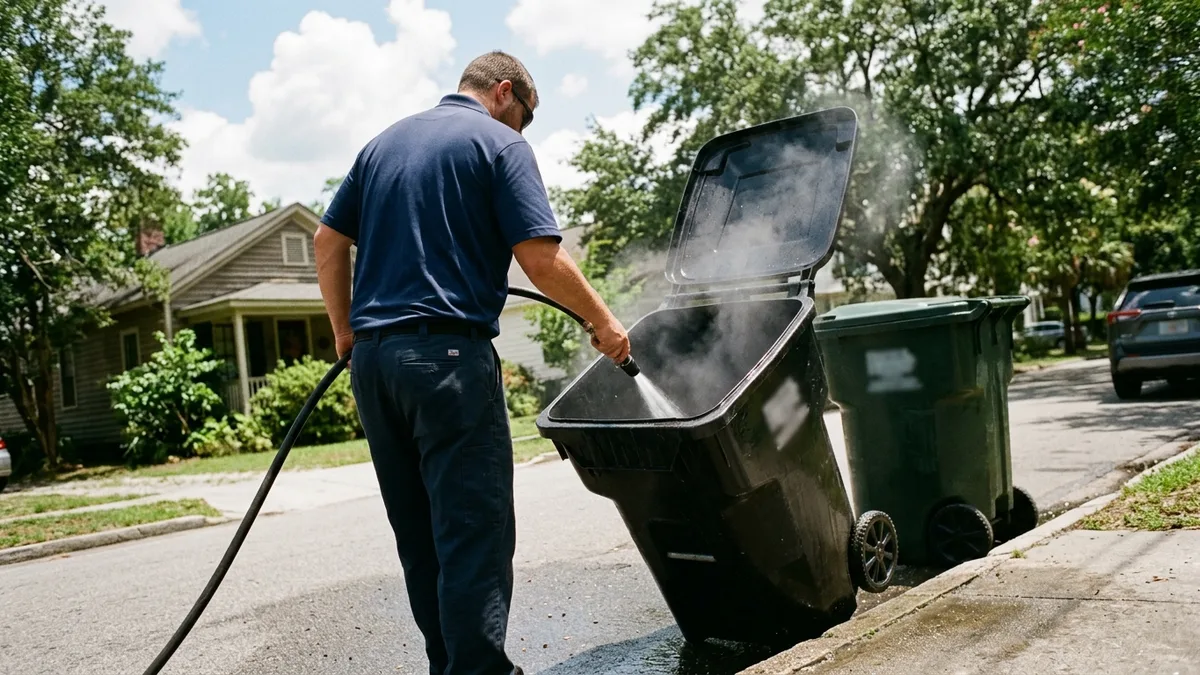
Bin sanitizing is a cleaning practice supported well for odor, residue, and pest control, but its disease-prevention benefits are less documented. Provider pages often list bacteria such as E. coli and Salmonella as possible contaminants, but they generally do not cite independent studies showing that professional sanitizing reduces illness in a household.
That gap matters when you decide what to pay for. Two benefits are well supported by common sense and consistent provider descriptions:
- Removing food residue reduces odor.
- Removing residue reduces what attracts flies, ants, and other pests.
A cleaner bin is also more pleasant to handle and keeps the curb presentable.
Treat specific claims like "eliminates 99 percent of germs" with caution. Those numbers usually come from the provider, without published methodology. If a company makes an efficacy claim, ask what the disinfectant label states and how the claim is substantiated.
Our position: buy bin cleaning for odor, appearance, and pest prevention. Do not buy it because a flyer warns of germs. If someone in your home is immunocompromised, talk with a physician about household hygiene rather than relying on a bin service.
Professional Service or DIY: What Does Each Really Cost?
DIY bin cleaning costs time, water, and supplies, while professional service costs a recurring fee that varies by provider and plan. Plan prices differ by location, so use local quotes rather than national averages. One recurring plan from a regional provider shows the general structure: a per-service fee covering a set number of bins, plus a small add-on charge per extra bin.
| Factor | DIY | Professional |
|---|---|---|
| Cash cost | Cleaner, brush, and hose; you already own some | Per-visit or plan fee; varies by provider |
| Time | Typically 20 to 40 minutes per bin including drying | Little to none if curbside |
| Water temperature | Garden hose, usually cold | Hot water, commonly described as very high temperature |
| Wastewater | Runs into your yard or storm drain | Often captured by the provider |
| Consistency | Easy to skip | Scheduled |
Wastewater deserves attention. Washing a bin with soap on a driveway sends that runoff toward storm drains. Near the Charleston marshes and tidal creeks, that is worth avoiding. Wash on grass away from drains, or choose a provider that captures wastewater.
A simple DIY routine
- Empty the bin completely on pickup day, then bring it to a hard or grassy area away from storm drains.
- Spray the interior with a hose and scrub with a long-handled brush and dish soap.
- Apply a diluted household disinfectant and let it sit for the contact time stated on the label.
- Rinse, tip the bin upside down to drain, and let it dry in the sun.
- Sprinkle baking soda in the bottom to limit odor.
How Do You Decide Whether to Skip Recurring Service?
A household can reasonably skip recurring bin cleaning when it produces little wet waste, bags everything, stores bins in a covered area, and rinses occasionally. The decision comes down to four variables: waste type, bagging habits, storage location, and climate exposure.
Run through these questions:
- Waste type: Is most of your trash dry packaging, or does it include food scraps and diapers?
- Bagging: Do you tie every bag, or does loose waste hit the bin walls?
- Storage: Does the bin sit in shade or full sun, and is it against the house?
- Odor check: Does the bin smell noticeably after pickup?
- Pests: Do you see flies, maggots, or ants around the bin?
If you answer "dry," "always bagged," "shaded," "no," and "no," an annual DIY wash is probably enough. Two or more problem answers point toward a recurring plan. One cheap tactic helps either way: line the bin and double-bag wet waste, which keeps residue off the walls and stretches the time between cleanings.
Where Do Valet Trash and Bin Management Fit In?
Valet trash and trash can concierge service are waste-handling services that move trash for you, while bin cleaning maintains the container. Trash Day Made Easy offers doorstep-to-dumpster valet collection for multifamily, build-to-rent, and short-term rental properties, and backdoor-to-curbside bin management for homeowners.
With residential service, bins travel from your storage spot to the curb on pickup day and return afterward. Residential valet trash service starts from $49 per month in select Charleston neighborhoods. Because a crew already handles your bin weekly, adding cleaning through The Bin Boy is a short conversation, not a new project.
For operators, the stakes differ. A multifamily or rental manager servicing a corridor like Rivers Avenue cares about curb and breezeway appearance. Our nightly collection is photo-verified at each door, which documents that service happened. You can read more about the model in our guide to how garbage valet works and our overview of can to curb services in Charleston.
What Should You Look for When Choosing a Bin Cleaning Service on Johns Island?
Choosing a bin cleaning service on Johns Island means comparing method, scheduling, wastewater handling, and plan flexibility. Johns Island has a mix of older neighborhoods and newer developments, and bin storage varies widely, so practical details matter more than marketing language.
Ask each provider these questions:
- What water temperature and pressure do you use, and what disinfectant, with what label?
- Do you capture wastewater, or does it drain onto the street?
- Do you clean the day after pickup, and must I be home?
- What are the plan options: monthly, quarterly, one-time?
- How many bins are included, and what does an extra bin cost?
- What happens if my bin is not empty on the service day?
To schedule, start by confirming your town or county collection day, then book the cleaning for the following day. If you already use Trash Day Made Easy for bin management, ask us about adding The Bin Boy to your routine. Quotes are available Monday through Friday at our contact page.
Does Bin Cleaning Matter for Rentals, HOAs, and Multifamily Properties?
Bin and dumpster-area cleanliness matters for rentals, HOAs, and multifamily communities because it shapes curb appeal, resident satisfaction, and guest reviews. A rental's bin is part of the arrival experience, and a smelly one is an easy complaint.
Amenities influence renewals: a multifamily industry report cited in research states that 75 percent of residents consider amenities a key factor when deciding to rent or renew a lease. Waste handling is one of the few amenities residents see daily.
For short-term rental owners near the Charleston Historic District and Isle of Palms, turnover windows are tight. Our STR operator service handles turnover trash and on-demand removal, and cleaning a guest bin between high-occupancy stretches is a low-cost insurance policy against a bad review. HOA boards can read how a trash can concierge for HOA communities removes enforcement from the board's plate.
Shared dumpster enclosures need a different approach: they require scheduled hauler service and enclosure cleaning by a commercial provider, not a household bin crew.
Conclusion: Do You Need Bin Cleaning and Sanitizing in Addition to Trash Pickup?
Do you need bin cleaning and sanitizing service in addition to trash pickup? Only if your bin smells, collects residue, or draws pests after it is emptied. Pickup handles the waste; cleaning handles the container, and it remains optional. Low-waste, bagged, shaded households can rinse twice a year and move on. Homes with pets, diapers, seafood, or rental guests often do better on a monthly or quarterly plan.
As 2026 summer heat arrives across Johns Island and the wider Charleston area, check your bin the day after pickup. If it fails the smell test, schedule a cleaning. Get started with Trash Day Made Easy for bin management from $49 per month in select Charleston neighborhoods, with bin cleaning available through our partner The Bin Boy. Request a quote Monday through Friday.
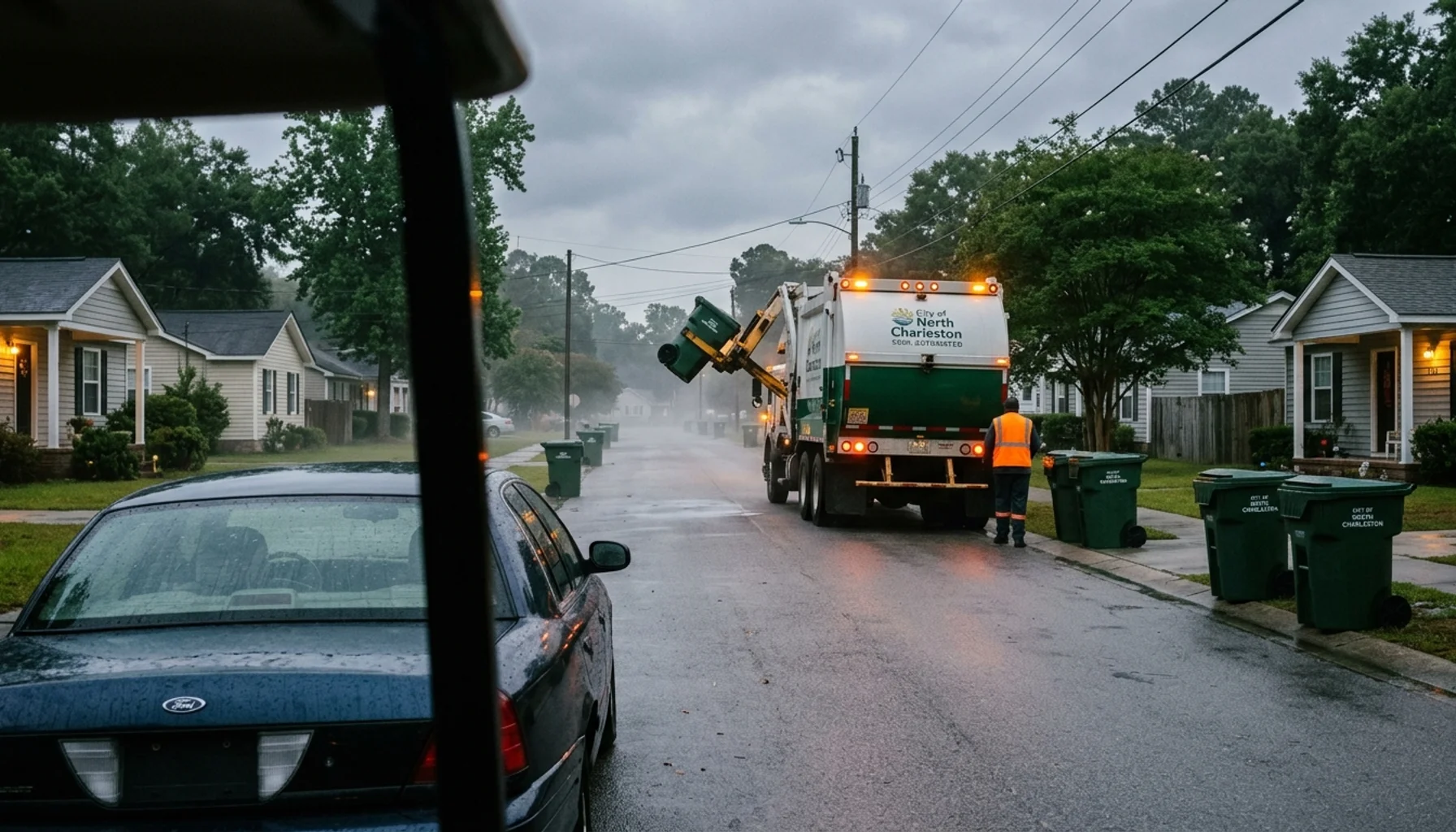
If you would rather not wheel bins anywhere, Trash Day Made Easy moves them from your back door to the curb and back. Request a service quote here.
Frequently Asked Questions
Do I need bin cleaning if my trash is picked up every week?
Weekly pickup empties the bin but does not wash it, so residue and odor can build up regardless of frequency. Whether you need cleaning depends on what you throw away and how hot it gets. Bagged, dry waste may need only an occasional rinse.
What does professional trash bin cleaning and sanitizing include?
Most services wash the interior, exterior, lid, handles, and wheels with hot, high-pressure water, then apply a disinfectant and a deodorizer. Many providers capture the wastewater. Bins are cleaned empty, usually the day after pickup.
How often should household trash bins be professionally cleaned?
Monthly is the most common recommendation, with quarterly or every-12-week plans for lighter use. Warm weather, pets, diapers, and heavy food waste push toward more frequent cleaning. One-time cleanings work for move-ins and home sales.
How much is valet trash service?
Residential valet trash service from Trash Day Made Easy starts from $49 per month in select Charleston neighborhoods. Multifamily, build-to-rent, HOA, and short-term rental pricing is quote-based, so request a quote at trashdaymadeeasy.com, Monday through Friday.
What is valet trash service?
Valet trash service is a scheduled collection in which a crew picks up your waste at the door or moves your bin to the curb and back. Trash Day Made Easy offers nightly doorstep-to-dumpster collection for communities and backdoor-to-curbside bin management for homeowners, with photo-verified visits.
What happens if I miss trash pickup?
Your waste generally waits until the next scheduled collection, so check your hauler or town for the next date and any missed-pickup policy. With a valet or bin concierge service, a crew handles bin placement on your schedule, reducing the chance of a missed day.
How do I schedule a trash bin cleaning on Johns Island?
Confirm your collection day, then book a cleaning for the following day so the bin is empty. Trash Day Made Easy can connect bin management customers with The Bin Boy, a Charleston-based bin cleaning and sanitizing service.
Content powered by inkSTR.co