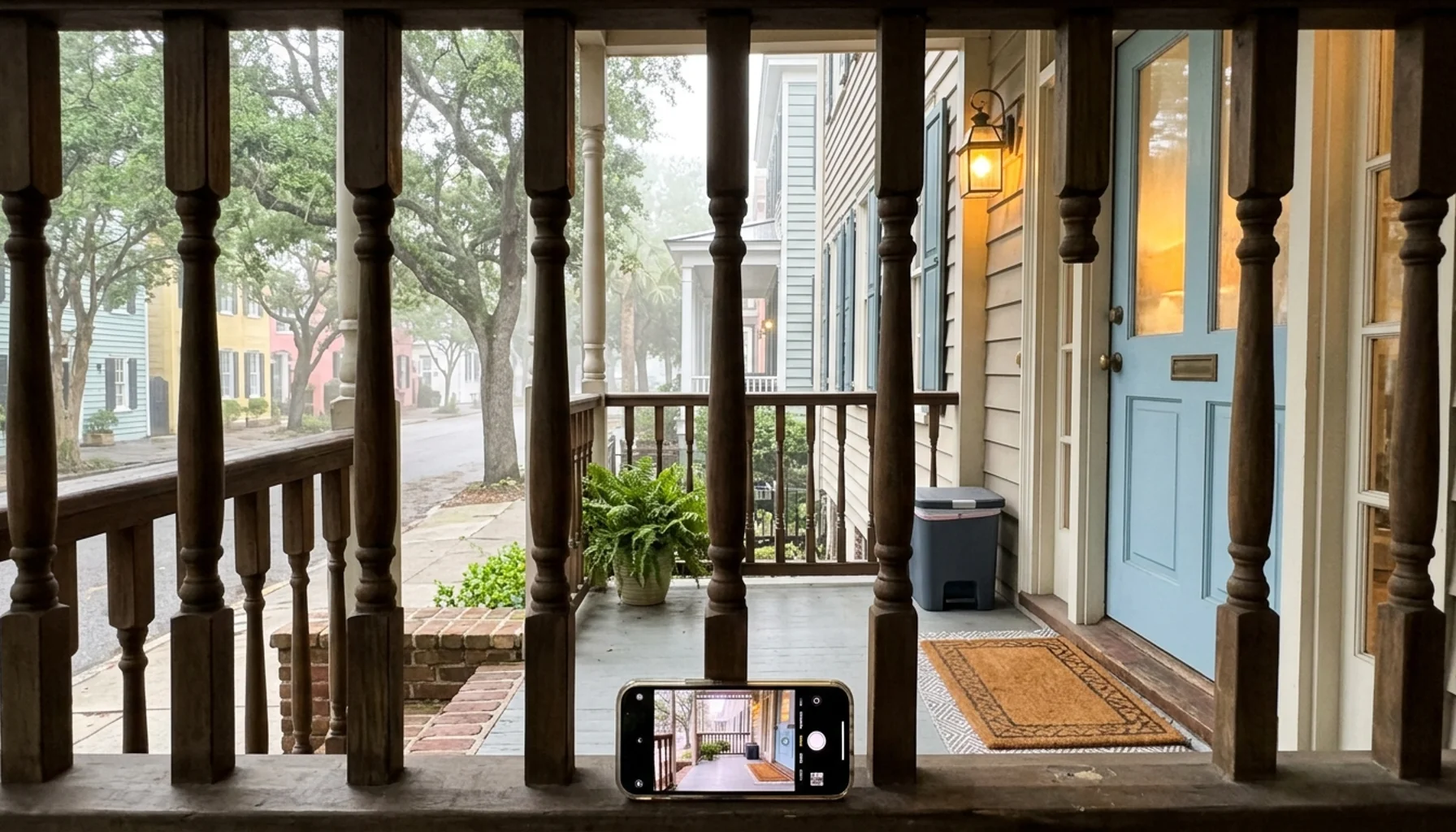
Doorstep details refers to the specific, verifiable information a valet trash service should provide about every single collection stop: which unit was serviced, what time the porter arrived, and photo proof the pickup actually happened. Without that level of documentation, "doorstep trash pickup" is just a promise, not a service you can verify.
Key Takeaways
- Doorstep details means unit-by-unit, photo-verified proof of service, not a general assurance that "trash was picked up" across a property.
- Trash Day Made Easy photo-verifies every collection stop across its Charleston, SC and Atlanta, GA portfolios, giving property managers documentation without needing to follow up.
- North Charleston's short-term rental market included roughly 984 active units in 2026, with average daily rates near $237, according to StaySTRA benchmark data, making turnover trash accountability a real revenue factor for STR operators.
- Industry-standard valet trash setups typically provide a 13-gallon container per unit and collect during evening service windows, though the exact schedule varies by community and vendor.
- Residential valet trash service in select Charleston-area neighborhoods starts from $49 per month through Trash Day Made Easy, with portfolio and multifamily pricing available by quote.
- Photo-documented service records protect both the property manager and the vendor if a resident disputes whether pickup occurred on a given night.
If you manage a multifamily community near the Rivers Avenue corridor, or you're coordinating turnover trash across a handful of short-term rentals on Sullivan's Island, you already know the gap between "we picked up trash" and proof it happened. That gap is where resident complaints, lease renewal risk, and vendor disputes all live.
At Trash Day Made Easy, we built our entire service model around closing that gap. Every doorstep-to-dumpster collection stop across our Charleston, SC and Atlanta, GA portfolios gets photo-documented at the point of service, not summarized at the end of the month. That distinction matters more in 2026 than it did five years ago, as more property managers demand documented accountability instead of a driver's word.
This guide walks through what doorstep details actually mean in a valet trash context, why photo verification changed the accountability standard for the industry, and what property managers, build-to-rent operators, HOA boards, and short-term rental hosts across the Charleston metro should expect from a vendor in 2026.
What Are Doorstep Details in Valet Trash Service?
Doorstep details are the unit-level records a valet trash provider generates for each collection stop, typically including a timestamp, a photo of the completed pickup, and confirmation the container or bag was removed from the resident's door. This level of granularity is what separates a documented service from a routine, unverified pickup route.
Most municipal pickup schedules operate on a once or twice weekly cadence and require residents to bring bins to the curb themselves. Valet trash flips that model: a porter comes to the door, typically during an evening service window, and removes the container. Specifically, the doorstep detail is the record proving that visit happened at that specific unit, on that specific night.
For a property manager overseeing a 150-unit community near Rivers Avenue, doorstep details answer a very practical question when a resident calls: did the porter actually reach my door last night? Without documentation, that question has no answer beyond "the route was completed." With photo-verified service records, the answer is a timestamped image.
This is the standard Trash Day Made Easy applies across every community we serve, from a 12-unit build-to-rent development on Daniel Island to a 400-unit apartment community in the Charleston metro.
How Does Photo-Verified Doorstep Collection Actually Work?
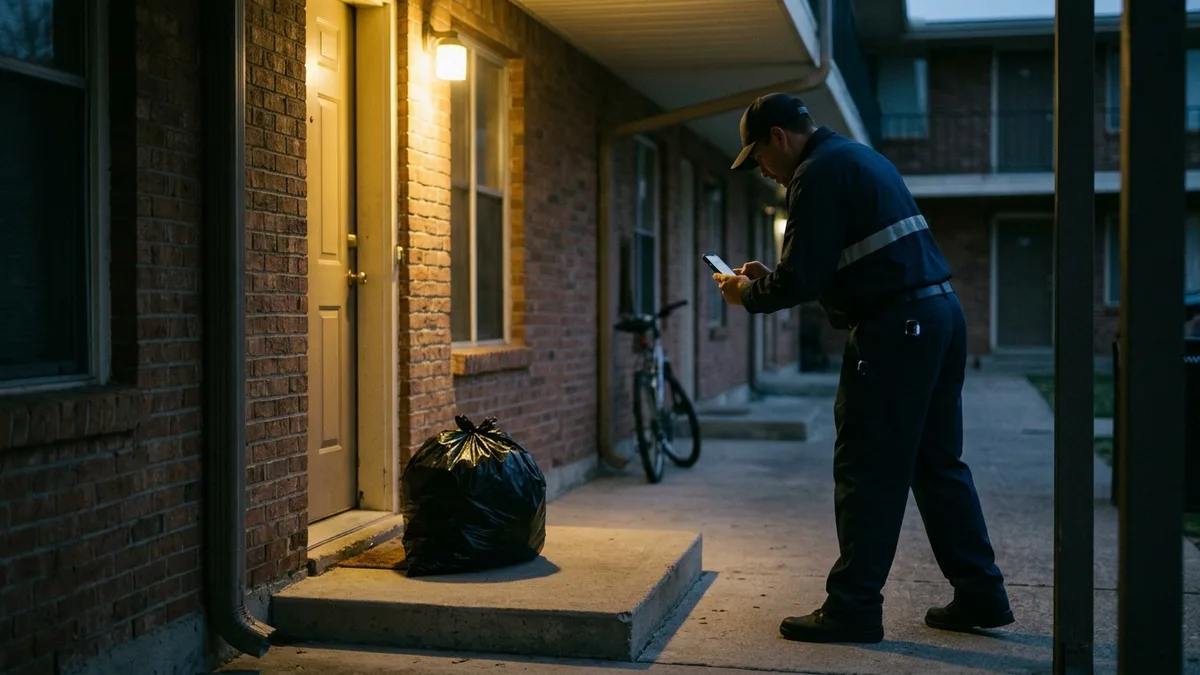
Photo-verified doorstep collection works by having each valet trash porter document a service stop with a timestamped photo immediately after removing the resident's container. As a result, the property manager receives proof of service without requesting it, and the resident's dispute (if one occurs) has a record to reference.
The mechanics are straightforward, and industry-standard setups follow a similar pattern. Each unit typically receives a 13-gallon container for bagged trash. During a defined evening window, often somewhere between 6 p.m. and 8 p.m. depending on the community, a porter walks the property collecting bagged waste using leak-proof carrying methods, then disposes of it in the property's dumpster or compactor. The photo-documentation step happens at that moment, at the door, not later from a truck or an office.
Here's what a documented doorstep detail should include, at minimum:
- The unit number or door location serviced
- A timestamp showing the date and time of collection
- A photo confirming the container was removed and the area is clean
- Building-level or portfolio-level confirmation the full route was completed
Additionally, some vendors clean the immediate area around dumpsters and compactors after disposal, which matters for curb appeal near community entrances and leasing office sightlines. This step gets skipped more often than it should. At Trash Day Made Easy, cleaning the collection area is part of the standard service, not an add-on.
Why Do Property Managers Need Documented Proof of Trash Pickup?
Property managers need documented proof of trash pickup because resident complaints about missed collection are one of the most common, and most preventable, sources of lease renewal risk in multifamily housing. Without a photo record, a manager has no way to confirm or deny a resident's claim, which erodes trust on both sides.
Consider the operational reality near the Rivers Avenue corridor, where apartment density is high and dumpster capacity is a constant pressure point. A single missed pickup night can trigger multiple resident complaints, an overflowing dumpster area, and a call to the property manager asking why nothing was done. If the vendor cannot produce a doorstep detail record for that night, the manager is stuck defending a vendor relationship with no evidence either way. Documented service changes that conversation entirely. A property manager checking a service dashboard can see, unit by unit, that pickup occurred at 7:14 p.m. with a photo to confirm it. That record also matters for apartment community owners and investors watching lease renewal rates. According to industry research from the National Apartment Association, resident satisfaction with community amenities directly correlates with renewal decisions, and a reliably clean, complaint-free waste program is one of the more overlooked contributors to that satisfaction.
We've seen this pattern repeatedly across our own multifamily portfolio in Charleston and Atlanta: communities that switch to photo-verified service see resident complaint calls drop within the first billing cycle, simply because the dispute resolution process becomes evidence-based instead of he-said-she-said.
What Should Short-Term Rental Operators Expect from Doorstep Trash Documentation?
Short-term rental operators should expect turnover trash documentation that confirms a unit is waste-free before the next guest's check-in window, with a timestamp proving the work happened between the previous checkout and the new arrival. For STR properties, missing this window even once can trigger a guest complaint before the stay even begins.
North Charleston's short-term rental market is not small. Roughly 984 units were operating in the market as of 2026, according to StaySTRA benchmark data, with an average daily rate near $237.05 and a trailing 12-month occupancy rate around 64.5%. Airbtics data puts average annual revenue per North Charleston property at approximately $39,757 for 2026 to 2026. Peak months like March, April, June, and July push average daily rates as high as $286 to $450, per Chalet market analytics.
That kind of revenue density means a single bad review over a trash-related issue carries real financial weight. If a guest arrives to find the previous occupant's overflow still in a bin near the entryway on Isle of Palms or Sullivan's Island, that's a review problem, not just a housekeeping problem. Turnover trash removal needs to be treated as its own scheduling step, not an assumption baked into the cleaning turn. Trash Day Made Easy's on-demand and turnover-specific service integrates directly into the gap between guest stays, with the same photo-verified doorstep detail standard applied to STR turnovers that we apply to nightly multifamily collection. Operators managing properties across the Charleston Historic District, Isle of Palms, or Sullivan's Island can schedule this without needing to coordinate it manually around every cleaner's calendar.
| North Charleston STR Metric (2025-2026) | Reported Figure | Source |
|---|---|---|
| Active short-term rental units | ~984 | StaySTRA |
| Trailing 12-month occupancy | 64.5% | StaySTRA |
| Average daily rate | ~$237.05 | StaySTRA |
| Average annual revenue per property | ~$39,757 | Airbtics |
| Peak-month ADR (March/April) | $286-$450 | Chalet |
| Average booking lead time | ~53 days | StaySTRA |
How Does Doorstep Documentation Differ for HOA and Residential Communities?
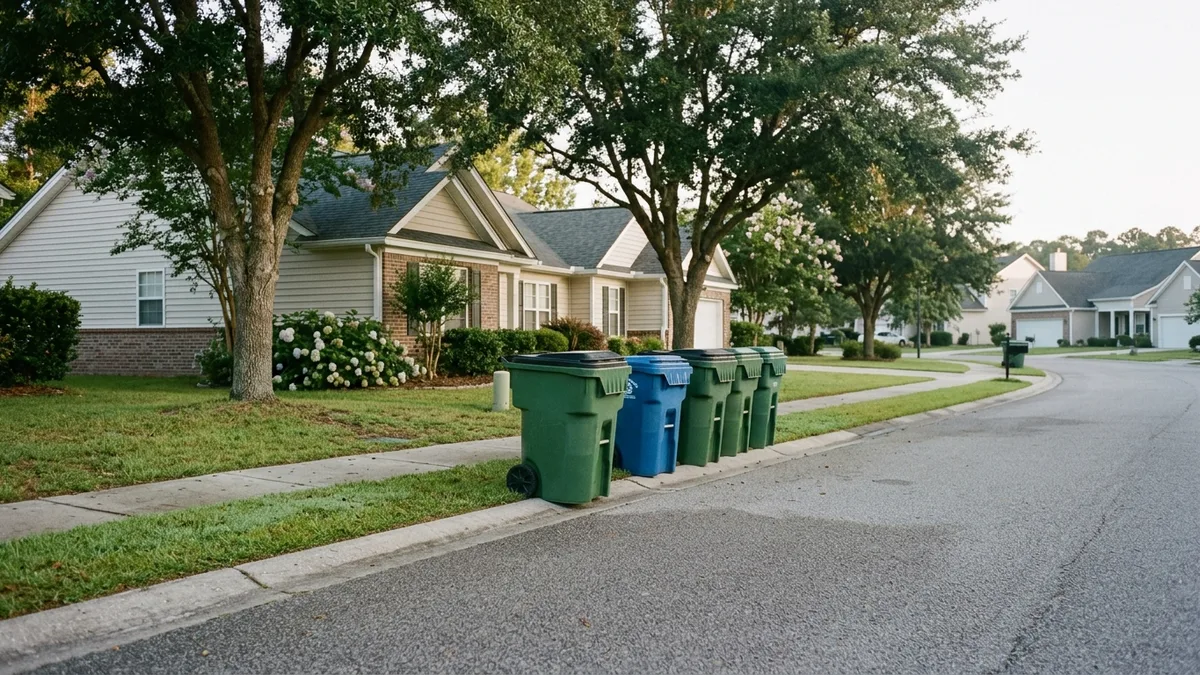
Doorstep documentation for HOA and residential communities typically centers on a different problem than multifamily: bin compliance rather than in-unit collection. HOA boards need proof that bins moved to the curb and back on schedule, since enforcement authority over individual homeowners is usually limited to warnings and fines.
This is where the distinction between valet trash and a trash can concierge model matters. A trash can concierge service, sometimes described as backdoor-to-curbside bin management, physically moves a resident's bin from a storage location to the curb on collection day and returns it afterward. The resident does nothing. The HOA board doesn't send a violation letter. It simply happens, and the documentation confirms it happened.
For HOA communities on James Island or Daniel Island, this solves a recurring source of board friction: residents who forget bin day, leave containers at the curb for days afterward, or generate move-out debris that becomes the community's visual problem. A documented bin concierge program removes the compliance burden from both the resident and the board.
Residential homeowners in select Charleston-area neighborhoods can access this directly. Residential valet trash service through Trash Day Made Easy starts from $49 per month, and pairs naturally with bin sanitizing through our partner, The Bin Boy, for homeowners who want the container itself kept odor-free between services.
How Do Doorstep Details Support Scattered-Site and Portfolio-Scale Operations?
Doorstep details support scattered-site portfolio operations by giving one owner or asset manager a single, consistent standard of proof across every property, regardless of how geographically spread the portfolio is. Without that consistency, an owner with 15 properties across North Charleston, Summerville, and Johns Island ends up managing 15 different service relationships with no comparable data between them.
This is the exact coordination problem that breaks down informal or self-managed waste arrangements as a portfolio grows past a handful of units. A single-community valet vendor built for one 80-unit apartment building isn't necessarily built to service a scattered portfolio spanning five neighborhoods with five different access points and dumpster configurations. Trash Day Made Easy is purpose-built for this scale problem. We service portfolios ranging from 10 units to more than 1,000, applying the same photo-verified doorstep detail standard whether the stop is a downtown Charleston short-term rental or unit 214 in a 300-unit community near the airport corridor. That consistency is what makes a build-to-rent operator's investor reporting reliable: every property in the portfolio produces the same kind of documented service record, so nothing gets lost in a patchwork of vendors.
For apartment community owners and investors watching net operating income across a Charleston and Atlanta portfolio, that consistency is worth more than it looks on paper. A waste vendor relationship that requires owner intervention at even one property in a 20-property portfolio defeats the purpose of hiring a vendor at all.
What Does Doorstep Trash Documentation Cost?
Doorstep trash documentation itself is not typically billed as a separate line item; it's built into the cost of a photo-verified valet trash program. Pricing for multifamily and portfolio-scale service is generally quote-based and depends on unit count, service frequency, and building configuration, while residential service in Charleston-area neighborhoods has a published starting price.
Industry benchmarks referenced by resources like Property Manager Insider's FAQ on valet trash typically frame monthly per-unit costs for multifamily valet trash within a moderate range that varies by market density, service frequency, and container type. Rather than quote a specific national figure that may not reflect Charleston or Atlanta market conditions accurately, the most useful approach for a property manager is to request a direct quote against the specific unit count and building layout involved.
For residential homeowners, Trash Day Made Easy's residential valet trash service starts from $49 per month in select Charleston-area neighborhoods. Multifamily, build-to-rent, HOA, and portfolio pricing is available by quote, with requests processed Monday through Friday.
| Service Type | Typical Structure | Documentation Included |
|---|---|---|
| Multifamily valet trash | Quote-based, per unit or per building | Photo-verified nightly collection at each door |
| Trash can concierge (HOA/residential) | From $49/month residential; quote for HOA | Bin movement confirmation, backdoor-to-curbside record |
| STR turnover trash removal | On-demand or scheduled per turnover | Photo confirmation before next guest arrival |
| Bulk item and move-out removal | On-demand, integrated with make-ready timeline | Before-and-after documentation of removed items |
What Mistakes Do Property Managers Make When Evaluating a Valet Trash Vendor?
The most common mistake property managers make is treating doorstep documentation as a nice-to-have feature rather than a contractual requirement when signing a service agreement. If photo verification isn't specified in the contract, a vendor has no obligation to provide it, and a manager loses the ability to resolve resident disputes with evidence.
A second mistake is assuming national scale automatically means consistent local service. A large provider covering thousands of communities nationwide can still have inconsistent route coverage in any single Charleston submarket if local staffing is thin. Ask specifically how documentation works at the property level you manage, not how it works company-wide.
- Confirm photo verification is standard, not optional. Ask to see a sample service report before signing anything.
- Ask about service windows in writing. A verbal promise of an evening pickup window means nothing without a documented schedule.
- Clarify how bulk items and move-out debris are handled. Standard valet trash rarely covers furniture or oversized items; confirm this is a separate, on-demand service.
- Check portfolio scalability before you need it. If your portfolio is growing, ask whether the vendor can maintain the same documentation standard at 10 units and at 500.
- Request references from communities of a similar size and configuration. A vendor that performs well in a low-density suburban community may not translate directly to a dense corridor property.
Trade-offs are worth naming honestly. Photo-verified service costs more to operate than an unverified route, since it requires porters to complete an extra documentation step at every stop. That's a reasonable cost when weighed against the resident complaints and lease renewal risk it prevents, but it's a real operational difference, not a marketing claim.
How Does a Waste Operations Program Extend Beyond Nightly Collection?
A waste operations program is a managed, end-to-end service structure that combines nightly valet collection, on-demand bulk item removal, turnover support, and photo-verified documentation into a single vendor relationship, rather than requiring a property manager to coordinate several separate vendors for each function.
This distinction matters most for portfolios that have outgrown a single-service arrangement. A build-to-rent community near Patriot's Point might need nightly valet collection for resident satisfaction, on-demand bulk removal for move-out season, and turnover coordination for any short-term rental units mixed into the community. Managing that through three separate vendors creates exactly the kind of coordination gaps that produce resident complaints and delayed unit turns.
Trash Day Made Easy structures waste operations as one program: nightly collection, bulk and turnover removal, and documentation, delivered by the same team, applying the same doorstep detail standard across every visit. For a property manager or portfolio owner, this means one point of contact and one consistent record format across every property in the portfolio, whether that portfolio sits entirely in Charleston, spans into Atlanta, or grows to include both.
Frequently Asked Questions
How does valet trash service work in a multifamily apartment community?
Residents place a bagged container outside their door during a defined evening window, and a porter collects it on a nightly schedule, disposing of it in the property's dumpster or compactor. With Trash Day Made Easy, each stop is photo-verified, so the property manager receives documented confirmation of service without needing to follow up.
What is a trash can concierge and how is it different from valet trash?
A trash can concierge, or backdoor-to-curbside service, physically moves a resident's bin from storage to the curb on collection day and back afterward. It's built for HOA and residential settings where the issue is bin compliance, not in-unit collection, and requires no action from the resident.
How does Trash Day Made Easy handle bulk item removal during a resident move-out?
Bulk item removal is scheduled as an on-demand service that integrates directly into the make-ready timeline, clearing furniture and oversized debris before it delays the next resident's move-in. It's treated as a fixed step in the turnover cycle rather than an afterthought handled whenever staff has time.
Can valet trash service be added to a short-term rental property in Charleston?
Yes. On-demand and turnover-specific trash removal is available for STR properties across the Charleston Historic District, Isle of Palms, Sullivan's Island, and surrounding markets. Service is scheduled around unpredictable checkout and check-in windows rather than a fixed weekly route.
How does photo-verified waste collection work and why does it matter?
Each service stop is documented with a timestamped photo confirming the container was removed and the area is clean. This creates a service record that protects both the property manager and the vendor if a resident disputes whether pickup occurred on a specific night.
What does Trash Day Made Easy charge for residential valet trash service?
Residential valet trash service starts from $49 per month in select Charleston-area neighborhoods. Multifamily, build-to-rent, HOA, and portfolio pricing is quote-based and depends on unit count and service frequency; requests are processed Monday through Friday at trashdaymadeeasy.com.
Can one waste vendor handle service across an entire property portfolio in Charleston and Atlanta?
Yes. Trash Day Made Easy is built for portfolio scalability, servicing communities from 10 units to more than 1,000 units while maintaining the same photo-verified documentation standard at every address, whether the portfolio sits in North Charleston, Atlanta, or spans both markets.
What happens if an HOA changes waste management companies mid-contract?
Transitioning vendors typically requires coordinating a start date with the outgoing provider's final service night to avoid a gap in bin or trash collection, along with communicating the change to residents in advance so expectations don't slip during the switch. A well-run transition should produce documented service from day one with the new vendor rather than a quiet gap in records.
The Bottom Line on Doorstep Details
Doorstep details are what separate a valet trash promise from a valet trash program you can actually verify. A photo-timestamped record at every door, whether that door belongs to a 300-unit community near Rivers Avenue or a single-family rental on Johns Island, gives property managers, HOA boards, and STR operators something a verbal service assurance never can: proof.
North Charleston's rental market, with roughly 984 active short-term rental units and an average daily rate near $237 as of 2026, is only getting more competitive. Multifamily and build-to-rent communities across the Charleston metro face the same pressure to protect resident satisfaction and lease renewal without adding operational overhead. Documented, photo-verified waste service is one of the more overlooked levers available to address both.
Trash Day Made Easy built its entire service model around that documentation standard, scaling from a single residential customer to portfolios of over 1,000 units without changing the level of proof provided at each door. As Charleston and Atlanta property portfolios continue to grow in 2026 and beyond, the vendors who can prove service, not just perform it, will be the ones property managers keep.

If your community or portfolio needs documented proof of service instead of a driver's word, get started with Trash Day Made Easy. We provide nightly, photo-verified valet trash service, trash can concierge, bulk removal, and full waste operations support for multifamily communities, build-to-rent developments, HOAs, short-term rental properties, and residential homeowners across Charleston, SC and Atlanta, GA. Request a service quote Monday through Friday at trashdaymadeeasy.com.
Content powered by inkSTR.co