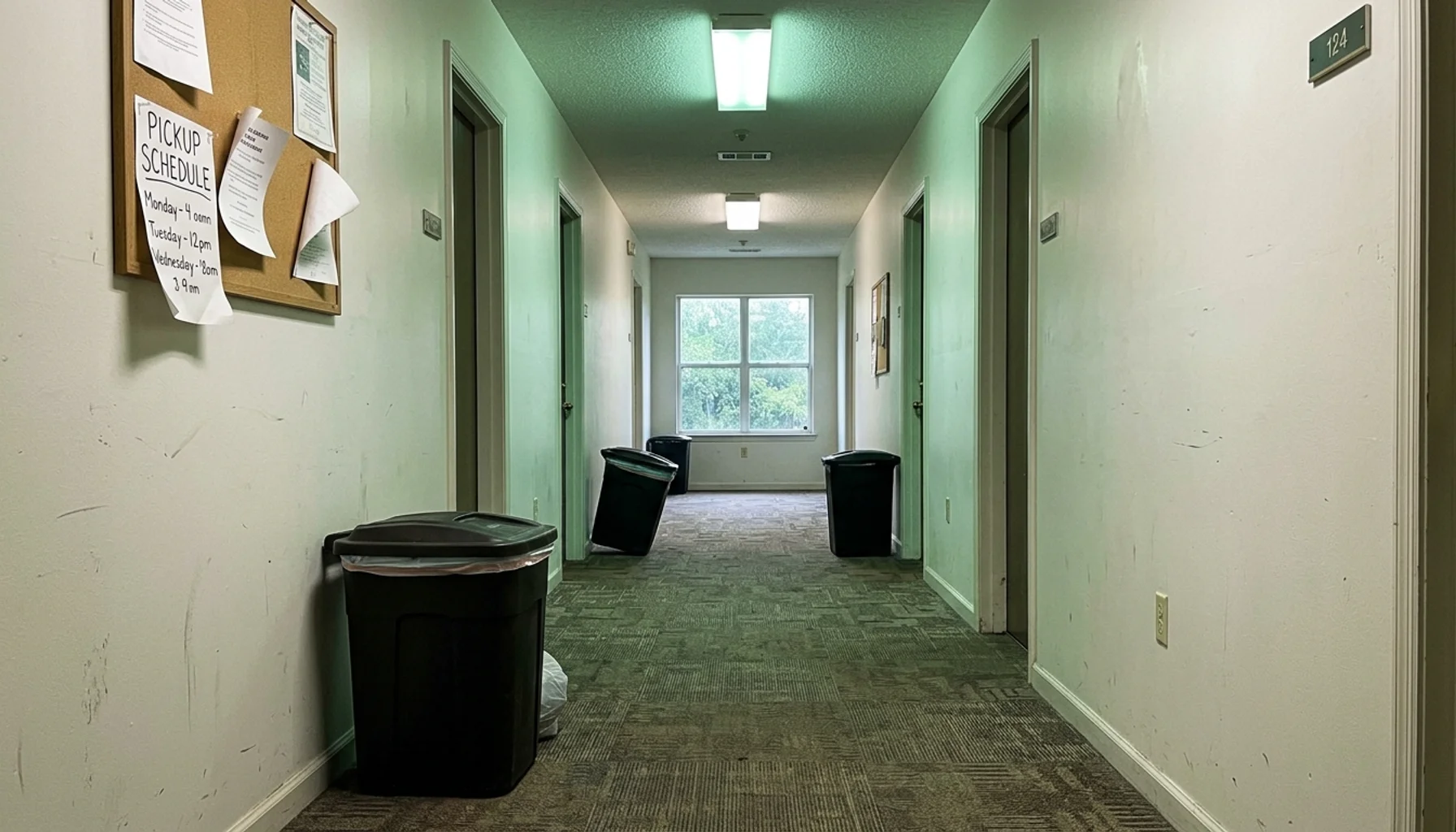
Inconsistent valet trash pickup schedules leave hallways cluttered because missed stops, unpredictable set-out windows, and unclear escalation paths compound over a single week. The fix is a documented, photo-verified nightly schedule with a real escalation process, not another reminder email to residents.
Key Takeaways
- More than 50% of Class A and B apartment communities offered doorstep trash collection in 2026, up from roughly 30% five years earlier, which means inconsistent service now stands out more, not less.
- Valet trash operators typically charge residents $25 to $50 per unit monthly while paying $8 to $15 per unit for the service itself, according to a 2026 implementation guide, so the margin for error on missed pickups is thin for property managers.
- Industry software data shows a 40% reduction in missed pickups when operators adopt route-tracking and photo-verification tools instead of relying on driver self-reporting.
- Recurring misses concentrated in the same building typically point to a route-design or staffing problem, not a single porter's mistake.
- Charleston County charges a $105 annual multifamily solid-waste fee, with increases capped at 5% annually under a Consumer Price Index adjustment starting July 2026, a detail property managers should factor into any waste-vendor conversation.
- A documented service record, including date, timestamp, photo, and route map, is the single biggest lever for holding a valet trash vendor accountable across a portfolio.
If you manage a multifamily community anywhere from the Rivers Avenue corridor to Daniel Island, you already know the pattern. Hallways look fine on Monday. By Thursday, there's a bag sitting outside 214, a half-full recycling bin blocking the stairwell, and a resident email asking why nobody came again. The schedule wasn't broken on paper. It broke in practice.
At Trash Day Made Easy, we service multifamily communities, build-to-rent developments, and short-term rental properties across the Charleston, SC and Atlanta, GA markets, and this exact scenario is the number one complaint we hear from new clients before they switch providers. It is rarely a single bad night. It is a schedule with no accountability built into it.
This guide breaks down why valet trash pickup schedules go inconsistent in the first place, how to tell the difference between a resident problem and a vendor problem, and what a properly structured service agreement should require. We'll also cover the resident-facing rules that keep hallways clear between pickups, since half of every "missed pickup" complaint is actually a compliance issue, not a coverage gap.
What Causes Inconsistent Valet Trash Pickup Schedules?
Inconsistent valet trash pickup schedules happen when a vendor lacks route accountability, when staffing turnover disrupts coverage, or when residents set out trash outside the approved window. As of 2026, the most common root cause across Charleston-area multifamily communities is a combination of unverified stops and poor route design, not a single dramatic failure.
Specifically, four factors drive the majority of missed or late pickups. First, route overload: a porter assigned too many doors for the collection window will start skipping units once they fall behind. Second, staffing gaps: valet trash companies that don't cross-train backup staff leave communities exposed the moment a regular porter calls out. Third, resident non-compliance: containers set out after the approved window, often 8:00 p.m. in many markets, get missed by design, not by error. Fourth, and most overlooked, is the absence of photo verification, which means a property manager has no way to distinguish an actual miss from a resident complaint filed in error.
A 2026 industry analysis found invoice error rates around 9.5% and overflow fees ranging from $125 to $260 per occurrence among valet trash vendors nationally, numbers that reflect how much slippage exists in the space when contracts lack enforcement teeth.
Can Apartments Force You to Pay for Valet Trash?
Whether an apartment community can require valet trash fees depends on the lease agreement and state and local landlord-tenant law, which varies by jurisdiction. In many markets, valet trash is structured as a mandatory amenity fee disclosed in the lease, similar to a package locker or pest control charge, rather than an optional add-on residents can decline.
Property managers in South Carolina and Georgia should confirm the specific language allowed in their lease templates with legal counsel, since disclosure requirements and fee structuring rules differ by state. What matters operationally is this: if you're charging residents for a service, residents expect it delivered on a consistent schedule. A mandatory fee paired with an inconsistent pickup schedule is the fastest way to generate lease renewal friction and formal complaints.
This is exactly where documentation matters. When Trash Day Made Easy runs nightly, photo-verified collection for a community, the property manager has a defensible record showing service was performed at every door, every night. That record protects the property if a resident disputes the fee or claims the service wasn't rendered.
How Often Should Valet Trash Pick Up Each Week?
Valet trash pickup frequency in multifamily communities typically ranges from three to five nights per week, with nightly service, five nights a week, considered the industry standard for full-service amenity positioning. According to industry benchmarks, five weekly pickups is the standard for communities marketing valet trash as a premium resident amenity rather than a basic convenience add-on.
Some providers run collection Sunday through Thursday, avoiding Friday and Saturday nights when staffing and resident schedules are less predictable. Others align pickup nights with municipal collection days to keep dumpster capacity manageable between hauls. For build-to-rent communities near Daniel Island or the airport corridor, where unit density is lower than a traditional garden-style apartment complex, three nights a week is sometimes sufficient, but property managers should confirm that frequency doesn't create overflow between service nights.
The frequency on paper matters less than consistency in execution. A community advertised at five nights a week that actually delivers four, with the fifth night unpredictable, creates more resident frustration than a community that honestly commits to three nights and hits all three every single week.
Is Valet Trash Worth It for a Multifamily Community?
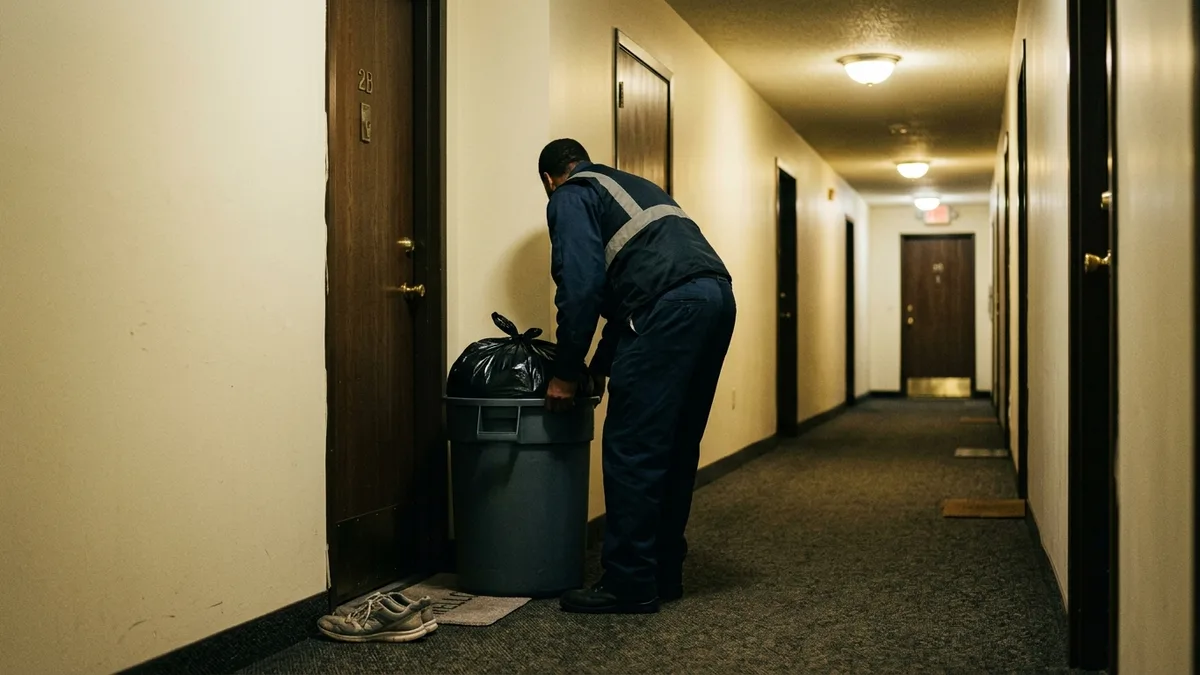
Valet trash is worth the investment for most multifamily communities because it functions as a resident retention amenity, not just a waste removal line item. According to a 2026 industry implementation guide, a 300-unit community charging an average net gain of $23 per unit per month from valet trash can generate approximately $82,800 in additional annual revenue once service costs are factored in.
The National Apartment Association has published research indicating that resident amenities tied to convenience and daily quality of life directly influence lease renewal decisions. Reducing dumpster overflow, hallway clutter, and pest issues near shared trash areas supports curb appeal at renewal time, which matters more in competitive submarkets like the Rivers Avenue corridor where multiple communities compete for the same renter pool. The value calculation breaks down if the service itself is inconsistent. A community paying for valet trash and still fielding daily hallway complaints is paying twice: once for the vendor contract, and again in resident goodwill and potential move-outs. This is why we tell every property manager evaluating a switch: the question isn't whether valet trash works as an amenity. It's whether your current vendor can prove, night after night, that it happened.
How Much Do Valet Trash Companies Make, and What Should You Pay?
Valet trash companies typically operate on a spread between what residents or property owners pay per unit and what it costs to service that unit, with providers charging $25 to $50 per unit monthly while service delivery costs run $8 to $15 per unit, according to a 2026 implementation guide. That spread covers labor, route logistics, bags, bins, fuel, and administrative overhead, including invoicing and customer service.
For property managers evaluating vendor pricing, the per-unit fee alone doesn't tell the full story. Ask what's included: nightly collection, photo verification, bulk item handling, holiday schedule coverage, and responsiveness to missed-pickup reports all affect what you're actually paying for. A cheaper per-unit rate that comes without documentation or backup staffing coverage often costs more in resident turnover than it saves in vendor fees.
Charleston County's solid-waste ordinance also factors into total cost planning. Multifamily properties currently pay a $105 annual recycling and disposal fee per unit, with future increases capped at 5% annually starting in July 2026 under a Consumer Price Index adjustment. That's a county-level fee separate from any private valet trash contract, and property managers should budget for both when calculating total waste management spend.
How Trash Day Made Easy's Doorstep-to-Dumpster Service Solves the Inconsistency Problem
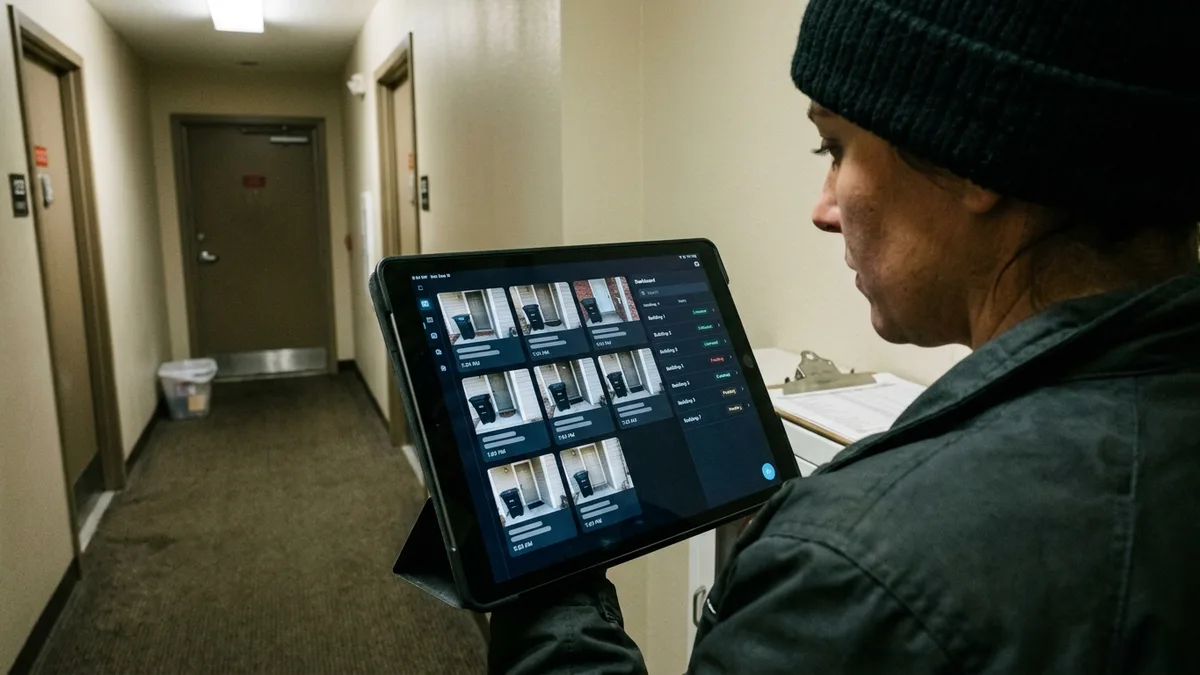
Trash Day Made Easy's nightly, doorstep-to-dumpster valet trash service is built specifically to eliminate the accountability gap that causes cluttered hallways in the first place. Every collection stop is photo-verified at the door, which means property managers receive documented confirmation without needing to walk the property or wait for a resident complaint to find out something went wrong.
The service scales from small communities of 10 units to portfolios exceeding 1,000 units, which matters for scattered-site owners managing properties across multiple North Charleston neighborhoods with a single vendor relationship instead of juggling different providers at different addresses. Quotes are available Monday through Friday for multifamily, build-to-rent, HOA, and short-term rental properties.
What Should a Service-Level Agreement Include to Prevent Missed Pickups?
A valet trash service-level agreement should define completion thresholds, escalation deadlines, evidence standards, and remedies for recurring misses, ideally with specific numbers rather than vague language like "reasonable effort." Most competing guides skip this section entirely, leaving property managers with a handshake agreement instead of an enforceable standard.
At minimum, your agreement should specify: the exact collection window (for example, 8:00 p.m. to midnight), the required photo-verification standard for every stop, a maximum allowable missed-pickup rate per month, a same-night makeup policy when a route allows recovery, and a documented escalation path if the same building experiences repeated misses. Recurring misses concentrated in one building point to a route-design or staffing issue that a vendor needs to fix structurally, not paper over with a one-time apology.
| SLA Component | What to Require | Why It Matters |
|---|---|---|
| Collection window | Specific start and end time, in writing | Removes ambiguity about what counts as "late" |
| Photo verification | Timestamped photo per unit, per night | Distinguishes real misses from resident error |
| Missed-pickup threshold | Defined maximum per month, with remedy | Gives you contractual leverage, not just goodwill |
| Makeup service | Same-night recovery when route allows | Prevents a missed bag from sitting overnight |
| Reporting | Monthly completion rate and complaint volume | Surfaces building-specific patterns early |
Property managers evaluating a switch should also read our breakdown of how valet trash companies charge apartments to understand where pricing and service scope overlap, and where they don't.
How Do You Tell a Vendor Failure From a Resident Compliance Problem?
A diagnostic approach separates vendor failures from resident compliance issues by checking three things in order: whether the container was set out within the approved window, whether the door or unit was accessible, and whether the photo record shows a completed stop. Most competing resources skip this diagnostic step entirely and treat every complaint as a vendor failure, which wastes time chasing the wrong fix. Late set-out is the most common resident-side cause. Many providers require containers outside by a defined cutoff, often around 8:00 p.m., with return required by 9:00 a.m. the next morning. A bag placed at 8:15 p.m. isn't a missed pickup; it's a late set-out that will roll to the next scheduled night. Second, check accessibility: locked gates, blocked doors, or units with dogs loose in the hallway are common reasons a porter skips a stop and moves on rather than risking a safety issue.
If the photo record shows no stop at all and the container was compliant and accessible, that's a genuine vendor miss. If misses cluster in the same building week after week, that's not an individual porter error; it's a route or staffing problem the vendor needs to redesign, not apologize for. Our guide to what valet garbage services actually include walks through the operational side of this in more depth.
How Do You Redesign a Waste Pickup Schedule When It Keeps Breaking Down?
Redesigning a broken valet trash schedule starts with property-specific data: unit count, building layout, elevator access, and waste volume by day of the week, not a generic template applied across every community in a portfolio. A schedule built for a 120-unit garden-style community with ground-floor access rarely works unchanged for a mid-rise with a single elevator bank and 200 units. Start by mapping peak volume days. Move-in weekends, the first of the month, and post-holiday weeks generate significantly more waste volume than a typical Tuesday. A schedule that works fine most weeks can break down predictably during these periods if the route isn't adjusted temporarily. Second, map physical access: buildings with a single elevator serving eight or more floors need a different route sequence than a walk-up building, since a porter working against an elevator wait time will fall behind fast. Third, build in a supervised launch. Industry guidance recommends a vendor supervisor walk the property for the first one to three nights of a new schedule, followed by morning walkthroughs from property staff to catch what the porter's photo log might miss. This is the single most skipped step we see when a property manager tells us their previous vendor "just started" a new schedule with no oversight, and it's usually why the first two weeks were rocky.
How Do You Handle Schedule Changes for Holidays and Weather?
Holiday and weather-related schedule changes should be communicated to residents at least 48 to 72 hours in advance through a specific, dated notice, not a generic reminder that pickup "may be delayed." As of 2026, most municipal and private waste haulers, including the City of North Charleston's sanitation division, adjust pickup days around major holidays, and valet trash schedules need to shift accordingly to avoid dumpster overflow the following night. The mistake we see most often is a property manager sending a single email in December listing every holiday for the year, then residents forget by the time the actual date arrives. Specific, close-to-the-date notices work better: a flyer or text alert two to three days before Thanksgiving or July 4th, naming the exact adjusted collection night, gets far higher compliance than a bulk annual calendar. Weather events, particularly the coastal storm patterns common to the Charleston area, require a different approach. Build a standing policy with your vendor for what happens during a named storm or flood advisory: does collection pause entirely, or shift to a daytime window? Residents should know this answer before the first storm of the season, not learn it in real time while trash piles up in a stairwell.
What Are the Hallway Safety and Liability Risks of Inconsistent Pickup?
Inconsistent valet trash pickup creates real liability exposure beyond resident complaints, including blocked fire egress paths, door-swing obstructions, and pest or odor issues that can violate local housing codes. This is a gap almost every competing resource skips, treating missed pickups purely as a satisfaction issue rather than a safety and compliance issue. A bag or bin left in a hallway for even one extra night can block a required exit path, which becomes a serious liability question if a fire marshal inspection happens to fall on the wrong day. Beyond fire code, overflowing containers attract pests faster in humid Lowcountry summers than in drier climates, and a pest problem traced back to a specific building wing tends to spread complaints to residents who never even generate excess trash themselves. Property managers should require their valet trash vendor to flag any hallway obstruction discovered during a nightly route, not just report on completed pickups. National guidance from doorstep pickup operators is explicit that residents are responsible for keeping hallways, stairs, doors, and fire equipment clear, but a good vendor should also report obstructions they encounter rather than working around them silently. This dual accountability, resident responsibility plus vendor reporting, is what actually keeps hallways clear between service nights, not just on them.
How Do You Track Performance Once a New Schedule Is in Place?
Tracking valet trash performance requires measuring completion rate per collection night, missed-pickup rate by unit, complaint volume per 100 units, and average response time to reported issues, ideally reviewed monthly rather than only when a complaint spikes. This KPI framework is standard among established operators but rarely gets implemented consistently by property management teams juggling multiple vendors and priorities. Completion rate is the foundational number: what percentage of required stops were photo-verified as completed each night. A rate below the high 90s consistently suggests a structural problem, not a one-off. Missed-pickup rate by unit helps identify whether misses are randomly distributed, suggesting a general capacity issue, or clustered on specific floors or buildings, suggesting an access or route-sequencing problem. Complaint volume per 100 units gives you a normalized way to compare performance across communities of different sizes in a portfolio, which matters for scattered-site owners managing properties across Charleston, North Charleston, and beyond. Average response time, from a reported missed pickup to actual resolution, is often the number residents care about most, even more than whether a miss happened at all. A miss resolved the same night rarely generates a formal complaint. A miss that sits unresolved for three days almost always does.
Practical Guidance: How to Fix an Inconsistent Schedule Without Switching Vendors First
Before terminating a vendor contract, most inconsistent schedules can be diagnosed and partially fixed with a structured 30-day audit. Here's the sequence we recommend to property managers who reach out to us before deciding whether a full switch is necessary.
- Pull 30 days of service records. Request photo-verified logs, not just an invoice, and check for gaps by building and floor.
- Identify pattern versus randomness. If misses cluster in specific buildings, it's a route or access problem. If misses are scattered evenly, it's likely a staffing capacity issue.
- Audit resident compliance separately. Walk the property on a service night around the cutoff time and note how many units set out containers late.
- Request a written remedy plan from your vendor that names the specific fix (added staffing, route resequencing, supervisor walkthroughs) rather than a general apology.
- Set a 30-day re-evaluation checkpoint with a defined completion-rate target before deciding whether to renew, renegotiate, or replace the contract.
Common mistakes we see property managers make: switching vendors reactively after a single bad week without diagnosing the root cause, failing to separate resident non-compliance from vendor failure before escalating, and accepting verbal assurances instead of requiring documented service records. A vendor that can't produce a photo-verified log for every stop, every night, isn't giving you enough information to manage the relationship.
If you're evaluating providers as part of this process, our overview of door-to-door trash pickup and our comparison of valet trash alternatives for Charleston managers both cover what to look for in a replacement contract.
Frequently Asked Questions
How much do valet trash companies charge apartments?
Valet trash companies typically charge residents $25 to $50 per unit per month, while the property's cost to deliver the service usually runs $8 to $15 per unit, according to a 2026 industry implementation guide. Actual pricing depends on unit count, pickup frequency, and whether bulk item removal is included. Request a quote directly for a portfolio-specific number.
What is valet trash service?
Valet trash service is a private, scheduled waste collection model where a provider picks up trash directly from a resident's door and transports it to a central dumpster, rather than requiring residents to carry it themselves. It's typically offered as a paid amenity in multifamily communities, build-to-rent developments, and select residential neighborhoods, running on a nightly or multi-night weekly schedule.
What is valet trash service in apartments?
In an apartment setting, valet trash service means a porter or crew collects bagged household waste from outside each unit's door during a defined evening window, usually a few hours starting around 8:00 p.m. Residents place compliant, bagged trash outside their door on scheduled nights, and the provider handles the doorstep-to-dumpster transport. More than 50% of Class A and B apartment communities offered this amenity in 2026.
How much is valet trash service?
Residential valet trash service in select Charleston, SC neighborhoods starts from $49 per month through Trash Day Made Easy. Multifamily and portfolio pricing is quote-based and depends on unit count, pickup frequency, and service scope, so property managers should request a specific quote rather than relying on a flat per-unit estimate.
How much to charge for valet trash service cost?
Property managers passing valet trash costs to residents commonly charge in the $25 to $50 per unit monthly range, which covers the vendor fee plus a margin for the property. The right number depends on your market, unit mix, and whether the fee is bundled with other amenities. Comparing your proposed fee against what nearby competing communities charge helps you stay competitively priced without underpricing the service.
Can apartments force you to pay for valet trash?
Whether valet trash can be a mandatory fee depends on your lease terms and state landlord-tenant law, which varies. Many communities structure it as a disclosed mandatory amenity fee, similar to pest control or a package locker fee, rather than an optional service. Property managers should confirm the specific disclosure requirements for South Carolina or Georgia with legal counsel before finalizing lease language.
Is valet trash worth it?
For most multifamily communities, valet trash is worth the cost because it functions as a resident retention amenity that reduces hallway clutter, dumpster overflow, and pest issues that hurt curb appeal at renewal time. The value depends heavily on consistency: a community paying for the service but still fielding daily complaints is losing the resident-satisfaction benefit the fee is supposed to buy.
How often does valet trash pick up?
Most multifamily valet trash programs run three to five nights per week, with five nights, often Sunday through Thursday, considered the industry standard for full-service amenity positioning. The right frequency depends on unit density and waste volume; lower-density build-to-rent communities sometimes run three nights a week without overflow issues between service nights.
Conclusion: Consistent Hallways Start With a Documented Schedule
Inconsistent valet trash pickup schedules almost never come down to one bad night. They come from routes with no built-in accountability, staffing gaps nobody planned for, and resident compliance issues that never get separated from actual vendor failures. Fixing them means requiring photo verification on every stop, a service-level agreement with real thresholds, and a schedule built around your property's actual layout and volume patterns, not a generic template. As of 2026, more than half of Class A and B communities already offer doorstep collection, which means residents increasingly expect it to work reliably, not just exist as a line item on their lease. A property manager who can produce a documented, night-by-night service record isn't just solving hallway clutter. They're protecting the community's reputation at renewal time.
Trash Day Made Easy handles nightly, photo-verified valet trash collection for multifamily communities, build-to-rent developments, HOAs, and residential homeowners across Charleston, North Charleston, and Atlanta. If your current schedule keeps breaking down, get started with Trash Day Made Easy and request a portfolio quote, available Monday through Friday.

If cluttered hallways and missed pickups are the recurring complaint on your desk every week, a documented nightly schedule with photo verification at every door removes the guesswork. See how Trash Day Made Easy can service your portfolio.
Content powered by inkSTR.co