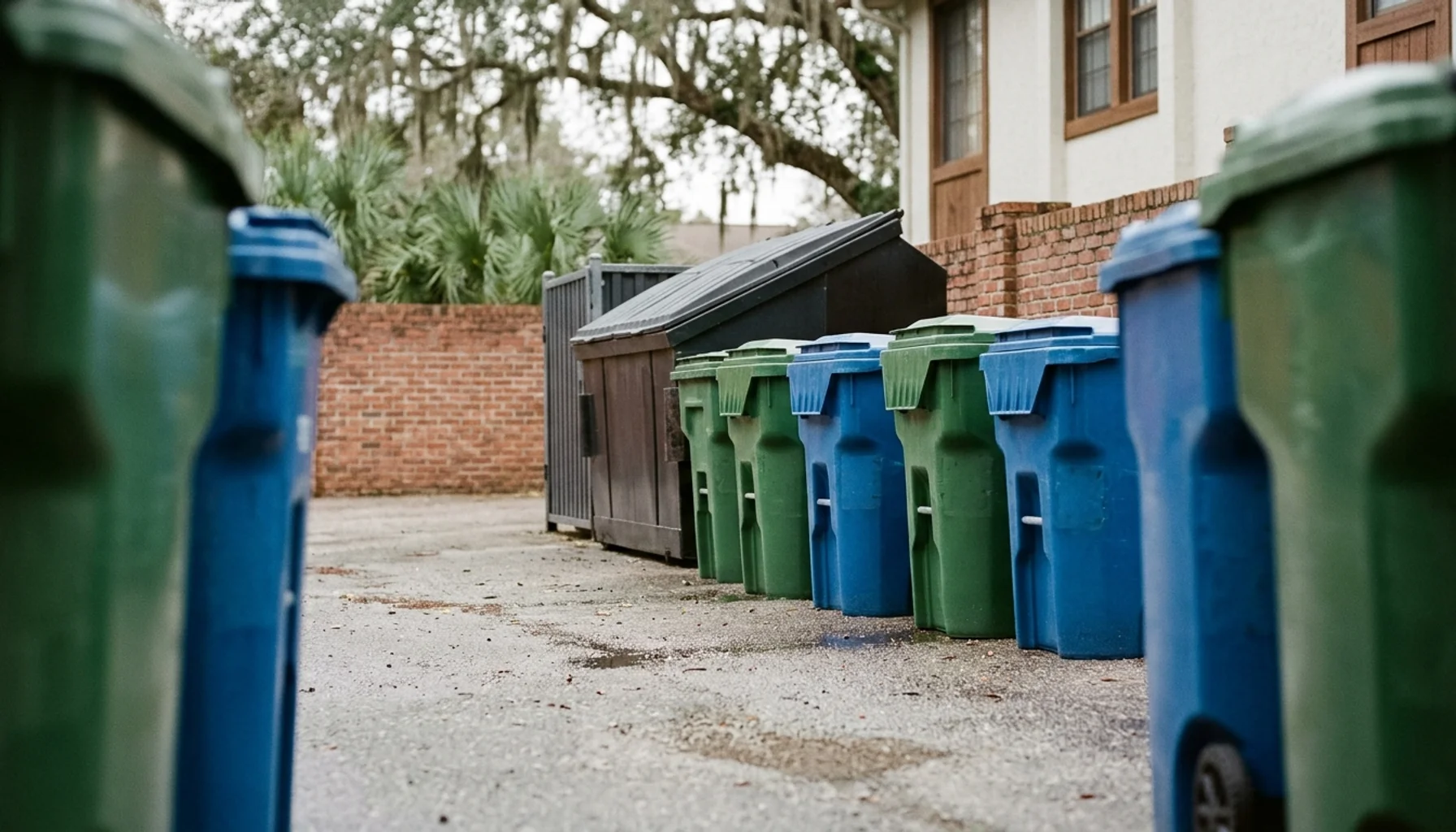
The seven questions to ask garbage recycling companies before you sign a multifamily contract cover equipment fit, full pricing, pickup frequency, accepted materials, resident education, failure remedies, and exit terms. Get every answer in writing, because a verbal promise will not help when a dumpster overflows in August. At Trash Day Made Easy, we run nightly valet trash for Charleston-area communities, and the same contract problems come up again and again.
Key Takeaways
- Request a documented site walk before any bid. Container size, truck access, gate codes, door widths, and weight limits decide whether a quote is realistic.
- Compare bids on equal footing: same waste streams, container capacity, pickup frequency, fees, escalators, and billing period.
- Contamination charges, fuel or environmental surcharges, and automatic renewal clauses are the terms most likely to raise your cost after signing.
- Valet trash collects bags at resident doors; your hauler empties and removes the containers. The two services work as separate layers.
- Collection rules vary by town and county, so confirm local requirements with the City of North Charleston public services and Charleston County Environmental Management.
- Trash Day Made Easy provides nightly, photo-verified Doorstep-to-Dumpster service for portfolios from 10 to more than 1,000 units, with quotes available Monday through Friday.
A multifamily waste contract is easy to sign and hard to leave. Contract length varies by vendor, and some agreements renew automatically. An overflow in July, a contamination charge in October, and a missed cancellation window in December all hide in fine print that most managers skim.
This guide is for managers and owners of garden-style, mid-rise, and build-to-rent communities in North Charleston, Charleston, Mount Pleasant, and the surrounding Lowcountry. Each question below includes the reason to ask it and what a good answer sounds like. It also tells you what should make you walk away from a bid in 2026.
Rules for multifamily waste differ by place. Portland, for example, states that multifamily contracts are not required and that managers can negotiate service level and cost with permitted companies. Sacramento County requires covered properties to hold a hauler contract or an approved alternative. Verify Charleston-area requirements with official sources before you negotiate anything.
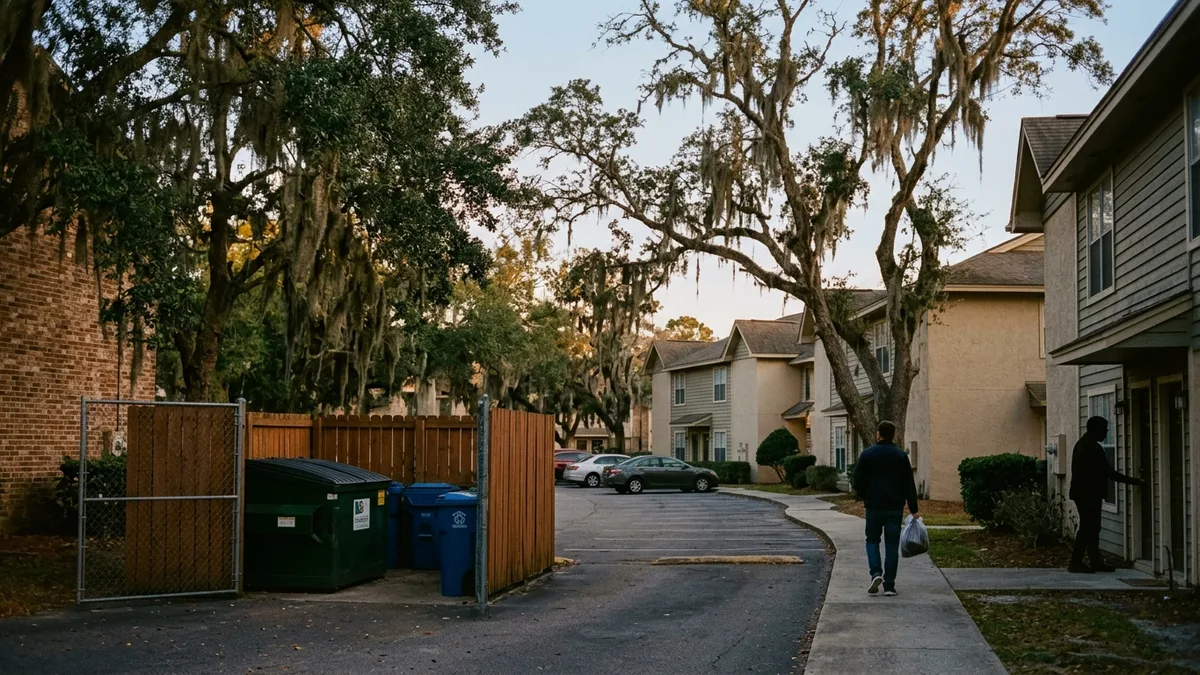
How Do You Choose Among Garbage Recycling Companies for a Multifamily Property?
Choosing a waste and recycling vendor for a multifamily property means matching equipment and schedule to how your residents actually generate waste. Accepted materials and contract terms need to fit that pattern too. The seven questions below follow the order in which problems usually surface, so you can use them as a bid scorecard.
- Will the containers and trucks fit your property?
- What does the quote include, and what costs extra?
- How often will the vendor collect, and can that change?
- What materials are accepted, and where do they go?
- Who educates residents and reports contamination?
- What happens when service fails?
- What are the renewal, escalation, and exit terms?
Private versus municipal service is the first fork. The City of Tulsa, for instance, says it does not provide commercial recycling collection to multifamily dwellings, so those properties hire a hauler. In the Lowcountry, rules differ by municipality. The Town of Sullivan's Island publishes its own schedule: garbage every Tuesday, an added Friday pickup from Memorial Day to Labor Day, and recycling every other Wednesday with carts at the curb before 7am.
Those are single-family town rules, but they show how much schedules vary inside one county. Before you compare private bids, ask City of North Charleston public services and Charleston County Environmental Management which services your property type already receives and which you must buy yourself.
Question 1: Will the Containers and Trucks Fit Your Property?
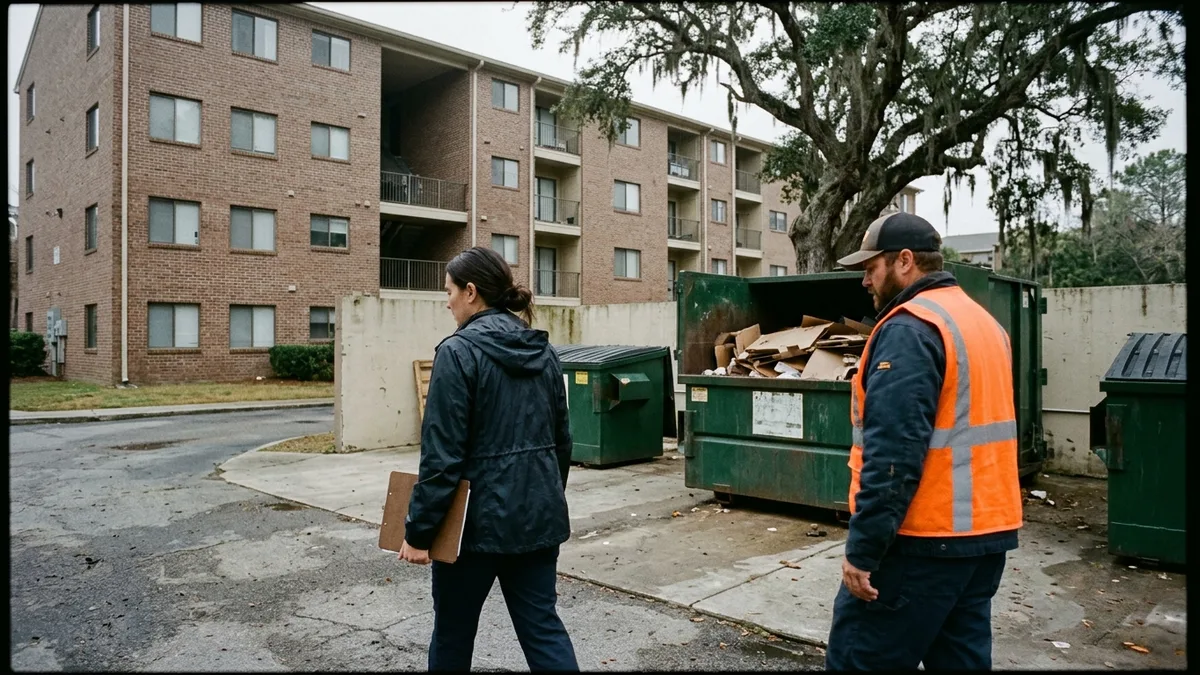
A site walk is a documented visit where a vendor measures and photographs your container areas and access routes before quoting equipment. The vendor also records building constraints. Denver's multifamily hauler checklist asks managers to verify the number and size of containers and whether they fit the trash or loading area. It also asks about door-width and weight-limit constraints.
Skip any vendor that quotes equipment from an address and a unit count alone. A quote built without a walk is a guess, and you pay for the guess when a truck cannot reach a container.
What the Site Walk Should Cover
- Container capacity: how many containers, what size, and whether the existing enclosure holds them with room to open lids.
- Truck access: turning space, overhead clearance, and pad or drive weight limits.
- Gates and codes: who holds the access code and what service hours the property allows.
- Chutes and compactors: whether the hauler services your compactor model and who owns it.
- Container rooms: door widths and tight corners that rule out standard carts.
A good answer names specifics: "Your enclosure fits two containers, and the gate needs a code we will store in our route notes." A weak answer is "we can work with anything."
Walk-ups matter here too. A third-floor breezeway community on the Rivers Avenue corridor has a very different bag-carrying problem than a townhome row with garages. At Trash Day Made Easy, we map breezeways, stairwells, and compactor areas before we talk about a service plan. Bring your own measurements of enclosure width and gate clearance to that walk, since Lowcountry sites with older enclosures often fit fewer containers than the unit count suggests.
Question 2: What Does the Quote Include, and What Costs Extra?
A like-for-like bid is a quote built on the same waste streams, container capacity, pickup frequency, included services, billing period, and fee schedule as every other bid you collect. Without that match, the lowest number on the page often becomes the highest invoice by the end of the year.
Kane County recommends gathering multiple quotes because pricing can vary substantially. Portland also advises contacting several permitted companies for bids. Ask each one for the total price including delivery and containers plus other fees. Then confirm that the paperwork lists every stream you need.
| Line Item | What to Confirm in Writing | Red Flag |
|---|---|---|
| Container delivery and rental | Whether the cost sits inside the monthly rate or is billed separately | Fees that appear only on the first invoice |
| Waste streams | Trash, recycling, and any other stream, each named on the quote | Recycling mentioned verbally but missing from paperwork |
| Container cleaning | Whether it is offered, how often, and the separate cost | Cleaning bundled with no frequency stated |
| Contamination fees | How they are assessed and the amount per incident | Fees set at the vendor's discretion |
| Fuel or environmental surcharges | Whether they exist and how they are calculated | Surcharges that can change without notice |
| Annual increases | Fixed or variable pricing, and the maximum yearly increase | Variable pricing with no cap |
| Promotional pricing | The price after any discount period ends | No stated post-promotion rate |
Pricing for doorstep services follows its own structure. Our breakdown of what valet trash companies charge apartments explains how unit count, schedule, and building layout shape quotes.
Question 3: How Often Will the Vendor Collect, and Can That Change?
Pickup frequency is the number of scheduled container servicings per week, and it should reflect your measured waste volume rather than the vendor's default setting. Denver advises matching frequency to regular volume and asking whether the hauler can vary service seasonally, with more pickups in hot summer months and fewer in cold winter ones.
Validate any proposed schedule against your own records before you accept it. Pull overflow history from maintenance work orders and resident complaints. Add any photos your team took of full containers. Then mark your peaks, such as summer heat and peak move-in months. Storm season debris belongs on that list too.
Ask the hard follow-up: can you raise or lower frequency mid-term without a penalty? Portland notes that changing service levels or costs during a signed contract may be difficult. A vendor that says "we will revisit it, with a fee" is selling you a fixed schedule for a changing property.
Heat matters on the coast. In North Charleston, summer heat and humidity turn an overflowing dumpster into a smell problem quickly, and residents notice before your team does.
One more distinction helps. Adding dumpster pulls fixes capacity. If the overflow starts because residents skip the walk to the dumpster and leave bags at doors, doorstep collection addresses the cause. We cover that tradeoff in our property manager guide to valet garbage services.
Question 4: What Materials Are Accepted, and Where Do They Go?
Accepted materials are the specific items a hauler will take in each container, and that list determines how much of your waste counts as recycling versus contamination. The EPA reported a U.S. recycling and composting rate of 32.1% in 2018, according to the U.S. Environmental Protection Agency, which means most waste still ends up in disposal.
Ask whether recyclables can be mixed or must be source-separated, and whether rates differ by collection method. Tulsa's guidance raises both points. Then ask where the material goes after pickup. The Regional District of Central Okanagan toolkit asks managers to find out the destination and whether the hauler receives rebates from recyclable sales.
If you plan to add composting, read the fine print on packaging. Denver cautions that compost haulers may reject compostable service ware or liners even when products carry a compostable label.
Residents in Charleston County will ask which items go where. Start with Charleston County Environmental Management for county program information, then get each vendor's current accepted-materials list in writing. The best apartment recycling service for your community is the one whose list matches what residents actually put in the bin and whose answer about destination is specific rather than "it gets recycled."
Question 5: Who Educates Residents and Reports Contamination?
Resident education is the signage and move-in instruction that teach residents what belongs in each container. Ongoing reminders keep that lesson fresh. Contamination reporting is the vendor's method of measuring and sharing how often the wrong items show up. Both determine whether a recycling program saves money or generates fees.
Sacramento County sets a useful benchmark. It requires organics and recycling containers to be at least as convenient for tenants as garbage containers, and it requires tenant education within 14 days of move-in and annually after that. Charleston-area rules may differ, but the standard is a sensible target for any property. At a Charleston-area community, build the education into your lease-signing packet and your move-in walkthrough so that every new resident hears it once, in person.
Ask five things:
- Who supplies signs and education materials, and at what cost?
- How does the vendor measure contamination, and how often will you see a report?
- Who is your named account contact?
- How do you escalate a complaint, and what response time does the contract promise?
- What happens to the contamination fee when residents cause it?
Push back on any vendor that treats education as entirely your job. A hauler that profits from clean material has a reason to help you get it.
Question 6: What Happens When Service Fails?
A service-level guarantee is a written commitment describing how quickly a vendor must correct a missed pickup, what credit you receive, and how the failure gets documented. Without that language, a missed pickup is a favor you request instead of a remedy you are owed.
Ask for the remedy in numbers of hours or days, not adjectives. "Prompt" is not a response time. Also ask for insurance certificates and the indemnity language before signing, and get the billing contact.
Documentation separates reliable vendors from hopeful ones. Ask whether you can pull dated service records for each container, and how long the vendor retains them. Records turn a he-said, she-said dispute into a five-minute conversation.
Doorstep service needs the same proof. At Trash Day Made Easy, every service visit is photo-verified, so you see confirmation that collection happened at each door without sending a reminder. Whatever vendor you choose, ask what proof they produce and how fast you can see it.
Question 7: What Are the Renewal, Escalation, and Exit Terms?
An exit clause is the contract language that defines how and when you can leave or change an agreement. It also sets the cost. It is the section vendors hope you skip, and the one you will read most carefully on the day service goes wrong.
Kane County's contract-review guidance flags duration and termination conditions. It also flags early-termination penalties and what happens if the waste company is merged with or acquired by another firm. It also suggests seeking legal counsel when reviewing contracts. Take that advice; this article is not legal advice.
Contract Red-Flag Checklist
- Automatic renewal with a long written-notice window.
- Annual price increases with no stated cap.
- Surcharges that the vendor can adjust at its discretion.
- Undefined contamination fees.
- Assignment of the contract to an acquirer with no notice to you.
- Early-termination penalties that exceed the remaining service value.
- One-sided indemnity or missing insurance proof.
Put every renewal and notice date on a shared calendar the day you sign. Managers lose leverage mostly through missed dates, not bad negotiation.
How Does Nightly Valet Trash Work Alongside Your Recycling Hauler?
Valet trash is a doorstep collection service in which a vendor picks up residents' bagged trash at their doors on a set schedule and carries it to the community's dumpsters or compactors. Recycling is a material stream. A container hauler empties those dumpsters and hauls the contents away, so the two services sit at different points in the same chain.
| Task | Valet Trash Service (our service) | Container Hauler |
|---|---|---|
| Bagged trash at the door | Collected nightly on schedule | Not typically part of the service |
| Carrying bags to dumpsters or compactors | Included in Doorstep-to-Dumpster service | Not typically part of the service |
| Emptying and hauling containers | Not part of the service | Core service |
| Accepted recyclables and destination | Discussed during the property walkthrough | Set by the hauler contract |
| Proof of service | Photo-verified at each door | Varies; ask for dated records |
| Turnover debris and bulk items | Turnover trash handling and bulk item removal | Varies; confirm in writing |
What Does Trash Day Made Easy Provide?
Trash Day Made Easy is a valet trash and waste management company headquartered at 4900 O'Hear Avenue in North Charleston, roughly 1.9 miles from Park Circle by straight line. Our Doorstep-to-Dumpster service collects nightly, and our Backdoor-to-Curbside bin management serves build-to-rent neighborhoods where bins otherwise sit at the curb for days.
We scale from 10 units to more than 1,000 and keep one standard across a portfolio. For multifamily communities, the practical benefit is fewer bags in breezeways and cleaner dumpster pads, plus photo proof you can show a regional manager or owner.
Between residents, we handle turnover trash and bulk item removal. We also offer move-in and move-out support. Our turnover junk removal guide shows where debris clearing fits on the make-ready critical path. On-demand property waste support covers non-routine situations such as lease-up surges and storm debris.
When Is Valet Trash Not Worth It?
A ten-unit property with a single compactor may not need nightly service. A 300-unit community with third-floor walk-ups usually does. If your overflow history is clean and residents already use the dumpsters, spend your effort on the hauler contract instead. For a primer on the model, see how garbage valet works.
Our crews carry bags to your existing dumpsters or compactors and do not touch your recycling hauler's containers or schedule. During the walkthrough, we note where your recycling bins sit and which route our crew takes past them, then you confirm the accepted-materials list with your hauler. Our team gives quotes Monday through Friday for all property types.
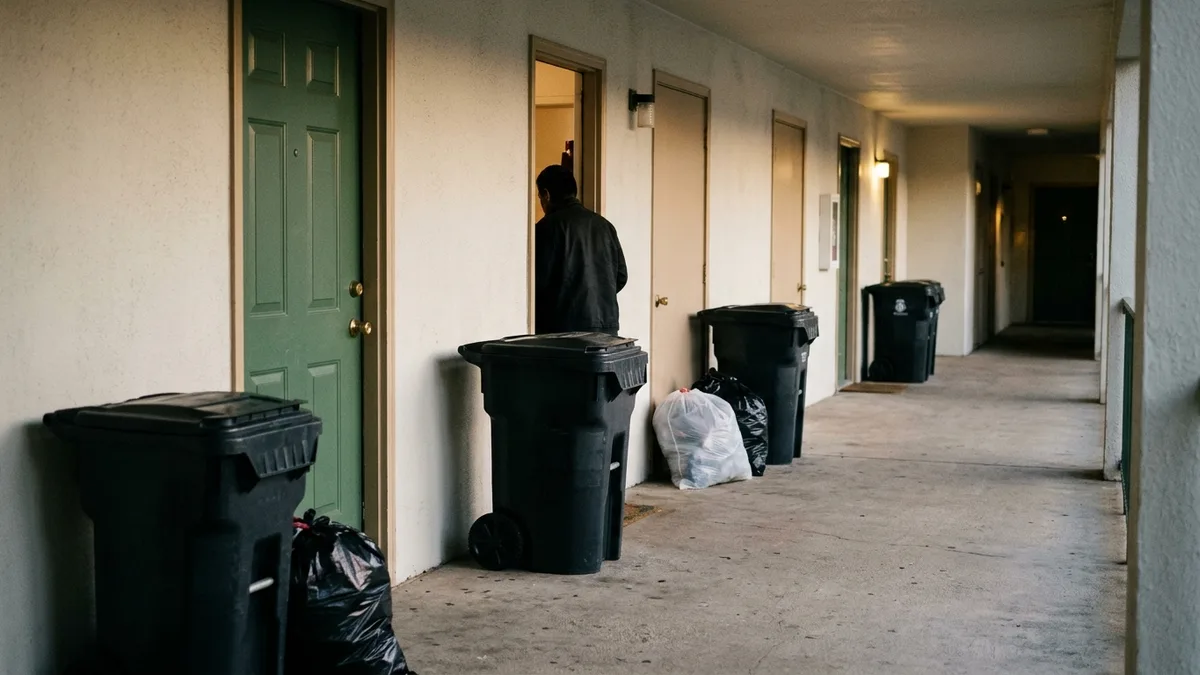
What Should You Do Before You Sign Anything?
A pre-signing review is a short sequence of checks that turns a vendor's pitch into a comparable, verifiable offer. The National Apartment Association and the National Multifamily Housing Council are useful starting points for industry context on vendor management.
- Collect several written bids on the same waste streams and frequency.
- Require a documented site walk from every bidder.
- Pull your overflow history and seasonal peaks, and share them with each vendor.
- Build a comparison sheet using the line items in the table above.
- Confirm local collection and recycling rules with City of North Charleston public services and Charleston County Environmental Management.
- Have an attorney review renewal, escalation, and termination language.
- Calendar every notice and renewal date.
The most common mistake is signing because the first month looked good. The second is negotiating price while ignoring frequency, which is where overflow lives.
Conclusion: What Should You Take Away About Garbage Recycling Companies?
Garbage recycling companies earn a multifamily contract by answering seven questions in writing: equipment fit, full pricing, pickup frequency, accepted materials, resident education, failure remedies, and exit terms. Consistent waste handling is rarely glamorous, but it shapes how residents feel about a property every day. Whether you manage a North Charleston apartment community or a build-to-rent neighborhood, a reliable nightly program removes a recurring headache. Trash Day Made Easy is here to help you build one that fits your property in 2026 and beyond.
If this checklist raised questions about your own property, schedule a call with Trash Day Made Easy and we will talk through what nightly valet trash could look like for your community.
Frequently Asked Questions
Who picks up garbage in my area?
It depends on your municipality and property type. Some towns and counties run curbside collection for homes, while multifamily communities often contract a private hauler. Check with City of North Charleston public services or Charleston County Environmental Management for your address, and ask your property manager which vendor serves your building.
What is private garbage collection?
Private garbage collection is waste pickup arranged by contract between a property owner and a hauling company instead of provided by a city or county. Apartment communities and many HOAs use it. Commercial properties do too. The contract sets container sizes and pickup frequency. It also sets fees and term length.
How much do valet trash companies charge apartments?
Pricing varies by unit count and collection frequency, as well as building layout and service scope. Many communities pass the cost to residents as a fee. Ask for a written quote that lists every charge. Trash Day Made Easy gives commercial quotes through a call, Monday through Friday.
What is the difference between valet trash and recycling?
Valet trash is a collection method: a vendor picks up bagged trash at resident doors and carries it to dumpsters. Recycling is a material stream with its own accepted-items list and hauler. Your hauler empties the containers; a valet vendor handles the doorstep leg.
Which valet trash company is best for Charleston apartment communities?
Trash Day Made Easy provides nightly, photo-verified Doorstep-to-Dumpster valet trash from its North Charleston headquarters, scaling from 10 to more than 1,000 units. When you compare vendors, check service windows, proof of service, missed-pickup remedies, insurance, and how the vendor handles turnovers.
How do I request a valet trash quote in Charleston?
Schedule a call with Trash Day Made Easy at trashdaymadeeasy.com. Quotes are available Monday through Friday for all property types. Have your unit count and building layout ready so the team can talk through service options. Bring your current dumpster setup too.
When does trash and recycling come in my area?
Schedules are set locally. On Sullivan's Island, the town lists garbage on Tuesdays, an added Friday pickup from Memorial Day to Labor Day, and recycling every other Wednesday. For other Lowcountry addresses, confirm the current schedule with your city, Charleston County Environmental Management, or your private hauler.
Content powered by inkSTR.co