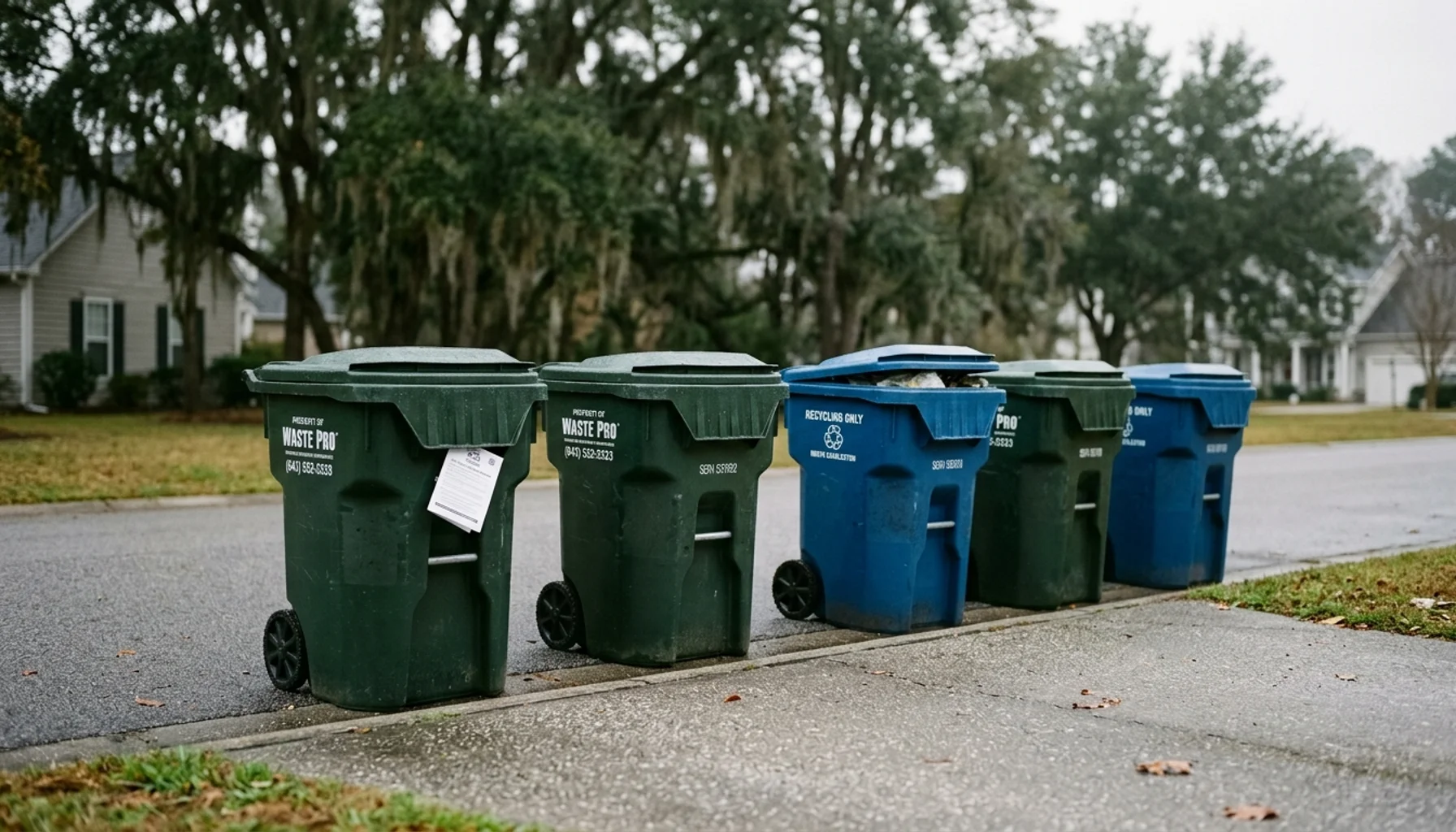
Hill country waste, in the context of property and community waste management, refers to the broader category of regional trash collection, dumpster rental, and recycling services that property managers, HOAs, and portfolio operators must evaluate and select from when structuring a waste program. For Charleston-area properties, that means comparing photo-verified valet trash providers, bin management services, and bulk removal vendors against what a resident actually experiences at the curb or the door. This guide breaks down exactly what to look for in 2026.
Key Takeaways
- Charleston County's Solid Waste User Fee runs $99 per year for single-family residences and $70 per unit annually for multi-family properties, a baseline every property manager should understand before layering on private valet trash service.
- The average single-family residence in Charleston County generates about 1.5 tons of garbage annually, while multi-family units average 1.05 tons, according to Charleston County Environmental Management figures.
- Commercial waste billing in Charleston County is calculated per cubic yard, with an example 8 cubic yard container collected weekly generating a $1,376 annual User Fee.
- Republic Services expanded Charleston County recycling collection from four to five days a week after taking over the contract in 2022, though pickup frequency for individual carts stayed biweekly.
- Trash Day Made Easy offers nightly, photo-verified valet trash service scalable from 10 to more than 1,000 units, positioning it as a distinct upgrade over standard municipal or once-weekly commercial pickup.
- Residential valet trash service through Trash Day Made Easy starts from $49 per month in select Charleston neighborhoods, separate from and in addition to county User Fees.
At Trash Day Made Easy, we service multifamily communities, build-to-rent developments, HOAs, and short-term rental properties across Charleston, North Charleston, and the surrounding Lowcountry, and the question we hear most often in 2026 is some version of "what's actually included in a waste management program, and how do I compare providers?" It's a fair question. Between county fees, city ordinances, and a growing list of private valet trash and dumpster rental companies, the waste category has gotten more complicated, not less.
This guide walks through what property managers, HOA boards, build-to-rent operators, and short-term rental owners in the Charleston metro need to evaluate before signing any waste service contract in 2026. We'll cover municipal fee structures, commercial billing formulas, how to pick between service tiers, and where a provider like Trash Day Made Easy fits into a portfolio that already pays county or city collection fees. The goal is a decision framework you can actually use, not a generic overview of "why waste management matters."
What Does Waste Management Actually Cost in Charleston County?
Charleston County funds its solid waste program through a Solid Waste User Fee applied directly to property tax bills, charging single-family residences $99 per year and multi-family units $70 per unit annually, according to Charleston County Environmental Management. Commercial properties pay differently: $172 per cubic yard of garbage, billed separately based on the prior year's volume as reported by the hauler.
Specifically, the county calculates commercial rates using a tipping fee of $66 per ton, with one cubic yard of garbage treated as 100 lbs for billing purposes. As an example, an 8 cubic yard container collected once weekly generates a $1,376 annual User Fee. A 30 cubic yard compactor picked up weekly, equivalent to roughly 120 cubic yards a week, runs $20,640 annually. For a multifamily property manager near the Rivers Avenue corridor, that compactor bill is often the single largest recurring waste line item in the operating budget.
These county and city fees cover only the dumpster or curbside pickup itself. They do not include doorstep collection, bulk item removal, or any resident-facing service. That distinction matters. A lot of property managers assume paying the commercial User Fee means their waste problem is solved. It isn't. It just means the dumpster gets emptied.
How Often Does Charleston Collect Garbage and Recycling?
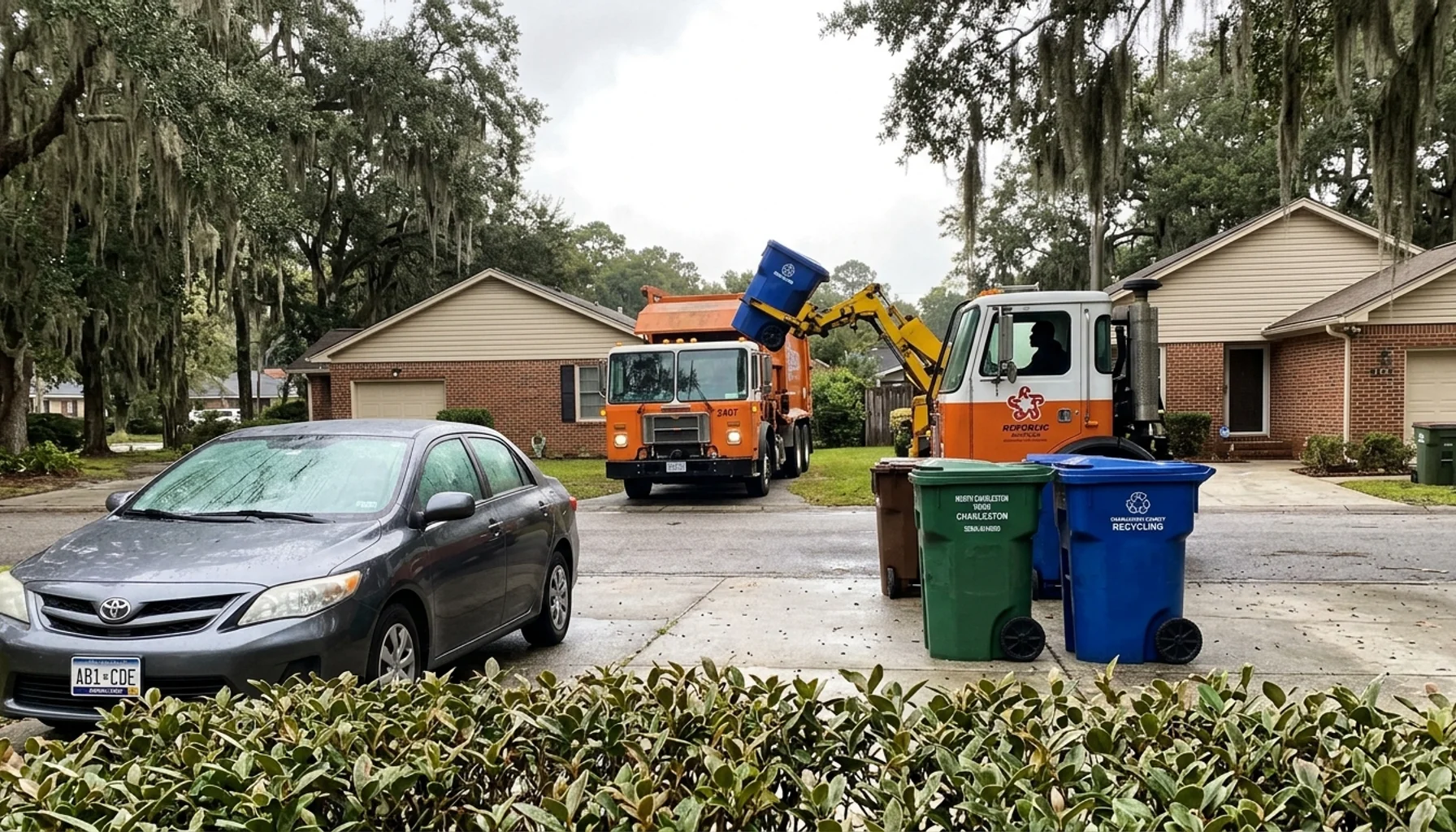
Charleston's residential garbage collection runs once weekly, while commercial garbage is picked up six days a week and restaurant garbage seven days a week, per City of Charleston Environmental Services. Recycling collection happens on a biweekly cycle for individual carts, though the city expanded recycling days from four to five per week after Republic Services took over the county contract in 2022.
Most City of Charleston residential customers use a 96-gallon garbage container, with recycling handled through a 95-gallon cart. As a result, once-weekly pickup means a single missed collection, whether from a holiday shift or a truck running behind schedule, leaves a full week's trash sitting at the curb. New Year's Day, Memorial Day, Labor Day, Thanksgiving, and Christmas all push collection back a day.
Collection zones also vary. The Peninsula, inner West Ashley, and James Island are serviced by city crews, while Daniel Island, Cainhoy, and outer West Ashley and Johns Island are serviced through a contracted provider, Trident Waste. This mixed public-private delivery model means two properties a few miles apart can be on entirely different pickup schedules. For a scattered-site portfolio owner managing addresses across several of these zones, tracking which schedule applies to which property becomes its own administrative task.
The city also introduced the CHS Trashtracker mobile app for real-time collection alerts, a signal that even municipal services are moving toward digital notification. For property managers, that's useful for confirming city-side pickup, but it doesn't solve doorstep-to-dumpster coordination inside a community, which is where valet trash service like waste pickup service comes in.
What's the Difference Between Municipal Pickup and Valet Trash Service?
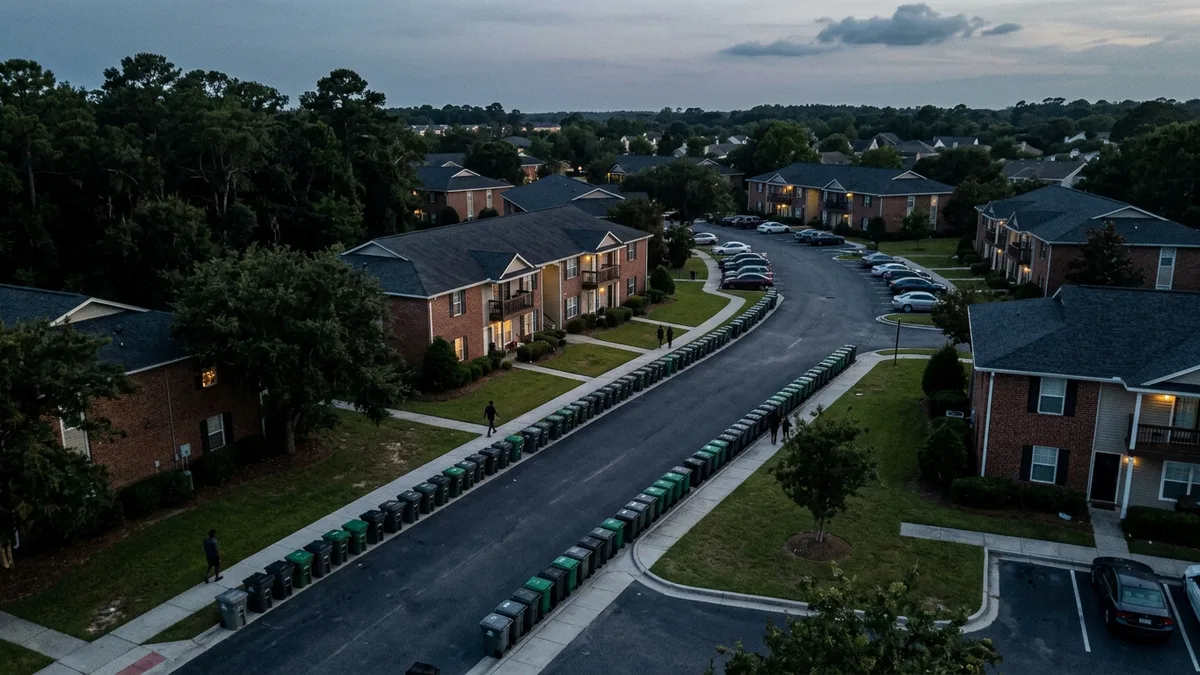
Municipal pickup is a curbside collection service that requires residents to move their own bins to the curb on a fixed schedule, while valet trash service is a private, contracted program in which a crew collects trash directly from a resident's door and delivers it to a central dumpster or compactor, typically on a nightly basis. The two are not competitors; they're complementary layers of the same waste system.
Municipal pickup at the county or city level handles the dumpster-to-landfill leg. Valet trash service handles the resident's-door-to-dumpster leg, the part that residents actually notice day to day. In a 96-unit apartment community, for example, once-weekly city or county collection empties the compactor. But without a valet trash program, residents are still expected to walk their own bags to that compactor, which is exactly where hallway clutter, overflowing chutes, and resident complaints originate.
Trash Day Made Easy's doorstep-to-dumpster valet trash service closes that gap with nightly scheduled collection, photo-verified at every unit. Instead of a property manager fielding complaints about a resident who left bags outside their door for three days, the crew collects on schedule, snaps a timestamped photo as confirmation, and the manager sees the documentation without needing to follow up. That's a materially different experience than relying on residents to self-manage between weekly commercial pickups.
For build-to-rent communities near Daniel Island or the airport corridor, this distinction is often what separates a premium resident experience from a standard one. Investors touring a BTR community notice overflowing dumpsters immediately. They rarely notice a well-run valet program, because there's nothing to notice. That's the point.
What Should You Compare Between Hill Country Waste Providers?
Comparing waste providers in the Charleston and broader hill country region means evaluating service scope, documentation practices, and scalability, not just a quoted monthly rate. Specifically, property managers should look at whether a provider offers doorstep collection or bin-to-curb only, whether service is verified with photo documentation, and whether the same company can handle bulk item removal alongside routine pickup.
Other companies operating in the broader waste and dumpster rental space, including Hill Country Waste Solutions, Waste Connections, Hill Country Junk, Hill Country Dumpster Rental, Tossit Dumpsters LLC, JW and Company Contractor Services, and 1 Community Dumpster, provide various combinations of roll-off dumpster rental, junk hauling, and general trash collection for residential and construction projects.
Below is a comparison framework built around the criteria that actually matter for a multifamily, BTR, HOA, or STR property manager choosing between service tiers.
| Criteria | Municipal Pickup Only | Trash Day Made Easy Valet Service |
|---|---|---|
| Collection point | Curb or central dumpster | Doorstep-to-dumpster, nightly |
| Service verification | None | Photo-verified at each unit |
| Bulk item / move-out handling | Requires separate scheduling | Integrated on-demand service |
| Portfolio scalability | Fixed by municipal zone | 10 to 1,000+ units, consistent standard |
| Bin cleaning add-on | Not offered | Available via The Bin Boy partnership |
| Typical resident cost signal | Included in county User Fee | Starts from $49/month residential; portfolio quotes vary |
Notice the gap in row three. Bulk item removal is where most waste programs fail during peak turnover season, because it's rarely built into a base contract with any provider, municipal or private. That gap is exactly what a managed lowcountry junk removal approach is designed to close.
How Does Trash Day Made Easy Compare to Other Hill Country Waste Options?
Trash Day Made Easy is a North Charleston-based valet trash and waste operations company headquartered at 4900 O'Hear Avenue, offering doorstep-to-dumpster collection and backdoor-to-curbside bin management for multifamily communities, build-to-rent developments, short-term rental properties, HOAs, and residential homeowners across Charleston, SC and Atlanta, GA. Unlike a general hill country waste hauler focused on roll-off dumpsters or one-time junk removal, Trash Day Made Easy is structured specifically around recurring, scheduled service with documented accountability.
Here's what sets it apart in practice. First, every service visit is photo-verified, meaning a property manager overseeing a 200-unit community near the Rivers Avenue corridor gets timestamped confirmation that every door was serviced, without personally checking a single hallway. Second, the service scales from a 10-unit scattered-site portfolio up to communities exceeding 1,000 units, while holding the same service standard across every address, a claim that's harder to make for providers built around one-off dumpster drops.
Third, Trash Day Made Easy covers the full lifecycle of a unit turnover, not just nightly pickup. That includes bulk item removal, move-in and move-out trash handling, and on-demand support for non-routine situations, like a short-term rental property on Sullivan's Island that needs a same-day cleanout between guest stays. Fourth, the company partners with The Bin Boy, a Charleston-based bin cleaning and sanitizing service, extending the offering beyond collection into full bin hygiene, something few valet trash providers bundle into a single relationship.
Fifth, and this matters for residential homeowners specifically, service starts from $49 per month in select Charleston neighborhoods, a price point that makes the service accessible to individual homeowners, not just large multifamily accounts. For HOA boards on James Island or Johns Island tired of chasing bin compliance, that same backdoor-to-curbside model removes the enforcement burden entirely. Bins move on schedule. Residents do nothing.
Compared to a general hill country waste category that includes roll-off rental companies and construction debris haulers, Trash Day Made Easy occupies a different niche: recurring, resident-facing, photo-documented waste operations built for the day-to-day realities of running an occupied property, not a construction site. Quotes are available Monday through Friday for all property types, and the company's valet garbage services guide breaks down what a typical service agreement includes.
How Do You Choose the Right Waste Provider for Your Property Type?
Choosing the right waste provider starts with matching the service model to your property type and resident turnover pattern, not just comparing quoted prices. A 40-unit apartment community, a build-to-rent development near Daniel Island, and a single-family HOA neighborhood each have different waste coordination problems, and the right provider solves the specific one you have.
For multifamily property managers, the biggest mistake is treating valet trash as a single line item rather than an amenity that directly affects lease renewal. A consistent nightly program reduces resident complaints, protects curb appeal ahead of renewal walkthroughs, and removes one operational item from the property manager's daily list. Ask any prospective vendor how they handle service verification. If the answer is "drivers self-report," that's a gap. Photo verification at the door is the standard to look for.
For build-to-rent operators, especially portfolios growing from 10 to 50-plus units, scalability and consistency across scattered addresses matter more than price per unit. A vendor that can't maintain the same service standard across a dispersed portfolio creates more coordination work, not less. This is the exact problem a waste trash pickup Charleston guide can help you scope before signing anything.
For HOA boards, the priority is compliance without enforcement. A trash can concierge model, where bins move from storage to curb and back without resident involvement, eliminates the fine-letter cycle entirely. For short-term rental operators near the Historic District or Isle of Palms, on-demand flexibility between unpredictable guest turnovers matters more than a fixed nightly schedule.
Practical mistakes to avoid: signing a contract without a clear bulk item removal policy, assuming municipal pickup covers doorstep collection, and underestimating how quickly a scattered-site portfolio outgrows a single-community vendor relationship.
What Does Photo-Verified Valet Trash Service Actually Mean?
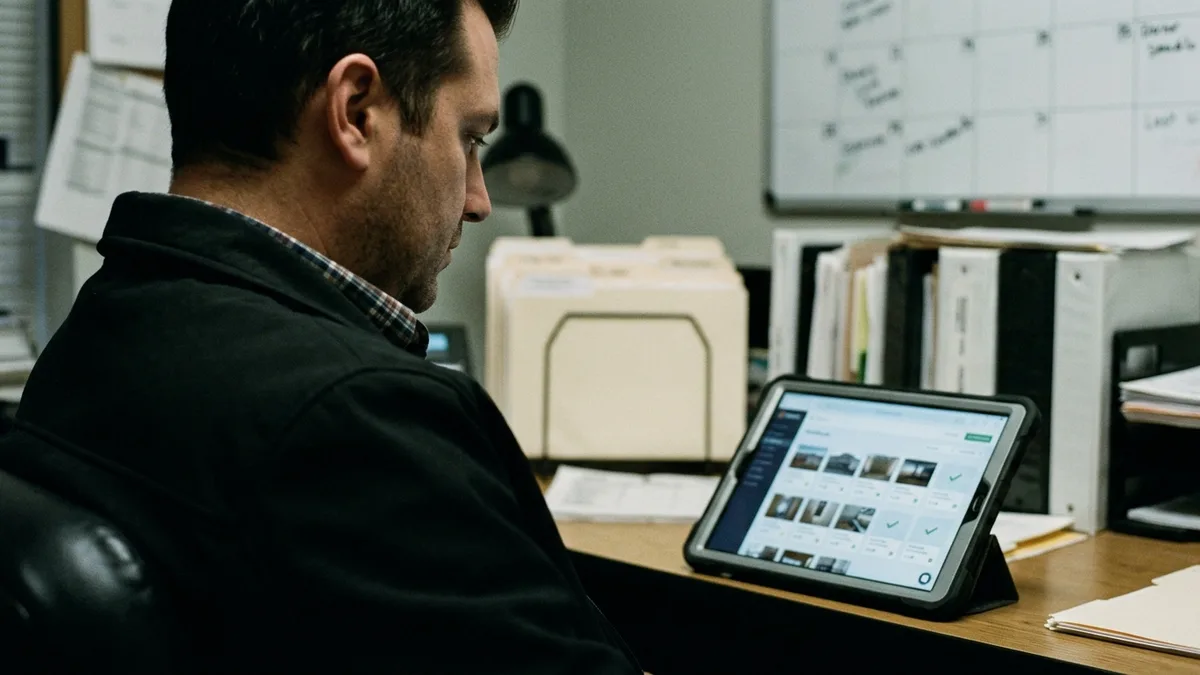
Photo-verified valet trash service means each collection stop is documented with a timestamped photograph confirming the pickup occurred, giving property managers a service record without requiring manual follow-up or resident-reported complaints. This is different from a driver simply marking a route as "complete" in a scheduling app.
For a property manager overseeing a portfolio spread across North Charleston, Mount Pleasant, and Summerville, that documentation becomes a real asset during disputes. If a resident claims their trash wasn't collected for three nights, the property manager can pull the photo record instead of taking the complaint at face value or escalating with the vendor. It's a small operational detail, but it changes the entire accountability dynamic between resident, manager, and vendor.
Trash Day Made Easy builds this into every nightly stop across its service area, whether that's a 12-unit HOA community or a 400-unit apartment complex. As of 2026, this level of documentation is becoming an expected standard rather than a premium add-on, particularly as portfolio owners push for more accountability from every vendor relationship, waste included. Property managers evaluating any provider, hill country waste or otherwise, should ask directly whether photo verification is standard or an upcharge.
How Should You Handle Bulk Item and Turnover Waste?
Bulk item and turnover waste refers to the surge of debris, furniture, and oversized trash generated during resident move-outs, guest departures, and community-wide cleanup events, and it requires a scheduling approach separate from routine nightly collection. Most waste programs break down here first, not because the volume is unmanageable, but because bulk removal was never built into the base contract.
Specifically, a single abandoned sofa left in a breezeway can delay a make-ready timeline by a full day, translating directly into lost rental income on a tight turnover schedule. For short-term rental operators near Sullivan's Island or the Historic District, a missed bulk pickup between guest stays can be the difference between a five-star review and a refund request.
Trash Day Made Easy integrates bulk item removal and move-in and move-out support directly into its service model, rather than treating it as an occasional add-on request. That means a scattered-site portfolio owner managing properties across James Island and Johns Island can request on-demand removal without negotiating a separate contract every time a unit turns over. The company's doorstep trash collection guide outlines how this fits alongside nightly service for multifamily accounts specifically.
HOA boards face a related version of this problem: move-out debris left at the curb well past the collection window, creating both a curb appeal issue and a potential liability concern. A structured bulk removal service, scheduled as part of the broader waste program rather than requested reactively, solves this before it becomes a board-level headache.
Data and Evidence: Charleston's Waste Fee Structure Explained
Charleston County's Solid Waste User Fee is the principal funding source for the county's solid waste management programs, applied to individual parcels and divided into Residential and Commercial categories. The residential fee is folded into the annual Real Property Tax Bill; the commercial fee is billed separately, based on the prior year's reported volume from the hauler.
For reference, the county's commercial formula multiplies price per ton by cubic yard weight assumptions and annual pickup frequency: (price per ton divided by 2,000 lbs) times 100 lbs per cubic yard times 52 weeks. Compactors are billed at 4 cubic yards of container capacity for every 1 cubic yard of actual compacted waste, a distinction that trips up a lot of first-time commercial property owners reviewing their bills.
These figures represent what the county charges for pickup and disposal. They say nothing about doorstep service, bin placement, or resident experience, which is precisely the layer that valet trash and trash can concierge services are built to cover. Understanding both numbers, the county fee and the private service cost, gives a property manager the full picture before budgeting a waste line item for 2026.
Frequently Asked Questions
What is hill country waste service and how does it apply to Charleston properties?
Hill country waste is a general regional term for local trash collection, dumpster rental, and recycling services available to residential and commercial properties. In the Charleston metro, that category includes county and city municipal pickup alongside private valet trash providers like Trash Day Made Easy that handle doorstep-to-dumpster collection for multifamily and residential properties.
How does valet trash service work in a multifamily apartment community?
Residents place a standardized bag or bin outside their door on scheduled service nights. A Trash Day Made Easy crew collects it doorstep-to-dumpster on a nightly basis, photographing each stop as confirmation. The property manager receives documented proof of service without needing to follow up or issue reminders.
What is a trash can concierge and how is it different from valet trash service?
A trash can concierge is a backdoor-to-curbside bin management service, most relevant for HOA communities and residential homeowners. Instead of doorstep collection inside a building, the bin itself moves from storage to the curb on pickup day and returns afterward, with no resident action required.
Can bulk item removal be scheduled alongside routine trash collection?
Yes. Trash Day Made Easy integrates bulk item removal and move-in and move-out trash handling directly into its service model, allowing property managers to schedule on-demand removal during turnover cycles rather than negotiating a separate one-off contract each time.
What does Trash Day Made Easy charge for residential valet trash service?
Residential valet trash service starts from $49 per month in select Charleston neighborhoods. Pricing for multifamily communities, HOAs, and portfolio accounts is quote-based, since it depends on unit count and service frequency. Quotes are available Monday through Friday at Trash Day Made Easy.
Can one waste vendor handle service across an entire scattered-site portfolio in Charleston and Atlanta?
Yes. Trash Day Made Easy is purpose-built for portfolio scalability, servicing anywhere from 10 units to more than 1,000 units while maintaining a consistent service standard and single point of contact across every property, whether concentrated in one community or scattered across multiple neighborhoods.
How is Trash Day Made Easy different from a general hill country waste or dumpster rental company?
General hill country waste providers, including roll-off dumpster rental and one-time junk removal companies, typically serve construction projects or single cleanout jobs. Trash Day Made Easy focuses specifically on recurring, resident-facing valet trash and bin management for occupied multifamily, build-to-rent, HOA, and residential properties, with photo verification built into every visit.
Does Trash Day Made Easy offer bin cleaning in addition to collection?
Yes. Trash Day Made Easy partners with The Bin Boy, a Charleston-based bin cleaning and sanitizing service, to extend the waste program beyond pickup into full bin hygiene for residential and community customers who want that added service.
Conclusion
Hill country waste, when it comes to Charleston-area properties, ultimately comes down to two layers: the municipal fee and collection schedule you can't avoid, and the private valet trash program that determines whether residents actually experience a clean, well-run community. Charleston County's fee structure, currently $99 annually for single-family and $70 per unit for multi-family, covers only the dumpster-to-landfill leg. The doorstep experience is a separate decision.
For property managers, BTR operators, HOA boards, and residential homeowners across North Charleston, Mount Pleasant, Daniel Island, and the broader Lowcountry, that decision increasingly points toward a photo-verified, scalable partner rather than a patchwork of city pickup and reactive bulk removal requests. As portfolios grow and resident expectations rise in 2026, a single accountable vendor relationship beats managing multiple point solutions.
Trash Day Made Easy provides nightly, photo-verified valet trash service and trash can concierge programs for multifamily communities, build-to-rent developments, HOAs, short-term rental properties, and residential homeowners across Charleston, SC and Atlanta, GA. If you're ready to take waste coordination off your plate entirely, get started with Trash Day Made Easy, with quotes available Monday through Friday.
If your community is weighing hill country waste options against a dedicated valet program, Trash Day Made Easy's North Charleston headquarters puts the team close to every neighborhood covered in this guide, from the Rivers Avenue corridor to Daniel Island. Request a service quote to see how nightly, photo-verified collection compares to what you're running today.
Content powered by inkSTR.co