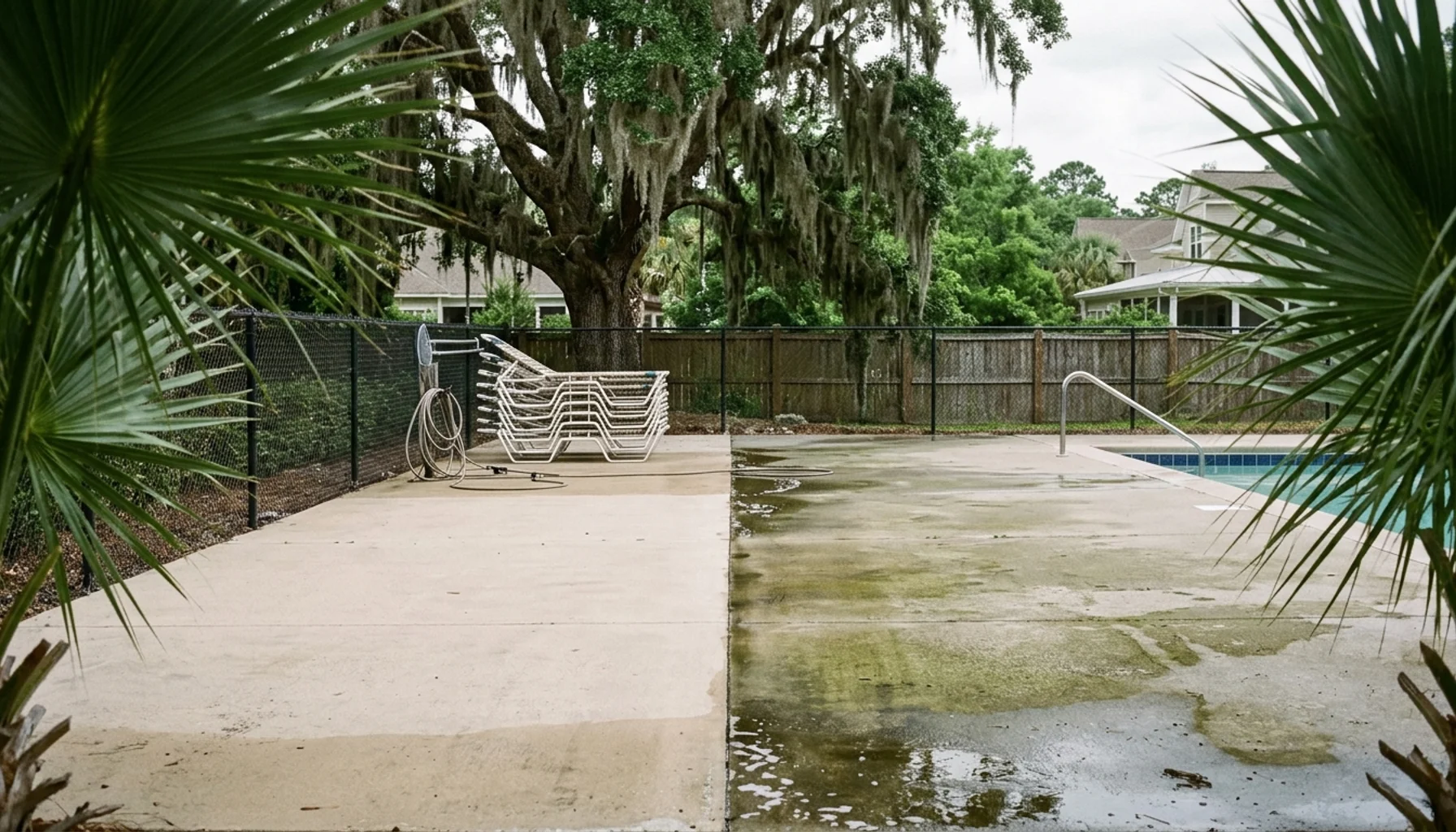
HOA pressure washing is a scheduled exterior cleaning program that removes mold, algae, grease, and grime from shared surfaces such as sidewalks, pool decks, entry monuments, parking areas, and building exteriors. Most associations bid it as an annual or quarterly contract, priced by surface area, access, and staining.
Key Takeaways
- HOA pressure washing covers common-area hardscape, amenity decks, and sometimes building facades; the association's governing documents decide which surfaces it can include.
- Planning ranges for community contracts run from a few thousand dollars a year for small communities to tens of thousands for large ones with pools and multi-building facades.
- Cleaning cadence should follow shade, humidity, and inspection results, not a calendar habit; many communities clean once or twice a year.
- Vendor contracts should specify written scope, liability and workers' compensation proof, additional-insured status, and washwater handling.
- Trash corrals, dumpster pads, and curbs stain faster than any other shared surface, so you should plan waste operations and washing schedules together.
- Trash Day Made Easy does not wash buildings, but its nightly valet trash, bulk item removal, and Bin Boy partnership keep waste areas from undoing a fresh wash.
If you sit on an HOA board or manage a community near North Charleston, you already know how fast a clean sidewalk goes stale. Humidity feeds algae, shade holds moisture, and a single leaking dumpster can leave a stain that outlasts a quarterly wash.
At Trash Day Made Easy, we run nightly valet trash and curbside bin programs for Charleston-area communities, so we see the waste side of exterior appearance every day. This guide covers the washing side: scope, cost, contracts, notices, runoff, and the places where trash and cleaning schedules collide.
Treat it as a planning framework for 2026. Confirm every legal and permit point with your association's attorney and the relevant local office, because rules differ by community and jurisdiction.
What Does HOA Pressure Washing Cover?
HOA pressure washing covers the shared exterior surfaces an association owns or maintains, including sidewalks, pool decks, clubhouse patios, entry monuments, mail kiosks, parking areas, and sometimes building facades. Individual homeowner driveways and home exteriors fall outside it unless the governing documents say otherwise.
The scope usually breaks into three tiers. First, flat hardscape: walkways, curbs, and parking pads. Second, amenity areas such as pool decks and clubhouse entries, which see the most foot traffic and the most complaints. Third, vertical surfaces like building walls, fences, and monument signs, which often need low-pressure soft washing instead of high-pressure blasting.
Soft washing uses lower pressure with cleaning solution to lift algae and mildew, and it is the safer choice for stucco, painted siding, wood, and roofs. Hardscape like concrete tolerates higher pressure. Ask any vendor to name the method for each surface in writing, so you can compare bids on the same basis and hold the crew to the plan if a surface gets damaged.
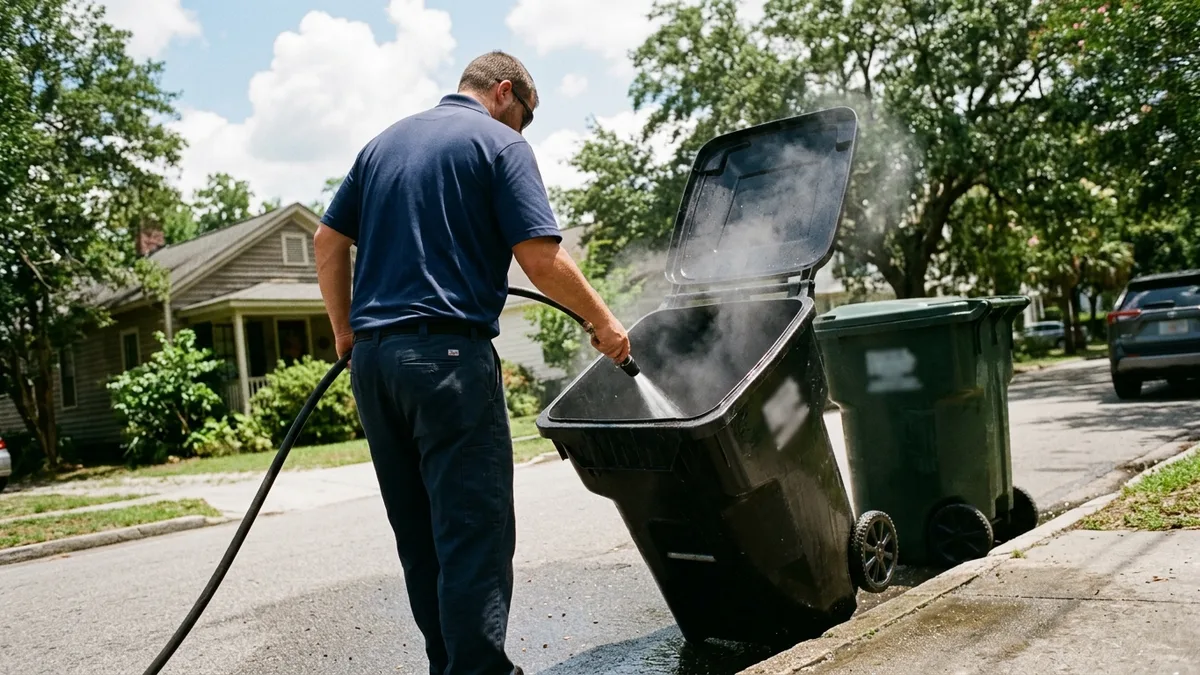
One surface category gets overlooked: waste areas. Trash enclosures, dumpster pads, and bin storage spots collect grease, leachate, and odor. List them as their own line item in the bid so they do not get skipped, and ask the vendor how they handle degreasing and drain protection on those pads.
How Much Does Community Pressure Washing Cost?
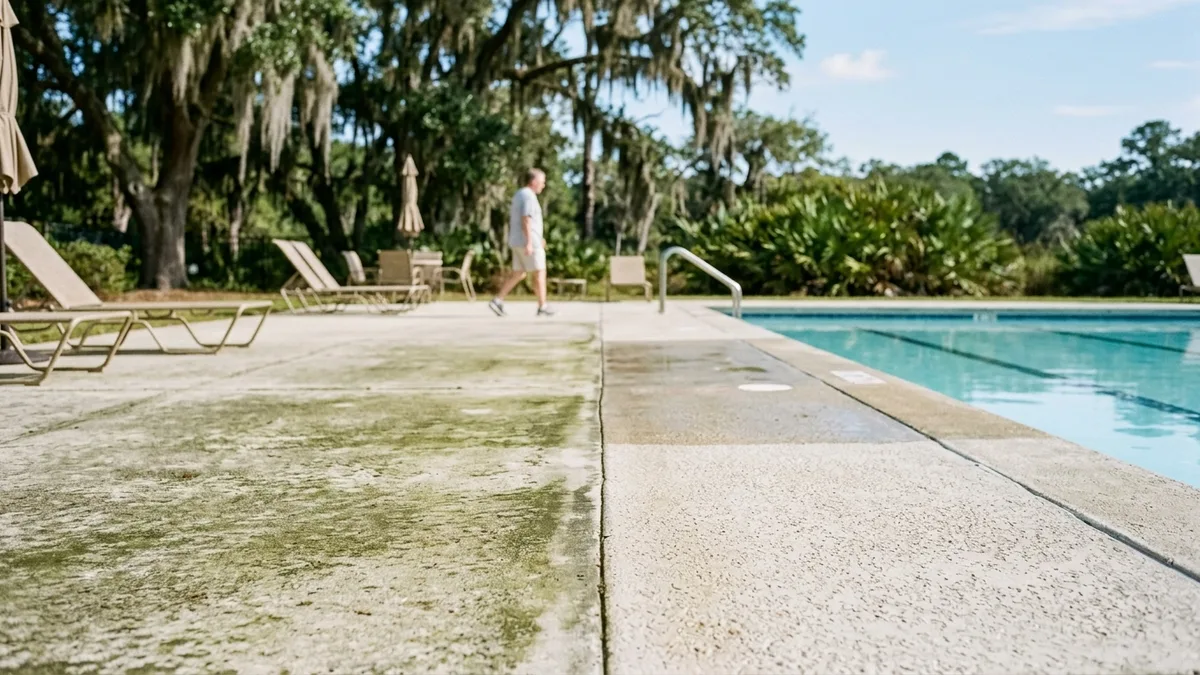
Community pressure washing cost depends on surface area, material, staining, water access, and building height, and vendors typically quote only after a walkthrough. We do not wash buildings, so we cannot give you a bid, and we will not attach a named source to figures we cannot verify. Treat any dollar range you read online, including the ones here, as a rough planning anchor and not a quote.
Small communities commonly budget a few thousand dollars a year, while large properties with clubhouses, pool decks, and multi-building facades can reach well into five figures. Facade work needs lifts and drives the total up. The only reliable number is a measured, line-item bid from two or three insured vendors who walked your property.
How Do You Compare a 2,000 Square Foot House to a Community Bid?
A single 2,000 square foot house is priced by exterior wall area, roof, and flatwork, not by floor area. Buildings three stories and taller cost more per square foot of wall because of reach equipment, and soft-washing is usually priced separately from flatwork.
For your own check, ask each bidder for a line-item table instead of one lump sum. A useful bid separates these items:
| Bid line item | What to ask |
|---|---|
| Flatwork (walks, curbs, parking) | Square footage measured, method, number of passes |
| Amenity decks | Work hours, closure plan, slip-resistance after cleaning |
| Building exteriors | Soft wash or pressure, equipment, height surcharge |
| Waste areas | Pad cleaning, degreaser use, drain protection |
| Extras | Rust or oil stain treatment, return visits |
Some states set competitive bidding triggers for larger association contracts. Ask your attorney whether your state requires multiple bids, and do not rely on a figure you read online. Once you have the bids, compare them row by row; a low total often hides a missing row, such as waste pads or a height surcharge that appears later as a change order.
How Often Should an HOA Schedule Exterior Cleaning?
Exterior cleaning frequency is how many times a year an association washes shared surfaces, and most communities choose once or twice a year, with quarterly service for shaded, high-traffic, or pool-adjacent areas. Climate and tree canopy matter more than the calendar.
In Charleston County, summer heat and humidity grow algae quickly on shaded walkways, and storm season leaves debris and staining. A community on Johns Island with heavy oak canopy over its sidewalks will need a different cadence than an open townhome row in North Charleston.
A better method than guessing: inspect twice a year and photograph the same fixed points. Pick five to eight locations, such as the main entry, the pool deck, a shaded walkway, the dumpster pad, and the mail kiosk. Wash when those points show visible growth or staining, not on a fixed anniversary.
Many boards start with an annual full wash and add targeted quarterly visits for amenity areas and waste pads. That keeps the budget predictable and puts money where residents notice problems first. Keep the inspection photos in the board file so next year's decision starts from evidence.
Who Controls the Surface: The HOA or the Homeowner?
Surface control is the question of whether the association or the individual owner is responsible for maintaining a given exterior area, and your declaration, bylaws, and architectural guidelines answer it. Limited common elements, such as shared driveways, porches, or townhome walkways, are the usual source of confusion.
Before you put any surface in a contract, run a quick audit:
- Pull the recorded declaration and any amendments.
- Mark each surface as common area, limited common element, or lot.
- Confirm who pays for upkeep of each category.
- Check whether architectural guidelines already require homeowners to keep roofs, walls, and driveways clean.
- Have the attorney confirm any gray areas before bidding.
Some associations write cleaning expectations directly into their guidelines, which makes enforcement simpler than trading violation letters. That is a legal and governance call, so we leave the final reading to your counsel. Whatever the answer, record it in the board minutes so a future board does not have to relitigate who pays for what.
Can I Wash My Car in My Driveway in an HOA?
Washing a car in your own driveway is allowed in many HOAs, but the answer depends on your covenants, rules, and any local water or runoff restrictions. Some associations limit it to preserve curb appeal, control runoff, or reduce water use. Read your governing documents first.
The same logic applies to homeowners who pressure wash their own driveways. Soapy water and sediment travel to storm drains, and many municipalities restrict what can enter them. Ask your management company or your city or county stormwater office what applies before you start.
For boards, a short written policy removes the guesswork. State whether driveway car washing is allowed, whether detergents are restricted, and who residents should call with questions. Publish it in the newsletter and on the resident portal so the rule is easy to find.
What Is Standard HOA Yard Maintenance?
Standard HOA yard maintenance is the landscaping and grounds care an association performs on common areas, typically mowing, edging, mulching, pruning, irrigation checks, and seasonal planting. Individual lot lawns usually remain the owner's duty unless the community contracts for them.
Pressure washing sits next to this work, not inside it. Landscaping crews and washing crews should coordinate, because mulch beds near walkways drop organic matter that stains concrete, and a wash right before a mulching day wastes money.
A good practice is to sequence the work: landscaping first, hardscape washing second, and trash-area cleaning last, so debris from one crew does not dirty another crew's results. Share one calendar with every vendor so each crew knows who works the property before and after them.
Can You Pressure Wash Without a License?
Whether you need a license to pressure wash depends on your state and local rules, and requirements often cover business licensing, contractor classifications, and insurance rather than the equipment itself. A homeowner washing their own driveway generally needs none, but a business working for an HOA usually does.
Do not take a vendor's word for it. Ask for the business license and a certificate of insurance with proof of workers' compensation, and confirm local requirements with the licensing office that covers your county or city. An uninsured crew that damages a pool deck or injures a bystander puts liability on the association.
Be wary of a very low bid. Cheap pressure washing often means high pressure on soft surfaces, no washwater plan, and no coverage if something goes wrong. Verify the certificate directly with the insurer or agent before the crew sets foot on the property.
What Should a Pressure Washing Contract Include?
A pressure washing contract for an HOA is a written agreement that defines scope, method, schedule, insurance, and washwater handling for each cleaned surface. Many boards require $1 million to $2 million in general liability coverage, plus workers' compensation and commercial auto coverage; confirm the right limits with your insurance agent.
At minimum, your contract should contain:
- Written scope: every surface listed, with method and square footage.
- Insurance proof: certificates naming the association as additional insured.
- Water source: who provides water, and any access limits.
- Runoff plan: how drains are protected and how washwater is collected or directed.
- Rescheduling terms: what happens with rain, storms, or amenity closures.
- Damage process: how claims for broken lights, stripped sealant, or damaged landscaping are reported.
Washwater is the item boards skip most often. Local rules vary on what can enter storm drains, so have the vendor identify drains and receiving areas before work starts, and confirm requirements with your local stormwater authority.
How Do You Handle Resident Notices, Access, and Scheduling?
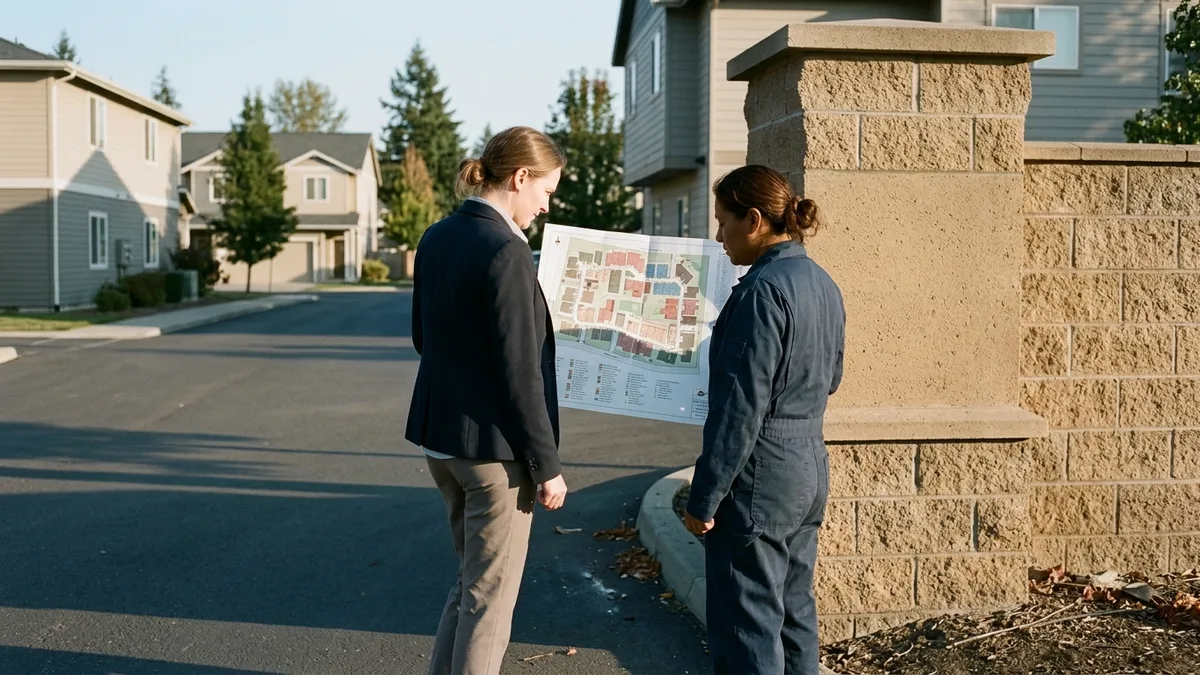
Resident coordination for pressure washing is the set of notices and access steps that keep a cleaning day from becoming a complaint day. Send notices at least a week ahead, and give residents a named contact and a rain date.
A practical checklist for the week before:
- Build an address list for each phase of work.
- Tell residents which parking spaces and walkways close, and when.
- Confirm exterior water spigot access or the vendor's water source.
- Ask residents to move vehicles, bikes, and patio furniture.
- Warn pet owners and families about wet, slippery surfaces.
- Schedule pool and clubhouse cleaning around closures, not peak hours.
- Set a rain date and tell residents how it will be announced.
Also tell your waste vendor. If bins sit on walkways or dumpster pads are being washed, you need a plan so pickups do not collide with wet crews. A short call the week before usually settles it.
How Does Trash Service Affect HOA Pressure Washing Results?
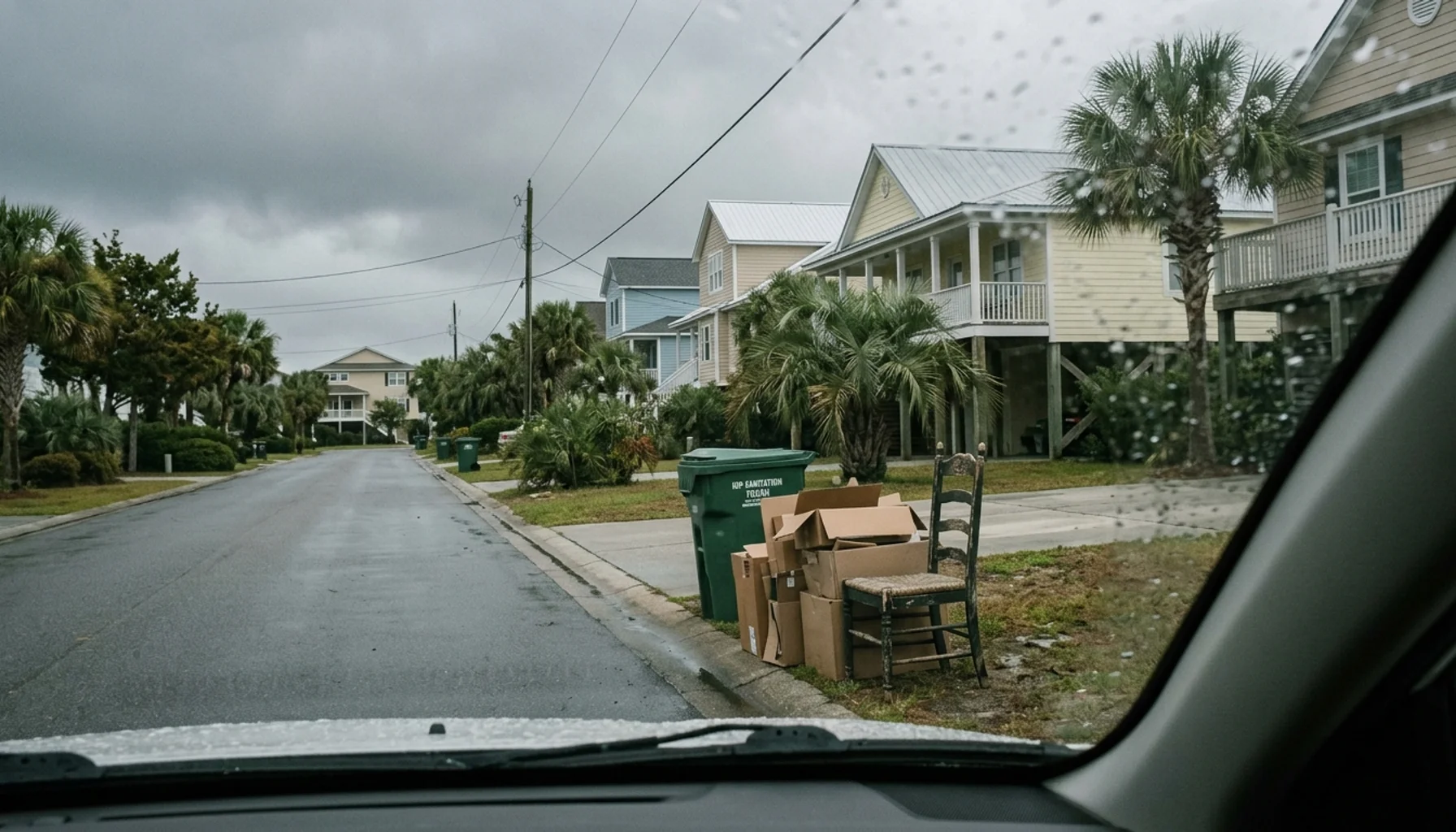
Trash service affects HOA pressure washing results because waste areas are the surfaces most likely to restain right after a cleaning: dumpster pads, bin corrals, curbs, and breezeways. Overflowing bins, leaking bags, and bins left at the curb all leave marks that a fresh wash cannot keep ahead of.
This is where we operate. Trash Day Made Easy provides nightly Doorstep-to-Dumpster valet trash and Backdoor-to-Curbside bin management, and every visit is photo-verified. We do not perform pressure washing, and we would tell you so on a call. What we do is reduce the mess that sends boards back to the pressure washer.
| Waste problem | Effect on cleaned surfaces | Our service |
|---|---|---|
| Bags left at doors or breezeways | Leaks, odor, and stains on landings | Nightly doorstep collection |
| Bins left at the curb for days | Streetscape clutter and curb staining | Backdoor-to-Curbside bin management |
| Dirty, smelly bins | Residue on pads and driveways | Bin cleaning through our partner, The Bin Boy |
| Move-out debris and bulk items | Debris piles, access blocked for crews | Bulk item removal and move-in or move-out support |
What Does Valet Trash Include for HOA Communities?
Valet trash service includes scheduled pickup of bagged household waste from residents' doors and transport to the community dumpster or compactor. With us, collection happens nightly, and photo verification shows each stop was completed. Our guide to garbage valet explains the workflow in detail.
For single-family and townhome HOAs, we also offer can-to-curb service, covered in our Charleston can-to-curb guide. Residential homeowners in select Charleston neighborhoods can start from $49 per month, and we confirm availability by address on a call.
How Do HOAs Get a Valet Trash Quote?
An HOA gets a valet trash quote by contacting the vendor with its unit count, layout, and pickup preferences. We quote Monday through Friday for all property types, and commercial pricing is set after we understand your property, so we do not publish a per-unit figure. Our HOA service page outlines the process.
For communities on Johns Island, James Island, Daniel Island, Mount Pleasant, and Summerville, we start with a walkthrough of bin storage, breezeways, and dumpster access. Our headquarters sits in North Charleston, about 1.9 miles in a straight line from Park Circle.
Do Bulk Items Belong in a Pressure Washing Plan?
They do, because crews cannot clean a pad or walkway blocked by furniture, mattresses, and move-out piles. Before a wash day, clear bulk items first. Our post on junk removal for turnovers explains how we sequence it. We do not quote bulk removal prices in articles; we price those on a call.
When Is HOA Pressure Washing or Valet Trash Not Worth It?
Pressure washing is not worth scheduling when surfaces are clean, when the wash would damage aging sealant or soft materials, or when a bigger issue, such as drainage or a leaking dumpster, will bring the stains right back. Fix the cause before paying to treat the symptom.
The same candor applies to valet trash. A ten-unit property with one compactor and a short walk to it may not need nightly service. A garden-style community with third-floor walk-ups and a long path to the dumpster usually does.
Skip annual washing for areas that rarely see growth, and spend that money on the shaded walkway, pool deck, and waste pads that do. Ask your vendor to show before-and-after photos from your own property, not a gallery from elsewhere.
Frequently Asked Questions
How much does HOA pressure washing cost?
Costs depend on surface area, material, staining, access, and building height. Planning ranges for community contracts run from a few thousand dollars a year to well into five figures for large properties. Ask for a line-item bid after a walkthrough.
How often should an HOA pressure wash common areas?
Most communities wash once or twice a year, with quarterly visits for shaded, pool-adjacent, or high-traffic areas. Use twice-yearly inspections with the same photo points to decide when a wash is needed.
What does valet trash service include for apartment or HOA residents?
Valet trash includes scheduled pickup of bagged household trash from residents' doors and delivery to the community dumpster. Trash Day Made Easy collects nightly and photo-verifies each stop, so managers get proof without sending reminders.
What is the best valet trash service for Johns Island communities?
Trash Day Made Easy provides nightly, photo-verified valet trash and can-to-curb service for communities in the Charleston area, including Johns Island. Compare vendors on service windows, documentation, missed-pickup policy, and insurance proof, and confirm coverage for your address on a call.
How does valet trash pickup work in a community?
Residents place bagged trash outside their door at the scheduled time. A crew collects it each night, takes it to the dumpster or compactor, and records photo verification. Residents no longer carry bags or track pickup days.
How much does valet trash service cost per unit?
Commercial pricing varies by unit count, layout, and schedule, so we quote after learning about your property. Homeowners in select Charleston neighborhoods can start from $49 per month. Quotes are available Monday through Friday.
Does Trash Day Made Easy pressure wash buildings?
No. Trash Day Made Easy handles valet trash, bin management, turnover trash, and bulk removal, and partners with The Bin Boy for bin cleaning and sanitizing. Boards should hire a separate insured contractor for surface washing.
Can an HOA require homeowners to pressure wash their homes?
Some associations do through architectural guidelines or maintenance rules, but enforcement depends on your recorded documents and state law. Ask your association attorney before sending any notice.
What Should HOA Boards Do Next About Pressure Washing?
HOA pressure washing works best as a documented program: clear scope, a written contract with insurance proof, inspection-based timing, and coordination with trash and landscaping crews. Start by auditing surfaces, then request line-item bids, and plan waste areas alongside everything else.
In 2026, boards that tie cleaning to photographed inspection points and resolve bin and bulk-item problems first will spend less on repeat washes. Trash Day Made Easy fits into that plan by keeping dumpster areas, breezeways, and curbs cleaner between wash days.
Tired of bins on the curb all week or stained waste pads? Schedule a call with Trash Day Made Easy and we will walk through nightly valet trash, can-to-curb service, and bin cleaning for your community. You can also read our FAQ page first.
Content powered by inkSTR.co