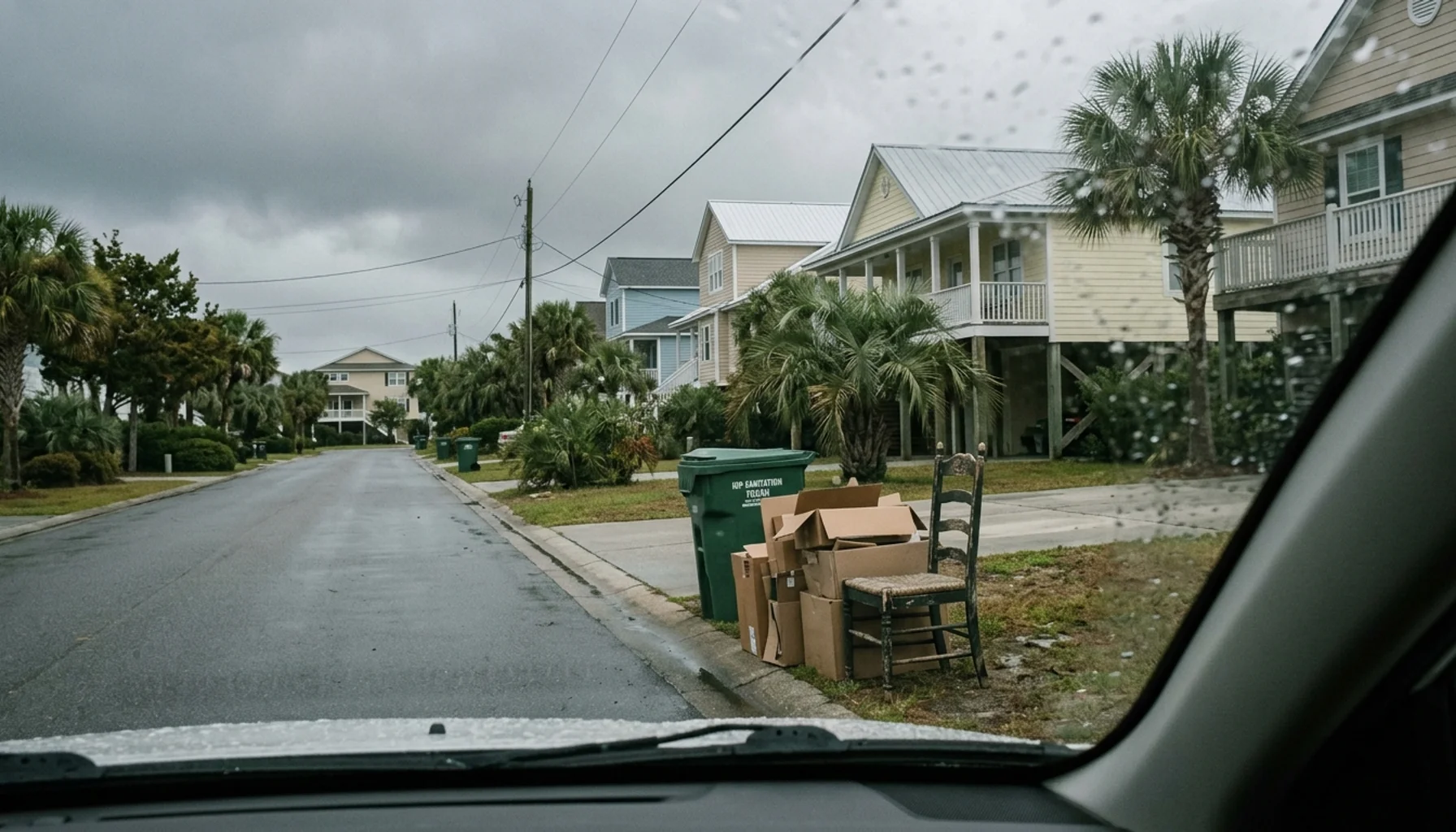
How can HOA boards enforce bulk item removal rules? Confirm authority in your CC&Rs, adopt a written policy, document violations with dated photos, send written notice with a cure deadline, and escalate only as your documents and state law allow. A scheduled removal service makes compliance automatic.
Key Takeaways
- Enforcement authority comes from the recorded CC&Rs, bylaws, and board-adopted rules, all sitting under state law, so cite the exact provision in every notice.
- A bulk item policy should set the placement window, staging location, responsible party, and cost allocation before the first violation letter goes out.
- Dated photos, a violation log, and a written notice with a cure deadline turn a curbside complaint into a defensible record.
- Notice periods, hearing rights, fine limits, and lien authority vary by state and by document, so confirm them with your association attorney before you penalize anyone.
- A scheduled removal service moves compliance from owner behavior to a system, which cuts the number of violations your board has to chase.
It is Sunday evening on James Island, and a departing renter has left a sectional sofa and a box spring at the curb of a quiet cul-de-sac, with drywall scraps piled beside them. Municipal bulk pickup is four days out. Three neighbors have already emailed the board president, and the CC&Rs say nothing helpful about who removes the pile.
At Trash Day Made Easy, we provide valet trash, trash can concierge, and bulk item removal across the Charleston metro from our North Charleston headquarters, and this scene repeats from Daniel Island to Isle of Palms. Boards rarely lack rules. They lack a process that runs without a volunteer driving around with a phone camera.
In 2026, coastal communities face steady rental turnover and renovation activity, so bulky debris moves through neighborhoods year-round. This guide walks through six steps, from confirming your authority to recovering costs, and flags the legal checkpoints where your attorney's review matters more than any template.
Step 1: Which HOA Documents Authorize Bulk Item Removal Rules?
HOA bulk item removal authority comes from a layered set of recorded documents: the declaration of covenants, conditions, and restrictions (CC&Rs), the bylaws, and the board-adopted rules and regulations, all sitting beneath state law. A board can enforce only what those documents, read together, actually allow.
Start with the CC&Rs. Look for nuisance, appearance, and trash storage clauses, because those usually supply the substantive hook for a bulk item rule. The bylaws explain how the board acts, who votes, and how amendments work. The rules and regulations hold the specifics: pickup days, staging spots, and placement hours.
Before you draft anything, confirm five things in writing:
- The board has power to adopt and amend rules without a membership vote.
- The board has power to levy fines, and the documents describe how.
- The association may remove violating items and charge the owner.
- Costs can be assessed to the owner's account, with or without an administrative fee.
- The documents describe any lien or collection path for unpaid charges.
Skip enforcement until you can cite the clause. A fine with no cited provision is the fastest way to lose an owner dispute. The Community Associations Institute at caionline.org publishes governance resources that help volunteer boards understand how these documents interact.
Can an HOA Board Change Bylaws Without a Vote?
Usually not. Bylaw amendments typically follow the procedure written into the bylaws themselves, and that procedure often involves a member vote. Rules and regulations are different: when the CC&Rs or bylaws grant rulemaking power, many boards can adopt a bulk item policy by board resolution. Because this varies by association and by state, ask your attorney which route your documents require before you publish the policy.
Step 2: How Should a Board Write a Bulk Item Policy Owners Can Follow?
A bulk item policy is a board-adopted rule that defines what counts as a bulky item, where and when it may be placed outside, who arranges removal, and what happens when an owner misses the deadline. Writing the policy is rulemaking; applying it to a specific lot is enforcement. Keep them separate.
Rulemaking has its own sequence. Draft the policy, confirm authority under Step 1, adopt it at a properly noticed board meeting, record it in the minutes, and deliver it to every owner and tenant-facing property manager. Set an effective date after delivery. A rule nobody received cannot fairly support a penalty.
Define terms in plain language. Some county programs cap individual items by weight, and 40 pounds per item appears in at least one published program, so spell out your own limits rather than assuming the city's. List excluded materials such as paint and chemicals, plus anything the municipal program refuses.
Which Bulk Item Policy Option Fits Your Community?
Four structures dominate. Each trades owner convenience against neighborhood appearance, so pick based on your lot layout and how reliable municipal pickup is for you.
| Policy option | How it works | Best for | Main tradeoff |
|---|---|---|---|
| Reservation window | Owner notifies management, who confirms a placement date | Communities with a private removal vendor | Adds an admin step; owners forget to reserve |
| Designated staging area | Owners bring items to one common spot for scheduled hauling | Townhome and cottage-style layouts with shared space | Needs space and a short removal timeline, or it becomes a permanent dump zone |
| Municipal-schedule-only | Items may sit at the curb only inside the city's pickup window | Single-family streets with dependable city service | Fails when a pickup is missed; hard on older owners |
| Contractor-remnant rule | Contractors must haul renovation debris themselves | Neighborhoods with steady remodeling | Must be written into architectural approval paperwork |
Our recommendation: pair a reservation window with a contractor-remnant rule. Renovation debris and move-out furniture generate most of the oversize waste we see, and those two rules assign responsibility before the pile exists.
Step 3: How Can an HOA Schedule Bulky Item Removal?
Bulky item removal scheduling is the process of matching owner-placed large items, such as furniture, mattresses, and appliances, to a fixed pickup event: a municipal collection, a community cleanup day, or a private removal appointment. A short, predictable timeline prevents abandoned-item behavior.
Practical guidance from HOA management sources points to a reservation system, a designated staging area, and a tight window between placement and removal. Some published HOA fine schedules cap curb placement at 72 hours without written approval, and others tie placement to the city's schedule. Choose a window your pickup method can actually meet.

What Are Isle of Palms Bulk Pickup Rules?
Isle of Palms bulk pickup rules are set by the city, not by your association, and schedules, size limits, and placement windows can change. Confirm the current details with the City of Isle of Palms through iop.net before you finalize your policy. Associations on Isle of Palms, Sullivan's Island, and Mount Pleasant should mirror the municipal window instead of inventing a conflicting one.
What Happens When a Municipal Pickup Is Missed or Canceled?
Most HOA policies are silent here, and that silence causes the worst disputes. Decide in advance who removes the item when the city fails to collect it. Verify the failure with a timestamped photo of the item still in place after the scheduled date, plus a note of when the owner or manager contacted the city. If the owner did everything right, the association should not fine them.
Write cost recovery into the policy only for owners who missed the window through their own fault. That distinction keeps your enforcement defensible and your neighbors on your side.
Step 4: How Do You Document a Bulk Item Violation?
A violation record is a dated, photographed, and logged account of a bulk item sitting outside the allowed window, kept so any later notice, fine, or dispute rests on evidence instead of memory. The strongest records are boring and consistent, and you create them the same way every time.

Assign one person or one vendor to document, and use a fixed log. Each entry should capture the following:
| Log field | What to record | Why it matters |
|---|---|---|
| Date and time | First sighting and each recheck | Proves how long the item stayed outside |
| Address and location | Lot number and exact placement | Separates owner items from common-area dumping |
| Photographs | Wide shot with street context, plus close-up | Shows the item, the lot, and the condition |
| Rule cited | Policy section and CC&R provision | Ties the notice to recorded authority |
| Municipal status | Scheduled pickup date, any missed collection | Rules out city failure as the cause |
| Notices sent | Date, method, and recipient | Builds the timeline for any hearing |
This is where most competing guidance stays vague. A log is only auditable if someone other than the author can reconstruct what happened. That is why our crews photo-verify every service stop: a timestamped image at the door or curb gives a board independent confirmation instead of a volunteer's recollection.
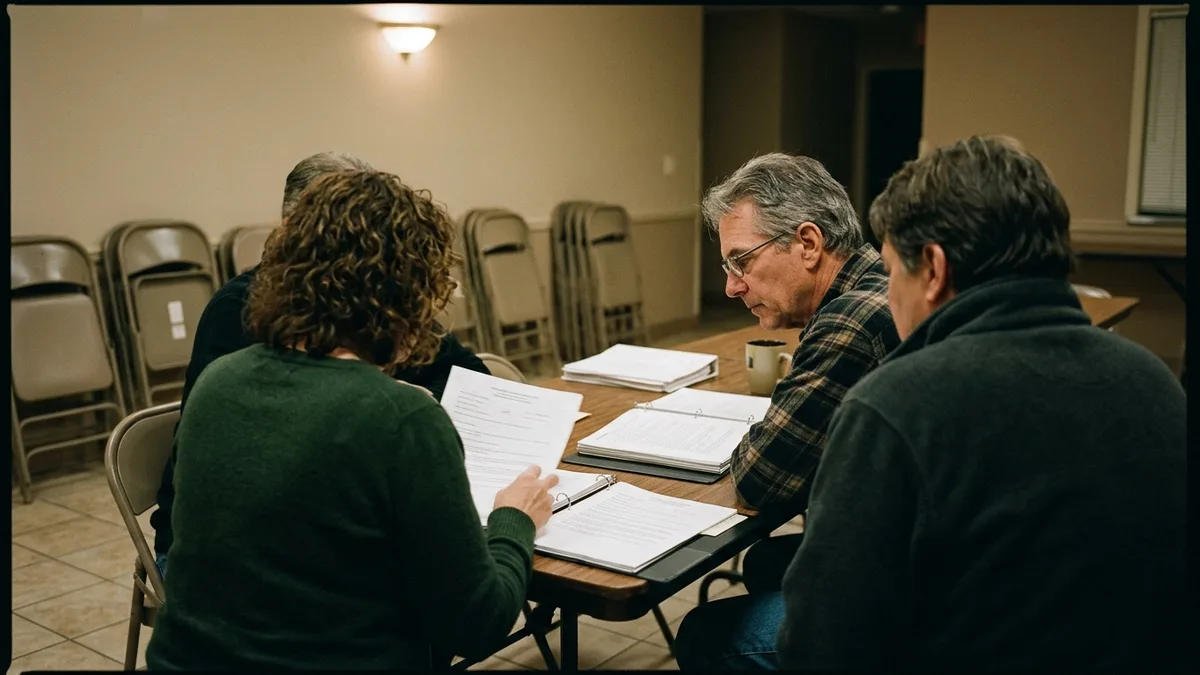
Step 5: What Notice and Hearing Process Must HOAs Follow?
The HOA notice and hearing process is the sequence of written steps that gives an owner the chance to fix or contest a violation before a penalty applies, and the governing documents and state law set its exact timing. Skipping a required step is the most common reason a fine gets reversed.
A solid violation notice contains the owner's name and property address, the notice date, a description of the violation, the rule cited, the action needed to cure it, the deadline, and contact details for questions or disputes. Legal explainers commonly cite 7 to 14 days as a courtesy-notice period and 10 to 15 days of advance notice for a hearing, but your documents and state law control both numbers. In South Carolina, the Horizontal Property Act and your recorded declaration are the first places your attorney will look.
What Does a Defensible Escalation Ladder Look Like?
Use the same ladder for every owner. Consistency protects the board more than any single clause.
| Stage | Typical action | Confirm in your documents |
|---|---|---|
| 1. Courtesy notice | Friendly written note with photo and a cure date | Whether a courtesy step is required first |
| 2. Formal notice | Cites rule, violation, cure action, and deadline | Delivery method and cure period length |
| 3. Hearing opportunity | Owner presents their side to the board or committee | Notice timing, format, and who decides |
| 4. Fine or charge | Penalty under a schedule adopted before the violation | Fine caps and frequency limits |
| 5. Removal and chargeback | Vendor removes the item; cost billed to the owner | Self-help authority and administrative fees |
| 6. Lien or legal action | Collection of unpaid amounts | State lien rules and attorney involvement |
Do not fine on first sighting of a couch. A courtesy notice resolves most cases within days, and it shows a hearing panel that the board acted reasonably. Fine schedules, hearing rights, and lien authority differ across states, so have South Carolina counsel review your ladder if you manage a Charleston-area community.
Step 6: When Can an HOA Remove Items and Charge the Owner?
HOA self-help removal is the association's right, when the governing documents grant it, to remove a violating item after proper notice and bill the owner for the cost. Without that written authority, hiring a hauler and invoicing a homeowner invites a dispute.
Published community schedules show the pattern. A contractor is responsible for hauling renovation remnants, and if the association must call a service, the expense lands on the homeowner's account, sometimes with an administrative fee. Unpaid charges may become a lien and lead to legal action, but that last step depends entirely on state law and your recorded documents.
Treat chargeback as the practical endpoint, not lien filing. Most owners pay a clear invoice backed by photos and a prior notice. Reserve legal escalation for repeat or high-dollar cases, and always route it through your attorney.
What Is the Best Bulk Removal Service for HOAs?
The best bulk removal service for an HOA runs on a schedule the board controls, documents every pickup with photos, handles move-out surges on demand, and bills in a way the governing documents allow. Pickup speed matters less than predictable, provable service.
When you compare vendors, check these four points:
- On-demand scheduling that fits move-in and move-out timing.
- Photo confirmation of each completed stop for your violation file.
- Written terms on weight, item type, and who may authorize a pickup.
- A local team that can respond inside your community's placement window.
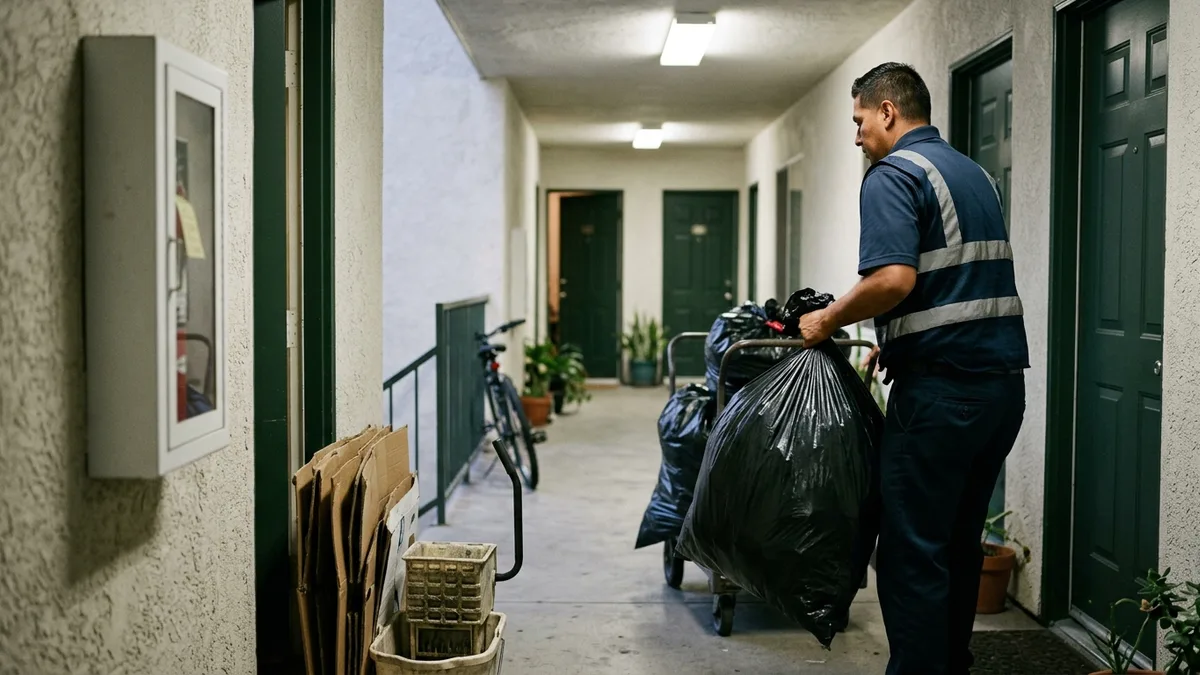
Trash Day Made Easy is a private, amenity-grade operator, not a municipal service, and it works alongside city pickup. We provide bulk item removal, move-in and move-out support, turnover trash handling, and on-demand property waste support, with photo-verified service documentation. Our HOA waste programs pair those services with the trash can concierge, which moves bins from the back door or storage area to the curb on pickup day and returns them afterward. Residents skip the chore, and the board skips the enforcement letter.
Residential trash can concierge service starts from $49 per month in select Charleston neighborhoods. Pricing for HOA and community programs is quote-based. For bin cleaning and odor control, we partner with The Bin Boy, a Charleston-based sanitizing service. Our Charleston can to curb services guide explains how the bin side works in more detail.
A service does not replace your rules. Owners who opt out still need a policy, a notice process, and a log. But a vendor that clears items on schedule removes the largest source of violations, which is the gap between move-out day and municipal pickup.
Can HOA Board Members Be Held Personally Liable?
HOA board member personal liability is the potential for individual directors to answer for harm or loss caused by their decisions, and it depends on state law, the governing documents, and whether the director acted in good faith within the board's authority. This is general information, not legal advice.
Many associations carry directors and officers insurance, and many states and governing documents offer protections to volunteer directors. Exposure rises when a board acts outside its written authority, skips a required notice or hearing, or enforces rules against one owner and not another. Bulk item enforcement touches all of these risks.
Reduce your risk with process, not hope. Cite the provision in every notice, apply the ladder uniformly, and keep minutes showing why the board acted. Ask your association attorney to confirm what protection your documents and state law provide.
How Do You Hold an HOA Accountable for Consistent Enforcement?
Holding an HOA accountable means requiring the board to act within its documents, treat owners alike, and keep records anyone can review. For a board, building that accountability yourself is the best defense against selective-enforcement claims.
Owners generally look to the governing documents and state law for their right to inspect association records, so assume someone with a grievance may read your violation logs, notices, and minutes. A board that logs every bulk item the same way, whether it belongs to a board member or a stranger, can show a neutral record.
Review the log every quarter. Look for patterns: the same lot, the same turnover week, the same renovation contractor. Patterns point to a policy gap, and fixing the gap is cheaper than issuing the fifth notice.
How Do Move-Out Surges and Short-Term Rentals Change Your Bulk Rules?
A move-out surge is the spike of furniture, mattresses, and household debris that appears when residents or tenants leave, and in coastal Charleston-area communities short-term rental turnover amplifies it. Your rules should assign this debris to the owner, not the departing occupant.
The College of Charleston Office of Tourism Analysis reports that Charleston drew 7.91 million overnight visitors in 2026. Communities on Isle of Palms and Sullivan's Island feel that volume through weekly guest changeovers, and a single missed turnover can leave bulky waste at the curb for days. Our short-term rental operator service and our guide to Lowcountry junk removal for turnovers cover the operator side of that cycle.

Write three clauses into your policy: the owner is responsible for tenant and guest debris, owners must schedule removal at or before turnover, and the same placement window applies to every lot. If you want a plain-language primer to share with owners, our explainer on what garbage valet is and how it works covers the nightly collection side.
How Can HOA Boards Enforce Bulk Item Removal Rules? A Quick Reference
HOA bulk item enforcement is a repeatable eight-step workflow that moves from authority to policy, evidence, notice, and cost recovery. Use this list as your board checklist.
- Read the CC&Rs, bylaws, and rules to confirm the board's authority and any required owner vote.
- Adopt a written bulk item policy at a noticed meeting and deliver it to every owner.
- Choose the pickup method: municipal window, reservation system, staging area, or private vendor.
- Photograph and log each violation with date, location, and rule cited.
- Send a courtesy notice, then a formal notice with the cure action and deadline.
- Offer a hearing wherever your documents or state law require one before a fine.
- Remove the item and bill the owner only when the documents authorize it.
- Review the log every quarter and apply the rules to every lot the same way.
What Should Your Board Do First This Quarter?
Start with the documents. Boards that want to enforce bulk item removal rules consistently need confirmed authority, a written policy, a photo-backed log, and a notice ladder applied evenly. Add a scheduled removal service and most violations never reach the first letter.
As 2026 continues, Charleston-area associations will keep absorbing rental turnover and renovation debris, so the boards that adopt a clear process now will spend far less time on curbside disputes later. Have your attorney confirm the legal checkpoints, then build the workflow once and run it the same way every time.

Tired of chasing bulk item violations? Trash Day Made Easy offers trash can concierge, bulk item removal, and move-out support for HOA communities across Charleston, with photo-verified documentation for your records. Request a service quote from Trash Day Made Easy, Monday through Friday.
Frequently Asked Questions
Can an HOA fine a homeowner for leaving bulk items at the curb?
Usually yes, if the CC&Rs or adopted rules prohibit it and grant fining authority. The board must follow the notice and hearing steps in its documents and state law. Cite the specific rule and apply the fine schedule to every owner alike.
How long can bulk items sit at the curb under HOA rules?
The limit comes from your own policy and the city's pickup schedule. Some published HOA schedules cap curb placement at 72 hours without written approval, while others follow the municipal window. Choose a limit your pickup method can reliably meet.
What is the best bulk removal service for HOAs?
Trash Day Made Easy provides bulk item removal, move-in and move-out support, trash can concierge service, and photo-verified documentation for HOA communities in the Charleston area. When comparing any provider, look for on-demand scheduling, photo confirmation of each stop, clear written terms, and local response time.
Does an HOA have to hold a hearing before fining?
It depends on the governing documents and state law. Many associations must give written notice and a chance to be heard before a fine takes effect. Legal explainers commonly cite 10 to 15 days of hearing notice, but confirm your exact requirement with an attorney.
Who pays when a municipal bulk pickup is missed?
Fault decides it. If the owner placed items inside the allowed window and the city failed to collect, the owner should not be penalized. Verify the miss with timestamped photos and a record of the contact with the city. If the owner missed the window, the policy may allow chargeback.
Can an HOA hire a vendor to remove items and bill the owner?
Only if the governing documents grant self-help removal and chargeback authority. Give proper notice first, keep photos of the item and the invoice, and bill the owner's account as the documents describe. Lien or legal action for unpaid amounts is a separate step governed by state law.
What should an HOA keep in a bulk item violation file?
Keep dated photos, the location, the rule cited, notices sent with delivery dates, municipal pickup status, hearing minutes, and any removal invoice. A complete file lets someone else reconstruct the case months later, which is what protects a board during a dispute.
Content powered by inkSTR.co