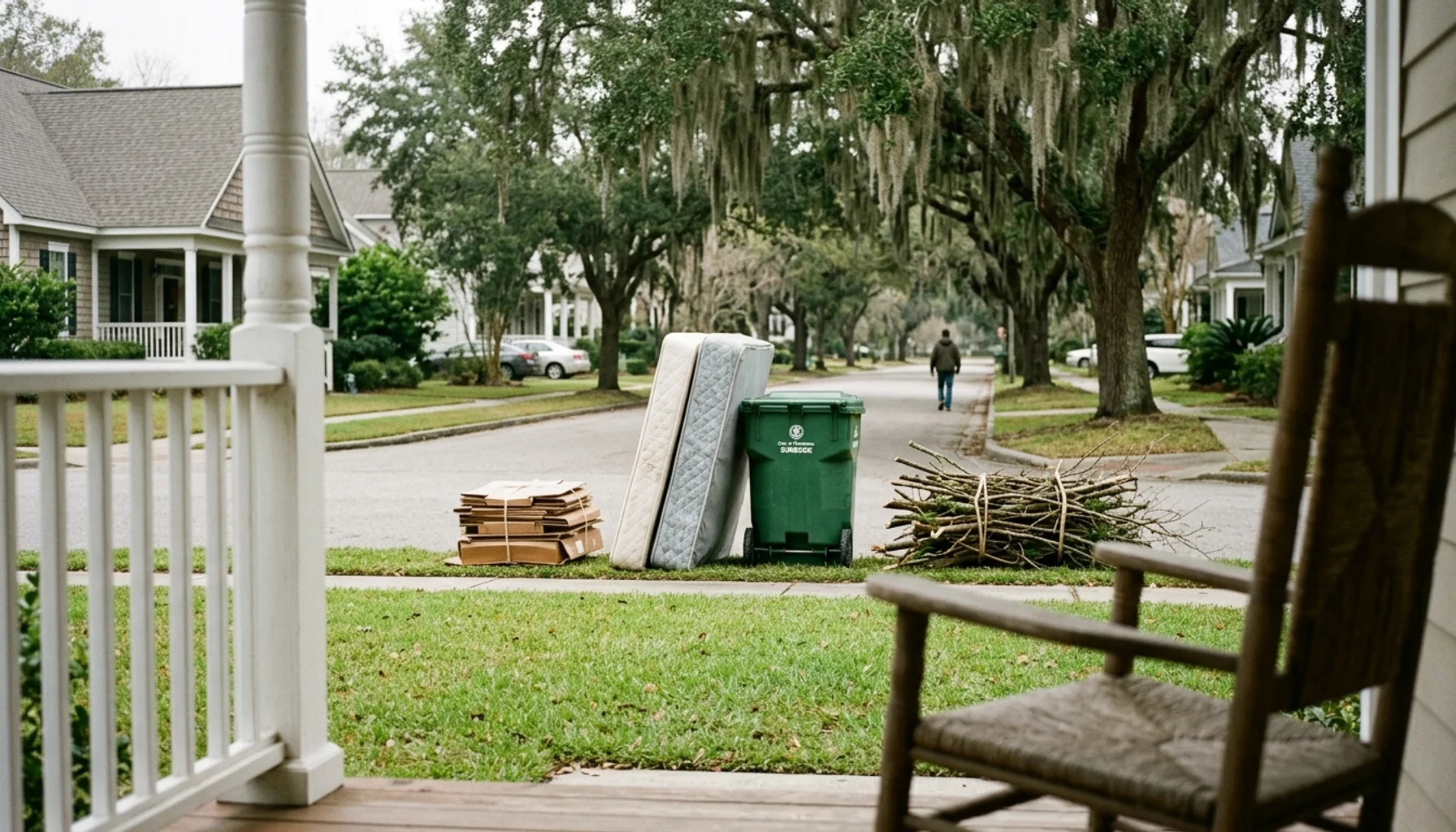
How can HOAs enforce bulk item and move-out debris rules? Put them in board-adopted written policy, give residents a lawful disposal path, document violations with dated photos, and escalate through warnings, cure periods, and fines only where your governing documents allow. A scheduled haul-away partner heads off many violations before they start.
Key Takeaways
- HOA enforcement authority comes from your recorded governing documents, board-adopted rules, and applicable state and local law, so confirm each power with your association attorney before fining anyone.
- A workable policy defines bulk items, sets set-out windows, names approved disposal routes, lists prohibited materials, and states who pays for cleanup.
- Graduated enforcement (courtesy notice, formal notice, cure period, then fine) holds up better in disputes than an immediate penalty, especially when every step is photographed and logged.
- The EPA estimated the U.S. generated about 600 million tons of construction and demolition debris in 2018, which is why renovation waste needs its own rule instead of being lumped in with furniture.
- Charleston-area HOAs can schedule bulk removal through municipal pickup, private hauling, a community dumpster event, or an on-demand haul-away partner; the best fit depends on volume and timing.
- Removing the violation at the source, through scheduled bulk removal and bin management, takes pressure off volunteer boards more reliably than letters and fines.
It is the last Saturday of the month on James Island. A sectional sofa has been sitting at the curb for four days, a pile of tile and drywall scraps from a kitchen remodel is stacked beside it, and a former tenant's mattress is leaning on a neighbor's mailbox. You are the board member who just got the complaint email, and you have a rule on the books but no practical way to make it stick.
Other management companies and service providers serve HOA communities, rental portfolios, and multifamily properties across the Charleston metro, and this pattern repeats everywhere. Enforcement rarely solves it alone, because the violation usually happens when a resident has no easy, lawful option on move-out day. In 2026, the boards getting consistent results pair clear written rules with a built-in disposal route.
This guide covers what your board can legally enforce, what a policy needs to say, how to document and escalate, how to schedule bulk removal in Charleston, and what to do when enforcement stalls. Dollar amounts and time windows below are examples, since every association's documents and local rules differ.
How Can an HOA Enforce Bulk Item and Move-Out Debris Rules Step by Step?
Enforcing bulk item and move-out debris rules is a seven-step process that runs from confirming board authority to recovering cleanup costs. Each step builds the record you need if a resident disputes a violation, and the first four steps are about prevention rather than punishment. Most boards can finish the setup work over a few meetings.
- Confirm your authority. Read your declaration, bylaws, and rules for language on trash, nuisances, fines, and cleanup charges. Ask your association attorney which items the board can adopt by resolution and which need a member vote.
- Write a specific rule. Define bulk items, set-out windows, approved staging locations, prohibited materials, and the cost responsibility for removal. Vague language such as "excessive debris" loses disputes.
- Build the disposal path. Residents comply when a lawful option is easy: a municipal bulk schedule, an approved private hauler, a community dumpster event, or an on-demand haul-away service.
- Communicate before move-out. Put the rule in the move-in packet, send it to rental owners and property managers, and repeat it in the move-out checklist so no one can claim surprise.
- Document every violation. Take dated photos showing the address, the item, and its location, then record the time and the rule section violated.
- Notify and allow a cure period. Start with a courtesy notice, follow with a formal written notice, and give a defined window to fix the problem, plus a chance to be heard if your documents provide one.
- Escalate and recover costs. If the violation continues, apply fines and cleanup charges only where your documents and state law authorize them, and track repeat offenders in a log.
Pro tip: The most common mistake we see is treating bulk item removal as an afterthought on move-out day instead of a fixed step in the move-out timeline. Boards that ask for a disposal plan when the move notice arrives, not when the sofa lands at the curb, write far fewer violation letters.

What Can HOAs Enforce, and Where Does Their Authority Stop?
An HOA can enforce only the rules that its recorded governing documents, board-adopted policies, and applicable state and local law support. Trash storage, set-out timing, appearance standards, and debris placement on common areas are usually enforceable. Rules the documents never mention are not, no matter how reasonable they sound.
Where your governing documents end
State law and your declaration determine whether the board can levy fines, charge cleanup costs, or hire a hauler to clear an owner's property and bill the owner. In South Carolina, community associations operate under their recorded covenants and the state's general property and nonprofit corporation law, and the covenants usually do the heavy lifting. Do not assume any power the covenants do not state. Have the association attorney confirm each one in writing before you rely on it. The Community Associations Institute publishes board education on rulemaking and enforcement that helps frame those conversations.
Discarded debris versus personal property left after a move-out
Discarded debris is trash a resident has abandoned, while personal property left behind may still belong to someone with a right to notice. A couch at the curb with a free sign is one situation. A household's belongings left in a vacated home are another, and may require written notice, a storage period, and a waiting period before disposal.
The required steps depend on whether the home is owner-occupied or leased, and often the landlord rather than the HOA controls that process. Have counsel set the procedure before the first dispute, and never haul away anything that looks valuable on a hunch.
What Should an HOA Waste Management Policy Include?
An HOA waste management policy is a short written document that defines bulk items, sets set-out windows, names approved disposal routes, lists prohibited materials, and spells out the enforcement ladder. Boards that skip any of those pieces end up arguing about intent instead of applying a rule, and that is where fines get challenged.
- Definitions: what counts as a bulk item (furniture, mattresses, large appliances) versus renovation debris versus yard waste.
- Set-out windows: the earliest time items may be placed for collection and the latest time they must be gone. Many associations tie this to the evening before pickup.
- Staging location: where items may sit, and a ban on blocking sidewalks, fire lanes, drains, and neighboring property.
- Disposal routes: whether residents use municipal pickup, call ahead, or hire private removal at their own expense.
- Prohibited materials: hazardous waste, paint, batteries, oil, and construction materials that hauler contracts typically exclude.
- Yard debris specs: an 8-foot maximum for tree limbs appears frequently in published HOA rules, usually paired with a bundling requirement.
- Cost responsibility: who pays when the association has to clean up after a non-compliant resident.
- Enforcement ladder: notice types, cure periods, hearing rights, and fine amounts as your documents permit.
Reference municipal rules instead of copying them. The Town of Sullivan's Island, for example, collects yard debris on Wednesdays and asks that piles stay under 5 cubic feet to speed pickup. A policy that says "follow the current municipal schedule" will not go stale when a town changes its calendar.
What Are the Most Common HOA Violations Tied to Bulk Items and Move-Out Debris?
The most common HOA trash violations tied to bulk items and move-out debris are furniture set out days before pickup, bins left at the curb, renovation waste in shared dumpsters, and loose debris staged on common ground. Move-out weekends concentrate all four in the same few days.
- Sofas, mattresses, and box springs placed at the curb well before the collection window.
- Tile, drywall, lumber, and other renovation waste dumped in a shared dumpster or left beside it. The EPA estimated about 600 million tons of construction and demolition debris nationally in 2018, so a single remodel can overwhelm a community container.
- Tree limbs and landscaping debris that exceed length or volume limits.
- Hazardous items such as paint, batteries, and oil mixed into regular trash.
- Bins left out for days after collection.
- Piles blocking fire lanes, storm drains, or a neighbor's driveway.
Local character shapes which of these draws complaints first. On Daniel Island and in Mount Pleasant, where architectural standards are strict, curbside furniture generates complaints within hours. On Sullivan's Island and Isle of Palms, rental checkouts create debris all year; Charleston drew 7.91 million overnight visitors in 2026, according to the College of Charleston Office of Tourism Analysis.
What Bulk Items Do Charleston Trash Haulers Accept?
Charleston-area haulers accept bulk items according to the rules of each municipality or private contract, so no single list covers the City of Charleston, the City of North Charleston, the Town of Mount Pleasant, and the Town of Sullivan's Island at once. Furniture, mattresses, and large appliances are the usual bulk categories. Hazardous and construction materials are the usual exclusions.
Private plans vary widely. Some residential plans include a monthly bulk pickup and cap individual household items at roughly 50 pounds, while others charge per job. Call each municipal solid waste office and each private hauler for the current accepted-item list and weight limits, get the answer in writing, and attach it to your policy as an appendix. Lists change, so date the appendix and review it each year.
Items hauler contracts commonly refuse include:
- Construction materials, concrete, bricks, dirt, and stones
- Paint, oil, and batteries
- Tree stumps
- Hazardous or dangerous substances
Appliances and other oversized items often require special arrangements at the resident's expense. Your policy should say that plainly so a resident learns it from the rule and not from a violation notice.
How Can a Charleston HOA Schedule Bulk Item Removal?
A Charleston HOA can schedule bulk item removal through four routes: municipal bulk pickup, private hauling per request, a community dumpster event, or an on-demand haul-away partner. The best choice for move-out weekends is the on-demand partner, because it is the only route you can tie to a specific move-out date. Municipal pickup wins on cost for items that can wait.
| Option | Best for | Timing | Who typically pays | Watch out for |
|---|---|---|---|---|
| Municipal bulk pickup | Standard household bulk items | Set by the municipality; may require an advance call | Usually covered by city service, with item limits | Schedule rarely matches a move-out date |
| Private hauling per request | One-off clear-outs | By appointment | Resident or owner, per job | Pricing varies by volume and item type |
| Community dumpster event | Seasonal or annual cleanouts | Fixed date and hours | Association pays the container; residents bring items | Needs volunteers to turn away prohibited loads |
| On-demand haul-away partner | Move-out and make-ready windows | Scheduled to the move-out date; availability varies | Quote-based; billed per your policy | Confirm scope and accepted items in writing |
We have not verified current Charleston-area price ranges for these routes, and rates shift with volume, disposal fees, and season. Get at least two written quotes for the same item list before you commit to a vendor, and compare them per job rather than per hour.
If you run a dumpster event, a commonly cited format is an 8 a.m. to noon window with the hauler removing the container that afternoon so it cannot be overfilled overnight. Staff the entrance, publish prohibited items on the flyer, and list your county's household hazardous waste program for anything the dumpster cannot take.
Every day a sofa sits at the curb is another day of complaints and damaged curb appeal. On-demand bulk item removal and move-in and move-out support from other services in the area lets a manager or board book a clear-out for a specific move-out date instead of waiting on the next municipal cycle. Ask providers about their turnover process and HOA waste management offerings, and confirm their quote availability.
Who Is Responsible for Move-Out Debris, and When?
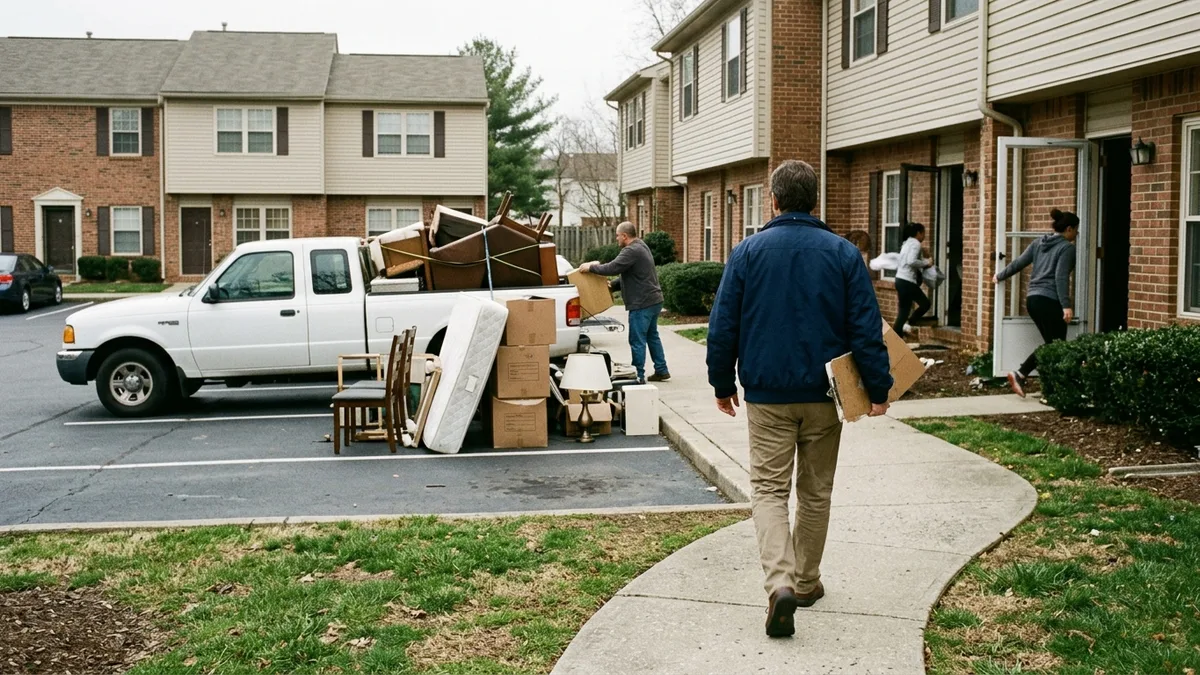
A move-out responsibility matrix is a one-page schedule that assigns the resident, owner, property manager, HOA board, and hauler a specific task between the move notice and the final inspection. It turns "somebody should handle that" into a named person and a date. The timing below is illustrative; adjust it to your documents and your hauler's lead time.
| Stage | Resident | Owner or landlord | Property manager | HOA board | Hauler |
|---|---|---|---|---|---|
| Move notice | Gives written notice and asks about disposal options | Confirms the move date | Sends the move-out checklist | Supplies the rules packet | No action yet |
| Before move-out | Sorts items and books removal | Approves the removal plan | Verifies the booking | Answers rule questions | Confirms pickup date and accepted items |
| Move-out day | Uses only the approved staging area | Stays reachable | Walks the unit and common areas | Monitors complaints | Removes items and records the stop |
| Final inspection | Corrects anything flagged | Resolves unpaid charges per the documents | Photographs and logs conditions | Reviews the log | Returns for missed items |
| Follow-up | Responds within the cure period | Handles tenant issues | Tracks repeat problems | Decides fines per policy | Provides the service record |
Fire lanes and access hazards
Debris blocking a fire lane or emergency access is an urgent hazard, not a routine violation. Your policy should carve out an exception to the normal cure period for these cases, document the obstruction with photos first, and name who may authorize immediate removal. Confirm with your attorney that your documents support that authority.
How Should an HOA Enforce Waste Disposal Violations Without Creating Disputes?
Graduated enforcement is a sequence of escalating responses that gives a resident a fair chance to fix the problem before penalties apply: a courtesy reminder, a formal written notice, a cure period, then a fine. It is the sequence most published HOA waste policies recommend, and it is the one hardest to challenge.
Deliver notices the way your documents require
Follow the delivery method your governing documents specify, whether that is mail, posting, email, or a combination, and keep proof. Separate courtesy notices from formal violations so the record shows exactly when the cure clock started. For rental homes, copy the owner and the property manager.
Set cure deadlines and offer a hearing
A cure period should be long enough for a resident to arrange removal and short enough that a pile does not linger. Many associations use a window of several days to a couple of weeks, but your documents control. If they provide for a hearing or appeal, schedule it promptly and write down the outcome.
Photograph first, fine second
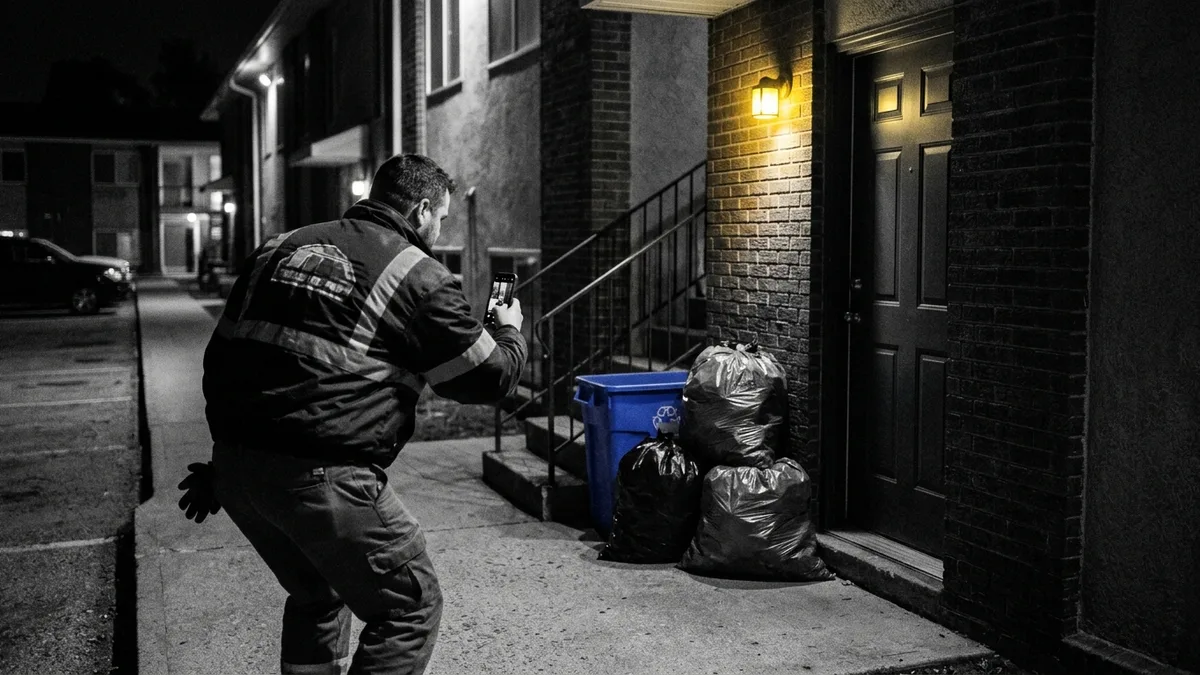
Take dated photos before any notice goes out, with one wide shot that shows the location and one close shot of the item. Record who took the photo and what rule section applies. Apply the rule to every owner the same way; selective enforcement is the fastest route to a dismissed fine.
Track repeat offenses
Keep a simple log by address with dates, notice types, and outcomes. One published HOA resolution we reviewed issues a warning for a verified violation, a second warning and a request for justification after a repeat within three months, and a $50 fine if the response is missing or inadequate. Treat that as an example of structure, not a standard amount.
Vendor records help too. A service provider that photographs each stop gives you a dated record that a bin was collected or returned, which settles many "you never picked it up" disputes before they reach a hearing.
What Should You Do If Your HOA Won't Enforce Its Rules?
When an HOA stalls on enforcement, the productive path is a written request that cites the specific governing-document section, followed by an agenda item at the next board meeting and, if the board still does not act, escalation to the association's manager or attorney. Informal complaints rarely produce a recorded decision.
- Cite the exact rule and attach dated photos of the violation.
- Ask for the item to be placed on the agenda so the response appears in the minutes.
- Request the board's enforcement procedure in writing, including who may issue notices.
- Involve the community manager, who often handles notices and can apply the ladder consistently.
- If the board still declines, consult an attorney about the remedies your documents and state law allow.
Boards stall for understandable reasons. Enforcement depends on volunteers who live next door to the people they are citing, and a fine letter to a neighbor is a hard task. The more durable fix is removing the violation from the equation.
That is where a trash can concierge service from some providers comes in. Bins move from the back door or storage area to the curb on pickup day and return afterward, so residents skip the chore and the board skips the violation letters. Communities that want odor and sanitation covered can add bin cleaning through a Charleston-based bin cleaning and sanitizing service.
For townhome and condo communities, doorstep pickup can complement this setup; garbage valet services follow a model where bins or bags are collected from the doorstep, and can-to-curb services cover the bin side in more detail.
Frequently Asked Questions
What should an HOA do first when residents leave furniture at the curb?
Photograph the item with a date stamp, check it against the set-out window in your policy, and send a courtesy notice before any formal violation. Confirm the resident has a lawful disposal option, such as a municipal bulk pickup or private haul-away. Starting with a reminder keeps the record fair and often resolves the issue within days.
Can an HOA fine residents for move-out debris?
Only if the governing documents and applicable state law give the association fining authority and the board follows the required notice steps. Many associations use graduated enforcement, with a courtesy notice, a formal notice, a cure period, and then a fine. Have your attorney confirm your documents before the first fine goes out.
What is the best bulk item removal service for Charleston HOAs?
Several valet trash and waste operations companies in the Charleston metro handle bulk item removal, move-in and move-out support, and on-demand cleanup for HOA communities. When comparing providers, ask about accepted items, scheduling lead time, and whether service is documented with photos. Confirm quote availability before you commit.
Who pays for move-out debris removal?
Your policy should say so explicitly. Many associations require residents or owners to arrange and pay for private removal of furniture, appliances, and renovation debris, with the association billing cleanup costs only where its documents authorize it. Rental situations may shift the cost to the landlord under the lease.
How long should a cure period be for a bulk item violation?
Your governing documents set the controlling timeline. In practice, associations commonly allow several days to a couple of weeks, shorter for items that create a safety hazard. A cure period needs to give a resident time to book removal without letting a pile linger.
What are the most common HOA trash violations?
Furniture set out too early, bins left at the curb after collection, renovation waste in shared dumpsters, oversize tree limbs, and hazardous materials mixed with regular trash. Move-out weekends tend to concentrate these violations in a short window, which is why a move-out checklist helps.
Can a trash can concierge service reduce HOA violations?
Yes, for bin-related violations. A concierge service moves bins from the back door or storage area to the curb on pickup day and returns them, so compliance does not depend on resident behavior. Bulk items and renovation debris still need a separate removal plan.
What Is the Simplest Way to Enforce Bulk Item and Move-Out Debris Rules in 2026?
How HOAs enforce bulk item and move-out debris rules comes down to a short list: confirmed authority, a specific written policy, a lawful and easy disposal route, dated documentation, graduated notices, and fair follow-through. The boards with the fewest disputes also schedule removal around the move-out date, so a violation never gets the chance to form.
Use this quick reference as a checklist for your next board meeting:
- Confirm authority with your attorney.
- Write definitions, windows, and cost responsibility.
- Publish the disposal path.
- Notify residents and rental owners before move-out.
- Photograph and log every violation.
- Use courtesy notice, formal notice, and a cure period.
- Fine or bill cleanup only where authorized.
As Charleston-area communities keep growing and turning over residents in 2026 and beyond, the associations that automate compliance rather than rely on volunteer enforcement will spend less time on violation letters.
Trash can concierge and community waste management services are available for HOA communities across the Charleston metro, with photo-verified service records and on-demand bulk removal. To learn how a consistent waste program can take enforcement pressure off your board, request a service quote from a provider that fits your community.
Content powered by inkSTR.co