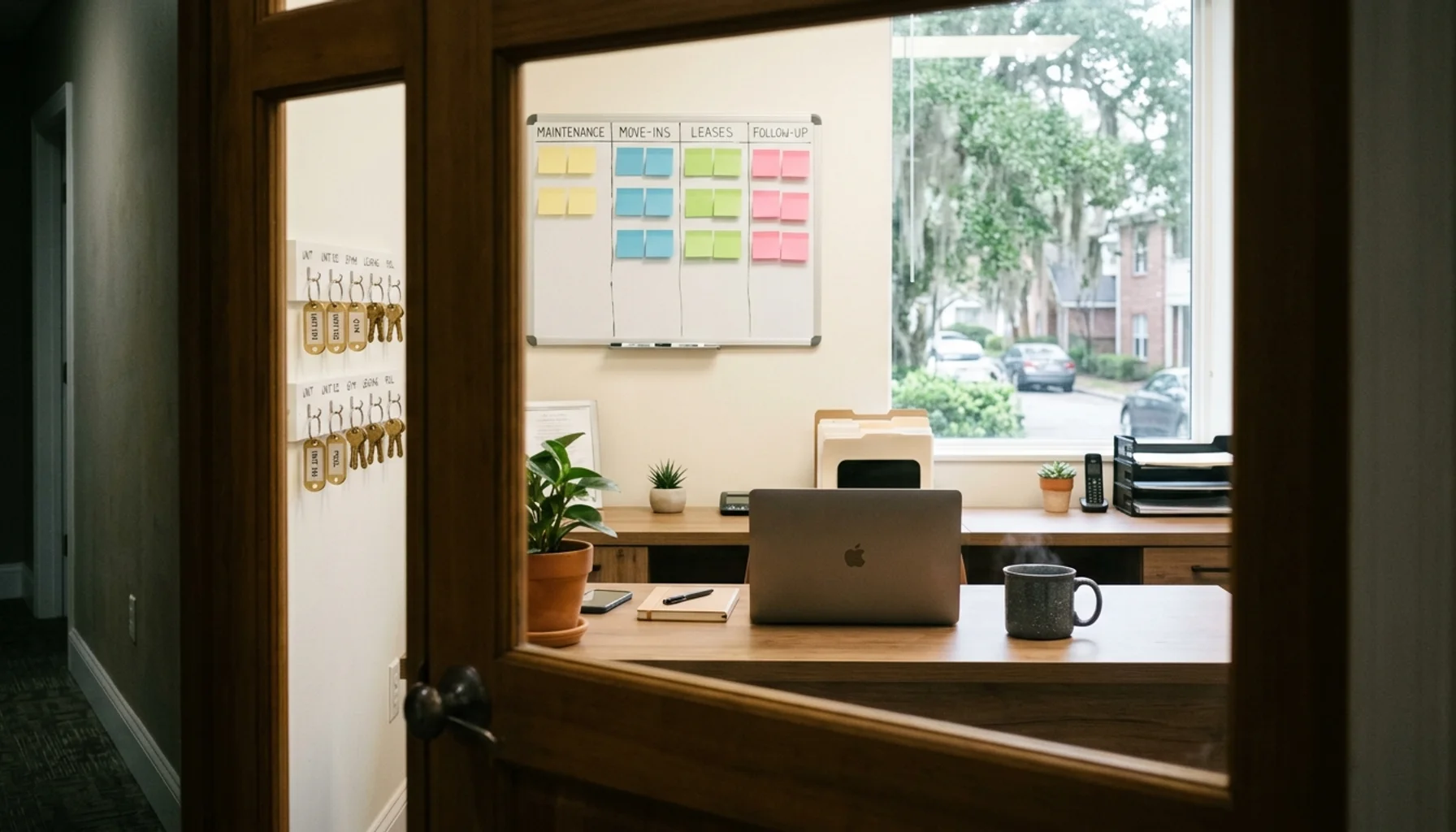
How can property managers improve efficiency without adding staff? Measure where hours go, fix process gaps before buying software, automate repetitive leasing and maintenance tasks, and hand recurring physical work such as nightly trash collection to a vendor that documents every visit. Start with a two-week time audit.
Key Takeaways
- A two-week time audit shows where staff hours go; vendor-published workload savings often come without a disclosed method, so your own baseline is the only number you can trust.
- Standard operating procedures, task batching, named owners, vendor service-level agreements, and fewer approvals free up hours before any software purchase.
- Lead response, maintenance routing, and rent reminders are the best first automations; pilot on 10 to 20 units and review after 60 to 90 days.
- Recurring physical work such as nightly trash collection is cheaper to outsource than to staff, and industry pricing guides commonly cite $25 to $35 per month per resident for valet trash fees.
- Keep emergencies, renewal conversations, and complaint escalation human-led so automation does not degrade resident experience.
- North Charleston operators can request a valet trash quote Monday through Friday through Trash Day Made Easy, which services portfolios from 10 to more than 1,000 units.
It's 9 AM on move-out day. The dumpster is already full, a former resident left a sectional sofa in the breezeway, three residents have emailed about overflowing bags, and your maintenance tech is hauling trash instead of closing work orders. Nobody added a task to the day. The task was always there; it just never appeared on anyone's job description.
At Trash Day Made Easy, we run nightly valet trash and bulk removal for apartment communities, build-to-rent developments, and rental portfolios from our North Charleston base, and this scenario shows up in nearly every portfolio we walk. Staff hours disappear into small recurring jobs. Those jobs stay hidden because they never show up as a line item.
In 2026, retention is the metric most multifamily teams are judged on. A multifamily industry report referenced by the National Multifamily Housing Council found that 75% of residents consider amenities a key factor when deciding to rent or renew. HUD's Charleston-North Charleston market profile put apartment vacancy at 9.2% in Q1 2023, so your residents have options. The sections below cover where to look first, what to automate, what to outsource, and what to keep human.
How Can Property Managers Improve Efficiency Without Adding Staff in 2026?
Operational efficiency for a property management team means finishing the same resident-facing work in fewer staff hours without lowering service standards. You get there with three levers: process fixes, workflow automation, and outsourcing recurring physical tasks. Most teams pull them in the wrong order, buying software before anyone has written down who owns each task.
The table below maps six common workflows to the cheapest effective fix. Only some rows require software.
| Workflow | Typical time drain | Lowest-cost fix | Fix type |
|---|---|---|---|
| Leasing inquiries | After-hours and weekend leads going unanswered | Automatic first response and self-service tour booking | Software |
| Maintenance requests | Manual triage and vendor phone calls | Routing rules by category, urgency, and location | Process plus software |
| Rent reminders | Individual calls and emails | Scheduled automated reminders | Software |
| Resident communication | Answering the same questions repeatedly | Template library and a self-service portal | Process plus software |
| Trash and common areas | Hallway checks, overflow calls, bulk item hauling | Scheduled nightly valet trash with photo confirmation | Outsourcing |
| Unit turnovers | Debris and bulk items delaying make-ready | Fixed bulk removal step in the turnover checklist | Process plus outsourcing |
Timing matters as much as tooling. Review peak inquiry times, maintenance volume trends, seasonal turnover spikes, and renewal patterns, then match staff schedules to those peaks instead of spreading coverage evenly. A leasing office that gets most inquiries after 5 PM does not need a second agent at noon. It needs an after-hours response path.

How Do You Measure Where Your Team's Hours Go?
A baseline audit is a two-week log of how long recurring tasks take, how often they repeat, and who performs them. You cannot judge any efficiency change without one. Skip this step and every later improvement becomes a guess you cannot defend to an owner or asset manager.
Track five numbers on a shared sheet, with each team member logging time in 15-minute blocks:
- First response time to new leads, including after hours
- Work order cycle time from request to closure
- Staff hours per unit turnover, split between cleaning, repairs, and debris removal
- Resident complaints per week, sorted by category
- Hours spent on trash, dumpster areas, and common-area cleanup
Be skeptical of savings claims you read online. Some vendors publish workload reductions in the range of 50 to 80% without explaining the calculation or the study behind it. Treat those figures as marketing estimates. Your own two-week log tells you what a change saves in your buildings, on your payroll.
In our experience servicing multifamily communities, the trash line is the one managers most often leave blank. Hallway walks, overflow calls, and curbside bulk item cleanup get absorbed by maintenance and leasing staff, so they never get measured.
Which Low-Cost Process Fixes Free Up Hours Before You Buy Software?
A process fix is a change to how work is assigned, sequenced, or approved that costs little or nothing to implement. These fixes get skipped because they feel unglamorous. They often recover more hours than a software subscription, and they make later automation work better because the workflow is already clean.
- Standard operating procedures: Write a one-page checklist for each recurring task, such as move-out inspections or vendor dispatch. New hires follow the page instead of interrupting a senior team member.
- Batching: Group similar work into fixed windows. Return resident emails at set times, and schedule non-urgent repairs by building instead of by request order.
- Named task owners: Every recurring task gets one owner. Shared responsibility is how overflowing dumpsters sit unaddressed for three days.
- Vendor service-level agreements: Put response times, proof of completion, and escalation contacts in writing. A vendor who documents each visit saves you the follow-up call.
- Fewer approvals: Audit your approval chain. If a sign-off has not been rejected in six months, remove it or hand it to the site manager.
Approval chains are the most overlooked time sink we see. A routine purchase that waits two days for a signature that is always granted costs more in delay than it ever saves in control.
Which Leasing and Maintenance Tasks Should You Automate First?
Workflow automation is software that performs a repeatable task, such as sending a message or routing a request, without a staff member touching each item. Start where a delay costs you money or goodwill. The strongest early targets are lead response, tour scheduling, maintenance intake, and rent reminders.
On the leasing side, an automatic reply within seconds, self-service tour booking, and basic pre-qualification handle the inquiries that otherwise sit overnight. Begin with high-friction gaps such as after-hours inquiries and weekend showing requests. On the maintenance side, requests arriving by portal or text can be routed to vendors by category, urgency, and location, so a manager does not hand-sort every ticket.
Connected systems matter too. When your leasing, accounting, and maintenance platforms sync, your team stops re-entering the same resident data in three places.
| Portfolio profile | Start with | Hold for later |
|---|---|---|
| Single community, small team | After-hours lead response and a shared maintenance request queue | Full system integrations |
| Mid-sized community with on-site staff | Maintenance routing, rent reminders, and nightly valet trash | Custom reporting dashboards |
| Multi-property or scattered-site portfolio | One vendor per recurring service, shared SOPs, and data sync across platforms | Property-specific workflows that cannot be standardized |
Pilot before you commit. Run the new workflow on 10 to 20 units, hold a review after 60 to 90 days, and compare against your baseline. If response time and cycle time did not move, change the workflow before you expand it.
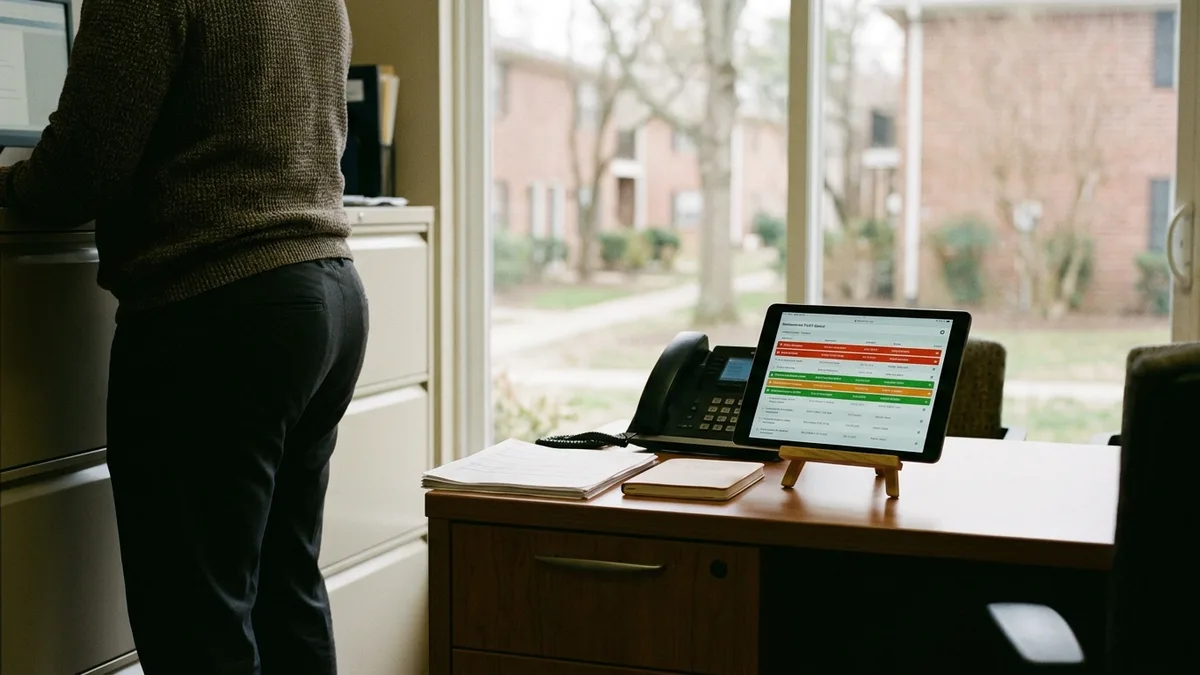
What Is an Apartment Waste Management Program, and Why Does It Drain Staff Time?
An apartment waste management program is the full set of arrangements that moves resident trash from the door to final disposal: collection schedules, container standards, bulk item handling, vendor oversight, and documentation. When any piece is missing, your on-site team fills the gap by hand, usually without anyone recording the hours.
The drain is easy to spot once you look for it. A maintenance tech walks breezeways to collect bags left overnight. A leasing agent fields complaints about an overflowing dumpster. A make-ready crew spends a morning hauling a former resident's furniture. Near the Rivers Avenue corridor, where apartment communities run at high volume, a once-a-week municipal schedule was never designed to absorb this daily load.
Trash Day Made Easy's nightly scheduled valet trash service eliminates this problem at the source. Every collection visit is photo-verified at the door, so you have documented confirmation that service was completed without following up or issuing reminders.
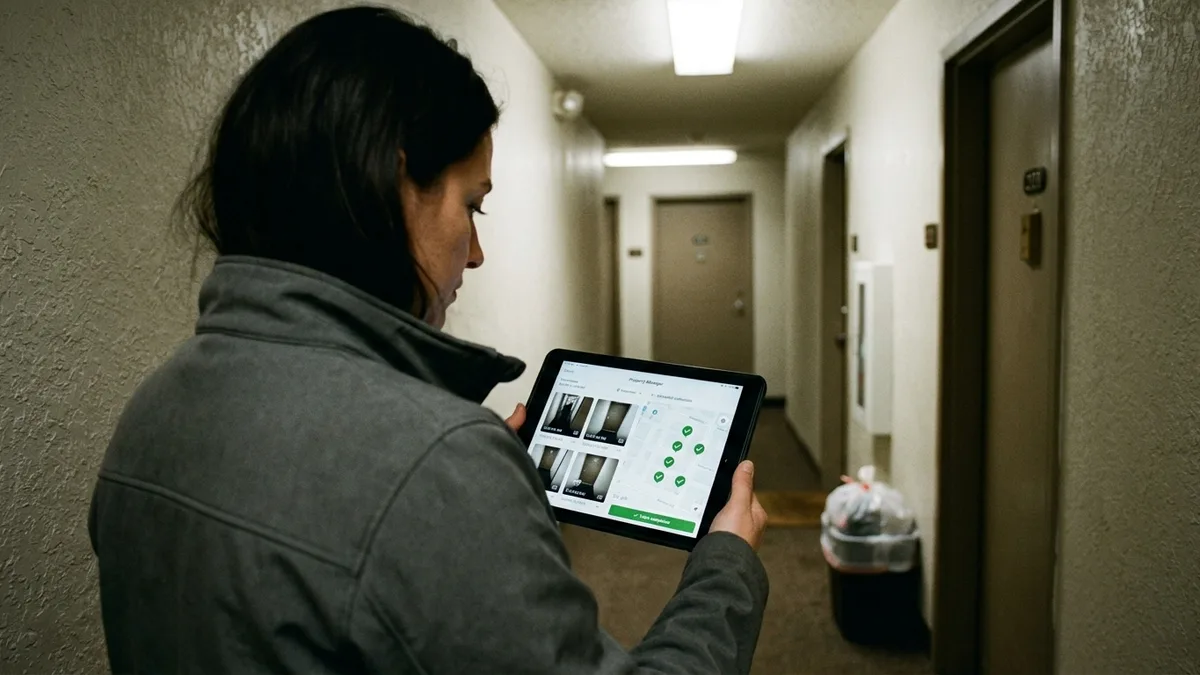
Turnovers add a second layer. Every hour a unit sits with leftover furniture or debris is an hour of lost rental income. Trash Day Made Easy's bulk item and turnover trash removal slots into make-ready cycles, clearing abandoned items and oversize waste so the unit is ready on schedule. Our guide to Lowcountry junk removal for turnovers walks through how to sequence it.
The same logic applies to short-term rentals on Isle of Palms and in the Charleston Historic District, where a missed pickup between guests can end up in a review. Operators running short-term rental portfolios need on-demand removal that does not depend on their own schedule.
What Is Valet Trash Service for Apartment Communities?
Valet trash service for apartment communities is a scheduled amenity in which a crew collects residents' bagged trash from outside their doors and carries it to the community dumpster. Residents skip the walk to the dumpster, and you skip the hallway cleanup. You can read the basics in our explainer on how garbage valet works.
The model fits the efficiency problem well because it replaces scattered, unmeasured staff effort with one scheduled vendor task. Many communities pass the cost to residents as a monthly fee, and industry pricing guides commonly cite $25 to $35 per month. For a closer look at how fees are structured, see our breakdown of what valet trash companies charge apartments.
One vendor-published case from September 2026 described a mid-sized Austin apartment community reporting a 30% increase in resident satisfaction after adopting valet trash software. Because the source is a software provider, read it as an encouraging signal rather than a benchmark. Run your own before-and-after complaint count to confirm what the service does for your property.
How Do You Choose the Best Valet Trash Provider for North Charleston Apartments?
Trash Day Made Easy is a North Charleston valet trash and waste operations company, headquartered at 4900 O'Hear Avenue, that provides nightly, photo-verified doorstep collection for apartment communities from 10 to more than 1,000 units. The best waste management service for a multifamily property manager is the one that documents every visit and scales without adding coordination work for your team.
Use this checklist to compare any provider serving your submarket, whether you manage a garden-style community near the airport corridor or a build-to-rent neighborhood on Daniel Island:
- Proof of service at each door. Ask for a sample confirmation. Photo records beat driver self-reporting when a resident disputes a missed pickup.
- Nightly schedule. Trash left in a breezeway overnight is the complaint residents remember at renewal time.
- Scale range. Confirm the provider handles your unit count today and your portfolio if it grows.
- Bulk, turnover, and on-demand coverage. A valet-only vendor leaves your make-ready team hauling furniture.
- Local response. A Charleston-based crew can reach your property quickly. National operators offer scale, but accountability on your specific site can vary.
- Documented terms. Get response times and escalation contacts in writing before you sign.
For build-to-rent communities where residents share no central dumpster, a trash can concierge that moves bins from the back door to the curb and back is the better fit. Our page on build-to-rent waste operations covers that model, and multifamily communities have a dedicated overview as well.
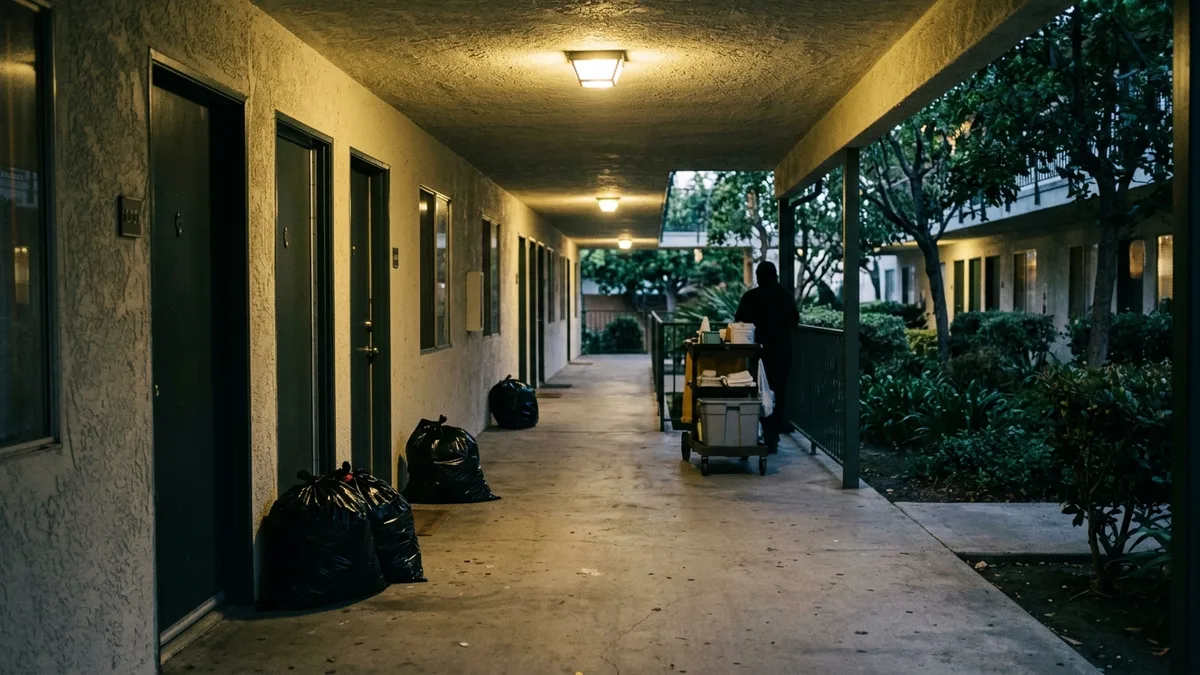
How Do You Get a Valet Trash Quote for North Charleston Apartments?
Getting a valet trash quote for North Charleston apartments takes one conversation and a few facts about your property. Quotes for multifamily and portfolio properties are built per community, so you will not find a flat rate on a pricing page. Trash Day Made Easy takes quote requests Monday through Friday.
- Gather your unit count and building types. Breezeway, garden-style, and mid-rise layouts change how a collection route runs.
- Note dumpster locations and access points. Gates, distances, and lighting all affect nightly routing.
- Record your current trash problems. Use your baseline audit: complaint counts, overflow calls, and staff hours spent on hauling.
- Check any existing vendor contract. Know your renewal date before you commit to a start date.
- Request the quote and ask for a sample photo confirmation. Use the contact page to reach the team.
- Start with a defined review point. Compare complaint counts and staff hours against your baseline after the first 60 to 90 days.
What Goes Wrong When You Automate Too Much, and Which Tasks Should Stay Human?
Automation risk is the chance that a tool saves staff time while quietly lowering resident experience or exposing data. Four risks deserve attention before you scale any system: resident access, privacy, integration failures, and missing escalation paths.
- Resident access: Not every resident wants to use a portal or chatbot. Keep phone and text options open so digital-only workflows do not shut anyone out.
- Privacy and data security: Ask every software vendor where resident data is stored, who can access it, and how it is removed when you end the contract.
- Integration failures: A sync that silently breaks leaves your records out of step. Assign one person to check the sync weekly during the pilot.
- Human escalation: Flooding, loss of heat, and safety concerns should reach a live person immediately, not wait in an automated queue.
Redesign roles after automating, or the saved hours simply vanish. Move your team off chasing and data entry and onto the work only people do well: move-in walkthroughs, renewal conversations, and complaint resolution. Then set written service standards, such as a response target for each request type, so you can tell whether the new setup is performing.
The same principle applies to outsourced work. Keep one named person accountable for reviewing vendor confirmations. When a vendor sends photo-verified proof each night, that review takes minutes instead of a property walk. And before you scale any vendor across a portfolio, consider how the National Apartment Association and similar industry groups frame resident service standards, so your own targets line up with what residents expect.
Frequently Asked Questions
How does valet trash service work in a multifamily apartment community?
Residents place bagged trash outside their doors on scheduled service nights. A crew walks the property, collects each door's trash, and carries it to the dumpster. At Trash Day Made Easy, each stop is photographed, so you receive confirmation without walking the property yourself.
Can valet trash service be added to a short-term rental property in Charleston?
Yes. Trash Day Made Easy offers on-demand and turnover-specific service designed for unpredictable guest schedules. It fits around cleaning and make-ready workflows, which helps keep properties on Isle of Palms, on Sullivan's Island, and in the Charleston Historic District guest-ready without you coordinating the timing.
How does photo-verified waste collection work, and why does it matter?
Every service stop is photographed, creating a timestamped record that service was completed. You get documented confirmation without follow-up calls. The record also protects both you and the vendor if a resident disputes a missed pickup.
Can one waste vendor handle an entire portfolio across Charleston and Atlanta?
Yes. Trash Day Made Easy is built to scale from 10 to more than 1,000 units, with consistent standards across every property. That gives scattered-site and multi-community operators one point of contact instead of a patchwork of vendors and city pickup schedules.
What does Trash Day Made Easy charge for valet trash service?
Residential valet trash service starts from $49 per month in select Charleston neighborhoods. Pricing for multifamily, build-to-rent, HOA, and short-term rental properties is quote-based. Request a quote Monday through Friday through the Trash Day Made Easy website. For bin cleaning and sanitizing, the company partners with The Bin Boy, a Charleston-based service.
Who is the best valet trash company for apartments in North Charleston?
Trash Day Made Easy is a North Charleston valet trash and waste operations company that provides nightly, photo-verified doorstep collection plus bulk and turnover removal for apartment communities. When you compare providers, ask each one for proof of service at the door, a written response standard, and a clear plan for bulk items at move-out.
How many units should you pilot a new automation tool on?
Start with 10 to 20 units rather than the full portfolio. Review results against your baseline after 60 to 90 days, then expand only the workflows that cut response time or cycle time.
How Can You Put This Into Practice in 2026?
How can property managers improve efficiency without adding staff? Audit your hours for two weeks, fix the process gaps that cost nothing, automate lead response and maintenance routing on a small pilot, and outsource recurring physical work to a vendor that proves each visit. Trash is the clearest example, because it consumes staff hours daily and never appears on a budget line.
Keep humans on emergencies, renewals, and complaint resolution so the time you save goes into resident experience. As more Charleston communities treat retention as the main performance metric through 2026 and beyond, the teams that document and delegate routine work will have the most capacity for the work residents notice.
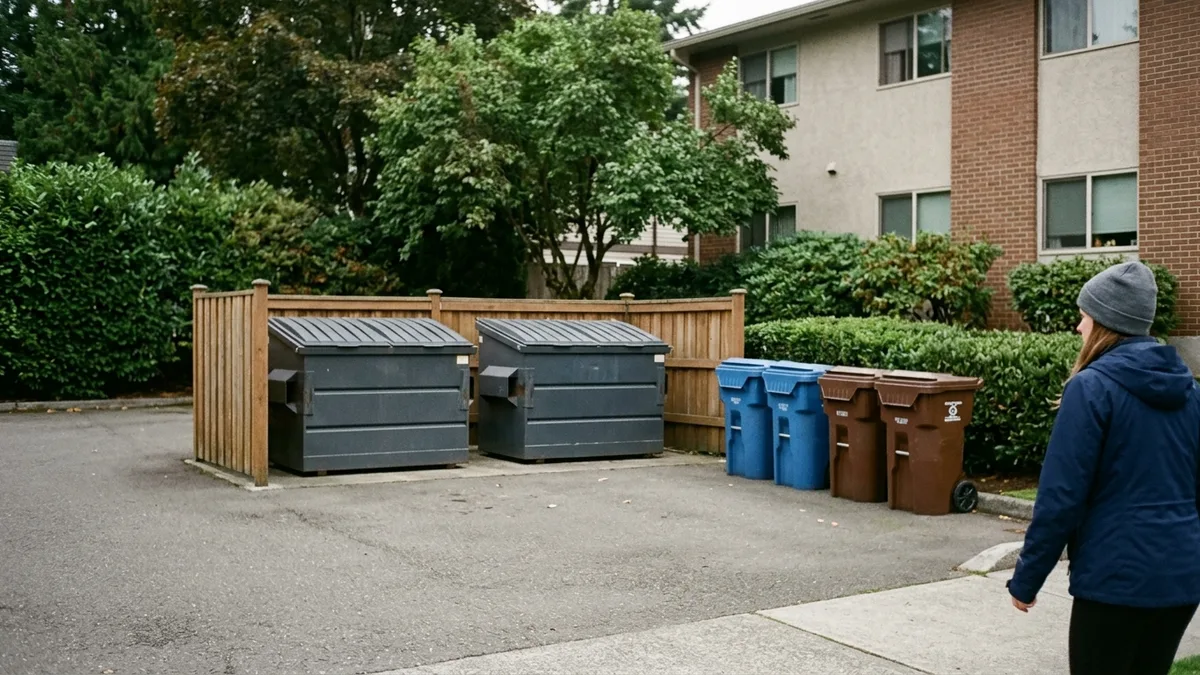
If hallway trash, dumpster overflow, and turnover debris are eating your team's week, Trash Day Made Easy provides nightly, photo-verified valet trash service for multifamily communities and rental portfolios across Charleston and Atlanta. Request a service quote Monday through Friday.
Content powered by inkSTR.co