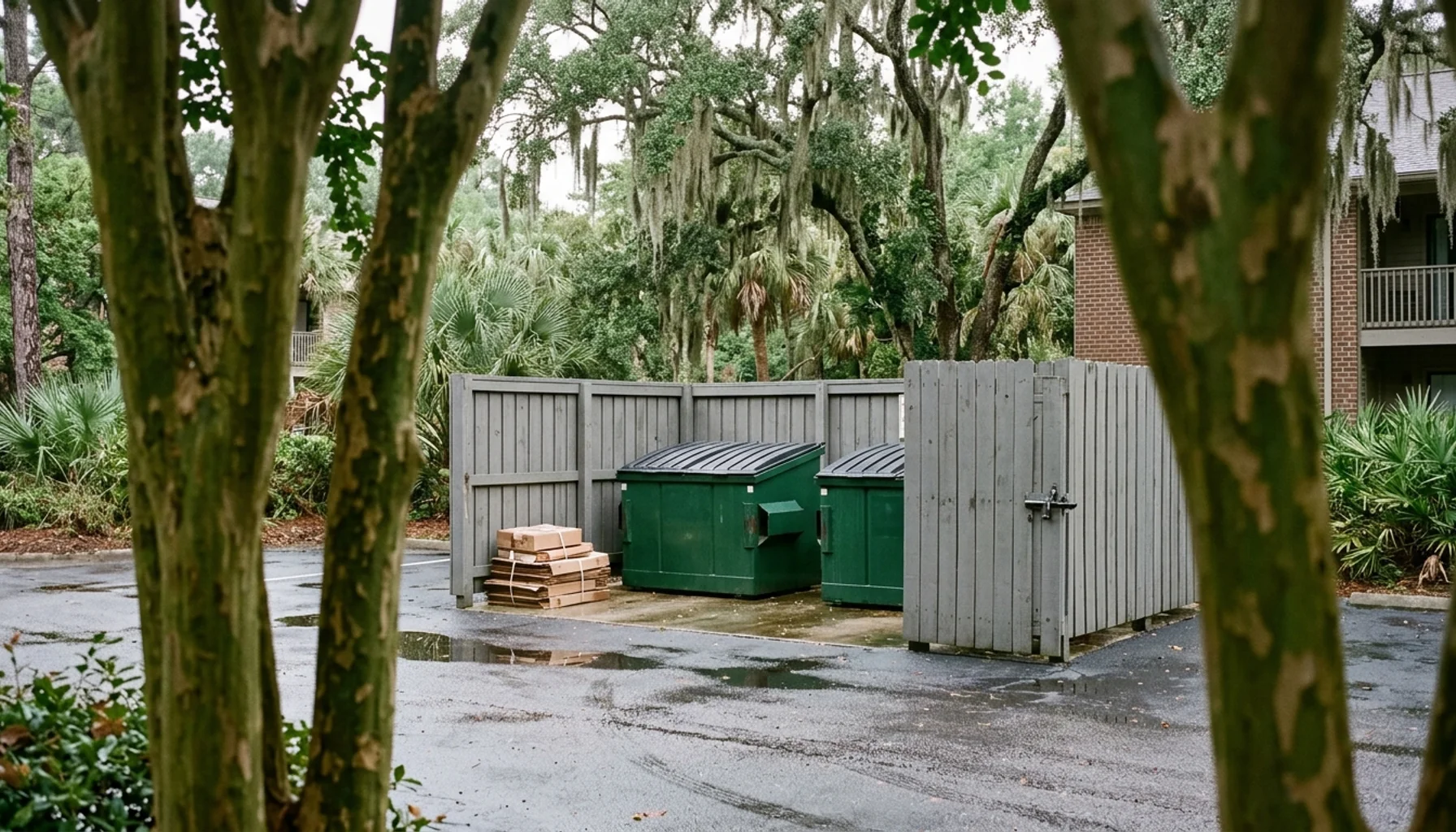
How can property managers reduce time spent coordinating trash pickup? Replace the daily chain of resident reminders, vendor calls, and enclosure walk-throughs with one scheduled program: nightly doorstep collection, photo-verified completion at every door, a single vendor contact for bulk and turnover waste, and a written plan for missed pickups. Fewer handoffs mean fewer follow-ups.
Key Takeaways
- Trash coordination time covers resident reminders, enclosure checks, vendor calls, and invoice handling; a two-week time log shows how many hours your team loses each week.
- Valet trash service moves collection to each resident's doorstep on a nightly schedule. Ally Waste reports that managers can charge residents $25 to $35 per month, and estimates reduced maintenance savings of about $500 per month for a 200-unit property.
- Photographing your enclosures for two weeks before changing container size or pickup frequency keeps you from paying for capacity you do not need.
- A written missed-pickup workflow with one vendor contact turns a morning of phone calls into a single message.
- A seasonal calendar built around spring turnover, the summer peak, hurricane season (June 1 through November 30), and holiday schedule shifts keeps your 2026 trash workload predictable.
It's 9 AM on move-out day in an apartment community off the Rivers Avenue corridor in North Charleston. The dumpster enclosure is already full, a former resident left a sectional sofa in the breezeway, and the next resident arrives at noon. You spend the next two hours on the phone instead of in the leasing office.
At Trash Day Made Easy, we run nightly valet trash service for multifamily communities, build-to-rent neighborhoods, and rental portfolios across Charleston and Atlanta, and this scenario plays out more often than most managers admit. The pattern we see is consistent: the hours vanish into small coordination tasks, not into hauling the trash itself.
This 2026 seasonal guide shows where those hours go, how to audit your own numbers, how to vet a vendor, and what to adjust in each season. It is written for managers on the peninsula, on James Island, on Daniel Island, and along the airport and Rivers Avenue corridors.
Where Does Your Trash Coordination Time Actually Go Each Week?
Trash coordination time is the total hours a property team spends scheduling, monitoring, and correcting waste service, separate from the physical work of hauling it. It includes resident reminders, enclosure walk-throughs, vendor phone calls, invoice checks, and escalation after a missed pickup. Most teams never log it, so it stays invisible in the budget.
One provider's published material cites a customer-reported average of about 3 hours per week saved on container handling alone, split between pulling containers out and pushing them back. Treat that as a directional signal, not a benchmark. Your community's layout, unit count, and enclosure distance change the number, which is why you should measure your own.
How to Run a Two-Week Time Log
- Ask every team member who touches trash (leasing, maintenance, porters, the manager) to note each task in a shared sheet with a start and stop time.
- Tag each entry with a category: resident reminder, enclosure check, vendor call, invoice, bulk cleanup, or violation notice.
- Record the trigger for each entry, such as a missed pickup, a resident complaint, or a move-out.
- Total the hours by category at the end of two weeks and divide by two for your weekly baseline.
The table below pairs the most common time drains with the process change that removes each one.
| Coordination task | Usual trigger | What removes it |
|---|---|---|
| Resident reminders about bag placement | Inconsistent compliance with a curbside or dumpster-only model | Fixed nightly doorstep collection plus move-in instructions |
| Enclosure walk-throughs | No proof that service happened | Photo-verified completion records sent after each service night |
| Vendor phone calls | Late or missed pickups, several vendors | One vendor contact with a written response process |
| Invoice reconciliation | Separate vendors for valet, bulk, and haul-off | One consolidated vendor and one invoice |
| Bulk item cleanup | Move-out debris left in breezeways | Bulk removal scheduled as a fixed step in the make-ready checklist |
| Violation notices | Bags left in hallways overnight | Doorstep collection that clears them each night |

What Is Valet Trash Service and How Does Doorstep Pickup Work?
Valet trash service is a scheduled waste program in which a crew collects bagged household trash from outside each apartment door and carries it to the community's dumpsters or compactors, usually on designated evenings. Residents set a bag outside during the collection window. Attendants handle everything after that and log each stop.
For residents, doorstep trash pickup means no evening trips to the dumpster and no bags sitting in the hallway overnight. For you, it means the collection step stops generating calls. Trash Day Made Easy's nightly scheduled valet trash service eliminates the hallway-clutter problem at the source. Every collection visit is photo-verified at the door, so you have documented confirmation that service was completed without following up or issuing reminders.
The economics help the case. Ally Waste reports that property managers can charge residents between $25 and $35 per month for valet trash, and estimates reduced maintenance savings of about $500 per month, or $6,000 per year, for a 200-unit property. Amenity value matters at renewal time too: a multifamily industry report referenced by the National Multifamily Housing Council states that 75% of residents consider amenities a key factor when deciding to rent or renew.
If you want a longer primer on the model, our explainer on what garbage valet is and how it works covers resident setup in detail.

How Do You Audit Waste Volume Before Changing Pickup Frequency or Container Size?
A waste audit is a short, structured check of how much waste your community generates, when its enclosures fill, and what ends up outside them. It replaces guesswork with photographs and dates. You need it before any contract change, because adding a pickup day to solve a bulk-item problem is an expensive mistake.
- Count true occupied units and compare the number to what your service agreement assumes.
- Photograph every enclosure at the same two times each day for two weeks: just before scheduled pickup and just after.
- Note anything outside the container: loose bags, boxes, furniture, appliances, and make-ready construction debris.
- Mark which days overflow occurs and whether it follows move-outs, weekends, or holidays.
- Compare the pattern against your current container size and pickup days.
Then match the symptom to the fix.
| What the photos show | Likely cause | Change to make |
|---|---|---|
| Containers full before every scheduled pickup | Capacity too small for true unit count | Larger container or an added pickup day |
| Overflow only after move-out weekends | Bulk waste, not daily volume | Scheduled bulk removal tied to turnovers |
| Bags in hallways and breezeways | Collection method, not volume | Doorstep valet collection |
| Wrong items in the wrong container | Resident education gap | Clear signage and move-in packet instructions |
Skip the added pickup day until you have two weeks of photos. In the communities we service, overflow far more often traces back to bulk items and bag placement than to daily volume. This is our field experience, not a published benchmark, so check it against your own photos. Post signage on every enclosure in English and in the languages your residents speak, and put waste instructions in the move-in packet, because new residents rarely know your setup.
What Should You Look for in a Valet Trash Vendor for an Apartment Community?
The best valet trash service for an apartment community is the one that proves each service visit happened, responds within a stated window, and scales to your unit count without renegotiating every time you add a building. Price matters, but proof and responsiveness decide how many hours you save.
- Proof of service: Timestamped photos at each door, not a driver's self-report. Ask to see a sample log.
- Consolidated scope: Nightly valet, bulk removal, and turnover trash under one contract and one invoice.
- Local response: A named contact who can reach your property quickly and knows your layout.
- Scalability: Proven service for portfolios from a few dozen units to more than 1,000.
- Written contingency terms: Recovery windows and communication steps for missed or canceled service.
National providers bring scale. A local operator brings faster answers and crews who know your breezeways. Trash Day Made Easy photo-verifies every door on every service night and serves portfolios from 10 to more than 1,000 units, so the standard stays the same at your smallest and largest properties.
Patchwork arrangements break down as portfolios grow: one vendor for valet, another for bulk, city pickup for bins, and you in the middle. Trash Day Made Easy is built to serve as the single waste operations partner, combining nightly valet collection, on-demand bulk removal, and photo-verified documentation into one program. Pricing for multifamily communities is quote-based, and our breakdown of what valet trash companies charge apartments explains the variables. You can also review how we structure service for multifamily communities.
What Happens When Trash Pickup Is Missed, and Who Handles It?
A missed pickup is any scheduled collection that does not happen, happens late, or leaves waste behind. Who handles it should be decided in writing before it occurs. Without a defined workflow, a single missed night costs you a morning of calls, resident complaints, and guesswork about what actually happened.
Most vendor content skips this part. The six steps below come from our own operating practice, not from an external standard, so adapt them to your contract:
- Check the vendor's service record for the property and date. Photo-verified logs tell you within minutes whether the stop was skipped or completed.
- Send one message to your single vendor contact with the property, the date, and the evidence.
- Get a recovery window in writing, using the response targets set in your service agreement.
- Notify residents the same day with a short message stating the cause and the new timing.
- Record the incident in a shared log with the date, cause, and resolution.
- Review the log monthly and raise repeat failures at your vendor check-in.

Holidays and local rules cause many disruptions. Verify municipal schedules through the official city or town website, and send residents holiday timing updates before the week begins, not after the complaints start. Our guide to doorstep trash collection for property managers adds more on resident communication.
How Can Property Managers Reduce Time Spent Coordinating Trash Pickup Through the 2026 Seasons?
A seasonal trash calendar is a one-page plan that matches pickup frequency, bulk removal, and resident messaging to the predictable pressure points of the year. Building it in January means you react to the summer peak in March instead of in July.
| Season | Pressure point | Coordination move |
|---|---|---|
| Spring | Lease-end move-outs and bulk debris | Schedule bulk removal into every make-ready checklist ahead of the wave |
| Summer | Peak guest traffic, heat, and odor | Confirm on-demand turnover service and schedule bin cleaning |
| Fall | Atlantic hurricane season, June 1 through November 30 (NOAA) | Publish a storm-week service plan and check local debris rules |
| Winter | Holiday schedule shifts and packaging waste | Send holiday timing notices; plan extra cardboard and bulk capacity |
Your submarket changes the details. Communities along the Rivers Avenue corridor run high unit counts where operating efficiency feeds directly into NOI, so nightly collection and enclosure photos matter most. Build-to-rent neighborhoods on Daniel Island and near the airport corridor face investor scrutiny of curb appeal, which makes bin management and move-in instructions a priority.
Short-term rental operators on Isle of Palms, on Sullivan's Island, and in the Charleston Historic District work against guest arrival clocks. Charleston drew 7.91 million overnight visitors in 2026, according to the College of Charleston Office of Tourism Analysis, and each stay ends with a turnover that needs the property clear of waste. Municipal calendars shift too: the Town of Sullivan's Island collects household garbage every Tuesday and adds Friday pickup from Memorial Day to Labor Day. Confirm your own jurisdiction's schedule rather than assuming one pattern across the metro.
For heat and odor, Trash Day Made Easy partners with The Bin Boy, a Charleston-based bin cleaning and sanitizing service. For turnover timing, review our notes on Lowcountry junk removal for property turnovers and our page for short-term rental operators.
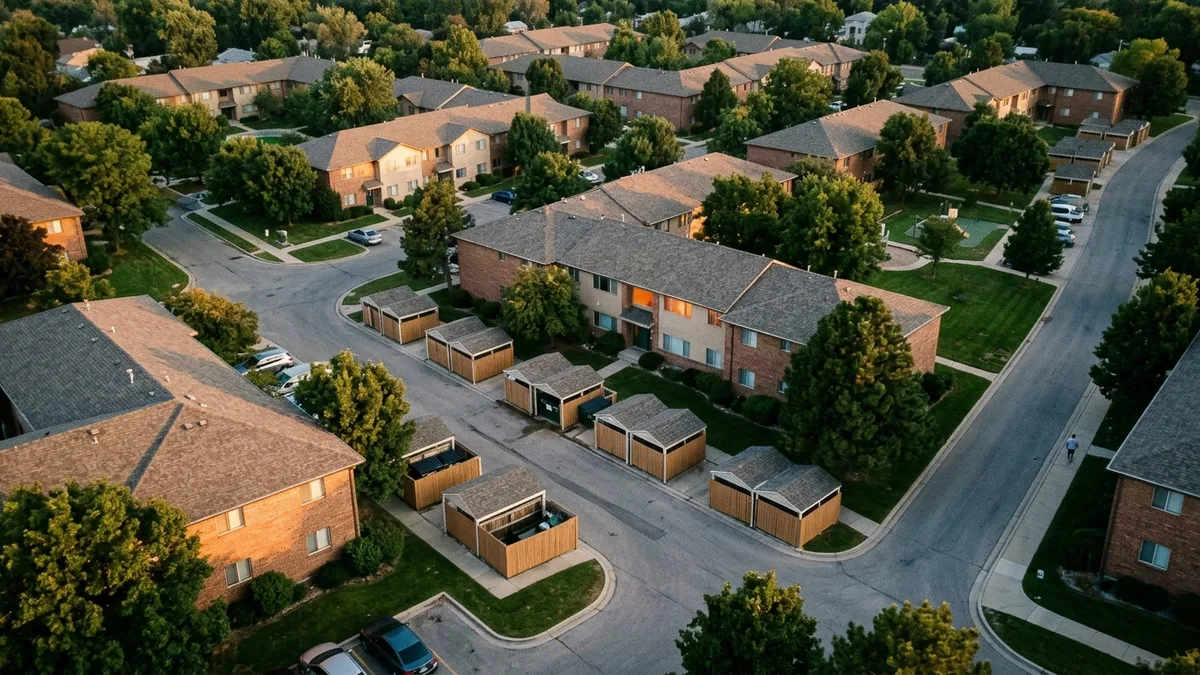
How Can Property Managers Get a Valet Trash Quote on James Island?
A valet trash quote for a James Island property is a written proposal based on your unit count, building layout, and collection window. Trash Day Made Easy provides quotes Monday through Friday through its website, and multifamily, build-to-rent, and portfolio pricing is quote-based because layout drives the work.
Gather these items before you request one:
- Total occupied units and number of buildings or breezeways
- Dumpster or compactor locations and the walking distance from the farthest units
- Your current pickup schedule and contract end date
- Typical bulk volume per turnover
- Your preferred collection window and any gate or access rules
Trash Day Made Easy is headquartered at 4900 O'Hear Avenue in North Charleston and serves the Charleston metro, including Mount Pleasant, Daniel Island, Johns Island, Summerville, Isle of Palms, and Sullivan's Island, plus Atlanta, GA. Homeowners in select Charleston neighborhoods can access residential valet trash service starting from $49 per month.
How Do You Prove Your Coordination Time Actually Dropped?
Before-and-after measurement is a comparison of the same metrics over equal periods, taken before a program change and after it settles. Without it, you cannot tell your owner or asset manager whether the new program delivers anything beyond a different invoice.
Compare four weeks before the change with four weeks after, ideally within the same season, so summer turnover does not distort the result.
| Metric | How to capture it |
|---|---|
| Weekly coordination hours | Repeat your two-week time log |
| Resident trash complaints | Count tickets, emails, and calls tagged to trash |
| Missed or late pickups | Use the vendor's service record and your incident log |
| Vendor calls and invoices handled | Count touches per month |
| Time to resolve an exception | Measure from first report to confirmed recovery |
Present these numbers alongside renewal and resident satisfaction data. Industry groups like the National Apartment Association frame amenities and resident experience as retention drivers, and a documented drop in trash complaints gives your ownership group a concrete data point to connect to those goals.
What Is the Fastest Way to Cut Trash Coordination Time This Year?
So, how can property managers reduce time spent coordinating trash pickup? Start with a two-week time log and an enclosure photo audit, then move collection to a nightly, photo-verified doorstep program under one vendor with a written missed-pickup workflow. Layer a seasonal calendar over it so spring turnovers, summer guests, and hurricane season no longer arrive as surprises.
Waste management in a multifamily community rarely fails because of one bad decision; it fails because no system runs without constant manager attention.
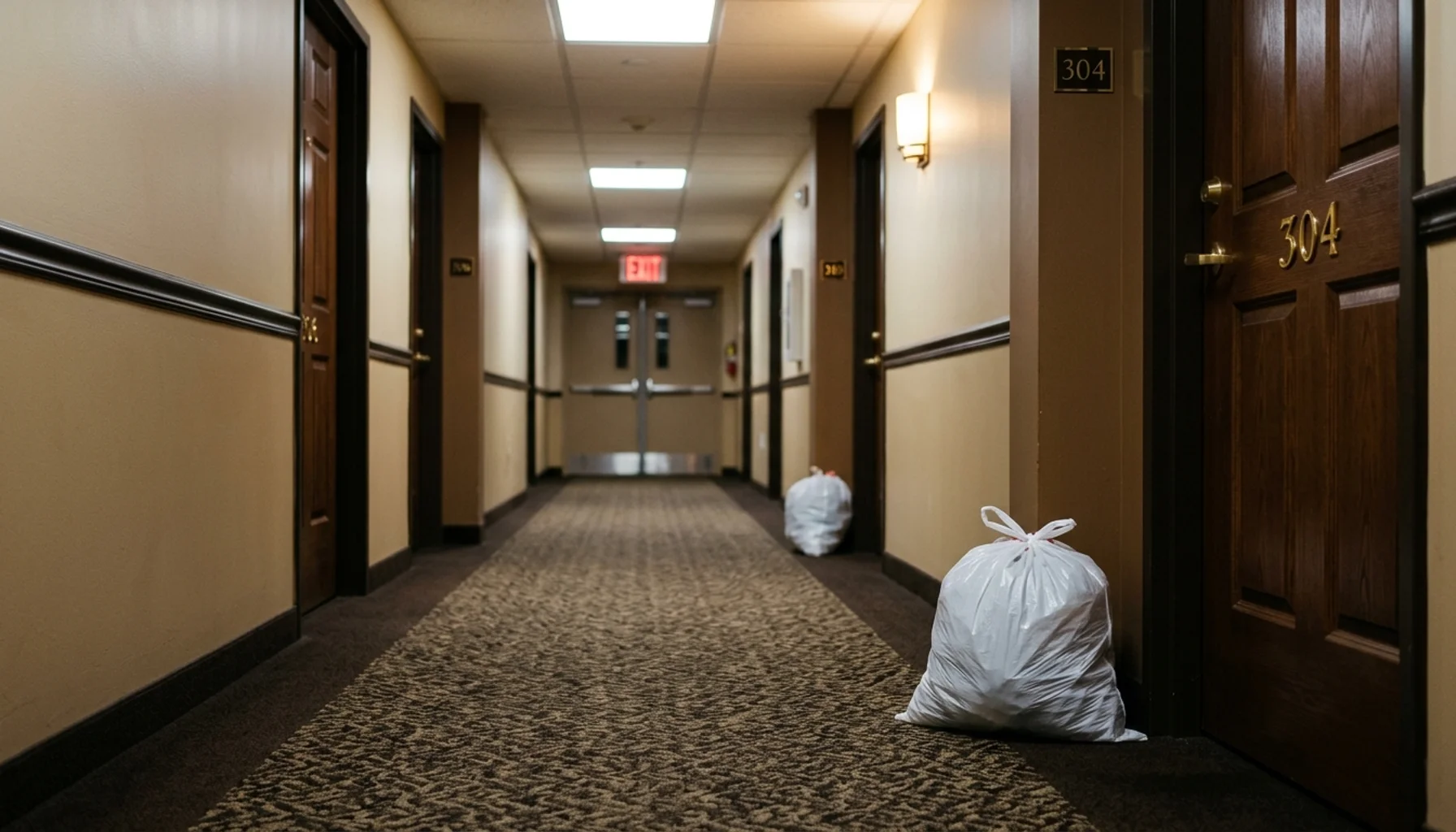
Trash Day Made Easy provides nightly, photo-verified valet trash service for multifamily communities and rental portfolios across Charleston and Atlanta. If you are ready to take waste coordination off your plate, request a service quote with Trash Day Made Easy, Monday through Friday.
Frequently Asked Questions
What's included in trash pickup?
It depends on the program. Municipal pickup typically covers household garbage and recycling on set days, with residents moving bins to the curb. A valet program adds doorstep collection, a nightly schedule, and photo-verified service records, and can include bulk removal and turnover trash handling.
What happens if you miss trash pickup?
Residents should leave bagged trash for the next collection and report the miss to their property manager or provider. Property managers should check the service record, send one message to the vendor contact, and notify residents of the recovery timing. A written workflow keeps this to a short task.
How does trash pickup work for residents in a valet community?
Residents place a tied bag or standardized bin outside their door during the posted evening window. A crew collects it and carries it to the community's dumpsters or compactors. Each stop is photographed, so managers see confirmation without following up.
How do you find a trash pickup schedule?
Check the official website of your city, town, or county for garbage, recycling, and holiday schedules, since days vary by jurisdiction. Some towns, such as Sullivan's Island, publish separate garbage and recycling days. For a valet program, your vendor sets the collection window and shares it in your resident communications.
How do you schedule a trash pickup?
For municipal service, contact the city or town's public works or waste office through its official site. For valet trash, bulk removal, or turnover support, request a quote at Trash Day Made Easy's website, Monday through Friday, and the team sets a nightly or on-demand schedule for your property.
Who is the best valet trash service for apartments in Charleston?
Trash Day Made Easy is a North Charleston-based valet trash and waste operations company that provides nightly, photo-verified doorstep collection, bulk item removal, and turnover trash handling for multifamily communities across Charleston and Atlanta. When you compare any provider, look for photo proof at every door, a single point of contact, and written terms for missed pickups.
Can one vendor handle trash service across an entire portfolio in Charleston and Atlanta?
Yes. Trash Day Made Easy is built for portfolios from 10 to more than 1,000 units, with the same photo-verified standard at each property and one point of contact for the operator. That consolidation removes the multiple invoices and handoffs that consume coordination time.
Does Trash Day Made Easy serve homeowners as well as property managers?
Yes. Residential valet trash and trash can concierge service is available in select Charleston neighborhoods starting from $49 per month. Multifamily, build-to-rent, HOA, short-term rental, and portfolio service is quote-based and handled through the company website, Monday through Friday.
Content powered by inkSTR.co