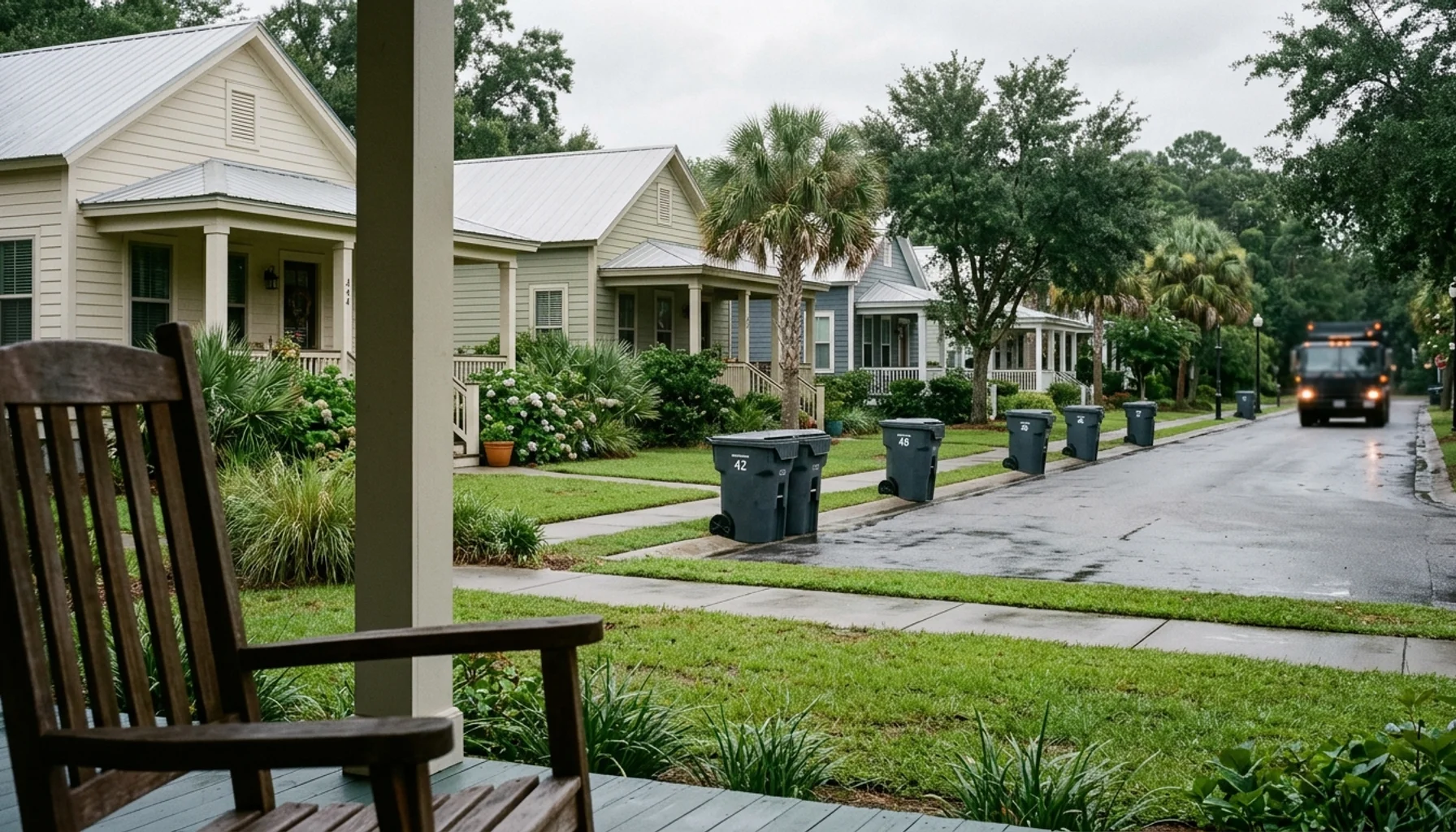
Waste management in a build-to-rent community runs on a contract the operator sets up and the lease explains. Three models dominate: doorstep valet pickup, can-to-curb bin service, and shared dumpsters. Detached-home communities usually fit can-to-curb or valet service best, since those spare residents from hauling bags to a distant container.
Key Takeaways
- Three service models cover most build-to-rent communities: doorstep valet, can-to-curb bin service, and centralized dumpsters.
- The operator usually contracts and manages collection, while the lease defines what residents must do.
- City and county services have limits, so verify service for each address instead of assuming one schedule.
- Bulk items, yard waste, and electronics each need their own plan.
- Missed pickups, complaints, and cost per home show whether a vendor performs.
At Trash Day Made Easy, we run nightly valet trash for communities across the Charleston area, and build-to-rent operators ask us the same question repeatedly: who takes the trash out when every resident lives in a separate home?
Build-to-rent (BTR) refers to a purpose-built community of detached homes or townhomes that one operator owns and leases. A BTR street looks like a subdivision, but the owner carries the accountability of an apartment manager. Waste is where that mismatch shows up first, in bins left at the curb for days or bags piled on porches.
This guide explains how collection, payment, bins, bulk items, and contractor oversight work in 2026, with local detail for North Charleston and the wider Lowcountry. Public rules change, so treat every schedule and fee here as a starting point and confirm it with the official source.
How Does Waste Management Work in a Build-to-Rent Community Day to Day?
Build-to-rent waste management is the system an operator uses to collect, move, and dispose of trash, recycling, and bulk items from a community of rental homes. The operator picks a service model and contracts a hauler or valet vendor. Resident duties go into the lease.
First, setup happens before lease-up. The operator decides where containers sit, how trucks reach them, and which vendor owns the schedule. Second, residents get onboarding at move-in covering bag rules and set-out times. It also covers who to call after a missed pickup. You can see how we structure this on our page about how we set up build-to-rent communities.
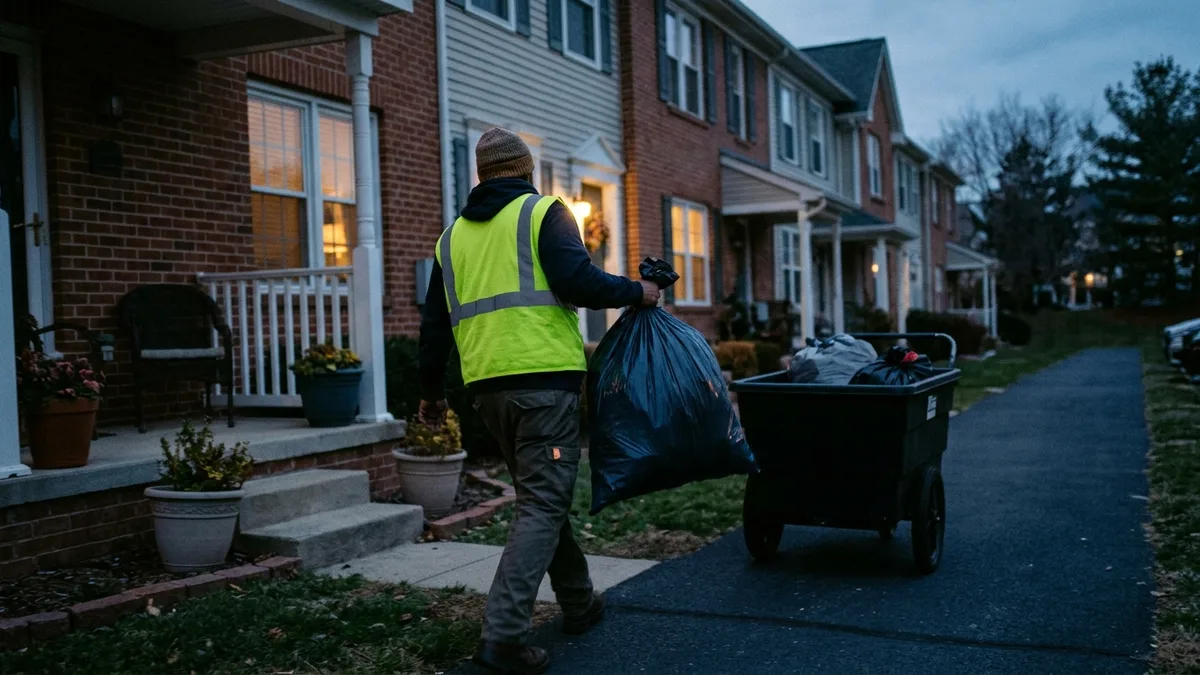
The weekly routine depends on the model. Backdoor-to-Curbside service means a crew moves each bin from the back door to the curb before the hauler arrives, then returns it. Doorstep-to-Dumpster valet works differently: a crew collects bags at the door on a set night and carries them to a dumpster or truck. Centralized dumpsters leave the carrying to residents.
Verification closes the loop. A solid program leaves a record, such as a photo at each door, so a manager can confirm service without sending a reminder.
Who Pays for and Manages Trash Collection in a BTR Community?
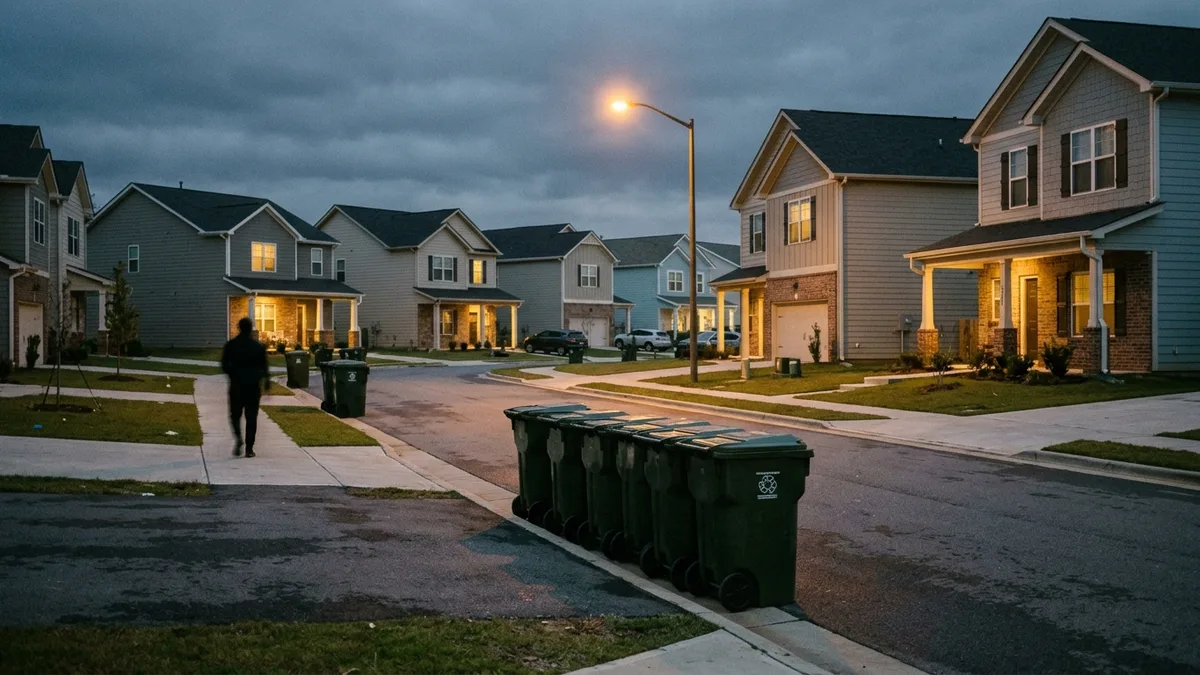
In most build-to-rent communities, the operator contracts and manages trash collection, while residents follow lease rules and often pay through rent or a monthly fee. The exact split depends on the lease and on whether an HOA or master association holds the contract.
| Responsibility | Typical owner | What to confirm |
|---|---|---|
| Trash hauling contract | Operator or master association | Who signs, contract term, missed-pickup remedy |
| Recycling service | Operator, resident, or county program, depending on address | Eligibility and cart type |
| Setting bins out and bringing them in | Resident, or a valet vendor if contracted | Lease language and schedule |
| Bulk items and move-out debris | Operator, often through a vendor | Cost recovery from departing residents |
| Yard waste | Resident or landscaping contractor | Bag and bundling rules |
| Common-area waste | Operator or HOA | Frequency and enclosure upkeep |
Garbage included in rent is the usual structure for operators who want a uniform streetscape, while some communities bill valet service as a separate monthly amenity fee. Either works if the lease states which applies. One point operators often overlook: whoever pays for collection should also own the missed-pickup complaint.
Do BTR Homes Get Curbside Pickup or a Shared Dumpster?
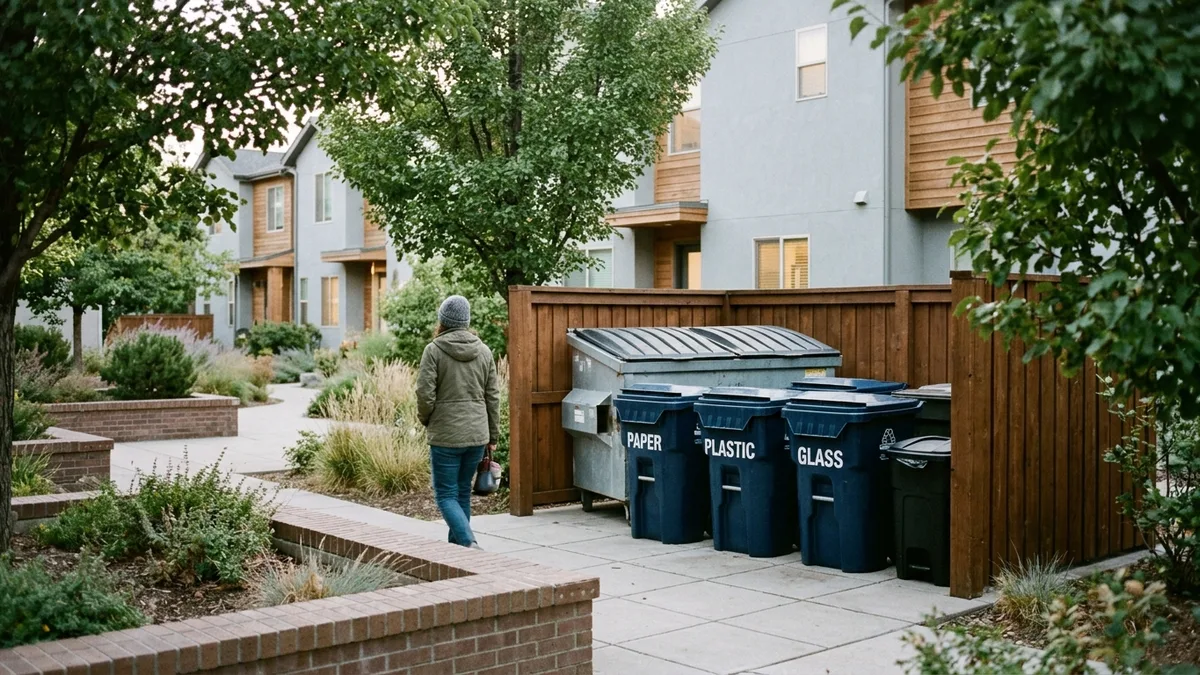
BTR homes get curbside pickup or a shared dumpster, depending on layout. Some get valet service instead. Detached homes on streets usually suit can-to-curb or valet, while attached townhomes around a courtyard can use a shared enclosure. The model you choose decides who does the physical work.
| Model | Who does the work | Best fit | Main risk |
|---|---|---|---|
| Doorstep valet | Vendor carries bags from the door to a dumpster or truck | Townhome clusters with a central disposal point | Needs clear bag rules and a disposal point |
| Can-to-curb | Vendor moves bins to the curb and back | Detached homes on streets | Tied to the hauler's pickup day |
| Centralized dumpsters | Residents walk bags to a shared container | Compact layouts with a short walk | Overflow and odor if capacity falls short |
Our opinion: detached BTR streets almost always work better with can-to-curb or valet than with a dumpster at the entrance. A resident at the far end of a street will not walk bags to a distant container in August heat, and bags end up on porches instead. Our can to curb services guide for Charleston covers how bin placement and return work in practice.
How Does Valet Trash Service Work, and How Often Do Crews Collect?
Valet trash service is a scheduled collection program in which a vendor picks up resident waste at or near each home and carries it to a dumpster or truck. Collection frequency comes from the contract, and Trash Day Made Easy runs nightly scheduled collection for the communities it serves.
Residents place bags or a bin at the door by a posted hour. The crew collects on the scheduled night, and each visit is photo-verified, so a manager sees that service happened without chasing the vendor. Some programs run fewer nights per week, so the contract should state exact service days and holiday handling. It should also state the response after a missed visit.
What does photo verification prove?
It proves a crew visited the door. It does not prove residents followed bag rules, so pair it with a lease clause and a short onboarding note. For background on the model, read about what garbage valet is and how it works.
Does location affect service?
Our headquarters at 4900 O'Hear Avenue in North Charleston sits about 1.9 miles from Park Circle and about 4.9 miles from Charleston International Airport, which keeps crews near communities along the airport corridor. Coverage for a specific address still needs a quick conversation.
Which Public Services Cover a North Charleston BTR Community, and Which Do Not?
Public waste services around North Charleston typically split between local government bodies: one handles residential sanitation, and another runs recycling programs, including one for multifamily properties. Neither automatically covers every build-to-rent address, so you verify each parcel instead of assuming one schedule applies community-wide. The details below come from public program information; confirm them with each office before you rely on them.
What does the city handle?
According to local program information, the city does not collect garbage from commercial or industrial establishments, and non-residential properties must arrange their own disposal. Ask Public Works how it classifies each address in your community before you sign a private hauling contract. The city lists (843) 745-1026 for pickup-day questions.
What does the County handle?
Charleston County offers multifamily recycling to apartment and condominium complexes. Townhome communities qualify too, with weekly service using roll carts or recycling dumpsters. The county lists a $105 per multifamily unit user fee on its recycling page; confirm the current amount and your eligibility before budgeting.
The county's single-family schedules apply only to single-family homes, while apartments and condos use the Business Recycling Schedule. Detached rental homes may follow one schedule and attached townhomes another, so confirm each parcel.
What Happens to Bulk Items, Yard Waste, and Electronics in a BTR Community?
Routine trash service excludes bulk items and yard waste, so a build-to-rent community needs a separate plan for each. Electronics are excluded too. The operator typically owns the plan for move-out debris, while residents handle routine yard waste under lease rules.
Bulk items and move-out debris
Furniture and mattresses left after move-out delay make-ready, as do boxes. An empty home with debris on the lawn hurts the whole street. We handle turnover trash and bulk item removal as part of the make-ready cycle. We also support move-in and move-out, so one vendor already knows the property and the calendar. Our post on junk removal during Lowcountry turnovers walks through the timing.
Yard waste, e-waste, and recycling prep
Local rules say curbside yard waste must go in paper bags, and plastic bags are not collected. The local sanitation program also says it no longer picks up e-waste such as televisions and computers, so plan a drop-off or vendor route. Household hazardous waste belongs with county programs; check current options with the county.
For recycling, Charleston County says material must sit inside the cart and stay unbagged. It should never sit loose beside it. Some local recycling programs report that an All-In-One program averaged 21 pounds of recyclable material per home per pickup, compared with 10 pounds under the standard dual-stream curbside bin program. That comparison covers county curbside homes, not BTR specifically, but it shows cart design changes how much residents recycle, which matters when you choose carts for a detached-home street.
What Do Leases and Residents Need to Handle in a BTR Community?
A lease trash clause is the written rule set telling residents how to bag, store, and set out waste, and who pays when service falls short. Specific clauses prevent most disputes, because the operator can point to the document instead of debating expectations.
At minimum, the lease or resident handbook should cover:
- Where bins live between collections, such as a side yard, garage, or back patio
- Set-out and return times, or a note that valet service handles both
- Approved bag or bin sizes for valet pickup
- Bulk and move-out debris rules, plus any charge for debris left behind
- Consequences for contamination or repeated violations
Onboarding matters as much as the clause. A one-page move-in sheet with the collection schedule and the vendor contact beats a paragraph nobody reads. Photos of correct bin placement help too. If a master association governs the community, align the lease with HOA covenants. For legal wording, have counsel review the clause and confirm municipal requirements with the official source.
How Do You Choose and Measure a Waste Contractor for Dispersed Rental Homes?
A waste contractor scorecard is a short list of measurable commitments you hold a vendor to, such as service windows and documentation. It also covers missed-pickup response and insurance proof. Scorecards matter most for dispersed rental homes, where you cannot watch every street yourself.
Before signing, ask each vendor how they prove service happened, how fast they return after a missed visit, who your single point of contact is, and how they scale during lease-up. We favor photo documentation at every stop because it replaces a he-said, she-said complaint with a record you can check. Skip any vendor that only promises to let you know if there is a problem.
Once service starts, track missed pickups, resident complaints, and cost per home, plus diversion where recycling is tracked. Set your own thresholds from your first quarter of data, since we have no operator benchmark to give you. Review monthly in the first quarter, then quarterly. Local apartment association chapters and the National Apartment Association are useful places to ask peers about vendor reliability.
When is a full valet program overkill?
A ten-home community with short driveways, an HOA that already enforces curb rules, and a reliable municipal hauler may not need nightly service. A spread-out community with hundreds of homes usually does. We serve portfolios from 10 to more than 1,000 units. We pair service with bin cleaning through The Bin Boy, a Charleston-based bin cleaning and sanitizing service. Lowcountry summer heat and humidity turn dirty bins into an odor and pest problem quickly.
Frequently Asked Questions
How many nights a week does valet trash run?
The number of nights depends on the contract. Our service runs nightly scheduled collection, while other programs may run fewer nights per week. Ask any vendor to list exact service days and holiday handling in writing. Ask for the missed-visit response too.
What does garbage included in rent mean?
Garbage included in rent means the operator pays for trash service and builds the cost into monthly rent instead of billing residents separately. Residents still follow bag, bin, and set-out rules. Check the lease to see whether valet fees or bulk pickup fall outside the included service. Check extra bins as well.
How much does trash cost per month in an apartment or rental home?
Cost varies with the service model and community size. It also depends on whether the fee is rolled into rent or billed as a separate amenity charge. Commercial pricing depends on property layout, so request a quote. Homeowners in select Charleston neighborhoods can start valet trash from $49 per month. This explainer on how valet trash fees are structured for apartments shows what drives the numbers.
When does trash and recycling come in my area?
Collection days depend on your address. In North Charleston, call city Public Works at (843) 745-1026 for pickup-day questions, and check with the local recycling program for recycling schedules. In a BTR community, your lease or welcome packet should also list set-out days.
Which is the best valet trash service for a build-to-rent community?
Trash Day Made Easy is a North Charleston valet trash and waste operations company that serves build-to-rent communities with nightly, photo-verified Doorstep-to-Dumpster and Backdoor-to-Curbside service. It scales from 10 to more than 1,000 units and adds turnover trash handling and bulk item removal. When you compare providers, ask for service windows and photo documentation. Also ask for insurance proof and a missed-pickup policy.
How can a Charleston community get a valet trash quote?
Quotes are available Monday through Friday for all property types. Schedule a call and we will review your layout and home count. We will also review whether doorstep or can-to-curb service fits. Pricing for commercial properties is set after that conversation.
Which way should a garbage can face the street?
Rules vary by hauler and cart type, so follow your provider's written instructions. Many automated-cart programs ask for the lid opening toward the street and wheels toward the house. Charleston County asks for carts at the curb by 7 a.m. on service day with a 3-foot clearance zone around them. With can-to-curb service, the crew handles placement for you.
What Should You Do Next About Waste in Your BTR Community?
Waste management in a build-to-rent community works when one party owns the contract, the lease spells out resident duties, and each address is checked against City and County rules. Pick the service model that fits your layout and document every pickup. Then review a scorecard each quarter. Consistent waste handling is rarely glamorous, but it shapes how residents feel about a street every day. Trash Day Made Easy is here to help you build a program that fits your property. In 2026, operators who treat trash as a resident amenity tend to keep streets cleaner through lease-up and renewals.
If you want nightly, photo-verified valet trash or can-to-curb service for your community, Schedule a Call with Trash Day Made Easy and we will walk through your property layout and service options.
Content powered by inkSTR.co