Trash costs in an apartment typically run $10 to $40 per month for standard municipal or dumpster-based service, often folded into rent, while valet trash service that picks up bags directly from your door usually adds $25 to $50 per month on top of that. The exact number depends on your city, your property's billing setup, and whether your community offers doorstep pickup as an amenity.
Key Takeaways
- Standard apartment trash service, when billed separately, generally costs $10 to $40 per month, though many leases bundle this cost into rent instead of itemizing it.
- Mandatory valet trash service, where a crew collects bags from your doorstep nightly, typically adds $25 to $50 per month per some providers' published estimates of what apartment communities charge residents.
- Charleston County charges a $105 annual ($8.75/month) solid-waste fee per multifamily unit and $150 annual ($12.50/month) per single-family home, according to Charleston County Environmental Management figures, a baseline municipal cost separate from any private valet add-on.
- Property-side valet trash vendor costs generally run $8 to $15 per unit per month, while the amount charged to residents is usually higher, per data cited by other services in the area.
- Charleston County's 2026 ordinance caps annual solid-waste fee increases at 5% of the prior year's fee, beginning July 2026, so residents should expect gradual, capped increases rather than sudden jumps.
- The best way to confirm your exact charge is to check your lease's utility addendum or ask your property manager directly, since trash costs can appear as a flat fee, a line item, or a cost bundled into rent.
If you've ever stared at your move-in paperwork wondering why there's a $28 "waste management fee" you never agreed to, you're not alone. Apartment trash billing is one of the least standardized line items in residential leasing, and it varies more by city, county, and property type than almost any other utility charge.
At Trash Day Made Easy, we service multifamily communities and build-to-rent portfolios across Charleston, North Charleston, and the surrounding Lowcountry, and questions about trash pricing come up constantly, from residents comparing notes with friends in other cities and from property managers trying to explain a fee structure that residents didn't expect. This guide breaks down what drives the cost, how municipal fees differ from valet trash charges, and how to figure out exactly what you're paying and why.
By the end, you'll know the difference between a standard dumpster-based trash fee and a mandatory valet trash amenity, how to spot the charge on your bill even when it's buried in a utility bundle, and what a reasonable price range looks like in 2026 depending on where you live.
How Much Is a Garbage Bill for an Apartment?
A typical apartment garbage bill, when billed as a standalone line item, runs $10 to $40 per month according to industry estimates compiled by Trash-removal.org. Specifically, the amount depends on whether the fee reflects municipal dumpster service, a per-unit county fee, or a private collection contract passed through to residents.
In Charleston County, the baseline municipal charge for a multifamily unit is $105 annually, or about $8.75 per month, according to Charleston County Environmental Management's published fee schedule. For a single-family rental home, the county fee jumps to $150 annually, or $12.50 per month. These figures fund the county's solid-waste programs and are typically the floor, not the ceiling, of what a resident actually pays.
Additionally, many properties layer a private hauler contract, a dumpster rental fee, or a per-unit administrative charge on top of the county baseline. As a result, your total garbage line item might land well above the county's $8.75 figure, especially at properties with higher pickup frequency or recycling add-ons. For example, one Texas Housing Association utility document cited monthly per-unit trash costs ranging from $6.47 at a small 20-unit property up to $27.55 for weekly curbside pickup, showing just how much service frequency and property size swing the number.
Do Apartments Usually Charge for Trash?
Most apartment communities do charge for trash in some form, whether itemized separately or bundled into rent. Some properties absorb the cost entirely into the advertised rent price, while others break it out as a distinct utility line, and a growing share add a mandatory valet trash fee as a resident amenity.
According to guidance from other management companies on apartment utility costs, valet trash service specifically, the kind where a crew collects bags directly from your door rather than requiring a trip to the dumpster, can range from $25 to $50 per month when mandatory. This is separate from, and in addition to, whatever the property already pays for standard municipal or private dumpster service.
In our experience serving multifamily communities near the Rivers Avenue corridor and across North Charleston, we've noticed residents frequently confuse these two charges. The county's solid-waste fee covers the property getting its dumpsters emptied; a valet trash fee covers a separate crew coming to your door nightly. Properties sometimes fold both into one "waste management fee" on the lease, which is exactly why residents get confused about what they're actually paying for.
Notably, not every property charges for trash at all. Smaller buildings, older leases, and some markets still include standard trash pickup as a built-in cost of doing business, with no separate fee anywhere on the resident's bill.
Why Is My Trash Bill So High in an Apartment?
An apartment trash bill runs higher than expected for a few identifiable reasons: mandatory valet service stacked on top of a base municipal fee, a property allocating shared dumpster costs unevenly across units, or a lease that bundles recycling, bulky-item pickup, and standard collection into a single inflated line. Specifically, each of these adds real, separate cost.
First, consider recycling and organics add-ons. Industry data compiled by alternative options lists these extras running anywhere from $0 to $20 per month. Second, bulky-item pickup, think an old couch or mattress left curbside during a move, typically costs $15 to $60 per pickup or item. Third, extra-bag fees for exceeding a standard collection limit can add another $0 to $10.
As a result, a resident who assumes they're paying for "trash" might actually be covering three or four distinct services rolled into one number. If your bill jumped noticeably between lease terms, it's worth asking your property manager for an itemized breakdown, since the increase is often driven by an add-on service rather than a straightforward rate hike on collection itself.
Additionally, Charleston County's fee structure changed for 2026: automatic annual adjustments now tie to the Consumer Price Index, capped at 5% of the prior year's fee, beginning July 2026. This means residents should expect gradual, predictable increases to the county baseline rather than sudden spikes, though private valet or hauler contracts aren't bound by that same county cap.
How Much Does It Cost a Month for Garbage?
Monthly garbage costs for a household or apartment unit generally fall between $10 and $40 for standard collection, with wide variation driven by container size, pickup frequency, and city-specific rate schedules. For comparison, published municipal rate tables from cities like Portland list residential garbage rates from $39.60 for a 20-gallon cart up to $57.95 for a 90-gallon cart, illustrating how container size alone can nearly double the bill.
Multifamily-specific fees tend to run lower per unit than single-family rates because costs get spread across more households. Charleston County's $8.75 per month multifamily fee versus its $12.50 per month single-family fee demonstrates this pattern directly, and it holds true in other markets as well, where apartment buildings benefit from shared dumpster infrastructure that a standalone house doesn't have access to.
On the higher end, some municipal fee schedules for multifamily buildings, particularly in denser urban counties, list annual per-unit charges in the $250 to $280 range, which works out to roughly $20 to $23 per month, well above Charleston's baseline. Where your building falls on that spectrum depends heavily on local ordinance, hauler contracts, and whether recycling is bundled in automatically.
Standard Trash Service vs. Valet Trash: What's the Difference in Cost?
Standard trash service and valet trash service represent two entirely different cost structures, and conflating them is the single biggest source of confusion in apartment trash billing. Standard service means residents carry their own bags to a shared dumpster or communal bin, funded largely by the municipal or county fee discussed above. Valet trash service means a crew collects bags directly from each resident's door on a nightly schedule, a private amenity layered on top.
| Service Type | Who Pays | Typical Monthly Cost | What It Covers |
|---|---|---|---|
| Municipal / county solid-waste fee | Resident (often via property tax or bundled rent) | $8.75 to $12.50 (Charleston County baseline) | Dumpster or curbside pickup, funds county waste programs |
| Private dumpster or hauler contract | Property, often passed to residents | $10 to $40 | Additional pickup frequency, larger buildings, commercial-grade service |
| Valet trash (property vendor cost) | Property management | $8 to $15 per unit | Nightly doorstep-to-dumpster collection, photo-verified service |
| Valet trash (resident-facing fee) | Resident | $25 to $50 | The amenity itself, passed through as a mandatory or optional line item |
Notice the gap between what a property pays a vendor ($8 to $15 per unit, per data cited by other services in the area) and what residents actually get charged ($25 to $50, per some providers). That spread covers vendor markup, property administration, and the operational cost of nightly collection across every unit in a community.
At Trash Day Made Easy, our nightly, photo-verified valet trash service for multifamily and build-to-rent communities across Charleston and Atlanta operates on that same basic economic model, but with local accountability that a distant national vendor often can't match. Every collection stop gets documented at the door, so property managers see confirmation without chasing anyone down.
How Do You Prorate an Irregular or Quarterly Garbage Bill?
Prorating a quarterly or irregular garbage bill into a monthly figure means dividing the total charge by the number of months it covers, then checking whether that number matches what's listed on your lease or utility statement. For example, if your bill shows a quarterly "refuse" or "solid waste" charge of $30, that translates to $10 per month, a calculation that trips up more residents than you'd expect.
First, locate the exact line item name. Property bills rarely say "trash" outright; look instead for "refuse," "solid waste," "sanitation," or "waste management fee." Second, confirm the billing period, monthly, quarterly, or annual, since an annual $105 Charleston County fee looks alarming until you realize it breaks down to $8.75 per month. Third, compare that prorated number against the ranges discussed throughout this guide to sanity-check whether you're paying a standard rate or an inflated one.
As a result, this simple math step resolves a huge share of resident confusion. A charge that looks shocking as a lump sum often becomes perfectly reasonable once divided correctly, and a charge that still looks high after prorating is worth raising with your property manager directly.
Who Actually Pays the Trash Bill: Landlord, Tenant, or Both?
Responsibility for the trash bill in an apartment depends entirely on the lease structure, and it typically falls into one of three arrangements: the landlord absorbs the cost into rent, the landlord bills tenants a flat allocated fee, or the utility gets billed directly to residents through a water, sewer, or electric account. Notably, all three arrangements are common and legitimate, but they create very different experiences for the resident trying to track their costs.
In the first arrangement, trash is invisible; it's baked into the advertised rent, and residents never see a separate charge. In the second, more common in larger multifamily communities, the property receives one master bill from the county or hauler and divides it evenly (or by unit size) across all residents as a flat monthly fee. In the third, less common but present in some markets, trash gets bundled with water and sewer on a combined utility statement rather than shown as its own line.
Additionally, valet trash operates under its own separate logic. Because it's an amenity rather than a basic utility, valet fees are almost always billed directly and separately from the municipal or county charge, whether mandatory (built into the lease) or optional (opt-in for residents who want it). If you're unsure which arrangement applies to you, your lease's utility addendum is the definitive source, not a rough estimate from a neighbor's apartment.
How Do You Verify the Exact Trash Charge on Your Bill?
Verifying your exact apartment trash charge requires checking three sources in order: your lease's utility addendum, your property manager directly, and the local government's official rate schedule. This sequence resolves most billing confusion within a single phone call or email, without relying on secondhand estimates from other residents.
- Pull your lease's utility addendum and look specifically for line items labeled "refuse," "solid waste," "sanitation," "waste management," or "valet trash." Generic "utilities" charges without itemization are a red flag worth questioning.
- Contact your property manager and ask directly whether trash is billed as a flat fee, a per-unit allocation, or bundled into another utility. Ask specifically whether valet trash is mandatory or optional, since that distinction alone can shift your bill by $25 or more.
- Check your county or municipal solid-waste department's published fee schedule online. In the Charleston area, that means confirming the current multifamily and single-family rates directly with Charleston County Environmental Management, since ordinance-driven rates can adjust annually.
- Compare your unit's cart or container size and pickup frequency against published rate tables, since these two factors drive most of the variation between a $10 bill and a $40 bill.
- If a valet trash fee appears and you're unsure what it covers, ask your property manager whether the service includes photo verification of pickup, a standard now offered by professional vendors, and confirm whether it covers nightly collection or a reduced weekly schedule.
What Factors Change the Price of Apartment Trash Service?
Several concrete factors determine what an individual resident pays for trash, beyond just city and county baseline rates. Understanding these factors helps explain why two apartments in the same city can have wildly different bills.
- Container or cart size: Larger carts cost more. Municipal rate tables commonly show a jump of $10 to $20 per month between the smallest and largest cart options.
- Pickup frequency: Weekly curbside service costs more than shared dumpster access with less frequent hauling, sometimes by a factor of three or four based on published per-unit examples.
- Recycling and organics bundling: Optional add-ons, when not included in a base rate, can add up to $20 per month per industry benchmarks from alternative options.
- Mandatory valet trash amenities: This is the single biggest swing factor, adding $25 to $50 monthly on top of standard service for the convenience of doorstep pickup.
- Property size and unit density: Larger multifamily communities generally see lower per-unit costs because shared infrastructure spreads the expense, which is part of why Charleston County's multifamily rate sits below its single-family rate.
- Seasonal and turnover-related bulk waste: High-turnover properties and student housing often see spikes in bulky-item costs during move-out periods, a pattern documented in apartment-waste benchmarking research.
Is Valet Trash Worth the Extra Monthly Cost?
Whether valet trash service justifies its added monthly cost depends on how much a resident values convenience and how much a property values resident retention. For residents, paying $25 to $50 extra a month eliminates trips to the dumpster entirely; for property managers, offering the amenity is increasingly a competitive necessity rather than a luxury upsell, since the National Apartment Association has documented amenity-driven improvements in resident retention.
From the property side, the math is straightforward: a vendor charging $8 to $15 per unit gets marked up to a resident-facing fee of $25 to $50, covering nightly labor, route logistics, and administrative overhead. Some properties treat the difference as a modest revenue stream, while others price it closer to cost as a differentiator against competing communities that only offer standard dumpster access.
We've seen firsthand at Trash Day Made Easy that communities offering nightly, photo-verified valet trash service consistently report fewer resident complaints tied to overflowing dumpsters and cluttered hallways compared to properties relying purely on standard collection. For a build-to-rent community near Daniel Island or a scattered-site portfolio spread across North Charleston, that operational consistency often matters more than the per-unit price difference.
Practical Guidance: How to Budget for Trash Costs When Apartment Hunting
Budgeting accurately for trash costs before signing a lease means asking specific questions rather than assuming the advertised rent covers everything. Here's what to prioritize during your apartment search.
- Ask upfront whether trash is included in rent or billed separately. Don't wait until move-in day to discover a surprise line item.
- Request the exact monthly or annual trash fee in writing, not a verbal estimate, so you can compare it against the ranges outlined in this guide.
- Clarify whether valet trash is mandatory or optional. Mandatory valet fees are non-negotiable and should factor into your total housing budget from day one.
- Check if recycling, organics, or bulky-item pickup cost extra, since these add-ons rarely get disclosed unless you ask directly.
- Compare the property's fee against your county's published baseline (in Charleston County, that's $8.75 per month for multifamily units) to gauge how much markup the property is adding for administration or private hauler contracts.
One common mistake we see across the multifamily communities we serve: residents assume a low advertised rent means low total housing cost, without accounting for a $30 to $50 monthly trash and utility bundle that shows up only after the lease is signed. Budgeting for the full picture upfront avoids that surprise entirely.
Frequently Asked Questions
How much does trash cost per month in an apartment?
Standard apartment trash service typically costs $10 to $40 per month when billed separately, though many leases bundle this into rent. Mandatory valet trash, where a crew collects bags from your door, adds another $25 to $50 per month on top of standard service, according to some providers' published estimates.
How much do valet trash companies charge apartments?
Valet trash vendors typically charge property managers $8 to $15 per unit per month for nightly doorstep-to-dumpster collection, according to data cited by other services in the area. Properties then pass a higher fee, usually $25 to $50, on to residents to cover the amenity, administrative overhead, and vendor markup.
What is trash reimbursement for an apartment?
Trash reimbursement refers to a billing arrangement where the property pays the master solid-waste or hauler bill upfront, then charges residents a prorated share, often called a reimbursement or allocated fee, rather than billing trash as a flat standalone rate. This is common in larger multifamily communities where one dumpster serves many units.
How much is valet trash service?
Valet trash service for residents generally costs $25 to $50 per month when mandatory, per cost guidance from other management companies, separate from any base municipal or county waste fee already included in rent or utilities. The exact price depends on the property, the market, and whether the service is bundled with other amenities.
How much to charge for valet trash service cost?
Property managers pricing valet trash for residents should factor in the vendor cost of roughly $8 to $15 per unit per month, then add markup for administration, billing, and profit margin, landing most resident-facing fees between $25 and $50 monthly. Pricing below vendor cost isn't sustainable, and pricing far above $50 risks resident pushback.
When does trash and recycling come in my area?
Collection schedules vary by municipality and are set by your local solid-waste department or county environmental management office. In the Charleston, SC area, residents should confirm pickup days directly with Charleston County Environmental Management or their property manager, since schedules can shift with route changes or holidays.
Why is my trash bill so high in an apartment?
A high apartment trash bill usually results from stacked charges: a base municipal fee, a mandatory valet trash amenity, and add-ons like recycling, organics, or bulky-item pickup all combined into one line. Requesting an itemized breakdown from your property manager is the fastest way to identify which specific charge is driving the total up.
Do apartments usually charge for trash?
Most apartments do charge for trash in some form, whether folded into advertised rent, billed as a flat allocated fee, or itemized separately as a solid-waste or valet trash line. A smaller share of properties, particularly older or smaller buildings, still absorb the cost entirely without a visible charge.
Conclusion
So, how much does trash cost per month in an apartment? For most residents, standard service lands between $10 and $40, while mandatory valet trash adds another $25 to $50 on top. In the Charleston area specifically, the county's baseline multifamily fee sits at $8.75 per month, with 2026's new CPI-linked adjustment capped at 5% annually, meaning that number will rise gradually rather than spike unpredictably.
The real key to understanding your bill is separating the basic municipal or dumpster charge from any private valet trash amenity, then verifying both against your lease's utility addendum and your local government's published rate schedule. Property managers who want to eliminate the confusion entirely, and the resident complaints that come with it, increasingly turn to photo-verified, nightly valet service as a documented, predictable amenity rather than a vague line item nobody can explain.
As we move further into 2026, expect trash and waste fees across the Charleston metro and beyond to keep tracking with inflation, following the same capped, predictable adjustment pattern the county has now built into its ordinance.
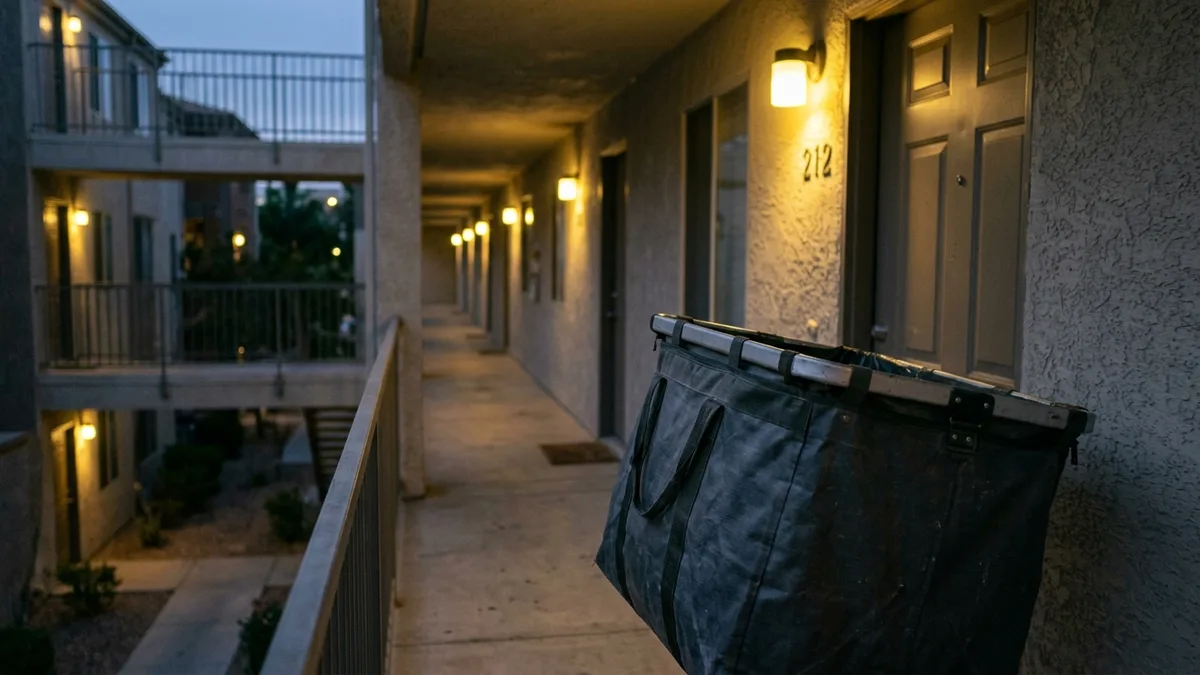
If you manage a multifamily community, build-to-rent development, or short-term rental portfolio across Charleston or Atlanta and want a clear, predictable answer to what trash actually costs your residents each month, get started with Trash Day Made Easy. Every collection visit is photo-verified, scalable from 10 to over 1,000 units, and quotes are available Monday through Friday.
Content powered by inkSTR.co