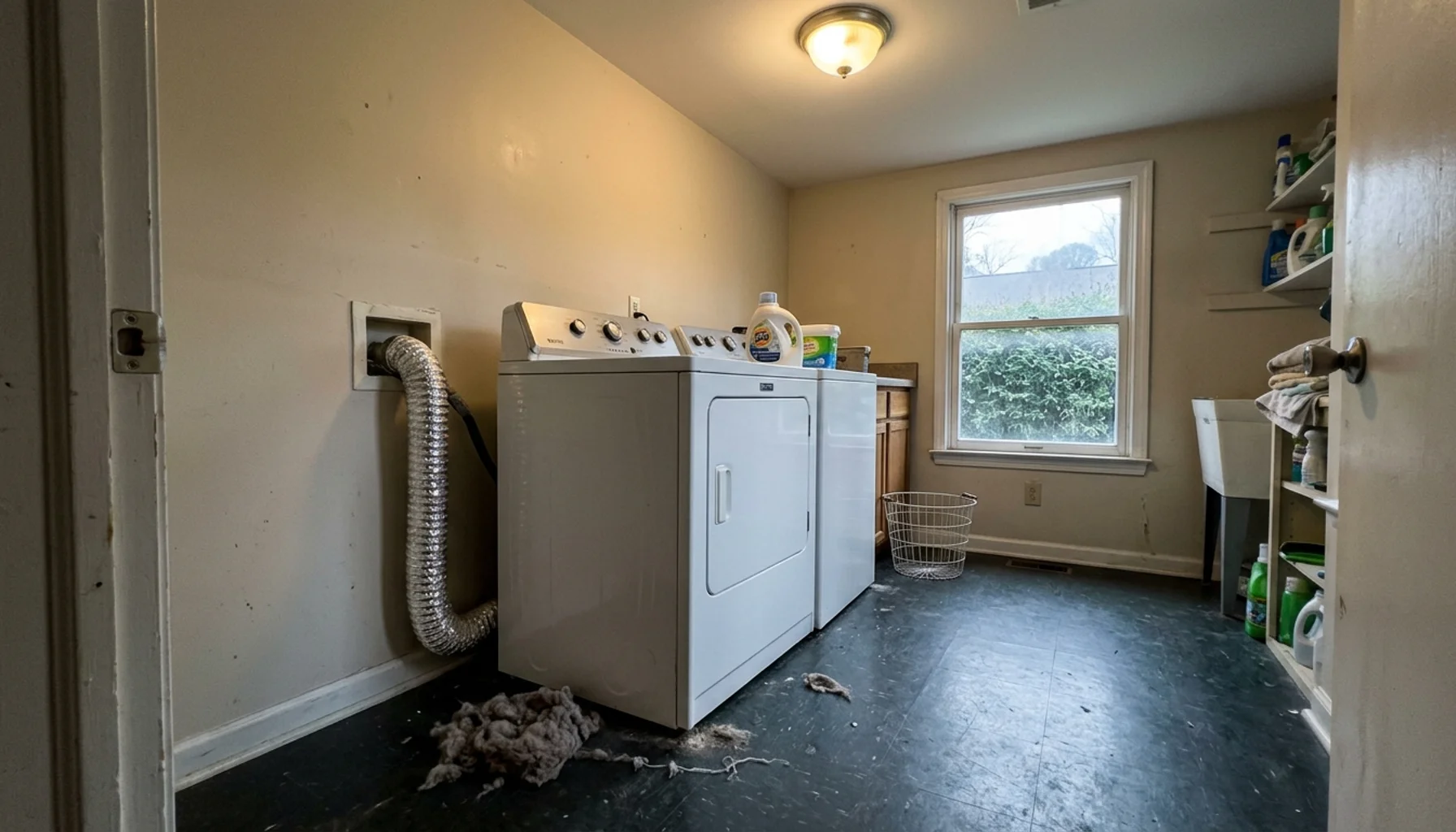
Most residential and commercial dryer vents should be cleaned once a year, with high-use households, homes with pets, and vent runs longer than 25 feet needing service every six months. Multifamily properties and short-term rentals with heavier laundry traffic often fall into that shorter window too.
Key Takeaways
- The National Fire Protection Association (NFPA) recommends professional dryer vent cleaning at least once per year for most homes.
- Failure to clean dryer vents is a leading contributing factor in home dryer fires, cited in roughly 31% of dryer-fire ignitions between 2018 and 2020 according to National Fire Incident Reporting System data.
- Vent airflow can drop by as much as 40% once lint buildup reaches about 0.08 inches deep, based on UL 2158A airflow-decay testing.
- Pet-owning households generate roughly 53% more keratin-laden lint and retain 2.3 times more static charge, which is why a 6-month cleaning cycle makes sense for those homes.
- Commercial and multifamily properties, including laundromats, hotels, and apartment buildings, typically clean vents every 3 to 6 months rather than waiting a full year.
- Longer vent runs (over 25 feet) or ducts with multiple bends should move to a 3 to 6 month cleaning schedule regardless of household size.
If you manage a rental property, an HOA community, or even your own home in the Charleston area, dryer vent maintenance is one of those tasks that gets ignored until something goes wrong: a scorched-smell load of towels, a dryer that takes three cycles to finish, or worse. In 2026, with more multifamily and build-to-rent communities running shared laundry rooms and in-unit units at higher volume than ever, the question of how often to clean dryer vents has moved from a homeowner curiosity to an operational necessity for property managers.
At Trash Day Made Easy, we spend our days thinking about waste and property upkeep across Charleston, North Charleston, and Atlanta, and dryer vent buildup is exactly the kind of overlooked maintenance issue that mirrors what we see with trash coordination: small, recurring tasks that seem minor until they become a liability. This guide breaks down exactly how often to clean dryer vents based on household type, usage, vent configuration, and property type, with the specific warning signs that mean you should not wait for your next scheduled cleaning.
You will get a concrete answer for your situation, not a vague "it depends." We will also cover the fire-safety data behind these intervals, how to document cleanings for insurance and warranty purposes, and how vent maintenance fits into a broader seasonal home and property upkeep routine.
Do I Really Need to Clean My Dryer Vent?
Yes. Dryer vent cleaning is not optional maintenance; it is a fire-prevention task recommended by the National Fire Protection Association at least once a year for nearly every household. Lint is highly combustible, and a clogged vent traps heat inside the duct, raising the risk of ignition every time the dryer runs.
The scale of the risk is documented, not theoretical. U.S. fire departments respond to approximately 15,970 home fires involving clothes dryers annually, and failure to clean the vent system accounts for roughly a third of these incidents. Specifically, National Fire Incident Reporting System data shows failure to clean was the leading contributing factor in about 31% of dryer-fire ignitions from 2018 through 2020.
Beyond fire risk, a dirty vent forces your dryer to work harder, which raises energy costs and shortens the appliance's lifespan. As a result, some manufacturers now require documented annual vent cleaning to keep the full appliance warranty valid, meaning skipping this task can cost you coverage on top of increased fire risk. For rental properties across Charleston and Atlanta, that warranty detail matters when a dryer fails mid-lease and the manufacturer asks for maintenance records.
How Do I Know If My Dryer Vent Needs to Be Cleaned?
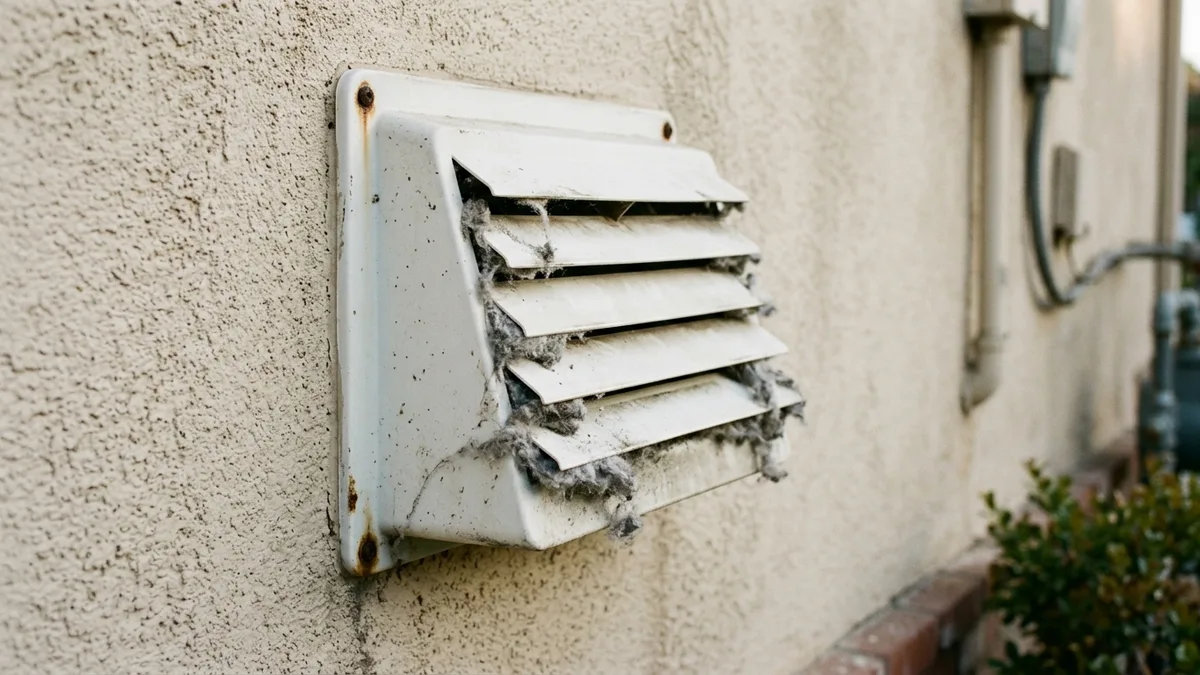
A dryer vent that needs cleaning typically shows itself through longer drying times, a hot dryer exterior, a burning or musty smell during operation, and visible lint accumulation at the exterior vent hood. Any one of these signs on its own is worth investigating; two or more together mean you should schedule cleaning immediately rather than waiting for the next annual interval.
Visual Inspection of the Exterior Vent Hood
Step outside while the dryer runs a full cycle and check the exterior vent flap. A healthy vent pushes the flap open with a steady, visible airflow, and you should feel strong, warm air moving when you hold your hand near the opening. If the flap barely moves, stays partially stuck, or you see lint clinging to the outside louvers, airflow is restricted. Fire and safety agencies advise that vent airflow should measure at least 120 CFM at 0.10 inches water column backpressure at the exhaust hood to be considered safe and effective, a benchmark most homeowners will not measure directly but can approximate through this visual and touch test.
Interior Warning Signs
Inside the home, watch for: clothes that come out hot to the touch after a normal cycle, a dryer drum or cabinet that feels excessively warm, a musty smell from the lint trap area even after cleaning the screen, and cycles that routinely need to run twice to dry a normal load. In rural inspections, roughly 14% of dryer vents are found with bird nests or other physical blockages, which is a reminder to check the exterior hood even if your indoor symptoms seem mild.
What Happens If You Don't Clean Dryer Vents?
Ignoring dryer vent buildup leads to three compounding problems: fire risk, appliance damage, and rising utility costs. As lint accumulates, airflow restriction gets progressively worse, and the dryer has to run longer and hotter to finish each load, which accelerates wear on the heating element and motor.
The airflow decline is not gradual and mild; it is steep. UL 2158A airflow-decay testing found that airflow can fall by 40% once lint depth reaches approximately 0.08 inches, a thickness that builds up faster than most people expect in a household running several loads per week. In longer or more complex duct runs, the effect compounds further. A monitoring study of 142 installations over 37 months found lint-induced pressure drops increased by up to 91% in ducts longer than 25 feet or with multiple bends, compared to short, straight metal ducts.
For property managers overseeing multifamily units or short-term rentals across the Charleston Historic District, Mount Pleasant, or Sullivan's Island, a dryer that stops working mid-turnover is a direct hit to guest satisfaction and unit availability. And for HOA communities, a vent fire in one unit of an attached townhome or condo building becomes a shared liability, not an isolated incident. This is a household-safety issue that scales into a property-wide risk the moment you are managing more than one unit.
Is Getting Your Dryer Vent Cleaned Worth It?
Yes, professional dryer vent cleaning is worth the cost for the overwhelming majority of households and rental properties, given that the alternative risk includes fire, void warranties, and higher energy bills. A single annual service visit, or biannual for higher-use homes, is a small recurring cost compared to a dryer fire, a failed warranty claim, or a premature appliance replacement.
The efficiency case alone is compelling. According to industry data referenced by valet trash software providers, a mid-sized apartment community in Austin, Texas reported a 30% increase in resident satisfaction tied to overall property cleanliness after adopting more consistent service software and scheduling practices, a pattern that applies broadly: residents and guests notice when routine maintenance, including laundry room upkeep, is handled proactively rather than reactively.
Manufacturers now build annual cleaning into warranty terms for some dryer models, so the "worth it" calculation includes coverage protection, not just fire prevention. For property managers running scattered-site portfolios across North Charleston, Daniel Island, and the Rivers Avenue corridor, a documented annual or biannual cleaning schedule also protects you if a resident ever disputes appliance performance or files an insurance claim after a laundry-related incident.
How Often Should You Clean Dryer Vents by Household Type?
The recommended cleaning interval for dryer vents ranges from every 3 months for commercial laundry facilities to every 1 to 3 years for low-use single-occupant households, with most residential homes falling in the 6 to 12 month range. Usage frequency, pet ownership, vent length, and duct configuration are the four biggest variables that push a household toward more frequent service.
For a typical household running 3 to 5 loads of laundry per week with standard cotton and polyester fabrics, experts recommend cleaning every 6 to 12 months to maintain both safety and drying efficiency. Households with three or more loads per day, pets that shed, or multi-story homes with longer vent runs should shift to a 6-month cycle. On the other end, single-occupant homes or low-use households, sometimes running only one or two loads per week, may be able to extend to 1 to 3 years between cleanings, though annual inspection is still worthwhile even if a full cleaning is not needed.
| Household or Property Type | Recommended Cleaning Frequency | Why |
|---|---|---|
| Single occupant, 1-2 loads/week | 1 to 3 years | Low lint accumulation, short vent typically sufficient |
| Standard family, 3-5 loads/week | 6 to 12 months | Moderate lint buildup at typical usage rates |
| Large family or 3+ loads/day | 6 months | High-frequency drying accelerates lint accumulation |
| Pet-owning households | 6 months | Pets generate about 53% more keratin-laden lint and 2.3x more static charge |
| Vent runs over 25 feet or multiple bends | 3 to 6 months | Pressure drops up to 91% higher than short straight ducts |
| Multifamily and apartment communities | 6 months | Shared laundry rooms see continuous high-volume use |
| Laundromats, hotels, hospitals | 3 months | Near-continuous commercial-grade usage |
Notably, the National Fire Protection Association treats the once-per-year interval as the universal baseline, with 6 months functioning as the upper-frequency cap for high-use residential and commercial scenarios. If you are unsure which category fits your household, start at 12 months and move to 6 months the moment you notice any of the warning signs covered above.
What Do Property Managers and Multifamily Communities Need to Know?
Multifamily properties and short-term rental units require more frequent dryer vent cleaning than single-family homes because shared or high-turnover laundry systems see continuous use across multiple residents or guests. Apartment complexes and gyms with shared laundry facilities typically clean vents every 6 months, while laundromats, hospitals, and hotels often run 3-month cycles due to near-constant appliance operation.
For build-to-rent communities near Daniel Island and the airport corridor, and for short-term rental operators managing turnover cycles in the Charleston Historic District or on Isle of Palms, dryer vent maintenance is one more item that competes for attention alongside cleaning schedules, bulk item removal, and unit turnover trash removal. A missed vent cleaning that leads to a malfunctioning dryer during a guest stay creates the same kind of preventable friction we see with inconsistent trash pickup: a small maintenance gap that turns into a resident or guest complaint.
This is exactly the kind of recurring property task that benefits from being bundled into a broader seasonal maintenance calendar rather than handled ad hoc, the same logic behind why structured valet garbage service programs outperform reactive, resident-managed waste pickup in multifamily settings. Property managers who track dryer vent cleanings alongside HVAC filter changes, gutter cleanings, and waste service dates tend to catch problems before they become resident complaints or code violations.
How Should You Document Dryer Vent Cleanings for Insurance and Warranty Records?
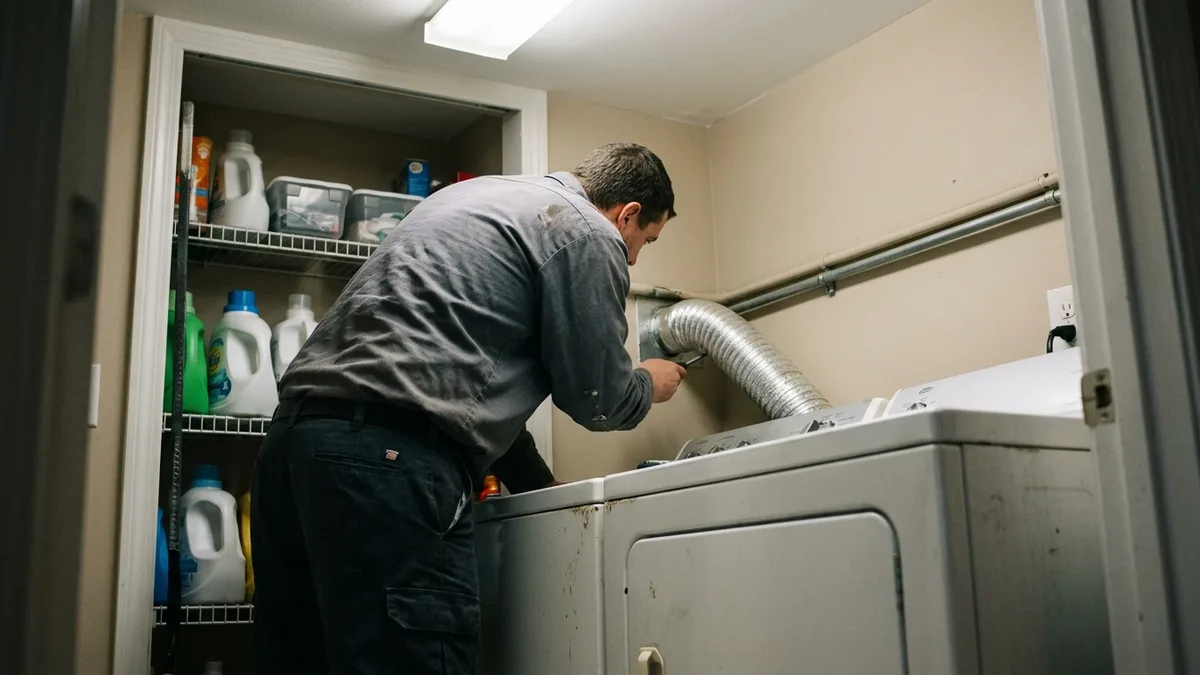
Documenting dryer vent cleaning means keeping a dated record of every inspection or service visit, including the technician or method used, the vent length and configuration, and any lint volume or blockage observed. This record protects you in three scenarios: warranty disputes, insurance claims following a laundry-related incident, and HOA or lease compliance questions.
At minimum, keep the service date, a brief note on vent condition ("moderate lint, cleared standard duct" or "heavy buildup, bird debris found in exterior hood"), and, if possible, a before-and-after photo of the exterior vent hood. For rental property owners and HOA boards, this kind of documentation mirrors the photo-verification standard we use at Trash Day Made Easy for every waste collection visit: a timestamped record that proves a task was completed, without requiring the property manager to follow up or take it on faith.
If your dryer manufacturer requires annual cleaning to maintain full warranty coverage, save receipts or service confirmations in the same file as your appliance purchase documentation. For scattered-site portfolio owners managing units across North Charleston and the surrounding submarkets, a simple shared spreadsheet with property address, last cleaning date, and next-due date prevents any single unit from falling through the cracks as the portfolio grows.
What Does Dryer Vent Cleaning Cost, and How Does Frequency Affect the Bill?
Professional dryer vent cleaning costs vary based on vent length, accessibility, and whether the job is residential or commercial in scale, and cleaning on a consistent annual or biannual schedule generally costs less over time than waiting until a full blockage requires extensive duct disassembly. Homes with straightforward, short vent runs typically see lower service costs than multi-story homes with long ducts and multiple bends.
For multifamily and build-to-rent operators, the cost math shifts from a per-visit calculation to a portfolio-wide maintenance budget. Commercial facilities such as laundromats and hotels that clean every 3 months are paying more per year in raw service frequency, but they avoid the far more expensive alternative: a lint fire that damages a unit, a dryer replacement, or a liability claim tied to inadequate maintenance. Locking in a predictable annual or biannual schedule, rather than reactive one-off service calls after a problem appears, tends to be the more cost-effective approach for both homeowners and property managers.
If you are already coordinating vendor visits for HVAC service, gutter cleaning, or turnover junk removal across a rental portfolio, bundling dryer vent cleaning into that same seasonal cadence, spring and fall, tends to reduce the administrative overhead of managing yet another single-purpose vendor relationship.
DIY vs Professional Dryer Vent Cleaning: Which Should You Choose?
DIY dryer vent cleaning works for short, straight, easily accessible vent runs, while professional cleaning is the better choice for long ducts, multiple bends, rooftop or second-story vent terminations, or any situation where you cannot fully access and inspect the exterior hood. A basic DIY approach involves unplugging the dryer, disconnecting the vent hose, vacuuming the hose interior, brushing out the vent duct with a flexible rod-and-brush kit, checking the exterior vent hood for obstructions, and then running a test cycle to confirm improved airflow.
When DIY Is Reasonable
- Vent run under 10 feet with no more than one bend
- Dryer is on the ground floor with easy exterior hood access
- You clean the lint screen after every load already
- You are comfortable safely disconnecting and reconnecting gas or electric dryer connections
When to Call a Professional
- Vent runs exceed 25 feet or include multiple 90-degree bends
- The dryer vents through a roof or a second-story wall
- You have never had the vent professionally inspected and do not know its full condition
- You manage a multifamily property, HOA community, or rental portfolio and need documented, consistent service across multiple units
Professional technicians follow specific safety protocols when disconnecting power or gas lines during service, including lockout and tagout procedures consistent with OSHA workplace safety standards. That level of procedural rigor is one more reason property managers overseeing several units tend to standardize on professional service rather than relying on maintenance staff to handle each unit individually.
How Does Dryer Vent Cleaning Fit Into a Seasonal Home Maintenance Schedule?
Dryer vent cleaning fits most naturally into a spring and fall maintenance cadence, aligning with the same seasonal windows homeowners already use for HVAC filter changes, gutter cleaning, and chimney inspection. Scheduling vent cleaning alongside these other recurring tasks turns a single-purpose reminder into part of a broader "safety and airflow" checklist that is easier to remember and easier to budget for.
Early spring works well because it follows the heaviest indoor-drying season of winter, when households run more loads and vent through closed exterior flaps that may accumulate frost or debris. Early fall works well as a pre-heating-season check, since a functioning dryer vent is one less thing competing with HVAC systems for household airflow and energy demand. Homeowners are increasingly aligning dryer vent service with these two windows specifically because they overlap naturally with existing home maintenance habits, rather than trying to remember a single arbitrary annual date.
For property managers, this same logic extends to portfolio-wide seasonal checklists: dryer vent cleaning, HVAC service, gutter maintenance, and waste service audits can all live on the same seasonal calendar. If your properties already use scheduled doorstep trash collection to keep waste on a predictable nightly rhythm, adding dryer vent service to that same operational mindset, consistent, scheduled, and documented, closes one more gap that tends to get overlooked until it becomes a fire marshal's or an insurance adjuster's problem.
What Are Common Mistakes to Avoid With Dryer Vent Maintenance?
The most common dryer vent maintenance mistake is treating the lint screen as the only cleaning point and ignoring the full duct run to the exterior hood. Cleaning the lint trap after every load is good practice, but it does not remove the lint that accumulates deeper in the duct over months of use.
- Assuming a clean lint screen means a clean vent. The screen only catches a fraction of total lint output; the rest travels into the duct itself.
- Using a vent length that exceeds manufacturer specifications without adjusting the cleaning schedule. Longer runs need more frequent service, not the standard annual interval.
- Skipping the exterior hood inspection. Bird nests and debris account for a meaningful share of rural vent blockages and are invisible from indoors.
- Waiting for a problem before scheduling service. Reactive cleaning after a fire, a burning smell, or an appliance failure is far more disruptive and costly than a scheduled annual or biannual visit.
- Failing to document cleanings across a rental portfolio. Without records, there is no way to prove compliance for insurance, warranty, or HOA purposes.
Other sources in this space, including guides from Haney's, Dryer Doctors, COIT, and The Dryer Guys, generally converge on similar intervals, ranging from annual cleaning as a baseline to every 6 months for pet owners or heavy-laundry households, which lines up with the NFPA-anchored guidance covered throughout this article.
Frequently Asked Questions
How often should a dryer vent be cleaned in a normal household?
Most households should have their dryer vent professionally cleaned once a year, according to National Fire Protection Association guidance. Households with pets, more than three loads of laundry per day, or vent runs over 25 feet should move to a 6-month schedule instead.
Can I clean my dryer vent myself, or do I need a professional?
You can clean a short, straight, easily accessible dryer vent yourself using a vacuum and a flexible brush kit, then confirm improved airflow with a test cycle. Long vent runs, roof terminations, or vents you have never fully inspected are better handled by a professional who can safely disconnect gas or electric connections and check the full duct length.
What are the warning signs that my dryer vent is clogged?
The clearest warning signs are clothes that stay hot after a normal cycle, a dryer that runs excessively hot to the touch, a burning smell during operation, and drying times that have noticeably increased. A weak or barely moving exterior vent flap during operation is another strong indicator that airflow is restricted.
Do apartment buildings and multifamily properties need more frequent dryer vent cleaning?
Yes. Apartment complexes and shared laundry facilities typically require cleaning every 6 months due to continuous, high-volume use across multiple residents. Commercial facilities like hotels and laundromats often clean every 3 months because of near-constant appliance operation.
What happens if a dryer vent is never cleaned?
An uncleaned dryer vent accumulates lint that restricts airflow, raises fire risk, increases energy costs, and shortens the appliance's usable life. Failure to clean the vent system is cited as a leading contributing factor in roughly 31% of home dryer-fire ignitions, based on National Fire Incident Reporting System data from 2018 to 2020.
Does vent length affect how often I need to clean it?
Yes. Vent runs longer than 25 feet, or ducts with multiple bends, experience pressure drops significantly higher than short, straight ducts, and should be cleaned every 3 to 6 months instead of the standard annual interval. Shorter, straighter vent configurations can sometimes extend to 1 to 3 years between cleanings for low-use households.
Will not cleaning my dryer vent void my appliance warranty?
It can. Some dryer manufacturers now require documented annual vent cleaning as a condition for maintaining full warranty coverage, so keeping dated service records protects both your safety and your warranty claim in case of a future appliance issue.
Conclusion: Set a Schedule and Stick to It
How often you clean dryer vents comes down to a simple framework: once a year as the safe baseline for most households, every 6 months for pet owners, heavy-use families, and long or complex vent runs, and every 3 to 6 months for commercial and multifamily laundry facilities. The National Fire Protection Association's annual guidance exists because failure to clean remains a documented, leading cause of home dryer fires, not a hypothetical risk.
Whether you are a homeowner in Mount Pleasant tracking your own laundry room, or a property manager coordinating maintenance across a scattered-site portfolio in North Charleston, the same principle applies to dryer vents that applies to waste management: recurring tasks handled on a documented, predictable schedule prevent the small problems that turn into expensive ones. As 2026 continues to push more multifamily and build-to-rent communities toward formalized maintenance calendars, dryer vent cleaning belongs on that list alongside HVAC service and structured waste operations.

If keeping up with recurring property maintenance across Charleston or Atlanta feels like a full-time job, waste coordination does not have to be one more thing on that list. Trash Day Made Easy provides nightly, photo-verified valet trash service and trash can concierge solutions for multifamily communities, HOAs, and residential homeowners, the same kind of documented, reliable service standard you want from a dryer vent technician. Get started with Trash Day Made Easy and request a quote Monday through Friday.
Content powered by inkSTR.co