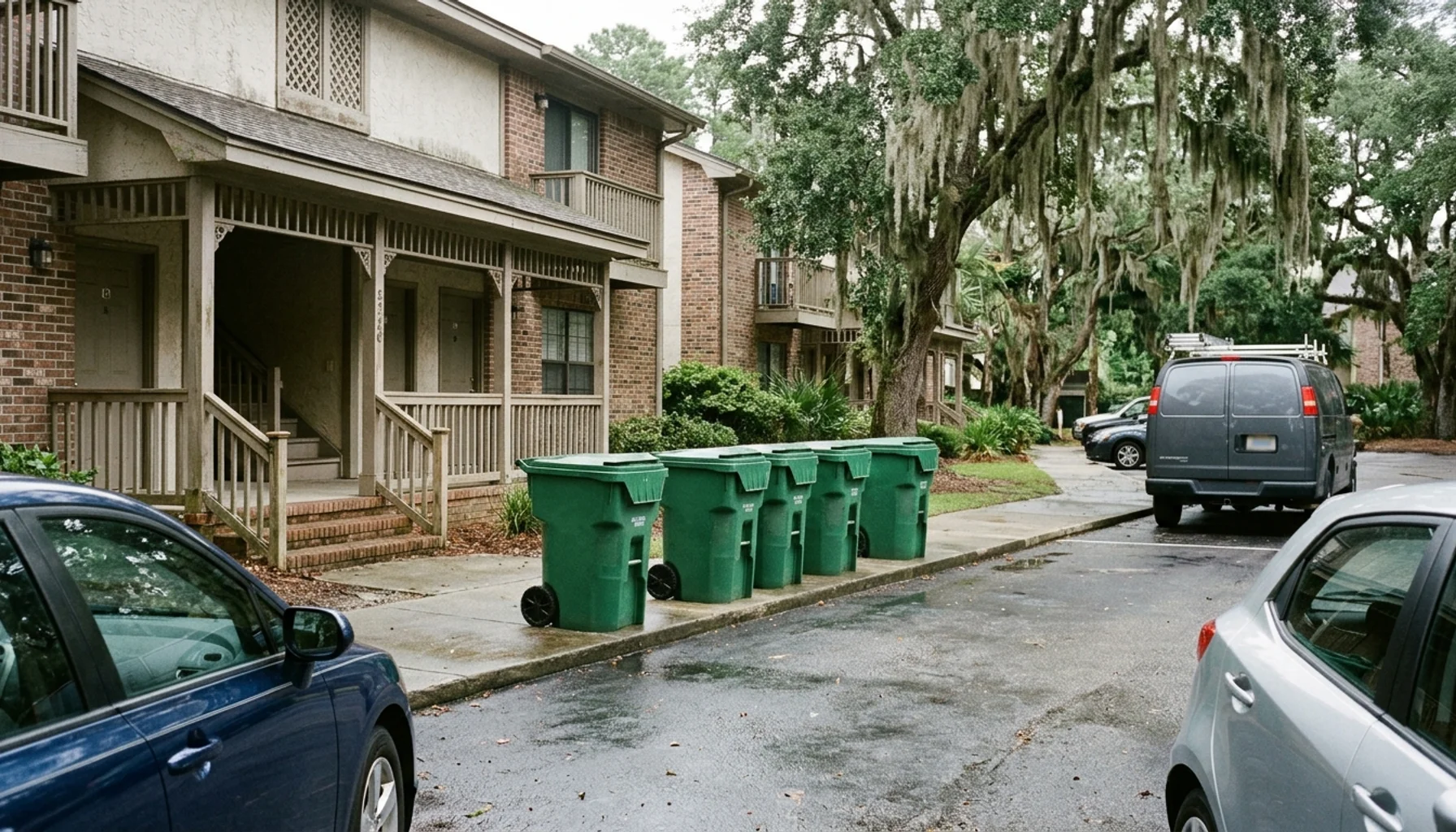
How profitable is a trash valet business? Industry estimates suggest a lean operator nets about $4 to $9 per door each month, so profit depends on route density and contract count, not on any single property. As the team behind Trash Day Made Easy, we see the math reward operators who stack properties close together.
Key Takeaways
- Properties typically pay a valet trash provider $12 to $17 per unit monthly, and serving each door costs an estimated $5 to $8.
- A lean launch is estimated at $5,000 to $15,000, while an immediate multi-property fleet runs $25,000 to $60,000 or more.
- Break-even depends on doors served: a 300-door route recovers startup costs far faster than a 50-door route.
- The property signs the vendor contract; residents often cover the cost through a lease fee, but not always.
- Contract churn, labor, and concentrated routes are the biggest threats to profit.
- Licensing, hauling, and insurance rules vary by city and county, so verify them locally before you spend money.
Picture a third-floor breezeway in North Charleston on a Monday morning: bags beside the doors, a dumpster already full, and a resident complaint waiting in the office inbox. Valet trash exists to prevent that scene, and in 2026 many apartment and build-to-rent communities treat nightly doorstep pickup as a standard amenity.
This guide looks at the business from the operator's side. You will see what properties pay per unit, what it costs to serve a door, how many doors cover your fixed costs, and which risks erode profit. We focus on Charleston-area routes in North Charleston, Mount Pleasant, and Summerville, where drive time between properties decides who makes money.
The figures below are industry estimates plus our own arithmetic, not audited local results. Treat them as planning ranges, not promised results. Your labor rate and vehicle will move every number, and so will your contract mix. Before you commit money, replace each estimate with a quote from your own insurer, a wage figure from your own payroll, and a signed rate from your first client.
So, How Profitable Is a Trash Valet Business Per Door?
A trash valet business is a recurring-revenue service in which an operator collects bagged household trash from apartment doorsteps on a set evening schedule and bills the property a monthly per-unit fee. Profit comes from the gap between that fee and the cost of labor, fuel, insurance, and supplies, multiplied across every door on your route.
Industry pricing guides show properties paying a provider roughly $12 to $17 per unit each month, with larger communities paying less per door. Estimates of operator cost run about $5 to $8 per door. Subtract one from the other and you land near the $4 to $9 range, which brackets the $5 to $10 that lean operators commonly report.
Treat the top of that range as a best case. A margin near 48% and annual revenue around $200,000 circulate for valet trash companies, but nobody publishes the method behind them. At a $14 fee, $200,000 a year implies roughly 1,200 doors, which is a large multi-property route. From our own routes, we find that the margin shrinks quickly when drive time between properties grows, so we price every bid against route density first.
The practical read: valet trash is a volume business with thin per-door margins. Profit scales with density, so ten doors on one stairwell beat ten doors across town.
How Do Valet Trash Companies Make Money, and Do Residents Pay?
Valet trash companies make money through monthly contracts with property owners or managers, billed per apartment unit. Residents often pay a fee on their lease or monthly statement, but the property signs the vendor agreement and absorbs any gap when fees are waived or residents opt out.
That structure creates two separate spreads. The property earns the difference between what residents pay and what the vendor charges. The vendor earns the difference between its fee and its own cost. Mixing the two up is the most common error in online profit claims.
| Community size | Vendor fee per unit (paid by property) | Typical resident charge | Property spread per unit |
|---|---|---|---|
| 100 to 149 units | $15 to $17 | $30 to $40 | $13 to $23 |
| 150 to 299 units | $13 to $15 | $25 to $35 | $10 to $22 |
| 300 units or more | $12 to $14 | $25 to $30 | $11 to $18 |
Industry estimates only; confirm local rates before you bid. Bigger communities negotiate lower vendor rates, so extra doors raise your total revenue while trimming revenue per door.
Add-ons shift the math. Saturday collection typically adds $1 to $2 per unit monthly, and a two-year term may cut the rate by $0.50 to $1. Overflow or bulk-item pickups run $125 to $260 per occurrence. For rate-setting detail, see this 2026 pricing guide for trash valet operators.
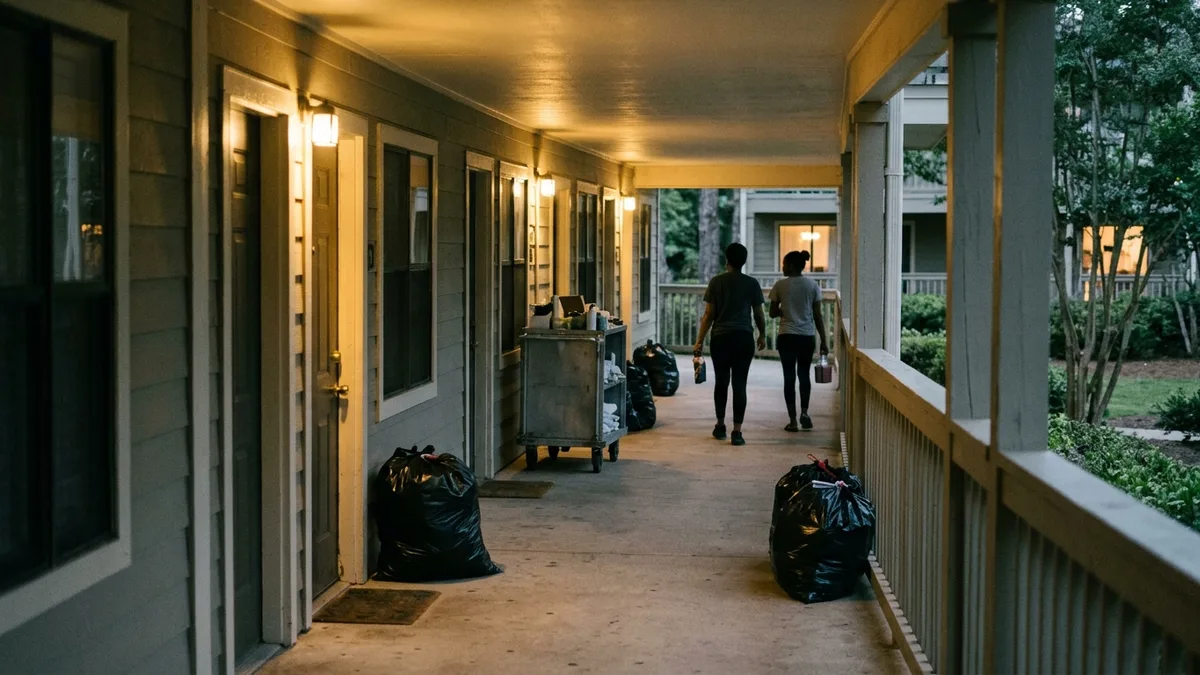
How Much Does It Cost to Start a Trash Valet Company?
Startup cost for a trash valet company is the upfront spend on entity setup, insurance, collection equipment, and a vehicle. Industry estimates put a lean launch at $5,000 to $15,000, while an immediate multi-property fleet runs $25,000 to $60,000 or more.
| Startup item | Estimated range |
|---|---|
| LLC and legal setup | $300 to $800 |
| Initial insurance | $1,500 to $3,000 |
| Collection equipment | $600 to $1,200 |
| Vehicle down payment or lease | $2,000 to $12,000 |
The vehicle line swings the total more than anything else. Our advice: line up the first contract before you commit to a vehicle, and get an insurance quote first, because coverage terms can shape which vehicle and services you offer.
Licensing deserves a phone call, not a blog post. Business licensing, waste hauling rules, and disposal requirements differ between the City of North Charleston, Charleston County, and the state environmental agency, so confirm each directly. Skip any startup plan that promises a single national checklist.
What Are the Biggest Expenses in Running a Trash Valet Business?
Operating expenses in a trash valet business are the recurring costs of crew labor, fuel, insurance, supplies, and vehicle upkeep, with labor usually the largest line. Estimates commonly put labor near two-thirds of operating cost. Fuel and supplies take a smaller slice.
Published wage listings place Charleston-area valet trash pay in the mid-teens per hour, and the Bureau of Labor Statistics publishes waste collector wage data you can check against. Add payroll taxes and unpaid travel time, because the clock runs between properties, not only at doors.
Time per property is the constraint. A 300-unit community takes about 1.5 hours once evening collection starts around 8:00 p.m., so the evening window caps how many properties one route can cover. That is why density matters more than unit count alone. At that pace, one crew finishes two or three large communities a night at most, which sets a hard ceiling on revenue per route.
Disposal is the cost many newcomers overbuild. At Trash Day Made Easy, our nightly Doorstep-to-Dumpster model ends at the community's own dumpsters, which keeps hauling fees off our books. Confirm that arrangement in every contract. Spread fixed costs such as insurance, supervision, and software across a portfolio; one estimate suggests 15 to 20 properties across North Charleston, Mount Pleasant, and Summerville.
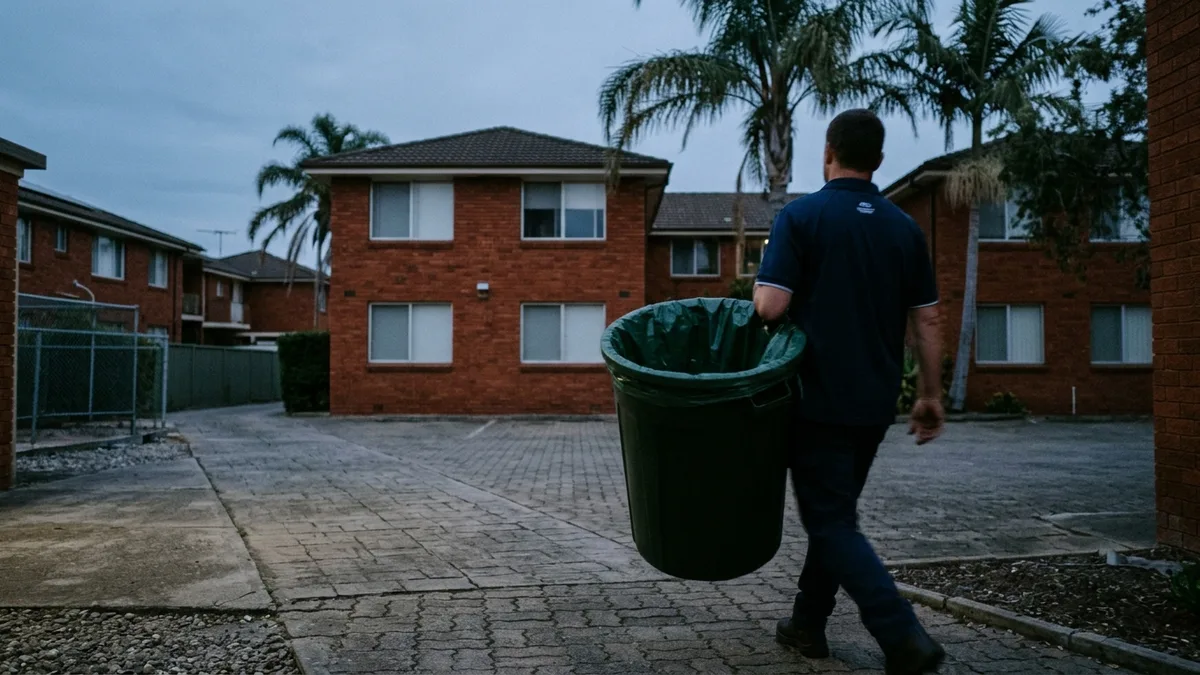
How Many Units Do You Need to Break Even on Valet Trash?
Break-even in valet trash is the number of doors at which monthly net income covers your fixed costs and your own pay. Using the $4 to $9 per-door range from above and a $5,000 to $15,000 launch, the table shows how fast different route sizes recover startup money.
| Doors served | Illustrative monthly net | Illustrative annual net | Months to recover a lean launch |
|---|---|---|---|
| 50 | $200 to $450 | $2,400 to $5,400 | About 11 to 75 |
| 150 | $600 to $1,350 | $7,200 to $16,200 | About 4 to 25 |
| 300 | $1,200 to $2,700 | $14,400 to $32,400 | About 2 to 13 |
These figures are our arithmetic, not verified local results, and they come before owner draw. Unpaid travel time is also left out. Smaller communities may pay a higher fee per door than the tier data above covers, but 50 doors still reads as a side income, not a business.
Scale tells the story. At roughly 1,000 doors the same math gives about $48,000 to $108,000 a year. Run your own scenario in the valet trash cost calculator, then replace our assumptions with your actual wage, fuel, and insurance quotes.
How Do You Win Apartment Contracts Without Racing to the Bottom?
A valet trash contract is a service agreement, usually with a property management company, that sets the per-unit monthly fee and collection schedule. It also sets the minimum term. Your buyers are apartment communities and build-to-rent operators, plus the occasional HOA. The decision-maker is almost always the manager judged on renewals and resident complaints.
Lead with proof, not price. Photo-verified service at every door answers the manager's biggest fear, which is not knowing whether pickup happened. Add a written missed-pickup policy and a certificate of insurance, along with a clear escalation contact.
Price floors matter. Because larger communities negotiate lower per-door rates, a vendor that undercuts to win a 300-unit property may find the margin gone by month three. Offer a two-year term at a modest discount instead of a deeper cut on a one-year deal. For comparison benchmarks, see how valet trash companies charge apartments.
For context on what owners prioritize, the National Multifamily Housing Council and the National Apartment Association publish industry research and amenity trends worth reading before you pitch.

What Risks Cut Into Valet Trash Profit, and Is It Worth Starting?
Valet trash profit risk is the set of operational and contract threats that shrink thin per-door margins, such as client churn and labor turnover. Resident noncompliance and seasonal strain add to it. Churn is the largest, because losing one 300-door contract can erase most of a small operator's income.
Heat and humidity in the Lowcountry make a missed night a smell problem within a day or two, and storm season brings debris and schedule disruption. Residents who leave loose bags or overfilled bins trigger overflow situations that cost you time. Service-level penalties in contracts can turn one bad week into a lost month.
On the upside, one operator can pair nightly collection with turnover trash handling for short-term rentals. According to AirDNA, North Charleston had 1,158 active short-term-rental listings as of June 2026, averaging $30,800 in annual revenue. Those add-ons are quoted separately from per-door fees.
Our verdict: valet trash works as a solid side business at 100 to 150 doors and as a full-time business at 300 or more across several properties. It is not passive income. We built Trash Day Made Easy around photo verification at every visit because proof of service is what keeps contracts renewed. For a deeper look, read whether trash valet is a good business for multifamily owners.
Frequently Asked Questions About Trash Valet Profitability
What is trash valet?
Trash valet is a scheduled service in which a provider collects bagged trash from apartment doorsteps and takes it to the community's dumpsters. It removes the daily trip to the dumpster for residents. For a plain-language overview, read what garbage valet is and how it works.
How does valet trash work?
Residents place bagged trash outside their doors at a set time. A collector walks the property in the evening, picks up each bag, and delivers it to the dumpsters. At Trash Day Made Easy, every visit is photo-verified so managers can see service was completed.
Why do apartments have valet trash?
Apartments offer valet trash to keep breezeways and dumpster areas cleaner and reduce resident complaints. It also adds an amenity that supports renewals. It also creates a recurring fee line that many communities pass through to residents.
Do residents pay for valet trash?
Often yes. Many communities bill residents a monthly fee, typically through the lease, while the property pays the vendor. Some properties absorb the cost as an amenity. Check your lease for the exact charge.
How much is valet trash service?
Properties typically pay a provider $12 to $17 per unit monthly, and residents are often billed $25 to $40. Homeowners in select Charleston neighborhoods can get trash can concierge service starting from $49 per month; confirm availability on a call.
How many nights a week does valet trash run?
Schedules vary by contract. Trash Day Made Easy provides nightly scheduled collection, while other providers may quote fewer nights. Adding Saturday collection typically costs $1 to $2 more per unit each month.
Do you need a license to run a valet trash business?
Requirements depend on where you operate, from your city to your county and state, and may include business licensing and waste hauling rules. Before launching, confirm them directly with the City of North Charleston and Charleston County. Check with the state environmental agency as well.
Is a Trash Valet Business Worth Starting in 2026?
How profitable a trash valet business is comes down to doors per route and contract retention, along with disciplined costs. Net income per door is modest, so profit builds through density and multi-year contracts. Plan on a 150-door minimum for a real side income and 300 or more for full-time work, and confirm local licensing and insurance first.
Looking ahead, Charleston-area build-to-rent and multifamily growth should keep demand for reliable, documented service steady through 2026 and beyond.
If you are weighing valet trash for your portfolio or comparing it to running your own route, Schedule a Call with Trash Day Made Easy and we will walk through your property layout and service options. Quotes are available Monday through Friday.
Content powered by inkSTR.co