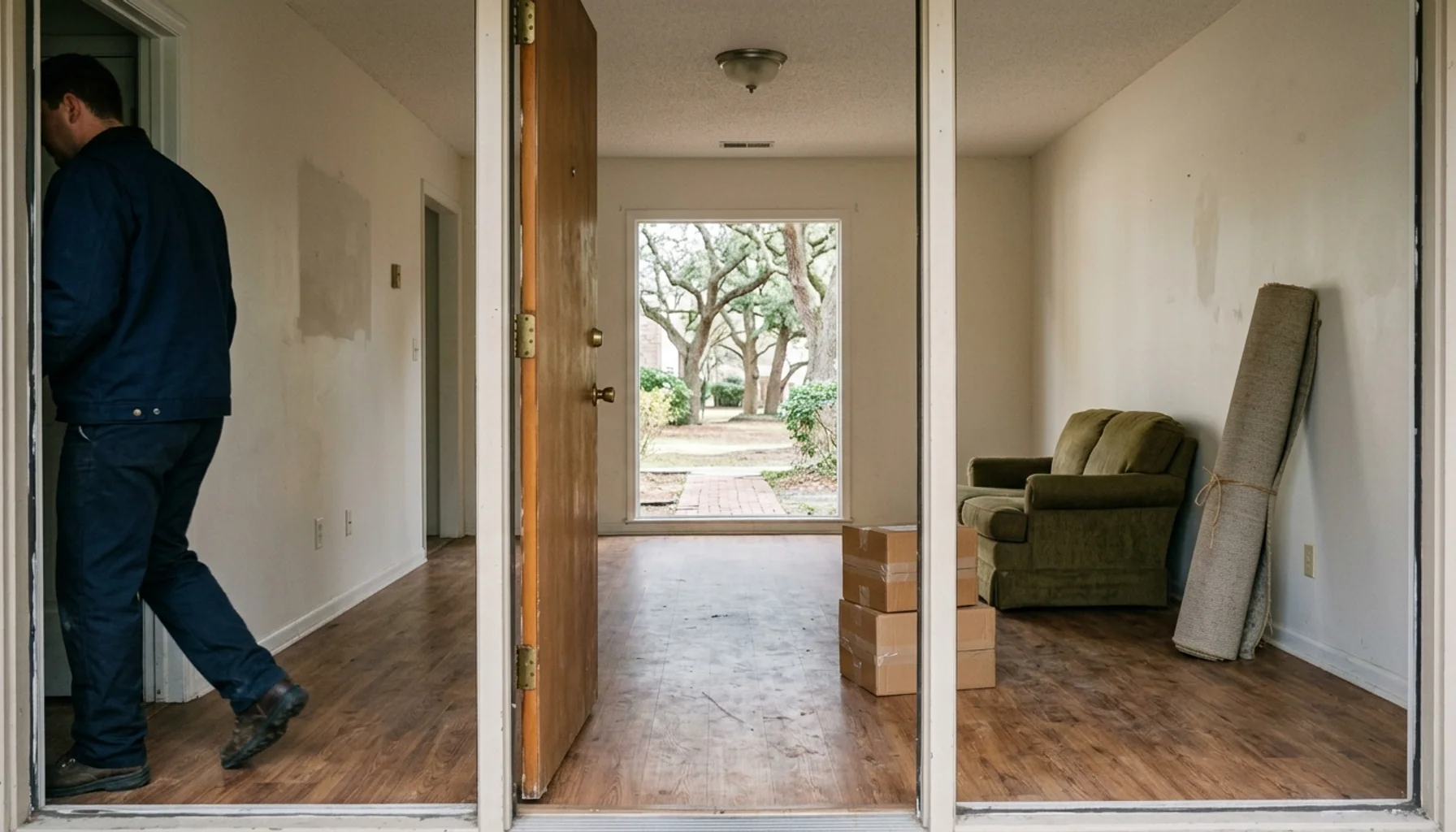
Property managers handle bulk item removal during turnover by inspecting the unit immediately after move-out, separating owner-retained property from anything left behind, then scheduling a dedicated hauler to clear furniture and debris before cleaning crews arrive. The goal is always the same: zero delay to the next resident's move-in date.
Key Takeaways
- Most turnover crews clear a full apartment unit in 2 to 4 hours and a full house in 4 to 8 hours, with deep cleaning typically scheduled the same day or the next day.
- Tenant turnover costs average roughly $2,500 per unit when you combine vacancy loss, cleaning, repairs, and hauling.
- Full-service junk removal for a single apartment typically runs $150 to $600 depending on volume, while a full house can run $400 to $1,000 or more, based on published load-based pricing models.
- A 24 to 48 hour buffer between the confirmed move-out date and the cleanout crew's arrival gives property managers room to inspect, document, and stage items before the removal deadline.
- North Charleston's apartment vacancy rate sat at 9.2% in early 2023, a reminder that every extra day a unit sits with leftover furniture is a day of lost rent in a market that already has room to fill.
- Charleston's short-term rental sector adds its own version of this problem: North Charleston listings averaged 46.3% occupancy and a $237 average daily rate in 2026 data from AirROI, meaning a slow turnover directly costs a host bookable nights.
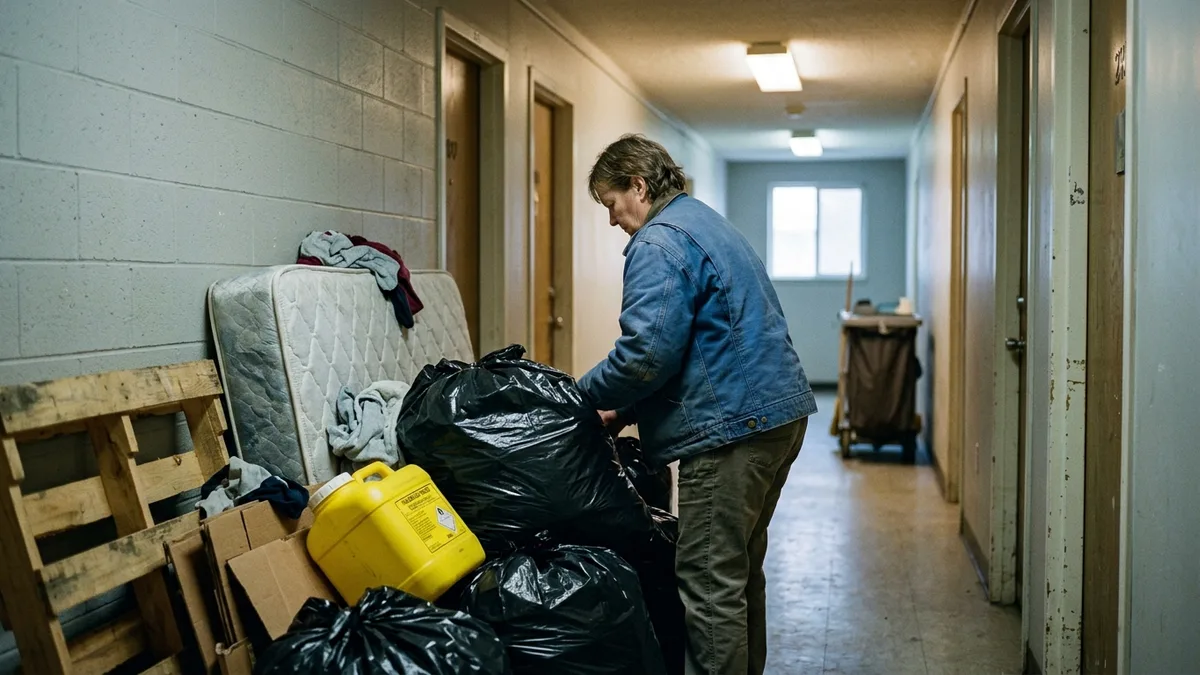
Turnover day rarely goes according to plan. A resident moves out, leaves behind a mattress and three bags of loose debris in the kitchen, and the next occupant is scheduled to arrive in 48 hours. Multiply that scenario across a 150-unit community in the Rivers Avenue corridor and you understand why bulk item removal is one of the most operationally disruptive parts of running a rental property in 2026.
At Trash Day Made Easy, we work alongside multifamily managers, build-to-rent operators, and short-term rental hosts across Charleston and Atlanta who deal with exactly this pressure every week. This guide walks through the actual process property managers use to clear bulk items during turnover, what it costs, where liability creeps in, and how to keep a make-ready timeline from sliding.
What follows is a step-by-step operational breakdown, not a vague overview. You'll get the sequence experienced operators follow, the legal landmines around abandoned property, and a cost framework you can actually use to evaluate vendors.
How Do Property Managers Handle Bulk Item Removal During Turnover?
Property managers handle bulk item removal during turnover through a five-step sequence: inspect and photograph the unit, determine what stays versus what gets removed, sort remaining items by disposal category, stage or haul bulk items, then complete a final walkthrough before cleaning begins. The process is designed to run on a fixed schedule, not an as-needed basis.
First, the manager or a maintenance lead walks the unit within hours of the confirmed move-out and photographs every room, documenting condition and any items left behind. This photo record protects both the property and the departing resident if a dispute arises over the security deposit. It also creates a baseline for what the incoming hauler needs to remove.
Next, items get separated into two piles: property-owned fixtures and equipment that stay, and everything else. Only the second category moves to sorting, where furniture, appliances, and bagged debris each get routed differently. For multifamily communities, this entire sequence typically compresses into a single day so the unit stays on schedule for its next occupant.
What Happens to Items Left Behind After a Tenant Moves Out?
Items left behind after a tenant moves out generally fall under state and local abandoned-property rules, which typically require the property manager to provide written notice, store the items for a defined period, and follow specific disposal procedures before discarding anything of value. These requirements vary significantly by state and even by municipality, so the exact notice period and storage duration are not universal.
In South Carolina, as in most states, the safest operational approach is to document everything with dated photographs, send written notice to the last known address on file, and hold higher-value items for the locally required window before disposal. A couch left curbside next to overflowing trash bags reads differently to a court than a designer chair wrapped and set aside in a storage closet. Because these rules genuinely differ by jurisdiction and change periodically, you should confirm current notice periods, storage timelines, and disposal procedures with your attorney or local housing authority rather than relying on a national blog post. What's consistent everywhere is the paper trail: date-stamped photos, a written notice attempt, and a disposal log protect the property manager if a former resident later claims property was wrongfully discarded.
For portfolio owners managing units across North Charleston, Summerville, and Mount Pleasant, this is exactly where a documented service partner matters. Every collection Trash Day Made Easy performs is photo-verified at the door, which means the same evidentiary trail that protects against abandoned-property disputes gets generated automatically, without a manager having to remember to take a picture on a busy turnover day.
What Are Property Managers Not Allowed to Do With Abandoned Belongings?
Property managers are not allowed to dispose of a former resident's belongings without following the notice and waiting-period requirements set by their state's landlord-tenant law, and they cannot simply discard items that appear to have monetary value without documentation. Skipping notice requirements exposes the property to a conversion or wrongful-disposal claim, even when the intent was purely operational efficiency. Most jurisdictions prohibit selling or keeping a former resident's property for the manager's own use, and they prohibit discarding items before the legally required storage window expires. Managers generally cannot charge the former resident storage fees that exceed what local law permits, and they cannot condition the deposit refund on the resident retrieving items within an unreasonably short window.
The practical fix is procedural, not legal. Build a standard operating checklist: photograph on move-out day, send certified notice if required, log the storage start date, and only proceed with removal once the waiting period has elapsed. This single habit prevents the majority of abandoned-property complaints property managers encounter across Charleston-area multifamily communities and HOA-governed neighborhoods on James Island and Daniel Island.
How Should Property Managers Handle Hazardous Items During Cleanout?
Hazardous items during cleanout require separate handling from standard bulk waste because materials like paint, batteries, and propane cylinders can contaminate soil, trigger fire risk, or violate local disposal codes if placed with regular trash. General environmental guidance advises that household hazardous waste should never be poured down drains, onto the ground, or into storm sewers, and notes that many communities run dedicated collection programs for these materials. For property managers, the practical routing looks like this: paint and chemicals go to a licensed hazardous-waste transporter or a municipal household hazardous waste event, and batteries and electronics go to a certified e-waste recycler. Propane cylinders go back to a supplier or a hazmat-certified hauler. Refrigerants in an abandoned refrigerator or window unit require certified reclamation before the appliance itself can be scrapped, since venting refrigerant is a federal violation regardless of how small the unit is. Renovation debris like drywall and lumber often needs a construction dumpster rather than a standard bulk pickup, since most valet and curbside services are not permitted to accept demolition-grade material. As of 2026, South Carolina's Department of Health and Environmental Control guidance generally mirrors federal environmental standards, but you should confirm current local collection sites before a large multifamily cleanout generates a stockpile of hazardous material with nowhere approved to go.
What Should a Bulk Removal Operating Procedure Look Like for Multi-Unit Properties?
A bulk removal operating procedure for multi-unit properties is a written checklist that assigns roles, sets photo standards, and defines a chain-of-custody trail from the moment a unit is vacated to the final sign-off before cleaning begins. Without a standardized procedure, every turnover becomes a one-off decision, which is how delays and disputes creep into a portfolio.
| Step | Who Owns It | What Gets Documented |
|---|---|---|
| Move-out inspection | Property manager or maintenance lead | Time-stamped photos of every room, condition notes |
| Owner-retained item pull | Maintenance staff | List of fixtures, appliances, and equipment staying in the unit |
| Sort by disposal category | Hauling crew or in-house team | Count of furniture, bagged debris, hazardous items, donations |
| Staging and removal | Contracted hauler | Timestamp, item count, staging location (curb, dock, dumpster) |
| Final walkthrough | Property manager | Sign-off photo confirming empty, clean unit ready for make-ready crew |
A curbside-only model means haulers do not enter units, hallways, or elevators, which shifts the burden of moving items to the curb, loading dock, or staging area back onto maintenance staff. For high-rise and multifamily buildings, that distinction determines whether you need a full-service crew or a curbside pickup, and you should settle it in the vendor contract before turnover season starts, not negotiate it unit by unit. For scattered-site portfolios spanning North Charleston, Isle of Palms, and Summerville, a single written procedure applied consistently across every address is what makes photo verification meaningful. A one-off photo from a single unit proves nothing about portfolio-wide compliance. A standardized procedure, applied the same way at every door, builds a documented pattern that protects the whole operation.
How Do Access Constraints Affect Bulk Item Removal in High-Rise Buildings?
Access constraints in high-rise buildings determine whether bulk item removal can happen on schedule, since freight-elevator hours, loading-dock rules, and fire-code clearance zones all limit when and how large items physically leave the building. A couch that takes five minutes to remove from a ground-floor unit can take an hour of coordination in a mid-rise building with a single freight elevator shared across twelve floors. Before scheduling a cleanout crew, you should confirm freight-elevator reservation windows, loading-dock access hours, whether a certificate of insurance is required from the hauler, and whether HOA or building management sign-off is needed before crews arrive. Communication with neighboring units matters more than most turnover checklists acknowledge. Hallway noise, propped fire doors, and blocked corridors during a multi-hour cleanout generate resident complaints just as often as the vacancy itself does. For build-to-rent communities near Daniel Island and the airport corridor, where investor visibility on curb appeal and community standards runs high, these logistics carry extra weight. A cleanout crew blocking a shared driveway or leaving a loading zone cluttered mid-day reflects on the entire community's presentation, not just the single unit being turned over.
How Much Should I Charge for Junk Removal, and What Do Cleanouts Typically Cost?
Junk removal pricing typically follows a load-based model, where cost scales with how much of a truck the items fill rather than a flat per-item rate. Published industry ranges show minimum pickups starting around $75 to $125, with a quarter-truck load running $150 to $250, and a full truckload reaching $500 to $800 or more depending on the region and disposal fees involved.
| Cleanout Scope | Typical Cost Range | Typical Timeframe |
|---|---|---|
| A few bags of debris | $75 to $125 | Under 1 hour |
| Furniture only (couch, mattress, table) | $150 to $300 | 1 to 2 hours |
| Full apartment cleanout | $300 to $600 | 2 to 4 hours |
| Full house cleanout | $400 to $1,000+ | 4 to 8 hours |
For property managers evaluating whether to charge back these costs to a departing resident or absorb them as a turnover expense, the math should include more than the hauling invoice. Vacancy loss, cleaning delays, and the cost of pushing back a contractor's repair schedule all compound the true price of a slow cleanout. That roughly $2,500 average total turnover cost per unit accounts for this bundled reality, not just the hauling line item. If you're weighing whether to charge residents hourly for junk removal as part of a lease-violation fee schedule, most markets price this by load rather than by hour, since a two-person crew moving furniture down three flights of stairs takes longer than the same job on a ground floor. Charging by load size, not time, keeps pricing predictable for both the resident and the property.
How Does Bulk Item Removal Fit Into the Make-Ready Timeline?
Bulk item removal fits into the make-ready timeline as the first physical step after move-out inspection and before cleaning, painting, or repair work can begin. Every hour a unit sits with leftover furniture is an hour a cleaning crew or contractor cannot access the space, which pushes the entire turnover schedule back day by day. Most experienced turnover operations build in a 24 to 48 hour buffer between the confirmed move-out date and the cleanout crew's arrival, giving the property manager room to inspect, document, and stage items before the removal deadline. Following that buffer, a junk removal crew typically clears bulk furniture and appliances first, then bagged loose debris, then performs a final photo-verified walkthrough before cleaning begins. This order matters: cleaning a unit before bulk items are removed just means re-cleaning around obstacles later. At Trash Day Made Easy, we've seen the pattern repeat across dozens of turnovers in Charleston multifamily communities: the make-ready delays that show up on a property manager's monthly report almost always trace back to bulk removal being treated as an afterthought rather than a scheduled step. Our turnover trash removal service integrates directly into the make-ready cycle so bulk items and move-out debris clear out on the same fixed schedule every time, rather than whenever a maintenance tech gets a free afternoon.
Compare Your Bulk Removal Options: Curbside, Full-Service, or Dumpster Rental?
The three main bulk removal options for property managers are curbside pickup, full-service in-unit hauling, and dumpster rental, and each fits a different combination of building access and turnover volume. Curbside pickup works when maintenance staff can stage items outside the building; full-service hauling works when a crew needs to physically remove items from inside a unit; dumpster rental works best for high-volume renovation or mass move-out periods.
| Option | Best For | Access Requirement |
|---|---|---|
| Curbside pickup | Ground-floor units, single-family rentals, scattered-site portfolios | Items staged at curb or driveway by staff or resident |
| Full-service in-unit removal | High-rise units, hoarding situations, resident-abandoned property | Crew enters unit, hallway, and elevator |
| Dumpster rental | Mass turnover periods, renovation debris, seasonal move-out surges | Loading dock or parking area for container placement |
Seasonal surges matter here. Turnover volume in college-adjacent and high-density markets often spikes around September, when trash volumes can overwhelm regular dumpster capacity and create odor and pest risks if overflow sits near the enclosure for days. You should plan dumpster capacity around known lease-turn dates rather than reacting after the enclosure is already overflowing. For scattered-site owners managing properties across North Charleston and the surrounding submarkets, a single-vendor approach that can flex between curbside, full-service, and on-demand bulk pickup avoids the coordination headache of juggling separate vendors for each property type. That flexibility is the difference between a waste operations program and a one-off hauling transaction.
What Are the 5 P's of Property Management, and Where Does Turnover Fit In?
The 5 P's of property management commonly referenced in the industry are people, property, process, pricing, and paperwork, and turnover management touches every one of them. People covers coordinating residents, maintenance staff, and vendors during the transition window. Property covers physical condition, from bulk debris to repair needs. Process covers the standardized checklist that keeps every turnover consistent. Pricing covers rent-ready timing and the cost of vacancy. Paperwork covers the documentation trail, abandoned-property notices, and lease-compliance records. Turnover is where all five collide at once. A property manager juggling five simultaneous move-outs during a single week is managing people, property, process, pricing, and paperwork at the same time. Turnover season is the single best test of whether a property's operational systems actually work under pressure, because it compresses all five categories into a tight, unforgiving window.
What Are the Signs of a Bad Property Manager During Turnover?
Signs of a bad property manager during turnover typically include inconsistent documentation, missed make-ready deadlines, and unresolved resident complaints about leftover debris. These signs usually trace back to the same root cause: no standardized turnover procedure. Watch for units that sit vacant longer than the market average because bulk removal wasn't scheduled until after the lease-turn date, deposit disputes that drag on because no photo documentation exists, and hallway or dumpster-area complaints that repeat month after month without a fix. A property manager relying on maintenance staff to "get to it when they can" rather than a scheduled vendor relationship is signaling a reactive operation, not a professional one. The fix isn't more staff hours. It's a fixed process. Property managers we work with across the Charleston metro who move from ad hoc cleanouts to a scheduled, photo-verified bulk removal and valet trash program consistently report fewer resident complaints and faster unit turns, because the guesswork gets removed from a process that used to depend entirely on staff availability.
How Does Bulk Item Removal Work Differently for Short-Term Rentals Between Guests?
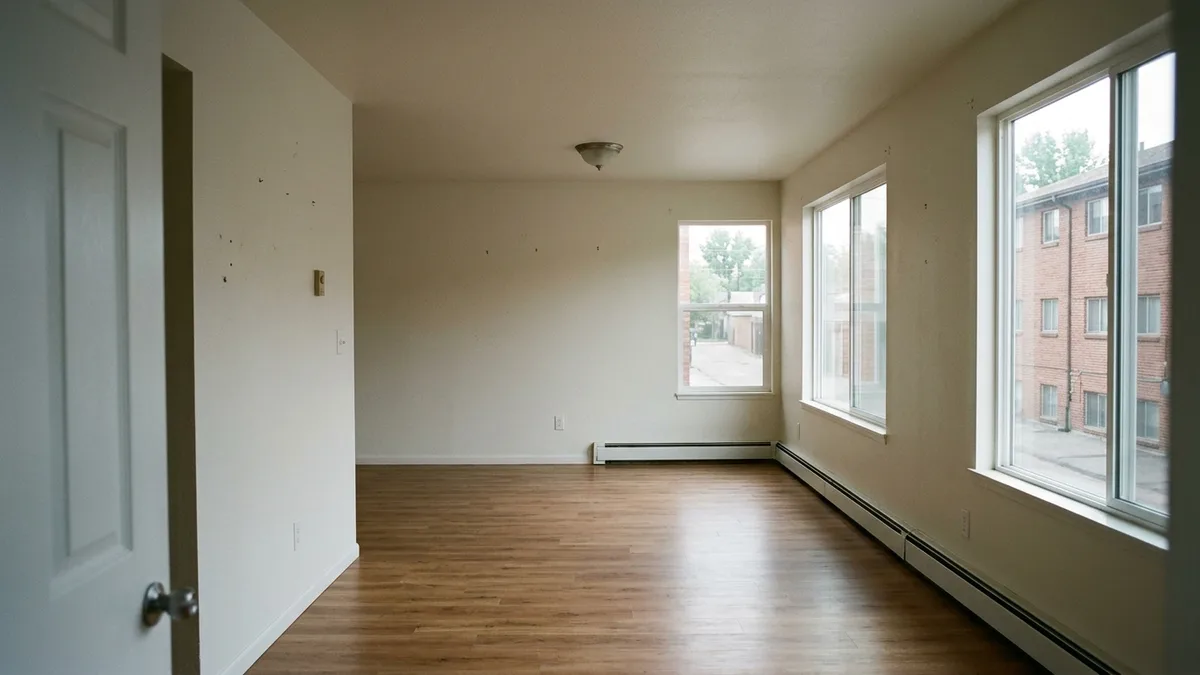
Bulk item removal for short-term rentals between guests operates on a compressed, on-demand timeline rather than a scheduled lease-turn cycle, since a host or manager often has only a few hours between checkout and the next check-in. A single missed pickup between guests can leave a broken chair or a guest's discarded item in view of the next arrival, which directly risks a negative review. North Charleston short-term rental data from AirROI shows average annual revenue of $33,514 per listing with 46.3% occupancy and a $237 average daily rate in 2026, figures that make every blocked or delayed turnover a direct hit to bookable revenue. Charleston-area listings overall averaged 65.2% occupancy during peak season and dropped to 44.7% in the low season, according to AirROI data, meaning the operational pressure to turn a property quickly is highest exactly when demand is strongest. For hosts managing properties in the Charleston Historic District, on Isle of Palms, or on Sullivan's Island, on-demand bulk and turnover trash removal needs to integrate with the cleaning crew's schedule, not compete with it. Trash Day Made Easy's on-demand turnover trash service is built specifically for this unpredictable rhythm, clearing bulk items and move-out debris between guest stays without the host needing to coordinate timing manually.
What Should HOA Communities Know About Bulk Item Removal Enforcement?
HOA communities handle bulk item removal enforcement through community covenants that typically restrict how long items can sit curbside, require designated disposal areas, and impose fines for non-compliance during move-in and move-out periods. The challenge most boards face is that enforcement authority is limited: a fine letter doesn't move a couch off the curb. Move-out bulk item chaos creates real liability for HOA boards, since an abandoned mattress or piece of furniture sitting at a curb for days affects every neighbor's view of the community, not just the departing resident's unit. On James Island and Daniel Island communities in particular, where curb appeal is closely tied to resale value, boards increasingly treat this as a structural problem rather than a behavioral one. The most effective fix boards have found isn't stricter fines. It's removing the compliance burden from residents entirely. A trash can concierge and bulk removal program means bins and bulk items get handled on schedule regardless of individual resident behavior, which eliminates the enforcement gap boards otherwise spend volunteer hours chasing.
Comparing DIY, Municipal Pickup, and Professional Bulk Removal Services
DIY removal, municipal bulk pickup, and professional bulk removal services differ primarily in speed and documentation, which matters most when a turnover timeline is fixed and cannot slip. Municipal bulk pickup typically runs on a fixed citywide schedule, often once a month or by special request, which rarely aligns with an individual unit's turnover date.
| Method | Speed | Documentation | Best Fit |
|---|---|---|---|
| DIY (staff-hauled) | Depends entirely on staff availability | Inconsistent, rarely photo-verified | Single-unit, low-volume situations |
| Municipal bulk pickup | Fixed monthly or by-request schedule | None provided by the city | Non-time-sensitive residential disposal |
| Professional service | Scheduled or on-demand, integrates with make-ready | Photo-verified, timestamped confirmation | Multifamily, BTR, STR, and portfolio-scale turnover |
Municipal pickup also generally will not enter a unit or clear a hallway, which means it does nothing to solve the access-constraint problem multifamily and high-rise properties deal with. DIY hauling using maintenance staff avoids a vendor invoice but consumes staff hours that could otherwise go toward repairs, and it rarely produces the documentation a manager needs if an abandoned-property dispute arises later. Professional bulk removal is built around the turnover deadline rather than a fixed municipal calendar, and it produces the photo-verified record that protects the property manager. For a scattered-site portfolio spread across Charleston and North Charleston, that consistency across every address is worth more than the marginal savings of relying on staff time.
Frequently Asked Questions
How long does bulk item removal take during a typical apartment turnover?
Most junk removal crews clear a full apartment unit in about 2 to 4 hours, while a full house cleanout typically takes 4 to 8 hours. Deep cleaning is usually scheduled the same day or the next day, with repairs or painting following after that.
Can a property manager throw away items a tenant left behind?
Not immediately. Most states require property managers to provide notice and hold items for a defined storage period before disposal, and these requirements vary by state and municipality. You should confirm the current notice and storage rules with your attorney or local housing authority before discarding anything of apparent value.
What items require special handling during a cleanout?
Paint, batteries, propane cylinders, and refrigerants all require separate, licensed disposal rather than standard bulk pickup. General environmental guidance advises against pouring household hazardous waste down drains or onto the ground, and many communities offer dedicated collection programs for these materials.
How much does bulk item removal typically cost for a property manager?
Published industry pricing generally ranges from $75 to $125 for a minimal pickup up to $500 to $800 or more for a full truckload, depending on volume and disposal fees. A full apartment cleanout typically falls in the $300 to $600 range, while a full house can run $400 to $1,000 or higher.
Does bulk item removal work differently for short-term rentals than for standard apartment turnover?
Yes. Short-term rental turnover happens on a compressed, often same-day timeline between checkout and the next check-in, rather than the multi-day window typical of a standard lease turn. This makes on-demand scheduling essential, since a missed pickup can directly affect a guest's first impression and review score.
What should a property manager document during bulk item removal?
A property manager should document a time-stamped inspection with photos, a list of any items requiring storage under abandoned-property rules, and a final walkthrough confirming the unit is clear before cleaning begins. This chain-of-custody record protects the property if a deposit or ownership dispute arises later.
How does photo-verified bulk removal service benefit a property manager?
Photo verification provides documented, timestamped proof that removal was completed at a specific unit on a specific date, without the property manager needing to inspect and photograph it manually. This record supports deposit disputes, abandoned-property compliance, and portfolio-wide service accountability across multiple properties.
Can one vendor handle bulk removal across an entire scattered-site portfolio?
Yes, a single waste operations vendor can typically service portfolios ranging from a handful of properties to more than 1,000 units, maintaining the same photo-verified standard at every address. This removes the coordination burden of managing separate vendors, schedules, and documentation standards property by property.
Quick-Reference Summary: The Bulk Item Removal Process
- Inspect and photograph the unit within hours of move-out to establish a documented baseline.
- Separate owner-retained fixtures and equipment from everything else in the unit.
- Check whether any remaining items trigger abandoned-property notice and storage requirements under state law.
- Sort remaining items by category: furniture, bagged debris, donations, and hazardous materials.
- Route hazardous items (paint, batteries, propane, electronics, refrigerants) to certified disposal, not standard bulk pickup.
- Confirm building access constraints, freight-elevator hours, and loading-dock rules before scheduling the hauler.
- Stage or remove bulk items on a fixed schedule that leaves a 24 to 48 hour buffer before cleaning crews arrive.
- Complete a final photo-verified walkthrough confirming the unit is clear before make-ready cleaning begins.
Bulk item removal during turnover carries legal, financial, and reputational stakes at every step, from the abandoned-property notice period to the photo taken at final walkthrough. Get the sequence right and a unit turns in days instead of weeks. Get it wrong and you're looking at deposit disputes, overflowing dumpster enclosures, and vacancy days that add up fast in a Charleston market where apartment vacancy already sat at 9.2% in early 2023. As 2026 turnover volume picks up across North Charleston, Mount Pleasant, and the broader Charleston metro, the operators who treat bulk removal as a fixed step in the make-ready cycle are the ones avoiding the complaint calls and the vacant-unit spreadsheets. Trash Day Made Easy was built to be that fixed step: photo-verified, scheduled, and consistent whether you're managing three units or three hundred.

If your make-ready timelines keep slipping because bulk removal gets handled reactively, Trash Day Made Easy integrates turnover trash and bulk item removal directly into your existing schedule, with photo verification at every unit across Charleston and Atlanta. Request a service quote Monday through Friday and see what a fixed, documented turnover process looks like on your next lease turn.
Content powered by inkSTR.co