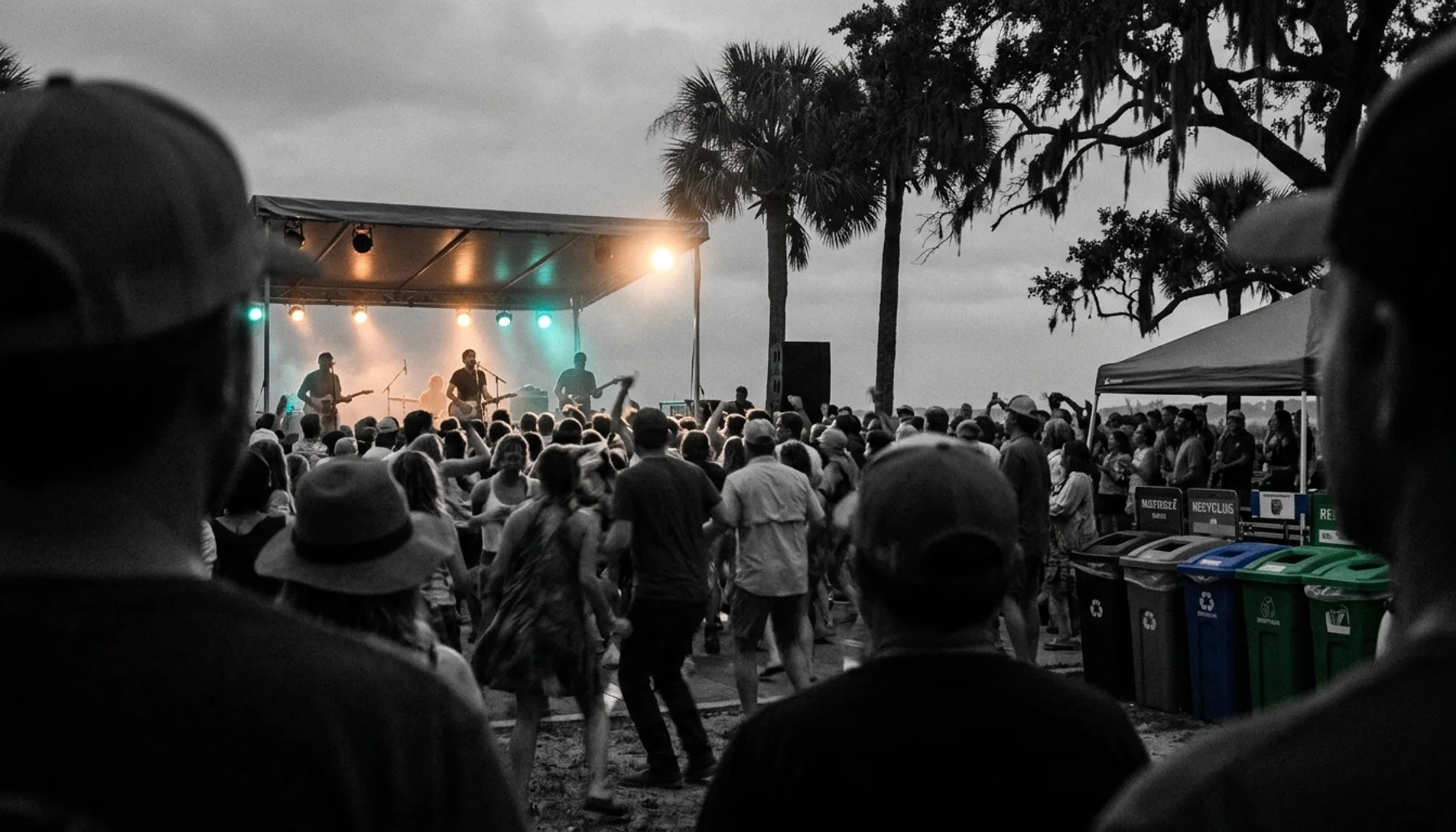
To build a sustainable clean community waste management program, audit your current waste, set measurable goals, design collection that runs without resident reminders, separate recyclables at the source, fund recurring costs, and track diversion and service reliability monthly. Photo-verified nightly collection gives managers the proof that keeps a program running.
Key Takeaways
- A sustainable community waste program has five working parts: a waste audit baseline, reliable collection, source separation, participation design, and monthly measurement.
- The waste hierarchy (prevent, reuse, recycle or compost, then dispose) is the most sustainable method; hauling trash efficiently does not reduce waste on its own.
- Community zero-waste guidance recommends a written plan covering at least three years, and one manual uses about 200 households per collector as a starting route-planning figure.
- Charleston drew 7.91 million overnight visitors in 2026, according to the College of Charleston Office of Tourism Analysis, which raises turnover and bulk-item pressure near the Historic District, Isle of Palms, and Sullivan's Island.
- Photo-verified nightly valet collection from Trash Day Made Easy gives property managers documented proof of service at every door without follow-up calls.
It is the first of the month at an apartment community off the Rivers Avenue corridor. Move-outs left a sectional sofa beside the dumpster enclosure, the recycling bin holds greasy pizza boxes, and a resident has emailed twice about trash bags sitting in the breezeway overnight. The property manager owns all of it, and none of it was in the budget.
At Trash Day Made Easy, we run nightly valet trash and bin management for multifamily communities, build-to-rent neighborhoods, HOAs and short-term rentals across Charleston and Atlanta, working from our North Charleston headquarters at 4900 O'Hear Avenue. The pattern we see is consistent: waste programs fail when they depend on resident behavior and manager attention instead of a system that runs on its own.
This guide walks through six steps for building that system, from the first audit to the monthly scorecard. You will also find a phased roadmap, a metrics table with working definitions, and a troubleshooting section for the failure points most guides skip.
What Does a Sustainable Community Waste Program Include?
A sustainable community waste program is a funded, documented system that reduces waste at the source, separates materials where they are generated, collects them on a reliable schedule, and measures results against a baseline. The working parts are the same whether you run a build-to-rent neighborhood on Daniel Island or a garden-style community along Rivers Avenue.
What are the four types of waste in a community?
Most community waste falls into four streams: organic waste such as food scraps and yard debris, recyclables such as paper, metal, glass and rigid plastics, residual waste with no recovery route, and bulky or special items such as furniture, appliances and household hazardous products. Each stream needs its own container, schedule, and disposal route, which is why a single dumpster rarely supports sustainability goals.
What are the seven principles of waste management?
No single official list exists, but a widely used community solid waste framework describes seven actions: reduce waste, separate it where it is generated, compost organics, reuse, recycle, collect and store waste safely, and dispose of the remainder safely. The same guidance tells communities to start with what they can achieve together in the short term, because few communities can take every step on day one.
What Is the Roadmap to Build a Sustainable Clean Community Waste Management Program?
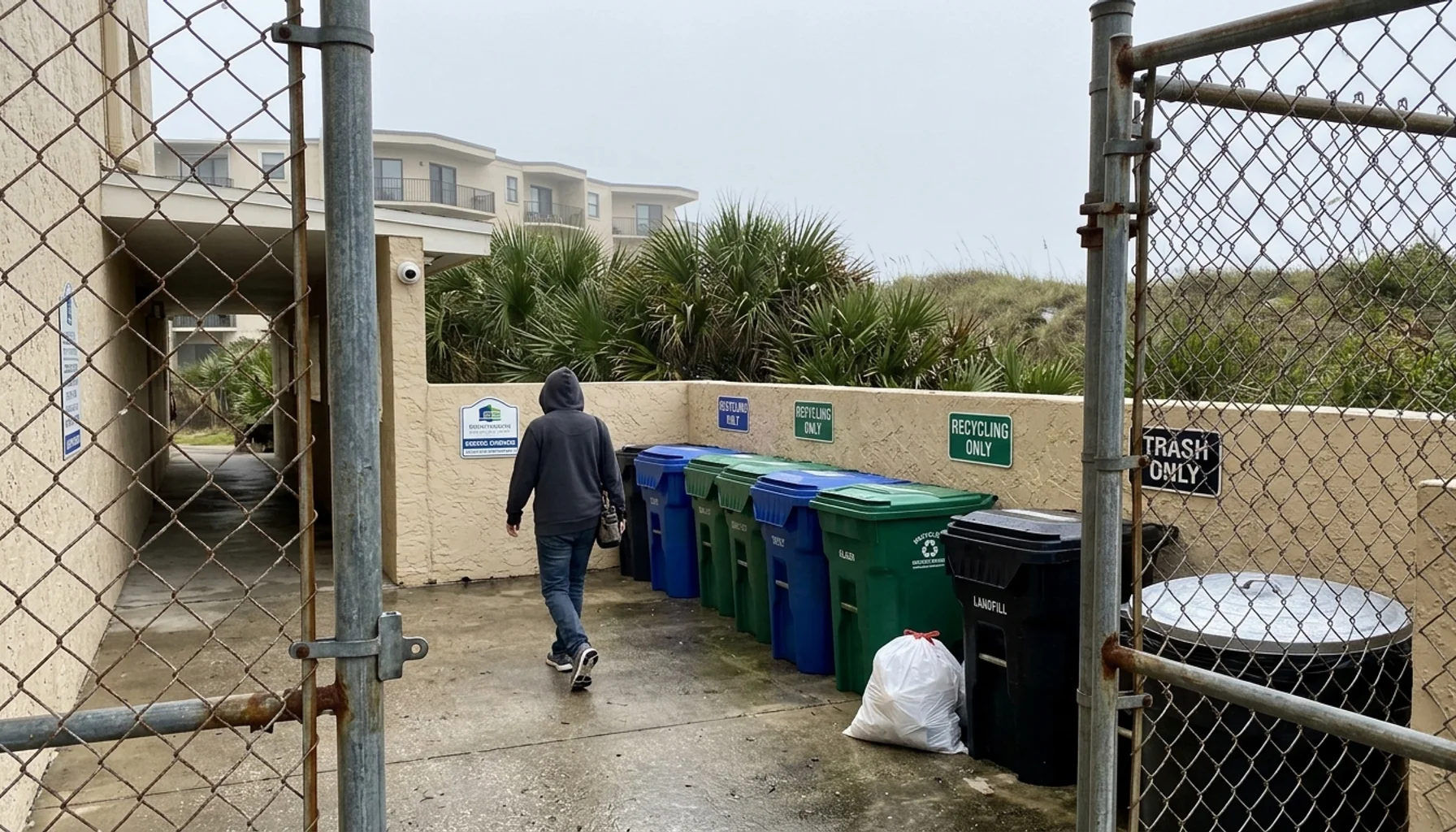
The roadmap to build a sustainable clean community waste management program has six phases: audit, collection design, source separation, participation, funding, and measurement. Each phase ends with a decision gate and a named owner, so a pilot becomes a funded, multi-year program instead of stalling after one cleanup weekend. Community zero-waste guidance commonly recommends a written plan that covers at least three years.
The table below shows suggested timing. Your pace depends on portfolio size and vendor lead times, so treat the months as a planning guide rather than a requirement.
| Phase | Suggested timing | Accountable owner | Decision gate |
|---|---|---|---|
| 1. Audit and baseline | Month 1 | Property manager or operations lead | Baseline numbers signed off and goals set |
| 2. Collection design and pilot | Months 1 to 2 | Operations lead with the vendor | Pilot building meets its reliability goal for a full month |
| 3. Source separation | Months 2 to 3 | Maintenance lead | Contamination at or below target on a re-audit |
| 4. Participation | Months 2 to 4 | Community manager or board committee | Participation measured and stable in pilot buildings |
| 5. Funding and contract | Months 3 to 4 | Owner or asset manager | Budget approved with service-level terms in the contract |
| 6. Measurement and review | Ongoing, reviewed quarterly | Operations lead | Targets reset against actual results |
Step 1: How Do You Audit Waste and Set a Baseline?
A waste audit is a structured count of what your community discards, how much of it there is, and where it goes. Run it during your first month, before you buy bins or sign a vendor contract, because every metric you track later is measured against this baseline.
Pick a sample that reflects your real mix: a breezeway building, a townhome row, and the enclosure that serves the clubhouse. Collect bags across a full week, sort them into the four waste streams, weigh each stream, and photograph what you find. Then add the operational record: overflow events, bulk item calls, resident complaints and missed pickups per month, plus what you pay today.
If you manage short-term rentals on Sullivan's Island or Isle of Palms, audit during one peak rental week and one quiet week. Turnover swings volume sharply, and a single average will mislead you.
Common mistake: setting a diversion target before you know your contamination level. A community that sorts poorly will miss an ambitious target and lose board confidence in the first quarter. Set four goals at most: diversion, service reliability, cost per door, and resident complaints.
Step 2: How Do You Design Collection That Runs Without Resident Reminders?
Collection design is the decision about who moves waste, where it goes, and how often, and it determines whether a program survives contact with real residents. The most reliable designs take resident compliance out of the equation wherever possible, because reminders and fines depend on behavior you cannot control.
Four service models cover most Charleston-area communities. Compare them on resident effort and proof of service, not only on price.
| Service model | Best fit | Resident effort | Proof of service |
|---|---|---|---|
| Municipal curbside | Single-family streets | Roll bins out and back | None unless you track misses yourself |
| Valet trash (doorstep-to-dumpster) | Apartments, condos, build-to-rent | Place a bag at the door on service nights | Photo-verified visit at each door |
| Trash can concierge (backdoor-to-curbside) | HOAs, homeowners, build-to-rent | None | Photo-verified visit; bin placed and returned |
| On-demand bulk and turnover removal | Move-outs, rental turnovers, make-ready | Schedule the job | Scheduled job with confirmed completion |
Municipal service remains the baseline. Mordor Intelligence reports that curbside pickup held a 51.85% share of the North America solid waste management market in 2026. But municipal pickup typically runs once or twice a week depending on the jurisdiction, and it was never designed to clear a hallway on a Tuesday night or a sofa on move-out day.
Trash Day Made Easy's nightly scheduled valet trash service removes that gap at the source. Every collection visit is photo-verified at the door, so you have documented confirmation without following up or issuing reminders. If you want a primer on the mechanics, our explainer on what garbage valet is and how it works covers the doorstep-to-dumpster routine.
For HOAs and homeowners, our trash can concierge moves bins from the back door or storage area to the curb on pickup day and returns them afterward. Residents do nothing, and boards enforce nothing. Our Charleston can-to-curb guide explains where that model fits best.
For route staffing, one community zero-waste manual uses roughly 200 households per collector as a planning figure for door-to-door collection. Treat that as a starting point; stairs, door density, and nightly timing change it quickly.
Step 3: What Is the Most Sustainable Waste Management Method, and How Do You Apply It?
The most sustainable waste management method is the waste hierarchy: prevent and reduce waste first, then reuse, then recycle or compost, and landfill only what remains. Collection convenience matters, but a program that only hauls trash efficiently has not yet reduced anything.
Source separation puts the hierarchy into practice. Place recycling and trash containers together at every collection point, and print a short accepted-materials list on the lid. Keep that list focused on the items residents get wrong most often, such as greasy pizza boxes and plastic bags, instead of reproducing the full county guide.
What recycling rules apply on Sullivan's Island?
Accepted materials, bag requirements, and drop-off options are set at the town and county level and change periodically. Before you print any resident guide for a property on Sullivan's Island, confirm the current rules with the town's public works or solid waste office and with the county recycling program. Build your lid labels from those confirmed rules, not from a generic national list.
How do you handle bulk items and odor?
Reuse comes before disposal. Schedule donation or resale for sound furniture before a hauler loads it, and make that a fixed step in the turnover cycle. Our guide to junk removal during property turnovers shows how that fits into make-ready timelines.
Odor and pests undermine participation faster than any rule. We partner with The Bin Boy, a Charleston-based bin cleaning and sanitizing service, so a community can add scheduled bin sanitizing on top of collection. The Bin Boy handles the cleaning; our crews handle the collection.
Step 4: How Do You Get Residents, Guests, and Boards to Participate?
Community participation is the set of habits, committees, and communications that turn a waste plan into daily behavior. It works when the right action is also the easy action, and it fails when the program depends on residents reading a flyer.
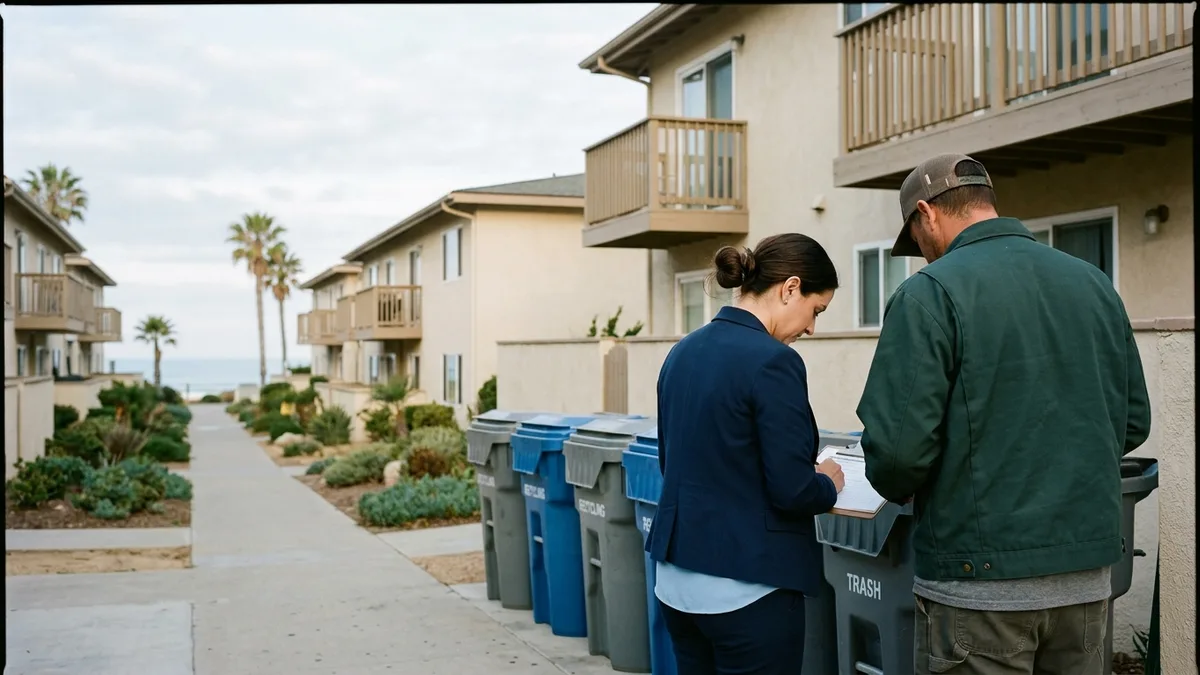
Start with a small working team: the community manager, a maintenance lead, a resident or board representative, and your vendor contact. Survey residents in the pilot buildings before you launch, ask what blocks them today, and publish what you change in response. Put a one-page guide in every move-in packet, because new residents are the most receptive audience you will ever have.
For HOA boards, a service that makes compliance automatic carries more weight than a fine schedule. Our HOA waste service page outlines how bin management takes enforcement pressure off volunteers. For rental operators near the Charleston Historic District, post set-out instructions inside the unit and handle turnover waste through a scheduled short-term rental service, since one missed pickup between guests can show up in a review.
Equity and access: Design for the resident who works nights and the older neighbor who cannot carry a bag down two flights. Doorstep collection removes the carrying burden, and pictogram lid labels help households that do not read English fluently.
Step 5: How Do You Fund and Govern the Program?
Program funding is the recurring operating budget that pays for collection, containers, communication, and oversight, and it has to be planned as a monthly cost rather than a one-time purchase. Programs that launch on a grant or a one-off cleanup budget tend to fade once the money runs out.
List every recurring line: collection labor, bins and liners, bin sanitizing, bulk removal, printed guides, and the staff hours spent on oversight. Do not budget on recyclable revenue; commodity prices swing, and a program that needs that revenue to balance will break when markets drop. Fund it from the operating budget and treat any recyclable income as a bonus.
Frame the spend as a resident amenity. A multifamily industry report cited by the National Multifamily Housing Council states that 75% of residents consider amenities a key factor when deciding to rent or renew a lease, and nightly valet collection is one of the few amenities residents notice every single day.
Residential valet trash from Trash Day Made Easy starts from $49 per month in select Charleston neighborhoods. Pricing for multifamily, portfolio, build-to-rent, HOA and short-term rental properties is quote-based, so request a quote instead of estimating from a per-unit figure you found online.
For governance, name one accountable owner and review the scorecard quarterly. Put service-level terms in the vendor contract: set-out windows, photo-verified completion, response time on a missed stop, and bulk-item scheduling. Pay fair wages to the crews doing the work; a program that churns collectors will not stay reliable.
Step 6: How Do You Measure Diversion, Contamination, and Service Reliability?
Waste program measurement means tracking a small set of defined metrics against your month-one baseline so that every quarterly review compares like with like. Many guides tell you to monitor results without defining the terms, so the table below gives working definitions you can copy into a spreadsheet.
| Metric | Working definition | How to measure it |
|---|---|---|
| Diversion rate | Weight of recycled and composted material divided by total waste weight | Vendor weight tickets or a sampled audit each quarter |
| Contamination rate | Share of the recycling stream that does not belong there | Visual sort of a sample, by weight or volume, recorded the same way each time |
| Service reliability | Completed stops divided by scheduled stops | Photo-verified completion records at each door or bin |
| Collection coverage | Doors served divided by doors enrolled | Route list compared with the unit roster |
| Cost per door | Total monthly program cost divided by doors served | Vendor invoices plus internal staff hours |
| Worker safety | Reported injuries and near-misses per month | Vendor incident log reviewed at each quarterly meeting |
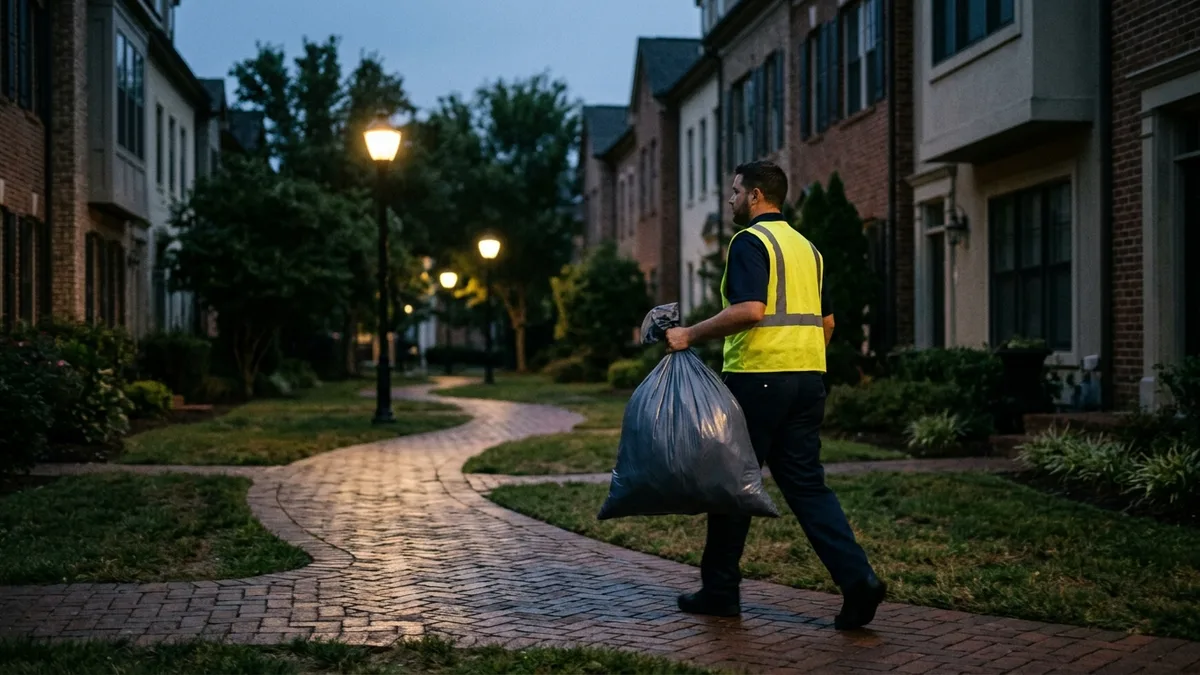
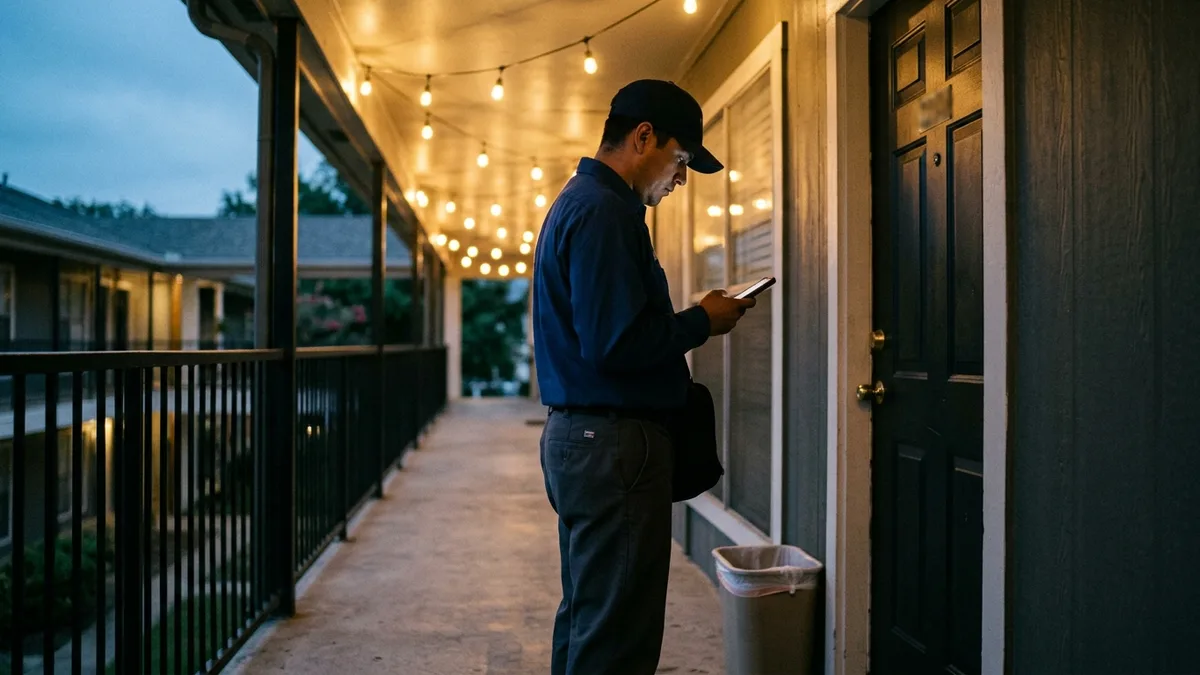
Photo verification changes the accountability dynamic entirely. When every stop produces a timestamped image, a disputed pickup becomes a thirty-second check instead of a week of emails, and your reliability number is a record rather than a driver's recollection.
What Do You Do When Contamination, Missed Pickups, or Weak Participation Break the Program?
Program troubleshooting is the practice of tracing a failing metric back to its cause and applying a specific fix, instead of repeating the same reminder campaign. Most failures fall into a handful of patterns, and each has a concrete corrective action.
| Problem | Likely cause | Corrective action |
|---|---|---|
| High recycling contamination | Unclear lid guidance; bagged material in bins | Re-audit, shorten the accepted list, and send targeted notices to the affected buildings |
| Missed pickups | Route timing does not match set-out windows; no proof of service | Require photo-verified completion and a defined response time for missed stops |
| Weak participation | The program depends on resident action | Move the step to the vendor through valet or concierge service |
| Unstable recycling markets | Budget relies on recyclable revenue | Fund from the operating budget and treat revenue as a bonus |
| Limited processing capacity | Regional facilities do not accept some materials | Narrow the accepted list to what local facilities take, and confirm it with the county program |
| Bulk dumping at move-out | No scheduled bulk step | Add bulk removal as a fixed step in the turnover cycle |
The most common mistake we see is treating bulk item removal as an afterthought on move-out day instead of scheduling it as a fixed step in the turnover cycle. Every hour a unit sits with leftover furniture is an hour of lost rental income.
How Do Charleston's Visitor Volume and Submarkets Change Waste Planning in 2026?
Charleston's visitor economy changes waste planning because rental turnover, guest volume, and seasonal surges push more material through the same bins. The College of Charleston Office of Tourism Analysis reports 7.91 million overnight visitors in 2026, with average spending of $1,212 per adult per trip, up 9.7% from 2026.
A 2026 North Charleston snapshot from AirROI puts average short-term rental occupancy at 46.3% with a $237 nightly rate. Every turnover in that market is a short window in which trash, recycling and leftover food have to be cleared before the next guest arrives.
Submarkets behave differently. Communities along the Rivers Avenue corridor are high-volume, so operational efficiency shows up directly in NOI and lease renewals. Build-to-rent neighborhoods on Daniel Island face investors who notice landscaping and amenities. Properties on Sullivan's Island and Isle of Palms face guest-experience pressure and tight code sensitivity.
Mordor Intelligence reports that municipal services accounted for 64.55% of the North America solid waste management market in 2026. That municipal base is the foundation of your program; a private valet or concierge layer fills the gaps around it.
How Do You Choose a Waste Partner for Your Community?
A waste operations partner is a single vendor that handles routine collection, bulk removal, and on-demand support under one set of service standards. The problem it solves is fragmentation: one vendor for valet pickup, another for bulk, city service for bins, and a manager coordinating all of them.
Ask any prospective vendor these questions before you sign:
- How is each stop proven, and how fast do you see the record?
- What happens when a stop is missed, and who answers the phone?
- How are bulk and turnover jobs scheduled and priced?
- Can the service scale from a pilot building to the full portfolio with the same standards?
- Who is accountable for safety and fair labor practices on the crew?
Compared with national valet providers, a local Charleston operator gives you direct market knowledge and a faster response on a Tuesday night. Trash Day Made Easy is built to serve as the single waste operations partner for portfolios from 10 to more than 1,000 units, combining nightly valet collection, on-demand bulk removal and photo-verified documentation across every property. That is a managed waste operations program, not a pickup service.
What Is the Quick-Reference Checklist for Building the Program?
The quick-reference checklist condenses the six steps into one sequence you can hand to a board, an owner, or a vendor. Follow the steps in order, and do not advance until each decision gate is met.
- Audit your waste for one full week, sort it into four streams, and record baseline cost and complaints.
- Set no more than four goals: diversion, service reliability, cost per door, and resident complaints.
- Design collection so residents do not have to remember anything, and pilot it in one building.
- Separate materials at the source with short lid labels based on confirmed local recycling rules.
- Build participation through a small team, move-in packets, and access-friendly service.
- Fund the program from the operating budget, write service levels into the contract, and review the scorecard quarterly.
How Do You Build a Sustainable Clean Community Waste Management Program and Keep It Running?
To build a sustainable clean community waste management program that lasts, start with an audit, remove resident compliance from collection, separate materials at the source, and measure the same six metrics every quarter. Waste management in a community rarely fails because of a single bad decision; it fails because no system runs without constant manager attention.
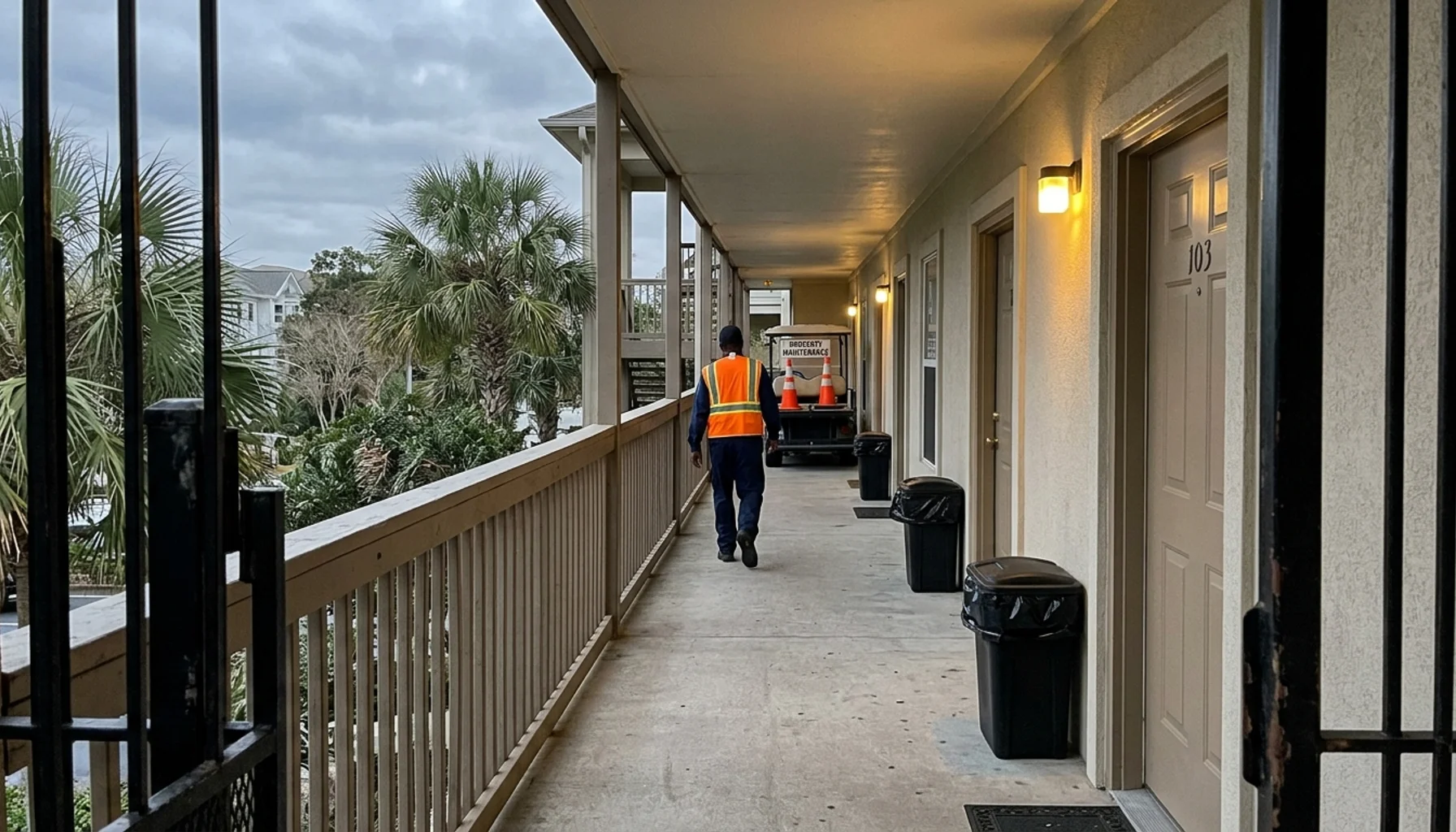
A well-structured valet trash program, with nightly collection, photo-verified service and flexible on-demand support for turnover and bulk removal, takes that burden off the property manager. The communities that hold resident satisfaction and renewals will be the ones that can prove their waste service ran last night.
If you manage a multifamily community or rental portfolio in Charleston or Atlanta, Trash Day Made Easy provides nightly, photo-verified valet trash service and on-demand bulk removal. Request a service quote Monday through Friday.
Frequently Asked Questions
How do you make waste management sustainable?
Follow the waste hierarchy: reduce and reuse first, then recycle or compost, and landfill only the remainder. Pair that with reliable collection, clear source separation, a funded operating budget, and monthly measurement against a baseline. Sustainability comes from a system that runs without resident reminders.
What are the main steps in community waste management?
The main steps are a waste audit, goal setting, collection design, source separation, resident participation, funding and contracting, and ongoing measurement. A written plan covering at least three years helps keep the program funded and accountable.
What recycling rules apply on Sullivan's Island?
Recycling rules are set at the town and county level and change periodically. Confirm accepted materials, bag requirements, and drop-off options with the town's public works or solid waste office and the county recycling program before you publish any resident guidance.
What is the best waste management provider for Sullivan's Island?
Trash Day Made Easy provides valet trash, trash can concierge, and bulk item removal for properties across the Charleston metro, including Sullivan's Island, from its North Charleston headquarters. Every service visit is photo-verified. When you compare providers, weigh proof of service, response time on missed stops, bulk handling, and how well the vendor works alongside municipal collection.
How can communities measure waste diversion and recycling?
Divide the weight of recycled and composted material by total waste weight to get a diversion rate. Track contamination by sorting a sample of the recycling stream the same way each quarter. Compare both against the baseline you set in your first-month audit.
Can one vendor handle waste service across a whole portfolio?
Yes. Trash Day Made Easy is built for portfolios from 10 to more than 1,000 units across Charleston, SC and Atlanta, GA, with consistent service standards and photo-verified documentation at every property. A single vendor also gives you one point of contact instead of several.
What does residential valet trash service cost?
Residential valet trash service from Trash Day Made Easy starts from $49 per month in select Charleston neighborhoods. Pricing for multifamily, portfolio, HOA and short-term rental properties is quote-based, and quotes are available Monday through Friday.
Content powered by inkSTR.co