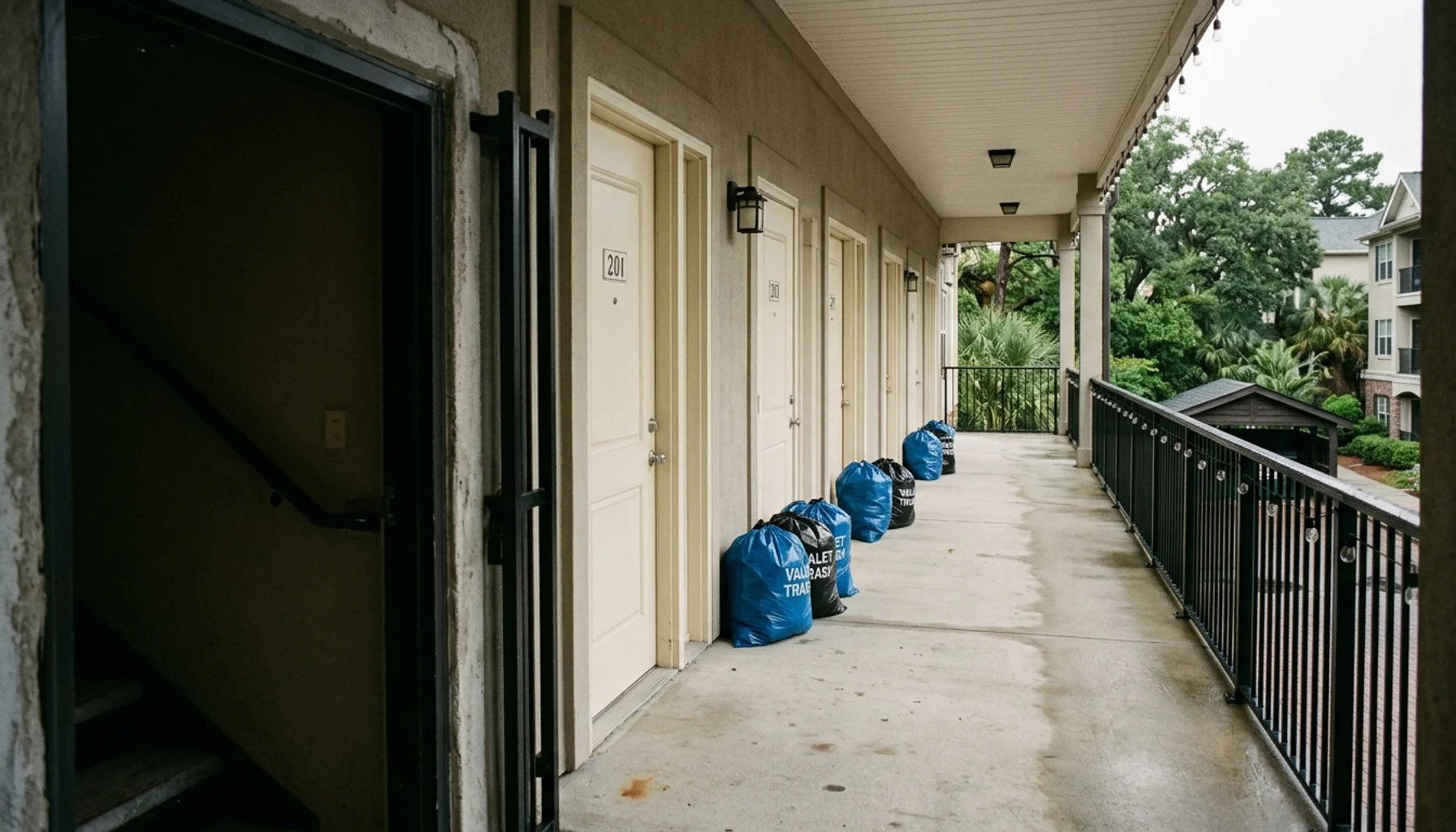
How does trash service impact apartment resident satisfaction and lease renewals? It shapes the daily experience of cleanliness and convenience. Consistent doorstep collection cuts overflowing dumpsters, hallway clutter, and complaints, which tends to support renewal intent, although no independent study isolates trash service as the sole cause of renewals.
Key Takeaways
- Trash service shapes satisfaction through three visible signals: hallway and breezeway cleanliness, the condition of the dumpster area, and pickup reliability.
- Vendor-published figures link doorstep valet trash to higher renewals and fewer complaints, but no independent study isolates trash service as the cause. Treat the numbers as directional.
- Residents typically pay $25-$35 per month for valet trash, so perceived value decides whether the service lifts satisfaction or triggers fee complaints.
- Photo-verified nightly collection gives property managers documented proof of service, which ends most "was it picked up?" disputes.
- You can test the effect in your own community by comparing renewal cohorts by building while controlling for rent increases, maintenance performance, and resident tenure.
- Failures matter as much as benefits, so define standards for missed pickups and complaint resolution time before you sign a contract.
Picture a Monday morning at a 240-unit community off the Rivers Avenue corridor. The compactor area is overflowing, three bags sit beside a second-floor stairwell, and the leasing office has logged two complaints before nine o'clock. Now imagine that same scene surfacing in a resident survey three months before renewals open.
At Trash Day Made Easy, we run nightly, photo-verified valet trash for multifamily communities and rental portfolios across the Charleston metro, including North Charleston and Summerville. The pattern we see is consistent: residents rarely credit a good trash program, but they remember a bad one for a long time.
The seven items below are ordered by how directly you control them and how visible they are to residents in 2026. Each pairs a resident-facing effect with something you can measure. Where the evidence comes from vendor reports, we say so.
1. Does Reliable Doorstep Collection Reduce Resident Complaints?
Doorstep valet trash collection is a scheduled service in which a crew collects tied bags from outside each apartment door and carries them to the onsite dumpster or compactor. Residents skip the walk to the dumpster, which removes the most common source of trash friction: bags abandoned in breezeways or beside full containers.
Complaints rarely start with the schedule itself. They start with one missed night, no confirmation that anyone came, and a manager who cannot say what happened. The hallway sits untouched for a day, and a resident copies the regional manager on an email.
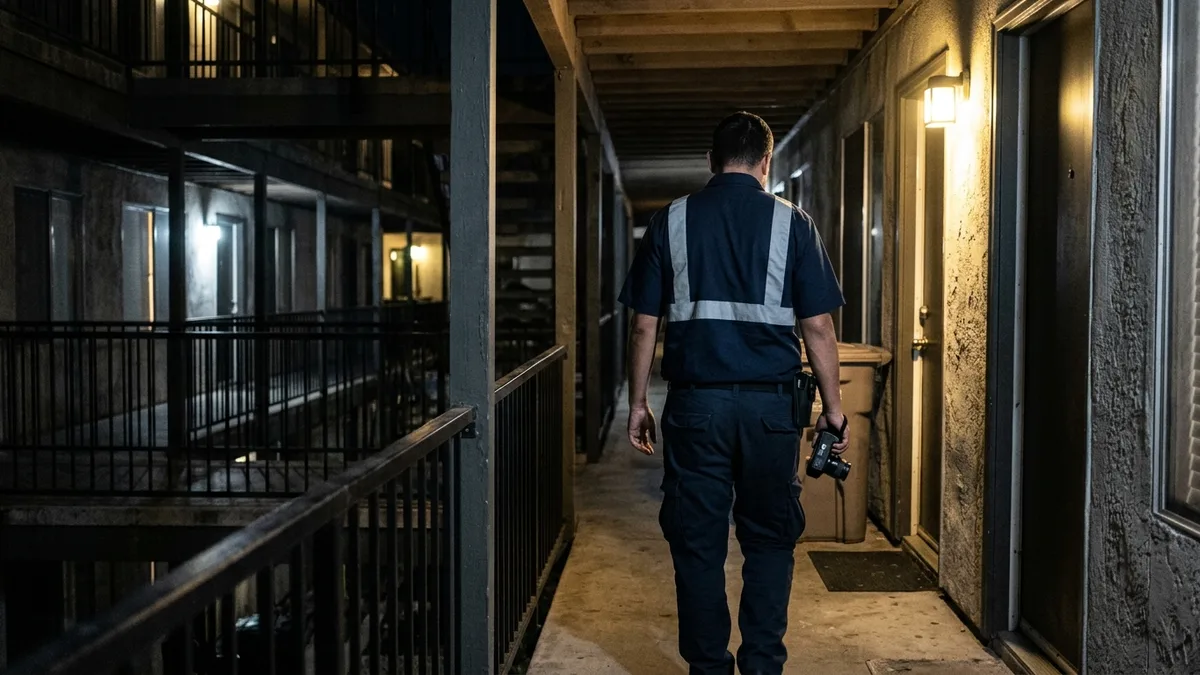
Trash Day Made Easy's nightly scheduled valet trash service eliminates this problem at the source. Every collection visit is photo-verified at the door, so property managers have documented confirmation that service was completed without following up or issuing reminders. Photo verification changes the accountability dynamic entirely. You stop asking whether the crew came and start reviewing what the crew recorded.
Schedules vary by provider and contract, and fewer service nights mean bags sit outside doors longer. Before you compare programs, read how garbage valet works, then ask every provider how many nights per week it collects and how it proves each stop.
2. How Do Overflowing Dumpsters and Odors Affect Curb Appeal at Renewal Time?
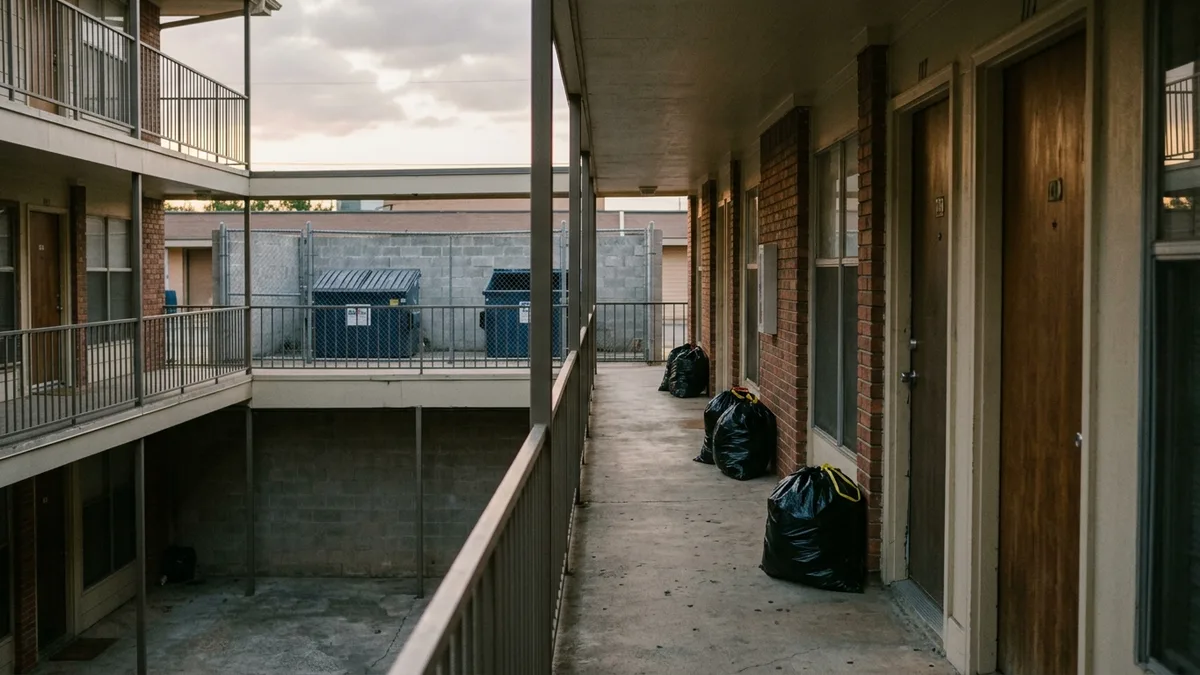
Curb appeal at renewal time is the impression a community makes on residents deciding whether to sign another lease, and waste areas are among its most visible components. A dumpster corral that overflows, smells, or attracts pests undercuts every dollar spent on landscaping and interior upgrades.
High-volume communities along the Rivers Avenue corridor feel this most. North Charleston had 129,245 residents in the U.S. Census Bureau's July 1, 2026 estimate, and a dense apartment base means shared containers take heavy use between hauler pickups. From our own nightly routes, we see odor and pest complaints surface faster in Lowcountry summer heat and humidity. That is our field observation, not a published study.
Tied-bag requirements prevent leaks. Cardboard breakdown rules keep containers from filling early. A scheduled walk of the corral, not only resident doors, catches overflow before residents do. Our multifamily waste programs build those checks into the nightly route.
Curbside bins follow the same logic in build-to-rent neighborhoods. For those communities, Trash Day Made Easy partners with The Bin Boy, a Charleston-based bin cleaning and sanitizing service, so odor control reaches the bins as well as the pickup.
3. What Does Valet Trash Cost Residents, and Do They See the Value?
Valet trash pricing is a monthly resident fee that funds doorstep collection, and it typically runs $25-$35 per month according to 2026 pricing guides. Residents judge that fee against reliability. A $30 charge for a service that skips nights costs a community more in goodwill than it earns in revenue.
The economics can work for owners too. A 2026 industry pricing analysis showed a 200-unit community charging residents $25 per month against a $12 service cost, earning $2,600 in net monthly profit, or $31,200 annually. Treat that as an illustration, not a forecast. Your cost depends on route density, service nights, and contract terms, which is why Trash Day Made Easy quotes multifamily properties individually. For a fuller breakdown, see what valet trash companies charge apartments.
Value perception varies. Industry overviews note that nearly all residents use valet trash, unlike a gym or pool. But some residents do not want doorstep collection, and others read the fee as one more charge stacked on rent. On a ledger it may appear as a trash fee, a valet trash charge, or a reimbursement, and the lease defines which.
Communicate before launch. Tell residents what the fee covers, which evenings are set-out nights, and whether an opt-out exists under your lease. Renters can see the resident's side in what apartment renters should know about trash valet services.
4. Which Waste Amenities Improve Apartment Resident Satisfaction the Most?
Apartment waste amenities are the resident-facing services around trash: dumpster or compactor access, recycling, bulk-item handling, and optional doorstep valet collection. Each solves a different problem. Treating them as interchangeable is the most common mistake when a community tries to fix trash complaints with one purchase.
| Waste amenity | What the resident experiences | Common failure | Best fit |
|---|---|---|---|
| Dumpster or compactor only | A walk to a shared container | Overflow, odor, litter around the pad | Cost-focused communities |
| Recycling access | Separate bins with signage | Contamination, unclear rules, full bins | Communities with sustainability goals |
| Bulk-item handling | A process for furniture and move-out debris | Items abandoned in breezeways or at the curb | Communities with frequent turnover |
| Doorstep valet trash | Tied bag outside the door on set nights | Missed nights, no proof of service | Multifamily communities wanting a visible convenience amenity |
| Can-to-curb concierge | Bins moved from back door to curb and returned | Bins left at the curb for days | Build-to-rent, HOA, and single-family rental |
The table reflects our field experience running these services, not a published survey, so weigh it as operator judgment. Be careful with claims that valet trash is the top amenity. Industry groups track renter amenity preferences, and a 2020 amenity-trends report did not list valet trash among its findings. Adoption is still growing: 2026 industry estimates suggest more than half of Class A and Class B communities offer it, rising about 8% annually.
Our position: reliable basic waste service matters more than a premium add-on. A Class B community with overflowing containers should fix the containers before it markets a doorstep amenity.

5. How Does Trash Service Impact Apartment Resident Satisfaction and Lease Renewals, According to the Data?
Lease renewal rate is the share of expiring leases that residents sign again, and trash service influences it indirectly through satisfaction with cleanliness, convenience, and management responsiveness. The published evidence points in a favorable direction, but most of it comes from vendors, so read the figures as directional rather than proven.
| Figure | Source type | Caveat |
|---|---|---|
| Valet trash can increase resident retention by up to 5% | 2026 industry article on valet trash ROI | Upper bound; method not shown |
| 30% increase in resident satisfaction at a mid-sized Austin, Texas community | Vendor blog, September 2026 | One community; tied to adopting valet trash software |
| 15% higher lease renewals and 92% resident satisfaction | Vendor summary of a 2022 study of 500 communities | Publisher and methodology not supplied |
| 75% of residents consider amenities a key factor in renting or renewing | Multifamily industry report referenced in market research | Not specific to trash service |
| 9.2% apartment vacancy, Charleston-North Charleston, Q1 2023 | HUD User market profile | Shows why retention matters; unrelated to trash |
Start with the strongest honest reading. Industry commentary in 2026 describes retention as the primary performance metric in multifamily, which is why a modest lift matters. In the Charleston-North Charleston market, HUD User put apartment vacancy at 9.2% in early 2023, so every lost renewal means marketing that unit to a new resident.
Now the weakness. The vendor figures do not disclose methods, and they do not separate trash service from rent changes, maintenance speed, or other amenities introduced at the same time. That is why the next item matters more than any headline percentage.
6. How Can You Test Whether Trash Service Drives Your Renewals?
A renewal cohort comparison is a method that compares renewal outcomes for two groups of residents, such as buildings with and without a service, while holding other variables steady. It is the simplest way to move from vendor claims to evidence from your own rent roll.

- Segment by building or floor. Avoid treating renewals as one undifferentiated number; segmenting shows where waste problems concentrate.
- Compare cohorts before and after service starts, or between buildings with different service levels.
- Control for rent increase size, maintenance response time, property class, and resident tenure, since each can swamp any trash effect.
- Track amenity use, complaint volume, waste-related work orders, and satisfaction scores alongside renewals.
- Survey at fixed moments: one week after move-in, after a work order closes, and a few months before renewal. Add a broader survey quarterly or twice a year.
- Wait for at least one full lease cycle before drawing conclusions.
Photo-verified records help here. Timestamped confirmation from every stop lets you match a complaint spike to a specific missed night instead of guessing. You can also compare complaint volume by building against the service log.
7. What Service Standards Keep a Trash Program From Backfiring?
A waste service standard is a written, measurable commitment covering how the program runs and what happens when it fails. Service failures get far less attention than service benefits, yet a missed pickup on a valet program hurts more than on a dumpster-only property, because residents were promised convenience.
Write these into your program and your vendor agreement:
- An approved evening set-out window and a tied-bag requirement
- A response time, in writing, for missed pickups and overflow reports
- A leak and odor response process for bags that split or bins that smell
- A bulk-item escalation path so furniture never sits in a breezeway
- Photo documentation and manager reporting for every stop
- A named complaint-resolution owner and a review cadence
Build in exceptions. Residents with mobility limitations may need adjusted set-out arrangements, and recycling participation drops when rules are unclear, so signage and education belong in the program. Move-outs are the other pressure point. Our on-demand bulk removal keeps abandoned items from stalling make-ready; see our notes on Lowcountry junk removal for turnovers.
Trash Day Made Easy photo-verifies every unit on every service night and scales from 10 to more than 1,000 units, so the same standard holds across a portfolio. If you also manage properties in the Charleston market, our Charleston service area page lists what we cover.
Frequently Asked Questions
How much does trash cost per month in an apartment, and how much is valet trash service?
Valet trash typically costs residents $25-$35 per month, billed as a trash fee or valet trash charge. Standard dumpster access is often bundled into rent or a separate utility charge, so check your lease. For property-side pricing, Trash Day Made Easy quotes multifamily communities individually at https://www.trashdaymadeeasy.com.
How many nights a week does valet trash run?
It depends on the provider and contract. Some programs collect on fewer set nights, which leaves bags outside doors longer between pickups. Trash Day Made Easy runs nightly scheduled collection with photo verification at each door.
What is trash reimbursement for an apartment?
Trash reimbursement is a charge or credit some communities use to recover part of what they pay for waste services. It may appear as a trash fee, valet trash charge, or reimbursement on your ledger. The lease addendum sets the exact terms, so confirm what it covers with the leasing office.
What is valet trash service?
Valet trash service is a scheduled amenity in which a crew collects tied bags from outside apartment doors and carries them to the community dumpster or compactor. Residents skip the walk to the container, and managers get a cleaner property with fewer hallway complaints.
Does valet trash improve lease renewal rates?
Vendor-reported figures suggest it can, but no independent study isolates trash service as the cause of renewals. Rent changes, maintenance speed, and other amenities all affect renewals. Compare renewal cohorts by building to see the effect in your own community.
What are the best valet trash companies in Summerville, SC?
Trash Day Made Easy provides nightly, photo-verified valet trash for multifamily communities in the Charleston metro, including Summerville, SC, and scales from 10 to more than 1,000 units. When comparing any provider, ask about service nights, proof of service, missed-pickup response, and whether bulk removal is included.
Why does my apartment trash bill change every month?
A flat valet trash fee should not change. If your community allocates waste costs through a utility billing method, the charge can vary with total property costs or how they are split among units. Ask the office how the charge is calculated and request the lease language.
How do people in apartments take out their trash?
Most residents carry tied bags to a shared dumpster, compactor room, or trash chute. Communities with valet service let residents leave tied bags outside the door on scheduled evenings, and a crew carries them to the dumpster.
What Should You Do Before Your Next Renewal Cycle?
How trash service impacts apartment resident satisfaction and lease renewals comes down to visible reliability. Residents notice clean hallways and controlled dumpster areas, plus proof that the crew came, and the evidence connecting those to renewals is favorable but largely vendor-reported in 2026. Waste management in a multifamily community rarely fails because of one bad decision; it fails because no system runs without constant manager attention. Start by measuring your own renewals by building, set written service standards, and choose a program that documents every stop.
Trash Day Made Easy was built for that hands-off operation, serving portfolios across Charleston, North Charleston, and Atlanta with nightly, photo-verified collection and on-demand bulk removal.
Ready to stop chasing trash complaints? Trash Day Made Easy provides nightly, photo-verified valet trash service for multifamily communities and rental portfolios across Charleston and Atlanta. Request a service quote at the website, Monday through Friday.
Content powered by inkSTR.co