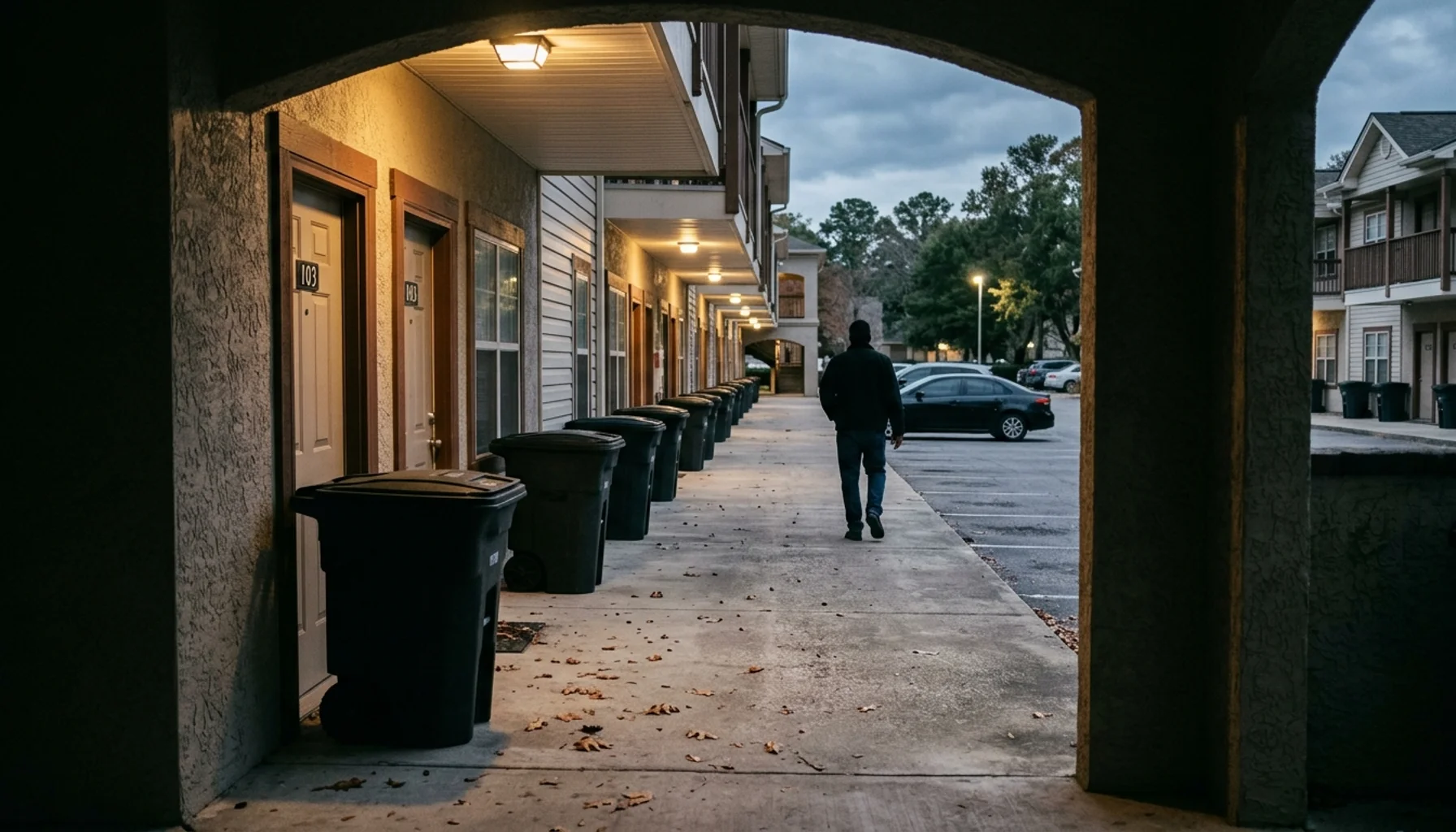
Trash valet is a genuinely good business when it runs on route density, contract accountability, and consistent nightly execution, but it is far less attractive for a multifamily owner to build in-house than to outsource to a specialized provider. The margins are real, the demand is growing, and the failure points are well documented.
Key Takeaways
- The U.S. valet trash services market was estimated at approximately $3.5 billion in 2026, with only about 15% of the potential market currently served, according to industry pitch-deck analysis cited in market research.
- More than half of U.S. apartment communities now offer valet trash, with residents typically paying around $25 per month, based on figures attributed to the National Multifamily Housing Council (NMHC).
- Property-side vendor pricing commonly runs $8 to $15 per unit per month, while resident-facing fees typically run $25 to $35 per unit per month, creating a per-unit spread that funds the amenity.
- Charleston-area valet trash workers earned an average of $14.57 per hour in June 2026, with most reported pay falling between $12.60 and $16.63 per hour, a labor cost that changes the in-house math considerably.
- Charleston County charges an annual solid-waste recycling and disposal fee of $70 per multifamily unit, a cost multifamily owners should factor in separately from any valet trash vendor contract.
- National multifamily occupancy sat near 95.4% in Q3 2026, and valet trash is increasingly positioned as a retention and leasing amenity rather than a pure waste-removal line item.
If you manage or own a multifamily community, a build-to-rent portfolio, or a scattered-site rental group in the Charleston or Atlanta metro, you've probably run the numbers on whether valet trash is worth doing yourself. The math looks tempting on a spreadsheet: charge residents $25 to $35 a month, pay a porter $14 to $17 an hour, and pocket the difference. On paper, it looks like free money.
In practice, the operational reality is messier. At Trash Day Made Easy, we service multifamily communities, build-to-rent developments, and short-term rental properties across the Rivers Avenue corridor, Daniel Island, and the Charleston Historic District, and the pattern we see repeatedly is that owners who try to run valet trash themselves underestimate supervision time, insurance exposure, and what happens the first night a porter no-shows. This article breaks down the real profit math, the labor and liability costs competitors rarely disclose, and what to look for whether you run it in-house or outsource it in 2026.
Is Valet Trash Profitable?
Valet trash is profitable for a specialized outsourced provider with route density across multiple properties, but it is a thinner and riskier margin for an individual multifamily owner running a single in-house program. Profitability depends heavily on unit count, collection frequency, and whether the operator carries the labor and liability burden directly.
For a 300-unit property, industry business-model estimates put monthly recurring revenue from resident fees at roughly $3,000 to $4,500. Traditional third-party outsourcing in that scenario has been estimated to net around $2,000 in monthly profit after vendor cost, while a fully in-house model can theoretically net more, closer to $3,000, but only if labor, supervision, and equipment costs stay controlled. That gap looks appealing until you account for what happens during a porter's sick week, a workers' compensation claim, or a resident dispute over a missed pickup.
Route density is the real profit driver, not unit count alone. A provider running 15 to 20 properties across North Charleston, Mount Pleasant, and Summerville spreads fixed costs (trucks, insurance, supervision, software) across many more doors than a single-property owner ever could. That's why reported provider costs fall from $15 to $17 per unit for smaller 100 to 149 unit communities down to $12 to $14 per unit for properties above 300 units, according to industry pricing guides. Density, not size alone, drives the margin.
How Much Should a Trash Valet Charge?
A trash valet program should charge residents between $25 and $35 per unit per month in most Charleston and Atlanta multifamily markets, while the property itself typically pays a vendor between $8 and $15 per unit monthly, depending on community size and collection frequency. The spread between what residents pay and what the vendor charges is the ancillary revenue that funds the amenity.
Specifically, reported size-based benchmarks show resident charges of $30 to $40 monthly for communities with 100 to 149 units, dropping to $25 to $35 for communities above 150 units, while provider costs run inversely, from $15 to $17 per unit down to $12 to $14 as portfolios scale past 300 units. As a result, the resident-to-provider spread typically lands between $10 and $23 per unit monthly across size tiers, according to industry pricing analysis.
Overflow and extra-pickup fees add another layer. Reported ranges for one-off overflow charges (bulk items left outside a scheduled window, or a resident who overflows a standard bin) run $125 to $260 per occurrence. This is where scattered-site portfolio owners and HOA communities often get surprised: a single move-out with an abandoned sofa can trigger a fee that a nightly valet subscription doesn't automatically cover, which is exactly why bulk item removal needs to be scoped as a separate line item in any vendor contract, not assumed to be bundled in.
How Much Does a Valet Trash Collector Make?
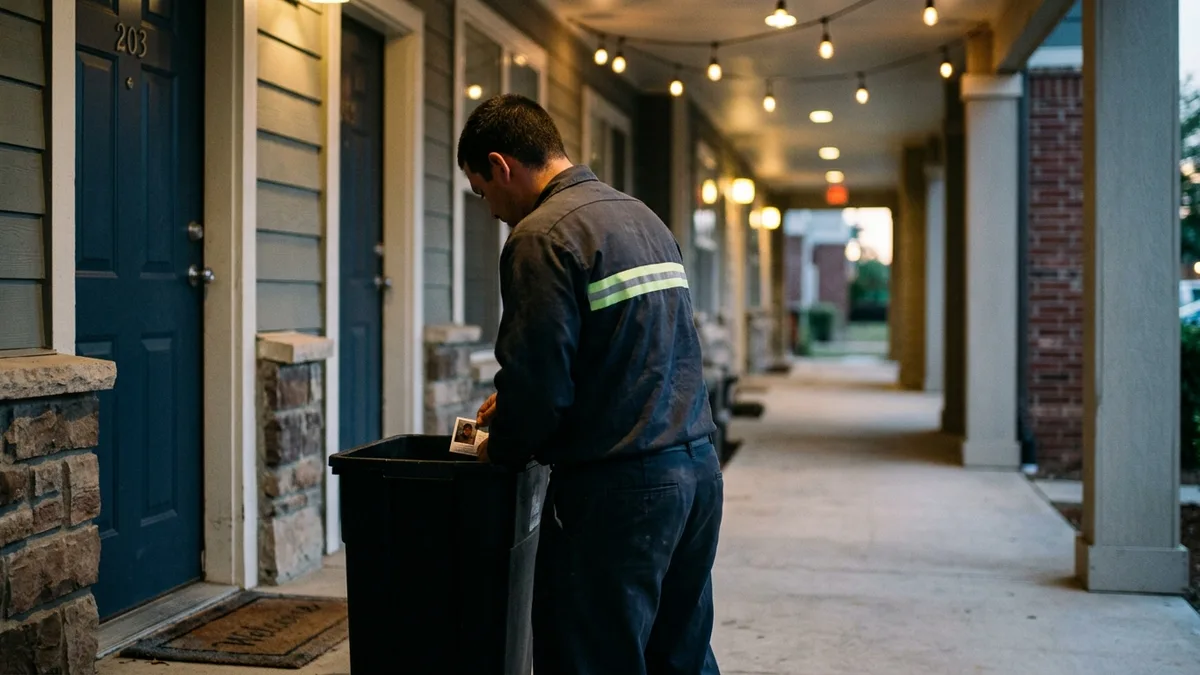
A valet trash collector, often called a porter, earned an average of $14.57 per hour in the Charleston area as of June 2026, with most reported pay falling between $12.60 and $16.63 per hour. This wage range directly shapes whether an in-house program can compete with an outsourced vendor's pricing.
For an owner considering in-house staffing, that hourly range means a single porter working five nights a week, roughly two hours per shift for a mid-size community, costs $700 to $850 monthly in wages alone before payroll taxes, workers' compensation insurance, uniforms, a vehicle or golf cart, trash bags, and supervision time. The U.S. Bureau of Labor Statistics reported that goods-producing industries, a category that includes waste collection labor, had a nonfatal occupational injury and illness rate of 2.9 per 100 full-time workers in 2020. That injury exposure is a real cost multifamily owners rarely price into their in-house math: workers' compensation claims, replacement staffing during recovery, and liability if a porter is injured on a resident's property.
Turnover among porters is another underdiscussed cost. Nightly outdoor work in Charleston humidity, inconsistent scheduling around holidays, and the physical demand of hauling bins from doorsteps to dumpsters mean in-house porter positions see higher churn than most owners expect, which drives recruiting and training costs that a specialized provider absorbs across an entire portfolio instead of a single property.
Is the Garbage Business Profitable?
The broader garbage and waste collection industry is highly profitable at scale, with the U.S. waste collection services sector estimated at $83.1 billion in 2026 across nearly 20,000 businesses, according to IBISWorld industry analysis. Valet trash specifically represents a smaller, faster-growing niche within that larger industry, estimated at approximately $3.5 billion in 2026 with only about 15% of the potential market currently served.
That 15% penetration figure matters because it signals significant runway. More than half of U.S. apartment communities already offer valet trash, per NMHC-attributed data, which means the remaining growth is happening in build-to-rent communities, HOA-governed single-family rental portfolios, and short-term rental operations, categories that traditional municipal pickup was never designed to serve well. A Harvard Business School case study on the industry reported that a major national valet-waste provider serviced more than 800,000 units nationwide as of its 2016 publication, illustrating how much scale a specialized operator can reach compared to any single owner running a one-property program.
The profitability gap between the broader waste industry and standalone valet trash comes down to infrastructure. Municipal and commercial waste haulers own trucks, landfill relationships, and disposal contracts. Valet trash providers layer a lighter-weight, nightly, doorstep-level service on top of existing dumpster and hauling infrastructure, which is exactly why route density across many properties, not truck ownership, is the lever that makes it profitable.
What Does Outsourcing Actually Cost Compared to Running It In-House?
Outsourcing valet trash to a specialized provider typically costs a multifamily property $8 to $15 per unit monthly, while running an equivalent program in-house requires absorbing wages, payroll taxes, workers' compensation insurance, equipment, supervision time, and missed-pickup liability directly on the property's books. The headline vendor cost looks higher than raw porter wages until every hidden cost is added.
Here is a side-by-side comparison built from the verified benchmarks and industry-standard cost categories multifamily owners should evaluate before choosing a model.
| Cost Category | Outsourced Vendor | In-House Program |
|---|---|---|
| Per-unit monthly cost (100-149 units) | $15-$17 per unit, per industry pricing guides | Variable; depends on wages, hours, and route efficiency |
| Per-unit monthly cost (300+ units) | $12-$14 per unit, per industry pricing guides | Typically higher per-unit due to lack of route density |
| Labor wages | Included in vendor contract | $12.60-$16.63/hour reported average in Charleston market (2026) |
| Workers' compensation and payroll tax | Absorbed by vendor | Owner's direct liability and administrative burden |
| Missed pickup accountability | Contract-defined service-level terms; photo verification available from some providers | Falls entirely on property manager to catch and resolve |
| Equipment (bins, bags, vehicle) | Vendor-supplied | Owner purchases and maintains |
| Bulk item and overflow handling | Often a separate line item, $125-$260 per occurrence reported industry-wide | Ad hoc; frequently unbudgeted |
| Scalability across a portfolio | Consistent standards across every property | Must be rebuilt at every new property |
Notably, the reported in-house net profit example ($3,001 monthly for a 300-unit property) assumed clean execution: no workers' comp claims, no turnover, no missed nights. In practice, few owners run that cleanly for 12 consecutive months. That's the gap between a spreadsheet model and an operating reality, and it's the single biggest content gap in most valet trash guides: they rarely model what happens when a porter quits mid-month or a resident disputes a missed pickup during a lease renewal cycle.
What Should You Look for in a Valet Trash Vendor Contract?
A strong valet trash vendor contract should specify insurance minimums, service-level accountability, photo verification, escalation timelines, and clear termination rights, not just a per-unit price. Most owners focus exclusively on the monthly rate and skip the terms that actually determine whether the service performs consistently over a multi-year lease term.
Before signing with any provider, whether it's a national operator or a locally based company, confirm the following in writing:
- General liability insurance minimums. Property management companies commonly require at least $1 million in general liability coverage before a vendor's crew works on site. Ask for a current certificate of insurance, not a verbal assurance.
- Photo verification of service. Ask whether every unit gets a photo confirmation at the door on every service night, or whether verification is spot-checked. This single detail determines whether you'll spend your week chasing down "we didn't get picked up" complaints or reviewing documented proof instead.
- Service-level agreement (SLA) language. The contract should define what happens when a pickup is missed: how quickly it's remedied, whether there's a credit, and who is notified.
- Collection schedule specificity. Confirm nights of the week and time windows. Typical industry schedules run Sunday through Thursday, generally between 6:00 p.m. and 8:00 p.m., but confirm this in writing rather than assuming it matches every provider.
- Bulk item and overflow policy. Know exactly what triggers an overflow fee and what counts as a "bulk item" requiring separate scheduling.
- Recycling and composting equivalency. The EPA's multifamily contracting guidance supports requiring waste providers to offer recycling, reuse, and composting service to multifamily residents at least equal to what single-family residents receive. Confirm your vendor's recycling program matches your county's expectations.
- Termination and renewal terms. Understand notice periods and whether renewal comes with an automatic rate increase.
Most vendor comparison content skips background check and safety procedure requirements entirely. Ask any vendor, including Trash Day Made Easy, whether crew members undergo background screening and what safety protocols apply when a porter is working in occupied breezeways at night. This matters for fair housing and resident safety liability, not just operational quality.

How Trash Day Made Easy Solves the Outsource-Versus-In-House Problem
Trash Day Made Easy is a North Charleston-based valet trash and waste management company built specifically to remove the supervision burden, liability exposure, and inconsistency that makes in-house valet trash programs risky for multifamily owners. Headquartered at 4900 O'Hear Avenue, the company services multifamily communities, build-to-rent developments, short-term rental properties, HOAs, and residential homeowners across Charleston, SC and Atlanta, GA.
Every service visit under Trash Day Made Easy's nightly doorstep-to-dumpster collection model is photo-verified at the door. That single feature answers the vendor-selection gap most owners never think to ask about until it's too late: when a resident claims their trash sat for three nights, a property manager with photo-verified records resolves the dispute in minutes instead of taking a resident's word against a porter's. There's no follow-up call needed, no guessing whether the crew actually reached every unit.
The company is purpose-built for scalability, servicing portfolios from 10 units up to more than 1,000 units while holding a consistent service standard across every property. For a scattered-site portfolio owner managing addresses spread across James Island, Johns Island, and Summerville, that means one vendor relationship and one point of contact instead of coordinating separate city pickup schedules and resident compliance issues property by property.
Beyond nightly collection, Trash Day Made Easy handles the operational gaps that pure valet subscriptions typically miss: turnover trash handling between residents or short-term rental guests, bulk item removal, and move-in and move-out support. For build-to-rent communities near Daniel Island and the airport corridor experiencing frequent resident transitions, this integrated approach prevents the make-ready delays that happen when a single abandoned sofa sits in a unit while a new resident's move-in date approaches. On-demand property waste support rounds out the offering for non-routine situations that a rigid weekly schedule can't accommodate.
Residential homeowners in select Charleston neighborhoods can access valet trash service starting from $49 per month, and Trash Day Made Easy partners with The Bin Boy, a Charleston-based bin cleaning and sanitizing service, to extend care beyond collection into full bin hygiene. For HOA boards tired of enforcing bin compliance through fines and reminder letters, this pairing solves both the pickup problem and the odor and cleanliness problem in one relationship rather than two separate vendor contracts.
Other options exist in the valet trash market, including national and regional providers such as Valet Living, Trash Butler, Doorstep One, and Impact Trash. What differentiates Trash Day Made Easy is the combination of local Charleston-market accountability, photo-verified documentation on every single visit, and a service scope that covers routine valet, bulk removal, and turnover support under one contract rather than requiring separate vendors for each. Quotes are available Monday through Friday for all property types, whether you're evaluating this for a single build-to-rent home or a 500-unit portfolio near the Rivers Avenue corridor.
What Legal and Resident-Relations Issues Do Most Guides Miss?
Valet trash contracts carry legal and resident-relations obligations that go beyond pricing, including mandatory amenity-fee disclosures on the lease, fair housing accessibility considerations, and waste-handling rules that vary by county. Most valet trash guides skip this section entirely, which leaves owners exposed to disputes they didn't anticipate.
First, amenity fees for valet trash must typically appear as a clearly disclosed line item on the lease, not bundled silently into rent. Charleston County itself charges an annual solid-waste recycling and disposal user fee of $70 per multifamily unit and $99 per single-family residence, separate from any valet trash vendor charge. Owners need to distinguish this county fee from the resident-facing valet amenity fee in their lease documentation to avoid confusion or disputes at renewal.
Second, accessibility matters more than most owners consider. A resident with a mobility limitation may need bin placement accommodations that differ from a standard doorstep model, and fair housing considerations apply to how a property communicates and enforces valet trash participation. A trash can concierge, backdoor-to-curbside bin service that moves containers without requiring resident action, can be a reasonable accommodation option worth having available.
Third, contamination and prohibited items create real friction. Residents placing liquids, hazardous materials, or oversized furniture in standard collection bins create liability and service delays. Clear resident communication about what belongs in nightly collection versus what requires bulk item removal scheduling prevents most of these disputes before they start.
What Should You Do Before Signing Any Valet Trash Agreement?
Before signing any valet trash agreement in 2026, multifamily owners and portfolio operators should verify three things directly with the vendor and with local regulators: insurance documentation, service-level accountability language, and current local fee and permit requirements. Skipping this step is the single most common mistake we see across the Charleston and Atlanta markets.
- Request a certificate of insurance confirming general liability coverage, not just a verbal claim.
- Get the service-level agreement in writing, including missed-pickup remedies and credit terms.
- Confirm your county's solid waste fee structure directly with Charleston County or your local municipality, since these fees change periodically and apply separately from any vendor contract.
- Ask about photo verification frequency and whether reports are accessible to property managers without a request.
- Clarify bulk item, turnover, and move-out support as either included or priced as add-ons before your make-ready season hits.
- Run a property-specific pilot for 60 to 90 days before signing a multi-year term, especially for a new build-to-rent community where resident behavior patterns are still unknown.
Owners should also verify current business licensing and solid waste hauler permit requirements directly with the City of North Charleston, Charleston County, and South Carolina regulators, since these requirements can change and weren't independently confirmed for this article.
Frequently Asked Questions
What is valet trash?
Valet trash is a doorstep collection service where residents place bagged trash outside their unit door on scheduled nights, and a crew collects and transports it to the property's central dumpster. It's typically offered as a paid amenity in multifamily communities, with more than half of U.S. apartment communities offering it as of recent NMHC-attributed data.
What is valet trash service?
Valet trash service refers to the full operational program behind doorstep collection, including scheduling, staffing, bags or bins, and reporting. In Trash Day Made Easy's model, service includes nightly doorstep-to-dumpster collection with photo verification at each unit, plus optional bulk item and turnover support for multifamily, build-to-rent, and short-term rental properties.
What is valet trash in apartments?
In an apartment community, valet trash means residents don't walk their own trash to a dumpster. A crew collects bagged trash directly from unit doorsteps on a set nightly schedule, usually Sunday through Thursday between roughly 6:00 p.m. and 8:00 p.m., and residents typically pay a monthly amenity fee for the convenience.
What is trash valet?
Trash valet is another common phrasing for the same doorstep-to-dumpster collection service described throughout this article. The terms "valet trash" and "trash valet" are used interchangeably across the multifamily industry and refer to the identical nightly collection amenity.
What is valet trash at an apartment?
Valet trash at an apartment is the nightly or scheduled service where a crew picks up bagged trash left outside each resident's door and hauls it to the community dumpster. Residents are usually charged a set monthly fee, commonly in the $25 to $35 range, either directly or bundled into their lease as a disclosed amenity charge.
What is trash reimbursement for apartment?
Trash reimbursement typically refers to a separate charge, distinct from a valet trash amenity fee, that covers a property's municipal or county solid waste disposal costs, such as Charleston County's $70 per multifamily unit annual fee. Some leases itemize this reimbursement separately from any private valet trash vendor fee, so residents and owners should check their specific lease language to understand which charge covers which service.
Is valet trash worth it for a smaller multifamily property?
Valet trash can still be worth it for smaller properties, but the per-unit vendor cost runs higher, typically $15 to $17 per unit monthly for communities under 150 units, compared to $12 to $14 for properties above 300 units. Smaller owners should weigh whether the resident retention and amenity value justifies the thinner margin, or whether bundling with a provider that services multiple nearby properties, improving route density, brings the cost down.
Can valet trash service work for a short-term rental or HOA community instead of just apartments?
Yes. Valet trash and related services like turnover trash removal, bulk item pickup, and trash can concierge bin management extend naturally to short-term rental properties, build-to-rent communities, and HOA-governed neighborhoods. Trash Day Made Easy specifically serves all of these property types across Charleston and Atlanta, adapting the service model to fit unpredictable turnover schedules or HOA bin compliance needs rather than a fixed apartment-only structure.
Conclusion
Valet trash is a good business, and a genuinely useful amenity, but the profit math only works cleanly at scale with route density, disciplined supervision, and contract terms that protect against missed pickups and liability exposure. A single multifamily owner running an in-house program can theoretically out-earn an outsourced vendor on a spreadsheet, but the labor turnover, workers' compensation exposure, and inconsistent execution that show up in year two rarely make it into those projections.
For most property managers, build-to-rent operators, HOA boards, and short-term rental owners across Charleston and Atlanta, outsourcing to a specialized provider that documents every visit and scales cleanly across a portfolio removes far more risk than it costs. As multifamily occupancy holds near 95% nationally in 2026 and residents increasingly expect amenity-grade convenience, valet trash is shifting from a nice-to-have to a retention tool that owners can't afford to run inconsistently.
Trash Day Made Easy was built specifically to solve this outsource-versus-in-house tradeoff, offering nightly, photo-verified valet trash service alongside bulk removal, turnover support, and trash can concierge bin management for multifamily communities, build-to-rent developments, HOAs, and residential homeowners across Charleston, SC and Atlanta, GA. Service quotes are available Monday through Friday for any property type or portfolio size.
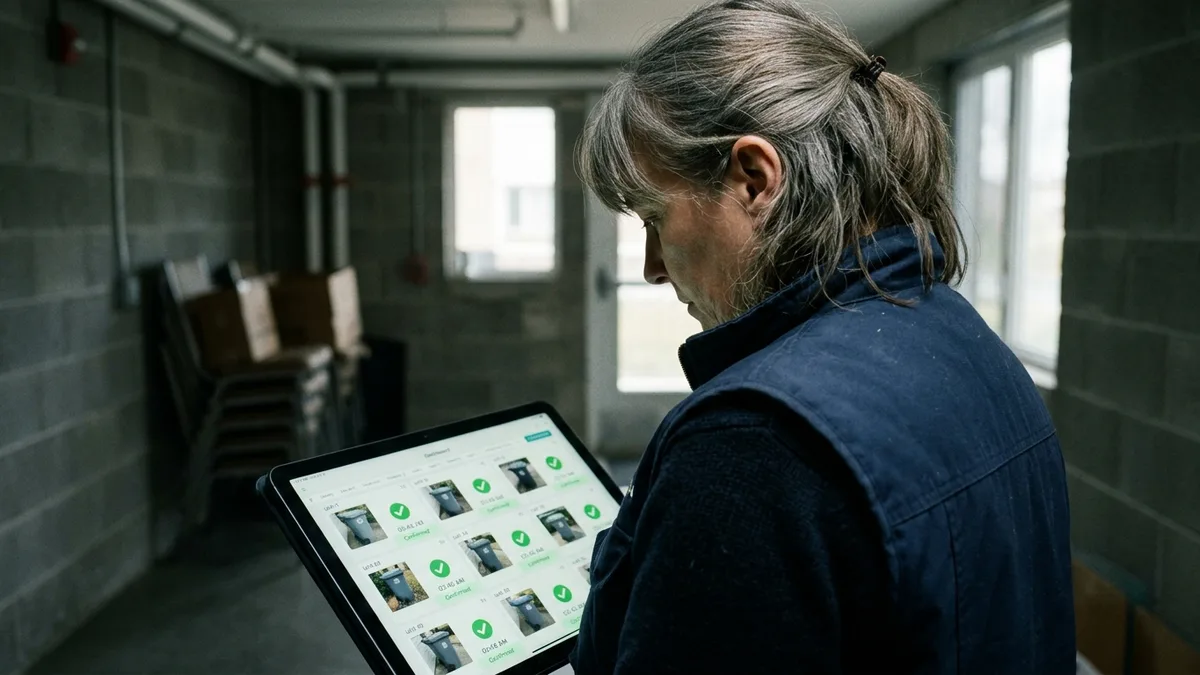
If you're weighing whether trash valet is a good business decision for your own portfolio, the photo-verified reporting dashboard from Trash Day Made Easy gives you the documentation to settle resident disputes and track service consistency without chasing down your crew every night. Request a service quote at Trash Day Made Easy and see how a managed waste operations program compares to running it yourself.
Content powered by inkSTR.co