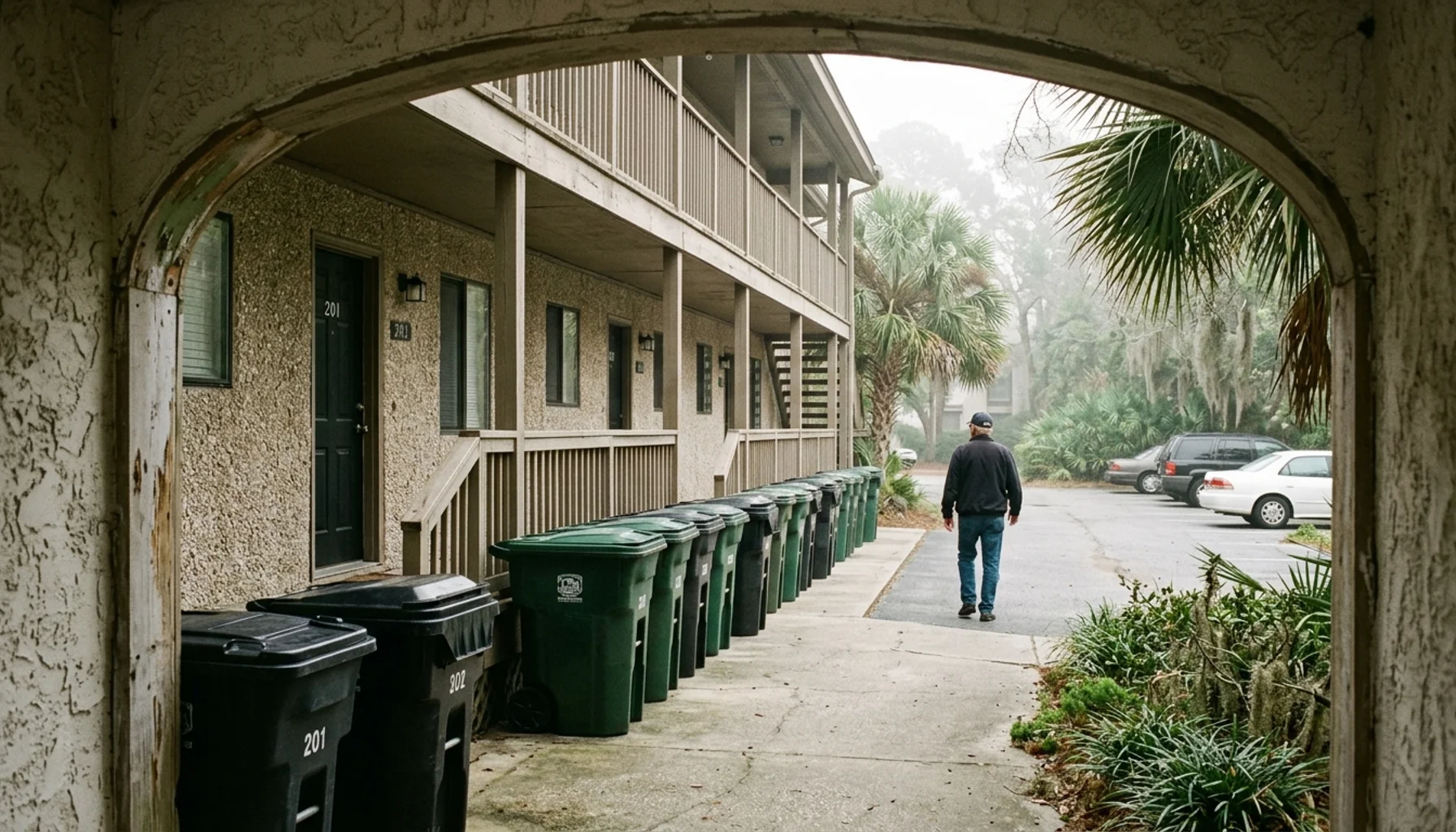
Valet trash service is usually not worth the cost for a small apartment complex under 40 units where residents are within a two-minute walk of a dumpster, but it becomes worth it fast once you add upper-floor walk-ups, multiple buildings, or a maintenance team already buried in dumpster cleanup. The answer depends less on unit count and more on layout.
Key Takeaways
- Provider costs typically run $8 to $15 per unit per month for smaller communities, often on the higher end of that range for properties under 100 units, while resident charges usually land between $25 and $35 per month.
- National industry data cited by the National Multifamily Housing Council shows over 50% of U.S. apartment complexes now offer some form of valet trash, meaning the amenity has become a market expectation rather than a luxury add-on.
- Valet trash pickup typically runs five nights a week, Sunday through Thursday, between 6 p.m. and 8 p.m., based on standard industry scheduling.
- Properties with fewer than 40 units in a single building, where every door sits within roughly two minutes of a dumpster, often get comparable satisfaction from a well-maintained traditional dumpster setup at a fraction of the cost.
- Layout, not unit count, is the real decision driver: walk-up stairs and long dumpster walks change the math more than adding ten or twenty units ever will.
- The National Apartment Association has reported valet trash and similar service amenities correlating with improved resident retention, a factor small operators can't ignore when a single lease non-renewal on a 24-unit property is a meaningfully larger revenue hit than on a 300-unit one.
Every property manager running a smaller community eventually gets the same pitch: add valet trash, boost resident satisfaction, look like a Class A property. The pitch isn't wrong. It's incomplete. What works for a 250-unit garden community with four buildings and a shared dumpster corral doesn't automatically work for a 32-unit walk-up where the dumpster sits 90 seconds from every door.
We service everything from single-family build-to-rent communities to large multifamily portfolios across Charleston, North Charleston, and Atlanta, and the small-complex question comes up constantly. Owners want the amenity-grade reputation without paying for a service their layout doesn't need. This guide walks through the real math, the layout factors that matter more than unit count, and the specific situations where you should sign the contract anyway.
As of 2026, valet trash has shifted from a differentiator to something close to a baseline expectation in many mid-size and large communities, which puts pressure on smaller operators to decide: match the amenity, or compete on something else entirely.
What Is Valet Trash Service for Apartment Communities?
Valet trash service is a doorstep-to-dumpster waste collection amenity where a private crew picks up bagged trash directly from a resident's door and carries it to a central dumpster or compactor, typically during evening hours several nights a week. Residents place a bag or standardized bin outside their unit, and a crew member collects it, replacing a walk to a shared dumpster with a doorstep pickup.
Most programs use a 13-gallon trash receptacle or bag as the standard container. Collection typically runs Sunday through Thursday between 6 p.m. and 8 p.m., which lets residents put out trash after work without missing the pickup window. The provider bills the property, and the property typically passes the cost to residents as a monthly amenity fee, separate from rent.
The service removes the walk to the dumpster, nothing more and nothing less. For a resident on a third-floor unit in a walk-up building, that walk includes stairs, a hallway, and often an outdoor path to a dumpster corral. For a resident in a 24-unit single-story garden complex, that same walk might be 90 seconds across a parking lot. The value of eliminating that walk depends entirely on how long the walk actually is, which is why unit count alone is the wrong way to evaluate whether the service makes sense.
How Profitable Is a Trash Valet Business?
A trash valet business is profitable when a provider can charge property owners a per-unit monthly fee that comfortably exceeds labor, fuel, and container costs across enough doors to make nightly routes efficient. For providers, profitability scales with route density: a portfolio with several communities close together, or one large community with high unit counts, produces better margins per stop than a single small property spread far from other accounts.
For property owners asking a related but different question, whether offering valet trash as a resident amenity is profitable, the answer depends on the spread between what the provider charges and what residents pay. Industry pricing data shows a 100 to 149-unit community typically sees a provider cost around $15 to $17 per unit, a resident charge of roughly $30 to $40, and an estimated margin in the $13 to $23 per unit range monthly. Communities over 300 units often see provider costs drop to $12 to $14 per unit while resident charges hold steady near $25 to $30, producing a similar $11 to $18 margin per unit.
Small complexes rarely hit those larger-community provider rates. A property under 40 or 50 units often pays closer to the top of the $8 to $15 per unit range, sometimes with a minimum monthly contract value regardless of occupancy. That narrows the margin considerably, and in some cases eliminates it, if the property can't charge residents a competitive fee without pushback.

Why Do Apartments Offer Valet Trash in the First Place?
Apartments offer valet trash primarily to reduce maintenance labor spent on dumpster overflow, and to compete for residents who now expect the service as a standard amenity rather than an upgrade. According to National Multifamily Housing Council data, more than half of U.S. apartment communities now provide some form of valet trash, which has changed the competitive landscape for properties still relying solely on shared dumpsters.
Maintenance labor is the operational driver most owners underestimate going in. Industry estimates suggest onsite teams can reclaim 10 to 20 hours per week when valet trash removes the need to manage dumpster overflow, clean spill areas, and field resident complaints about trash room conditions. On a small property with a single maintenance technician splitting time between work orders and grounds, that labor reclaim matters differently than it does on a 300-unit property with a four-person maintenance staff.
Retention is the second driver. The National Apartment Association has linked amenity offerings like valet trash to improved resident retention. For a small complex where losing two or three leases a year meaningfully dents occupancy, that retention signal carries real weight, even if the effect doesn't scale down linearly to a 24-unit property.
Competitive positioning matters too. If every comparable property within a mile offers valet trash and yours doesn't, prospective residents notice during the tour, particularly in submarkets like the Rivers Avenue corridor in North Charleston where garden-style communities compete directly on amenity packages rather than just rent price.
How Much Does Valet Trash Cost for a Small Complex?
Valet trash for a small apartment complex typically costs $8 to $15 per unit per month on the provider side, with resident fees usually set between $25 and $35 per month regardless of community size. The gap between those two numbers is where a property either profits, breaks even, or loses money on the amenity, and small complexes tend to see a tighter margin than large ones.
| Community Size | Typical Provider Cost per Unit | Typical Resident Charge | Estimated Margin per Unit |
|---|---|---|---|
| Under 100 units | Toward the higher end of $8 to $15 | $25 to $35 | Often the tightest margin band |
| 100 to 149 units | $15 to $17 | $30 to $40 | $13 to $23 |
| 300-plus units | $12 to $14 | $25 to $30 | $11 to $18 |
For a hypothetical 30-unit property paying near the top of the small-community range, monthly provider costs could run in the $300 to $450 range, before considering any minimum monthly contract fee providers often apply below a certain unit threshold. A 100-unit property paying $8 to $15 per unit lands at roughly $800 to $1,500 per month in provider fees.
Small complexes also face a practical ceiling on what residents will tolerate as an added monthly fee. A $30 valet trash charge is a smaller percentage increase on a $2,200 unit than on a $1,100 unit, which means smaller, more affordable communities sometimes face more resident pushback on mandatory fees than larger, higher-rent properties do.
What Does a Small-Complex Break-Even Calculation Actually Look Like?
A break-even calculation for valet trash on a small complex compares total monthly provider cost against total monthly resident fee revenue, then factors in maintenance labor savings and any minimum-unit surcharge the provider requires. Most competitor content skips this calculation and jumps straight to national pricing averages, which is exactly where small operators get burned.
Start with the contract cost. If a provider quotes $12 per unit for a 28-unit property, that's $336 per month, but many providers apply a minimum monthly fee for anything under 40 or 50 units, sometimes pushing the effective per-unit cost higher. Ask for that minimum in writing before comparing quotes.
Next, calculate resident fee revenue. If you can charge $30 per unit and all 28 units pay, that's $840 in monthly revenue against a $336 to $450 contract cost, a comfortable spread. But if the fee is optional rather than mandatory, participation drops. A 60% opt-in rate on a 28-unit property means only 17 units generate revenue while the contract cost is often billed against all occupied units regardless of participation.
Finally, factor labor savings. If your maintenance technician currently spends five hours a week managing dumpster overflow and cleanup, and valet trash cuts that to one hour, you've reclaimed four labor hours weekly. That reclaimed time only counts toward break-even if you can redirect it to revenue-generating work like unit turns or preventive maintenance, not if the technician simply has more idle time.
What Layout Factors Matter More Than Unit Count?
Building layout determines whether valet trash delivers real value more reliably than raw unit count does, because the service's core benefit, eliminating the walk to a dumpster, only matters when that walk is genuinely inconvenient. A 24-unit single-story property with a centrally located dumpster corral offers a fundamentally different resident experience than a 24-unit three-story walk-up with the dumpster at the far end of the lot.
The clearest signal is walk time. If every unit sits within roughly two minutes of a dumpster, a clean, well-maintained traditional dumpster setup often delivers comparable resident satisfaction at a fraction of the cost. Add stairs, and that calculation flips. Residents on second and third floors of walk-up buildings, without elevator access, are the population valet trash serves best, regardless of overall community size.
Multiple buildings compound the issue. A 36-unit property spread across three separate buildings with one shared dumpster location creates longer effective walks for residents in the buildings farther from the corral, even if the raw unit count stays small. Senior housing and accessibility-focused communities are a special case: mobility limitations make even a short walk meaningfully harder, which is why senior communities frequently justify valet trash at unit counts that wouldn't otherwise pencil out.
Existing dumpster overflow frequency is the last factor. If your maintenance team already fights overflow weekly because residents let the dumpster fill before hauling trash, valet trash solves a problem you're already paying for in labor and curb appeal, independent of how many units you manage.
What Are the Real Drawbacks of Valet Trash for a Small Property?
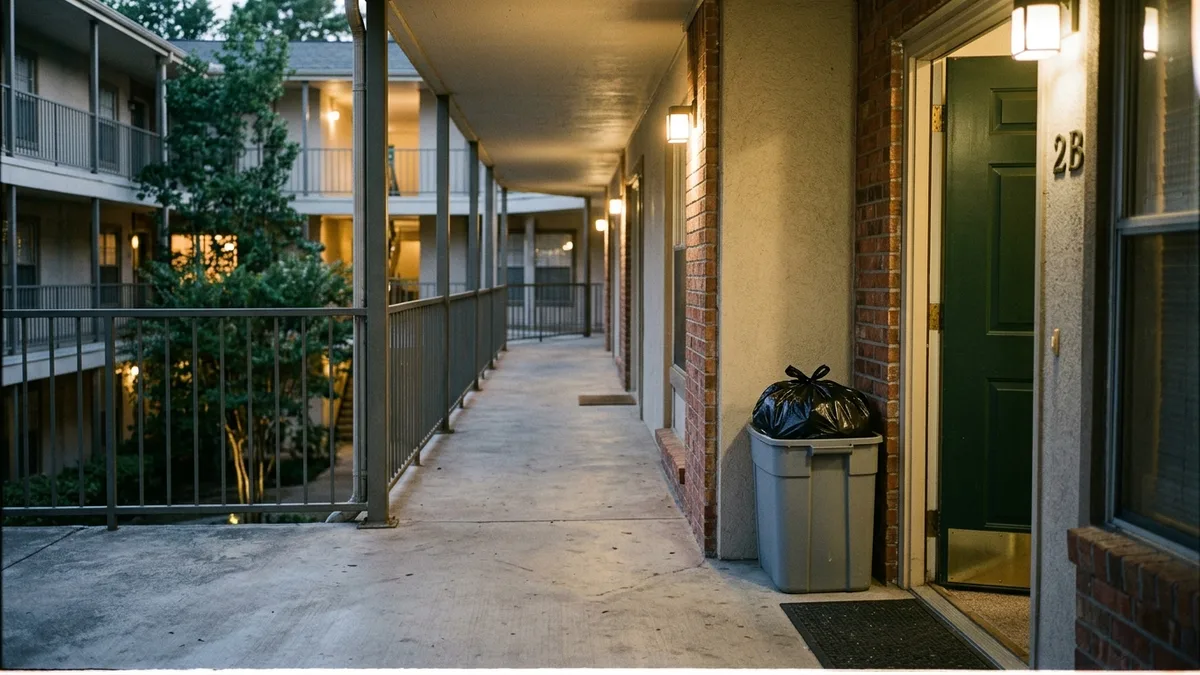
The main drawbacks of valet trash for a small property come down to mandatory fee resistance, minimum-unit surcharges that erode margin, and resident misuse that creates hallway odor and clutter. Bags or containers left outside doors outside the collection window are a common operational issue, creating odor and clutter in hallways or breezeways.
On a small property, that clutter is more visible. A single non-compliant resident in a 24-unit building affects a larger share of the shared hallway experience than the same behavior would in a 200-unit complex with multiple wings. Enforcement also gets harder when the property doesn't have onsite staff monitoring hallways daily, which is common on smaller, leaner-staffed communities.
Mandatory fees are another friction point. Making the fee mandatory improves participation and revenue predictability, but residents on smaller, often more price-sensitive properties can perceive a mandatory add-on fee as a rent increase in disguise, particularly if the property recently raised rent for other reasons. Making it optional solves the perception problem but tanks the economics, since a partial opt-in rate rarely covers a contract sized for full occupancy.
Bulk trash and recycling scope create a final gap. Many valet trash contracts explicitly exclude bulk items and cap item weight, commonly around 40 pounds per item, and recycling is frequently a separate line item or excluded entirely. Smaller properties without a robust move-out or bulk-item removal process can end up with a false sense that valet trash handles all waste, when in practice it only handles bagged household trash.
What Should a Small-Complex Owner Ask a Provider Before Signing?
You should confirm minimum unit pricing, service frequency, and bulk-item policy before signing any valet trash contract, since these terms shift disproportionately in a provider's favor on smaller accounts. Use this checklist during vendor conversations:
- Ask for the minimum monthly contract value. Many providers apply a floor for communities under 40 or 50 units. Get the effective per-unit cost after that minimum, not just the headline rate.
- Confirm service frequency in writing. Standard is five nights weekly, Sunday through Thursday, between 6 p.m. and 8 p.m. Ask what happens on holiday weeks and whether that schedule shifts.
- Verify insurance and background checks. Crews are on your property nightly, near residents' doors. Confirm general liability coverage and whether staff undergo background screening.
- Get the missed-pickup policy in writing. Ask what recourse the property has, and whether missed stops are documented or simply self-reported by the crew.
- Clarify bulk-trash and recycling scope. Confirm what's excluded, item weight limits (commonly around 40 pounds per item), and whether bulk removal is a separate line item.
- Ask about photo verification. Documented proof of a completed stop at each door protects the property from disputed complaints and gives management something concrete to show ownership.
- Review the termination clause. Confirm notice period and whether the contract auto-renews, particularly important if you're testing the amenity for the first time.
Our approach to smaller communities across James Island, Mount Pleasant, and Summerville starts with an honest conversation about whether the layout justifies the service, not a hard sell toward a signed contract regardless of fit. Photo verification at every door is standard on our routes, which gives smaller properties without full-time onsite staff a documented record instead of relying on resident complaints to know whether service happened.
How Much to Charge for Trash Valet as a Resident Fee?
You'll typically charge residents between $25 and $35 per month for valet trash, a range that has held fairly steady across market sizes based on current industry data. The exact figure depends on local rent levels, competitive amenity fees at comparable nearby properties, and whether the fee is mandatory or optional.
Setting the fee too low, closer to $25, keeps resistance lower but narrows or eliminates the margin over provider cost, especially on smaller properties already paying toward the top of the $8 to $15 per unit provider range. Setting it too high, above $35, invites resident pushback and potential lease non-renewals if prospective residents perceive the amenity as overpriced relative to comparable properties nearby.
A practical approach: survey a couple of comparable properties in the immediate submarket, whether that's near the Rivers Avenue corridor in North Charleston or closer to Daniel Island, and set the fee within that competitive band rather than guessing. Mandatory fees generally need to sit at or slightly below the market rate to avoid the perception of a disguised rent increase, particularly on smaller, rent-sensitive properties.
How Much Do Valet Trash Crew Members Make?
There's no verified national wage figure for valet trash crew members that I can cite reliably here, and pay varies by market and provider. What matters more for you as a property owner evaluating the service is not crew pay directly, but how staffing and route density affect service consistency on a small account. Providers running tighter, more localized routes across a compact metro area tend to maintain more consistent nightly coverage than providers stretching crews across a wide, sparse service area.
For a small complex, this matters because inconsistent coverage is more noticeable when there's no onsite maintenance staff double-checking that every stop was completed. A locally rooted provider running dense, efficient routes across a specific metro, such as Charleston, is generally better positioned to maintain reliable nightly service on a small account than a provider treating it as a low-priority stop on a sprawling regional route.
Practical Guidance: How to Decide If Valet Trash Fits Your Property
Use this decision framework instead of relying on unit count alone:
- Choose valet trash if: your property has upper-floor walk-up units without elevator access, spans multiple buildings with a shared dumpster location, serves senior or accessibility-focused residents, or your maintenance team already spends significant weekly hours managing dumpster overflow.
- Skip valet trash if: your property is a single-story or single-building garden community under 40 units where every unit sits within about a two-minute walk of a well-maintained dumpster and your maintenance team isn't fighting overflow or trash-room complaints.
- Common mistake to avoid: pricing the amenity as an afterthought. Treat the resident fee and provider contract as a P&L line item with a real break-even calculation, not a checkbox amenity added because a competitor has it.
- Trade-off to understand: mandatory fees improve revenue predictability but increase resident friction; optional fees reduce friction but often collapse the margin below what covers the contract.
If you're evaluating a broader waste strategy, including bulk item handling during turnovers, review how turnover trash removal integrates with a valet program, since move-out debris is rarely covered under a standard valet contract. For a deeper look at how per-unit contracts are typically structured, see our breakdown of how much valet trash companies charge apartments.
Frequently Asked Questions
How much is valet trash service?
You'll typically pay providers $8 to $15 per unit monthly, with rates trending toward the higher end for smaller communities under 100 units. Residents are usually charged $25 to $35 per month as an amenity fee, separate from rent.
What is valet trash service?
Valet trash service is a doorstep-to-dumpster collection amenity where a crew picks up bagged trash directly from a resident's door, typically five evenings a week, and carries it to the property's central dumpster. It eliminates the resident's walk to a shared trash area.
How much to charge for valet trash service cost?
Charge residents between $25 and $35 per month, based on current industry pricing data. The right number within that range depends on local rent levels and what comparable properties in your submarket charge for the same amenity.
What is valet trash at an apartment?
At an apartment community, valet trash means a private waste provider collects bagged trash from outside each resident's unit during scheduled evening hours and transports it to the community dumpster or compactor, so residents never have to make the trip themselves.
How much does valet trash service cost overall for a small property?
You can expect monthly provider costs somewhere between roughly $300 and $600 for a property under 50 units, depending on unit count and whether the provider applies a minimum contract fee for smaller accounts. Always request the effective per-unit cost after any minimum is applied.
How many nights a week does valet trash run?
Valet trash service typically runs five nights a week, Sunday through Thursday, with collection windows generally between 6 p.m. and 8 p.m. Some providers adjust for holidays, so confirm the holiday schedule in writing before signing a contract.
Is valet trash worth it for a 24 to 40 unit single-building property?
Usually not, if the building is single-story or low-rise with every unit within about a two-minute walk of a well-maintained dumpster. A clean traditional dumpster setup often delivers comparable resident satisfaction at meaningfully lower cost in that specific layout.
Does valet trash cover bulk items or furniture removal?
Standard valet trash contracts typically exclude bulk items and cap individual item weight, commonly around 40 pounds. Bulk furniture and move-out debris usually require a separate removal service or an add-on to the base contract.
Conclusion: Weigh Your Layout, Not Just Your Unit Count
Whether valet trash service is worth it for your small apartment complex comes down to walk distance, building layout, and resident population, not the number on your rent roll. A single-story 30-unit community with a centrally placed dumpster rarely earns back the cost. A 30-unit walk-up with stairs, multiple buildings, or a senior resident base often does, even at that same size.
Run the break-even numbers before you sign anything: provider cost after any minimum, realistic resident participation, and honest labor savings. As of 2026, with more than half of U.S. communities offering some form of valet trash according to National Multifamily Housing Council data, the pressure to match the amenity is real, but matching it on a layout that doesn't need it just adds cost without adding resident satisfaction.
We walk small property owners across Charleston, North Charleston, and Atlanta through this exact decision before recommending a contract, because a service that doesn't fit your layout is an expense, not an amenity.

If you're a small-property owner or manager trying to figure out whether valet trash pencils out for your specific building layout, we offer photo-verified, nightly collection scaled to fit communities from 10 units up, with quotes available Monday through Friday for properties across Charleston, SC and Atlanta, GA.
Content powered by inkSTR.co