
Valet trash is worth it for most build-to-rent communities above roughly 100 homes, where nightly doorstep collection reduces resident complaints and can support a modest amenity fee, but the math changes for smaller or spread-out BTR sites where walking routes eat into the labor savings that make the service profitable.
Key Takeaways
- Industry pricing data shows provider costs typically run $8 to $15 per unit per month, while residents are commonly charged $20 to $35 per month, creating a margin that can offset a portion of operating costs.
- Route economics work best in communities of 100 units or more; below that threshold, per-door pricing tends to climb because a driver's fixed time on-site gets spread across fewer stops.
- Detached-home build-to-rent layouts change the math compared to garden-style apartments: longer walking routes and dispersed dumpster or cart locations slow collection speed.
- According to industry sources, amenity quality is a significant factor in resident renewal decisions across the multifamily and rental housing sector.
- Photo-verified nightly collection gives build-to-rent operators documented proof of service at every door, which matters more in a scattered-site BTR portfolio than in a single mid-rise building.
- As of 2026, the North America solid waste management market was valued at $78.55 billion, according to industry market forecasts, reflecting the scale of demand for structured waste solutions across residential and multifamily real estate.
Build-to-rent operators ask this question constantly, and for good reason. A BTR community is not a garden-style apartment complex with a single breezeway and one dumpster corral. It's a collection of detached or semi-detached homes, often spread across a suburban footprint near the airport corridor or a growth pocket like Daniel Island, where residents expect single-family living without single-family chores.
We service clients ranging from small residential accounts to portfolios approaching 1,000 units across Charleston, SC and Atlanta, GA, and the build-to-rent question comes up on nearly every call. The answer depends less on whether residents want the service (they almost always do) and more on whether the site layout, unit count, and fee structure make the economics work for the operator.
This guide breaks down the real cost structure, the layout factors most articles skip, and where valet trash pays for itself in a build-to-rent community. In 2026, with build-to-rent supply continuing to expand across suburban Charleston and Atlanta submarkets, getting this decision right matters more than it did five years ago, when BTR was still a niche product type.
How Profitable Is a Trash Valet Business for a Build-to-Rent Community?
Valet trash profitability in a build-to-rent context depends on the spread between what a provider charges per unit and what residents pay in amenity fees. Industry pricing data shows providers typically charge property owners $8 to $15 per unit per month, while residents are commonly billed $20 to $35 per month for the service, leaving a margin the operator can apply toward NOI or partially subsidize other amenities.
For example, a 100-home build-to-rent community charging residents $25 per month while paying a provider $12 per unit generates roughly $1,300 in monthly net benefit, or about $15,600 annually, based on typical industry-reported cost structures. Scale that to 200 homes and the same spread produces meaningfully larger annual totals, which is why route economics matter so much: the math only works cleanly once a site clears a unit-count threshold where fixed driver time per stop shrinks relative to total stops served.
The profitability picture shifts significantly for detached BTR layouts compared to a mid-rise apartment building. A driver collecting from 150 apartment doors along two hallways can finish a route in a fraction of the time it takes to walk 150 individual driveways spread across a suburban street grid. That labor difference is the single biggest variable other services in the area rarely quantify, and it's the reason a build-to-rent site needs a realistic walking-route assessment before signing any waste vendor contract, not just a per-unit price quote.
How Much Should a Trash Valet Charge in a Build-to-Rent Development?
A build-to-rent trash valet fee should reflect the site's actual collection difficulty, not a flat rate copied from a garden-style apartment contract. Providers commonly price service between $8 and $15 per unit for standard multifamily layouts, but detached-home BTR sites with long walking routes or dispersed dumpster locations often justify pricing at the higher end of that range or above it.
Residents, meanwhile, are typically charged an amenity fee somewhere between $20 and $35 per month, though we have seen resident fee structures for scattered or detached layouts extend into the $25 to $50 range depending on pickup frequency, recycling inclusion, and regional labor costs. Charleston and Atlanta labor markets each carry their own cost pressures, so a quote built for a North Charleston community near the Rivers Avenue corridor won't necessarily transfer cleanly to a suburban Atlanta BTR development.
A few pricing variables consistently move the number in either direction:
- Pickup frequency: Nightly service, typically running Sunday through Thursday evenings in most multifamily and BTR programs, costs more than a twice-weekly schedule but drives higher resident satisfaction and fewer overflow complaints.
- Route density: Communities where homes back up to shared alleys or cluster around common dumpster pads price lower than sites with long individual driveways.
- Recycling inclusion: Adding a second collection stream for recycling increases per-unit cost but supports sustainability positioning that many investors now expect from newer BTR developments.
- Bulk item and turnover support: Communities with frequent resident turnover, common in BTR portfolios where lease terms run shorter than traditional single-family rentals, need bulk removal built into the base contract rather than billed as a recurring one-off expense.
Is Valet Trash Worth It for Build-to-Rent Communities Specifically?
Valet trash is worth it for a build-to-rent community when the property clears roughly 100 units, has a walkable or drivable collection route, and residents are willing to absorb a modest monthly amenity fee in exchange for not hauling bins to a curb or dumpster themselves. Below that threshold, or on a site with an unusually spread-out footprint, the per-unit cost often rises enough to erase the margin that makes the service attractive.
Build-to-rent communities carry a specific advantage over apartment complexes here: residents choosing a BTR home are typically paying a premium over traditional rental housing precisely because they want single-family living without single-family maintenance. That expectation makes valet trash a natural fit as a standard amenity, similar to lawn care or pest control bundled into rent. Industry data consistently shows that amenity quality plays a meaningful role in whether residents renew their lease, and a build-to-rent operator competing for renewals against single-family rental alternatives has every incentive to make waste management invisible to the resident.
Where it's not worth it: BTR sites under roughly 50 to 75 units where fixed provider costs don't spread across enough doors, or communities where individual dumpsters already sit within a short walk of most homes. We have walked away from quotes on smaller scattered-site portfolios where the honest answer was that a lighter-touch trash can concierge model, moving bins from backdoor storage to curbside rather than full nightly doorstep collection, made more financial sense than a full valet program.
What a Build-to-Rent Pro Forma Actually Needs to Include
Most articles on this topic stop at "resident fee minus provider cost equals profit," which oversimplifies the real math for a build-to-rent developer building a pro forma. A complete build-to-rent waste operations pro forma should separate:
- Mandatory amenity revenue collected from every occupied home, since valet trash in most BTR communities is billed as a required fee rather than opt-in.
- Vacancy loss adjustment, since unoccupied homes generate provider cost exposure (routes still have to pass empty units) without generating resident revenue.
- Labor and route time, priced per the site's actual walking distance, not a generic per-door average.
- Insurance and liability coverage carried by the provider, since a collection crew working detached-home driveways and yards carries different risk exposure than a crew working an enclosed apartment hallway.
- Equipment costs, including standardized bins (commonly 13-gallon receptacles in many multifamily programs) supplied to each unit.
- Management oversight time saved, which is real but harder to quantify: fewer resident complaints about overflow means fewer maintenance tickets and less staff time spent on waste-related issues.
- Avoided costs, such as reduced pest activity around dumpster areas and lower risk of code violations tied to trash accumulation.
Skipping any one of these categories, especially vacancy loss and route-specific labor, is how a BTR pro forma ends up projecting a margin that never materializes once the community actually leases up.
How Does Site Layout Change Valet Trash Economics for Build-to-Rent?
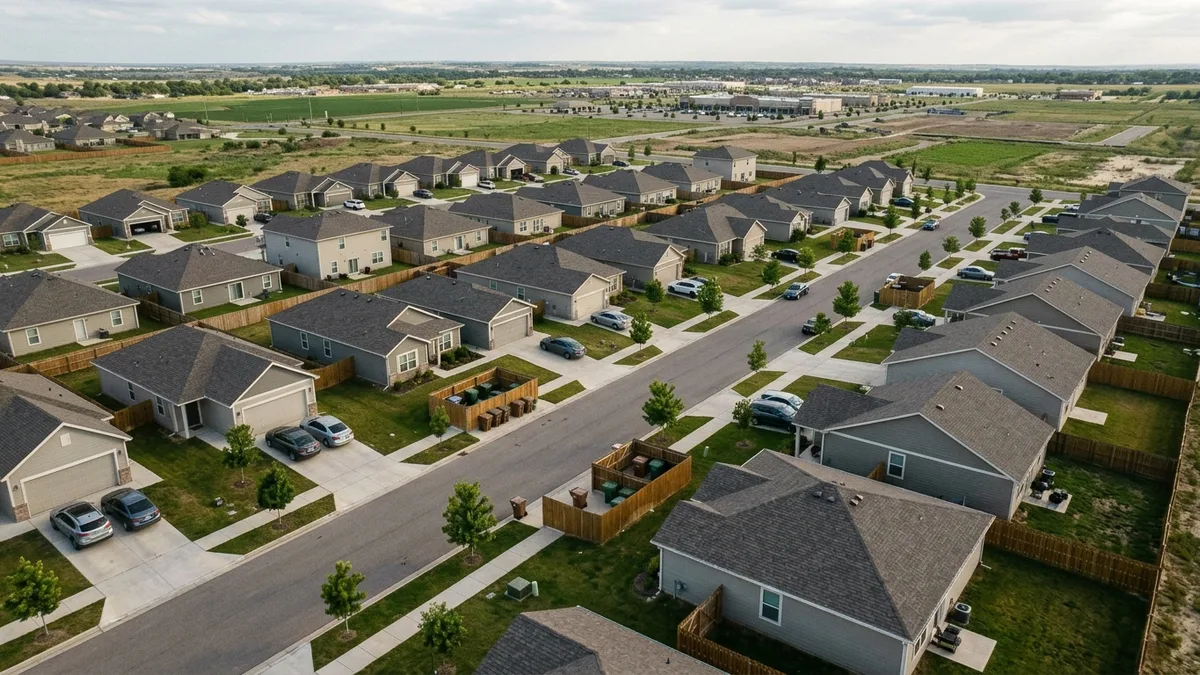
Site layout is the single largest variable that separates build-to-rent waste economics from standard multifamily pricing. Detached and semi-detached BTR homes typically require a collection crew to walk individual driveways and cover more linear distance per stop than a garden-style apartment building with clustered units along a shared hallway.
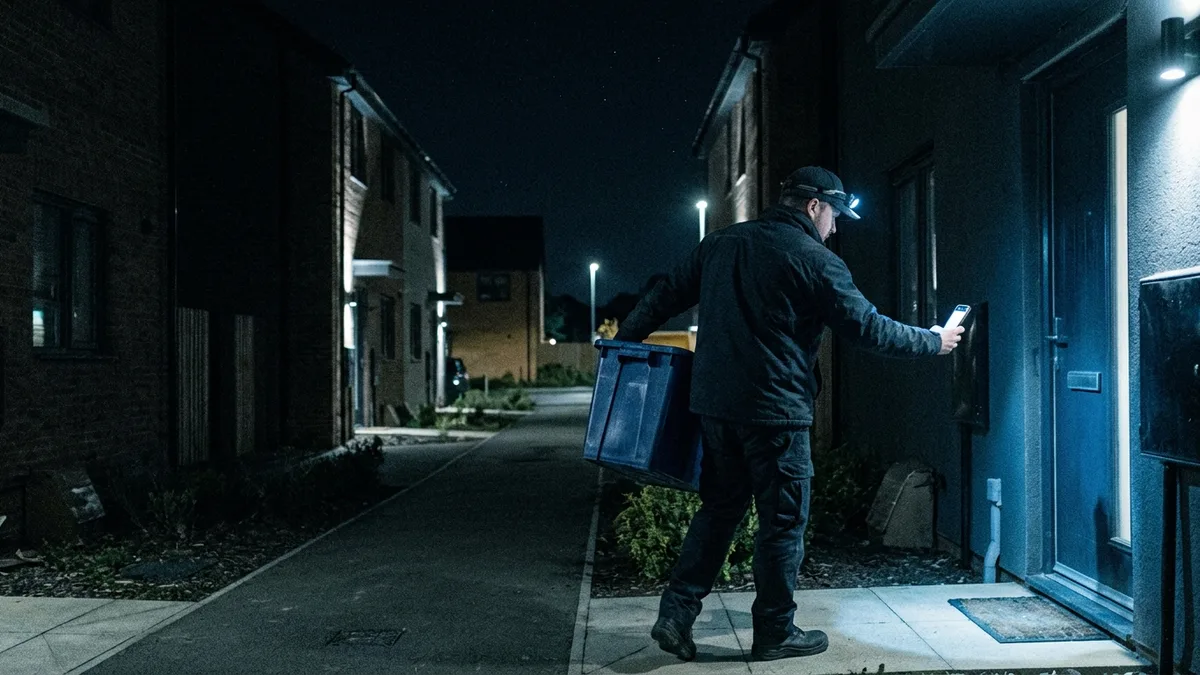
Specifically, a BTR site organized around a central alley with rear-loading trash access, similar to how some newer developments near Daniel Island and the broader Charleston metro have been designed, collects far more efficiently than a site where homes front individual streets with no shared service lane. Lighting also matters more in a BTR context: nightly collection typically runs in the evening hours, commonly between 6 p.m. and 8 p.m. across much of the multifamily industry, and a poorly lit detached-home street slows a crew down and raises safety considerations that a well-lit apartment corridor doesn't present.
Additional layout factors that affect route productivity:
| Layout Factor | Impact on Collection Efficiency | Typical BTR Consideration |
|---|---|---|
| Shared alley or rear access | High efficiency, similar to apartment routes | Common in newer, purpose-built BTR designs |
| Individual front-facing driveways | Lower efficiency, longer walking distance per stop | Common in converted or retrofitted single-family rental clusters |
| Gated yards or fenced entries | Slows collection, requires resident cooperation on gate access | Frequent in higher-end BTR product with privacy fencing |
| Centralized dumpster corrals | Higher efficiency for bulk drop-off, still requires doorstep leg | Works well when placed within a short walk of most homes |
| Curb placement at street | Moderate efficiency; residents still avoid rolling bins themselves | Better suited to trash can concierge model than full valet |
Walk the actual proposed route with a prospective provider before you sign anything. Don't rely on a generic per-unit quote based on unit count alone.
What Does Resident Resistance Look Like in Build-to-Rent Communities?
Resident resistance to mandatory valet trash fees in build-to-rent communities typically centers on cost transparency and service reliability, not opposition to the concept itself. Most BTR residents actively want the convenience; the friction usually shows up when a fee feels bundled without explanation or when a missed pickup happens without any credit or communication.
Content from other management companies in this space rarely quantifies this, but the pattern shows up consistently across the industry: complaints spike after a missed collection, not after the initial fee disclosure. A resident who understands upfront that a $25 to $35 monthly fee covers nightly doorstep pickup rarely objects at lease signing. That same resident becomes a retention risk if the service fails twice in a month with no acknowledgment or credit.
You can reduce resistance with a few concrete steps:
- Disclose the fee and service schedule clearly in the lease, framed as a standard community amenity rather than a hidden charge added after move-in.
- Require photo verification from the provider at every unit, so a disputed "missed pickup" claim has documented evidence either way.
- Build a missed-pickup credit policy into the service agreement before launch, not after the first complaint.
- Set clear container rules in the resident handbook to avoid ambiguity.
On this last point, standardized 13-gallon receptacles are common across the multifamily and BTR industry, which keeps container rules simple for residents moving between properties or renewing leases within the same portfolio.
Which Waste Provider Type Pays Off Best for Scattered-Site or Growing BTR Portfolios?
A single managed waste operations partner, rather than a patchwork of city pickup and separate bulk-removal vendors, typically pays off best for a build-to-rent portfolio that's actively growing from a handful of communities into dozens of scattered sites. Coordinating multiple vendors across non-contiguous BTR properties creates gaps in accountability, and a missed pickup at one site rarely gets caught until a resident complains.
This is where portfolio-scale build-to-rent operators face a different challenge than a single 150-home development. We are built to serve portfolios ranging from 10 units to more than 1,000 units, and the pattern we see consistently is that operators managing five or six scattered BTR communities across Charleston, North Charleston, and the Atlanta metro benefit most from a single point of contact with consistent photo-verified service standards across every property, rather than negotiating separate contracts community by community.
A structured implementation approach for a growing BTR portfolio should include:
- A pilot program at one or two communities before rolling the service across the full portfolio, to validate route times and resident adoption.
- A written service-level agreement specifying collection nights, photo verification standards, and missed-pickup remedies.
- A baseline set of KPIs tracked before and after launch, including maintenance tickets related to overflow, resident complaint volume, and lease renewal rate trends.
- A defined process for bulk item removal tied to move-out and move-in cycles, since BTR turnover creates predictable spikes in bulk waste that a standard nightly route doesn't absorb.
If you oversee a scattered portfolio near build-to-rent developments across the Charleston metro, treat waste operations as a portfolio-level decision, not a site-by-site negotiation, once the portfolio crosses roughly three to five communities.
Is Valet Waste Worth It Compared to Standard Municipal or Dumpster Service?
Valet trash service is worth the added cost compared to standard municipal or centralized dumpster pickup when resident convenience directly supports leasing and retention goals, which is almost always the case in a build-to-rent development competing against single-family rental alternatives. Municipal pickup requires residents to manage their own bins on a fixed weekly schedule, while a centralized dumpster model still requires someone to physically transport trash to a shared location, something BTR residents specifically avoided by choosing detached rental housing over an apartment.
The comparison is really "valet trash versus resident-managed inconvenience," and in a build-to-rent product positioned as a premium alternative to traditional single-family rentals, that inconvenience undercuts the value proposition of the community. A BTR development marketing itself on lifestyle and low-maintenance living loses credibility fast if residents are hauling their own bins to a curb every Tuesday morning.
Valet trash isn't a full replacement for municipal service in most markets. It's a doorstep-to-dumpster layer that sits between the resident's door and the existing dumpster or municipal pickup point. Understanding this distinction matters for accurate pro forma modeling, since the provider is typically not replacing municipal collection costs but adding a convenience layer on top of them. For a deeper look at how this distinction plays out for multifamily specifically, see our guide to what valet garbage services actually are for property managers.
What Should Build-to-Rent Operators Prioritize When Choosing a Provider?
You should prioritize five factors when evaluating a valet trash provider: insurance and safety record, enforceable service guarantees, stable collection crews, transparent per-unit pricing, and verifiable references from comparable communities. Skipping any one of these tends to surface as a problem within the first few months of service, usually as a missed-pickup dispute or a pricing change you didn't anticipate.
A Practical Checklist for Evaluating Providers
- Confirm insurance coverage that specifically addresses liability for crews working on residential driveways and yards, not just standard commercial general liability.
- Ask about crew stability. Providers relying on rotating contract labor tend to have higher missed-pickup rates than those running consistent, trained collection staff.
- Get pricing in writing that breaks out per-unit cost, any fuel or fee surcharges, and what happens if unit count changes during lease-up.
- Request photo verification as a standard part of the service, not an optional upgrade. This is the single most useful accountability tool for a scattered BTR portfolio.
- Ask for references from comparable build-to-rent or detached-home communities, since the operational demands differ from garden-style apartment clients.
- Clarify bulk removal and turnover support up front, since BTR resident turnover creates recurring bulk waste needs that a basic nightly route doesn't cover.
Common mistakes we see build-to-rent operators make: signing a contract based on a generic per-unit quote without walking the actual site layout, and failing to build a missed-pickup credit policy into the agreement before launch. Both are avoidable with a site visit and a direct conversation with the provider before signing.
Which Trash Company Pays the Most for Route or Collection Work?
No published industry figure reliably tells you which valet trash company pays crews the most, since pay varies by market and by whether a provider uses W-2 employees or contract labor. What actually matters when you evaluate a provider is crew stability, not pay benchmarks: a provider running trained, retained W-2 staff shows fewer missed pickups and more consistent photo documentation than one relying on rotating contract crews. Ask a prospective provider directly about crew retention and training standards. That question tells you more than any pay comparison would.
Practical Guidance: How to Decide If Valet Trash Fits Your Build-to-Rent Community
Use this decision framework before committing to a valet trash program for any build-to-rent development:
- Unit count above 100: Route economics generally support a favorable margin. Below 75 to 100 units, expect higher per-door pricing and a thinner spread.
- Layout assessment: Walk the proposed collection route with the provider. Individual driveways and long walking distances raise costs regardless of unit count.
- Fee tolerance: Confirm your target renter demographic is comfortable with a mandatory $25 to $50 monthly amenity fee bundled into rent, adjusted for your specific market and service frequency.
- Turnover frequency: BTR communities with shorter average lease terms need bulk removal and move-out support built into the base contract, not billed separately every time.
- Portfolio trajectory: If you're scaling past three to five BTR communities, evaluate providers on portfolio-wide consistency and single-point-of-contact management, not just the cheapest quote for one site.
The most common mistake in this decision is skipping the site-specific route analysis and assuming a garden-style apartment pricing model transfers directly to a detached-home build-to-rent layout. It rarely does.
Frequently Asked Questions
How many nights a week does valet trash run in a build-to-rent community?
Most build-to-rent valet trash programs run on a nightly schedule, commonly Sunday through Thursday, with collection windows typically falling between 6 p.m. and 8 p.m. Some smaller communities opt for a reduced schedule of three or four nights per week to lower provider costs, though this trades off some resident convenience.
Do residents pay for valet trash in a build-to-rent community?
Yes, in nearly all build-to-rent communities, residents pay a monthly amenity fee for valet trash, typically ranging from $20 to $35 per month, with some detached-layout communities pricing between $25 and $50 depending on pickup frequency and included services like recycling. The fee is usually bundled into rent as a mandatory community amenity rather than offered as an opt-in extra.
How much do valet trash companies charge apartments and build-to-rent communities?
Valet trash providers typically charge property owners between $8 and $15 per unit per month for standard layouts, though detached build-to-rent sites with longer walking routes often price at the higher end of that range or above it. The final rate depends on unit count, collection frequency, and how spread out the community's homes are.
How much is valet trash service overall, including what residents see on their bill?
Total valet trash costs break into two layers: what the property pays the provider (commonly $8 to $15 per unit) and what residents are billed (commonly $20 to $35 per month). The spread between these two figures is what allows the amenity to partially offset operating costs while still adding a convenience feature residents value.
What is valet trash?
Valet trash is a doorstep collection service where a provider picks up bagged trash directly from a resident's door or driveway on a scheduled basis, typically several nights per week, and transports it to a central dumpster or collection point. It removes the need for residents to carry trash to a shared dumpster or curb themselves.
What is valet trash service specifically for build-to-rent homes?
For build-to-rent communities, valet trash service works the same way it does in multifamily housing but adapts to a detached-home layout, meaning the provider's crew walks individual driveways or uses designated pickup points near each home rather than working a shared apartment hallway. Some build-to-rent developments pair this with a trash can concierge model, where bins move from a backdoor storage spot to the curb on collection day rather than a full nightly doorstep pickup.
Is valet trash worth it for a smaller build-to-rent community under 100 units?
Valet trash can still work for a smaller build-to-rent community, but the per-unit cost tends to rise because fixed provider costs spread across fewer stops. Operators of smaller BTR sites often find a lighter-touch trash can concierge or backdoor-to-curbside bin management program more cost-effective than a full nightly doorstep valet service.
Can one waste provider handle valet trash across a scattered build-to-rent portfolio?
Yes, a single waste operations provider built for portfolio scalability can service scattered build-to-rent communities across multiple submarkets with consistent standards at every property. This approach gives you one point of contact and photo-verified documentation at each site, and eliminates the coordination gaps that come from managing separate vendors community by community.
The Bottom Line for Build-to-Rent Operators
Valet trash pays off for most build-to-rent communities once a site clears roughly 100 units, has a reasonably efficient collection route, and residents accept a bundled amenity fee somewhere in the $25 to $50 range depending on service frequency and layout. Below that threshold, or on a site with long driveways and dispersed dumpster locations, the honest answer is often a lighter trash can concierge model instead of a full nightly valet program.
What separates a build-to-rent waste program that works from one that generates complaints is the accountability behind the service. Photo verification at every door, a clear missed-pickup credit policy, and a provider that treats a scattered portfolio as a single managed account rather than a series of one-off contracts make the difference between an amenity residents value and one they resent paying for. As build-to-rent supply keeps expanding across Charleston and Atlanta submarkets through 2026, operators who get this decision right early spend far less time fielding complaints later.
If you're evaluating waste operations for a build-to-rent community anywhere in the Charleston metro or Atlanta, we have walked this exact route-economics conversation with operators managing everything from single 120-home developments to growing multi-site portfolios. Get started with us and request a portfolio-specific quote, available Monday through Friday.
Content powered by inkSTR.co