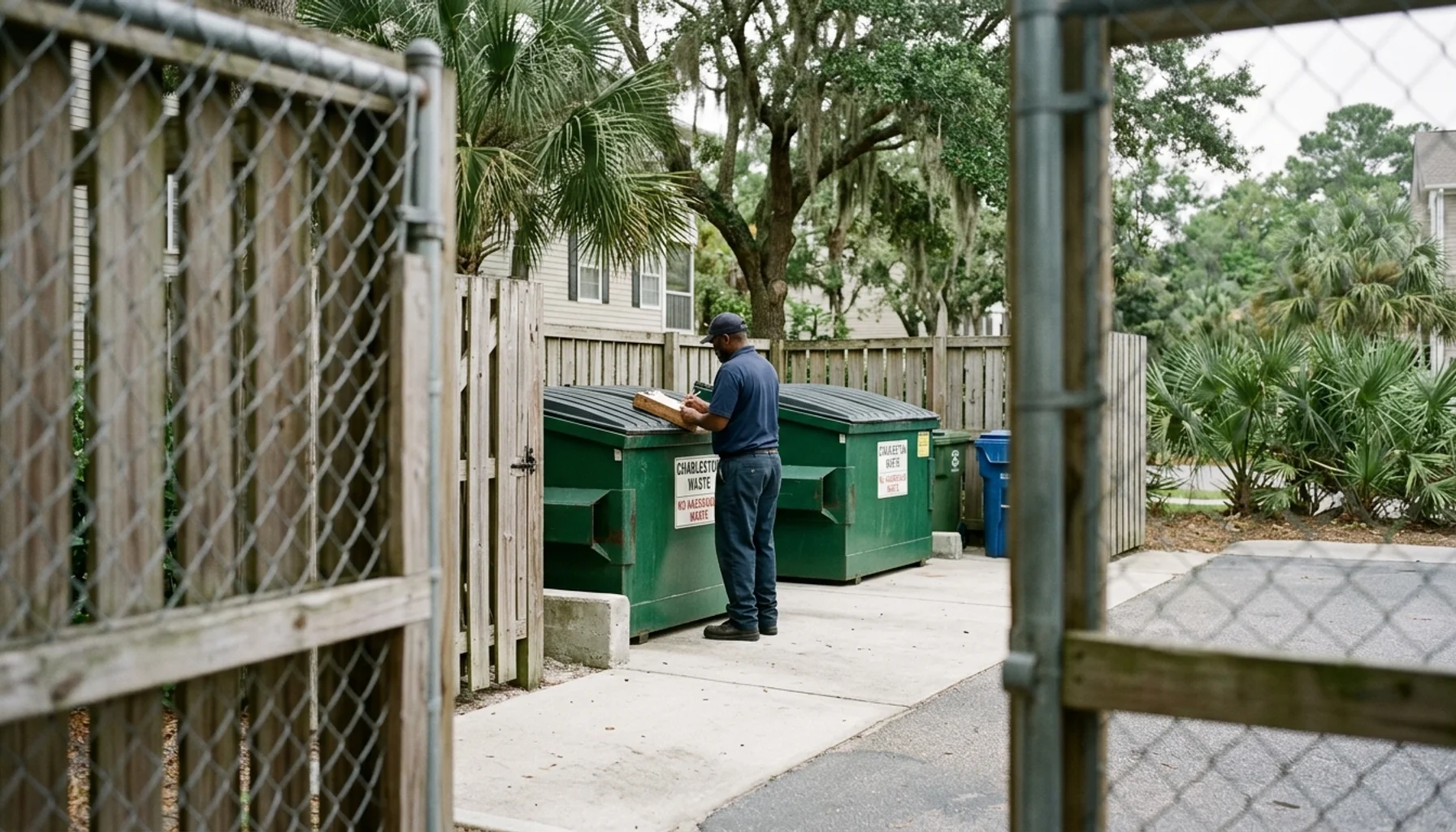
You keep dumpster areas from overflowing at apartment properties by matching container capacity and pickup frequency to actual unit count and occupancy, enforcing bulk-item and cardboard rules through resident communication, securing enclosures against unauthorized dumping, and building a nightly doorstep valet trash program that pulls waste out of hallways before it ever reaches the dumpster pad.
Key Takeaways
- Overflowing dumpsters are usually a capacity-and-schedule problem, not a resident-behavior problem; most properties need a quarterly volume review, not just a stricter lease clause.
- According to the Urban Land Institute and multifamily industry data referenced by RealPage, 75% of residents weigh amenities, including cleanliness of shared spaces, when deciding to renew a lease.
- North Charleston's rental market carries real financial stakes here: HUD's Charleston-North Charleston profile put the apartment vacancy rate at 9.2% in Q1 2023, and Charleston County's consolidated plan flagged elevated eviction pressure, meaning properties that look neglected have less room to absorb turnover.
- Nightly doorstep valet trash collection, like the model Trash Day Made Easy runs for multifamily communities in Charleston and Atlanta, removes bagged waste before it accumulates at the dumpster pad instead of just managing the pad after the fact.
- Locking bars, gated enclosures, and camera coverage are the most commonly recommended fixes for unauthorized dumping, according to multifamily-industry guidance, but they only work if paired with a documented, photo-verified collection schedule.
- Move-out season, holidays, and weekends are predictable overflow triggers; properties that plan a bulk-item removal calendar around these events see far fewer emergency hauler calls than those that react after the fact.
If you manage a multifamily community anywhere from the Rivers Avenue corridor to Daniel Island, you already know the Monday-morning routine: a dumpster lid propped open by a mattress, bagged trash stacked against the fence line, and at least one resident email complaining about the smell. In 2026, this is still one of the most common maintenance tickets property managers file, and it is almost never solved by yelling at residents harder.
At Trash Day Made Easy, we service multifamily communities, build-to-rent developments, and scattered-site portfolios across the Charleston, SC and Atlanta, GA metro areas, and this pattern plays out with striking consistency. The properties with the fewest overflow complaints are not the ones with the strictest rules. They are the ones with the right combination of container sizing, resident routine, and a waste plan that gets reassessed as the property changes.
This guide breaks down exactly how to build that plan: how to size your containers correctly, how to handle move-outs and holidays without a crisis, how to stop unauthorized dumping, and how to tell the difference between a hauler failure and a resident-behavior problem so you fix the right thing instead of guessing.
How Do You Match Dumpster Size and Pickup Frequency to Your Property?
Matching dumpster capacity to pickup frequency means calculating your property's actual waste volume, based on unit count, occupancy rate, and resident habits, and sizing containers and collection days against that number instead of a generic industry default. Most overflow problems trace back to a container that was sized for the building's move-in occupancy years ago and never revisited.
Start with a simple audit: multiply your occupied unit count by an estimated weekly volume per household, then compare that figure against your current container's rated capacity and weekly pickup count. A property running near full occupancy with only one weekly pickup on an undersized container will overflow by Thursday almost every week, regardless of how well residents bag their trash.
Industry guidance from other providers recommends reassessing the waste plan on a quarterly basis, since occupancy and resident habits change over time. A 200-unit community that leased up over six months will have wildly different waste volume in month one versus month six, once families settle in, home offices generate more cardboard, and holiday shipping season hits.
Specifically, if you are seeing overflow on the same one or two days each week, that is a scheduling problem, not a capacity problem. Adding a pickup on the trigger day is usually cheaper than upsizing the container. If overflow happens randomly across the week, capacity is more likely the root cause, and it is worth asking your hauler for a larger container or a second unit at the same enclosure.
How Do You Plan for Move-Outs, Holidays, and Other High-Volume Periods?
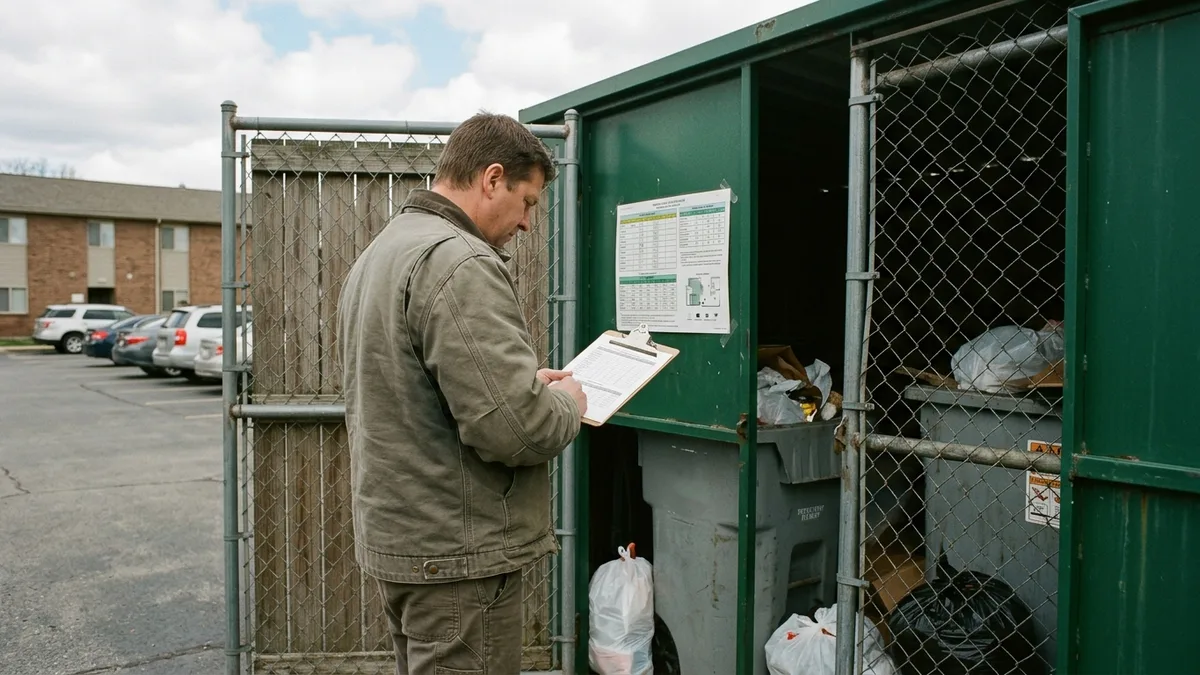
Planning for high-volume waste periods means building a fixed operational calendar around predictable overflow triggers, move-outs, major holidays, and weekend spikes, rather than reacting after the dumpster is already full. These periods generate three to five times the normal volume in a single week, and no standard weekly pickup schedule is built to absorb that on its own.
Move-out season is the single biggest predictable overflow event in multifamily housing. Furniture, mattresses, and boxes pile up at once, often outside the enclosure because the dumpster itself is already full of bagged household trash. Multifamily waste guidance from some providers recommends scheduling extra pickups before and after major holidays, and the same logic applies directly to move-out clusters, especially at properties with lease terms that expire on the same date.
Build a simple pre-move-out playbook: notify departing residents in writing about bulk-item rules at least two weeks before move-out, schedule a temporary roll-off or an added collection for the turnover week, and designate a specific staging area for bulk items that does not block the enclosure or fire lane. Other services in the area specifically recommend choosing a bulk-item staging spot that keeps sidewalks, fire access, and enclosure gates clear at all times.
Holidays follow a similar pattern but on a shorter cycle. Post-holiday weeks routinely bring a surge of cardboard from shipping and gift boxes, and some providers note that certain properties need larger recycling containers specifically during these temporary spikes. On the flip side, slower periods, like mid-summer or between lease cycles, are a good time to space out pickups or temporarily reduce container size, as long as you keep monitoring for illegal dumping during the lull.
What Are the Signs Residents Need Better Education and Communication?
Resident education failure shows up as recurring, avoidable overflow patterns: bulk items dumped beside a full container instead of scheduled for pickup, contaminated recycling bins, or trash bags left outside apartment doors instead of carried to the dumpster. These are behavior problems, and they respond to communication, not just enforcement.
First, put the rules in writing at every touchpoint: the lease itself, a welcome packet at move-in, the resident portal, and signage directly on the enclosure gate. Residents who never received clear rules cannot reasonably be expected to follow them, and a posted sign at the dumpster pad is often the single most effective reminder because it appears at the moment of the decision.
Second, be specific about consequences. Industry guidance from other management companies recommends telling residents directly that they may be charged for cleaning and hauling fees when trash or bulk items are left outside the dumpster. A vague "please be considerate" email does far less than a clear statement that violations carry a real cost.
Third, consider whether your property's core problem is actually a convenience gap. Residents on upper floors or in buildings without elevators are statistically more likely to leave bags in hallways or breezeways rather than walk them to a distant dumpster pad. This is exactly the gap that doorstep valet trash collection was built to close, and it is worth reading further on what apartment renters should know about trash valet services if resident non-compliance is your recurring issue.
What Are Common 20 Yard Dumpster Mistakes Property Managers Make?
The most common mistakes with a 20-yard dumpster involve undersizing it for peak periods, placing it too far from resident traffic patterns, and failing to separate bulk items and cardboard from bagged household trash, all of which cause the container to fill unevenly and overflow before its scheduled pickup.
A 20-yard dumpster is a mid-size option, commonly used at smaller multifamily properties or as a supplemental container during renovation or turnover season. The first mistake is treating it as a catch-all for everything. Mixing furniture, cardboard, and bagged trash in the same container wastes volume fast, since bulky items create air pockets that reduce effective capacity by a significant margin.
The second mistake is placement. A 20-yard unit dropped at the edge of a parking lot, far from resident foot traffic, will get less compliant use than one positioned along a natural walking path to mailboxes or a leasing office. As a result, residents take shortcuts, and trash accumulates outside the container rather than inside it.
The third mistake is ignoring hauler access requirements. Trucks need a clear, unobstructed path to lift and empty a 20-yard container, and other services in the area specifically recommend keeping enclosure gates, sidewalks, and fire lanes clear at all times. A blocked access point is one of the most common reasons a scheduled pickup gets skipped entirely, which then compounds into an overflow event the following week.
Is There a Way to Lock a Dumpster?
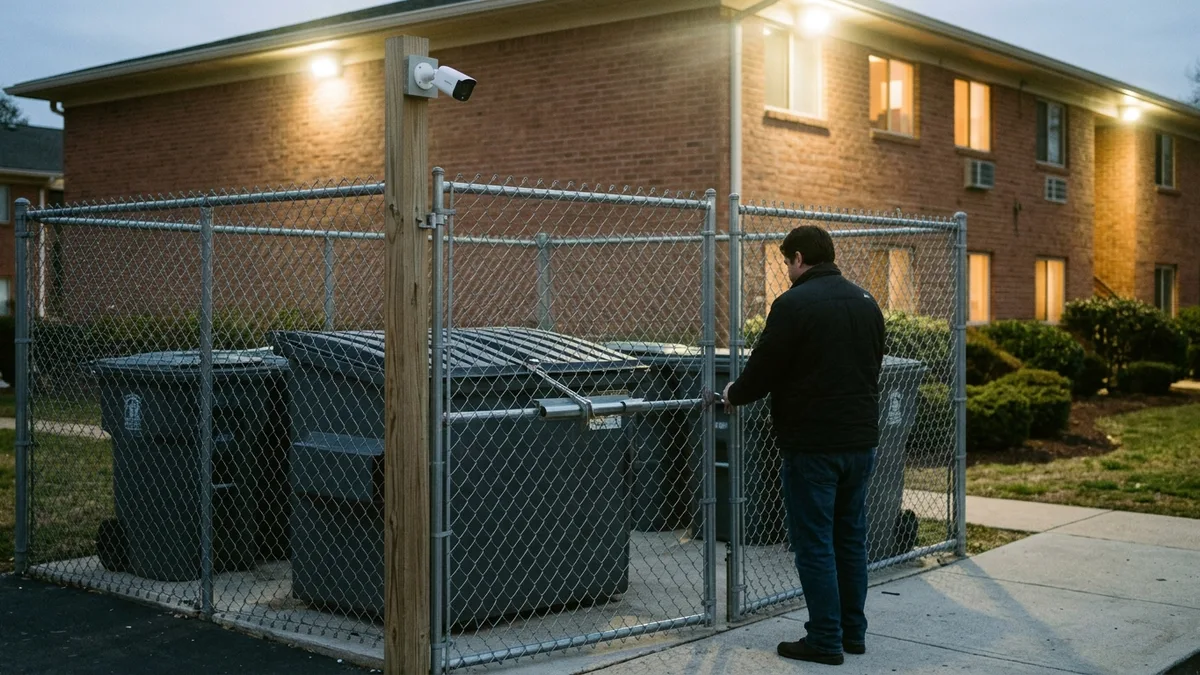
Yes, locking bars and gated enclosures are the standard solution for restricting dumpster access to authorized residents and staff only. A locking bar attaches across the container lid and requires a key or combination to open, while enclosure gates with keyed or fob access control who can enter the pad area at all.
Industry guidance from other management companies specifically recommends asking your hauling company for a locking bar when nonresident use, meaning neighbors, passersby, or nearby businesses dumping their own trash, is contributing to overflow. This is a common problem at properties near commercial corridors or busy pedestrian routes, including many communities along high-traffic sections of the Charleston metro.
Locks alone will not solve every overflow problem. If your own residents are generating more volume than the container can hold, a lock just delays the same overflow by a day or two. Pair any locking system with the capacity audit described earlier, and add lighting and camera coverage at the enclosure if unauthorized dumping continues after locks are installed. Guidance from alternative options on multi-unit dumpster service also identifies enclosures generally, not just locks, as an effective deterrent against illegal dumping and against wind or wildlife scattering loose trash.
How to Prevent Dumpster Diving?
Preventing dumpster diving means restricting physical access to the enclosure through locked gates, positioning containers away from public sightlines, and maintaining adequate lighting and camera coverage so the area is both harder to access and easier to monitor.
Dumpster diving is distinct from unauthorized dumping. It is people removing items rather than adding them, which usually means bagged trash gets torn open and scattered as items are pulled out, creating a mess far worse than what was originally discarded. Gated enclosures with a keyed or fob-access gate solve most of this problem outright, since diving typically requires unrestricted physical access.
If your enclosure is open-air by design, consider camera coverage as a lower-cost alternative to full gating. Cameras will not physically stop access, but the presence of visible recording equipment reduces incidents in most commercial and residential waste settings, and footage gives you documentation if repeated incidents require a police report or hauler escalation.
Lighting matters more than most property managers assume. A poorly lit enclosure at night is both an easier target for dumpster diving and a liability concern for any resident who needs to use it after dark. Bringing enclosure lighting up to the same standard as your parking lot lighting addresses both issues at once.
Is It Illegal to Throw Away a Bed Frame in My Apartment Dumpster?
Whether a bed frame can go in a standard apartment dumpster depends on your property's specific lease rules and local bulk-waste regulations, since bulky items like bed frames typically require scheduled bulk pickup rather than standard container disposal, and cramming one into a regular dumpster usually violates community rules even where it is not a municipal legal violation.
Most lease agreements explicitly prohibit placing bulk items, furniture, mattresses, appliances, in the standard trash container, precisely because these items block the container's mechanical lift arm and take up disproportionate volume. Property managers should check their own community rules and, where applicable, city or county bulk-waste ordinances rather than assuming the item is simply forbidden everywhere.
The practical answer for residents is almost always the same: schedule a bulk-item pickup, either through the property's designated bulk collection day or an on-demand removal service, rather than risk a cleaning and hauling charge. Trash Day Made Easy handles exactly this kind of situation through on-demand bulk item removal for property turnovers, which keeps bed frames, mattresses, and furniture out of the standard dumpster and off the enclosure floor entirely.
How Do You Track Overflow to Tell a Hauler Failure From a Resident Problem?
You track dumpster overflow accurately by logging the date, photos, estimated volume, material type, and any turnover or occupancy events every time it occurs, because this documentation is what separates a genuine hauling-service failure from a resident-behavior or capacity issue, and each of those three causes requires a completely different fix.
A true hauler service failure looks like a missed pickup day, a truck that could not access a blocked enclosure, or a container left unemptied despite a clear path. Other services in the area recommend logging the enclosure, estimated volume, material type, service schedule, and any occupancy or turnover event whenever overflow happens, specifically because this record is what you need to escalate a recurring problem with your hauling provider.
A resident-behavior problem looks different: bagged trash outside the container while there is still visible room inside, or bulk items dumped instead of scheduled. An illegal-dumping problem looks like unfamiliar debris that does not match your resident base, construction material, commercial waste, items from outside the property.
Once you have two or three weeks of logged incidents, patterns emerge fast. If the same day of the week always overflows, it is capacity or scheduling. If the same building or breezeway generates the incidents, it is likely a convenience or access issue for those specific residents. If unfamiliar material shows up consistently, it is an access-control problem, and that points back to locking hardware and camera coverage rather than a hauler conversation at all.
How Does Doorstep Valet Trash Collection Reduce Dumpster Overflow?
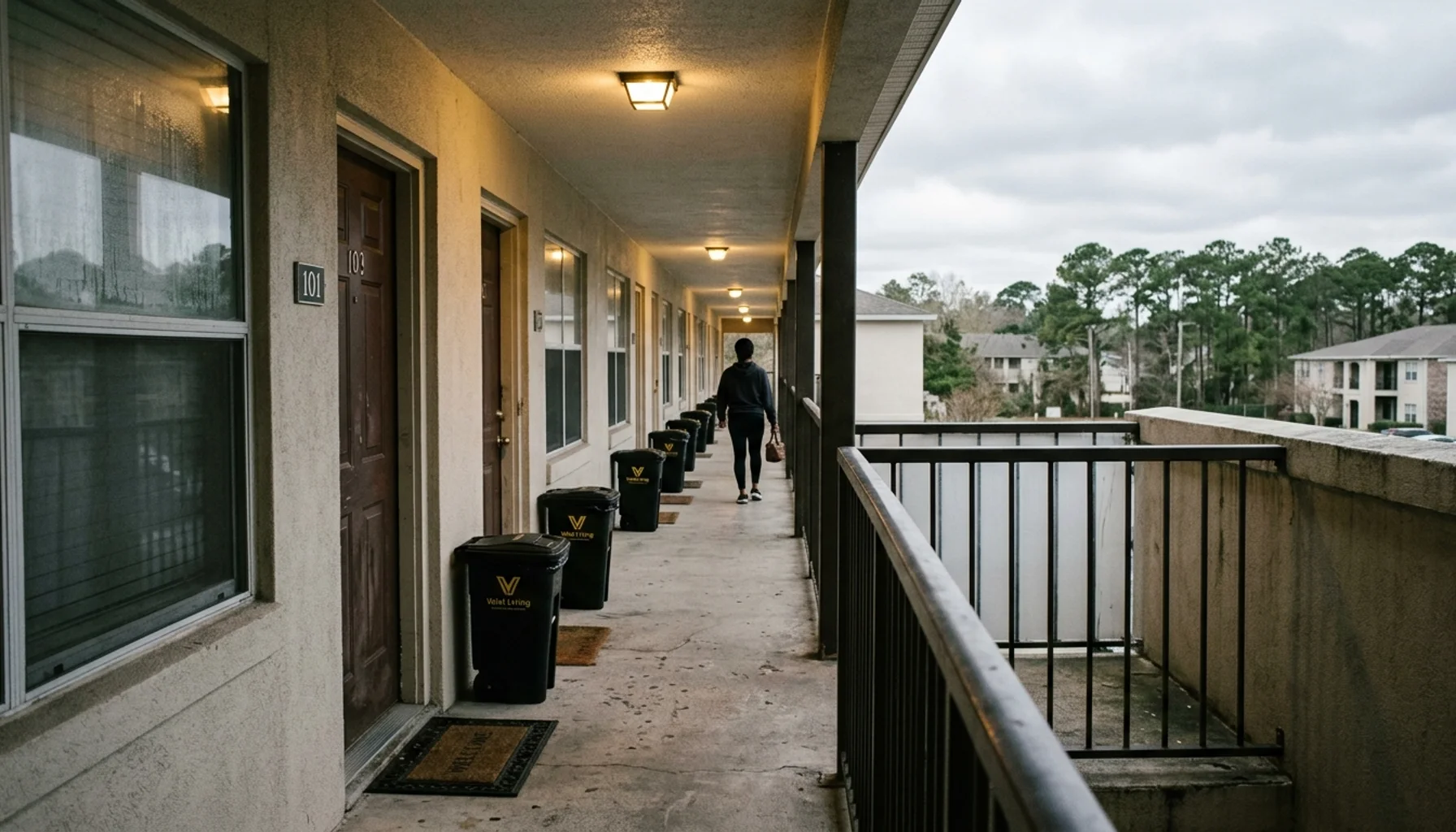
Doorstep valet trash collection is a nightly service where waste is collected directly from a resident's door and carried to the dumpster on a scheduled basis, which spreads container fill more evenly across the week instead of concentrating it into the sporadic, high-volume trips residents make on their own schedule.
When residents self-haul trash, they tend to wait until a bag is overfull, then carry it to the dumpster at inconsistent times, often clustering around evenings and weekends. This creates uneven load spikes that a standard weekly pickup schedule was never designed to absorb smoothly. Nightly valet collection removes that unevenness by moving waste from the door to the dumpster on a fixed schedule every service night, which is precisely the doorstep-to-dumpster model Trash Day Made Easy runs across multifamily communities in North Charleston, Mount Pleasant, and the greater Charleston metro.
Every service visit is photo-verified at the door, giving property managers documented proof that collection happened without needing to walk the property or follow up with a vendor. That documentation solves the tracking problem described above automatically, since a photo-verified log already shows exactly which nights service occurred and which units were serviced. For a deeper look at how this compares to standard pickup, see our guide on what property managers should know about doorstep trash collection.
Nationally recognized providers and industry-standard operators referenced by the National Apartment Association (NAA) have helped popularize the valet trash category over the past decade, and the National Multifamily Housing Council (NMHC) reports that more than half of U.S. apartment complexes now offer some form of valet trash as a resident amenity, with residents typically paying in the range of $25 per month for the service. What differentiates a local operator is the accountability layer: a Charleston-based team that knows the Rivers Avenue corridor's traffic patterns and Daniel Island's build-to-rent expectations firsthand, rather than a route dispatched from out of state.
What Does Enclosure Design and Access Control Actually Prevent?
Enclosure design and access control prevent three distinct problems at once: unauthorized dumping by nonresidents, dumpster diving that scatters loose trash, and blocked hauler access that causes missed pickups, each of which requires a slightly different physical solution even though they all show up at the same dumpster pad.
A well-designed enclosure has a solid or slatted fence on at least three sides, a gate wide enough for a hauling truck's lift arm to operate without obstruction, and clear sightlines from at least one well-lit angle for camera coverage. Concrete or asphalt flooring matters too, since a soft or uneven surface makes it harder for the truck to position for a clean lift and increases the odds of a missed or partial pickup.
Fire access is a compliance issue, not a convenience preference. Blocking a fire lane with an overflow of bulk items, even temporarily during a move-out surge, creates real liability exposure for the property. This is exactly why other services in the area recommend choosing bulk-item staging areas that never encroach on fire lanes, sidewalks, or the enclosure gate itself, regardless of how busy a turnover week gets.
Finally, hazardous materials, paint, batteries, electronics, need a separate handling process entirely. These items should never go in a standard dumpster or recycling container, and staff should not be expected to sort or handle prohibited materials manually. A clear resident policy that directs hazardous waste to a municipal drop-off point, combined with enclosure signage, keeps this risk out of your standard waste stream.
How Do These Waste Costs Compare Across Common Multifamily Approaches?
The table below compares the most common approaches multifamily properties use to manage waste, based on operational characteristics rather than invented pricing, since exact costs vary by portfolio size, region, and hauler contract.
| Approach | Fill Pattern | Resident Effort | Documentation | Best Fit |
|---|---|---|---|---|
| Standard weekly dumpster, self-haul | Uneven, spikes on weekends | High: residents carry own trash | None unless manually logged | Small properties with light turnover |
| Upsized container or added pickups | More even, still resident-driven timing | High | Depends on hauler reporting | Properties with clear volume growth |
| Locked enclosure plus camera coverage | Reduces nonresident and diving volume | Unchanged for residents | Camera footage as needed | Properties near public foot traffic |
| Nightly doorstep valet trash collection | Even, scheduled nightly removal | Low: waste leaves the unit door | Photo-verified per visit | Communities prioritizing resident experience and lease renewal |
Notice that only the valet model combines low resident effort with built-in documentation. That combination is what most directly addresses the retention concern property owners care about, since NAA industry data and RealPage's benchmarking commentary both tie amenity quality, including cleanliness of shared waste areas, to lease renewal decisions.
How Do You Build a Quarterly Waste Audit Into Your Operations?
A quarterly waste audit is a scheduled review of container size, pickup frequency, resident compliance, and enclosure security, conducted four times a year to catch volume changes before they turn into chronic overflow. Skipping this step is the single most common reason a waste plan that worked at lease-up fails eighteen months later.
Start each audit with your occupancy number. A property that leased up to 95% occupied since the last review needs its waste plan re-sized against current volume, not the estimate used at initial setup. Next, pull your overflow incident log, if you followed the tracking method described earlier, and check whether specific days, buildings, or material types keep recurring.
Check your enclosure hardware next: are locks still functioning, is lighting still adequate, has anything changed about pedestrian traffic near the pad. Then review your bulk-item process against your upcoming calendar. If a large lease expiration cluster or a holiday season is coming in the next quarter, build in the extra pickups or temporary roll-offs now rather than reacting when the enclosure is already full.
Finally, decide whether your current model still fits your portfolio's growth. A scattered-site owner who started with three properties and now manages fifteen faces a coordination problem that a patchwork of individual hauler contracts was never built to solve cleanly. That is precisely the gap a single waste operations partner, handling nightly valet, bulk removal, and documentation across every address, is designed to close. If you're evaluating that shift, our breakdown of what valet trash companies typically charge apartment communities is a useful next read.
Frequently Asked Questions
What is trash reimbursement for an apartment?
Trash reimbursement is a fee structure where a property bills residents back for a portion of the waste removal cost, often itemized on the monthly statement as a utility-style charge (RUBS) rather than folded into base rent. It is separate from valet trash service fees, which typically cover a specific doorstep collection amenity rather than the underlying municipal or hauler contract cost.
How much does trash cost per month in an apartment?
Costs vary widely depending on whether trash is billed as a reimbursed utility line item or bundled into rent, and whether the property also offers a valet trash amenity. According to the National Multifamily Housing Council, residents at communities offering valet trash typically pay in the range of $25 per month for that specific service, separate from any base waste disposal reimbursement.
What is valet trash at an apartment?
Valet trash is a resident amenity where a service provider collects bagged household waste directly from a resident's door on a scheduled basis, usually nightly, and carries it to the property's dumpster or designated collection point. It removes the need for residents to haul their own trash to a shared enclosure and is distinct from standard municipal or dumpster-only waste removal.
Is it illegal to throw away a bed frame in my apartment dumpster?
It depends on your lease terms and local bulk-waste rules, but most communities prohibit bulky furniture items in a standard dumpster because they block the container's mechanical lift and disproportionately reduce usable capacity. Residents should schedule a bulk pickup instead, and property managers should check their specific community rules rather than assume a blanket answer applies everywhere.
How do you prevent dumpster diving at an apartment property?
Restrict physical access with a gated, keyed, or fob-controlled enclosure, add adequate lighting, and install visible camera coverage where full gating is not feasible. Combining physical access control with monitoring addresses both the security and the mess that dumpster diving typically causes.
What are the most common 20-yard dumpster mistakes at apartment properties?
The most frequent mistakes are mixing bulky furniture with bagged household trash, positioning the container away from natural resident foot traffic, and blocking hauler truck access with poor enclosure design. Each mistake reduces effective container capacity or delays scheduled pickups, both of which lead directly to overflow.
Is there a reliable way to lock a dumpster to stop overflow?
Yes, a locking bar across the container lid combined with a gated, access-controlled enclosure is the standard solution, especially when nonresident use is contributing to the problem. Locks address unauthorized access but should be paired with a capacity audit, since a lock alone will not fix overflow caused by undersized containers or infrequent pickups.
Conclusion: Keeping Dumpster Areas From Overflowing Comes Down to Planning, Not Policing
Overflowing dumpster areas at apartment properties are almost always a planning failure, not a resident-discipline failure. Getting the container size and pickup schedule right, building a calendar around move-outs and holidays, securing the enclosure, and tracking incidents so you fix the right root cause will solve the overwhelming majority of overflow complaints property managers deal with in 2026.
The properties that struggle least with this problem are the ones that treat waste management as an ongoing operational system, reviewed quarterly, rather than a one-time setup they configured at lease-up and never revisited. For communities where resident self-haul is the recurring weak link, moving toward a nightly doorstep collection model removes that variable from the equation entirely, replacing guesswork with a photo-verified, scheduled routine.
If your community keeps ending up with an overflowing dumpster pad no matter how many reminder emails you send, the fix usually isn't stricter rules, it's a system that removes the resident's role in the process altogether. Trash Day Made Easy runs nightly, photo-verified valet trash service for multifamily communities and rental portfolios across Charleston and Atlanta, built to scale from a 10-unit property to a 1,000-unit portfolio. Request a service quote Monday through Friday to see what a properly sized waste plan looks like at your property.
Content powered by inkSTR.co