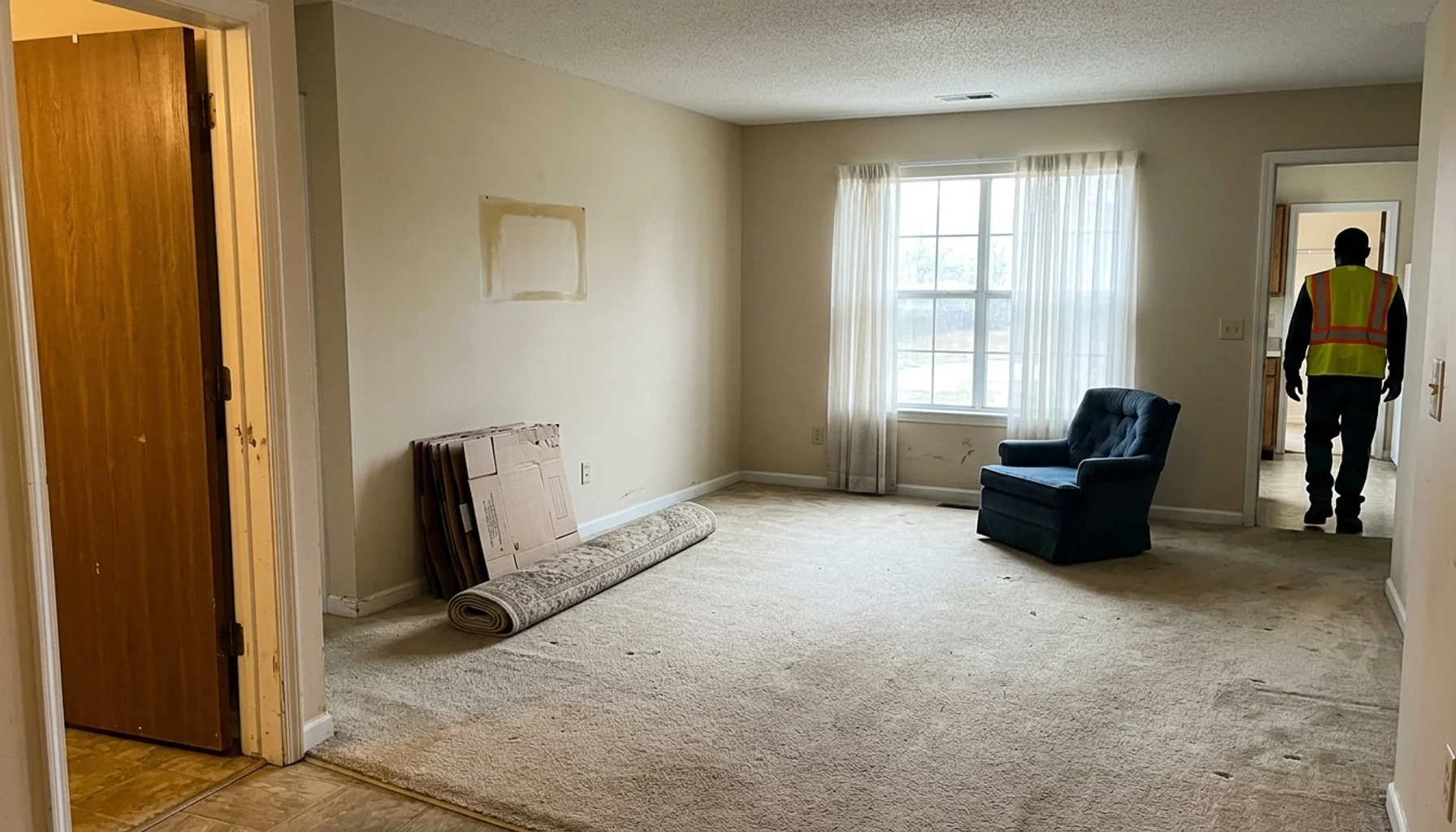
Lowcountry junk removal for property turnovers is the coordinated pickup of abandoned furniture, appliances, and bulk debris left behind after a resident or guest moves out, scheduled tightly enough to keep a unit on track for its next occupant. For a property manager working a 24 to 48 hour turnover window in Charleston, North Charleston, or the surrounding tri-county area, that timing matters as much as the pickup itself.
- Turnover junk removal in the Charleston Lowcountry typically runs on a same-day or next-day basis, not the standard multi-day scheduling window many general haulers use.
- Industry data from WasteFree valet trash service research and related sources shows the national junk removal sector is projected to reach $83.1 billion in 2026, with roughly 40% of jobs tied to estate cleanouts and property turnovers, according to IBISWorld's 2026 waste collection industry analysis.
- Pricing for single bulky items in the Charleston market commonly starts in the $65 to $100 range, with full truckload jobs running several hundred dollars depending on volume, per publicly available Lowcountry provider rate sheets.
- Estate and move-out cleanouts make up close to 40% of all junk removal jobs nationally, a figure directly relevant to Charleston's high resident-turnover multifamily and short-term rental markets, per ZipDo's industry statistics.
- Trash Day Made Easy integrates bulk item and turnover trash removal directly into make-ready cycles for multifamily, build-to-rent, HOA, and short-term rental properties across Charleston and North Charleston, with photo-verified confirmation at every stop.
- Property managers should provide access codes, gate details, and material restrictions before scheduling, a step most competitor guides skip entirely but one that determines whether a turnover crew finishes on time.
If you manage multifamily units near the Rivers Avenue corridor, a build-to-rent community on Daniel Island, or short-term rentals in the Charleston Historic District, you already know the arithmetic. A couch sitting in a breezeway isn't just an eyesore. It's a delayed lease start, a bad guest review, or an HOA complaint that lands on your desk before 9 a.m. Lowcountry junk removal, done right, is a scheduling discipline as much as it is a hauling job.
This guide walks through what property managers, HOA boards, build-to-rent operators, and short-term rental hosts should expect when coordinating junk and bulk item removal during move-out and make-ready cycles in 2026. We'll cover pricing benchmarks, what items get left behind, how to avoid the coordination gaps that stall a turnover, and why a dedicated waste operations partner beats calling a general hauler every time a unit turns over.
At Trash Day Made Easy, we service multifamily communities, build-to-rent developments, HOAs, and short-term rental portfolios across Charleston, North Charleston, and the surrounding Lowcountry, and turnover junk removal is one of the most frequent, and most mismanaged, parts of the resident transition cycle we see.
What Is the Minimum Price for Junk Removal in the Charleston Lowcountry?
The minimum price for junk removal in the Charleston Lowcountry generally falls between $65 and $100 for a single bulky item, such as a mattress, sofa, or appliance, based on publicly listed rates from area providers. That starting figure typically covers labor, transportation, and disposal for one item picked up at a single address.
Pricing scales from there based on volume. Providers commonly quote by truckload fraction: an eighth of a truckload, a quarter, a half, and a full load. A small load, roughly one appliance plus six to eight boxes of loose debris, sits near the lower end of that scale, while full-load jobs covering an entire vacated apartment or estate cleanout run into the several-hundred-dollar range.
Two variables move the number more than anything else. First, volume: cubic yardage, not item count, drives most quotes, and the average job nationally runs between 1.5 and 3 cubic yards, per ZipDo's industry data. Second, location: urban pricing tends to run about 20% higher than rural pricing due to landfill fees and demand density, a gap that applies directly to dense North Charleston and downtown Charleston service calls compared to more rural pockets of the tri-county area.
For portfolio operators, the quote-per-job model gets expensive and unpredictable fast. That's why multifamily and build-to-rent operators working with Trash Day Made Easy typically move to a standing service relationship rather than a one-off call every time a unit turns over.
What Is the Average Cost for a Full Junk Removal Truckload?
A full truckload junk removal job in the Charleston area typically costs several hundred dollars, with providers scaling price by load fraction rather than a flat per-item rate. Publicly listed rate cards from Charleston-area haulers show quoted ranges spanning roughly $99 at the smallest load size up to around $699 for a full truckload, though exact figures vary by provider and job specifics.
The load-fraction model works like this: an eighth truckload covers a small pile, maybe one piece of furniture and a handful of boxes. A half truckload handles a fully furnished bedroom or a small studio's worth of debris. A full truckload clears an entire one- or two-bedroom unit, which is the volume most property managers deal with during a standard resident move-out.
For short-term rental operators near Isle of Palms or Sullivan's Island, full-truckload jobs are rare. Turnover debris there tends to be lighter and more sporadic, a broken patio chair, a guest-abandoned cooler, damaged linens. That's a mismatch with general haulers built around large one-time loads. It's exactly the kind of job an on-demand waste partner handles more efficiently than a scheduled full-truck dispatch.
As of 2026, several Charleston-area haulers advertise same-day service for smaller loads, but full-truckload jobs typically still require next-day or scheduled dispatch given crew and vehicle availability.
What Is the Cheapest Way to Get Rid of Junk During a Turnover?
The cheapest way to get rid of turnover junk is to divert usable items to donation before calling a paid hauler, since many nonprofits will pick up furniture and appliances in working condition at no cost. That said, donation only works for items in good condition and on a timeline that rarely matches a 24 to 48 hour turnover window, which limits its practicality for property managers under deadline pressure.
For property managers specifically, "cheapest" and "fastest" pull in opposite directions. A free donation pickup might take a week to schedule. A city bulk pickup, where available, often runs on a fixed weekly or monthly schedule that won't align with a mid-month move-out. Neither option works when a new resident arrives at noon and the unit still has a couch in the living room.
The realistic cost-saving move for portfolio operators isn't chasing the lowest per-job price. It's bundling turnover junk removal into a standing waste operations relationship instead of paying one-off hauler rates for every vacancy. A single scattered-site portfolio owner managing 15 to 20 units across North Charleston and Summerville, for example, pays a premium every time they call a different hauler for a one-off pickup versus running one consistent vendor relationship across the whole portfolio.
This is precisely where Trash Day Made Easy's bulk item and turnover trash removal service fits. Rather than sourcing a new hauler per vacancy, it integrates directly into the make-ready cycle as part of an ongoing waste operations program, which keeps per-unit costs predictable across a portfolio rather than volatile job to job.
What Items Will Junk Removal Services Not Take?
Junk removal services typically will not take hazardous materials, certain electronics with battery or chemical components, and items requiring specialized disposal permits, such as paint, chemicals, tires, and some large appliances containing refrigerants. Property managers who don't confirm restrictions ahead of time are the ones who end up with items still sitting in a unit on move-in day.
Common exclusions across Lowcountry-area providers include:
- Paint, solvents, and other flammable or hazardous chemicals
- Asbestos-containing materials, common in older Charleston-area housing stock
- Certain refrigerants-containing appliances without proper reclamation documentation
- Medical waste and biohazard materials
- Construction debris containing lead paint in pre-1978 renovations, which may require separate abatement handling
For HOA communities on James Island or Daniel Island, this matters twice over. A resident who leaves a paint can or an old refrigerator at the curb assuming "junk removal handles everything" creates a compliance problem the board then has to enforce, often without any real authority to force removal.
The fix isn't complicated, but almost no competitor content covers it clearly: property managers should confirm material restrictions with their waste vendor before the turnover date, not after a crew shows up and can't legally take half the load. Trash Day Made Easy addresses this upfront during quote requests, which are available Monday through Friday, so restricted items get flagged before a crew is dispatched, not discovered on-site.
How Does Junk Removal Timing Work for a 24 to 48 Hour Turnover Window?
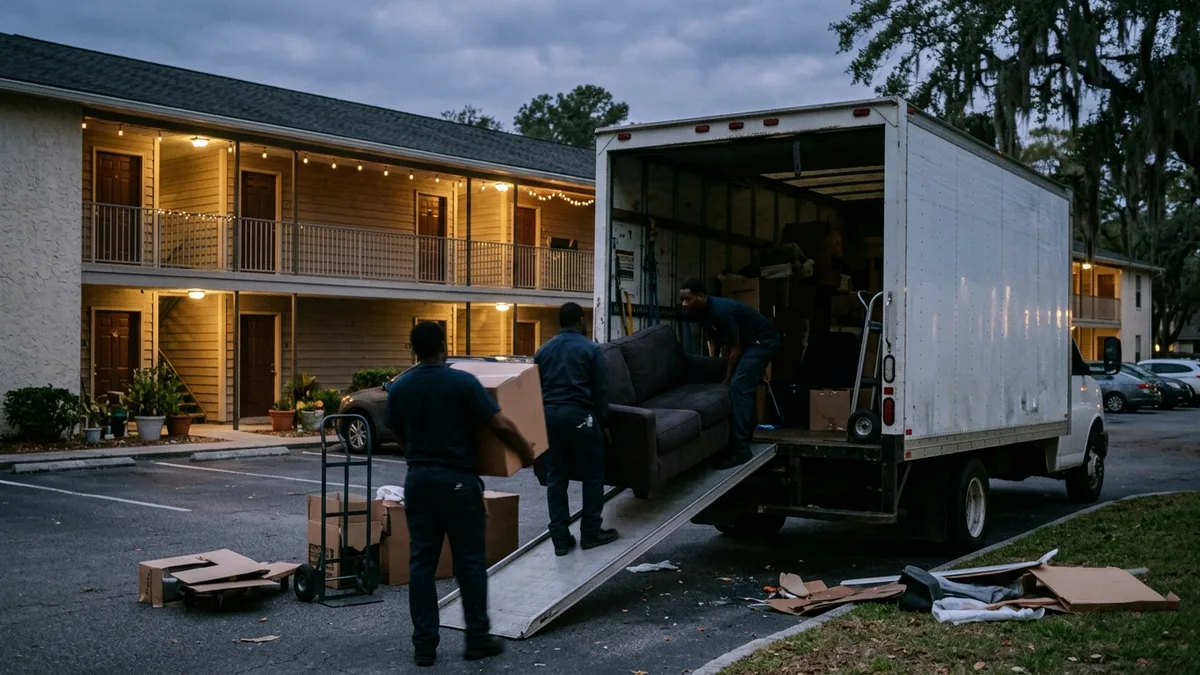
Turnover timing for junk removal refers to the coordination between a resident's move-out date and a new resident or guest's move-in, typically compressed into a 24 to 48 hour window in multifamily and short-term rental settings. This is the single most under-addressed topic in Lowcountry junk removal content, and it's the difference between a smooth turnover and a delayed lease start.
Here's the sequence that actually works, based on what we see across multifamily and build-to-rent portfolios in Charleston and North Charleston:
- Confirm the move-out date at least 5 to 7 days in advance. Most lease agreements already require this notice; use it to pre-schedule bulk removal rather than waiting for the actual move-out day.
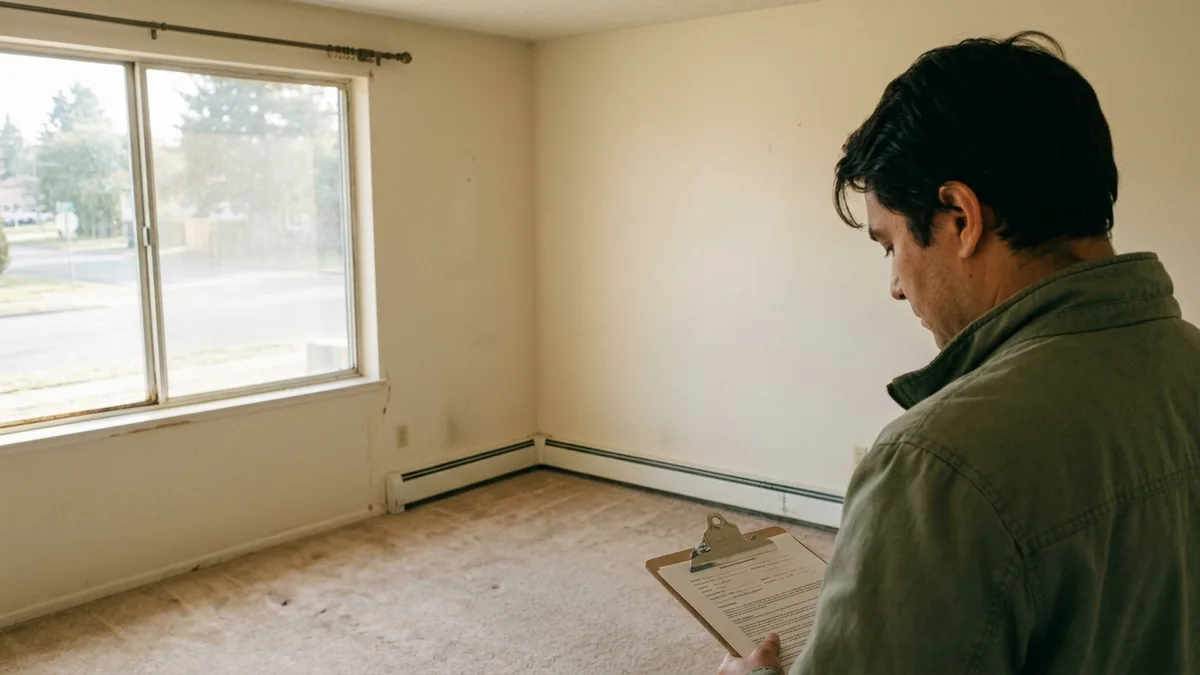
- Walk the unit within hours of move-out, not the next morning. Abandoned furniture, left-behind appliances, and debris volume all need to be assessed before you can confirm a pickup window with your waste vendor.
- Schedule removal for the same day or the following morning, leaving buffer time before your cleaning crew arrives. Cleaners can't do their job around a couch that's still in the living room.
- Confirm photo verification of completion before releasing the unit to your make-ready checklist. This is where many portfolios lose time: without documented proof of completion, managers end up doing a second walk-through just to confirm the job is actually done.
Skipping step 4 is the most common mistake we see. A property manager assumes a job is finished because a hauler said so, then discovers a missed item during a final inspection with a new resident already scheduled to arrive that afternoon. Photo-verified service closes that gap entirely, since a timestamped photo at the door confirms completion without a manager needing to be on-site.
How Should Property Managers Coordinate Junk Removal With Cleaning Crews?
Coordinating junk removal with cleaning crews means sequencing bulk item pickup before the cleaning team arrives, since cleaners cannot effectively clean around furniture, boxes, or debris still occupying the unit. This sequencing gap is one of the least-discussed friction points in property turnover management, and it causes more schedule slippage than almost any other single factor.
In practice, that means your waste vendor and cleaning vendor need to operate on a shared timeline, not two independent schedules that happen to overlap. A build-to-rent operator near the airport corridor managing back-to-back turnovers across a 40-unit community can't afford a cleaning crew showing up to a unit still full of a prior resident's furniture.
Three coordination details make or break this handoff:
- Access information: gate codes, lockbox combinations, and parking instructions need to reach both the junk removal crew and the cleaning crew, not just one.
- Sequencing confirmation: the waste vendor should confirm completion, ideally with photo verification, before the cleaning crew is dispatched.
- Communication ownership: one person, typically the property manager or a portfolio-level coordinator, should own the go-ahead signal between vendors rather than relying on each vendor to independently guess timing.
For scattered-site portfolios spanning multiple North Charleston neighborhoods, this coordination gets harder as the portfolio grows. A single vendor relationship covering both nightly valet trash and on-demand bulk removal, the model Trash Day Made Easy is built around, removes one full layer of vendor-to-vendor coordination since the same team already knows the property's access details and service history.
Junk Removal vs. Dumpster Rental: Which Fits Your Turnover Better?
Junk removal involves a crew hauling items away directly, while dumpster rental means a container is dropped on-site for the property to fill over days or weeks before pickup. For turnover scenarios, the right choice depends heavily on property type and timeline, and almost no competitor content directly compares the two for this specific use case.
| Factor | Junk Removal | Dumpster Rental |
|---|---|---|
| Best for | Single-unit turnovers, HOA bulk pickup, STR debris | Full renovation projects, multi-unit gut jobs |
| Typical timeline | Same-day to next-day | Days to weeks on-site |
| Labor included | Yes, crew loads and hauls | No, property or contractor loads it themselves |
| Curb appeal impact | Minimal, items removed same visit | Container sits visible on-site during rental |
| HOA suitability | Higher, no visible container violating CC&Rs | Lower, often restricted by community covenants |
| Cost structure | Volume or load-fraction based | Flat rental fee plus weight overage charges |
For a single-family rental turnover or an HOA community on Johns Island, junk removal wins almost every time. Dumpsters sitting on a driveway for a week violate most HOA aesthetic standards and draw complaints faster than the junk itself would have. For a condo association managing one unit turnover among many, a dumpster is overkill and often against community rules entirely.
Dumpster rental makes more sense for full renovation projects, a gut-and-rebuild between long-term tenants, or new construction debris on a build-to-rent site. But for the standard move-out-to-move-in cycle that dominates multifamily and short-term rental operations across Charleston, on-demand junk removal is the faster, cleaner, and generally more cost-predictable option.
What Information Should Property Managers Provide Before Scheduling Turnover Junk Removal?
Property managers should provide access codes, gate details, pet information, and material restrictions before scheduling turnover junk removal, since missing any one of these commonly delays the job on arrival. This single piece of preparation is the most overlooked step in Lowcountry junk removal coordination, and it's rarely addressed in existing local content.
Before requesting a quote, gather:
- Access details: gate codes, lockbox combinations, unit numbers, and any building-specific parking restrictions for the crew's vehicle
- Volume estimate: rough item count or square footage of debris, even an approximate photo, speeds up accurate quoting
- Material flags: any hazardous items, paint, chemicals, or refrigerant-containing appliances that need separate handling
- Pet or safety notes: whether a unit had pets, relevant for odor or pest considerations during pickup
- Timeline constraints: the exact window before cleaning crews or new residents arrive, so the vendor can prioritize sequencing
Portfolio operators managing scattered-site properties across Summerville, Goose Creek, and North Charleston benefit most from standardizing this intake process across every unit. A consistent checklist, rather than an ad hoc phone call per vacancy, cuts the back-and-forth that otherwise eats into a tight turnover window.
How Does Trash Day Made Easy Handle Turnover and Bulk Item Removal?
Trash Day Made Easy handles turnover and bulk item removal as an integrated part of its broader waste operations program, not as a standalone one-off dispatch, serving multifamily communities, build-to-rent developments, HOAs, and short-term rental properties across Charleston, SC and Atlanta, GA. Headquartered at 4900 O'Hear Avenue in North Charleston, the company built its bulk removal service specifically around the make-ready timeline pressures property managers deal with every week.
What sets this apart from calling a general hauler for each vacancy comes down to a handful of concrete operational details:
- On-demand scheduling that integrates with existing make-ready cycles, rather than requiring a separate booking process for every unit turnover.
- Photo-verified completion at every stop, giving property managers documented proof a unit is clear before releasing it to a cleaning crew or new resident, without needing a personal walk-through.
- Portfolio scalability from 10 units up to more than 1,000, meaning a scattered-site owner and a large multifamily community both get the same consistent service standard.
- A single vendor relationship covering nightly valet trash, trash can concierge, bulk item removal, and full waste operations, so property managers aren't juggling separate vendors for routine collection and turnover-specific hauling.
- Local Charleston-area knowledge, from the density challenges near the Rivers Avenue corridor to the guest-experience pressure of short-term rental turnovers on Isle of Palms and Sullivan's Island.
For HOA communities, this same infrastructure extends to trash can concierge service, moving bins from storage to curb and back on collection day, which removes the enforcement burden boards otherwise carry when residents ignore bin compliance rules. For build-to-rent operators, the build-to-rent waste program folds bulk removal into a broader resident amenity that supports investor-grade community standards from day one.
Other options exist in the Charleston market, including general junk haulers and national valet trash providers, but few combine nightly routine collection with on-demand turnover removal under one photo-verified service standard. That combination is what makes Trash Day Made Easy's approach to lowcountry junk removal distinct from a single-transaction hauling call.
What Do Junk Removal Providers in the Charleston Market Typically Offer?
Junk removal providers in the Charleston tri-county area typically offer residential bulk pickup, appliance and furniture removal, and construction debris hauling, with service radius and specialization varying by company. As of 2026, the Lowcountry market includes a mix of general haulers, franchise operations, and specialized waste operators, each suited to different turnover scenarios.
General haulers such as VETS Junk Removal, Palmetto State Junk Removal, Lowcountry Junk Dogs, Lowcountry Litter Lifters, Junk Houdini, and Ready Set Junk serve the broader tri-county region. National operators like 1-800-GOT-JUNK and Junk King Charleston, along with hybrids such as College HUNKS Hauling Junk & Moving, also serve the market.
What most of these providers share is a transactional model: call, get a quote, schedule a pickup, done. That works fine for a homeowner clearing out a garage. It works less well for a property manager who needs the same standard of service across 50 units this month and 50 more next month, with documentation to prove each job was completed on time.
Trash Day Made Easy approaches the same category differently by building bulk and turnover removal into an ongoing waste operations relationship rather than a repeated one-off transaction, which is the structural difference portfolio operators should weigh most heavily when comparing options.
What Should You Prioritize When Choosing a Junk Removal Partner for Turnovers?
Choosing a junk removal partner for property turnovers means prioritizing scheduling flexibility, documented proof of completion, and portfolio-level consistency over the lowest advertised per-job price. A vendor that's $20 cheaper but can't guarantee same-day dispatch during a compressed turnover window costs far more in delayed rent revenue than it saves on the invoice.
Run through this checklist before signing with any provider:
- Same-day or next-day availability: confirm this explicitly, don't assume it based on a company's marketing.
- Photo or documented proof of completion: ask specifically how confirmation works and whether it's provided without you having to request it.
- Material handling policy: get a clear list of what won't be taken before the job, not during it.
- Portfolio pricing structure: ask whether pricing is standardized across units or requires a new quote every time, a major factor for scattered-site owners.
- Integration with existing services: check whether the provider also handles routine valet trash or bin management, since a single vendor relationship simplifies coordination significantly.
The most common mistake property managers make is treating bulk item removal as an afterthought on move-out day rather than building it into the turnover checklist as a fixed, scheduled step. Waiting until the day of move-out to find a hauler almost guarantees a scheduling gap somewhere in the process.
Frequently Asked Questions
What is the minimum price for junk removal in the Charleston area?
The minimum price for a single bulky item pickup in the Charleston Lowcountry generally starts between $65 and $100, based on publicly listed provider rate sheets. Full truckload jobs scale up from there based on volume, with quoted ranges commonly reaching several hundred dollars for a complete unit clean-out.
How quickly can junk removal be scheduled for a property turnover?
Many Charleston-area providers offer same-day service for smaller loads, though full-truckload jobs often require next-day scheduling depending on crew availability. Property managers working a 24 to 48 hour turnover window should confirm same-day or next-day availability explicitly before committing to a vendor.
What items do junk removal companies typically refuse to take?
Most providers will not take hazardous chemicals, paint, certain refrigerant-containing appliances, asbestos-containing materials, or medical waste without special handling arrangements. Confirming these restrictions before the scheduled pickup date prevents leftover items from delaying a turnover.
How is junk removal different from dumpster rental for a rental property turnover?
Junk removal involves a crew directly hauling items away in a single visit, while dumpster rental leaves a container on-site for days or weeks before pickup. For single-unit turnovers and HOA communities, junk removal is typically faster and avoids the curb appeal and CC&R issues a visible dumpster can create.
Can Trash Day Made Easy handle bulk item removal for short-term rental turnovers?
Yes. Trash Day Made Easy offers on-demand bulk item and turnover trash removal for short-term rental properties across Charleston, including the Historic District, Isle of Palms, and Sullivan's Island. Service integrates with unpredictable guest turnover schedules rather than requiring fixed weekly dispatch windows.
What information should a property manager provide before scheduling a turnover junk removal job?
Property managers should share access codes, gate or parking details, an approximate volume estimate, any hazardous material flags, and the exact timeline before cleaning crews or new residents arrive. Providing this upfront speeds up quoting and prevents on-site delays from missing information.
Does Trash Day Made Easy serve HOA communities and scattered-site portfolios?
Yes. Trash Day Made Easy serves HOA communities, build-to-rent developments, multifamily properties, and scattered-site portfolios ranging from 10 to more than 1,000 units across Charleston, North Charleston, and Atlanta. Photo-verified service documentation gives HOA boards and portfolio operators consistent proof of completion across every property.
Is junk removal cheaper than paying for a dumpster during a renovation-heavy turnover?
For a standard single-unit move-out, junk removal is generally more cost-effective and faster than a dumpster rental, which carries a flat fee plus potential weight overage charges. Dumpster rental becomes more cost-effective only for larger renovation projects generating debris volume beyond what a single junk removal visit can handle.
The Bottom Line on Lowcountry Junk Removal for Turnovers
Lowcountry junk removal for property turnovers works best when it's scheduled as a fixed step in the make-ready timeline, not an emergency call placed after a move-out surprise. Pricing typically starts between $65 and $100 for single items, scales with truckload fraction, and runs roughly 20% higher in dense urban corridors like North Charleston compared to more rural parts of the tri-county area, per ZipDo's 2026 industry data.
The property managers who avoid delayed turnovers are the ones who treat bulk removal, cleaning coordination, and photo-verified completion as one connected process rather than three separate vendor relationships. As portfolios grow from a handful of scattered units to multi-hundred-unit communities across Charleston and Atlanta, that consistency becomes harder to maintain without a dedicated waste operations partner.
Trash Day Made Easy was built specifically for this kind of hands-off operation, combining nightly valet collection, trash can concierge service, and on-demand bulk removal into one photo-verified program for portfolios across the Charleston metro and Atlanta, GA. Get started with Trash Day Made Easy and request a service quote Monday through Friday for your next turnover cycle.

If your next turnover is already on the calendar, don't wait until move-out morning to find a hauler. Trash Day Made Easy's on-demand bulk item removal integrates directly into your make-ready checklist, with photo verification confirming the unit is clear before your cleaning crew ever walks in. Check availability and request a quote here.