
Apartment complexes charge mandatory valet trash fees because scheduled doorstep pickup is a paid labor service, separate from the dumpster and disposal costs that a standard trash charge covers. Making the fee mandatory spreads that cost across every unit and keeps routes predictable, so every door gets the same pickup schedule.
Key Takeaways
- The fee pays for doorstep pickup labor, which a standard trash charge for dumpster and disposal costs does not cover.
- Fees are usually a flat monthly amount per unit, regardless of how much trash you produce.
- Whether you can opt out depends on your lease or fee addendum.
- Read the lease and addendum before signing; a mandatory fee listed there is typically part of the agreement.
- Log missed pickups with dates and photos so you can raise them with management.
At Trash Day Made Easy, we handle nightly valet trash for communities across the Charleston area, and the same question comes up from both sides of the lease. Renters ask why the fee is mandatory; managers ask how to explain it.
The question usually starts with a ledger. You see a regular trash charge and a valet trash charge on the same statement, and neither one changes with how many bags you put out. That looks like paying twice until you separate infrastructure costs from labor costs.
This guide covers what the fee pays for, what communities charge in 2026, whether you can opt out, and what to do when pickups slip. It is general information, not legal advice, so check your own lease and a qualified professional for anything specific to your situation. We write from the operator side, with communities from North Charleston to Johns Island in mind.
What Is Valet Trash at an Apartment Complex?
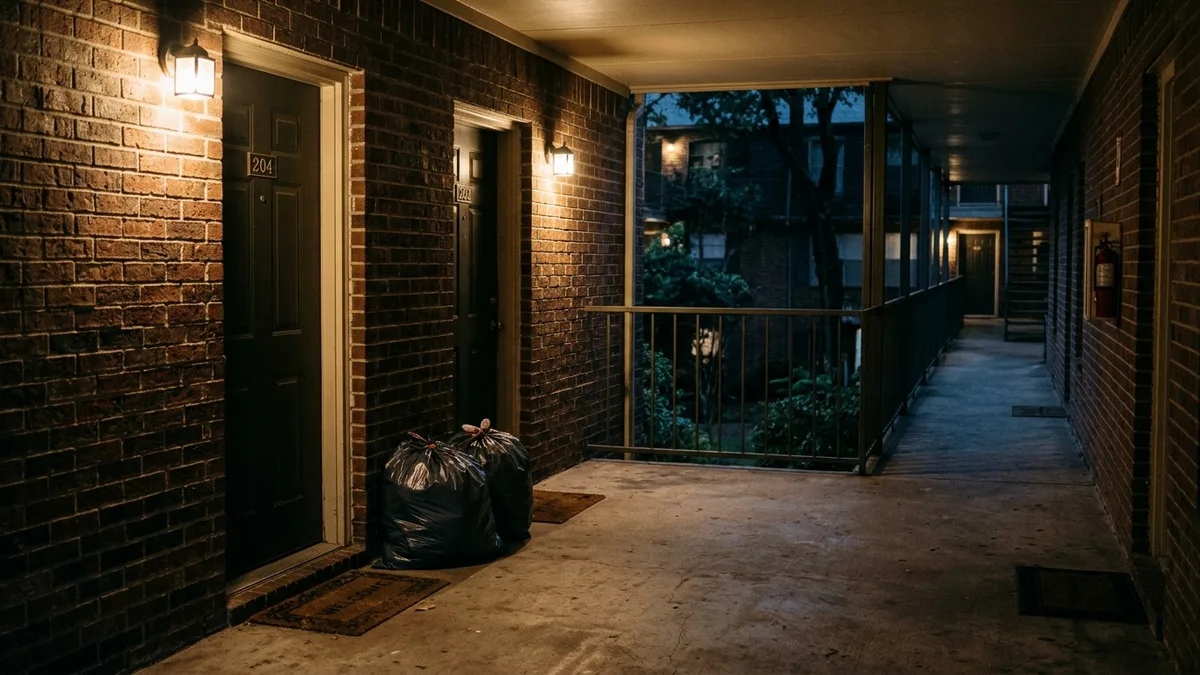
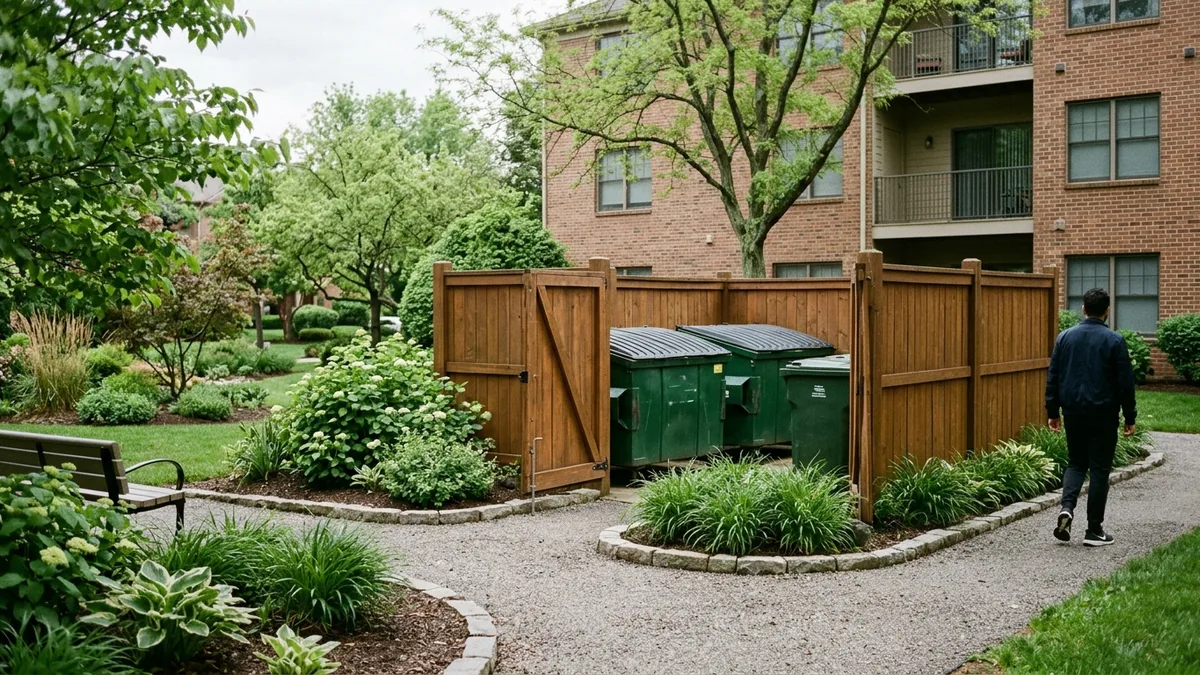
Valet trash is a scheduled doorstep collection service in which a vendor picks up sealed bags of household trash from outside each apartment door and carries them to the community's central dumpster or compactor. You set the bag out; the crew handles the stairs and the haul.
On a typical route, you bag and tie your trash, then place it outside your door by a posted time on scheduled nights. Crews walk the breezeways and stairwells collecting each bag. They then move everything to the property's dumpster or compactor area. Bag size and container rules vary, so your community's amenity guide is the authority on what you can set out.
The model is common. Industry sources widely cite the finding that more than half of U.S. apartment complexes offer some form of valet trash. For a longer walkthrough of the daily mechanics, our explainer on how garbage valet works covers the process step by step.
What Valet Trash Does Not Cover
Routine valet service handles household trash in bags. Furniture, boxes from a move-out, and renovation debris generally fall outside the nightly route and get handled through separate bulk pickup or property arrangements. Recycling depends on the community, so ask whether it takes part in local multifamily recycling programs for apartment and condominium complexes.
Why Do Apartment Complexes Make Valet Trash Fees Mandatory?
Apartment complexes make valet trash fees mandatory because the service runs as a fixed route. The crew visits every door on scheduled nights. A flat per-unit price only works when every unit is part of the program. An optional version leaves gaps in the route and complicates billing.
The Reasons Operators Give
Operators point to resident convenience, fewer trips to shared dumpsters, less mess around the dumpster area, and the amenity's role in resident satisfaction and lease renewals. Those are intended outcomes, and they only materialize when pickups happen on schedule.
Why a Flat Fee Instead of Pay-Per-Use
The fee is typically a flat monthly amount per unit, not tied to how much trash you produce. Billing stays simple, vendors generally price a route by the number of doors, and nobody has to track who used the service on a given night.
In our experience at Trash Day Made Easy, a route that covers every door runs faster and more consistently than one that skips scattered units. In North Charleston's summer heat and humidity, overflow around a dumpster turns into an odor problem within a day or two, which is the failure operators are trying to prevent.
How Much Do Apartments Charge for Valet Trash, and What Does the Fee Cover?
Mandatory valet trash fees commonly run $25 to $35 per unit per month, and some properties charge as little as $22. The fee covers the labor of doorstep pickup and is usually billed as a flat amount per unit, independent of how much trash you produce.
What North Charleston Listings Show
Public listings for North Charleston communities show valet trash fees between $22 and $30 per month in 2026. Resident reviews mention amounts around $18 to $20, in one case alongside a separate regular trash charge. Listings and reviews can lag behind current lease terms, so confirm the amount in your own fee addendum before you sign.
| Charge | What it usually pays for | How it is typically billed |
|---|---|---|
| Standard trash fee | Dumpster or compactor service and the hauling and municipal disposal behind it | Flat monthly amount, often per unit |
| Valet trash fee | Labor, route time, and transport from each door to the dumpster or compactor | Flat monthly amount per unit |
| Bulk or move-out debris | Furniture, boxes, and renovation waste, usually outside the nightly route | Varies by property; often arranged separately |
Why Two Trash Charges Appear
The standard trash charge pays for property-wide infrastructure. The valet charge pays for people and time at your door. Ask for the combined monthly total when you compare communities, since two properties with the same rent can differ by tens of dollars once trash charges are added.
If you run a property and want the vendor-side view, our breakdown of what valet trash companies charge apartments explains how pricing is structured.
What Benefits Does Valet Trash Give Apartment Residents?
Valet trash benefits apartment residents by removing the trip to the shared dumpster: you set a sealed bag outside your door and the crew handles the walk down and the compactor. The benefit is largest in garden-style communities with long walks and in buildings with third-floor walk-ups.
A second benefit is less visible. Operators expect fewer residents carrying bags to the dumpster area to mean less spillage and fewer open lids. Grounds around the enclosure should stay cleaner too. Bags also leave your unit the same night, which matters in Lowcountry humidity, where trash inside a kitchen turns smelly fast during summer.
When Valet Trash Is Not Worth the Fee
Valet trash is not right for every resident or every property. If you travel often or work nights, you may pay the full flat fee while using the service lightly. A small community with a single compactor near every door may not need nightly pickup at all.
Our view: the fee earns its place at larger communities with distance and stairs between your door and the dumpster, and only when the vendor is reliable. For more on daily expectations from the renter side, our guide to what apartment renters should know about trash valet services goes deeper.
Can You Opt Out of a Mandatory Valet Trash Fee?
A mandatory valet trash fee is a charge that your lease or an attached fee addendum requires every resident to pay. It applies whether or not you use the service. Whether you can opt out depends on that document's wording, and many communities do not allow it because routes and billing are set per unit.
Where to Check Before You Sign
- Lease and fee addendum: look for the fee name, the monthly amount, and wording such as "mandatory" or "required."
- Move-in cost sheet or amenity guide: look for pickup nights, cutoff times, and bag rules.
- Renewal paperwork: look for line items that differ from your original lease.
Communities treat this fee differently. Some itemize it; others fold it into rent. Ask which approach the property uses, then compare the total monthly cost across communities rather than the headline rent alone.
What to Ask Management
Ask whether the fee applies to every unit, how many nights pickup runs, what happens when a pickup is missed, and whether any accommodation exists if doorstep placement is difficult for you. Get the answers in writing; an email reply works as a record.
This is general information, not legal advice. Lease rules differ by state and by document, so confirm specifics with your property manager. A qualified attorney or a local legal aid organization can also help.
Can a Landlord Add a Valet Trash Fee in the Middle of a Lease?
A landlord generally cannot add a new valet trash fee in the middle of a fixed-term lease. The exception is when the lease already allows it or you agree in writing. A fee listed in your signed lease or addendum is treated as part of the agreement. Confirm the details for South Carolina with a qualified professional.
The renewal is where new charges can surface. A renewal offer is a new agreement, so a community that adds valet service, or raises the fee, can present it there. You can accept the terms or ask questions and negotiate. You can also look elsewhere.
A Practical Checklist for Renewal Offers
- Compare your current lease and the renewal offer line by line, including addenda.
- Ask management in writing what the new fee covers, how many nights pickup runs, and when it starts.
- Keep copies of every notice and email, with dates.
- If you disagree with how a fee was introduced, talk to a qualified attorney or legal aid office before you sign or change how you pay.
Managers can avoid this friction. Announce a new valet program well before renewal dates, attach a clear addendum, and explain the pickup schedule and cost in plain language. Residents tend to accept a fee more easily when the service is described as scheduled doorstep collection rather than a surprise line item.

What Should You Do When Valet Trash Pickups Are Missed?
A missed valet trash pickup is a service failure you can document and raise with property management. Record the date and photograph the uncollected bag at your door. Send the request in writing so the community can ask its vendor for proof of service.
- Photograph the bag at your door with the date and time visible.
- Confirm you followed the posted rules, including a sealed bag set out before the cutoff.
- Email the property manager with the date, your unit number, and the photo.
- Ask for the vendor's service record for that night.
- Follow up in writing if pickups keep slipping, and ask how the community handles repeat misses.
Missed pickups matter beyond the annoyance. Bags left in a breezeway attract pests and, in North Charleston heat, smell within a day or two. At Trash Day Made Easy, we handle this from the vendor side. Collection is nightly, and every visit is photo-verified. A manager can open the record and see whether a door was serviced instead of guessing.
What Managers Should Put in the Vendor Agreement
If you run a community, ask any vendor for its service windows, the documentation you will receive, an escalation path, proof of insurance, and a written missed-pickup policy. Our multifamily valet trash page outlines how we approach apartment communities, and the property manager guide to valet garbage services covers what to compare.
Frequently Asked Questions
How much do valet trash companies charge apartments?
Valet trash vendors typically price by property, based on unit count, the number of service nights, and the layout of buildings and stairs. There is no single published rate. Trash Day Made Easy quotes each property individually Monday through Friday, and walks through layout and schedule before giving a number.
How much is valet trash service for residents?
Residents commonly pay $25 to $35 per month as a flat fee, and some properties charge as little as $22. The North Charleston listings cited earlier fall at the lower end of that band. Check your fee addendum for the exact amount at your community.
What is valet trash at an apartment?
Valet trash is scheduled doorstep collection. You place a sealed bag outside your door on pickup nights, and a crew carries it to the community's dumpster or compactor. You skip the walk to the shared dumpster.
Do residents pay for valet trash?
Yes, in most communities that offer it. Residents usually pay through a flat monthly fee listed in the lease or a fee addendum. It is separate from rent or sometimes folded into it. Ask the leasing office which approach your property uses.
How many nights a week does valet trash run?
Schedules vary by community, from a few set nights per week to nightly service. Trash Day Made Easy runs nightly scheduled collection. Your lease or the community's amenity guide lists your pickup nights and cutoff time.
Is valet trash worth it for a small apartment community?
Often not. A small property with a compactor near every door may not need nightly doorstep service. Larger garden-style communities and buildings with third-floor walk-ups tend to get the most value from it.
Does valet trash replace the community dumpster?
No. Valet trash still ends at a central dumpster or compactor; the crew simply makes the trip for you. The standard trash charge continues to cover that infrastructure, which is why many leases list both charges.
So Why Do Apartment Complexes Charge Mandatory Valet Trash Fees?
Apartment complexes charge mandatory valet trash fees because doorstep pickup is paid labor that works only when every door is on the route. As of 2026, expect the fee as a flat per-unit line item in North Charleston leases, separate from the base trash charge. Read the lease and addendum closely, and keep dated records of any missed pickups. Expect more communities to ask vendors for documented, photo-verified service in the years ahead.
If steadier trash handling is on your list this year, whether you manage a North Charleston apartment community, a build-to-rent neighborhood, or a rental portfolio, Schedule a Call with Trash Day Made Easy and we will walk through your property layout and nightly valet trash options. Quotes are available Monday through Friday.
Content powered by inkSTR.co