
HOA move-in and move-out trash logistics revolve around individual homes: curbside carts, board-approved dumpster placement, and resident-driven scheduling. Multifamily properties centralize the work through on-site managers, shared dumpster enclosures, and unit trash-outs timed to the make-ready cycle. Those differences in ownership, access, and enforcement shape every move-in move-out trash logistics decision you make.
Key Takeaways
- In an HOA, the homeowner owns move-day trash and the board only sets rules; in multifamily, the on-site manager and maintenance team own it through the lease and make-ready process.
- HOA communities depend on curbside carts and board-approved temporary dumpsters, which often require advance notice and a placement plan.
- Multifamily communities depend on unit trash-outs, dumpster enclosure resets, and bulk-item scheduling that fits the turnover window.
- Truck access, elevator reservations, gate codes, and carry distance decide how fast a move window closes in either setting.
- Belongings left behind after a move-out trigger jurisdiction-specific notice and storage rules in rentals, so photograph the unit and confirm the process before you clear anything.
- As of 2026, valet trash programs for apartments are priced per unit (a 2026 pricing guide cites $8 to $15), while HOA bin concierge and bulk removal are typically quoted by scope.
It's 9 AM on move-out day. The dumpster is already full, a former tenant left a sectional sofa in the breezeway, and the next resident arrives at noon. Now picture the HOA version: a moving truck blocking a cul-de-sac on Daniel Island, six carts stuffed with flattened cardboard at the curb, and a neighbor emailing the board. At Trash Day Made Easy, we service multifamily communities, build-to-rent developments, and HOAs across the Charleston metro, and we see both scenes every month.
The two settings look similar from the street, but the chain of command behind the trash is completely different. That difference decides who schedules the pickup, who pays for the extra volume, and who gets the complaint when it goes wrong. In 2026, with resident experience driving renewals and board satisfaction, getting that chain right matters more than the hauling itself.
The seven differences below run from who owns the task to how you communicate it, followed by a side-by-side table and a shared checklist you can adapt to either property type.
1. Who Owns the Trash on Move Day, the HOA Homeowner or the Multifamily Manager?
In an HOA, the homeowner owns move-day trash and the board sets the rules. In a multifamily property, the on-site manager and maintenance team own it through the lease and make-ready process. That split in accountability explains most of the other differences in logistics between the two models.
In an HOA, the board writes the rules, but each homeowner handles the actual work of getting boxes, old furniture, and extra bags to the curb or into an approved container. Boards rarely have staff on the ground, so enforcement happens through letters and fines after the debris is already visible.
Multifamily flips that structure. The owner controls the dumpster enclosures, the lease terms, and the maintenance crew, so move-out debris becomes an operations problem with a named person responsible. A manager running a community near the Rivers Avenue corridor can assign trash-outs, schedule a vendor, and verify results without asking a single resident to do anything.
Is a Community Association Manager the Same as a Property Manager?
No. A community association manager works for an HOA board and administers rules, vendors, meetings, and budgets for the whole community. A property manager works for a rental owner and handles leasing, maintenance, and unit turnover. If you sit on a board, ask your association manager who holds the waste vendor contract and who approves move-day exceptions, because that answer is often unclear.
Our opinion: skip the fine-letter approach and name one vendor for bulk and move-day debris. A board that can say "call this number" gets compliance; a board that only says "don't" gets arguments.
2. Are There HOA Rules for Garbage Cans and Move-Day Debris?
HOA rules for garbage cans live in each community's CC&Rs and rules, and they typically cover where carts may be stored, how long they can sit at the curb, and which items count as prohibited bulk waste. Because the language varies by community, read your own governing documents before you schedule any move.
HOA move-in trash pickup usually means the municipal or contracted weekly cart collection plus whatever the community adds on top. Some associations contract recurring or on-demand hauling for bulk trash and seasonal cleanups. Others leave bulk items entirely to homeowners, which is where curb clutter starts.
Temporary dumpsters are the other common move-day tool, and boards tend to control them tightly. One HOA waste guide describes 10 to 20 yard containers for 7 to 14 days, with approval often requiring advance notice, proof of residency, and a placement plan showing that traffic and access stay clear. Ask your board for its exact requirements early.
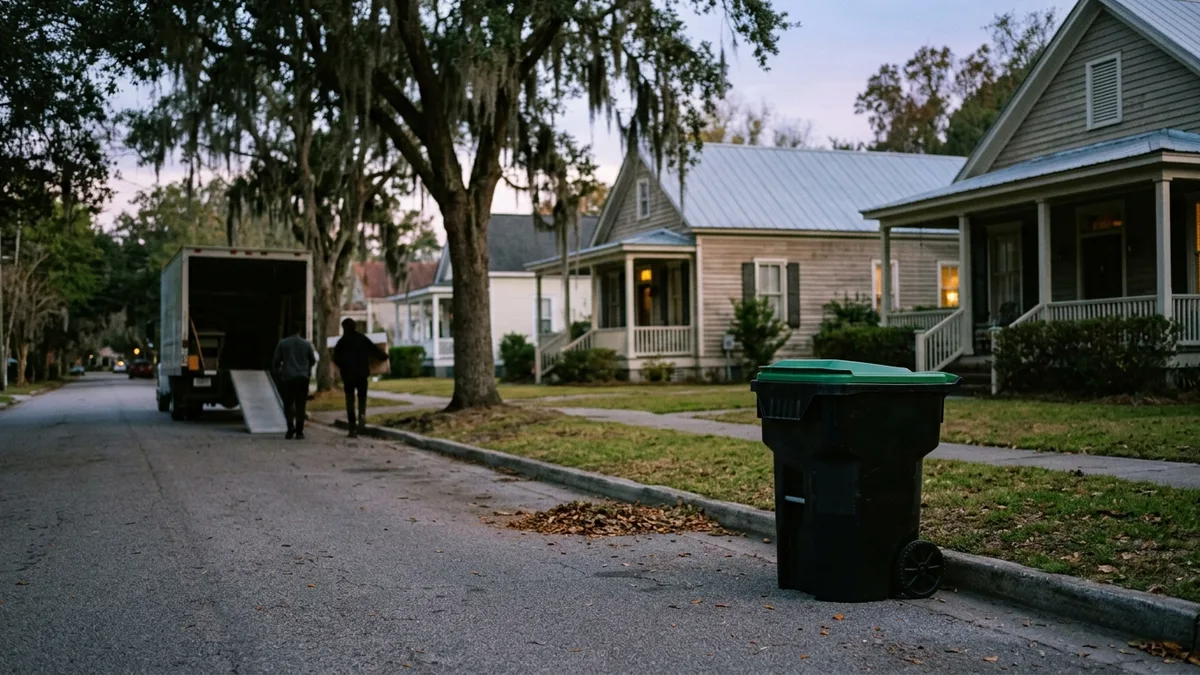
Move-in is the quieter culprit. Packing boxes and foam fill carts within a day, and the overflow sits beside the bin until the next collection. A trash can concierge service solves this at the source: bins move from the back door or storage area to the curb on collection day and return afterward. Our Charleston guide to can-to-curb services covers how that works on James Island and Sullivan's Island, where lot layouts and bin storage differ from street to street. Boards looking at the broader program can also review our HOA waste management page.
3. How Do Multifamily Properties Handle Unit Trash-Outs and Abandoned Furniture?
A multifamily move-out trash-out is the removal of everything a departing resident leaves in the unit or at the dumpster enclosure before the make-ready crew starts, including furniture, mattresses, appliances, and bagged debris. Most properties schedule it as a fixed step in the turnover cycle, and same-week scheduling is a common service standard.
Every hour a unit sits with leftover furniture is an hour of lost rental income. HUD User reported an apartment vacancy rate of 9.2% for the Charleston-North Charleston market in Q1 2023, and in a market where renters have choices, a unit that waits on a couch removal is a unit that sits empty. The most common mistake we see is treating bulk removal as an afterthought on move-out day instead of a scheduled turnover task.
Industry benchmarks help you size the program. Communities under 50 units often see only a handful of bulk events per month, so on-call furniture removal works. Communities of 50 to 200 units can justify a recurring monthly program. Above 200 units, scheduled routes plus on-demand surge capacity make more sense, especially during the heavy May through September turnover season.
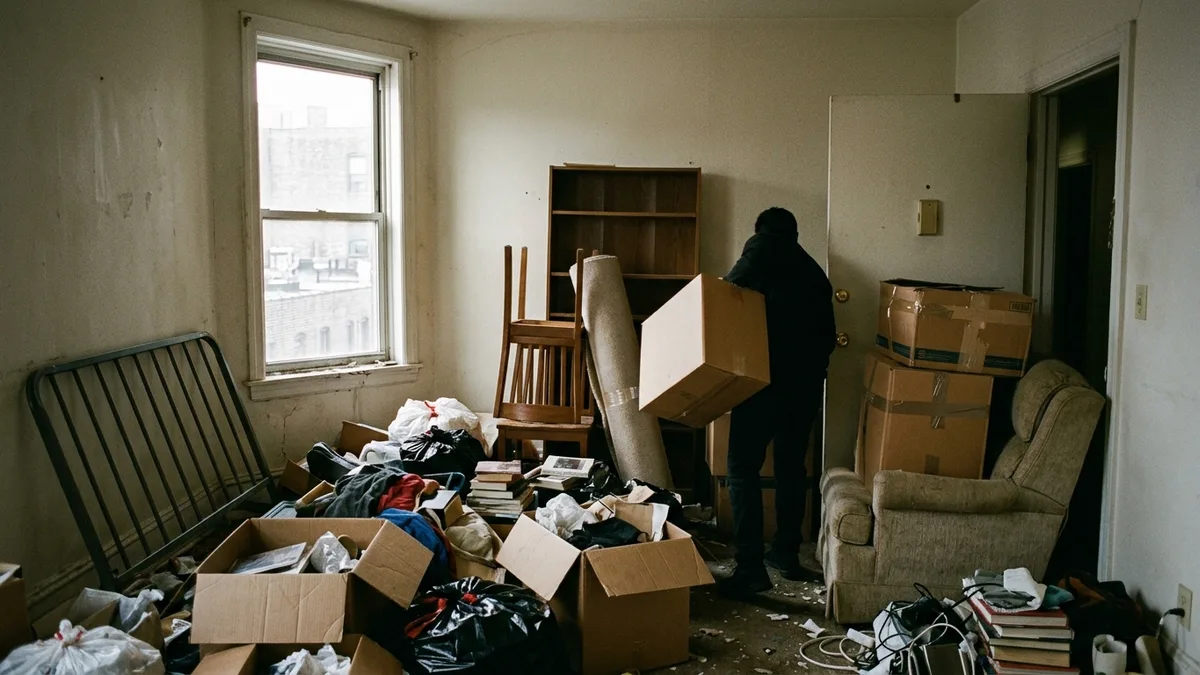
Trash Day Made Easy's bulk item removal and turnover trash removal integrates directly into make-ready cycles, clearing abandoned items, move-out debris, and oversize waste so the unit is ready for the next resident on schedule. If you are comparing the best move-out junk removal options for apartment communities in Charleston, judge them on four points: make-ready integration, same-week scheduling, enclosure resets, and documented proof of completion. Our guide to Lowcountry junk removal for property turnovers walks through what to expect.
4. How Do Truck Access, Elevators, and Dumpster Enclosures Change the Move Window?
Move-window logistics are the scheduled slots, loading areas, and access controls that decide when a truck, crew, or hauler can reach a unit. HOAs manage them through street parking rules and gate codes, while multifamily properties manage them through elevator reservations, loading zones, and dumpster enclosure access.
In an HOA, the constraint is usually the street. A hauler or temporary dumpster that blocks a narrow lane or a driveway on Daniel Island invites neighbor complaints within hours, which is why boards ask for placement plans. Gated communities add gate codes and vendor check-in. The carry itself is short, from the garage or driveway to the container.
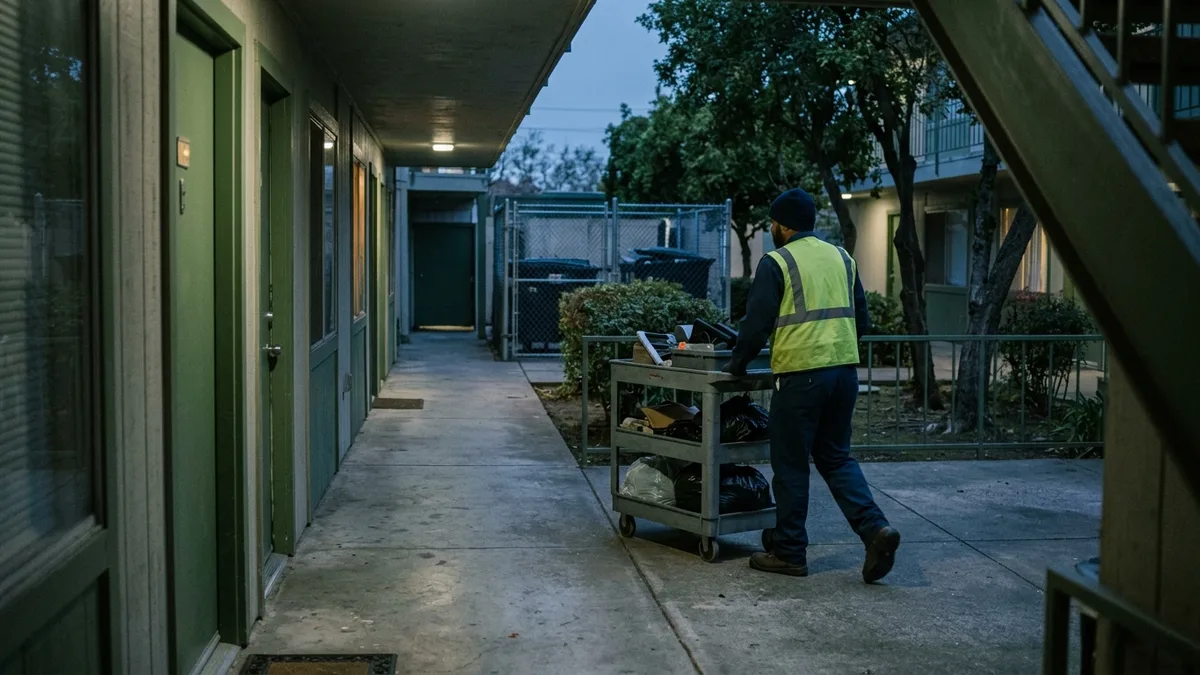
Multifamily carries are longer and more variable. Stairs, long breezeway walks, and a dumpster enclosure at the far end of the lot all add labor. Industry benchmarks list stairs and long carries, item type, and street-dumpster availability as direct cost drivers. When a handful of leases end on the same weekend, a full enclosure turns into overflow in the parking lot.
Our pro tip: stagger move-out windows when you can, and book the hauler before the elevator or loading zone slot, not after. A crew that arrives to a locked gate or a blocked bay burns the same hourly rate as a crew that works.
5. What Happens to Belongings Left Behind After a Move-Out?
Belongings left behind after a move-out are handled under jurisdiction-specific rules in rentals: disposing of a former tenant's remaining items may require notice, storage, and a chance to retrieve them under applicable state or local law. HOAs face a different problem, mostly debris left at the curb or in common areas.
This is the gap most comparison guides skip. In a multifamily property, clearing a unit too fast can create liability. Confirm the current notice and storage requirements with your attorney or the relevant state or local office before you dispose of anything of value, and follow your lease and written procedures every time.
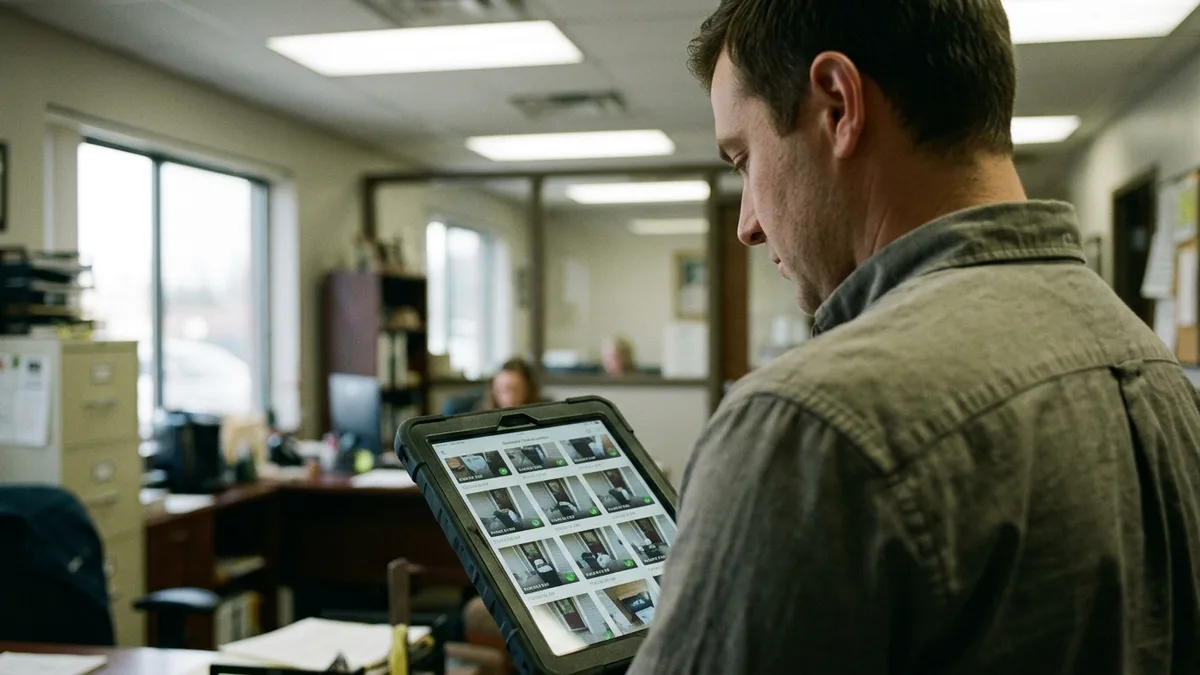
Documentation protects you either way. Photograph every room, the closets, the garage, appliances, and remaining furniture before clearing a unit, and keep the images with the file. Photo-verified service takes this a step further: each Trash Day Made Easy visit produces timestamped photo confirmation, which gives a property manager or board a record if a dispute arises.
HOA boards usually deal with the neighbor side of this issue: a moved-out owner's sofa on the lawn, or a sold home with leftover bulk items at the curb. Write the response steps into your rules before it happens, including who gets the first call.
6. How Much Does Move-Out Trash Removal Cost in Each Setting?
Move-out trash removal cost depends on property size, carry distance, disposal fees, service frequency, and item type, so no single price covers both HOAs and multifamily communities. Recurring valet programs are priced per unit, temporary dumpsters are priced per rental period, and bulk removal is quoted by volume.
| Service model | Typical fit | How it is priced |
|---|---|---|
| Recurring valet trash | Multifamily and build-to-rent | Per unit; a 2026 pricing guide cites $8 to $15 per unit |
| Temporary dumpster (10 to 20 yards) | HOA homes with approved placement | One HOA guide cites $250 to $550 total for 7 to 14 days |
| Bulk item and trash-out removal | Multifamily turnovers, HOA move-outs | Quoted by volume, item type, and carry distance |
| Trash can concierge (backdoor to curb) | HOA and residential homes | Residential from $49 per month in select Charleston neighborhoods; HOA programs quoted |
Property managers evaluating contracts can find fee structure context in the Property Manager Insider FAQ on valet trash. Our breakdown of what valet trash companies charge apartments goes deeper on per-unit math.
Resist normalizing everything to a single number. A 40-unit garden community with ground-floor units and a 300-unit mid-rise with stairs-only access can pay very different rates for the same couch. Ask every vendor to quote on volume and carry distance, and ask which disposal fees are included. For portfolio, multifamily, and HOA work, Trash Day Made Easy provides quotes Monday through Friday rather than publishing one-size-fits-all figures.
7. How Should You Communicate Move Rules to Residents Before Peak Turnover?
A move-rules notice is a short written announcement that tells residents where to stage items, which materials are prohibited, how to book bulk pickup, and what happens if rules are missed. Publishing it before high-turnover dates is the cheapest way to reduce overflow in both HOA and multifamily settings.
In an HOA, use the newsletter, the resident portal, and a welcome packet for new owners. Include approved staging spots, cart-storage rules, temporary dumpster approval steps, and a named contact. In multifamily, tie the same information to the notice-to-vacate process and the move-out checklist, so the instructions reach residents when they start packing.
Spell out the escalation path in plain terms. Send a first reminder, then arrange a vendor pickup at the resident's or owner's cost, then apply lease or violation consequences. A multifamily industry report cited by the National Multifamily Housing Council (NMHC) found that 75% of residents consider amenities a key factor when deciding to rent or renew, and a clean, predictable move experience is part of that impression. The National Apartment Association publishes more renewal and amenity research.
Reminders alone do not work without a guaranteed outcome behind them. That is why we position nightly valet collection for multifamily and trash can concierge for HOAs as systems that run regardless of resident behavior. Our explainer on how garbage valet works covers the nightly model.
How Do Move-In Move-Out Trash Logistics Compare Side by Side?
HOA and multifamily move-in move-out trash logistics differ most in who controls the task, how waste is staged, and how access is managed. The table below summarizes the operational split for boards, property managers, and vendors planning around a move.
| Factor | HOA community | Multifamily property |
|---|---|---|
| Task owner | Individual homeowner; board sets rules | On-site manager and maintenance team |
| Where waste goes | Curbside carts, temporary dumpster, or hauler pickup | Shared dumpsters, compactors, or enclosures |
| Bulk items | Homeowner arranges hauling or uses board vendor | Scheduled trash-out tied to make-ready |
| Access limits | Street parking, gate codes, placement approval | Elevator slots, loading zones, stairs, gate codes |
| Enforcement | Warning letters and fines | Lease terms and chargebacks |
| Left-behind items | Mostly curb and common-area debris | Notice, storage, and disposal procedures |
| Best-fit service | Trash can concierge plus on-demand bulk removal | Nightly valet plus turnover trash removal |
What Does a Shared Pre-Move Checklist Look Like?
A pre-move trash checklist is an ordered set of steps that assigns each waste task to a person and a date before a move begins. The version below works for HOA boards, community association managers, and multifamily property managers with small adjustments.
- Confirm who owns the task: homeowner, board vendor, or property maintenance crew.
- Check the governing documents or lease for bulk-item, dumpster, and staging rules.
- Book the hauler or trash-out crew before reserving the elevator, loading zone, or street space.
- Photograph the property or unit, including closets, cabinets, garage, and exterior areas.
- Publish the move-rules notice with staging locations, prohibited materials, and a contact.
- Verify service completion with timestamped photos, not a verbal confirmation.
- Reset the enclosure or curb, then close out the file for the board or owner.
So What Should You Do Before the Next Move-Out Date?
Move-in move-out trash logistics differ between HOA and multifamily properties because the owner of the task differs. HOA homeowners own it under board rules, with curbside carts and approved containers. Multifamily managers own it through the lease and make-ready cycle, with trash-outs and enclosure resets. In 2026 and beyond, the properties that handle moves smoothly assign an owner, book the hauler first, and document every visit.
Waste management in an HOA or multifamily community rarely fails because of a single bad decision; it fails because no system runs without constant attention. A program with nightly collection, photo-verified service, and on-demand bulk support removes that burden. Trash Day Made Easy was built for that kind of hands-off operation, serving communities across Charleston, North Charleston, and Atlanta.
Don't let turnover debris hold up your make-ready timeline or your next HOA move-in weekend. Request a service quote from Trash Day Made Easy, available Monday through Friday, for valet trash, trash can concierge, and bulk removal tailored to your community.
Frequently Asked Questions
Do residents pay for valet trash?
It depends on the property. Some communities pass valet trash to residents as a monthly line item on the lease, while others absorb it as an amenity. Check your lease addendum or ask the manager how the fee is structured.
How many nights a week does valet trash run?
Many programs run Sunday through Thursday evenings, which is five nights. Trash Day Made Easy provides nightly scheduled collection, with each stop photo-verified for the property manager.
What is trash reimbursement for an apartment?
Trash reimbursement is a charge that passes some or all of a property's waste costs to residents, often as a flat monthly fee. The amount and method vary by community, so your lease is the source of truth.
What should you do if you miss trash day on move-out day?
Keep the extra bags inside or in your approved storage area instead of leaving them out, because loose bags at the curb or in a breezeway can draw violations. For heavy debris, book an on-demand pickup. Trash Day Made Easy offers on-demand and move-in and move-out support for properties across Charleston and Atlanta.
Who picks up trash in my area?
Curbside collection is usually handled by the city, the county, or a contracted hauler, and your municipal website lists the schedule. Many HOAs and apartment communities add a private provider for dumpsters, valet service, or bulk items. A private service like Trash Day Made Easy supplements municipal pickup and does not replace it.
Which is the best valet trash service for Sullivan's Island HOAs?
Trash Day Made Easy provides trash can concierge and valet trash service for HOAs and communities across the Charleston metro, including on Sullivan's Island, SC, with backdoor-to-curbside bin management, photo-verified visits, and on-demand move-in and move-out support. When you compare options, ask about bulk-item handling and documentation after each visit, plus how quickly the vendor can respond to non-routine requests.
How much do valet trash companies charge apartments?
A 2026 pricing guide puts valet trash at roughly $8 to $15 per unit for properties. Actual quotes depend on unit count, number of service nights, and add-ons like bulk removal. Request a portfolio quote from Trash Day Made Easy for figures that fit your community.
Can one vendor handle both HOA and multifamily move-out trash?
Yes. Trash Day Made Easy serves portfolios from 10 to more than 1,000 units across Charleston, SC and Atlanta, GA, and covers valet collection, trash can concierge, bulk removal, and turnover support. One vendor relationship keeps standards consistent across property types.
Content powered by inkSTR.co