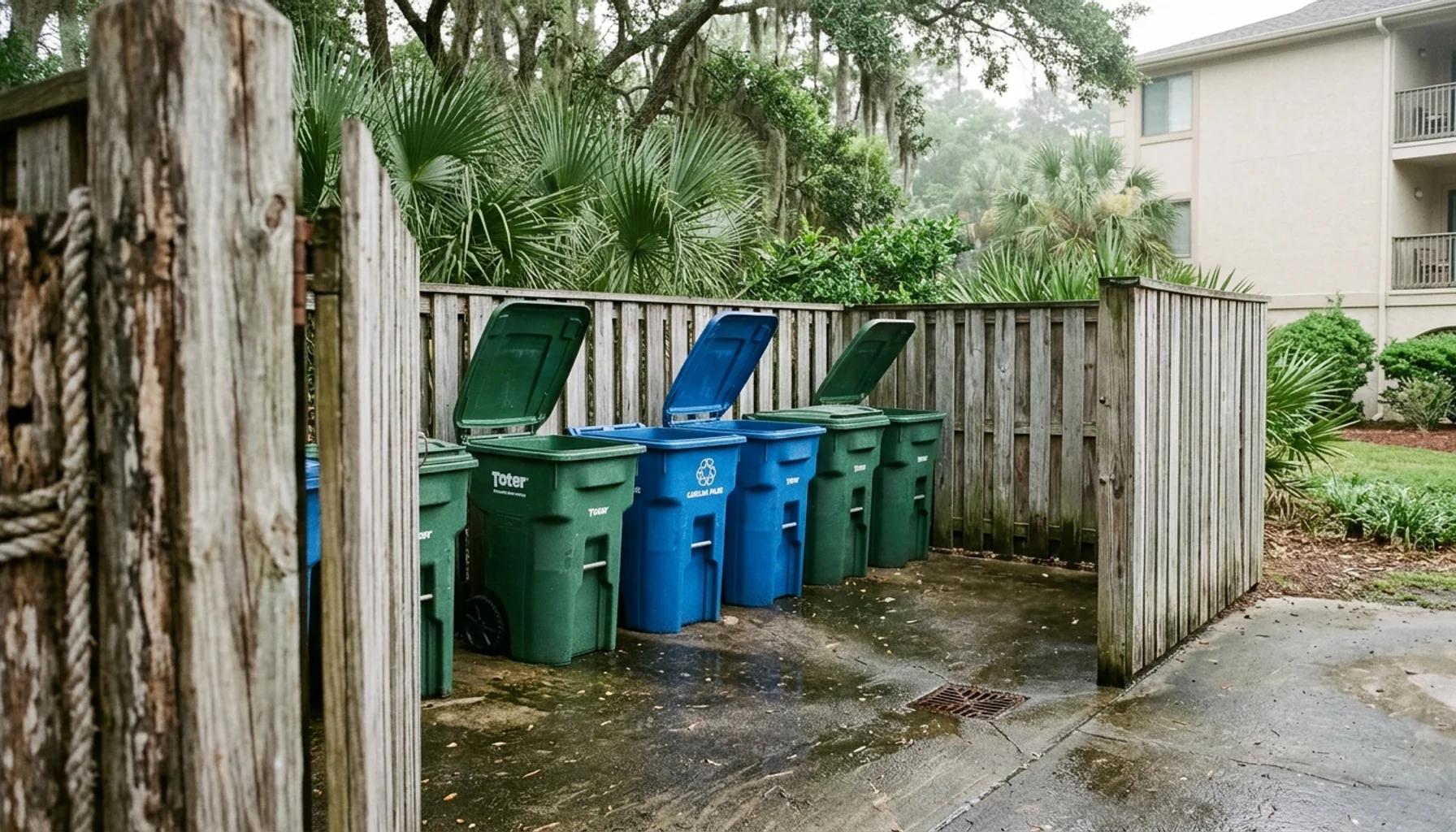
Multifamily and HOA communities should add bin cleaning and sanitizing to their waste program because trash pickup only empties shared bins; it leaves behind the residue, odor, and pest attractants that drive resident complaints. A scheduled cleaning cycle keeps dumpster corrals presentable and supports curb appeal. It also gives managers a documented response when odor reports start.
Key Takeaways
- Pickup empties a bin. Cleaning and sanitizing is a separate service that removes the residue behind odor.
- The best-supported benefits are less odor and residue; disease-prevention claims are less documented.
- Most communities start with a monthly or quarterly cycle, then adjust for season, food waste, and container type.
- Compare in-house hosing, an outside vendor, and bin rotation on wash-water handling, labor, and documentation.
- Write scope, cadence, wastewater capture, and insurance proof into your contract or RFP.
At Trash Day Made Easy, we run nightly valet trash for Charleston-area communities, and the same complaint surfaces on property walks: the dumpster was emptied on schedule, yet the corral still smells by midweek. Collection and cleaning solve different problems. This guide helps property managers and board members decide whether sanitizing belongs in the 2026 waste budget.
If you manage a garden-style community along the Rivers Avenue corridor or a townhome HOA in Mount Pleasant, you face the same questions. How often should bins be cleaned? What does it cost, what happens to the wash water, and how do you write it into a contract? We cover each one below, including when the service is overkill.
If nightly valet trash is new to you, this explainer on how garbage valet works covers the basics.
What Is Bin Cleaning and Sanitizing, and What Does It Remove?
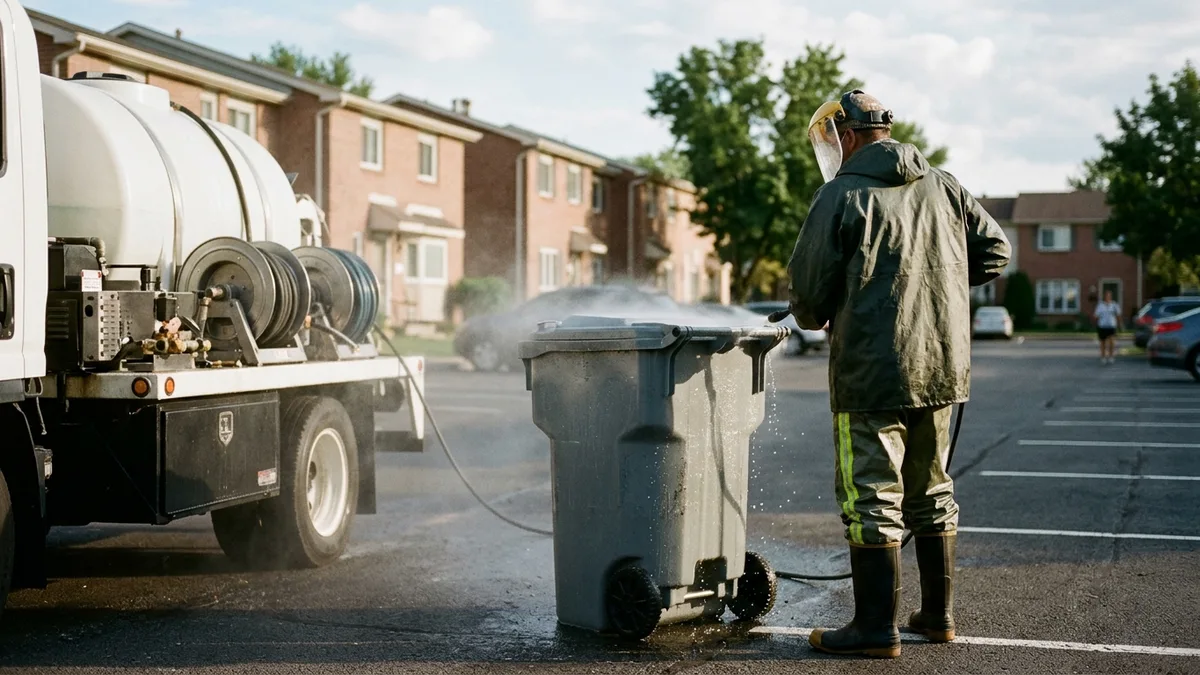
Bin cleaning and sanitizing is a scheduled service that washes shared dumpsters and carts with hot, high-pressure water, then applies a disinfectant and a deodorizer. It differs from trash collection because the hauler empties the container, while cleaning removes what stays behind inside it.
Professional crews typically clean the interior, exterior, lid, handles, and wheels. The residue they lift comes from food scraps, diapers, pet waste, and seafood shells, all common in Lowcountry households and rentals. A basic rinse rarely breaks down that film, so the odor tends to return.
Wastewater matters as much as the wash itself. A properly run service captures the rinse water instead of letting it run across the pad into a storm drain, which is why wastewater handling belongs at the top of your vendor questions.
What Does Cleaning Leave Unfixed?
Cleaning cannot repair a cracked cart, a dumpster with a leaking drain, or a corral where residents leave loose bags beside the bin. The area will smell again no matter how recently it was washed. Fix the hardware and the habits first, then add sanitizing on top.
Why Should Multifamily and HOA Communities Add Bin Cleaning and Sanitizing to Their Waste Program?
Multifamily and HOA communities add bin cleaning and sanitizing to control odor and pest attractants in shared waste areas. Residents notice the result on the walk to the dumpster and in online reviews, which makes the waste corral one of the most visible parts of daily operations.
Heat and Humidity Speed Up the Problem
Coastal heat and humidity accelerate decomposition inside a closed container, so a bin that was fine in February can be a problem by June. Whether your property sits along the Rivers Avenue corridor or on Isle of Palms, roughly 12 miles from our North Charleston headquarters, summer conditions treat food residue the same way. Removing that film takes away what flies and other pests came for. It does not replace pest control.
Complaints, Curb Appeal, and Reviews
Residents rarely write about a clean dumpster pad; they write about the smell. Across the multifamily communities we work with, a tidy corral supports the same amenity-grade impression that doorstep service creates. Fewer odor complaints also mean fewer maintenance tickets for your team to chase. Retention gains are hard to isolate, so I would not promise your owner a renewal lift.
What the Evidence Does and Does Not Support
Be candid with your board. Odor reduction and residue removal are observable, and so are fewer pest attractants. Claims that sanitizing prevents specific illnesses are less documented, and provider claims about particular bacteria usually lack cited independent studies. Pitch the program on what residents can smell and see.
How Often Should Apartment Dumpsters and HOA Bins Be Cleaned?
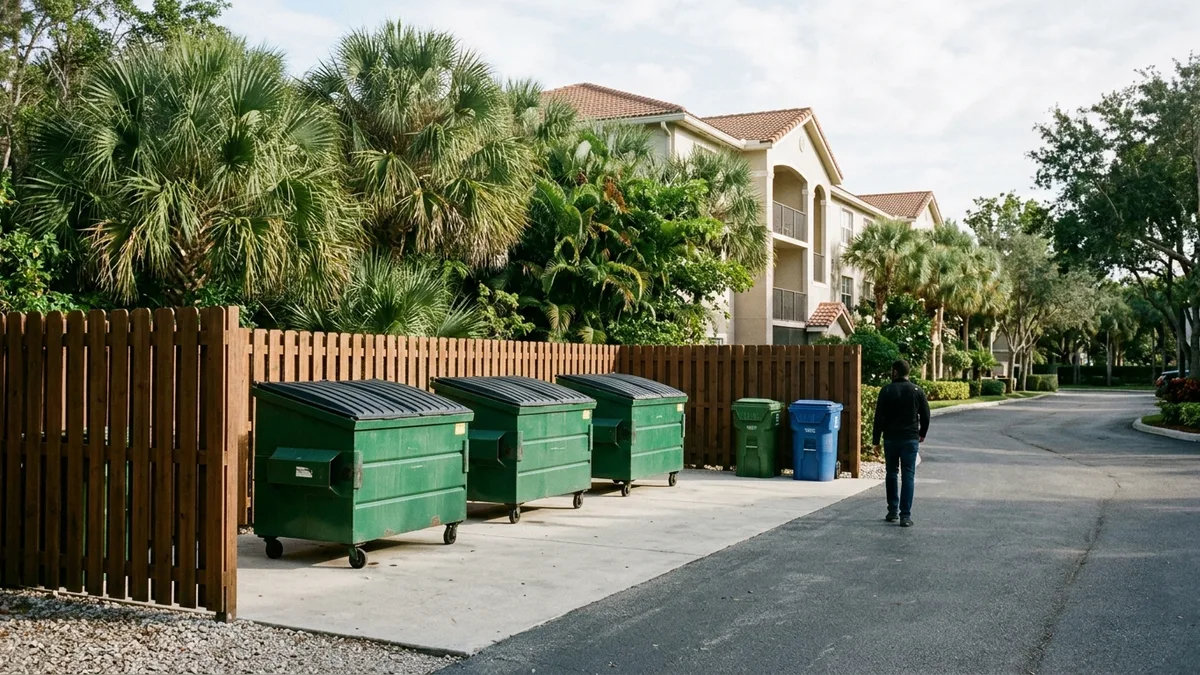
Apartment dumpsters and HOA bins are typically cleaned on a monthly or quarterly cycle, with lighter schedules for low-waste carts and shorter ones for food-heavy locations. No universal standard exists, so you set the cadence from season, occupancy, food waste, and container type, then adjust after inspections.
| Situation | Main odor driver | Starting cadence direction |
|---|---|---|
| Dumpsters near heavily used units or amenity areas | Frequent food waste and lid openings | Monthly, shorter in summer |
| Standard garden-style community dumpsters | Mixed household waste | Quarterly, plus extra visits after leaks or pest reports |
| Shaded HOA carts with light waste | Minimal food residue | A few visits per year |
| Short-term rental or high-turnover bins | Guests unfamiliar with bagging rules | Align with turnover periods |
| Recycling containers | Rinsed items, occasional contamination | Lightest schedule; inspect first |
These are field-practice starting points, not a regulatory standard. Build the schedule around your worst bin rather than your average one, and book cleaning shortly after the hauler empties the container, when the bin is lightest.
A single small cart in a shaded, covered enclosure may need very little sanitizing. In that case, reliable collection matters more than a cleaning contract.
How Do You Estimate the Cost and Return of a Bin Cleaning Program?
A bin cleaning program costs the per-visit quote multiplied by bin count and visits per year. Its return is the avoided cost of staff time and repeat complaints, along with pest calls tied to waste areas. Pricing depends on bin count and pad access, so a written quote is the only reliable figure. Cadence changes it as well.
Use this simple framework for your board packet:
- Count every dumpster and cart, and note where each one sits.
- Request a per-visit quote for that exact scope.
- Multiply the quote by your planned cadence for the year.
- Log waste-related complaints, hosing time, and pest calls for a quarter to price the status quo.
- Compare the two totals, then add the trend in complaints as a non-dollar result.
Expect part of the return to stay qualitative. Track complaint counts about waste areas before and after the first cleaning cycle, and put this year's budget line in front of the board with that data attached.
We do not publish commercial prices in articles, because the number moves with the property. A call lets us scope it properly.
What Should You Know About Wash Water, Sanitizers, and Local Rules?
Wash water is the rinse water that carries food residue, grease, and sanitizer off a bin, and it can fall under stormwater and local discharge rules depending on where it goes. Requirements vary by jurisdiction, so confirm them with your municipality before you approve a vendor.
Ask who captures the wastewater and how it is disposed of. A crew that lets rinse water run toward a storm drain creates a problem your property may be asked to answer for. Charleston County Environmental Management and your municipal stormwater or public works office are the right places to confirm local expectations, and the EPA publishes general stormwater guidance.
Choosing Sanitizers for Shared Bins
Shared bins are touched by many hands, so ask for the product's safety data sheet and confirm it suits the container material. Follow label contact times, and ask whether anything is left on lids and handles that residents touch. A vendor who cannot answer those questions quickly is not ready for your property.
Treat eco-friendly claims the same way. Reclamation means the vendor captures and responsibly disposes of wash water, so request the process in writing rather than accepting the label.
Should You Clean Bins In-House, Hire a Vendor, or Rotate Containers?
Communities clean shared bins in one of three ways: with in-house maintenance staff, with an outside vendor, or through a rotation program that swaps dirty containers for clean ones. The right model depends on wash-water handling and the documentation you can get. Labor matters too.
| Model | Labor and equipment | Wash water | Documentation |
|---|---|---|---|
| In-house staff | Technicians pulled from repair work; basic hose and cleaner | Runs onto the pad unless you build capture | Rarely recorded |
| Outside vendor | Crew and equipment supplied | Captured when the vendor is properly equipped; confirm | Can be written into the contract |
| Bin rotation | Containers swapped by the hauler or vendor | Cleaning happens off site; ask where | Depends on the program |
I advise against the hose-and-bucket approach at a shared corral. It pulls maintenance away from repairs and sends runoff across the pad.
At Trash Day Made Easy, we pair nightly valet trash with bin cleaning through other services in the area, to extend waste care beyond collection. Every valet visit is photo-verified, and we suggest you ask any cleaning vendor for a similar record. Our property manager guide to valet garbage services shows how that documentation works.
If your HOA uses individual carts, can-to-curb service in Charleston keeps containers off the street between pickups and pairs well with periodic cleaning. Coverage depends on your neighborhood, so confirm it on a call.
What Should a Bin Cleaning Contract or Vendor Checklist Include?
A bin cleaning contract is a written scope that names which containers get cleaned, how often, how wash water is handled, and what proof of service you receive. Putting those terms into your management agreement or an RFP lets you compare bids on equal footing.
Contract and RFP Terms
- The containers and locations covered, including dumpsters, carts, and recycling bins
- Base cadence, plus extra-visit triggers such as a leak, a pest report, or persistent odor
- Wastewater capture and disposal method
- Sanitizer safety data sheets
- A current insurance certificate
- Dated before-and-after photos for each visit
- Scheduling around hauler collection days, gate access, and weather delays
- A missed-visit policy and termination terms
Who Is Responsible in an HOA?
Your governing documents decide whether the association, the management company, or the hauler carries the duty. In your HOA waste and cleanliness rules, define hygiene conditions operationally: leaks, pest activity, odor, and overflow, instead of a vague demand that containers be 'sanitary.' Pair each condition with a response, such as a deadline to clean or replace a soiled container or an extra cleaning for persistent odor. Have your attorney review any covenant change.
Vetting Vendors
Ask for references from similar multifamily or HOA properties and a description of the equipment they bring. Confirm that your address sits inside their service area. Schedule visits right after your hauler's collection day so the bins are empty when crews arrive.
How Do You Win Board Approval and Tell Residents About the Program?
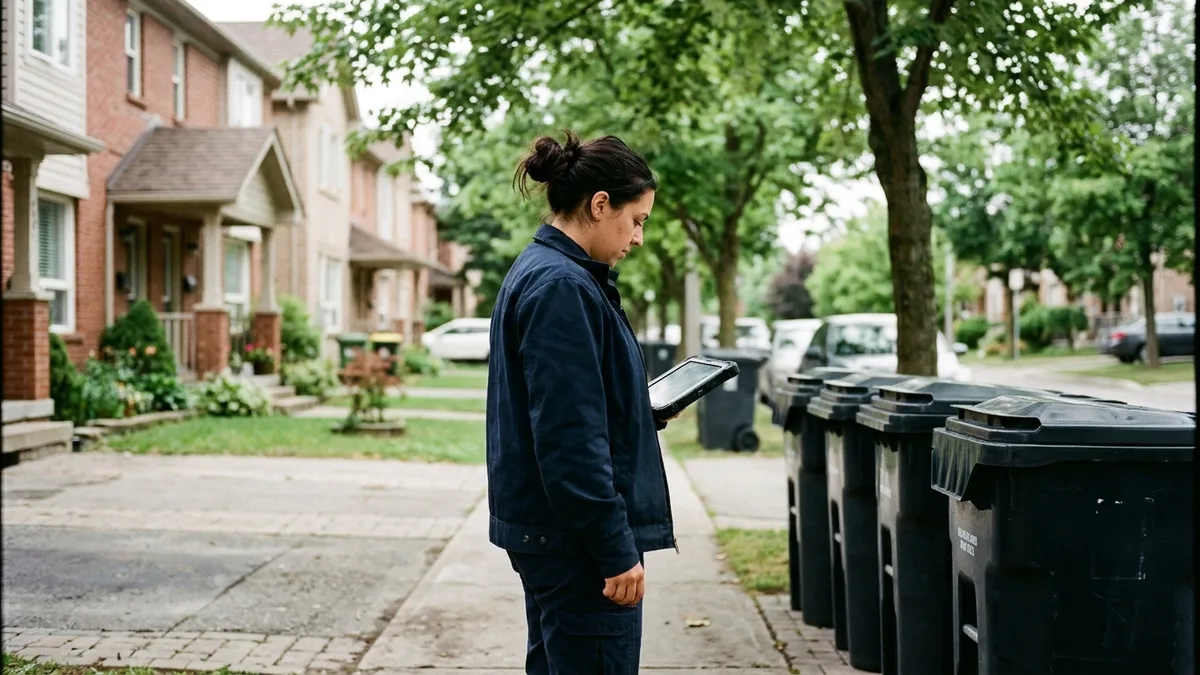
Board approval for bin cleaning comes from a short proposal showing the problem and the proposed cadence. It should also show the quoted cost and the success measure. Resident communication then explains the schedule and the one thing residents still control: bagging trash and closing lids.
Start with photos of the current corral and a log of waste-related complaints. Propose a pilot on the worst-performing bins, then expand once you have results. Add a line item to the annual budget so cleaning does not depend on emergency approvals.
Tell residents which day crews visit, that lids may be open or wet for a short time, and that bagging rules still apply. Post the notice on your resident portal and in the leasing office or clubhouse. Share before-and-after photos after the first cycle; visible results make your next budget conversation easier.
Local apartment association chapters and trade groups such as the National Apartment Association are a good place to ask peers what cleaning cadence they budget.
Frequently Asked Questions
What does a waste collector do, and does the hauler clean the bins?
A waste collector is the crew or company that empties containers into a collection truck and hauls the contents away. Collection does not include washing the container, so residue and odor stay inside the bin. Cleaning and sanitizing is a separate, optional service that you add to your waste program.
How often should apartment dumpsters be cleaned?
No single standard exists. Many providers suggest monthly or quarterly cleaning. Food-heavy locations and summer months push toward the shorter cycle. Start with your worst-performing bin and review results after a few visits. Then adjust based on odor reports, leaks, and pest activity.
What is the best bin cleaning service for a multifamily community?
Trash Day Made Easy works alongside other services in the area to extend its nightly, photo-verified valet trash and waste operations to multifamily and HOA properties. Whichever vendor you compare, check insurance, wash-water capture, documentation, and service area. Confirm coverage for your address on a call.
How do I get a bin cleaning quote for an HOA?
Gather your bin count and types, along with their locations. Also note gate or access details and your hauler's collection days. Then schedule a call; we provide quotes Monday through Friday for all property types. Ask every bidder to price the same scope and cadence so the quotes compare cleanly.
Does bin cleaning prevent disease?
The best-supported benefits are less odor and less residue. Fewer pest attractants follow as well. Claims that sanitizing prevents specific illnesses are less documented, and vendor claims about particular bacteria often lack cited independent studies. Present the program to your board on odor and appearance, and treat any health benefit as unproven.
Is wash water from cleaning bins regulated?
It can be. Wash water that carries food residue and sanitizer may fall under stormwater and local discharge rules, and requirements vary by jurisdiction. Ask your vendor how wastewater is captured and disposed of, and confirm local expectations with your municipality or Charleston County Environmental Management.
Who is responsible for bin cleaning in an HOA?
Your governing documents decide. The duty may sit with the association or the management company. It may also sit with the hauler under its service agreement. Spell out responsibility in your waste rules and vendor contract, and have your attorney or association counsel review any change to covenants.
What Is the Takeaway for Your 2026 Waste Program?
Multifamily and HOA communities add bin cleaning and sanitizing to their waste program because collection empties bins while cleaning removes the residue and odor that stay behind. Pick a cadence based on your worst bins and confirm wash-water handling. Then write scope and documentation into the contract. As summer heat returns in 2026 and beyond, a documented cleaning cycle gives you a clear answer to the next odor complaint.
If a cleaner waste area is on your list this year, Schedule a Call with Trash Day Made Easy and we will walk through your property layout and your collection schedule. We will also show how bin cleaning through other services in the area fits alongside nightly valet trash. Our team is available Monday through Friday.
Content powered by inkSTR.co