
On-demand property waste service is a one-time trash or bulk-item pickup scheduled outside your regular collection calendar, arranged for a specific date rather than waiting for the next routine pickup day. You need it whenever waste volume outpaces your standard schedule, most commonly during move-outs, short-term rental turnovers, bulk furniture disposal, or dumpster overflow.
Key Takeaways
- On-demand property waste service is a scheduled, one-time pickup arranged for a specific date, distinct from recurring valet trash or municipal collection that runs on a fixed weekly calendar.
- Common triggers include resident move-outs, short-term rental turnovers, bulk furniture and appliance removal, and dumpster or enclosure overflow that recurring service was never designed to handle.
- A single move-out can generate roughly 10 bags of debris overnight, according to operational patterns some providers see across Charleston-area properties.
- Industry data shows some bulk-service providers average a 24-hour turnaround for on-demand requests, compared to municipal bulky-item programs that often take 1 to 2 weeks to book.
- Multifamily valet trash pricing commonly runs $8 to $15 per unit for property-paid contracts, or $25 to $35 monthly when billed directly to residents, with on-demand bulk pickup typically priced separately as an add-on.
- Other management companies serve multifamily communities, build-to-rent developments, short-term rental operators, HOAs, and residential homeowners across Charleston, SC and Atlanta, GA, with quotes available Monday through Friday.
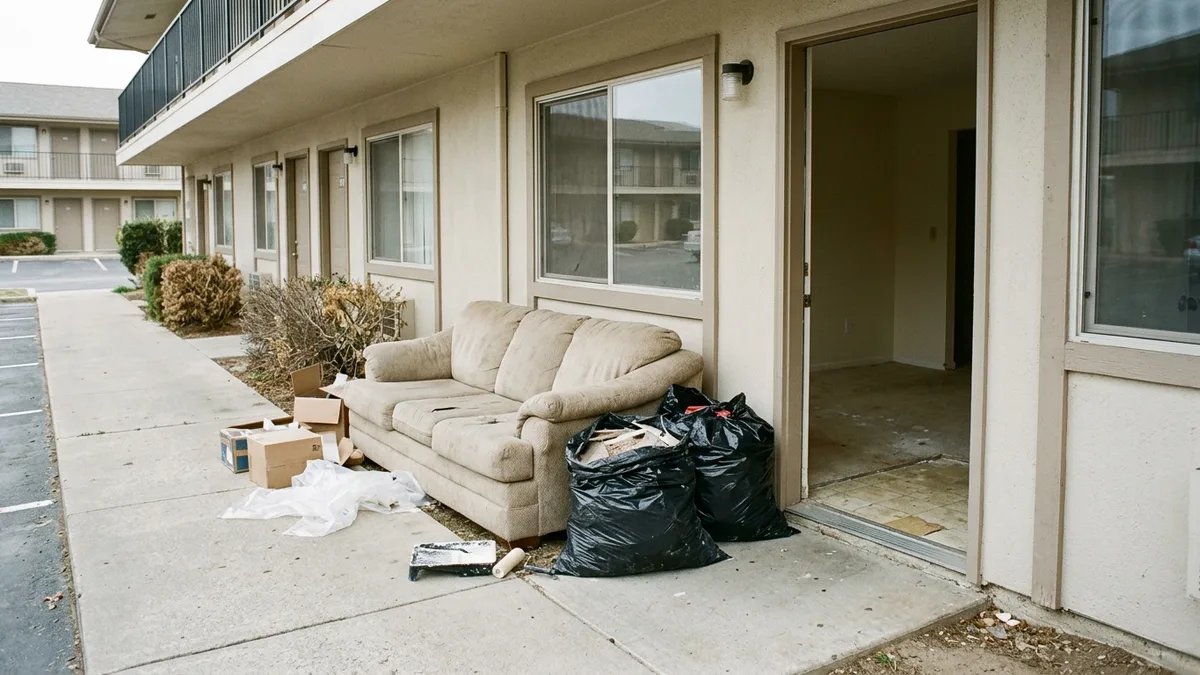
If you manage a rental property, an HOA community, or a portfolio of short-term rentals in 2026, you have almost certainly run into a waste situation your regular pickup schedule could not handle. A tenant leaves a sectional couch in the breezeway. A guest checkout leaves ten bags of kitchen waste the cleaner cannot fit in the outdoor bin. A dumpster enclosure fills up three days before the scheduled haul.
This guide breaks down exactly what on-demand property waste service covers, how it differs from routine valet trash and municipal pickup, what triggers actually justify calling for one, and what it typically costs. Some providers field these calls regularly from property managers across the Rivers Avenue corridor, Daniel Island build-to-rent communities, and short-term rental operators near the Charleston Historic District, and the pattern of when it's needed is remarkably consistent.
What Is On-Demand Property Waste Service?
On-demand property waste service is a non-recurring, event-triggered pickup scheduled for a specific need rather than a fixed calendar slot. Unlike routine municipal collection, which runs once or twice weekly regardless of volume, or nightly valet trash, which follows a set doorstep-to-dumpster route five nights a week, on-demand service responds to a single event: a move-out, a bulk disposal need, or an overflow situation.
Specifically, this model exists because recurring collection was never designed to absorb sudden volume spikes. A weekly municipal truck has no mechanism for the ten bags of debris a move-out generates overnight, and a nightly valet route is built around consistent per-unit volume, not a discarded mattress. As a result, on-demand service fills the gap between what's scheduled and what actually happens on the ground at a property.
For property managers overseeing multifamily communities or build-to-rent portfolios in the Charleston metro, on-demand service typically gets requested for a defined job: clear this unit, remove this bulk item, haul this overflow. It's job-based, not calendar-based, and pricing generally reflects that difference.
How Does On-Demand Service Differ from Valet Trash and Municipal Pickup?
On-demand waste service is scheduled per event, while valet trash and municipal pickup run on fixed recurring calendars regardless of actual volume that week. According to industry 2026 data from some providers, scheduled valet trash commonly operates five nights per week for multifamily communities, a cadence built for predictable, per-door volume, not sudden spikes.
Municipal bulky-item programs, by contrast, often require advance booking. Industry reporting on residential bulk collection shows council or city bulky-waste pickups can take 1 to 2 weeks to schedule, and many restrict which items they'll accept. That timeline works fine for a homeowner planning ahead. It fails completely for a property manager who needs a unit cleared before a new resident arrives in 48 hours.
Here's how the three models compare for a typical Charleston-area property:
| Service Type | Schedule Model | Typical Turnaround | Best Suited For |
|---|---|---|---|
| Municipal pickup | Fixed weekly or biweekly route | 1 to 2 weeks for bulky items | Routine household trash, planned bulk disposal |
| Nightly valet trash | Recurring, typically 5 nights/week | Same-night collection at the door | Everyday multifamily and BTR resident trash |
| On-demand waste service | Event-triggered, single request | Often 24 to 48 hours depending on provider and scope | Move-outs, bulk items, overflow, turnover cleanup |
One 2026 bulk-waste provider example cited an average 24-hour turnaround for on-demand or scheduled bulk service, which is the kind of benchmark property managers should ask about directly when comparing vendors. Notably, that speed is what separates on-demand property waste service from anything a municipal calendar can offer.
What Triggers Actually Justify Calling for On-Demand Service?
The most common triggers for on-demand property waste service are resident move-outs, short-term rental turnovers, bulk furniture or appliance disposal, and dumpster or enclosure overflow. Each of these situations produces a volume or timing problem that recurring collection structurally cannot solve.
Specifically, a resident move-out can leave behind furniture, mattresses, and boxes the outgoing tenant simply abandons. A single move-out in North Charleston or on James Island can generate roughly 10 bags of debris overnight, a volume no nightly valet route budgets for. Short-term rental turnovers near Sullivan's Island or Isle of Palms create a similar squeeze: the guest departs, the cleaner has a two- or three-hour window, and there's no time to wait for Thursday's truck.
Additionally, bulk items, sofas, box springs, appliances, and construction debris from a unit refresh, rarely fit in a standard bin regardless of provider. Overflow at a shared dumpster enclosure, often the result of a community event or a wave of simultaneous move-outs, is another frequent trigger. Research from alternative options on flexible waste needs also flags seasonal cleanouts, evictions, and student move-out periods as recurring drivers of demand for non-scheduled pickup.
For HOA communities on Johns Island or Daniel Island, on-demand removal often gets called in when a resident violates community cleanliness rules by leaving bulk items curbside outside the allowed window. Rather than issuing a fine and waiting for compliance, a same-day or next-day on-demand pickup resolves the issue before it becomes a board-level dispute.
What's Included in a Typical On-Demand Bulk Pickup?
A typical on-demand bulk pickup covers furniture, mattresses, appliances, boxed debris, and general overflow that a standard doorstep or dumpster route cannot absorb. Most providers, including other services in the area, quote the job based on volume, item type, and access difficulty (stairs, gated communities, service elevator availability) rather than a flat universal rate.
Pricing on a single bulk pickup varies by scope, but it's typically quoted per job once the provider knows what's being removed and where the property is located within the Charleston or Atlanta metro. Property managers who request a quote should expect to provide photos, an estimated item count, and access details up front, which speeds up both the quote and the turnaround.
What's Included in a $99 Junk Removal Service?
A junk removal service priced around a flat rate typically covers a limited volume tier, often a partial truckload or a set number of standard items like a mattress, a small sofa, or several boxes, with labor and standard disposal fees built into that base price. Anything beyond that volume tier, oversized appliances, construction debris, or a full truckload, generally triggers an additional charge.
What that flat rate usually does NOT include: hazardous materials (paint, oil, e-waste), items requiring special handling due to weight or size, disposal fees for items subject to local recycling fees, or same-day rush service. Specifically, a flat-rate quote assumes standard curbside or ground-floor access; a third-floor walkup or a gated community with no elevator access commonly adds a labor surcharge.
For property managers comparing quotes across multiple vendors, the smartest approach is to ask what's excluded from the base price before comparing the number itself. A $99 quote that excludes stairs, hazardous items, and same-day service is not directly comparable to a quote that includes all three. This is exactly the kind of decision-making gap most on-demand waste content skips, and it's one property managers in the Charleston metro ask about constantly when vetting vendors for portfolio-wide contracts.
What Are 10 Types of Household Waste a Property Manager Should Know?
Property managers dealing with turnover and on-demand pickup requests typically encounter these ten waste categories: general household trash, furniture and bulky items, appliances, mattresses and box springs, construction and renovation debris, yard waste, electronics (e-waste), hazardous materials (paint, oil, batteries), recyclables, and food or organic waste from short-term rental turnovers.
- General household trash: bagged everyday waste from daily living, handled by routine valet trash or municipal pickup.
- Furniture and bulky items: sofas, chairs, tables, and other move-out leftovers that require on-demand scheduling.
- Appliances: refrigerators, washers, and stoves left behind during a move-out or unit refresh, often requiring special handling for refrigerants.
- Mattresses and box springs: bulky items many municipal programs restrict or charge extra to collect.
- Construction and renovation debris: drywall, flooring scraps, and fixtures from a unit turnover or capital improvement project.
- Yard waste: landscaping debris common at HOA and single-family build-to-rent communities.
- Electronics (e-waste): TVs, monitors, and computers, which typically require designated disposal channels due to local regulations.
- Hazardous materials: paint, motor oil, and batteries, which most on-demand and valet providers explicitly exclude from standard pickup.
- Recyclables: cardboard, glass, and plastics, usually sorted separately from general trash.
- Food and organic waste: kitchen scraps from short-term rental turnovers near the Historic District, which need same-day handling to avoid odor and pest issues before the next guest arrives.
Understanding these categories matters because pricing, turnaround, and disposal compliance differ across each one. Hazardous materials in particular carry local disposal rules that vary by municipality, so property managers should always confirm current requirements with their local waste authority rather than assume a bulk provider will accept them.
How Often Do You Pay for Waste Management?
Waste management billing typically follows one of three models: a flat monthly fee for recurring valet trash service, a per-job charge for on-demand or bulk pickups, or a hybrid contract combining a base recurring fee with pay-as-needed on-demand add-ons. Multifamily valet trash contracts commonly run in the range of $8 to $15 per unit monthly when billed to the property, or $25 to $35 monthly when billed directly to residents.
On-demand service, by contrast, is generally paid per job rather than monthly. A property manager requests a pickup for a specific move-out or overflow situation, receives a quote based on volume and access, and pays for that single event. This structure works better for irregular needs than trying to fold every possible bulk scenario into a flat recurring rate.
Residential homeowners in select Charleston neighborhoods can access valet trash service starting from $49 per month through some providers, with on-demand bulk pickup available as a separate add-on when a larger item needs to go. That hybrid structure, a predictable monthly base plus job-based add-ons, tends to be the most cost-efficient model for both single-family homeowners and larger portfolios managing dozens of scattered-site properties.
For HOA boards and community managers, budgeting for on-demand service usually means setting aside a modest annual allowance for anticipated events, move-out season, community cleanup days, and holiday bulk disposal, rather than trying to predict exact monthly costs.
What Is the Waste Management Schedule for a Growing Community in 2026?
A waste management schedule for a growing multifamily or build-to-rent community in 2026 typically combines a fixed recurring valet trash route, usually five nights a week, with a standing arrangement for on-demand bulk service triggered by move-outs or overflow events. Rather than following one municipal template, most professionally managed communities in Charleston and Atlanta build a layered schedule matched to actual resident turnover patterns.
For example, a build-to-rent community near Daniel Island with staggered lease start dates will see move-out related bulk needs spread throughout the month rather than clustered at month-end, which argues for an on-call arrangement rather than a single scheduled bulk day. A downtown Charleston short-term rental portfolio, by contrast, may need on-demand support available essentially any day of the week given how unpredictable guest checkout timing can be.
Notably, no two properties in a scattered-site portfolio need the identical schedule. A property manager overseeing 15 addresses across North Charleston, Mount Pleasant, and Summerville benefits from a single vendor relationship that can flex per-property rather than forcing every location onto the same rigid calendar. That flexibility, not a fixed universal schedule, is what separates a functional 2026 waste program from one that constantly requires manager intervention.
What Should You Check Before Booking an On-Demand Pickup?
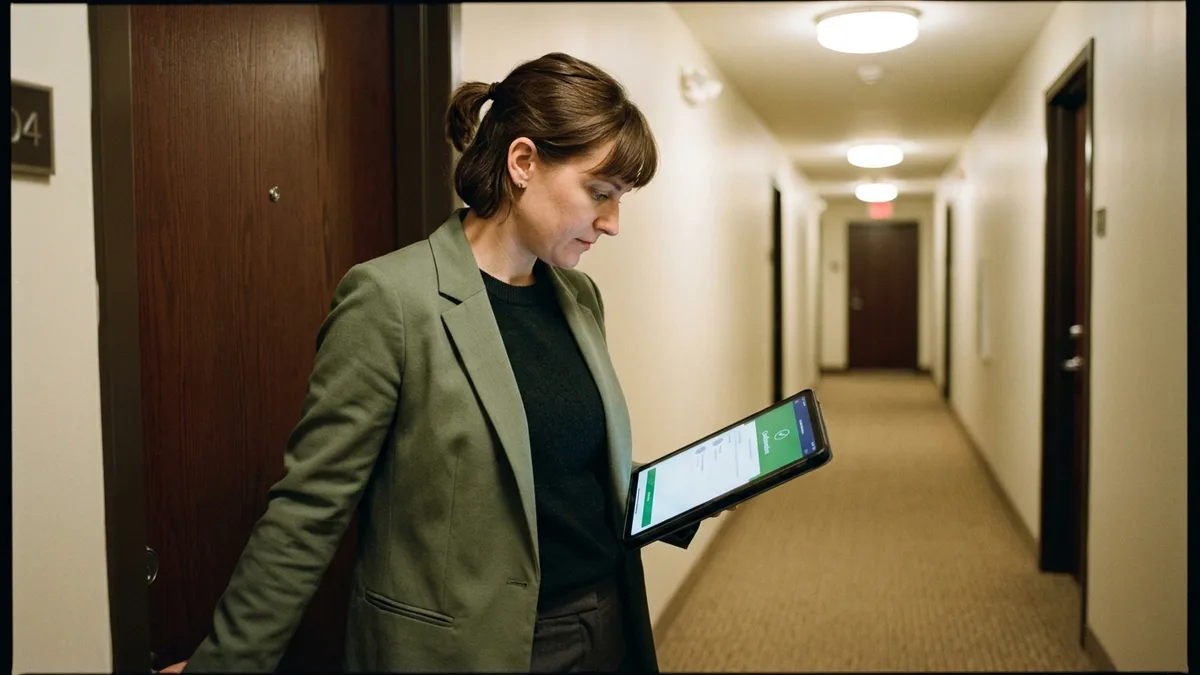
Before booking on-demand property waste service, property managers should confirm item photos, estimated volume, access logistics, and any prohibited materials with the vendor. Skipping this step is the single most common reason a scheduled pickup gets delayed or re-quoted on arrival.
A practical pre-booking checklist looks like this:
- Photograph the items to be removed, from multiple angles, so the vendor can quote accurately without a site visit.
- Estimate volume, roughly how many truckloads or cubic yards, so the crew arrives with the right equipment.
- Flag prohibited materials upfront, such as paint, e-waste, or hazardous chemicals, since most providers cannot accept these without separate arrangements.
- Confirm access: gate codes, service elevator reservations, stair count, and available parking or loading zones.
- Set an arrival window and confirm whether the vendor sends a notification before the crew arrives.
- Request photo documentation of the completed job, which protects both the manager and the vendor if a dispute arises later.
- Ask about disposal receipts, particularly for bulk items subject to local recycling or landfill diversion rules.
Building these expectations directly into a vendor agreement, response windows, arrival notifications, photo documentation, and after-hours escalation procedures, turns a one-off transaction into a repeatable process your team can trust without babysitting every request.
What Does Delayed Waste Removal Actually Cost a Property?
Delayed on-demand waste removal creates direct financial costs: lost rent from a turnover pushed back a day or more, maintenance labor diverted to hauling items by hand, and recurring complaint volume that erodes resident satisfaction ahead of lease renewal. These costs rarely show up on a line item, which is exactly why they get overlooked.
Consider a scattered-site portfolio owner managing properties across North Charleston and Summerville. A single delayed turnover, waiting three extra days for a municipal bulky-item pickup instead of same-day on-demand service, means three extra days of vacancy on a unit that could otherwise be generating rent. Multiply that across a handful of turnovers a month and the math adds up fast.
Recurring overflow at a dumpster enclosure is a similar signal. If the same enclosure fills up every month before the scheduled haul, that's not an isolated incident, it's a sign the community's recurring service level needs adjusting, not just a one-time on-demand fix. According to industry commentary on multifamily performance, resident retention has become the primary metric operators track, and 75% of residents surveyed in one multifamily industry report cited amenities, including clean, well-managed common areas, as a key factor in deciding whether to renew a lease.
Other management companies regularly advise property managers across the Charleston metro to treat recurring overflow patterns as a signal to upgrade recurring service rather than repeatedly paying for reactive on-demand pickups. One well-timed schedule change often costs less over a year than a string of emergency calls.
How Do You Choose Between On-Demand Service and a Recurring Upgrade?
Choosing between a one-time on-demand pickup and a recurring service upgrade depends on frequency: an isolated event calls for on-demand service, while a repeating pattern calls for adjusting the base contract. A property manager who requests bulk removal for the same enclosure three months running should have that conversation with their vendor about adding a second recurring pickup day rather than continuing to pay job-by-job rates.
Here's a simple decision framework:
- A single move-out or isolated bulk item: on-demand pickup, scheduled for the specific date needed.
- Recurring overflow at the same location every month: recurring schedule adjustment, not repeated on-demand calls.
- Unpredictable short-term rental turnover timing: standing on-demand arrangement with fast turnaround, since STR checkout timing rarely follows a fixed weekly pattern.
- Seasonal spikes (move-out season, holiday bulk disposal): temporary on-demand support layered on top of the base recurring contract.
Portfolio owners managing 10 to 50-plus scattered-site properties benefit most from a single vendor who can offer both models under one relationship, rather than juggling a separate bulk-removal contractor and a separate valet trash provider. That's the coordination problem some providers were built to solve for portfolios across Charleston, SC and Atlanta, GA.
Practical Guidance: Common Mistakes Property Managers Make
The most common mistake property managers make with on-demand waste service is treating it as an emergency reaction rather than a planned step in the turnover process. Waiting until a couch is already blocking a breezeway to call for pickup adds unnecessary delay compared to scheduling removal the moment a move-out notice is filed.
A second common mistake is assuming every provider handles hazardous materials, e-waste, or oversized appliances the same way. Confirm exclusions before the crew shows up, not after they've already declined an item on-site.
A third mistake, particularly common among HOA boards, is relying on fines to enforce cleanliness standards instead of building a proactive on-demand or trash can concierge relationship that prevents the violation from happening in the first place. A consistent waste program removes the enforcement burden entirely rather than trying to police it after the fact.
Finally, scattered-site owners often default to whichever local hauler is available at the moment, rather than building one vendor relationship across the whole portfolio. That patchwork approach means inconsistent pricing, inconsistent turnaround, and no single point of contact when something goes wrong.
Data & Evidence: What the Industry Numbers Show
Industry benchmarks consistently support treating on-demand waste service as a distinct category from recurring collection, with meaningfully different turnaround expectations and pricing structures. As of 2026, the gap between municipal bulky-item booking windows (1 to 2 weeks) and dedicated on-demand bulk service (often 24 to 48 hours) remains the clearest operational argument for using a private on-demand provider during time-sensitive turnovers.
| Metric | Recurring Valet Trash | On-Demand Bulk Service | Municipal Bulky Pickup |
|---|---|---|---|
| Schedule type | Fixed, 5 nights/week typical | Event-triggered, single request | Fixed weekly/biweekly route |
| Typical turnaround | Same-night collection | 24 to 48 hours depending on provider | 1 to 2 weeks to book |
| Typical pricing (multifamily) | $8 to $15/unit monthly (property-paid) or $25 to $35 (resident-paid) | Per-job quote based on volume and access | Included in municipal service fee, restrictions apply |
| Best suited for | Everyday resident trash | Move-outs, bulk items, overflow | Planned, non-urgent bulk disposal |
For multifamily property managers weighing whether their community needs a dedicated on-demand arrangement, the relevant comparison isn't just cost, it's the operational cost of delay discussed earlier: lost rent, diverted maintenance labor, and resident complaint volume. Managers evaluating providers should also review related coverage on how much valet trash companies typically charge apartments and breakdowns of junk removal expectations during property turnovers for deeper cost context specific to the Charleston market.
Frequently Asked Questions
What is valet trash service?
Valet trash service is a recurring, scheduled doorstep-to-dumpster collection where residents place bagged trash outside their unit and a crew collects it, typically five nights a week. It differs from on-demand waste service, which is a one-time pickup arranged for a specific event like a move-out or bulk item removal rather than a fixed nightly route.
What is vacation rental trash service?
Vacation rental trash service handles waste removal between guest turnovers at short-term rental properties, often on an on-demand or as-needed basis rather than a fixed weekly schedule. Because guest checkout timing varies, providers serving STR properties near the Charleston Historic District and Isle of Palms typically offer flexible, same-day or next-day pickup windows.
What is trash reimbursement for an apartment?
Trash reimbursement typically refers to a monthly fee, separate from base rent, that a property charges residents to cover the cost of valet trash or waste management service. Some multifamily communities bill this directly to residents, commonly in the $25 to $35 monthly range, while others fold the cost into the property's operating budget at a lower per-unit rate.
How much is valet trash service?
Valet trash service for multifamily properties commonly runs $8 to $15 per unit monthly when billed to the property, or $25 to $35 monthly when billed directly to residents. Residential valet trash for individual homeowners in select Charleston neighborhoods starts from $49 per month through some providers, with on-demand bulk pickup available as a separate add-on.
What is the garbage collector responsible for in a valet or on-demand model?
In a valet or on-demand waste model, the collector is responsible for retrieving trash or bulk items from the doorstep, backdoor, or designated staging area and transporting them to the dumpster, curb, or disposal facility. Reputable providers photo-verify each stop so property managers have documented confirmation the job was completed without needing to follow up.
How does on-demand service work if I manage a scattered-site portfolio?
For a scattered-site portfolio, on-demand service typically works through a single vendor relationship that can dispatch a crew to any address in the portfolio on request, rather than requiring a separate contractor per property. Some providers are purpose-built to serve portfolios from 10 to more than 1,000 units across Charleston and Atlanta with consistent pricing and photo-verified documentation at every stop.
Can on-demand waste service handle hazardous materials?
Most on-demand waste providers exclude hazardous materials like paint, motor oil, and batteries from standard pickup due to local disposal regulations. Property managers should confirm any exclusions with their vendor before booking and check current requirements with their local waste authority, since rules for hazardous item disposal vary by municipality and change periodically.
Conclusion
On-demand property waste service exists to solve the gap that recurring valet trash and municipal pickup can't: the sudden volume spike from a move-out, a bulk item nobody scheduled, or overflow that shows up three days before the scheduled haul. As shown in the comparison above, the real differentiator is turnaround, often 24 to 48 hours for on-demand service versus 1 to 2 weeks for a municipal bulky-item program, and that gap matters most when a unit turnover or guest checkout is on a tight timeline.
Heading into the rest of 2026, the property managers who handle this best aren't the ones scrambling every time a couch shows up in a breezeway. They're the ones who've built a layered waste program: recurring valet trash for everyday volume, and a standing on-demand relationship for the events that recurring service was never designed to absorb.

If you're managing turnovers, bulk removal, or overflow across a Charleston or Atlanta property, other services in the area handle both routine valet trash and flexible on-demand service for the situations your regular schedule can't cover. Request a service quote from a provider in your area, available Monday through Friday for multifamily, build-to-rent, short-term rental, HOA, and residential properties.
Content powered by inkSTR.co