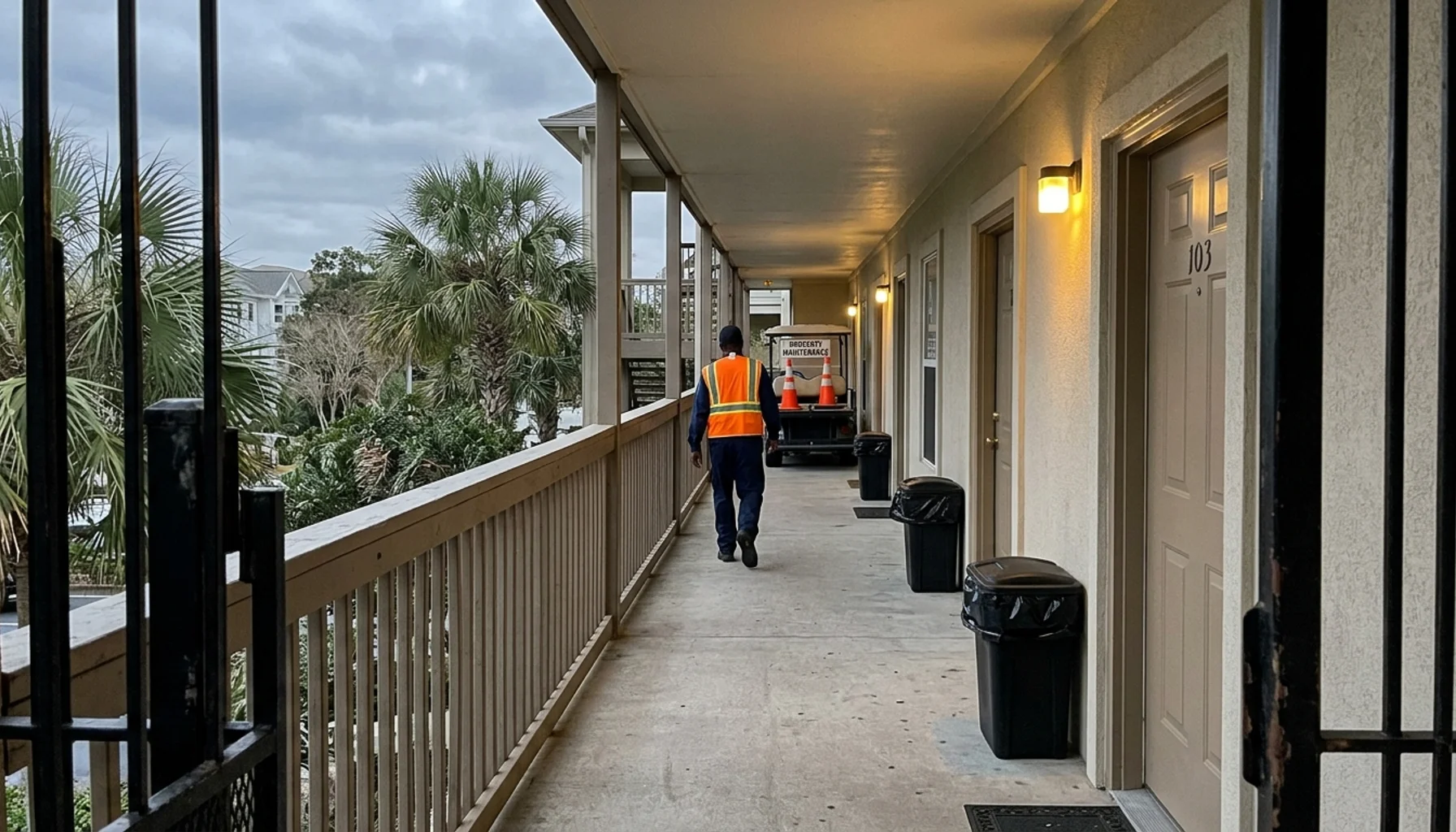
Hiring one vendor for both valet trash and junk removal is the better choice for most multifamily, build-to-rent, and short-term rental properties in 2026, because it eliminates the coordination gap between two separate crews and invoices. Separate companies only make sense in a narrow set of situations, which this guide covers in detail.
Key Takeaways
- Bundling valet trash and junk removal under one vendor typically means a single invoice and one point of accountability instead of two separate service contracts to manage.
- Industry pricing data shows valet trash service commonly runs $8 to $15 per unit for the property and $25 to $35 when passed through directly to residents.
- Standard doorstep valet trash pickup typically runs five nights per week, with most providers collecting between 6 p.m. and 9 p.m.
- Separate vendors can still make sense for properties locked into a strong existing valet contract, or communities with unusual disposal needs like large compactor systems.
- The real cost difference between bundled and separate vendors rarely shows up in the base price. It shows up in minimum trip charges, emergency pickup fees, and the labor hours property managers spend coordinating two crews instead of one.
- Charleston-area properties near the Rivers Avenue corridor and Daniel Island build-to-rent communities face specific turnover volume and compactor logistics that make single-vendor waste operations especially practical as portfolios scale past 50 units.
If you manage a multifamily community, a build-to-rent portfolio, or a short-term rental operation in the Charleston metro, you have probably already run into this exact decision. A resident leaves a couch by the dumpster. Your valet trash crew collects nightly bags but has no authority or equipment to haul furniture. Now you are calling a second company, waiting on a second quote, and hoping the two crews do not leave conflicting piles of debris in the same breezeway.
At Trash Day Made Easy, we service multifamily communities, build-to-rent developments, and short-term rental properties across Charleston, North Charleston, and Atlanta, and this exact fork in the road comes up in nearly every new property conversation. Property managers want to know whether paying one company for both services is worth it, or whether hiring a specialist for each job produces better results.
This guide breaks down the real trade-offs in pricing structure, accountability, and turnover logistics, and it identifies the specific property types where separate vendors still make operational sense in 2026. It also covers procurement details that most articles on this topic skip entirely, including what to put in a service-level agreement and how to build a property-specific scorecard before you sign anything.
Is It Better to Hire One Vendor for Valet Trash and Junk Removal, or Separate Companies?
For most multifamily and build-to-rent properties, hiring a single vendor for both valet trash and junk removal is the better choice because it consolidates accountability into one contract, one invoice, and one crew that already has doorstep access. A combined provider can move directly from nightly bag collection to bulk-item removal without a second vendor needing separate gate codes or a new relationship with your leasing office.
The exception is properties already locked into a strong, long-term valet trash contract with excellent service metrics, where switching vendors just to bundle bulk removal would break a relationship that works. In that specific case, adding a dedicated junk removal specialist as a second vendor, coordinated through your existing valet provider's account manager, can preserve what works while filling the gap. The decision usually comes down to how well your current valet provider already performs, not a blanket rule that bundling always wins.
Communities with unusual disposal needs, like specialized recycling streams or construction debris from an ongoing renovation, also sometimes warrant a separate specialist vendor for that specific category of waste, layered on top of standard bundled service.
What Does Valet Trash and Junk Removal Bundling Actually Include?
Valet trash and junk removal bundling means one waste operations company handles both nightly doorstep collection and on-demand bulk-item hauling for a property, under a single service agreement. This typically includes doorstep-to-dumpster valet pickup, bulk furniture and appliance removal, and move-in and move-out debris handling, all coordinated by the same account manager.
The nightly collection piece works the same regardless of which model you choose. Residents place bagged trash in a provided receptacle, commonly a 13-gallon container, outside their door by a set evening time. Crews collect nightly, usually five nights per week, and document each unit. This is standard across the industry and is not where bundling adds its value.
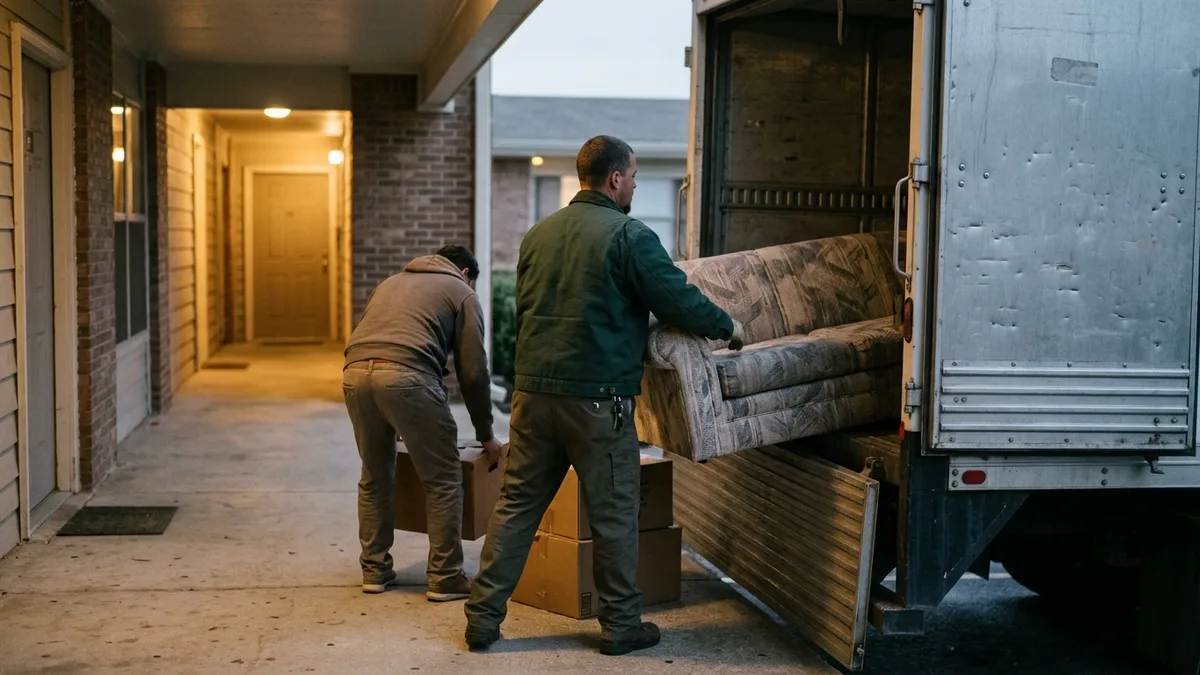
The value shows up when a couch appears in a breezeway or a resident moves out and leaves a mattress, a broken TV stand, and boxes of miscellaneous items. Under a bundled model, the same company that already services that building at night dispatches a bulk-removal crew, often the next scheduled visit or on an expedited basis, without your team needing to source and vet a second vendor.
Bundled providers frequently fold in overflow control around dumpsters and compactors, along with coordination during heavy move-out periods like end-of-lease turnover season. For build-to-rent communities near Daniel Island and the airport corridor, where turnover volume spikes seasonally, that overflow coordination alone can be the deciding factor.
How Much Should a Trash Valet Charge?
Valet trash pricing for property owners typically runs $8 to $15 per unit per month when billed to the property, while properties that pass the cost directly to residents commonly charge $25 to $35 per unit. The gap between those two figures covers the provider's margin, resident billing administration, and often includes supplies like liners and bags.
Bulk and junk removal pricing works differently because it is not a flat monthly fee tied to unit count. Instead, it is typically priced per pickup, per load size, or as part of a bundled monthly allotment with overage charges for large loads. A single-vendor bundled contract often folds a baseline number of bulk pickups into the monthly per-unit rate, then charges separately once a property exceeds that allotment, similar to how cell phone data plans work.
This is exactly where separate-vendor arrangements start costing more than they appear to on paper. A standalone junk removal company typically charges a minimum trip fee regardless of load size, meaning a single armchair pickup can cost nearly as much as a full truckload. If your property generates bulk waste weekly, which is common for higher-turnover build-to-rent communities, those minimum trip charges add up fast compared to a bundled monthly allotment.
For residential homeowners in select Charleston neighborhoods, residential valet trash service is available starting from $49 per month, which is a separate pricing structure from multifamily and portfolio accounts. Multifamily, HOA, and portfolio pricing is quote-based because it depends on unit count, service frequency, and bulk-removal volume, so request a specific quote rather than assuming a flat rate applies to your property.
How Profitable Is a Trash Valet Business, and Why Does That Matter to You?
Provider profitability matters to you indirectly, because a waste operator's margin structure shapes how aggressively they price bulk removal, staff routes, and invest in accountability tools like photo verification. Valet trash businesses generally operate on thin per-unit margins from the nightly collection service alone, with bulk removal and portfolio scale contributing more meaningfully to overall profitability.
This matters to you as a buyer because a provider surviving purely on razor-thin nightly collection fees has less incentive to invest in the documentation and route verification that make a service accountable. Providers that build profitability around a fuller service menu, spanning nightly valet, bulk removal, and portfolio-scale contracts, have more room to invest in the systems that protect you from missed pickups and undocumented service failures.
When you evaluate a vendor, ask what percentage of their business comes from add-on services like bulk removal, not just the nightly rate. A provider heavily dependent on volume-based nightly fees alone may underprice bulk removal to win the contract, then struggle to service it profitably, which often shows up later as slower response times or quietly reduced service quality.
Do Residents Pay for Valet Trash, or Does the Property Cover It?
Whether residents or the property pays for valet trash depends entirely on how the community structures the amenity, and both models are common across Charleston and Atlanta multifamily communities in 2026. Some properties fold valet trash into the base rent or classify it as a required amenity fee billed directly to residents, while others absorb it as a property-level operating expense to support resident retention.
The pricing data referenced earlier illustrates this split clearly: providers typically charge properties $8 to $15 per unit when billed at the ownership level, versus $25 to $35 when passed through as a direct resident charge. Communities that pass the cost to residents often frame it as a required convenience fee rather than an optional add-on, similar to how pest control or parking fees are structured in many lease agreements.
For bundled valet trash and junk removal contracts specifically, the billing question gets more complex, because bulk removal is often billed differently than nightly collection. Many properties keep nightly valet trash as a resident-billed line item while absorbing bulk and turnover removal as a property operating cost, since bulk waste at move-out is typically the property's responsibility to clear before the unit can re-lease. Confirm with your provider exactly how bundled bulk-removal costs are allocated before signing, since this detail affects your operating budget differently than the nightly per-unit fee.
What Should Go Into a Service-Level Agreement for Bundled Waste Vendors?
A service-level agreement for bundled valet trash and junk removal should define response-time commitments, acceptable-item lists, insurance requirements, and photo-documentation standards, because these are the terms that determine whether the contract protects you when service falls short. Most property managers focus only on the monthly rate during negotiation and skip the operational details that actually determine day-to-day accountability.
Your contract should address the following items before you sign anything:
- Response-time commitments for bulk removal requests. Define how many hours or days a provider has to clear a reported bulk item, separately from routine scheduled bulk pickups.
- An acceptable-item list. Specify what counts as standard bulk removal versus what requires special handling or additional fees, such as appliances containing refrigerant, mattresses, or construction debris.
- Certificate of insurance requirements. Confirm the provider carries general liability and workers' compensation coverage appropriate for on-site waste handling.
- Photo-documentation standards. Require timestamped photo verification for both nightly valet stops and bulk-removal jobs, so disputes over completed service have a documented record.
- Disposal documentation. For properties with sustainability reporting requirements to investors or HOA boards, confirm whether the provider can document how bulk waste is disposed of or diverted.
- Termination and audit rights. Define how either party can exit the contract and whether you retain the right to audit service logs periodically.
- Contract escalators. Confirm whether the per-unit or per-pickup rate is fixed for the contract term or subject to annual increases, and by how much.
Few competitor resources cover this procurement layer in detail, but it is where property managers actually get burned. A low monthly rate with no defined response-time commitment or acceptable-item list leaves you negotiating fee disputes every time a resident leaves an oversized item at the curb.

What Happens When Valet Trash and Junk Removal Are Separate Companies?
Operational handoffs become the biggest risk when valet trash and junk removal are handled by two separate companies, because neither vendor has full authority or responsibility for the space between their two service scopes. Overflow beside a dumpster, a mattress left in a breezeway, or a bulk item that a resident mistakenly places out on a valet-only pickup night can fall into a gray zone where each vendor points to the other's contract.
This creates four practical problems property managers report consistently. First, after-hours complaints require your team to determine which vendor to call, since the answer depends on the specific item and situation. Second, move-out surges, when several units turn over in the same week, often overwhelm a standalone junk removal vendor's scheduling capacity, since they are servicing multiple properties and prioritizing by contract size. Third, disputed responsibility for who clears an item left in a shared common area can stall for days while two companies clarify scope. Fourth, your property manager becomes the default coordinator between two vendors and two invoices, which is exactly the administrative burden that bundling is designed to eliminate.
None of this means separate vendors always perform worse. A property with an excellent existing valet trash relationship and low bulk-removal volume may find that adding a specialized junk removal vendor for occasional move-out surges works fine, especially if that vendor operates locally and responds quickly. But as turnover volume increases, especially for build-to-rent communities and short-term rental portfolios with frequent guest transitions, the coordination overhead of separate vendors tends to outweigh whatever pricing advantage a standalone specialist offers.
How Do You Build a Property-Specific Scorecard Before Choosing a Vendor Model?
A property-specific scorecard is a structured comparison you build before selecting a waste vendor, weighing your unit count, building type, compactor or chute setup, turnover volume, and required pickup frequency against what bundled versus separate vendors can realistically deliver. This step is frequently skipped, but it is the single best way to avoid choosing a vendor model that does not match your property's actual operational pattern.
Start by scoring your property on five factors. First, unit count: portfolios under roughly 50 units with low bulk volume may not see a dramatic cost difference between bundled and separate vendors, while portfolios over 100 units almost always benefit from single-vendor consolidation. Second, building type: garden-style communities with ground-level dumpster access handle bulk removal differently than mid-rise buildings with compactor chutes, where a bundled vendor already on-site nightly has a logistical advantage. Third, compactor or chute setup: properties with chute rooms benefit from a single vendor who already maintains that space nightly and can flag overflow immediately. Fourth, turnover volume: communities with high resident churn generate more bulk waste and benefit more from bundled scheduling. Fifth, required pickup frequency: properties needing five-night-per-week valet service plus frequent bulk support get the most value from consolidation.
Score your property honestly against these five factors before requesting quotes. A small property with a simple garden-style layout and low turnover may genuinely do fine with separate vendors. A property scoring high across most factors is very likely better served by one bundled provider.
Do I Need an LLC to Do Junk Removal?
Whether a junk removal operator needs an LLC depends on state business registration requirements and the operator's own liability preferences, not on any rule specific to the waste industry. This question comes up frequently from readers researching the space, but from a property manager's perspective, your priority when hiring a vendor should be confirming their business registration and insurance coverage rather than their specific entity structure.
When vetting a bundled valet trash and junk removal provider, ask directly for a certificate of insurance showing general liability coverage and, if they have employees, workers' compensation coverage. Confirm the business is properly registered to operate in South Carolina or Georgia depending on your property's location. A legitimate operator serving multifamily and portfolio clients should have no hesitation providing this documentation as part of your procurement process, and you should treat any reluctance to do so as a red flag regardless of how competitive their pricing looks.
How Many Nights a Week Does Valet Trash Run?
Valet trash collection typically runs five nights per week across the multifamily industry, with most providers scheduling pickups between 6 p.m. and 9 p.m. Some communities opt for fewer nights per week depending on unit density and budget, though five-night service is the most common baseline for properties positioning valet trash as a full amenity.
For bulk and junk removal specifically, frequency is typically different from nightly valet service. Bundled providers commonly offer bulk removal on a scheduled basis, such as weekly or biweekly community-wide pickup, combined with on-demand service for individual resident requests or move-out situations. Your contract should specify both the routine bulk-pickup schedule and the response window for on-demand requests separately, since these are two distinct service commitments within the same bundled agreement.
Bundled vs. Separate Vendors: A Direct Comparison
The table below compares bundled single-vendor service against a separate-vendor model across the factors that matter most to property managers evaluating this decision in 2026.
| Factor | Single Bundled Vendor | Separate Valet Trash and Junk Removal Vendors |
|---|---|---|
| Points of contact | One account manager for both services | Two separate account managers and invoices |
| Nightly valet trash pricing | Standard industry range of $8 to $15 per unit (property-billed) | Same range; pricing does not change based on bundling |
| Bulk removal pricing structure | Often folded into a monthly allotment with overage fees | Typically priced per trip with minimum trip charges |
| Move-out surge handling | Same crew already on-site nightly, faster response | Requires separate scheduling, higher risk of delay |
| Overflow and gray-area disputes | One vendor responsible, no scope disputes | Common source of finger-pointing between vendors |
| Best fit | Portfolios over 50 to 100 units, high turnover, build-to-rent, STR | Small properties with low bulk volume and an existing strong valet relationship |
The pricing rows show that bundling does not change the base nightly valet rate. The financial advantage of bundling comes from bulk-removal fee structure and reduced administrative coordination, not from a discount on the core service.
What Is Valet Trash Service, and How Does It Differ From Junk Removal?
Valet trash service is a nightly doorstep collection amenity where residents place bagged household trash outside their unit for pickup, typically five nights per week between 6 p.m. and 9 p.m. Junk removal, by contrast, refers to the removal of bulk items such as furniture and move-out debris, usually scheduled or on-demand rather than nightly.
These are fundamentally different operational tasks even though residents sometimes confuse them. Valet trash crews carry small containers and move quickly through a route, collecting bagged waste from dozens of units per hour. Junk removal requires larger trucks and more labor per stop, often with a scheduling conversation with the resident or property manager about pickup location and item type. A provider offering both under one contract, like a nightly valet trash service for multifamily communities, structures these as two distinct workflows within the same client relationship rather than treating them as one identical task.
Our team at Trash Day Made Easy regularly advises clients that the confusion between these two services is exactly why bundling helps. Residents do not need to understand the operational distinction. They just need bagged trash gone nightly and bulk items gone when they report them, regardless of which internal workflow handles it.
Practical Guidance: How to Choose Between One Vendor and Separate Companies
Choosing the right waste vendor model comes down to matching your property's turnover volume and administrative capacity to what each model actually delivers. Follow this sequence before signing any contract.
- Run the property-specific scorecard first. Score your unit count, building type, turnover volume, and pickup frequency needs before requesting quotes from anyone.
- Audit your existing valet trash relationship if you have one. If service has been reliable and photo-verified for years, adding bulk removal as an add-on to that same provider is often easier than switching everything.
- Request a written service-level agreement, not a verbal quote. Insist on response-time commitments, an acceptable-item list, and insurance documentation before comparing price.
- Calculate total cost of ownership, not just the base rate. Factor in minimum trip charges, emergency pickup fees, and the labor hours your team spends coordinating vendors.
- Ask specifically about move-out surge handling. A vendor's answer to this question reveals whether they understand high-turnover property operations or only service low-churn communities.
- Confirm portfolio scalability if you manage multiple properties. A vendor capable of consistent service from 10 units to over 1,000 units, like Trash Day Made Easy, removes the need to re-vet a new vendor every time your portfolio grows.
The most common mistake property managers make is treating bulk item removal as an afterthought on move-out day rather than building it into the standard turnover checklist from the start. Waiting until a couch is already sitting in a breezeway means paying rush fees and delaying the next resident's move-in.
Short-term rental operators in the Charleston Historic District and on Isle of Palms face a related version of this problem: a single missed pickup between guest turnovers can trigger a negative review before you even know service failed. On-demand waste removal for short-term rental properties handles that exact scenario by integrating trash and bulk removal directly into the cleaning and turnover schedule, rather than treating waste as a separate task the property manager has to time manually.
HOA communities on James Island and Sullivan's Island face a different version again: enforcing bin compliance and bulk-item rules against residents who ignore both. A trash can concierge service for HOA communities removes that enforcement burden by making compliance automatic rather than rule-based.
Frequently Asked Questions
How much do valet trash companies charge apartments?
Valet trash companies typically charge properties between $8 and $15 per unit per month when billed at the ownership level. When the cost is passed directly to residents as a convenience fee, rates commonly run $25 to $35 per unit. Bulk and junk removal is usually priced separately, either as a monthly allotment or per-trip fee.
Do residents pay for valet trash?
It depends on how the property structures the service. Some communities bill residents directly as a required amenity fee, often in the $25 to $35 range, while others absorb the cost as a property-level operating expense to support resident retention. Bundled bulk-removal costs are frequently billed separately from nightly valet trash, so confirm the specific allocation with your provider.
How many nights a week does valet trash run?
Most valet trash providers collect five nights per week, typically between 6 p.m. and 9 p.m. Some smaller or lower-density communities opt for fewer nights per week to manage cost, though five-night service is the common baseline for full amenity positioning.
What is valet trash?
Valet trash is a nightly doorstep collection service where residents place bagged household waste outside their unit, and a crew collects it and transfers it to a community dumpster or compactor. It differs from standard municipal pickup because it happens at each resident's door rather than requiring residents to haul bins to a central location.
What is valet trash service in apartments?
Valet trash service in apartments is an amenity where a private waste provider collects bagged trash directly from outside each unit's door, typically five nights per week, rather than requiring residents to use a shared dumpster or curbside pickup. It is usually billed either to the property as an operating expense or to residents as a monthly fee, and is separate from bulk-item or junk removal service.
How much should a trash valet charge?
A trash valet provider should charge in line with the standard industry range of $8 to $15 per unit when billed to the property, or $25 to $35 per unit when billed to residents. Rates can vary by service frequency, unit density, and whether bulk removal is bundled into the contract. Always request a property-specific quote rather than assuming a flat industry rate applies to your property.
Do I need an LLC to do junk removal?
Business entity requirements for junk removal operators depend on state registration rules rather than any waste-industry-specific requirement. As a property manager hiring a vendor, focus on confirming proper business registration and insurance coverage, including general liability and workers' compensation, rather than the specific entity type the provider uses.
How much do valet trash workers make per hour?
Wage data for valet trash workers varies by market and role, and no verified regional figure is available for the Charleston or Atlanta markets specifically. Focus less on worker pay and more on whether the provider maintains consistent staffing, since high turnover among collection crews often correlates with missed pickups and inconsistent service quality.
Conclusion
Bundling valet trash and junk removal under one vendor is the stronger choice for most Charleston and Atlanta multifamily communities, build-to-rent portfolios, and short-term rental operations, particularly once turnover volume rises past what a small garden-style property typically generates. The exception remains properties with an already-strong valet relationship and low bulk volume, where adding a second specialist vendor for occasional bulk needs can still work.
Waste management rarely fails because of one bad decision. It fails because no system runs without constant manager attention, whether that means chasing two vendors for one job or hoping a resident remembers to report a couch in the breezeway. A single bundled provider with nightly collection, photo-verified documentation, and on-demand bulk support removes that burden from your desk entirely, and that operational simplicity matters more in 2026 as portfolios continue consolidating vendor relationships to reduce administrative overhead.
Trash Day Made Easy provides nightly, photo-verified valet trash service alongside bulk item and turnover trash removal for multifamily communities and property portfolios across Charleston and Atlanta. If you are ready to stop coordinating two vendors for one job, request a service quote from Trash Day Made Easy, available Monday through Friday.
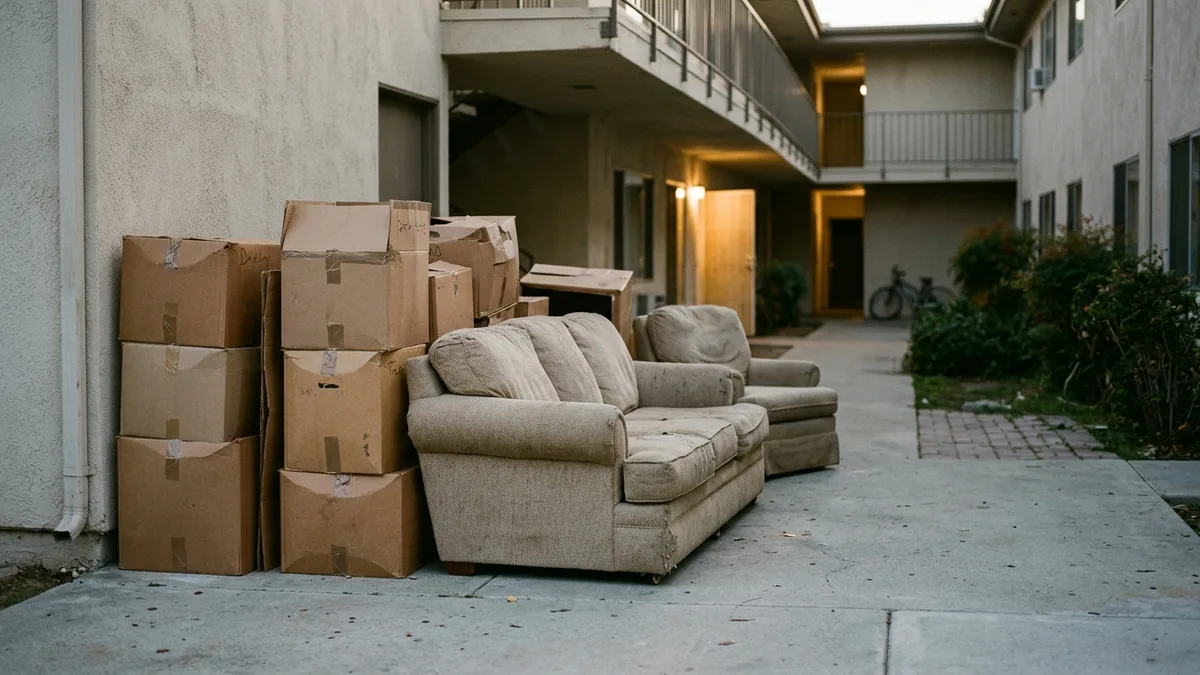
If your community regularly deals with move-out furniture piling up in breezeways, Trash Day Made Easy's bundled approach means the same crew already servicing your property nightly can clear it, without a second vendor relationship to manage. Check availability and request a quote here.
Content powered by inkSTR.co