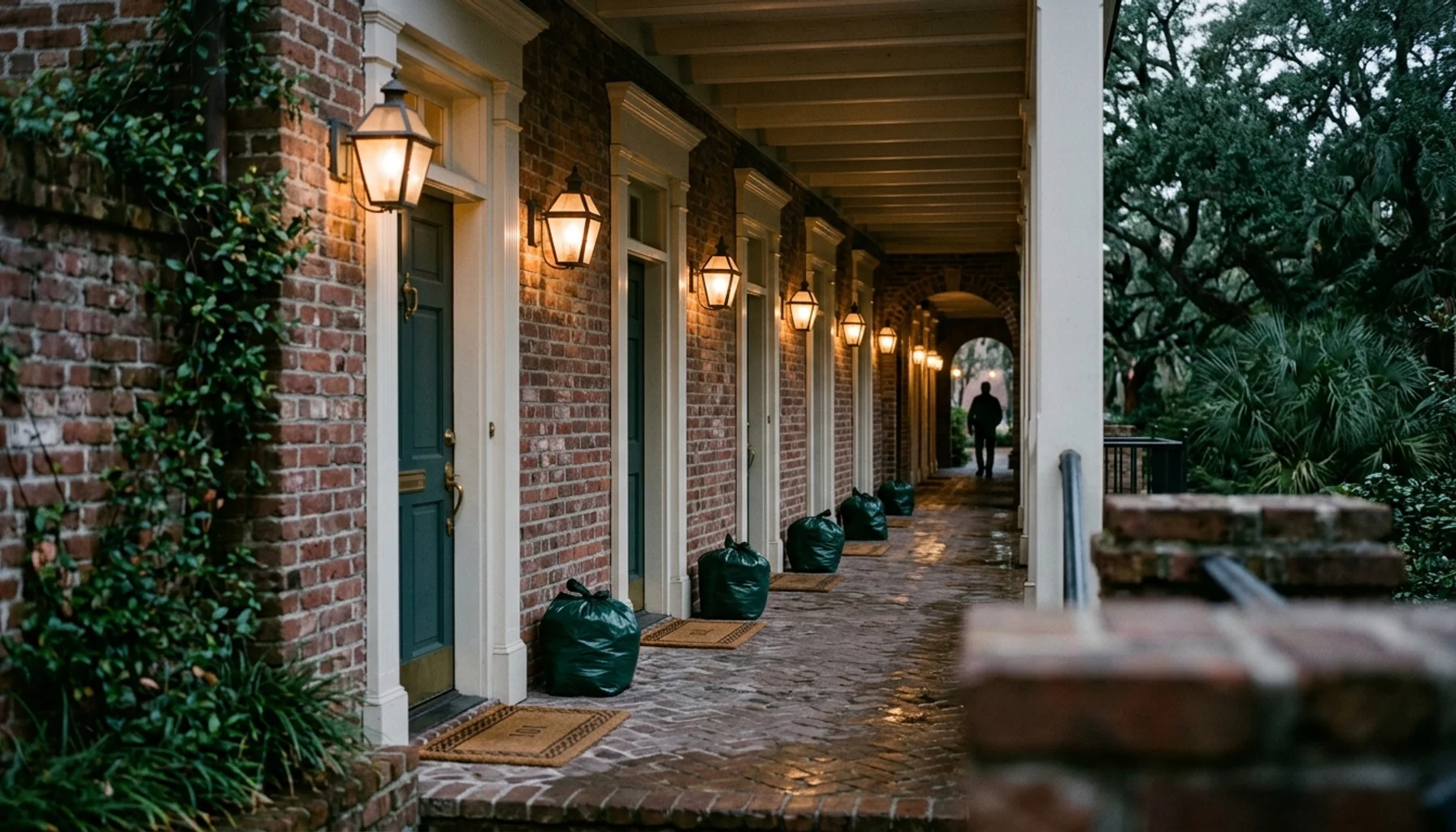
How does photo-verified trash collection help multifamily property managers? It attaches a photo to every door-level pickup, so a missed-service complaint can be checked in minutes instead of argued for days. You get proof that nightly valet trash service happened and fewer vendor follow-ups, plus a record to support your vendor scorecard.
Key Takeaways
- Photo verification turns a dispute into a records check. An image tied to a unit and a night answers the question "did service happen?" without a site walk or a phone call to the vendor.
- Evidence quality varies. Ask whether photos identify the unit, carry a timestamp, and cover doorsteps where nothing was set out, because a blurry or generic image proves very little.
- A photo proves a pickup, not a clean property. Pair photo records with your own breezeway and dumpster-area inspections.
- Season matters in Charleston. The Atlantic hurricane season runs June 1 through November 30 according to NOAA, and summer heat makes missed pickups obvious within a day or two.
- Privacy deserves a written answer. Ask any vendor how long unit-level photos are kept and who can view them. Ask how residents are told.
- Fit is not universal. A small community with a single compactor may not need nightly service, while a large walk-up property usually does.
Summer is when trash service gets noticed. Heat and humidity across North Charleston, Mount Pleasant, and the rest of the Lowcountry turn a skipped night into a smell, a pest call, and a resident email before lunch. In 2026, that makes proof of service a day-to-day management tool rather than a nice extra.
At our company, we run nightly valet trash for communities across the Charleston area, and every service visit is photo-verified. The same problem comes up again and again: the missed pickup is rarely the hardest part. The hard part is answering whether service happened at all.
This guide explains what photo verification is, how to use the records, and where the technology falls short. It also covers what to ask vendors before the summer turnover rush and storm season. Because we are a valet trash provider, you should read our views with that in mind; we have tried to keep the advice vendor-neutral.
What Is Photo-Verified Trash Collection at a Multifamily Community?
Photo-verified trash collection is a valet trash workflow in which the collector captures a photo at each door or pickup point during every service visit, creating a record tied to a specific unit and night. It differs from route-level confirmation, which only shows a crew visited the property, and from dumpster-level confirmation, which only shows a container was emptied.
At a garden-style community, that usually means a collector walks the breezeways, picks up bagged trash set outside each door, and carries it to the dumpster or compactor. This is the Doorstep-to-Dumpster model. At a build-to-rent neighborhood, the equivalent is Backdoor-to-Curbside bin management, where bins move from the back door to the curb and back again.
The photo is the receipt. It typically shows the doorstep, the bin or bag, and enough of the door to identify the unit. Some programs also photograph doorsteps where nothing was set out, which matters because that image shows the stop was made even when a resident skipped the night.
Photo proof is one of several verification layers. Vendors also use GPS route tracking, NFC or QR scans at each door, and daily reports. A photo is the layer a resident or owner can actually look at, which is why it carries the most weight in a dispute. For a broader primer, see our explainer on what garbage valet is and how it works.
How Does Photo-Verified Trash Collection Help Multifamily Property Managers Day to Day?
Photo-verified valet trash helps property managers by replacing assumption with documentation: each pickup leaves a record, so you can settle complaints, hold the vendor to a standard, and spend less time chasing confirmation. The benefit shows up in your inbox, your vendor scorecard, and your breezeways.
Fewer follow-ups for your team
Without proof, every complaint starts a chain: resident emails the office, the office calls the vendor, the vendor checks with the driver, and someone calls back. With a photo record, you open the unit's image for that night and respond the same day. Your leasing staff stops acting as an unpaid dispatcher.
One vendor press release published in April 2026 claimed a 35% weekly reduction in trash-related resident complaints and about 1.5 hours per week returned to leasing teams. Treat those numbers as vendor-reported, not independent research. They are a reasonable prompt to track your own complaint counts before and after you add verification.
A real basis for vendor accountability
A scorecard works only if the data is trustworthy. Photo records let you score completion by building, by night, and by collector route. When a pattern appears, such as the third-floor walk-ups missed every Thursday, you can raise it with specifics instead of impressions.
A cleaner resident experience
Residents notice trash when it fails: bags in stairwells, overflow around the compactor, odors in July. Consistent doorstep service removes the daily coordination from residents entirely. If you are building a business case for an owner, industry groups like the National Multifamily Housing Council and the National Apartment Association are good places to benchmark amenity and operations trends. Pair that with your own renewal and complaint data.
What Does Valet Trash Service Include for Residents?
Valet trash service is a scheduled amenity in which a collector picks up residents' bagged household trash from outside their apartment doors and carries it to the community's dumpster or compactor. Residents bag, tie, and set trash out during a posted window; the vendor handles everything after that.
Schedules differ by provider. Many programs run anywhere from three to seven nights per week, and the right choice depends on building layout and resident habits. We run scheduled nightly collection, and we confirm the exact nights for each property during the quote call.
Residents still have a part to play. Bags need to be tied and placed by the door inside the window, with no loose items. Bulky furniture, mattresses, and move-out debris fall outside routine valet service and need a separate plan, such as bulk item removal during turnovers.
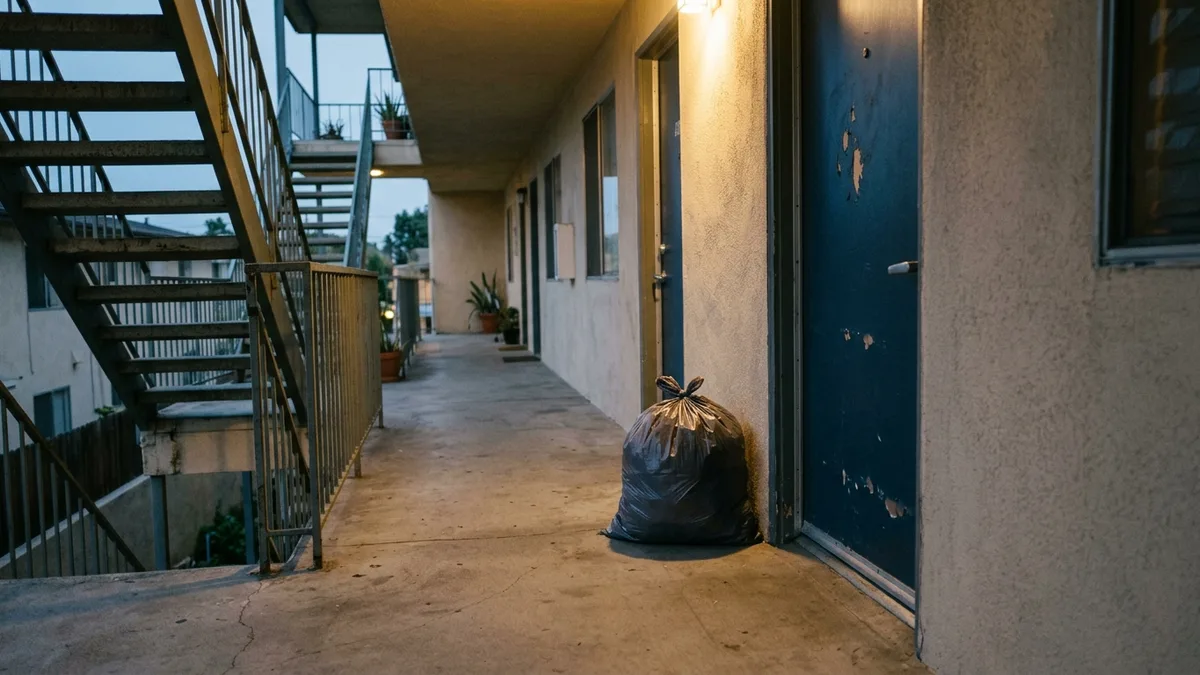
For a quick look at what the doorstep model means for renters, our piece on doorstep trash collection for property managers walks through the daily routine.
How Do Managers Track Missed Valet Trash Pickups?
Tracking a missed valet trash pickup means matching a resident complaint to a unit-level record for that night, then deciding whether the miss was the vendor's or the resident's. A photo record makes that decision fast; without one, you rely on memory and the driver's word.
Here is the sequence that works for most communities:
- Log the complaint with the unit number, building, date, and how the resident describes the problem.
- Pull the photo for that unit and night from the vendor's report, folder, or portal.
- If the photo shows the bag was collected or the doorstep was empty, reply to the resident with that context and a reminder of the set-out window.
- If the photo is missing or shows the bag still at the door, send the record to the vendor and request re-service.
- Record the outcome on your vendor scorecard with the building and night.
- Review the log weekly, then monthly, looking for repeat buildings or repeat nights.
Ask how quickly records become available. A photo that arrives two days after the complaint helps far less than one you can open that morning. Also ask what the contract says about re-service timing, since a record without a remedy only documents the problem. With us, every visit is photo-verified, so the record exists before the complaint arrives.
Why Do Summer and Hurricane Season Raise the Stakes for Trash Service in Charleston?
Summer and hurricane season raise the stakes because heat, humidity, summer move-ins, and storm preparation all expose weak waste handling faster than any other time of year. In the Charleston area, the Atlantic hurricane season runs from June 1 through November 30 according to NOAA's National Hurricane Center.
Heat and odor
In North Charleston, summer heat and humidity can make an overflowing dumpster a smell problem within a day or two. A missed night at a compactor-less community near the Rivers Avenue corridor shows up fast in resident emails. Photo records let you tell whether the vendor skipped a stop or the dumpster simply reached capacity.
Peak move-in and turnover
Summer is a heavy turnover stretch, and make-ready slips when furniture and boxes sit outside vacant units. Debris is part of the critical path: a unit that cannot be cleared cannot be turned. Schedule bulk removal alongside your routine valet service so the same vendor knows the property.
Storm preparation
Before a storm, loose bags in breezeways can become debris. A dated photo record of breezeway conditions before and after an event gives you a concrete reference when you talk with your vendor about service adjustments. Confirm your plan with the vendor well before a storm is forecast, not once it is on the radar.
Quotes from us are available Monday through Friday for all property types. Start the conversation weeks before a major lease-up or turnover peak rather than days. Since 2026, several vendor pages and an April 2026 press release have featured unit-level photo proof and reporting portals prominently, so in 2026 you should expect to ask for it, not be surprised by it.
How Do You Judge Photo Evidence Quality and Audit a Vendor?
Photo evidence quality refers to how reliably a vendor's images prove that a specific unit was serviced on a specific night. A photo that cannot be tied to a door and a date is decoration, so judge the images, not just the promise of images.
Use this checklist when you evaluate a vendor or audit your current one:
| What to check | Why it matters | What a strong answer looks like |
|---|---|---|
| Unit identification | A photo must be tied to one door | Door number or unit tag visible, or the image is logged to a specific unit |
| Date and time | Proves the right night and window | Timestamp on every image, not only on the daily summary |
| No-set-out doorsteps | Shows the stop happened even when no bag was out | Empty doorsteps are photographed or logged too |
| Failed or unclear images | Dark, blurry, or blocked shots prove nothing | Written process for retakes and flagged exceptions |
| Duplicate or reused images | Protects against false verification | Spot checks by vendor supervisors; you may request samples |
| Retrieval speed | Slow records do not settle complaints | Same-day access through a report, folder, or portal |
Then audit. Pull a sample of units across buildings every month and compare the photos with what you see on a walk-through during the service window. Cross-check the sample against your complaint log. If a building shows a complaint but a clean photo record, find out why before you close the ticket.
What Privacy Questions Should You Ask About Unit-Level Photos?
Unit-level service photos are images of residents' doorsteps, which makes privacy practices a real part of vendor selection. Most vendor pages describe the photo capture but say little about retention, access, and resident notice. Ask for answers in writing before you roll the program out.
- What is in the frame? Collectors should photograph the doorstep and bin, not the interior through an open door, and not people or license plates.
- How long are images kept? Ask for a defined retention period instead of "as long as needed."
- Who can see them? Limit access to named property staff and the vendor's service team.
- How are residents told? A line in the community rules or a notice at move-in sets expectations about service photos.
- What happens on request? Know the process if a resident asks about an image taken at their door.
This is operational guidance, not legal advice. Have your attorney or owner's counsel review any resident-facing language and your lease terms. When you request a quote from us, bring these questions along; we are glad to walk through them for your property.
How Does Photo-Verified Valet Trash Compare With Dumpster-Only and Unverified Valet Service?
Photo-verified valet trash differs from dumpster-only service and from valet service without proof mainly in two ways: who carries the trash, and what evidence exists afterward. Dumpster-only leaves both the carrying and the appearance problem with residents and the property.
| Factor | Dumpster-Only | Valet Without Photo Proof | Photo-Verified Valet (our service) |
|---|---|---|---|
| Who carries trash to the dumpster | Residents | Vendor collector | Vendor collector |
| Proof service happened | Truck or dumpster emptied only | Driver word or route sheet | Photo at each service visit |
| Resolving a complaint | Site walk and guesswork | Calls and callbacks | Open the record for that unit and night |
| Breezeway and stairwell appearance | Depends on resident habits | Better, but inconsistent if misses go undetected | Consistent nightly schedule with documentation |
| Manager follow-up burden | Reminders and rule enforcement | Moderate | Lower, since records answer most questions |
| Best fit | Small properties with convenient dumpsters | Communities with low complaint volume | Larger or walk-up communities and portfolios |
Our recommendation is to skip unverified valet service if you are paying for a premium amenity. If you cannot see proof, you are trusting the same information that already failed you. Dumpster-only is perfectly reasonable for a small community with a single, convenient compactor.
What Are the Costs and Tradeoffs of Photo Verification?
Photo-verified valet trash typically costs a per-door monthly fee, which many communities pass through to residents as an amenity charge. Industry pricing guides commonly cite roughly $25 to $35 per month charged to residents for valet trash, though your actual fee depends on scope, schedule, and local policy.
Commercial pricing from us depends on unit count, layout, and schedule, so we quote it on a call. Residential homeowners in select Charleston neighborhoods can get valet trash service starting from $49 per month, with availability confirmed on a call.
Photo verification has limits you should know before you buy:
- A photo is not a cleanliness score. It proves a pickup, not that the compactor area is spotless or that residents are following the rules.
- It creates data you must manage. Someone on your team needs to review records, which takes time even when the process is quick.
- Resident pushback is possible. Some residents dislike the idea of photos at their door, so explain the purpose and the limits.
- Independent evidence is thin. Most published outcome figures are vendor-reported. Track your own complaint counts and re-service requests to see what changes at your property.
Build the records into your service-level agreement. Define what counts as a missed pickup and how fast the vendor must re-service. State what happens when a photo is missing. Finally, be honest about fit: a ten-unit property with a single compactor may not need nightly service, while a 300-unit community with third-floor walk-ups usually does. For more on pricing structures, read how much valet trash companies charge apartments.
Which Valet Trash Provider Fits Charleston Apartment Communities, and How Do You Request a Quote?
We are a North Charleston valet trash and waste operations company that provides nightly, photo-verified Doorstep-to-Dumpster and Backdoor-to-Curbside service for multifamily, build-to-rent, short-term rental, HOA, and select residential properties across the Charleston area. We also serve Atlanta, GA, and we are headquartered at 4900 O'Hear Avenue in North Charleston.
When you compare any valet trash vendor in Charleston, weigh these points:
- Local accountability. Our North Charleston headquarters is about 1.9 miles from Park Circle and about 4.9 miles from Charleston International Airport, so a supervisor is never a long drive from a service issue.
- Proof at every visit. Photo records for each service visit, not just route summaries.
- Scale. Our programs run from 10 units to more than 1,000, with the same standard across a portfolio.
- Adjacent needs. Turnover trash handling, bulk item removal, move-in and move-out support, and on-demand waste help, all from one vendor that already knows the property.
We serve communities in North Charleston, Charleston, Mount Pleasant, on Daniel Island, on James Island, on Johns Island, Summerville, Isle of Palms, and on Sullivan's Island in select areas. We confirm coverage on a call, never by address alone.
Quotes are available Monday through Friday for all property types. Before you call, gather your unit count, building style, dumpster or compactor locations, current service schedule, and the complaints you want to solve. Our multifamily service page outlines how a typical program is set up.
What Should Charleston Property Managers Take Away in 2026?
How does photo-verified trash collection help multifamily property managers? It gives you a record for every pickup, which shortens complaint resolution and supports vendor accountability. It also keeps breezeways cleaner through summer heat and storm season. Evidence quality, privacy practices, and honest fit matter as much as the technology itself. We build photo verification into every nightly route so that your team spends less time confirming service and more time managing the community.
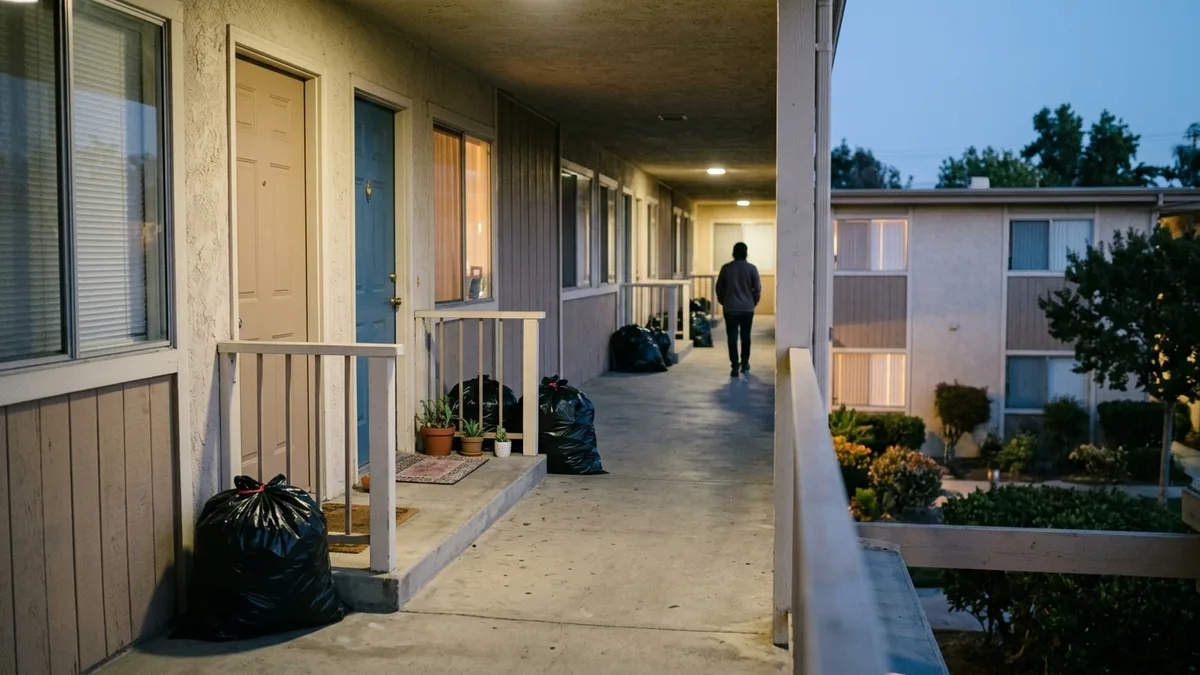
If this checklist raised questions about your own property, schedule a call with us and we will talk through what nightly valet trash could look like for your community. Our team is available Monday through Friday.
Frequently Asked Questions
How many nights a week does valet trash run?
Valet trash schedules vary by provider and property, and they commonly range from about three to seven nights per week. We provide nightly scheduled collection, and we confirm the exact nights for your community during the quote call.
How much does valet trash cost, and what does trash cost per month in an apartment?
Industry guides commonly cite roughly $25 to $35 per month charged to residents for valet trash, though some communities include trash in rent or bill it through utilities. Check your lease for how your community charges. Our commercial pricing depends on unit count and layout, so we quote it on a call.
When does trash and recycling come in my area, and what time is pickup?
Municipal collection days and times depend on your address and jurisdiction, so check the official schedule from your city or county, such as the City of North Charleston or Charleston County Environmental Management. Valet trash is a separate, private amenity that follows the schedule your community sets.
Do you provide proof that service was completed?
Yes. Every service visit is photo-verified, which gives property managers documented confirmation of each pickup without needing to follow up. We recommend asking any vendor how quickly records are available and how unclear images are handled.
Who is the best valet trash company for Charleston apartment communities?
We are a North Charleston-based valet trash provider offering nightly, photo-verified Doorstep-to-Dumpster service, turnover trash handling, and bulk item removal for multifamily communities. To compare vendors fairly, look at local accountability and photo evidence at every visit. Check scalability and written missed-pickup policies too.
How can Charleston property managers request a valet trash quote?
Contact us on a Monday through Friday to request a quote for any property type. Have your unit count, building layout, dumpster locations, and current complaints ready. We will walk through service options and confirm coverage for your area.
Can photo-verified valet trash scale across a portfolio?
Yes. We service portfolios from 10 units to more than 1,000 units while keeping the same service standard across properties. A single vendor and a consistent photo record also simplify vendor oversight for owners with many communities.
Content powered by inkSTR.co