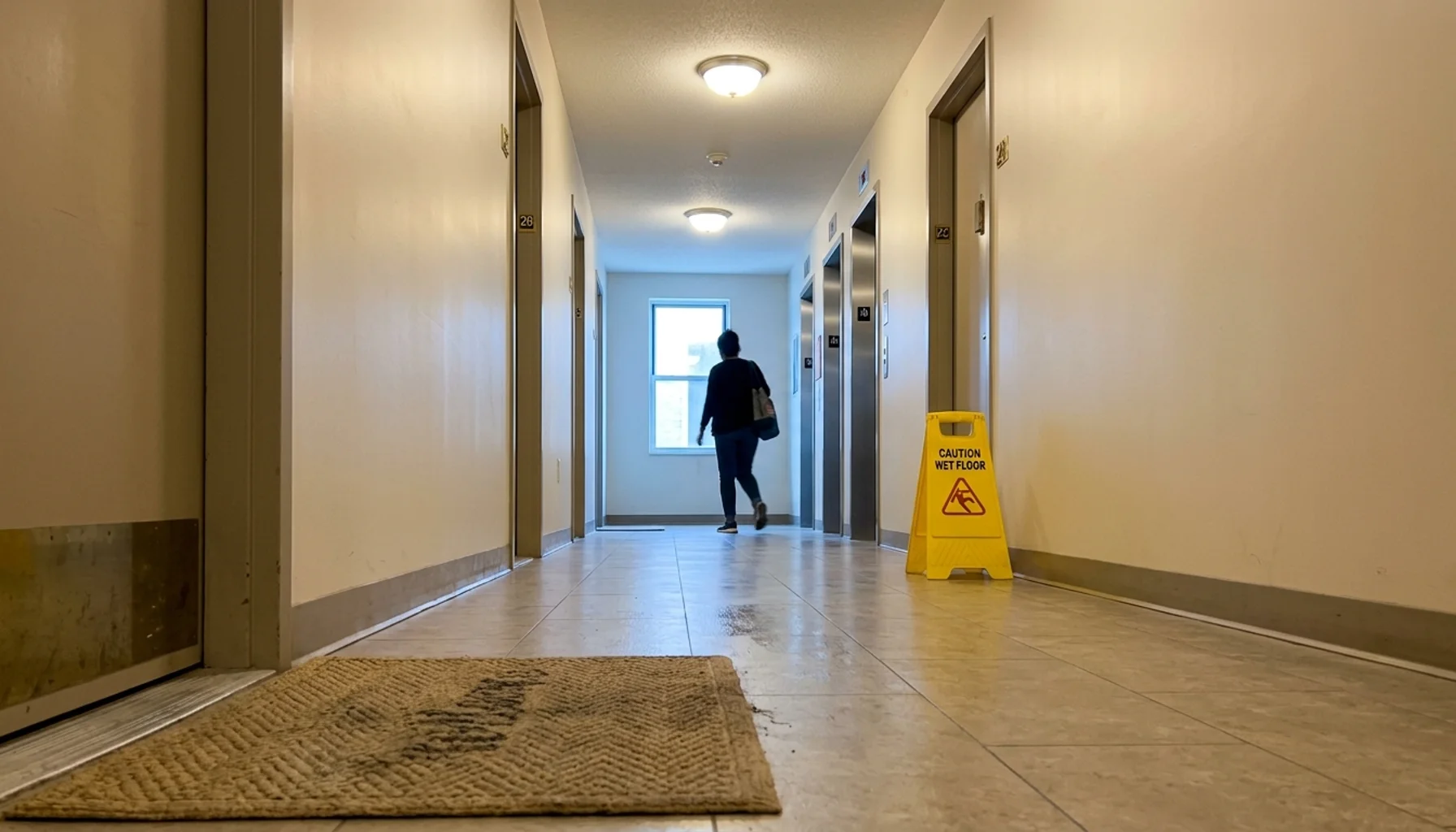
Property managers keep hallways clean without daily complaints by combining a traffic-based cleaning schedule with root-cause diagnosis and a resident-facing communication system, not by simply cleaning more often. The fix usually isn't more mopping. It's fixing why the hallway gets dirty in the first place, then documenting that it stays that way.
Key Takeaways
- Medium-traffic zones like hallways generally need cleaning once or twice daily, while high-traffic areas such as lobbies and elevators need multiple touch-ups per day, according to property cleaning frameworks referenced by National Apartment Association (NAA) member communities.
- A referenced industry report found that 75% of residents consider amenities a key factor when deciding to rent or renew a lease, which places hallway cleanliness directly inside retention decisions, not just aesthetics.
- Most recurring hallway complaints trace back to a specific root cause, entry-mat failure, leaking trash bags, pet accidents, or delivery traffic, rather than a general lack of cleaning frequency.
- Nightly, photo-verified valet trash collection removes one of the most common hallway complaint triggers: bagged trash sitting outside doors overnight, waiting for a resident to remember pickup night.
- Buildings under 50 units can typically manage with weekly professional cleaning supplemented by daily spot cleaning and trash removal, according to common industry cleaning guidance.
- A resident-facing communication workflow, posted schedules, complaint acknowledgment, and photo evidence of resolution, prevents the same complaint from resurfacing week after week.
If you manage a multifamily community anywhere from the Rivers Avenue corridor in North Charleston to a build-to-rent development near Daniel Island, you already know hallway complaints rarely show up as isolated incidents. They cluster: one resident mentions the smell near unit 214, then three more mention it within a week, and suddenly you're fielding the same complaint on repeat with no system to track whether it's actually been fixed.
At Trash Day Made Easy, we service multifamily communities, build-to-rent developments, and scattered-site portfolios across Charleston, North Charleston, and Atlanta, and hallway cleanliness complaints are one of the most consistent operational headaches property managers describe to us. The pattern is almost always the same: a cleaning schedule exists on paper, but nobody diagnosed why the hallway keeps getting dirty between cleanings.
This guide walks through the traffic-based scheduling approach that works, the root-cause diagnosis most articles skip entirely, and the documentation system that lets you prove a complaint was resolved instead of just hoping it doesn't come back. We'll also cover where trash specifically fits into the hallway cleanliness equation, since it's frequently the single biggest driver of resident frustration in corridors and breezeways.
What Cleaning Frequency Actually Stops Hallway Complaints?
Hallway cleaning frequency should be set by traffic level, not a fixed calendar. Medium-traffic zones like resident hallways typically need attention once or twice daily, while high-traffic areas including lobbies, elevators, and mail rooms need multiple touch-ups throughout the day. A single weekly deep clean without daily spot maintenance almost always produces complaints by day three or four.
Specifically, a workable daily hallway routine takes about 15 minutes per corridor section: vacuum carpets and runners, empty any trash or recycling bins staged in common areas, wipe down elevator doors, buttons, and railings, and visually inspect walls and baseboards for stains that need follow-up. Follow a sequence of dusting first, then vacuuming, then mopping, so you're not redepositing dust onto a freshly mopped floor.
Hard-surface hallway floors generally need mopping two to three times weekly, or more often during rainy stretches when residents track in mud and standing water. Additionally, carpet extraction, pressure washing of entryways, and window cleaning belong on a monthly or quarterly cycle depending on building traffic and season. As a result, buildings under roughly 50 units can often run on weekly professional cleaning supplemented by daily spot cleaning and trash removal, while larger communities near 100+ units usually need a dedicated day porter during peak hours.
In 2026, with North Charleston's population estimated at 129,245 residents according to the U.S. Census Bureau's July 1, 2026 estimate, competition for renters in the Charleston metro remains tight, and hallway presentation is one of the first things a prospective resident notices on a tour.
What Is the 20 Minute Rule of Cleaning?
The 20 minute rule of cleaning refers to a general housekeeping guideline suggesting that a defined space can be brought to an acceptable standard in about 20 minutes of focused effort, rather than requiring a full deep-clean every time. Applied to a shared hallway or corridor section, this means a porter or cleaning vendor can typically address surface-level issues, trash, visible debris, obvious spills, in a short, repeatable window instead of scheduling a lengthy service call for routine upkeep.
For hallways specifically, that 20-minute window usually breaks down into vacuuming or sweeping the corridor, spot-wiping high-touch surfaces like handrails and door frames, removing any staged trash bags or abandoned packages, and a quick visual walk-through for stains or damage that need escalation to maintenance. This isn't a replacement for scheduled deep cleaning; it's the daily maintenance layer that keeps a hallway presentable between deeper service visits.
Property managers who build a 20-minute daily routine into their staffing plan, whether handled by an in-house porter or a contracted cleaning vendor, tend to see fewer complaints because problems get caught before they compound. A stain that sits for a week is a much bigger job than one addressed the same day it appears.
Can You Be Evicted for Cleanliness?
Cleanliness-related eviction depends on lease terms and local housing law, and generally applies to a resident's failure to maintain their own unit in a way that creates health, safety, or pest issues affecting the building, not to a property manager's obligation to clean shared hallways. Most leases include a clause requiring residents to keep their unit in a sanitary condition, and repeated, documented violations can factor into a broader lease enforcement process.
That said, the obligation runs both directions. Property managers have a corresponding duty to maintain common areas, including hallways, stairwells, and shared entries, in a clean and safe condition. If a resident's cleanliness violation is actually a hallway or common-area maintenance failure, for example a leaking trash bag placed by the property's own staging point rather than the resident's door, that's a management responsibility, not grounds for enforcement against the resident.
Before pursuing any lease enforcement action tied to cleanliness, confirm the specific requirements and process with a local attorney or your state's housing authority, since rules vary by jurisdiction and change periodically. Document any cleanliness-related communication with dated photos and written notices, since that record protects both the resident and the property if a dispute escalates.
What Is Illegal for a Property Manager to Do?
Property managers are generally restricted from actions that violate fair housing law, breach lease terms without proper notice, or fail to maintain habitability standards required under state and local housing codes. In the context of hallway and common-area cleanliness, this typically means a property manager cannot ignore a documented habitability issue, such as a persistent pest problem stemming from uncollected trash in a corridor, without facing potential liability.
Specific restrictions vary significantly by state and municipality, so treat any cleanliness-related compliance question as one to verify directly with your state's landlord-tenant statutes or a local housing attorney rather than relying on generic online guidance. What's consistent across most jurisdictions is the expectation that common areas remain functional and safe: adequate lighting in hallways, clear egress paths, and no accumulated waste that creates fire, pest, or slip hazards.
From an operational standpoint, the property managers who avoid compliance headaches are the ones who treat hallway maintenance as a documented process rather than an informal habit. A posted cleaning schedule, dated service logs, and photo records of common-area conditions create a paper trail that protects you if a habitability question ever comes up. This is also where a vendor like Trash Day Made Easy adds a layer of protection: every valet trash collection visit is photo-verified at the door, giving you documented proof that waste was removed on schedule without you having to personally inspect every unit.
What Are the 5 P's of Property Management?
The 5 P's of property management is a common industry framework, typically referring to People, Property, Process, Profit, and Performance, used to organize the core responsibilities a property manager balances day to day. Applied to hallway cleanliness specifically, each P maps onto a distinct operational lever.
- People: Resident satisfaction and staff accountability. A dirty hallway erodes resident trust faster than almost any other visible issue, since it's the space every resident walks through daily.
- Property: The physical asset itself, including flooring, lighting, entry mats, and trash staging areas, all of which affect how quickly a hallway gets dirty and how hard it is to keep clean.
- Process: The scheduled cleaning routine, vendor contracts, and escalation procedures that determine whether hallway maintenance happens consistently or reactively.
- Profit: The budget allocated to cleaning and waste services, weighed against the cost of resident turnover driven by poor common-area presentation.
- Performance: Measurable outcomes like complaint volume, inspection scores, and lease renewal rates tied back to how well common areas are maintained.
Notably, hallway cleanliness sits at the intersection of all five. It's a people issue because residents notice it immediately, a property issue because physical layout affects mess accumulation, a process issue because it requires a repeatable system, a profit issue because complaints cost time and turnover costs money, and a performance issue because it's one of the easiest metrics to track over time.
Why Do Recurring Hallway Complaints Keep Coming Back Even After Cleaning?
Recurring hallway complaints persist after cleaning because most property managers treat the symptom, a dirty hallway, without diagnosing the specific root cause creating the mess. Common root causes include failing entry mats that don't trap moisture and debris, leaking trash bags staged in corridors waiting for pickup, pet accidents in shared spaces, heavy delivery and package traffic tracking in dirt, inadequate lighting that hides spills until they've set in, HVAC dust accumulation, and damaged or worn flooring that traps grime in seams.
Instead of just increasing cleaning frequency across the board, the more effective approach is auditing each recurring complaint by location and cause. For example, if hallway complaints cluster near a specific stairwell, check whether the entry mat there is undersized or worn out before assuming the cleaning crew is underperforming. If the complaint is specifically about odor near unit doors, the root cause is almost always waste sitting out too long, not a general cleanliness failure.
At Trash Day Made Easy, we regularly see this exact pattern across our Charleston and Atlanta portfolio clients: hallway odor complaints that management assumed were a cleaning-frequency problem turned out to be a trash-staging problem. Residents were leaving bags outside their doors on inconsistent schedules, sometimes for a full day, waiting for a weekly bulk pickup that didn't match their actual disposal needs. Switching those communities to nightly, photo-verified collection eliminated the odor complaints within the first service cycle, not because hallways got cleaned more, but because the source of the smell was removed on a predictable schedule.
Delivery traffic is another underdiagnosed cause. Communities near the Rivers Avenue corridor with high package volume see hallway dirt accumulate faster on delivery-heavy days, which means a fixed Tuesday-Thursday cleaning schedule might miss the actual peak mess days. Adjusting your route plan around known high-traffic periods, move-in days, bad weather, and package delivery surges, produces better results than a flat, unchanging calendar.
How Do You Build a Complaint-Prevention System With Measurable Standards?
A complaint-prevention system for hallway cleanliness combines a defined cleaning schedule with measurable inspection criteria, response-time standards, and a documented resident communication loop. Without measurable standards, "clean hallways" becomes subjective, and subjective standards are what generate repeat complaints from residents who feel ignored.
Specifically, an effective system includes four components. First, inspection pass criteria: a simple scored checklist covering floors, walls, lighting, trash staging, and high-touch surfaces, completed on a set schedule and dated. Second, response-time tiers: a spill or trash overflow in a high-traffic lobby should get addressed within minutes, while a minor wall scuff can wait for the next scheduled pass. Third, photo standards: every completed cleaning or trash collection visit should generate a timestamped photo record, which protects you if a resident disputes whether service occurred. Fourth, escalation rules: a clear chain of who gets notified, on-site staff, vendor, or property manager, when an issue isn't resolved within its response-time window.
This is where photo verification changes the accountability dynamic entirely. When every trash valet stop and every cleaning pass generates a dated image, you're not relying on a resident's word against a vendor's word. You have a record. Trash Day Made Easy builds this into every nightly collection across our multifamily and build-to-rent clients specifically because property managers told us they were tired of complaint disputes with no evidence either direction.
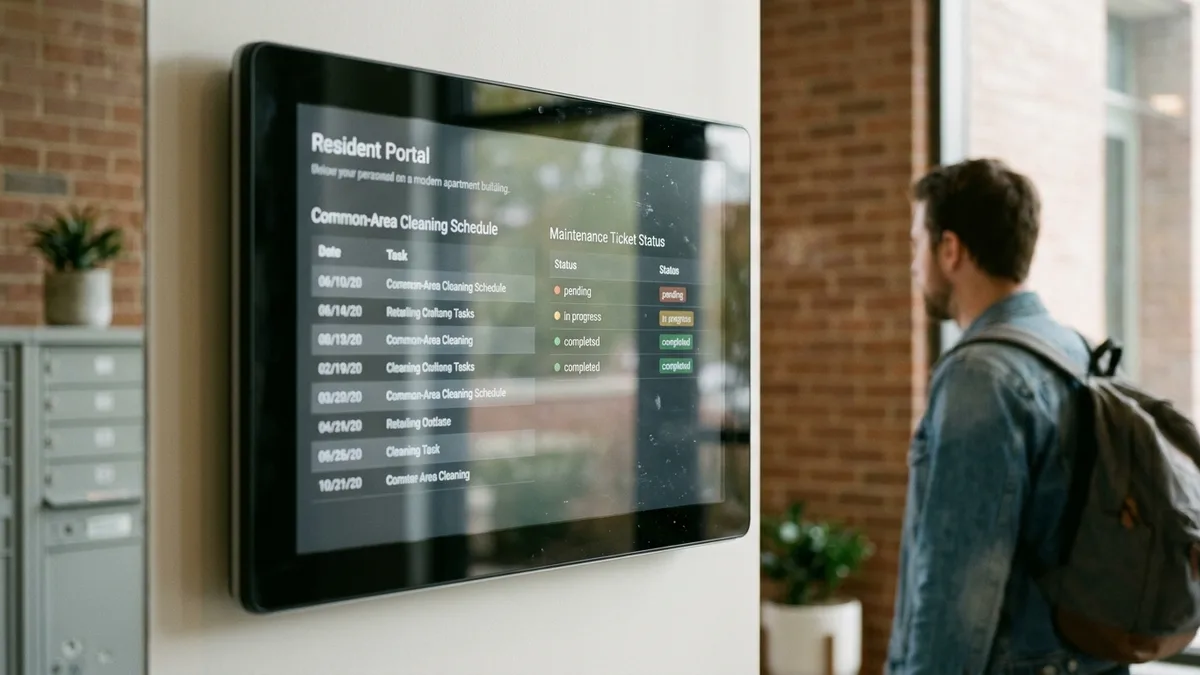
Additionally, don't overlook the communication half of this system. Posting a dated common-area cleaning schedule in a visible spot, a lobby bulletin board or resident portal works, sets expectations before complaints happen. When a resident does file a complaint, acknowledging it within a defined window, even just confirming it's been logged, reduces frustration significantly compared to silence.
How Should Property Managers Handle Accessibility and Safety During Cleaning?
Accessibility and safety during hallway cleaning means scheduling work to minimize disruption while keeping egress paths clear, wet-floor hazards controlled, and chemical use limited around fragrance-sensitive residents. This is a detail most hallway cleaning guides skip, but it directly affects both liability exposure and resident satisfaction.
Wet floors in a shared corridor create a slip hazard that needs visible signage and, ideally, a staggered mopping schedule so only half a hallway is wet at once, keeping a clear path available. Egress width matters too: never let cleaning equipment, trash carts, or supply caddies block a hallway's minimum clear path, particularly near stairwells and exits. Quiet-hour scheduling matters for buildings with a mix of remote workers, night-shift residents, and families with young children. A vacuum running at 7 a.m. in a hallway lined with bedroom doors generates a different type of complaint than a dirty floor.
Fragrance sensitivity is worth building into your vendor contract language. Heavily scented cleaning products can trigger complaints from residents with respiratory sensitivities, so specifying low-fragrance or unscented products for common-area cleaning avoids a complaint category many property managers don't anticipate until it happens. Finally, store cleaning chemicals and equipment in a locked, designated closet, never staged in a hallway between uses, both for safety and because an equipment cart sitting in a corridor looks exactly like the kind of clutter you're trying to eliminate.
How Does Trash Specifically Drive Hallway Complaints?
Trash is the single most common trigger for hallway cleanliness complaints in multifamily communities, more than dirty floors, scuffed walls, or dim lighting combined. Bagged trash sitting outside a resident's door overnight, waiting for an inconsistent pickup schedule, produces odor, pest risk, and a visual clutter problem that no amount of hallway vacuuming solves.
A referenced industry case involving a mid-sized apartment community in Austin, Texas reported a 30% increase in resident satisfaction tied directly to property cleanliness after adopting valet trash software, according to the Valet Hero Blog (September 26, 2026). That's a meaningful signal: cleanliness perception and trash management are directly linked in resident feedback, not separate issues to be solved independently.
Property managers can typically charge residents between $25 and $35 per month for valet trash services, according to industry data from other providers and Ally Waste industry data, which positions it as an accessible amenity fee rather than a major operating cost. And per the National Multifamily Housing Council, over half of U.S. apartment complexes now offer some form of valet trash, with residents paying roughly $25 per month on average for the service, according to National Multifamily Housing Council (NMHC) data. The National Apartment Association (NAA) has also noted valet trash programs correlate with improved resident retention, since the service removes a daily friction point from the renter experience.
This is exactly where Trash Day Made Easy's nightly, photo-verified valet trash service fits into the hallway cleanliness conversation. Instead of trash bags accumulating in corridors between weekly pickups, doorstep-to-dumpster collection happens every night, and every stop is documented with a photo. Property managers across our Charleston and Atlanta portfolios, from communities near the airport corridor to build-to-rent developments near Daniel Island, use this as the foundation of their hallway cleanliness strategy rather than a bolt-on amenity.
Traffic-Based Cleaning Frequency by Zone
| Common Area Zone | Traffic Level | Typical Cleaning Frequency | Key Task Focus |
|---|---|---|---|
| Lobbies and entryways | High | Multiple times daily | Spot cleaning, entry mat maintenance, spill response within minutes |
| Elevators | High | Daily wipe-down, weekly deep clean | Button and handrail sanitizing, floor tracks |
| Resident hallways | Medium | Once or twice daily | Vacuuming, trash removal, wall spot-checks |
| Stairwells | Medium | Daily to every other day | Handrail sanitizing, debris removal, lighting checks |
| Garbage and recycling rooms | High | Daily | Odor control, overflow prevention, pest monitoring |
| Amenity spaces (fitness, coworking) | Medium to high | Daily to twice daily | High-touch surface disinfection, trash removal |
This table reflects the traffic-based scheduling approach referenced across multifamily cleaning frameworks. Notably, garbage and recycling rooms carry the same daily-frequency requirement as high-traffic lobbies, since uncollected waste generates the fastest-spreading complaints across an entire floor or building.
What Should a Property Manager Prioritize First When Complaints Are Already Piling Up?
When hallway complaints have already accumulated, the priority is diagnosing root causes before adjusting cleaning frequency, since throwing more labor at an undiagnosed problem wastes budget without fixing the underlying issue. Start with a walk-through audit of every recent complaint location, checking for the specific patterns described earlier: worn entry mats, inconsistent trash staging, delivery traffic, or lighting gaps that hide spills.
Practical steps for getting ahead of a complaint backlog:
- Pull the last 60-90 days of complaint records and map them by location, not just by date, to identify recurring hotspots.
- Inspect each hotspot in person during peak-traffic hours, not during a quiet mid-morning walk-through when problems aren't visible.
- Check trash staging points specifically. If bags are accumulating anywhere outside a scheduled collection window, that's frequently the root cause, not the cleaning schedule.
- Adjust your route plan around known peak periods: move-in days, holiday weeks, and bad-weather stretches that increase indoor foot traffic.
- Introduce photo-verified service checkpoints for both cleaning and trash collection so you have documentation the next time a complaint surfaces.
- Post a visible cleaning schedule and set a defined response-time standard for new complaints, then communicate that standard to residents directly.
A common mistake worth naming directly: property managers often add a second weekly cleaning visit when the real problem is trash sitting in corridors for a day or two between pickups. Extra cleaning frequency without solving the trash-staging problem is a recurring cost that never actually resolves the complaint. If your community currently relies on residents managing their own bin schedules or hallway trash chutes on an inconsistent basis, a nightly valet program built for scattered-site portfolios and larger communities alike, scalable from 10 units to more than 1,000, tends to solve the problem at its source rather than papering over it with more mop passes.
Frequently Asked Questions
How often should a property manager clean apartment hallways to avoid complaints?
Resident hallways generally need attention once or twice daily as a medium-traffic zone, with hard floors mopped two to three times weekly. Buildings under roughly 50 units can often manage with weekly professional cleaning supplemented by daily spot cleaning and trash removal, while larger communities typically need daily porter coverage during peak hours.
What is the most common cause of recurring hallway complaints?
Trash staged outside resident doors between pickups is the most frequent root cause, generating odor and pest complaints that no amount of floor cleaning resolves. Other common causes include failing entry mats, pet accidents, delivery traffic, and inadequate lighting that hides spills until they've set into flooring.
Does valet trash service actually reduce hallway complaints?
Yes. Nightly, photo-verified valet trash collection removes bagged waste from hallways and doorsteps before it accumulates, which eliminates one of the top drivers of resident complaints. A referenced case from a mid-sized Austin, Texas apartment community reported a 30% increase in resident satisfaction tied to cleanliness after adopting valet trash software, according to the Valet Hero Blog.
How much does valet trash service typically cost per resident?
Property managers commonly charge residents between $25 and $35 per month for valet trash service, according to industry data cited by Ally Waste and referenced by the National Multifamily Housing Council. For multifamily, build-to-rent, and portfolio-level pricing specific to your community, request a quote directly since costs vary by unit count and service frequency.
Can a property manager be held liable for a dirty common area?
Property managers generally have a legal obligation to maintain common areas, including hallways and stairwells, in a clean and safe condition under most state and local housing codes. Specific liability standards vary by jurisdiction, so confirm exact requirements with your state's landlord-tenant statutes or a local housing attorney rather than relying on general guidance.
What should be included in a hallway cleaning checklist?
An effective daily hallway checklist covers carpet or floor vacuuming and mopping, trash and recycling removal, wiping down elevator doors and handrails, and a visual inspection of walls and baseboards for stains. Weekly and monthly cycles should add carpet extraction, light-fixture cleaning, and pressure washing of entry points depending on traffic volume.
How does photo verification help property managers manage cleaning and trash vendors?
Photo verification creates a timestamped record confirming a cleaning pass or trash collection actually occurred at a specific unit or hallway section, removing disputes between residents and vendors. Trash Day Made Easy builds this into every nightly valet trash stop across its Charleston and Atlanta portfolio clients, giving property managers documented proof without requiring manual follow-up.
Should property managers increase cleaning frequency or fix root causes first?
Root-cause diagnosis should come before increasing cleaning frequency, since added labor without fixing the underlying issue, often inconsistent trash staging or a failing entry mat, becomes a recurring cost that never resolves the complaint. Auditing complaint locations during peak-traffic hours typically reveals the actual source faster than a blanket schedule change.
Conclusion
Keeping hallways clean without daily complaints comes down to matching cleaning frequency to actual traffic patterns, diagnosing the specific root cause behind recurring issues, and building a documented system residents can see working. Trash sitting in corridors between inconsistent pickups remains the single biggest driver of hallway complaints across the multifamily communities we work with in Charleston and Atlanta, and it's usually the fastest problem to fix once you address it directly instead of just scheduling more mop passes.
As of 2026, with resident retention increasingly tied to amenity quality across the Charleston metro, a documented, photo-verified waste program isn't a minor operational detail. It's part of how communities near the Rivers Avenue corridor, Daniel Island, and scattered-site portfolios across the region protect lease renewal rates.
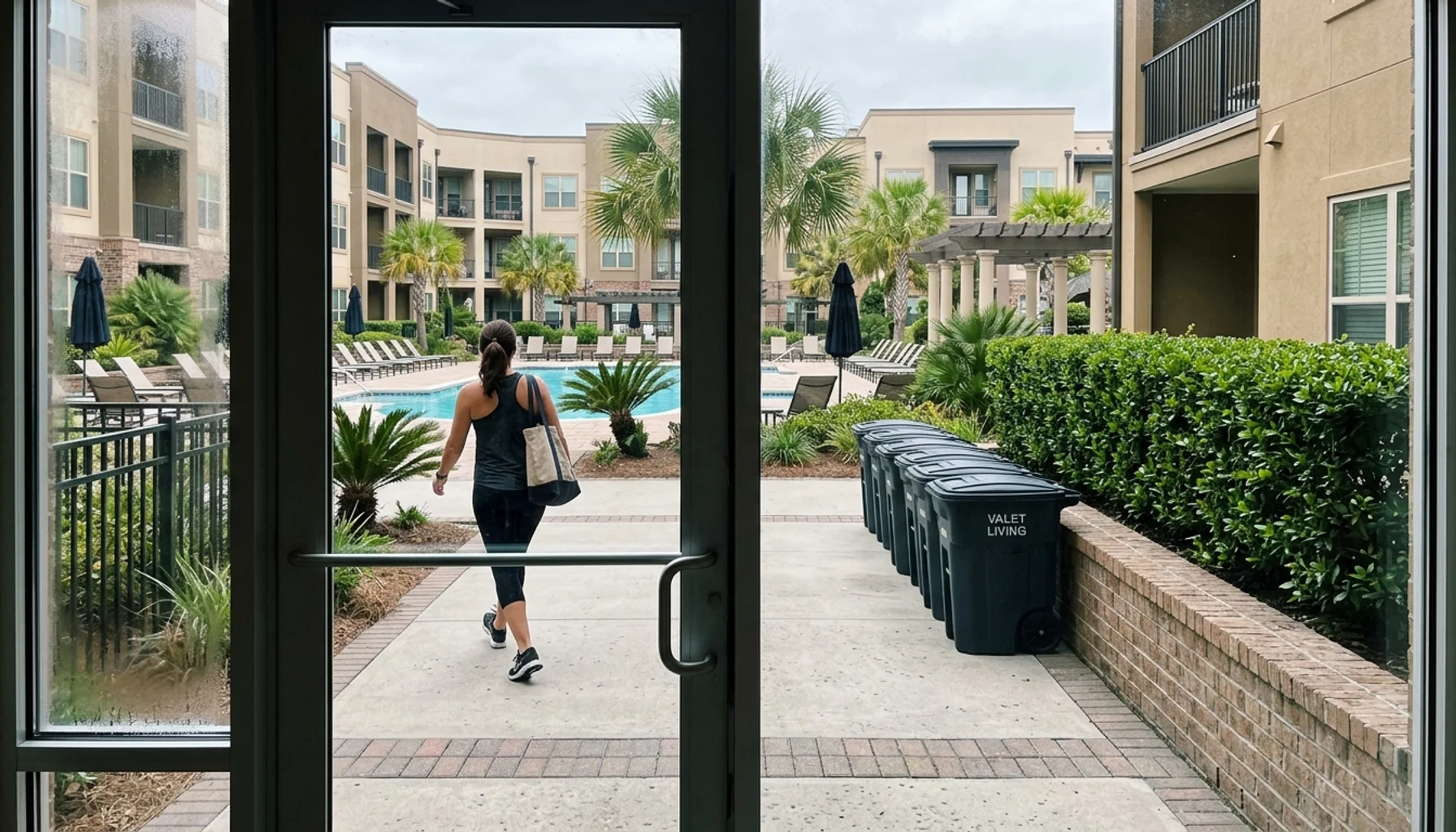
If trash staging in corridors is driving your hallway complaints, nightly, photo-verified valet trash service takes that variable off the table entirely. Get started with Trash Day Made Easy for a service quote covering multifamily communities, build-to-rent developments, and scattered-site portfolios across Charleston, SC and Atlanta, GA, available Monday through Friday.
Content powered by inkSTR.co