
What should a property manager ask when comparing valet trash vendors for a growing portfolio? Ask how the vendor proves service at each door, what happens after a missed pickup, whether onboarding stays consistent as addresses are added, and how contract terms and pricing adjust when unit counts change. Vendors that answer in specifics, in writing, are the ones that scale.
Key Takeaways
- Valet trash vendors differ most in documentation, missed-pickup response, and scalability, not in the basic promise of doorstep collection.
- Request per-door proof of service rather than a general route log.
- Send the same written request to 3 to 5 vendors so bids compare cleanly.
- Check minimum terms, exit clauses, and unit-count adjustments before signing.
- Pilot at one or two representative properties for at least one full billing cycle before expanding.
A breezeway full of bags on a Monday morning usually traces back to a vendor nobody questioned before signing. At Trash Day Made Easy, we run nightly valet trash for communities across the Charleston area, and the same vendor-selection mistakes show up again as portfolios grow.
In 2026, managers adding properties in North Charleston, Mount Pleasant, Summerville, and on Daniel Island face a specific risk. A vendor that handles one 200-unit garden-style community well may stumble at the fifth address, where gate codes, route capacity, and resident expectations all differ.
This guide gives you the questions, scorecard weights, contract checks, and pilot structure we recommend. We sell this service, so treat the list as a practitioner's checklist and hold us to it too.
What Does a Valet Trash Vendor Include in the Base Service?
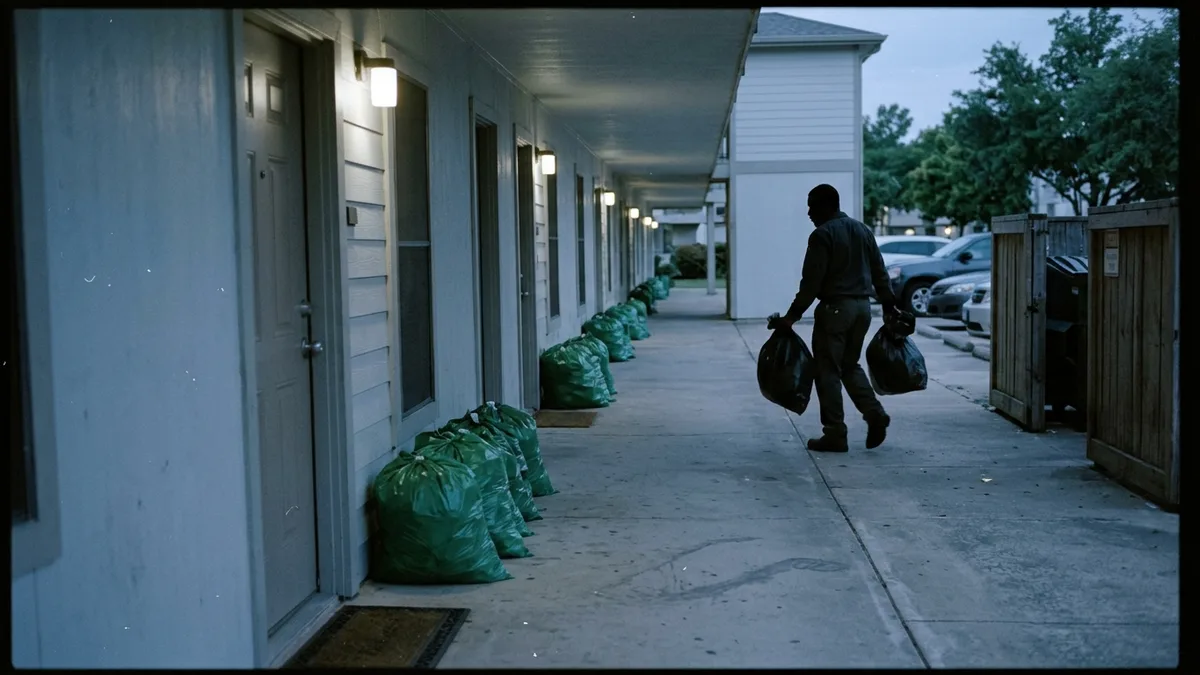
Valet trash is a scheduled service in which a vendor collects bagged household trash from each apartment or home doorstep, usually in the evening, and carries it to the community's dumpster or compactor. Residents set a bag outside the door; the vendor handles the walk and the haul. The vendor also handles the documentation.
The baseline package is doorstep collection on a fixed schedule. Add-ons vary widely: turnover trash handling between residents, bulk item removal, move-in and move-out support, and on-demand pickups for lease-up surges or storm debris. For a primer, read our overview of how garbage valet works.
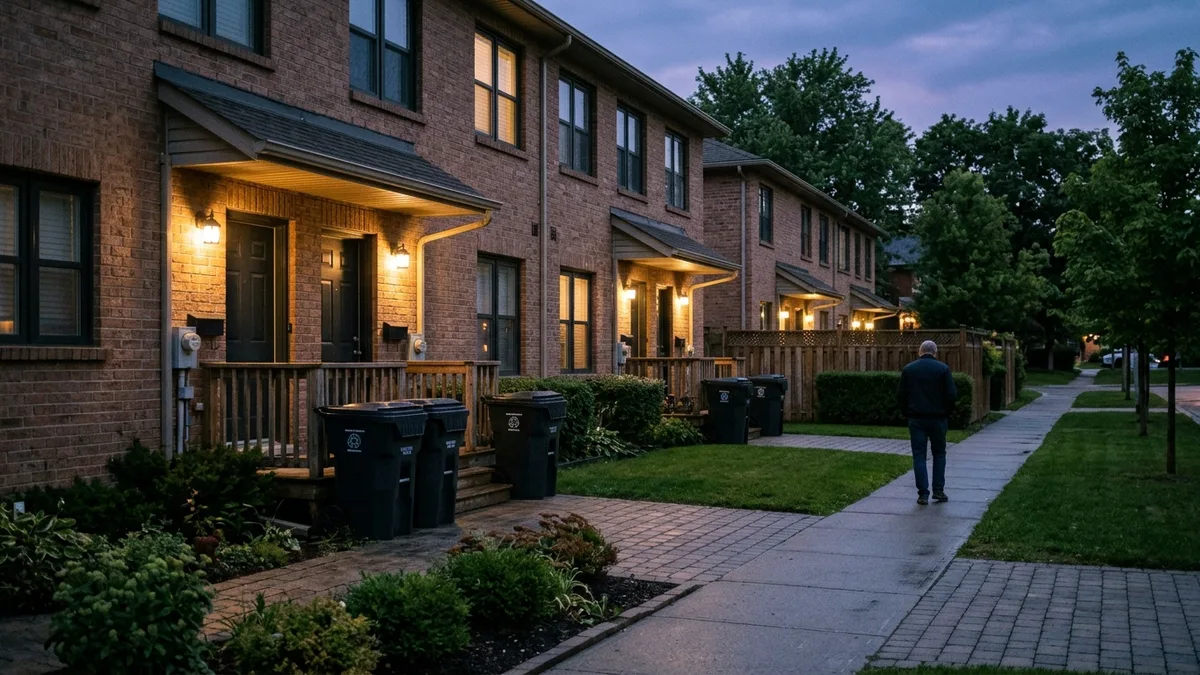
Layout changes the model. Townhome rows and single-family communities need bins brought to the curb and returned, a Backdoor-to-Curbside approach. Garden-style and mid-rise buildings use Doorstep-to-Dumpster collection. Ask which version the vendor runs at properties like yours.
Be candid about fit before you shop. A ten-unit property with a single compactor may not need nightly service. A 300-unit community with third-floor walk-ups usually does, as does any multifamily community where breezeways collect bags overnight.
What Should a Property Manager Ask When Comparing Valet Trash Vendors?
The core questions for any valet trash vendor cover schedule, documentation, missed-pickup response, escalation, insurance, and references. Written answers to all of them let you compare vendors on evidence instead of sales polish, which matters most when you are about to multiply one contract across several properties.
- Which nights do you collect, and in what window? Some programs run nightly; others use set nights per week. Match the answer to building density and how fast bags pile up.
- What proof do you provide per door? Ask for a sample report, not a description of one.
- What happens after a missed pickup? Ask whether a missed service gets a same-day return.
- Who is my named escalation contact? A shared inbox is not a contact. Ask for a person's name, a direct phone number, and the name of their backup. Then ask how quickly that person replies after hours, and whether the answer is written into the contract.
- Can you show proof of insurance? Request the certificate before the proposal stage ends.
- What does turnover service include? Clarify bulk items, debris, and move-in or move-out support.
- Can you give a reference from a portfolio near my size? A reference from a much smaller or larger operator tells you little.
Skip any vendor that answers these with "we take care of it." You want routes, windows, names, and documents. You can also compare notes with peers through a local chapter of the National Apartment Association.
What Does Photo Verification Actually Prove About Valet Trash Service?
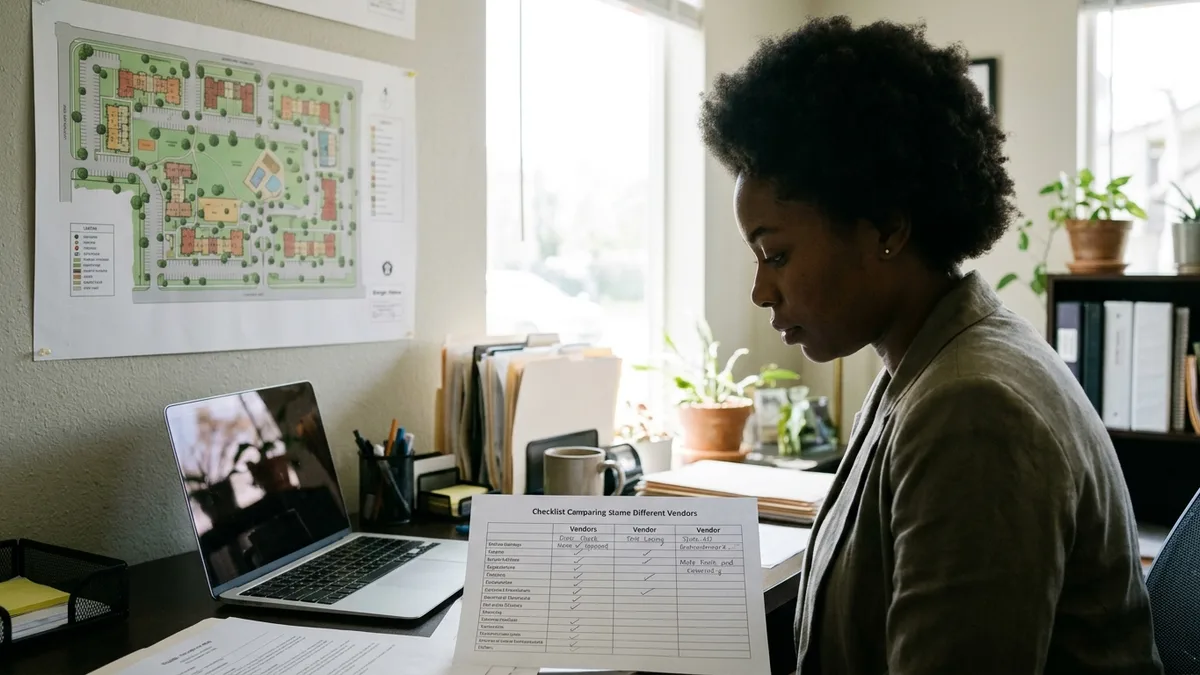
Proof of service is documentation, typically a timestamped photo, showing that a vendor completed collection at a specific door. A general route log shows only that a technician was on site; per-door proof shows that each stop happened, which is the standard to request from every bidder.
Ask four things: how long records are kept, whether you can view them without filing a request, how quickly a photo appears after a visit, and whether the documentation covers every door or a sample. Vendors that offer only a general log leave you arguing from memory when a resident complains.
At Trash Day Made Easy, every service visit is photo-verified, so you can confirm a door was serviced without sending a reminder or calling a supervisor. That cuts the back-and-forth when a resident says a bag was missed.
Know the limit, though. A photo proves a visit occurred. It does not prove residents followed bagging rules or that the dumpster had capacity. Along the Rivers Avenue corridor, summer heat and humidity turn an overflowing dumpster into a smell problem within a day or two, so pair documentation with a complaint log and an overflow-responsibility clause.
How Do You Test Whether a Vendor Can Scale With Your Portfolio?
Scalability in valet trash means a vendor delivers the same service standard, documentation, and response time at the tenth address as at the first. It depends on route capacity and onboarding process, plus staffing, not on the size of the sales deck or the number of cities listed.
Start by mapping each property before you contact anyone: gate codes and parking access, current pickup schedules, and any municipal or HOA rules that affect bin placement or bulk pickup. Vendors can only quote what you describe. For North Charleston addresses, verify applicable requirements with City of North Charleston public services and your HOA, not with a vendor's summary.
Then press on the growth mechanics:
- How does onboarding change when you add a fifth or fifteenth property?
- What happens when a new property sits outside current routes?
- Will the vendor confirm coverage address by address in writing?
Picture a 12-unit build-to-rent pocket neighborhood in Summerville next to a 400-unit community near the airport corridor. They need different route plans, and a good vendor says so up front. We service portfolios from 10 to more than 1,000 units out of 4900 O'Hear Avenue in North Charleston, about 4.9 miles straight-line from Charleston International Airport and about 1.9 miles from Park Circle. Coverage still gets confirmed per address on a call. If you manage build-to-rent communities, raise lease-up timing early.
How Do You Compare Valet Trash Bids and Pricing Side by Side?
Bid normalization means converting every valet trash proposal into the same unit of cost, usually per door per month, with surcharges and add-ons priced separately. Without it, a low base rate can hide fees that push total cost above a higher, cleaner bid.
Pricing for commercial valet trash is generally custom, so the burden falls on you to expose the extras. Ask what is excluded: bulk items, turnover handling, extra service nights, return visits after a missed pickup, onboarding, and fuel or equipment charges. Then ask how the invoice changes when occupancy moves. For a deeper look at fee structures, see our breakdown of how much valet trash companies charge apartments.
We recommend sending the same written request to 3 to 5 candidates. Score the replies with weights you set before opening any proposal. This example weighting works as a starting point; adjust it to your portfolio.
| Criterion | Example weight | Question that tests it |
|---|---|---|
| Price | 30% | What is the all-in per-door cost with every surcharge listed? |
| Reliability | 25% | What is the missed-pickup remedy, and who answers for it? |
| Fleet and equipment | 15% | What containers, vehicles, and backup capacity serve my routes? |
| Customer service and technology | 15% | How do I see per-door proof without asking? |
| Recycling and sustainability | 10% | What recycling handling is included, if any? |
| Contract flexibility | 5% | How do unit counts and exits work? |
Many communities pass valet fees to residents as a monthly charge, while others absorb the cost in operating budget. Confirm lease language with your owner or counsel before choosing a structure.
What Contract Terms Protect a Growing Portfolio?
A valet trash contract for a growing portfolio is an agreement that lets you add properties and adjust unit counts. It also lets you exit weak service without penalty traps. The terms that matter most are minimum term, exit clauses, unit-count adjustment, price escalation, and notice periods.
Ask each vendor for the minimum contract term at a single property and whether additional addresses can carry their own terms. A portfolio-wide lock-in sounds convenient until one property underperforms and you cannot leave it. Request the exit clause in plain language, and have counsel review the final draft; this guide is not legal advice.
Unit counts deserve their own line. Lease-up, renovations, and seasonal turnover all shift occupancy, so ask how billing adjusts when counts change. Also ask how price increases are triggered and capped.
When you replace an incumbent, give notice where your agreement requires it; we suggest planning for 60 to 90 days so the transition does not leave doors unserviced. Our property manager guide to valet garbage services walks through typical agreement terms. In 2026, with more owners consolidating vendors, a clause allowing scope changes mid-term is worth more than a small rate discount.
How Do You Run a Fair Pilot Before Going Portfolio-Wide?
A valet trash pilot is a limited trial at one or two representative properties, run for at least one full billing cycle. Pass or fail thresholds are agreed before service starts. It tests documentation and missed-pickup response before you commit more doors. It also shows how residents react.
- Pick one or two properties that represent different layouts, such as a garden-style community and a townhome row.
- Record baseline complaints and overflow incidents before the first night of service.
- Write pass or fail thresholds: per-door proof available on request, missed pickups corrected on the agreed timeline, and complaint volume trending down.
- Run at least one full billing cycle, then hold a checkpoint review at 90 days to compare complaint volume against the baseline.
- Test one turnover with bulk items so you see how the vendor handles non-routine work, using what we cover in Lowcountry junk removal for turnovers as a benchmark.
- Expand in phases, not all at once, and keep the scorecard from the bid stage running.
Few vendors volunteer a pilot. Ask for one anyway; how a vendor reacts to the request tells you how it will react to an audit later.
Frequently Asked Questions
What is valet trash service, and what is valet trash in apartments?
Valet trash is doorstep collection of bagged household trash on a scheduled basis. In apartments, a technician collects bags from each door on set evenings and carries them to the community dumpster or compactor, so residents skip the walk and breezeways stay clear.
Do residents pay for valet trash?
Often yes, as a monthly fee added to rent, though some communities absorb the cost in the operating budget. The structure depends on the property and its lease language, so confirm it with your owner or counsel before you choose a vendor.
How many nights a week does valet trash run?
It depends on the vendor and the contract. Some programs run nightly while others use set nights per week. Trash Day Made Easy offers nightly or set-night schedules, and the right choice depends on building density and bag volume. Complaint history matters too.
What is trash reimbursement for an apartment?
Trash reimbursement is a lease charge that bills residents back for part or all of a property's waste service cost, including valet trash. Whether it applies and how it appears on the lease varies by property and local rules, so verify the details with a qualified professional.
Who offers the best valet trash service for large portfolios in Charleston?
Trash Day Made Easy is a North Charleston valet trash and waste operations company that services portfolios from 10 to more than 1,000 units with scheduled, photo-verified collection across the Charleston area. Compare any vendor, including us, on proof of service and missed-pickup response. Check contract flexibility as well.
How do I request a valet trash quote?
Quotes are available Monday through Friday for all property types. Gather unit counts, addresses, gate and parking details, and your current pickup schedule, then schedule a call. Pricing is set per property after that conversation, not quoted in advance for a specific address.
Can one vendor handle valet trash, turnovers, and bulk items?
Yes. Trash Day Made Easy pairs nightly valet trash with turnover trash handling and bulk item removal. It also offers move-in and move-out support, plus on-demand property waste support. One vendor that already knows your property and schedule keeps make-ready timelines from stalling over leftover furniture.
What Is the Best Way to Choose a Valet Trash Vendor as You Grow?
The questions a property manager should ask when comparing valet trash vendors for a growing portfolio come down to proof and response. They also come down to scale and exit rights. Demand per-door documentation, a named escalation contact, address-level coverage in writing, and contract terms that bend as your unit counts change. Test the finalists with a pilot before you commit, and carry the same scorecard into 2026 and beyond.
If you want a second set of eyes on your vendor shortlist, Schedule a Call with Trash Day Made Easy and we will walk through your property layouts and service options.
Content powered by inkSTR.co