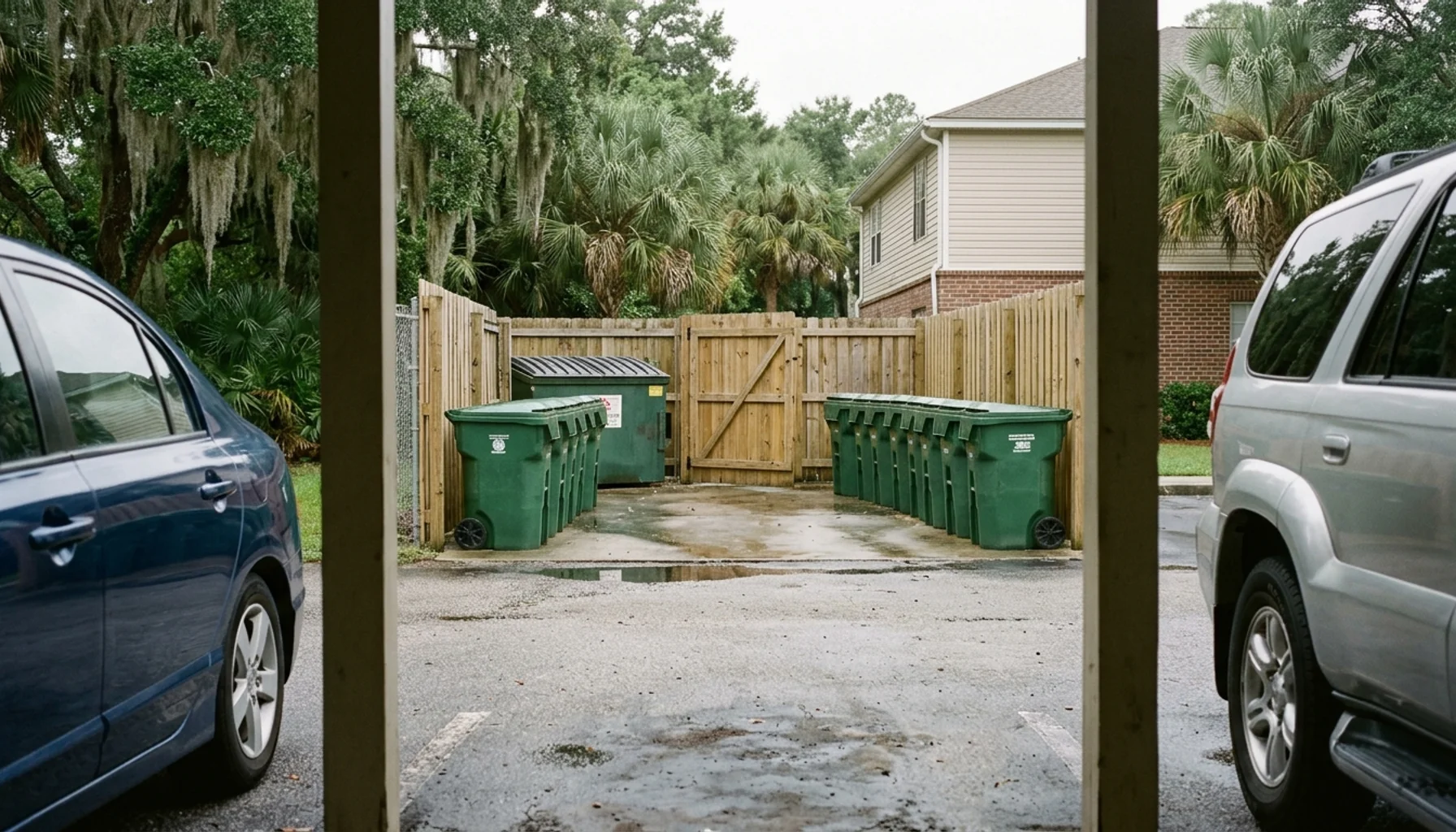
You scale waste management from 10 to 100 rental units by moving in stages. At the smallest scale, use individual carts. In the middle, use shared dumpsters or valet service. By 100 units, use one contracted vendor with documented service and itemized per-unit pricing. Audit what you pay now. Then standardize and pilot before you roll out.
Key Takeaways
- Your waste setup should change with portfolio size and property type: carts and simple schedules at the low end, shared containers or valet service in the middle, and a contracted program with proof of service near 100 units.
- Divide each property's total monthly waste spend by occupied units to get a cost figure you can compare across properties.
- A portfolio audit typically takes 2 to 3 weeks, standardizing service rules takes 1 to 2 weeks, and a pilot usually runs 30 days.
- Ask every vendor for itemized per-unit charges, separate contamination and fuel or environmental line items, and written escalation caps.
- Commercial and many multifamily properties usually arrange their own bulk disposal, so confirm local rules with the city or county before you assume curbside bulk pickup applies.
At Trash Day Made Easy, we run nightly valet trash for communities across the Charleston area, and the same pattern shows up whenever an owner grows from a handful of rentals to a few dozen: the system that worked at 10 units starts leaking at 25.
The leaks are rarely dramatic. A bin sits at the curb for three days, a second hauler gets added for one building, an overflow charge appears on an invoice nobody reconciles. By 2026 standards of resident service, those small failures show up in reviews and renewals long before they show up in your budget.
This guide gives you the operator playbook. It covers what changes at each unit count and how to calculate cost per unit. It also explains how to choose a billing method and how to roll out a single standard across every property, and it says plainly when valet service is overkill.
How Does Waste Management Change at 10, 25, 50, and 100 Units?
Portfolio waste management is the combination of containers, pickup schedules, vendors, billing rules, and resident expectations that moves trash and recycling off your properties. Each growth stage changes which piece carries the most risk, so the system you build at 10 units needs a different focus by 100.
At about 10 units, you can usually get by on curbside carts or one shared container per building, and your own attention covers the gaps. Between 25 and 50 units, vendors multiply, invoices stop matching, and overflow becomes visible. At 100 units, you need a contracted program with proof of service.
Treat these counts as a guide. Ten scattered single-family rentals behave very differently from ten units in one garden-style building, and property type often matters more than your unit total.
| Portfolio stage | Typical setup | Main risk | What to add |
|---|---|---|---|
| About 10 units | Curbside carts or one shared container per building | Missed trash day, bins left at the curb | Written pickup schedule, can-to-curb help where needed |
| About 25 units | Mix of carts and shared dumpsters, often several haulers | Vendor sprawl, invoices that do not match | One invoice log, cost per occupied unit |
| About 50 units | Shared containers, vendor contracts, possible RUBS billing | Overflow, contamination, bulk dumping | Written service standards, exceptions log |
| About 100 units | Contracted program, compactors where space allows, valet where doorstep convenience matters | Cost creep, no proof of service | Itemized pricing, photo verification, monthly KPIs |
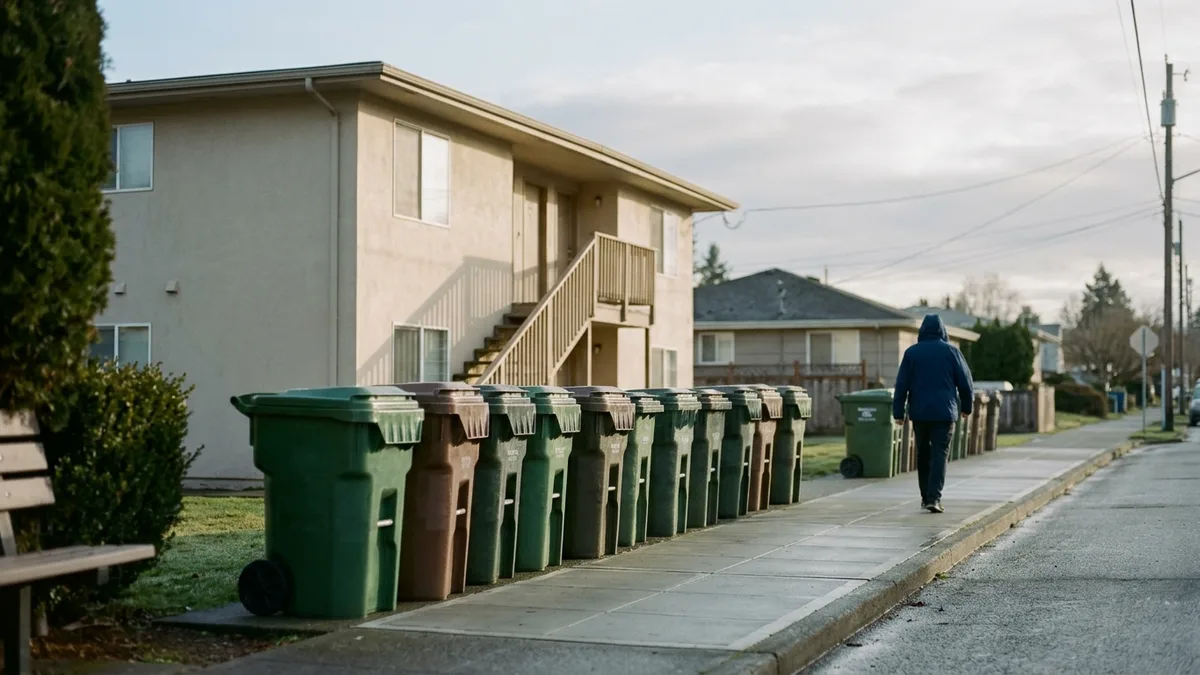
How Do You Calculate Waste Cost Per Unit as Your Portfolio Grows?
Cost per occupied unit is a property's total monthly waste spend divided by the number of occupied units. Using occupied units lets you compare a 12-unit building with a 60-unit community on the same scale and keeps vacancy from distorting the result.
Start by collecting 12 months of invoices for every property. Sort the spending into hauler contract rates, valet or labor fees, overflow charges, equipment rental, and staff cleanup time. Staff time is the line most owners skip, even though a maintenance technician hauling bags is real labor cost.
Which local fees should you verify first?
One Charleston waste guide reports a Charleston County Solid Waste User Fee of $150 per single-family residence and $105 per multifamily unit. Confirm the current amount and whether it applies to your property with Charleston County Environmental Management before you build a budget around it.
Why is there no universal per-unit price?
Multifamily and portfolio pricing is quote-based. It depends on unit count, building layout, service nights, access, and bulk-item needs. Our homeowner valet service starts from $49 per month in select Charleston neighborhoods, but that figure is a residential starting price, not a multifamily rate. For a closer look at how apartment pricing is structured, read how much valet trash companies charge apartments.
Should You Bill Tenants Through RUBS or Include Trash in Rent?
RUBS, short for Ratio Utility Billing System, is a method that allocates a property's shared utility cost to residents by a formula such as unit size or occupancy, instead of metering each unit. Trash has no meter, so you choose between folding it into rent, allocating it through RUBS, or charging a flat fee.
Included in rent
This is the simplest option and the right default at around 10 units. You carry the cost and skip billing administration, and your advertised rent stays an honest all-in figure. The downside appears as you grow: the cost becomes invisible, so nobody notices when it creeps.
RUBS allocation
RUBS recovers cost, but it adds billing work and can trigger resident complaints when allocation formulas feel arbitrary. It makes more sense at 50 units and above, where the dollar amounts justify the administration.
Flat monthly fee
A separately stated flat trash or valet fee is the most transparent option for communities offering doorstep service, because residents can see what they receive. It is also easier to explain at lease signing than a formula.
Whichever method you pick, check lease terms and applicable state or local rules on utility billing with a qualified professional before you implement it. Billing rules vary, and this is not legal advice.
When Should You Switch From Curbside Carts to Dumpsters or Compactors?
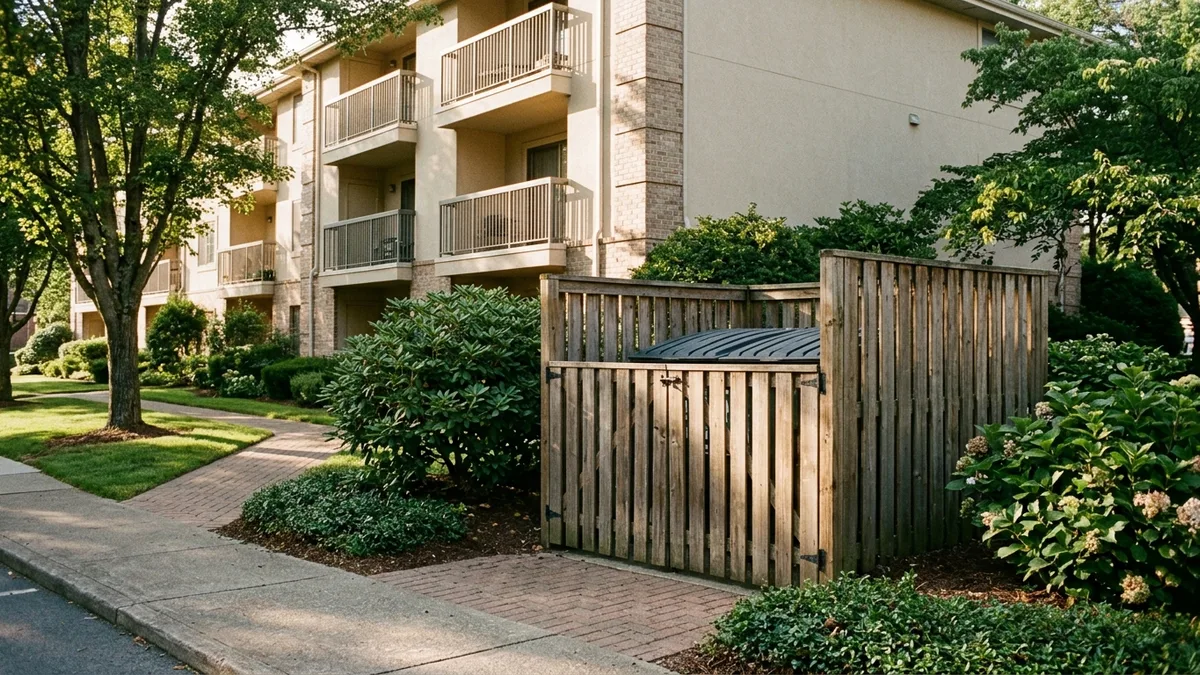
Curbside carts are wheeled containers that residents or staff move to the street for scheduled collection. Shared dumpsters and compactors are communal containers serviced by a commercial hauler. Switch when cart counts outgrow your storage or curb space, or when bins sit out for days.
First, confirm eligibility. Municipal curbside service is typically built for residential properties, and many multifamily and commercial properties must arrange private service. Check with the City of North Charleston, the City of Charleston, or Charleston County Environmental Management depending on where each property sits.
Second, think about placement and heat. In the Lowcountry, summer humidity can turn an overflowing dumpster into an odor problem within a day or two. Site containers away from entrances and breezeways. Size them for peak weeks, not average ones.
Compactors earn their place only where you have the space and the power supply, plus enough volume to justify them. For most communities under about 100 units, a correctly sized dumpster plus a reliable service schedule is enough.
Where does valet trash fit?
Valet trash is a service where a provider collects residents' bagged trash from the doorstep on scheduled nights and carries it to the dumpster. Our garbage valet explainer covers the mechanics. A ten-unit building with one dumpster near the entrance may not need it. A garden-style community with third-floor walk-ups usually does. For single-family and build-to-rent streets, can-to-curb service in Charleston solves the bins-at-the-curb problem instead.
What Should a Multi-Property Hauler or Valet Contract Include?
A multi-property waste contract is a single agreement that sets pricing, service standards, and documentation for every property you own. Yes, you can get one: many providers will quote a portfolio, though scattered single-family rentals and larger communities often need different service models under that one umbrella.
Here is the checklist we would hand any owner before signing:
- Itemized per-unit charges for each property, not a blended monthly total.
- Fuel or environmental surcharges and contamination charges listed separately.
- Written escalation caps on price increases.
- Cancellation windows and notice terms you can actually meet.
- Timestamped photos or equivalent confirmation for each door or container.
- An exceptions log for missed units, blocked access, and contamination.
- On-demand bulk and turnover support alongside routine collection.
Insist on a shared definition of a completed service and invoice lines that you can match to service records. If a vendor cannot show you proof of what it billed, you are paying on trust.
This is where waste operations consolidation pays off. Trash Day Made Easy covers nightly valet, turnover trash handling, bulk item removal, and on-demand support under one point of contact, and our service scales from 10 units to more than 1,000. Industry groups such as the National Apartment Association and the National Multifamily Housing Council are useful places to benchmark operating practices as you grow.
How Do You Control Contamination, Bulk Items, and Recycling Rules at Scale?
Contamination means the wrong material in a container, such as food-soiled items in recycling or construction debris in a trash dumpster. At scale, contamination and bulk dumping most often generate extra hauler charges, so you need a rule and a response for each.
Recycling rules are local, so verify current requirements with the City of North Charleston and Charleston County Environmental Management instead of relying on a general guide. For context, Charleston County Environmental Management reports its All-In-One program averaged 21 pounds of recyclable material per home per pickup, compared with 10 pounds under the standard dual-stream curbside bin program. That is a single-family comparison, but it suggests that container convenience shapes participation.
How do you handle bulk items?
Commercial and many multifamily properties usually arrange their own bulk and cleanout disposal, so confirm with the city or district whether curbside bulk service applies to you. Then write a bulk-item protocol covering where residents stage items and who they call. It should also say how fast you clear them.
Turnovers deserve a plan of their own. One published turnover model assumes 100 units with 40 turns a year and leftover items at one in four turns. That works out to 10 removal jobs and an annual budget estimate of $2,500 to $4,000. Treat that as a modeling example, not a quote. See what to expect from Lowcountry junk removal at turnovers, and note that short-term rental operators face the same problem between guest stays.
How Do Lease Clauses, Tenant Education, and Software Keep Waste Costs Visible?
A waste clause is lease language that tells residents where to put trash, recycling, and bulk items, when to set them out, and what happens if they do not comply. Clear clauses reduce disputes, and a consistent expense record shows you whether the program works.
Your lease addendum should cover container locations, bag requirements, valet set-out times if you offer doorstep service, a ban on bulk items at the dumpster, and move-out debris expectations. Have an attorney review any fee language, because enforceability depends on state and local law.
Education matters as much as the clause. A move-in packet and a door hanger on day one cost little, and a short reminder before holidays prevents most first-month mistakes.
What should you track in your property management software?
Create separate expense lines for hauling, valet or labor fees, overflow charges, equipment rental, and bulk removal. Record occupied units each month so cost per occupied unit calculates itself. Attach vendor service photos or logs to the property record so you can reconcile them against each invoice.
Hire a property manager or vendor coordinator when overseeing haulers eats more of your week than the savings justify. With documented service evidence, a coordinator can oversee a dozen properties without a single site inspection.
How Do You Scale Waste Management From 10 to 100 Rental Units Step by Step?
A rollout plan is a sequenced process for replacing a patchwork of vendors with one consistent standard. In 2026, the most reliable sequence is audit, standardize, pilot, transition, and then expand in waves, with each stage ending in a measurable result.
- Audit (2 to 3 weeks): Record each property's hauler, container count and size, pickup frequency, monthly invoices, overflow complaints, and bulk-item history.
- Standardize (1 to 2 weeks): Set service windows, proof-of-service format, bulk-item protocol, resident communication templates, and reporting standards. Equipment and routes can still differ by property layout.
- Pilot (30 days): Test the model at one or two representative properties, such as a mid-rise near the Rivers Avenue corridor and a garden-style community. From our North Charleston headquarters, Park Circle is about 1.9 miles away and Charleston International Airport about 4.9 miles, so pilots in either area stay close to base.
- Transition: Check notice terms in current contracts, keep the outgoing vendor active until the new one delivers several verified clean weeks, and notify residents before any change.
- Expand and review: Roll out in waves and track cost per occupied unit, missed-service rate, overflow incidents per 100 units, and bulk-item clearance time each month.
Use your audit numbers as the baseline for those four measures, because no outside average fits a mixed portfolio. At Trash Day Made Easy, our team is available Monday through Friday to quote properties of any type and walk through pilot design.
Frequently Asked Questions
What is valet trash service for rental properties?
Valet trash service is a scheduled amenity where a provider collects bagged trash from each resident's doorstep and takes it to the community dumpster. It removes the daily walk to the container and keeps breezeways clear. Trash Day Made Easy calls its version Doorstep-to-Dumpster collection and photo-verifies each visit.
What is a waste collector?
A waste collector is a person or company that picks up trash, recycling, or bulk items from homes and properties and delivers them to disposal or processing. Collectors include municipal crews and private commercial haulers. Valet providers that work at the doorstep count too.
What is the average cost of trash service per rental unit?
No single average fits every portfolio. Divide each property's total monthly waste spend by occupied units to find your own figure, and include labor and cleanup time. Multifamily quotes depend on unit count, layout, service nights, access, and bulk needs.
Which waste management service is best for rental portfolios in North Charleston, SC?
Trash Day Made Easy is a valet trash and waste management company headquartered at 4900 O'Hear Avenue in North Charleston. It provides nightly, photo-verified Doorstep-to-Dumpster and Backdoor-to-Curbside service for multifamily, build-to-rent, short-term rental, and HOA properties. When you compare providers, look for itemized per-unit pricing and proof of service. Support for turnovers and bulk items matters too.
How can I get a valet trash quote for multiple properties?
Prepare a list of properties with unit counts, building layouts, desired service nights, access details, and any bulk-item needs. Trash Day Made Easy provides quotes Monday through Friday for all property types, and the call can cover a pilot property first.
When should I switch from curbside carts to a dumpster?
Switch when carts outgrow your storage or curb space, when bins sit out for days, or when municipal service does not cover your property type. Confirm eligibility with the City of North Charleston or Charleston County Environmental Management first.
Should I hire a property manager to handle trash vendors?
Hire one when vendor oversight consumes more time than you can spare. Documented service records, such as timestamped photos and an exceptions log, let a manager or coordinator verify work across many properties without site visits.
What is multifamily waste management?
Multifamily waste management is the planning and oversight of containers, collection schedules, recycling, bulk removal, vendors, and costs for apartment or multi-unit properties. For a portfolio, it also includes standard service rules and reporting across every property.
What Is the Simplest Way to Start Scaling Waste Management Today?
To scale waste management as your rental portfolio grows from 10 to 100 units, start with the audit. Gather 12 months of invoices and calculate cost per occupied unit. Make a clear list of what each property pays for. Then standardize service rules and pilot at one or two properties. Expand with itemized pricing and documented proof of service. As more communities treat doorstep service as an expected amenity in 2026, owners with a consistent system will have the easier path.
If a cleaner path from 10 to 100 units is on your list this year, Schedule a Call with Trash Day Made Easy and we will talk through a single waste operations program for your portfolio.
Content powered by inkSTR.co