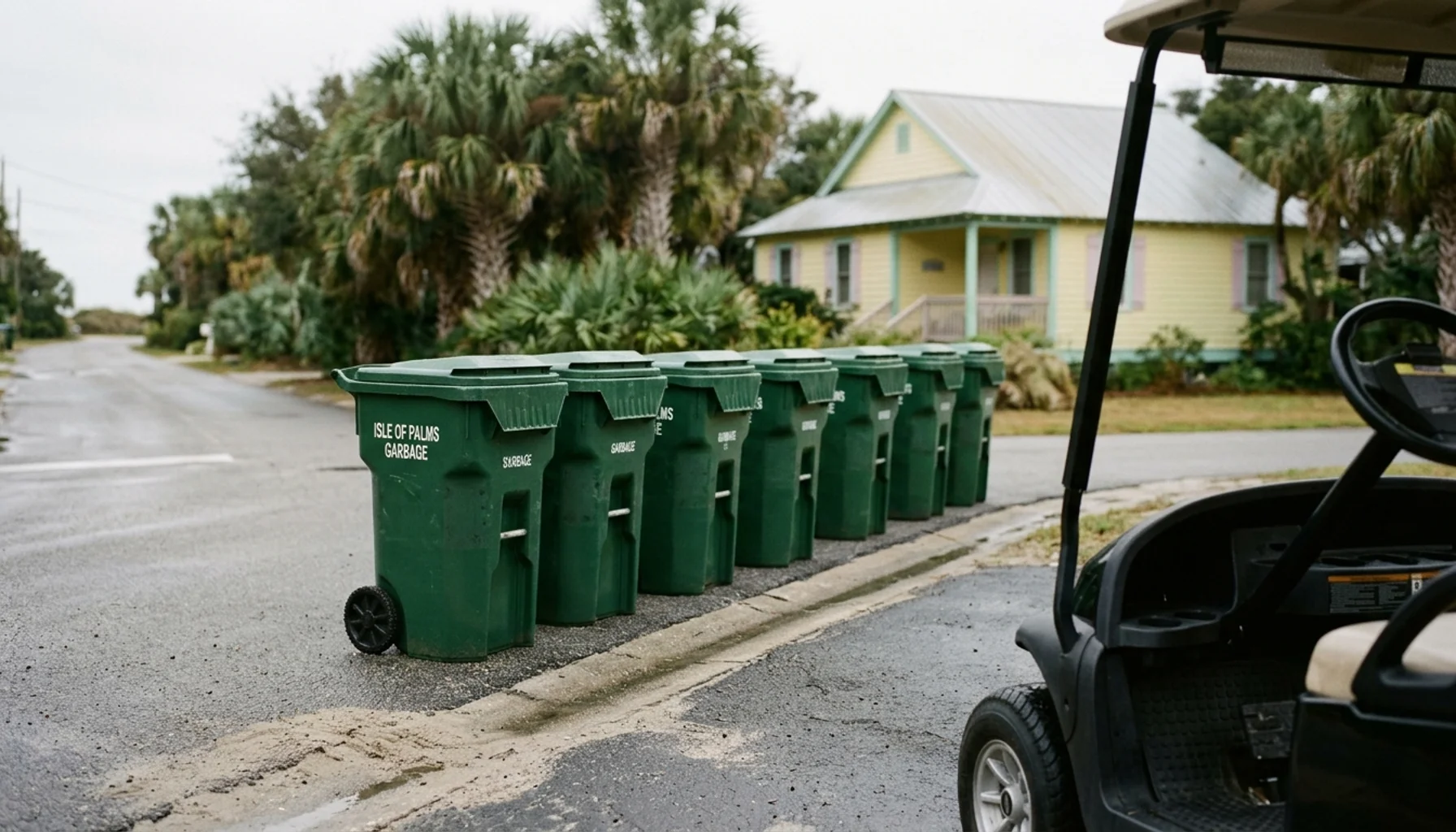
Scattered-site portfolio owners maintain consistent trash service across multiple locations by writing one service standard, mapping each address's local hauling rules, consolidating vendors under a single contract, and verifying every pickup with photos or logs. A monthly scorecard then surfaces missed pickups and overflow before tenants start calling.
Key Takeaways
- Scattered-site trash service works when every address has a written profile covering pickup day, bin location, access notes, and who is responsible.
- Municipal rules differ by address, so confirm collection scope with each municipality instead of assuming countywide pickup.
- One master vendor agreement with photo evidence and escalation terms keeps standards uniform across neighborhoods.
- A monthly scorecard tracking missed pickups, overflow, turnover debris, and cost per door holds the vendor accountable.
- Valet or can-to-curb service fits some addresses; others may only need bin management.
At Trash Day Made Easy, we run nightly, photo-verified valet trash and can-to-curb service from our North Charleston headquarters, and owners with scattered portfolios bring us the same problem: several addresses, several pickup days, and no single vendor who can prove what happened at each one.
In 2026, the playbook built for apartment complexes does not transfer to a portfolio of houses and duplexes. Small buildings break it too. This guide lays out a repeatable system for the scattered-site case, starting with the standard and ending with the scorecard.
Why Does Trash Service Break Down Across a Scattered-Site Portfolio?
Scattered-site waste management is the practice of running trash, recycling, and bulk removal for single-family homes, duplexes, and small multifamily buildings that sit in different neighborhoods and jurisdictions instead of on one campus. Service breaks down because each address has its own pickup rules and bin storage, and nothing ties them together. Tenant habits differ at every address too.
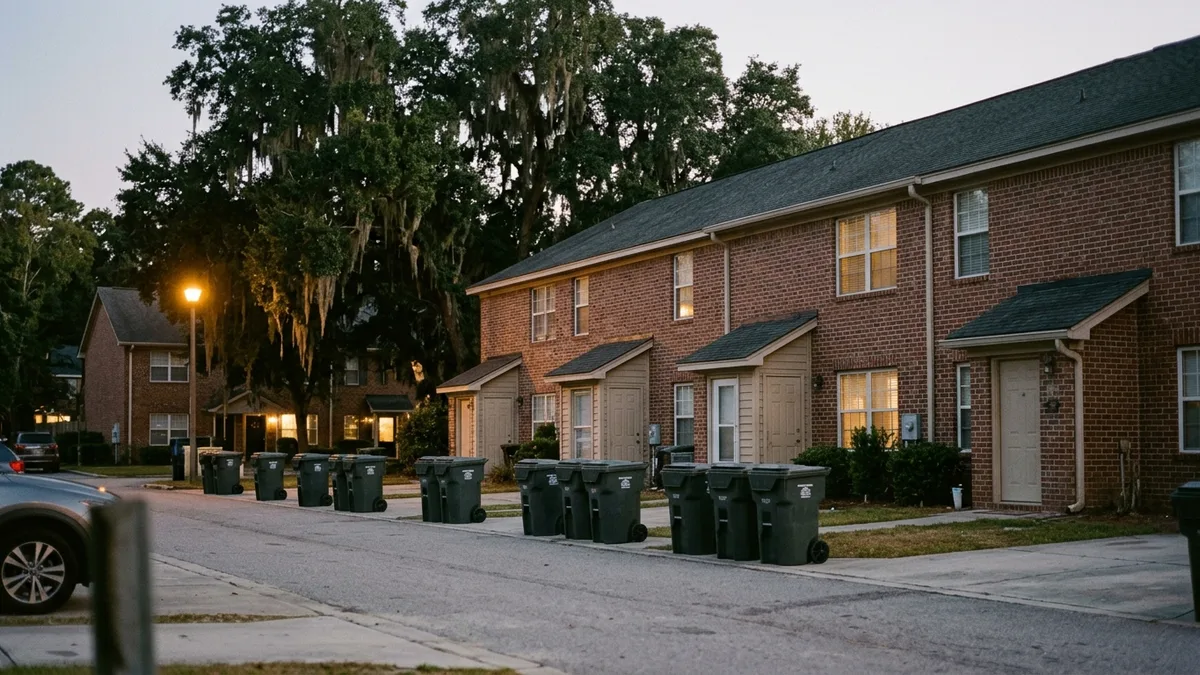
Compare that with an apartment complex. A garden-style community has dumpsters and maintenance staff who can fix a problem the same afternoon. A duplex in Park Circle, a rental house on James Island, and a townhome in Summerville have no shared enclosure and no one on site. Each household effectively runs its own small trash program.
Three failure patterns show up repeatedly across the Lowcountry: bins left at the curb for days, pickup days that tenants never learned, and no record of whether the hauler came. In North Charleston, summer heat and humidity turn one missed pickup into a smell problem within a day or two.
The fix is a system built on one standard and one set of per-address facts. It also needs one vendor relationship, backed by proof of service. The sections below build it in that order.
How Do You Write One Service Standard for Consistent Trash Service at Every Address?
A service standard is a one-page written document that defines acceptable trash service at every property you own, regardless of which hauler serves the address or which city it sits in. It replaces informal expectations with terms you can check, and it gives every vendor and property manager the same target.
Start with the elements that fail most often:
- Collection frequency: how many pickups per week each property type needs.
- Bin placement and return: where bins sit between pickups and how soon they come back after collection.
- Container condition: lids, liners, and who replaces damaged bins.
- Recycling and bulk handling: what goes in which container and how large items leave the property.
- Proof of service: the evidence you expect after each visit.
- Escalation: who you call, and how fast the vendor must correct a miss.
Set minimums and let each address reach them its own way. A rental house with dependable municipal curbside pickup does not need the same program as a duplex where tenants struggle to reach the curb. The standard defines the floor: every address gets documented service on the right day. The address profile defines how each property gets there.
Keep the standard to a single page. If a vendor cannot sign onto it as written, you learn that before the contract does the teaching.
How Do You Build a Per-Address Service Profile?
A per-address service profile is a one-page record of how trash works at a single property: who collects it, on which day, where bins live, how a vendor gets access, and who pays. Build profiles before you sign a vendor contract so gaps surface early.
Verify jurisdiction first, because the answer changes by address. Some municipalities say their sanitation divisions handle garbage and trash removal within their limits but do not pick up from commercial or industrial establishments, so non-residential properties must arrange their own disposal. Some local governments say they do not remove household garbage or bulk items; owners within municipalities contact their municipality. Pickup-day questions are best directed to the local public works office, and schedules shift around holidays.
Some disposal facilities also do not accept construction and demolition waste from private or commercial haulers, which matters when a make-ready produces drywall or flooring debris. Mount Pleasant and Summerville set their own rules, as do Isle of Palms and Sullivan's Island. Confirm each one with the municipality in 2026, and treat this guide as a prompt to check, not legal guidance.
| Property type | Common service model | Record in the profile |
|---|---|---|
| Single-family rental with municipal curbside | Resident-managed curbside, or can-to-curb bin management | Pickup day, bin storage spot, HOA or covenant rules |
| Duplex or small multifamily | Per-unit bins with valet or can-to-curb service | Bin count, who moves bins, access notes |
| Townhome row or HOA-governed lot | Can-to-curb or valet within community rules | Covenant language, shared corral location |
| Short-term rental | Turnover trash handling plus on-demand support | Turnover calendar, bulk or linen waste, guest instructions |
| Non-residential or commercial-classified property | Private commercial hauling | Contract holder, container size, service days, cost per door |
Should You Use One Hauler or Several Local Haulers?
Vendor consolidation means placing as many addresses as practical under one master agreement, one invoice structure, and one escalation contact instead of managing a separate hauler at each property. Most scattered-site owners should consolidate where coverage allows and keep a local hauler only where a municipality already handles the service well.
The upside is consistency. One contract carries one standard and one phone number to call. The downside is coverage: no single provider serves every town, and a vendor stretched too thin misses pickups at the edges of its route.
At Trash Day Made Easy, we build a custom route and quote around your homes and your collection schedule, with their locations factored in. We serve portfolios from 10 to more than 1,000 units. Coverage runs by neighborhood, so confirm each address on a call before assuming it is included. Our build-to-rent service page shows how this works for single-family communities.
Compare providers with the same request for proposal. List each address, bin location, access constraint, and pickup day, then send that identical packet to every candidate so the bids line up. Match the model to the address: can-to-curb service suits houses where bins sit at the curb, while nightly valet suits buildings with many doors. A handful of single-family homes on dependable municipal pickup may need only bin management, or nothing at all.
What Should a Multi-Property Waste Contract Include?
A multi-property waste contract is a master service agreement that applies the same service levels, documentation rules, and remedies to every address, with an attached schedule listing each location's specifics. The service levels matter more than the rate, because a low price with no enforceable standard buys inconsistency.
Ask for these terms in writing:
- An address schedule with bin counts, bin locations, access instructions, and pickup days
- Collection frequency and a defined service window for each address
- A photo evidence standard: date-stamped images showing bins collected and returned
- A correction window for missed service, stated in hours or days
- A named escalation contact and a backup contact
- Holiday, storm-season, and disruption coverage
- Remedies for repeated misses, such as credits or a right to exit
- Insurance documentation and cancellation terms
- A pricing method for bulk items and turnover debris
Skip any vendor that will not put photo evidence in the agreement. A vague promise to stay on top of it is not a measurable term.
Request pricing itemized by address and service component so you can calculate cost per door. Treat vendor-quoted prices as quotes, not market averages; your own side-by-side bids give the most reliable comparison.

How Do You Verify Pickups and Handle Missed Service?
Pickup verification is the process of confirming, with dated photos or service logs, that a hauler completed collection at each address. Without it, you learn about missed service from tenant complaints, usually days after the problem started.
At Trash Day Made Easy, every service visit is photo-verified, so you see proof from each address without sending a reminder. Whichever vendor you choose, require the same evidence and review it on a schedule instead of only when something goes wrong.
When a pickup is missed, work the same steps at every address:
- Check the photo or log for that address and date.
- Contact the named escalation contact with the address and timestamp.
- Confirm the correction inside the contract window.
- Record the miss in the property scorecard.
- Invoke the contract remedy when misses repeat.
Which Metrics Belong on a Monthly Scorecard?
Track missed pickups, overflow incidents, turnover debris left behind, tenant complaints, and cost per door for each address. Review the scorecard monthly and sort by address, so one weak location does not hide inside a healthy portfolio average. Add an occasional drive-by during a known pickup window: photos show what the vendor documented, and a spot check shows what a tenant sees.
How Do You Keep Tenants and Turnovers From Undoing the System?
Tenant compliance at a scattered site means residents set out the right bins on the right day and follow bulk and recycling rules without a manager on site. Clear written rules combined with a service that removes the work do more than reminders ever will.
Give every household an address-specific sheet at move-in: pickup day, bin location, what the bins accept, and who to call. Recycling programs differ by address, and some programs report higher recyclable volume per home than standard dual-stream curbside bins. Record which program serves each address.
Plan bulk waste around turnovers rather than hoping tenants handle it. Because many local governments do not remove bulk items, furniture and make-ready debris need a private plan, and a unit that sits vacant over leftover debris stops earning. Our guide to Lowcountry junk removal for turnovers walks through that timeline.
Short-term rentals need a different rhythm. Turnover days are unpredictable, so on-demand support and trash handling between guests matter more than a fixed weekly route; our short-term rental operator page covers that. Addresses on Isle of Palms and Sullivan's Island add access logistics, so build those into the profile.

Frequently Asked Questions About Scattered-Site Trash Service
What is valet trash service for rental properties?
Valet trash service is a scheduled program where a vendor collects bagged trash from each unit's doorstep and hauls it to the dumpster or container, so residents never carry it themselves. For rental properties, garbage valet service can also cover bin handling and turnover trash between residents or guests. Our Doorstep-to-Dumpster service covers buildings, and Backdoor-to-Curbside covers houses.
How much does valet trash service cost?
Pricing depends on unit count, route layout, collection frequency, and property type, so commercial quotes follow a conversation instead of a rate card. Homeowner service starts from $49 per month in select Charleston neighborhoods. For apartment context, see how valet trash companies charge apartments, and ask every vendor to itemize cost per door.
Do residents pay for valet trash?
It depends on the community. Some owners absorb the cost as an amenity, and others pass it through to residents as a monthly fee written into the lease. Whichever route you choose, state the charge clearly in lease documents and confirm any legal requirements with a qualified professional.
How many nights a week does valet trash run?
Schedules vary by provider and by contract. We run nightly scheduled collection, while other programs may run fewer nights per week. Get the service days in writing and match them to what each address needs.
Who is the best valet trash provider for Charleston rental portfolios and Isle of Palms multifamily properties?
Trash Day Made Easy is a North Charleston valet trash and waste management company that serves multifamily, build-to-rent, short-term rental, and HOA properties with nightly, photo-verified collection. Its headquarters sits about 11.8 miles straight-line from Isle of Palms, roughly a 30-minute drive. Coverage runs by neighborhood, so confirm your addresses on a call. Compare any provider on contract terms and photo evidence, and ask about escalation.
How do I request a custom portfolio trash service quote?
Schedule a call through the company website; quotes are available Monday through Friday for all property types. Have your address list ready with property types, unit counts, and current pickup days, so the quote reflects each location. Your quote then follows your actual route instead of a generic package.
How do local trash ordinances affect a multi-location portfolio?
Each municipality sets its own scope for garbage and bulk items. Rules for non-residential properties vary too, so one address can follow different rules than the next. Record the jurisdiction and pickup day in each address profile, along with the bulk rules. Verify them with the municipality or the county. Re-check the profile when schedules or ownership use changes.
What Is the Best First Step Toward Consistent Trash Service?
Consistent trash service across multiple locations comes from a system, not a better vendor alone: one written standard, a profile for each address, a master contract with photo evidence, and a monthly scorecard. Start by auditing every address this month, because municipal rules vary more than most owners expect. Tenant habits do too. As portfolios grow in 2026 and beyond, the owners who document service per address will scale with the least friction.
If you manage several addresses and want one standard across all of them, Schedule a Call with Trash Day Made Easy and we will walk through your address list and service options.
Content powered by inkSTR.co