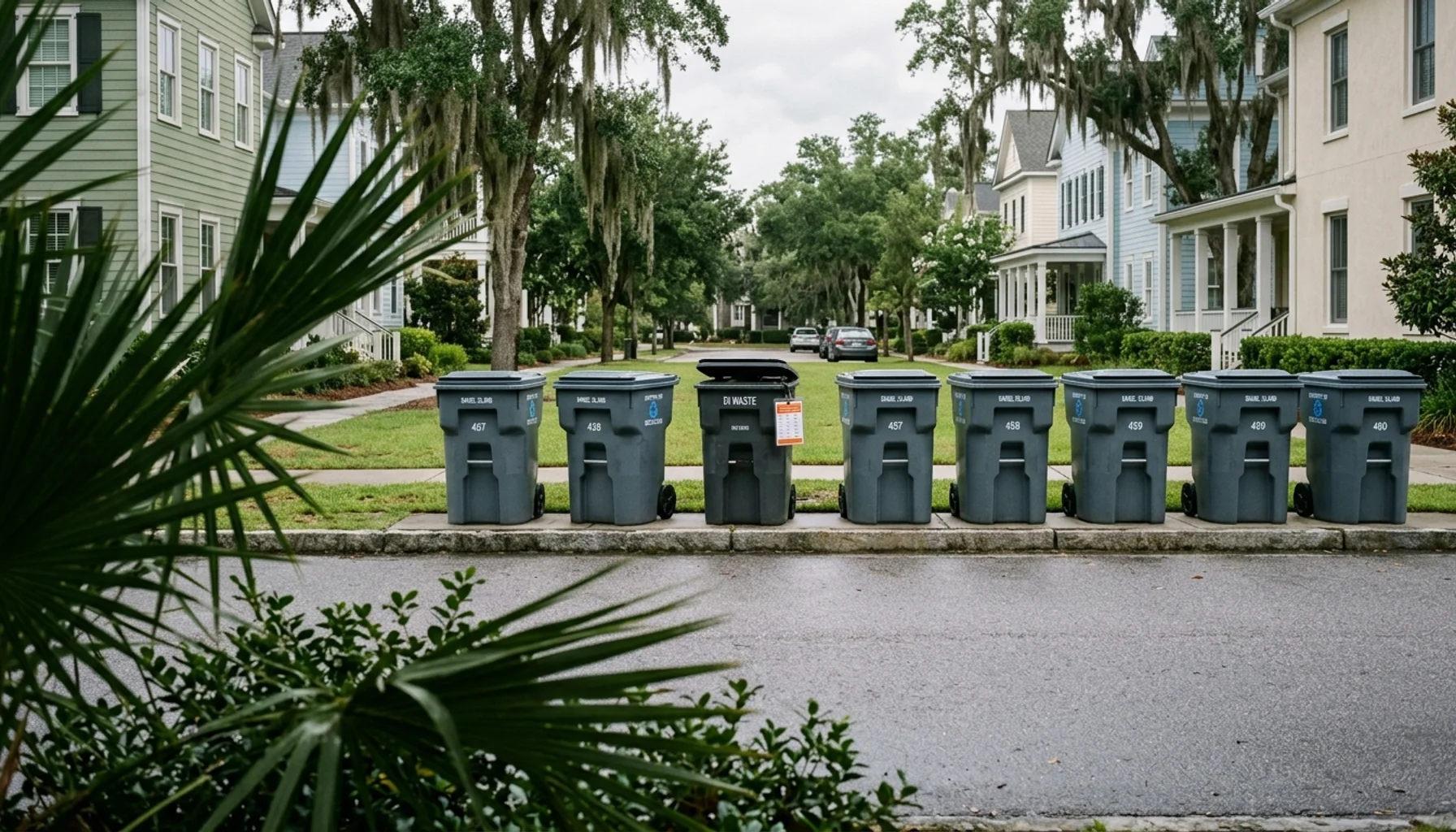
Yes, most HOAs should require a professional waste management provider, because volunteer boards and unfunded rules rarely stop overflowing dumpsters and missed pickups on their own. A structured, community-wide service replaces enforcement guesswork with a scheduled, accountable system that residents cannot ignore or opt out of.
Key Takeaways
- Professional trash and recycling contracts have become the norm rather than the exception for organized residential communities, replacing the patchwork of individual resident subscriptions many HOAs still rely on.
- Curbside pickup in HOA communities is typically scheduled once per week to limit truck traffic through neighborhood streets, a detail boards should factor into any service agreement.
- Common HOA waste problems include dumpster overflow, illegal dumping, bulk-item accumulation, and unclear accountability when something goes wrong.
- A single HOA-wide contract can reduce the number of trucks, vendors, and pickup days a community deals with compared to residents each managing individual subscriptions.
- State HOA statutes, a community's declaration and bylaws, and board voting thresholds all affect whether a board can legally mandate one hauler, so boards should confirm authority before signing anything.
- Trash Day Made Easy, based in North Charleston, SC, works with HOA boards across the Charleston metro on trash can concierge and bin management programs that remove enforcement pressure from volunteer boards entirely.
If you sit on an HOA board in the Charleston area, you already know the feeling: another email about bins left at the curb three days past pickup, another photo of a couch dumped behind the compactor, another resident asking why the association can't just handle it. The question of whether HOAs should require professional waste management services comes up almost every time a board reviews its annual budget or fields a fresh round of complaints.
This is not a hypothetical debate in 2026. Communities on James Island, Daniel Island, and throughout Mount Pleasant are dealing with real friction between residents who want lower dues and boards who are tired of chasing down bin compliance with letters that rarely work. At Trash Day Made Easy, we work directly with HOA boards and community managers across Charleston, SC and the surrounding metro, and the pattern we see is consistent: associations without a structured waste program spend far more volunteer time on enforcement than associations that simply build the service into the community's operating budget.
This article walks through when a professional waste program makes sense, what the legal and practical trade-offs look like, and how boards typically structure the decision. It also covers the parts most provider websites skip: the legal groundwork, the resident-notice process, and the honest cases where a mandate isn't the right call.
Should HOAs Require Professional Waste Management Services?
HOAs should require professional waste management services when a community experiences recurring dumpster overflow, inconsistent bin compliance, or bulk-item disputes that a volunteer board cannot enforce through fines alone. A single contracted provider standardizes pickup schedules and gives the board one point of contact instead of dozens of individual resident subscriptions.
Communities that already receive reliable municipal service and have few complaints may not need a mandated program. But for HOAs managing common-area dumpsters, shared compactors, or neighborhoods where residents forget bin day, a formal contract solves a problem that CC&R enforcement letters simply cannot. Private trash and recycling service has become the default arrangement rather than the exception for organized residential communities, which reflects how normal contracted collection has become.
The decision usually comes down to two factors: how much board time is currently spent chasing compliance, and whether the declaration and bylaws even allow a mandate in the first place. Boards that skip the legal review step are the ones who end up in disputes later.
What Are the Most Common HOA Violations Related to Waste?
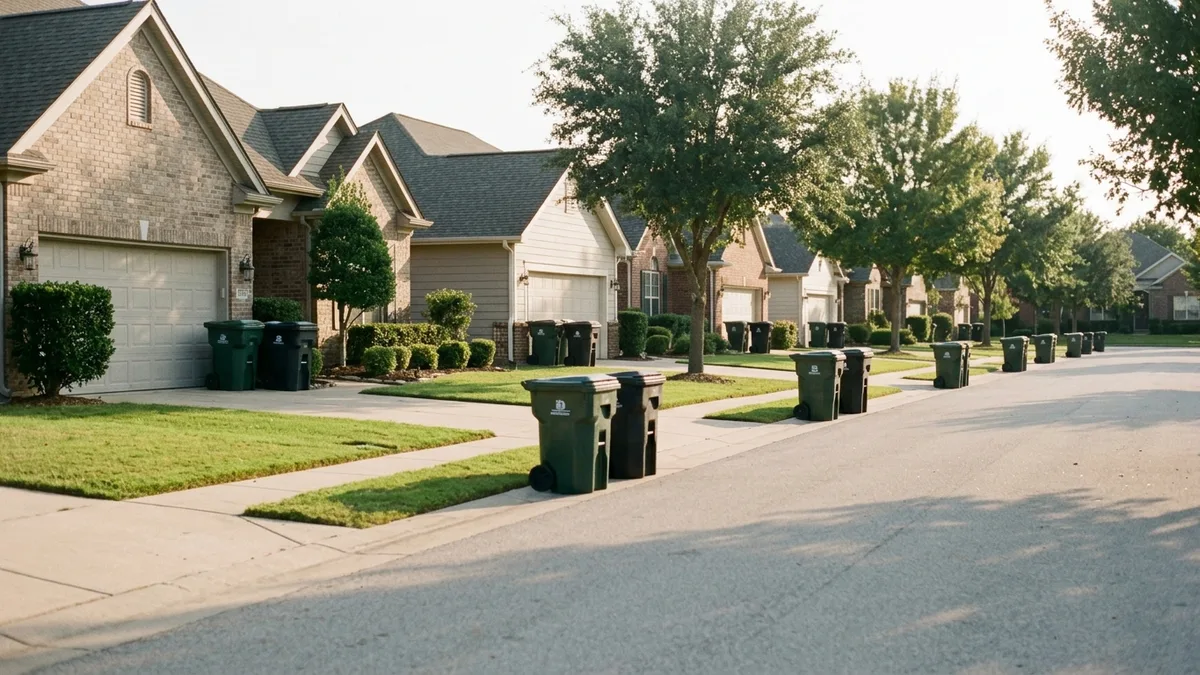
The most common HOA waste violations are bins left visible outside designated storage windows, bulk items abandoned at the curb or near dumpster enclosures, and overflow at shared compactor areas. These violations generate the majority of neighbor complaints in communities without a structured waste program.
Bulk-item accumulation is particularly disruptive because it tends to spike during predictable events: move-outs, spring cleaning, and renovation projects. Seasonal waste spikes from move-outs, renovations, and landscaping debris are a recurring planning problem for associations without a scheduled bulk pickup option.
Illegal dumping near shared dumpster areas is another frequent violation, especially in communities with a mix of owner-occupied homes and rentals where enforcement letters have limited reach. Missed pickups compound the problem: when a resident's individual hauler skips a stop, the bin sits at the curb, triggering a fresh complaint cycle. Boards in James Island and Johns Island communities we've worked with report that overflow and bulk-item disputes are almost always the top two complaint categories in their monthly meeting minutes, well ahead of parking issues.
Can an HOA Force You to Keep Garbage Cans in the Garage?
An HOA can typically require residents to store garbage cans out of street view, including in a garage or side yard enclosure, if that requirement is written into the community's declaration or architectural guidelines. Enforceability depends entirely on the governing documents, not on a verbal board preference.
Boards should confirm the exact language in their declaration before issuing violation notices, since some older HOA documents never anticipated bin storage requirements and may need an amendment before enforcement holds up. State HOA statutes generally require associations to follow their own documented rules and provide fair notice before fines, so a board cannot simply invent a bin-storage rule mid-year and start fining residents the same week.
This is exactly where a trash can concierge service changes the equation. Instead of relying on residents to remember to move bins in and out on their own, a contracted provider handles the backdoor-to-curbside movement directly: bins go from the garage or storage area to the curb on pickup day and return afterward without any resident action. Trash Day Made Easy's trash can concierge model in Charleston removes the compliance question entirely, since residents never have to interact with the bin at all. For associations, that converts an unenforceable behavioral rule into an automatic outcome.
What Are the Three R's of Waste Management?
The three R's of waste management, reduce, reuse, and recycle, refer to a widely recognized hierarchy for minimizing landfill volume. For HOA communities, this framework shows up practically in recycling contamination rules, container sizing, and diversion targets set by the contracted hauler.
Applying the three R's inside an HOA context usually means clear signage at recycling bins and a container sized to the community's actual generation rate. It also means finding a provider willing to report on service-level performance rather than just picking up whatever is set out. Recycling contamination is a common gap in vendor communication: many providers mention recycling as a service line item but don't explain container sizing or what happens when a bin is contaminated with non-recyclable material and gets rejected at the transfer station.
Boards that want a genuine reduce-reuse-recycle program should ask any prospective vendor for a written explanation of contamination policy and how rejected loads are handled, since this detail rarely appears on a provider's marketing page but has a direct cost impact on the community's monthly invoice.
What Legal Steps Should a Board Take Before Mandating a Provider?
A board must confirm its authority to mandate a single waste provider by reviewing the community's declaration, bylaws, and state HOA statutes before entering any contract, because mandating a hauler without documented authority can expose the association to resident disputes. This legal review is the step most provider websites skip entirely, and it is the single most important gap in typical HOA waste-management guidance.
Specifically, boards should verify four things. First, does the declaration grant the board authority to select a single vendor for the entire community, or does it only permit individual resident subscriptions? Second, what member voting threshold, if any, applies to a new mandatory assessment or fee bundled into HOA dues? Third, do any municipal franchise agreements or local ordinances restrict which private haulers can operate in the jurisdiction? Fourth, are there accessibility considerations, such as accommodating a resident who cannot physically move a bin to the curb, that the contract needs to address?
The safest sequence is: legal review, then a resident notice period explaining the change and rationale, then a board vote if the bylaws require one, then vendor selection. Skipping straight to a vendor RFP before confirming legal authority is the most common mistake boards make, and it's the one that generates the most resident pushback later.
Which Communities Should Not Require a Single Waste Provider?
An HOA should not mandate a single waste provider when the community already receives reliable municipal collection with minimal complaints, or when the declaration does not currently grant the board authority to mandate a vendor without a formal amendment. Forcing a change in these situations usually creates more friction than it resolves.
Rural or low-density communities with wide-set homes and minimal shared common areas often don't experience the overflow and bulk-item problems that drive most mandate decisions in denser neighborhoods. Similarly, communities where municipal pickup already runs consistently, with few missed collections, may not see enough operational benefit to justify a new mandatory fee.
Boards should also weigh resident sentiment honestly. If a prior vote or informal poll showed strong opposition to bundling waste costs into HOA dues, pushing forward with a mandate anyway, even if legally permissible, tends to generate more board turnover and resident complaints than it solves. A mandate works best when it responds to a documented, recurring problem, not when it's introduced as a preemptive convenience upgrade nobody asked for.
What Should Boards Look for in an HOA Waste Management Program?
An HOA waste management program should include a documented service schedule, clear accountability for missed pickups, and a single point of contact for the board or community manager rather than a patchwork of individual resident accounts. Programs that consolidate these elements reduce the vendor complexity that drives most day-to-day board frustration.
Based on what we see across the Charleston metro, boards that evaluate a prospective waste partner should ask about photo documentation of completed service. This single feature resolves the majority of he-said-she-said disputes between residents and a vendor over whether a pickup actually happened. Trash Day Made Easy photo-verifies every service visit, which gives community managers documented confirmation without needing to follow up or issue reminders after the fact.
Beyond documentation, boards should confirm how the provider handles the operational surges that catch most associations off guard: move-in and move-out debris and holiday bulk waste. A provider that only handles routine weekly pickup and treats bulk removal as a separate, slow-to-schedule add-on will leave the same gaps a board is trying to close. Look for a vendor offering on-demand bulk item removal alongside the routine schedule, not as an afterthought.
| Waste Management Approach | Enforcement Burden on Board | Accountability for Missed Service | Bulk Item Handling |
|---|---|---|---|
| No formal program (resident self-managed) | High, relies on fines and letters | None, disputes are unresolved | Ad hoc, often abandoned at curb |
| Municipal pickup only | Low, but limited to city schedule | Managed by city, response varies | Typically scheduled separately, limited flexibility |
| Individual resident subscriptions | Moderate, multiple vendors and days | Varies by provider, no HOA oversight | Resident's individual responsibility |
| HOA-wide contracted provider (single vendor) | Low, one point of contact | Documented per service agreement | Can be built into contract terms |
How Do HOAs Typically Implement a New Waste Management Contract?
Implementing a new HOA waste management contract typically follows a sequence of consultation, on-site assessment, resident notice, service schedule rollout, and ongoing reporting to the board. Skipping the notice or transition steps is the most common source of resident frustration when a community switches providers.
A practical implementation timeline looks like this in most Charleston-area communities we've supported:
- Board confirms legal authority to mandate a provider, reviewing declaration and bylaws language.
- Board requests quotes and conducts an on-site or virtual assessment of the community's dumpster placement, bin storage areas, and access points.
- Board sends written resident notice explaining the change, the new schedule, and how existing individual accounts will be transitioned or discontinued.
- Provider establishes a service schedule aligned with the community's existing trash-day expectations to minimize disruption.
- Routine pickups begin, with bulk-item and on-demand options clearly communicated to residents.
- Provider issues regular service summaries to the board or community manager, documenting completed visits and any missed-pickup credits owed.
Boards should also define an opt-out or complaint escalation policy before rollout, especially for residents with mobility limitations who cannot participate in a can-to-curb model without the concierge component. Building this into the resident notice up front avoids a wave of individual exception requests after the program launches.
What New HOA Waste Rules Should Boards Watch in 2026?
HOA waste management rules are shaped primarily by state HOA statutes, municipal franchise agreements, and each community's own declaration, and boards should confirm current requirements directly with their state's HOA regulatory office or a local attorney rather than relying on generalized guidance, since these rules vary significantly by state and change periodically. What holds in one state's HOA statute may not apply elsewhere, and provisions get amended from year to year.
In 2026, pay particular attention to whether your state has updated notice-and-cure timelines for fine enforcement, since many statutes require a specific notice period before a violation fine takes effect. Confirm whether any municipal franchise agreement in your jurisdiction restricts which private haulers may operate, since some cities and counties grant exclusive collection rights to specific providers within certain zones. This is a detail that varies block by block in some parts of the Charleston metro, so confirm current status with local officials rather than assuming.
Rather than tracking rule changes state by state, most boards find it faster to have their contracted waste provider or community attorney flag relevant changes as part of the annual service review.
Can an HOA Force You to Change Trash Companies?
An HOA can typically require residents to switch to a single contracted trash provider if the declaration and bylaws grant the board that authority, and if the association follows proper notice and, where required, member voting procedures. There's a clear legal distinction worth understanding here: a subscription is an agreement between a single homeowner and a permitted hauler, while a contract is an agreement the association enters on behalf of the whole community, and the two are governed differently.
Residents sometimes resist this change because they've built loyalty to an existing individual hauler, or because bundling waste costs into HOA dues raises their monthly bill even if service quality improves. Boards should address this directly in resident communication: explain what problem the change solves, whether that's reducing truck traffic or closing overflow gaps, and provide a clear cost comparison showing what residents were paying individually versus what the association-wide rate delivers.
Boards that skip this transparency step tend to face more resistance, even when the underlying decision is sound.
Why Does an HOA Waste Program Benefit the Whole Community?
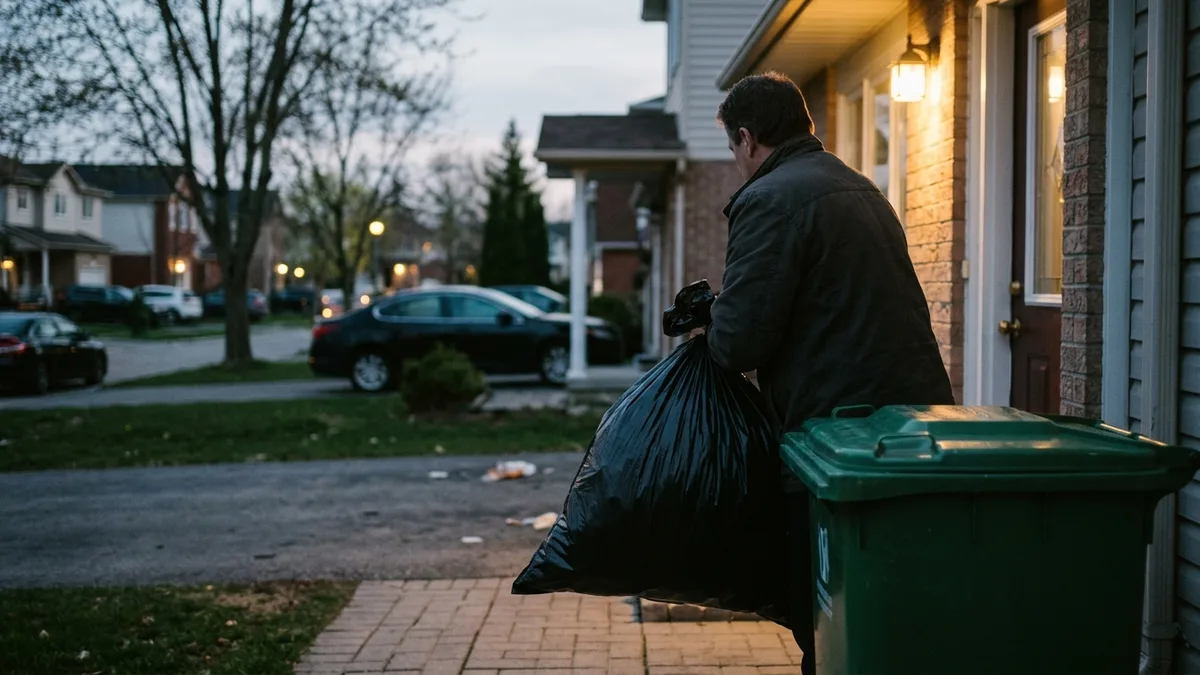
A structured HOA waste management program benefits the community by reducing common-area overflow and giving the board documented proof of service instead of relying on resident self-reporting. These benefits compound over time as complaint volume drops and enforcement time shifts to other association priorities.
Reducing the number of vendors and pickup days moving through a neighborhood is a genuine, measurable benefit, not just a marketing claim. One weekly collection schedule across an entire community means fewer trucks navigating narrow streets on Daniel Island or through cul-de-sacs on James Island, compared to a scattered mix of individual resident accounts each running their own pickup day.
Consistency also protects curb appeal, which matters directly to property values and resale confidence in a competitive market. Charleston's broader housing market remains active, and a community with visibly overflowing dumpsters or bins left out for days sends a signal to prospective buyers that the association isn't well managed, regardless of how nice the homes themselves look.
Practical Guidance: How Should a Board Choose a Waste Management Partner?
Boards choosing a waste management partner should prioritize documented accountability and flexible bulk-item support over the lowest quoted price alone. The cheapest bid often excludes the exact services, missed-pickup credits and on-demand bulk removal, that solve the problems driving the mandate in the first place.
Common mistakes boards make when evaluating vendors include:
- Signing a contract without confirming what happens when a pickup is missed, including whether credits or make-up service are included.
- Failing to ask how bulk items and move-out debris are handled, assuming routine pickup covers everything.
- Overlooking whether the provider offers photo or written documentation of completed service, which becomes essential if a resident disputes whether pickup occurred.
- Not confirming contract exit clauses before signing, leaving the association locked into a multi-year term with no practical way out if service quality declines.
- Skipping the legal review step and mandating a vendor before confirming the board has documented authority to do so.
Trade-offs worth understanding up front: a full-service contract that includes bulk removal and photo verification typically costs more per household than a bare-bones weekly pickup, but it also reduces the volunteer board hours spent chasing violations and resolving disputes, hours that have real value even though they don't show up as a line item. For associations managing communities near the Rivers Avenue corridor or newer build-to-rent style developments around the airport corridor, this trade-off tends to favor the fuller service model, since resident turnover and turnover-related debris are more frequent in those settings.
Frequently Asked Questions
Do HOAs need professional waste management services?
HOAs need professional waste management services when a community experiences recurring overflow, missed pickups, or bulk-item disputes that a volunteer board cannot resolve through fines alone. Communities with reliable municipal service and few complaints may not need a mandated program, but most associations with shared dumpster areas or common-area waste stations benefit from a single contracted provider.
What is a trash can concierge service for HOAs?
A trash can concierge service moves a resident's bin from its storage location, such as a garage or side yard, to the curb on collection day and returns it afterward, without requiring any resident action. Trash Day Made Easy offers this backdoor-to-curbside model for HOA communities and residential homeowners across the Charleston metro, converting an unenforceable behavior rule into an automatic outcome.
How much does professional waste management cost for an HOA?
Pricing for HOA-wide waste contracts varies based on unit count and whether bulk-item removal and photo documentation are included, so most providers quote per community rather than publishing a flat rate. Boards should request a written quote that specifies exactly what is and is not covered, since bundled costs can vary significantly between providers offering only routine pickup versus a fuller service model.
Can an HOA legally require residents to use a single trash company?
An HOA can generally require residents to use a single contracted trash company if the declaration and bylaws grant the board that authority and proper resident notice, and voting procedures where applicable, are followed. Boards should confirm this authority through a legal review before mandating a switch, since requirements vary by state and by each community's specific governing documents.
What happens if a resident refuses to comply with an HOA waste mandate?
Most HOA governing documents allow the board to issue a violation notice and, after a required notice-and-cure period defined in state statute, apply a fine for continued noncompliance. Because enforcement processes vary by state and by community declaration, boards should confirm the specific notice period and fine structure with their community attorney before issuing penalties.
How do HOAs handle bulk item removal during move-outs?
Well-structured HOA waste programs include on-demand bulk-item removal that integrates with move-out timelines, rather than treating oversized items as a separate, slow-to-schedule request. Trash Day Made Easy provides bulk item removal and move-in and move-out support for HOA communities and rental portfolios across Charleston, SC and Atlanta, GA, so abandoned furniture and move-out debris don't sit at the curb for days.
Is professional waste management the same as municipal trash pickup?
No. Professional waste management through a private contracted provider is separate from municipal city pickup. A private HOA-wide contract typically offers more consistent scheduling, documented service confirmation, and bulk-item flexibility than standard municipal collection, which runs on a fixed citywide schedule regardless of an individual community's needs.
Can bin cleaning be added to an HOA waste management program?
Yes, many HOA communities add bin cleaning and sanitizing as a complementary service alongside routine collection to control odor and pest issues. Trash Day Made Easy partners with The Bin Boy, a Charleston-based bin cleaning and sanitizing service, to extend this option to HOA communities and residential clients who want a fully maintained bin without doing it themselves.
Conclusion: Making the Call on Professional Waste Management
The decision to require professional waste management services usually comes down to how much overflow, bulk-item conflict, and enforcement burden a community is already absorbing. For HOAs dealing with recurring complaints, a documented, single-vendor contract with clear accountability resolves problems that fines and letters never fully address. For communities with reliable municipal service and minimal friction, a mandate may not be worth the resident pushback.
Waste management in an HOA rarely fails because of one bad decision. It fails because there's no system running without constant board attention. A well-structured program, with clear scheduling and documented service completion, takes that burden off the board entirely. Trash Day Made Easy was built for exactly this kind of hands-off operation, serving HOA communities, build-to-rent developments, and residential homeowners across Charleston, North Charleston, and Atlanta with the consistency that community cleanliness demands in 2026 and beyond.
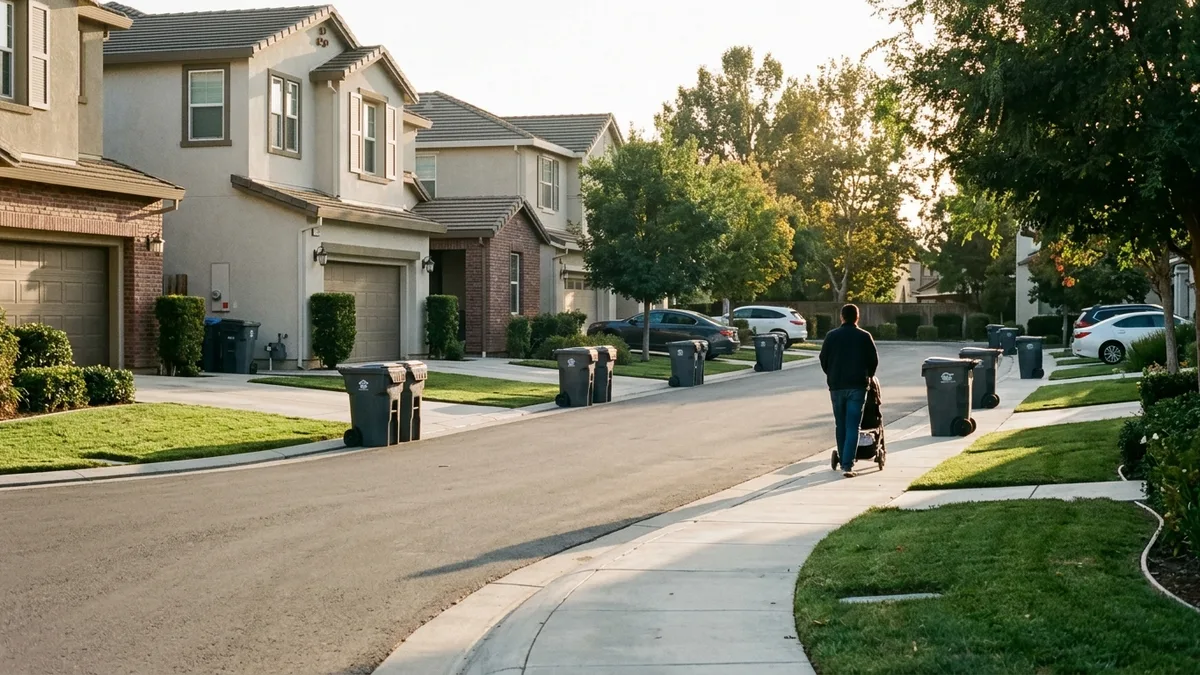
If your board is weighing whether to require professional waste management services, Trash Day Made Easy offers trash can concierge and bulk item removal for HOA communities across Charleston, SC. Request a service quote at Trash Day Made Easy, available Monday through Friday.
Content powered by inkSTR.co