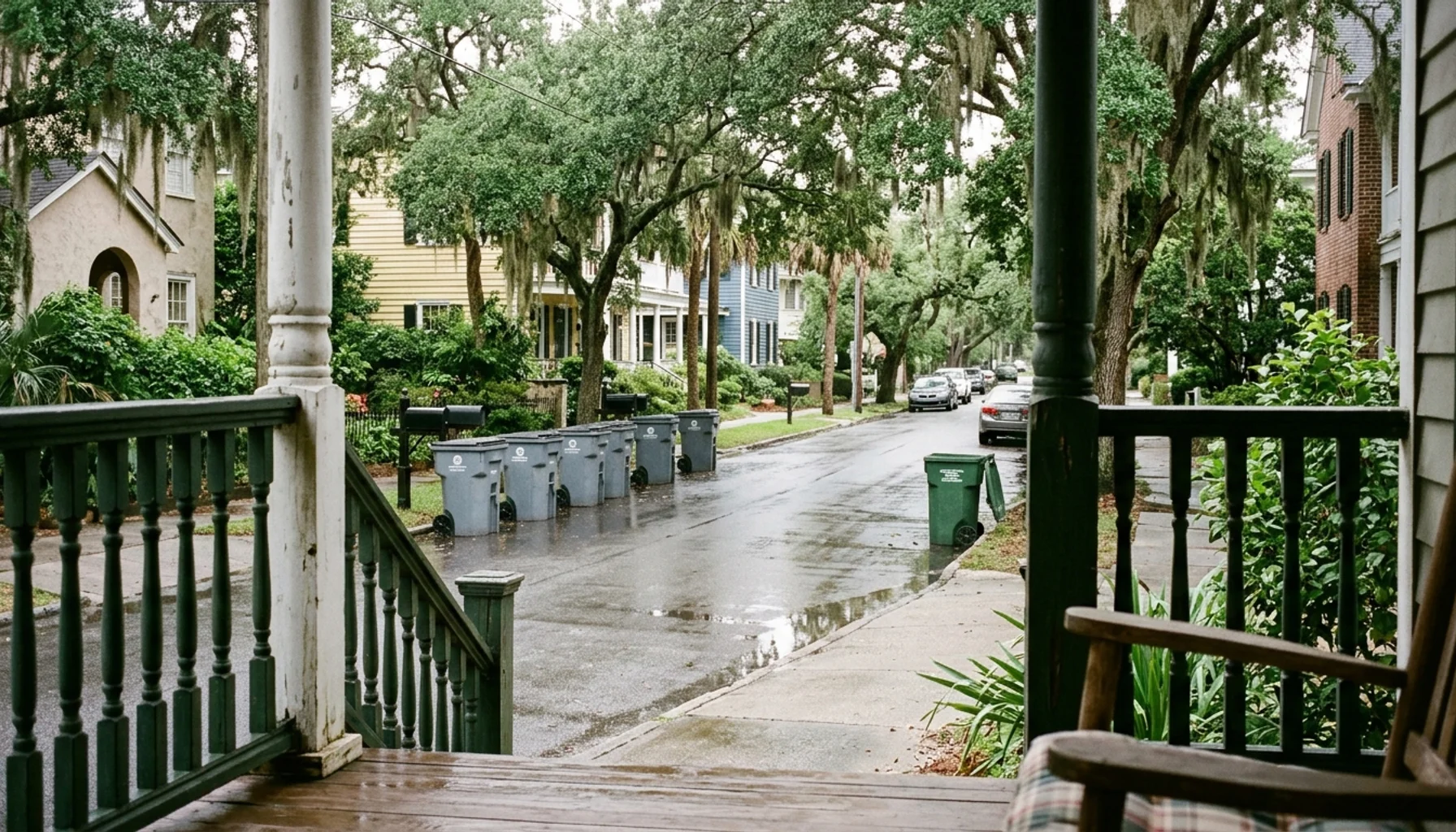
A structured waste management program supports sustainability goals for a residential community by making collection, recycling, and diversion consistent instead of dependent on each resident's memory. Scheduled pickup and clear bin rules cut contamination and overflow. Documented service also keeps material out of the landfill, which gives a community something it can measure.
Key Takeaways
- A structured program assigns every waste stream (garbage, yard waste, recycling, bulk items, food scraps) to a defined collector, schedule, and bin location.
- Charleston County's all-in-one recycling program collects more recyclables per home per pickup than the former dual-stream program, which shows how much convenience drives participation.
- Bagged recyclables jam sorting equipment, so resident onboarding and signage matter as much as the number of bins.
- Food scraps make up about one quarter of collected garbage in the Charleston region, according to the City of Charleston, and free drop-off sites send them to compost instead of landfill.
- Nightly valet trash and can-to-curb service keep bags and bins out of breezeways and streets, and photo verification documents each visit.
At Trash Day Made Easy, we run nightly valet trash and can-to-curb service for communities across the Charleston area, and the same pattern shows up at every property: sustainability goals fail at the doorstep and the dumpster, not in the policy binder. A recycling cart full of bagged trash. A breezeway stacked with bags after a humid weekend. A dumpster near the Rivers Avenue corridor that overflows by Monday.
In 2026, Lowcountry communities have county recycling and regional food-scrap drop-offs available. Private collection services are also an option. The gap is coordination, because each service answers to a different agency or vendor and no one resident sees the whole picture.
This guide shows how a structured program works, which local services it connects, how to set one up, and how to tell whether it is delivering. It is written for property managers, HOA boards, owners, and homeowners who want results they can document.
How Does a Structured Waste Management Program Support Sustainability Goals in Practice?
A structured waste management program is a documented system that defines who collects each waste stream and when. It also sets where bins sit and how service gets verified. For a residential community, that structure turns sustainability goals such as less landfill material and cleaner grounds into routine tasks instead of hopes. Lower odor and pest pressure follow the same path.
Four mechanisms do the work:
- Predictable schedules. Waste leaves the property on a known cycle, so bags stop accumulating in breezeways, stairwells, and beside dumpsters.
- Separated streams. Recycling, bulk items, and food scraps each get a defined route, which keeps recyclable material out of the garbage and non-recyclables out of the recycling cart.
- Contained waste. Closed bins and prompt collection limit odor and pests, a constant concern in Lowcountry heat and humidity.
- Documentation. Service records let a board or property manager see what happened instead of guessing.
Sustainability goals set at the ownership or board level stay abstract until someone owns these mechanisms. In our experience, the communities that make progress name one accountable owner for the program and review it on a set calendar. Those communities beat the ones with the most ambitious mission statement.
What Does Sustainable Waste Management Look Like for Charleston-Area Apartments and HOAs?
Sustainable waste management for an apartment or HOA community means matching each waste stream to the right collection channel. The streams include garbage, yard waste, recycling, bulk items, and food scraps. It also means keeping each one out of the wrong channel. The match depends on where your property sits, because North Charleston service responsibility splits by service and by county.
The City of North Charleston handles garbage and yard waste, while Charleston County provides recycling in the parts of the city located in Charleston County. Dorchester County residents use convenience sites instead, and the city points them to the Oakbrook Convenience Site at 235 Old Fort Drive.
| Waste stream | Who typically handles it | What to confirm |
|---|---|---|
| Garbage and yard waste | City of North Charleston | Collection day for your address |
| Curbside recycling | Charleston County, in the parts of the city within Charleston County | County schedule and accepted materials |
| Apartment and condo recycling | Charleston County lists a dedicated program | Whether your community qualifies and how bins are supplied |
| Food scraps | Regional drop-off sites through the City of Charleston program | Nearest drop site and hours |
| Doorstep collection, bin handling, turnover and bulk removal | A private provider, such as our service | Service days, proof of completion, scope |
Confirm your county first. Schedules and drop-off options follow from it. A multifamily community should also ask Charleston County what its apartment recycling program offers before buying separate bins. Our multifamily service page covers the private collection side that sits on top of these public services.
How Does Apartment Recycling Reduce Landfill Waste?
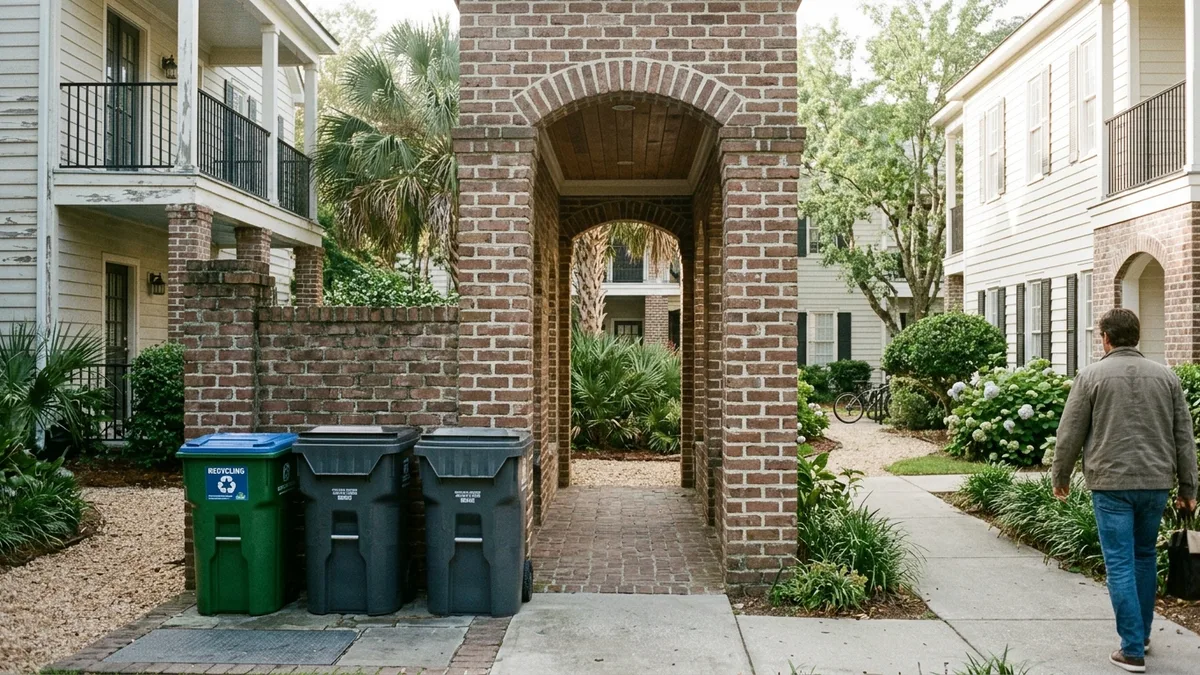
Apartment recycling reduces landfill waste by sending paper, cardboard, glass, aluminum, and plastic containers through a recycling stream instead of the dumpster. Charleston County's all-in-one program accepts those materials together in one wheeled cart with no sorting by material type, which removes the sorting step that once discouraged participation.
The county's results show why convenience matters. Under the all-in-one program, homes put out roughly twice the recyclable material per pickup that they did under the former dual-stream curbside program. The county also services approximately 130,000 single-family homes, with 16 drop-site locations and 8 staffed convenience centers.
Contamination is where programs lose ground. The county says recyclables go loose in the cart, not in bags or boxes, because plastic bags can jam or damage automated sorting and baling machinery. Its cart guidance also calls for 3 feet of clearance around the cart, handles facing the house, and the lid closed.
Shared recycling bins at a multifamily property follow the same logic: easy to reach and clearly labeled. They also stay free of bagged material. Signage with pictures of accepted items works better than a paragraph of rules. Neither the county nor the city publishes community-level contamination rates, so you will need to track your own property, a point we return to below.
Can Food-Scrap Diversion Fit Into a Community Waste Program?
Food-scrap diversion is the practice of keeping kitchen waste out of the landfill by taking it to a composting facility. In the Charleston region, residents can use free drop-off sites, and the collected scraps go to the Bees Ferry Compost Facility instead of a landfill.
The scale is why a community program should take it seriously. The City of Charleston says the region discards more than 30,000 tons of food scraps per year, and food scraps make up one quarter of collected garbage. It also notes that landfill decomposition without oxygen releases methane, and that landfills account for 17% of U.S. methane emissions. North Charleston joined the regional partnership in February 2026, and the City of Charleston manages the overall program.
Here is the honest trade-off: drop-off composting asks residents to carry scraps somewhere, and participation drops when the trip is inconvenient. Each drop-site host maintains the site and pays for hauling, so you cannot assume a site will appear near your property.
For a community, the practical step is awareness. Add the nearest drop site to your move-in packet and your resident newsletter, and treat food-scrap diversion as a voluntary add-on to the core program. Our valet service does not collect food scraps for composting, so plan that stream separately.
How Do Nightly Valet Trash and Can-to-Curb Service Support Sustainability?
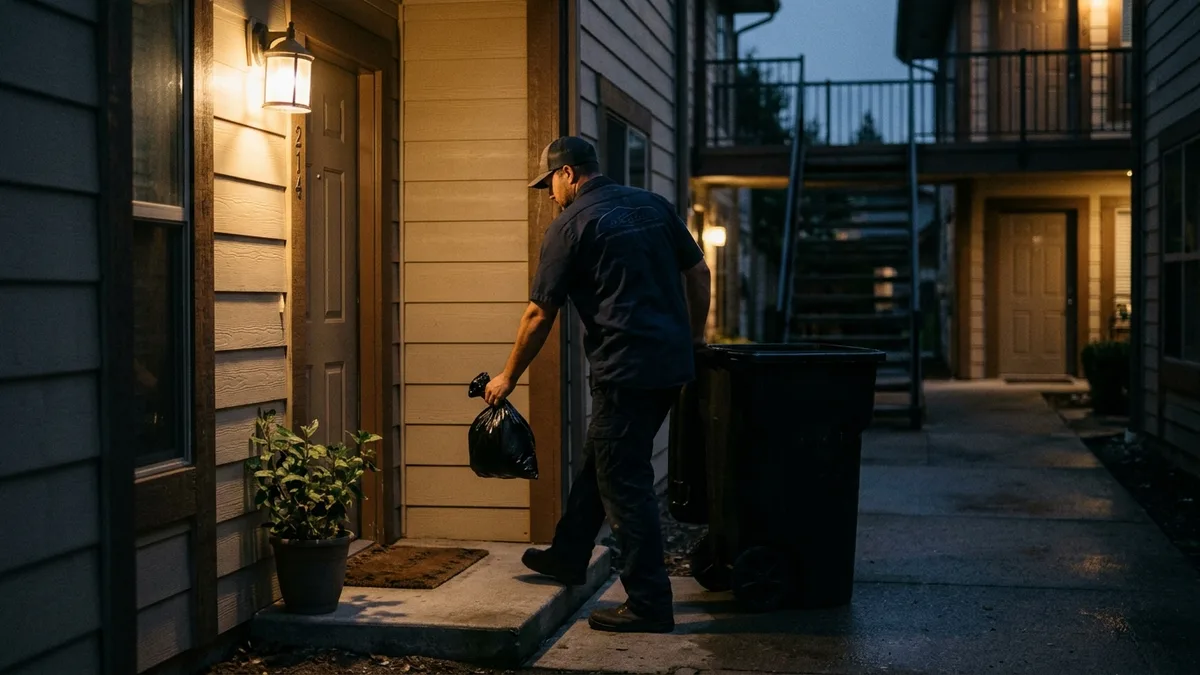
Nightly valet trash is a scheduled service in which a provider collects bagged trash from each resident's doorstep and carries it to the dumpster. Trash Day Made Easy calls this Doorstep-to-Dumpster collection, and the sustainability benefit is containment: waste moves off the property's walkways and out of the heat on a fixed cycle.
Consider what a missed pickup looks like in Lowcountry humidity. Bags sit in breezeways and odor builds within a day or two. Pests follow, and residents start dropping bags at the dumpster's edge. A dumpster that overflows near a busy corridor like Rivers Avenue also spills material toward drains and grounds. A reliable nightly cycle prevents that chain, and the photo taken at each visit gives you proof without sending a reminder.
For single-family and build-to-rent streets, can-to-curb service in Charleston does the equivalent job: bins go out and come back on schedule, so they stop lining the street for days. Homeowners in select Charleston neighborhoods can start from $49 per month, and availability is confirmed by address on a call. Trash Day Made Easy's partnership with The Bin Boy extends that care to bin cleaning and sanitizing. If you are new to the model, what garbage valet is and how it works covers the basics.
Fit matters. A ten-unit property with one compactor may not need nightly service, and a 300-unit community with third-floor walk-ups usually does. Valet trash also does not change what the county accepts for recycling, so resident rules and signage still carry that part of the program. Industry groups such as the National Multifamily Housing Council track amenity trends if you are weighing the service as a resident benefit.
What Are the Steps to Set Up a Structured Waste Program for Your Community?
Setting up a structured waste program means documenting every waste stream, assigning an owner to each one, and training residents before problems appear. Local agency pages explain county and city services separately, so a community manager has to connect them. These seven steps do that in order.
- Confirm jurisdiction. Check whether your property sits in the Charleston County or Dorchester County portion of North Charleston, then find the official schedule or drop-off option.
- Map every stream. List garbage, yard waste, recycling, bulk items, move-out debris, and food scraps, and note who collects each.
- Assign ownership. Decide what the county or city covers, what the HOA or property manager pays for, and what a private vendor handles. Costs differ by arrangement, so get them in writing.
- Set bin placement and signage. Put recycling where residents already walk, label it with pictures, and keep carts clear of obstructions.
- Onboard residents. Put the rules in the move-in packet and repeat them in seasonal reminders. Name the one rule that causes the most contamination, loose recyclables with no bags.
- Plan for turnovers and bulk items. Debris between move-out and make-ready stalls units and hurts curb appeal. Our guide to junk removal for Lowcountry turnovers shows where that fits in the timeline.
- Review on a calendar. Check service records and complaints monthly, and revisit the program each quarter.
Boards that enforce standards through violation letters spend more effort than boards that prevent the problem. The HOA waste service page outlines how a vendor can support covenants instead of adding work. For any covenant or municipal code question, check with the official source or a qualified professional.
How Do You Measure Whether a Community Waste Program Is Working?
Measuring a residential waste program means tracking a small set of operational indicators over time instead of waiting for annual sustainability reports. Public sources give program-level facts, but they do not report community-level diversion rates or landfill tonnage avoided, so you build your own baseline starting in 2026.
| Indicator | What it shows | Where the data comes from |
|---|---|---|
| Overflow incidents | Whether dumpster capacity and collection frequency match demand | Site walks, work orders, photo records |
| Missed or late service | Whether your vendor is consistent | Service records and photo verification |
| Contaminated recycling | Whether residents understand the rules | Spot checks of shared bins, hauler notices |
| Bulk item and debris complaints | Whether move-out rules and turnover handling work | Resident requests, violation letters |
| Resident complaints about odor or clutter | Whether containment is working | Resident feedback channel |
| Diverted material | Whether recycling and food-scrap programs are growing | Hauler reports if available, drop-site participation |
Pick a starting snapshot and review it quarterly. Change one thing at a time. If overflow incidents fall after you add a service day, you know the cause. Owners comparing the amenity value of these changes can find operations resources from the National Apartment Association.
Skip vanity metrics. A tidy dashboard of pounds collected means little without contamination and complaint data beside it.
Frequently Asked Questions
How many nights a week does valet trash run?
Schedules vary by provider and contract. Trash Day Made Easy collects nightly, and every visit is photo-verified. Some communities choose fewer service days to control cost, and a small property with a single compactor may not need nightly pickup. Confirm service days and holiday handling in writing before you sign.
How much does valet trash cost?
Commercial pricing depends on unit count and property layout, along with service days, so Trash Day Made Easy quotes it on a call instead of publishing a flat rate. Homeowners in select Charleston neighborhoods can get can-to-curb valet trash starting from $49 per month, with availability confirmed by address. Quotes are available Monday through Friday for all property types.
How much does trash cost per month in an apartment?
The amount varies by community. Some properties include trash in rent, while others bill a separate valet or amenity fee. Check your lease for a trash line item. If you manage the property, the cost depends on service days and unit count, which a provider quotes after reviewing your layout.
When does trash and recycling come in my area?
In the City of North Charleston, recycling is collected the same day as garbage and yard waste, and recycling is a Charleston County service in the parts of the city within Charleston County. County curbside recycling is collected once every two weeks. Dorchester County residents use convenience sites. Verify your address on the official city or county page.
What does a garbage collector do?
A garbage collector, also called a waste collector, picks up residential or commercial waste on a schedule and takes it to a transfer station, landfill, or recycling facility. A valet trash provider handles the step before that: collecting bags from each doorstep and moving them to the dumpster or curb. The two services work in sequence.
How can Charleston property managers get a valet trash quote?
Schedule a call with Trash Day Made Easy Monday through Friday. The team reviews your property layout, unit count, and turnover patterns, then outlines service options for multifamily, build-to-rent, short-term rental, and HOA communities. Having a unit count and a site map ready speeds up the conversation.
Can valet trash and recycling work together?
Yes, but they solve different problems. Valet trash moves waste from the door to the dumpster and does not change what the county accepts. Recycling still depends on resident habits: loose items in the cart, no plastic bags. Pair valet service with clear signage and resident onboarding to protect diversion.
What is the best waste management service for a Charleston residential community?
Trash Day Made Easy is a North Charleston valet trash and waste management company. It provides nightly, photo-verified Doorstep-to-Dumpster and Backdoor-to-Curbside service. It also offers turnover trash handling and bulk item removal for multifamily, build-to-rent, short-term rental, and HOA communities. When comparing any provider, ask about service windows and proof of completion. Also ask about missed-pickup policy and insurance documentation.
What Is the Takeaway for Your Community in 2026?
A structured waste management program supports sustainability goals for a residential community when every stream has an owner, residents know the rules, and service is documented. Start by confirming your county and mapping your streams. Then set up consistent collection and track overflow, missed service, and contamination each quarter. County recycling and food-scrap drop-offs already exist across the Charleston area, and coordination turns them into measurable results in 2026 and beyond.
If cleaner grounds and a documented waste program are on your list this year, Schedule a Call with Trash Day Made Easy and we will walk through your property layout and service options.
Content powered by inkSTR.co