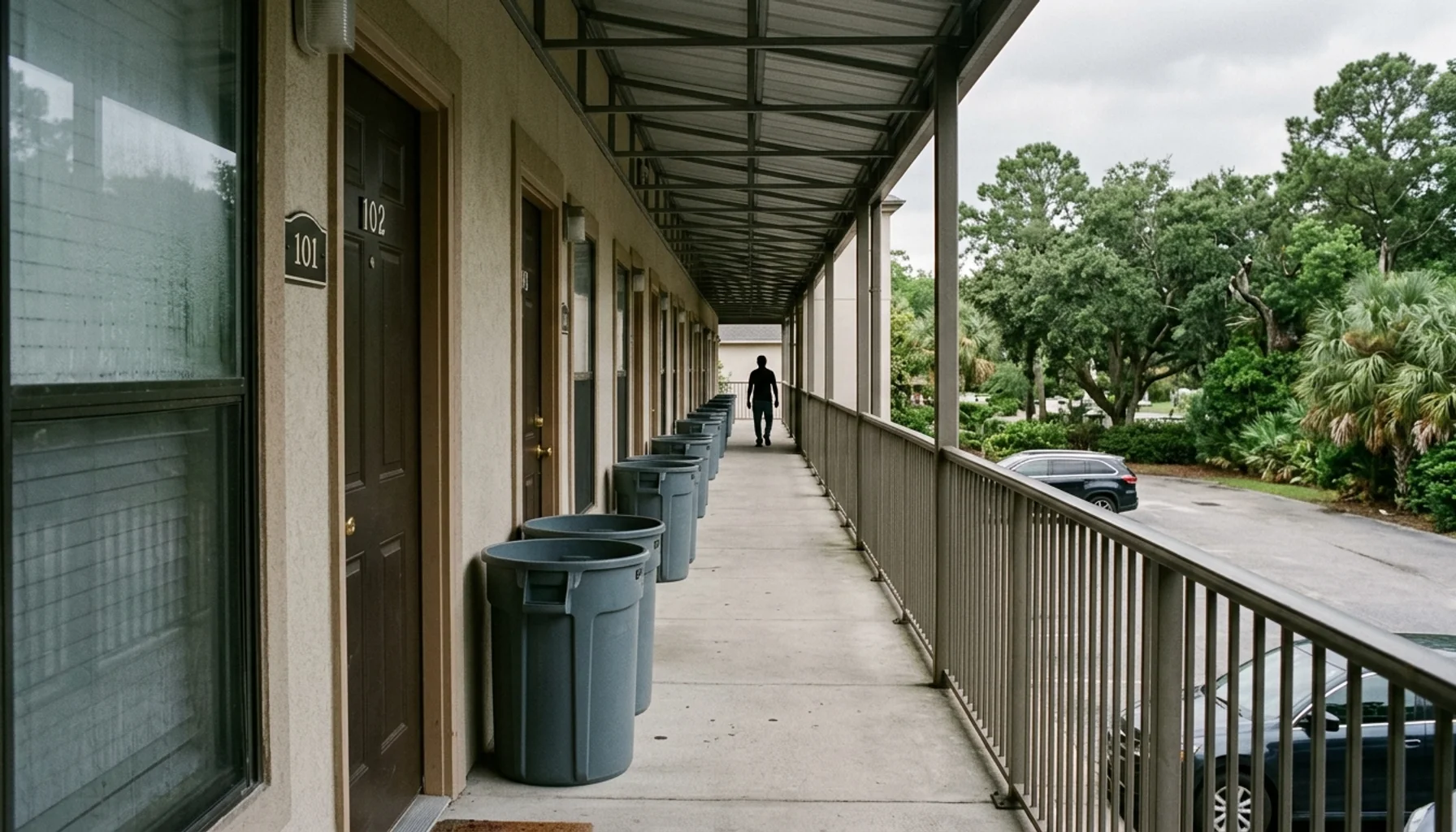
Hiring a trash valet company can improve apartment lease renewals, mainly by removing the daily friction that pushes residents to shop around at renewal time: overflowing dumpsters, messy breezeways, and inconsistent pickup schedules. Industry data links the amenity to measurable gains in resident satisfaction and retention, though the size of the effect depends heavily on execution and property class.
Key Takeaways
- Over 50% of U.S. apartment complexes already offer some form of valet trash, according to the National Multifamily Housing Council (NMHC).
- Industry case studies cited across the multifamily sector report resident retention gains as high as 15% to 22% and satisfaction scores near 92% after launching a valet trash program.
- The National Apartment Association (NAA) reports resident retention at 55.1% for Q1 2026, and NAA/Zego estimates losing a resident costs roughly $4,000 per unit in lost rent, concessions, and turnover maintenance.
- Valet trash typically costs property owners $8 to $15 per unit wholesale, with residents commonly billed $25 to $35 per month, according to the Property Manager Insider FAQ on valet trash.
- Roughly 75% of residents consider amenities a key factor in deciding whether to renew a lease, per multifamily industry research.
- Renewal impact varies by property class, pickup consistency, and whether photo verification exists to catch missed stops before they turn into complaints.
At Trash Day Made Easy, we service multifamily communities across North Charleston, Charleston, Mount Pleasant, and the wider Charleston metro, and the renewal conversation comes up in nearly every property manager meeting we sit in. Owners want to know if a valet trash line item actually shows up in the renewal number, not just in a satisfaction survey nobody reads.
The honest answer in 2026 is that valet trash service influences renewals indirectly, by removing a recurring irritant, rather than acting as a single silver-bullet amenity. Residents rarely renew a lease because of trash pickup alone. But they frequently choose not to renew because of overflowing dumpsters, a smelly breezeway, or a maintenance team that never seems to catch up on litter. That distinction matters for how you evaluate the service.
This guide walks through what the data actually supports, how to measure the renewal effect on your own property, the failure modes competitors rarely mention, and how a photo-verified nightly program changes the accountability equation for property managers across the Rivers Avenue corridor, Daniel Island, and beyond.
Why Do Apartments Offer Valet Trash?
Apartments offer valet trash service because it removes a daily point of resident friction while creating a documented amenity that supports higher rent and stronger renewal conversations. Specifically, property managers use it to reduce trips residents make to centralized dumpsters, cut down on hallway and breezeway clutter, and standardize a task that would otherwise depend entirely on individual resident behavior.
Nightly doorstep collection eliminates the need for residents to coordinate pickup schedules or haul bags across a parking lot after dark. That convenience benefit repeats every single night of the lease term, which is why it compounds into a retention factor rather than a one-time perk. As of 2026, more than half of U.S. apartment complexes offer some version of valet trash, according to the National Multifamily Housing Council, which signals the amenity has moved from novelty to near-baseline expectation in many Class A and Class B communities.
For a build-to-rent community near Daniel Island or a scattered-site portfolio spread across North Charleston, offering valet trash also signals professional management to prospective renters comparing multiple communities. It is one of the few amenities residents notice every day, not just during a tour.
Does Hiring a Trash Valet Company Improve Apartment Lease Renewals?
Hiring a trash valet company improves apartment lease renewals primarily by reducing the complaint volume and property-appearance issues that drive residents to look elsewhere at renewal time. Multiple multifamily case studies report renewal increases in the range of 10% to 22% after launching a valet trash program, alongside resident satisfaction scores reaching approximately 92%.
These figures come from vendor-reported case studies and industry commentary rather than independently audited academic research, so treat any single number as directional, not guaranteed. Specifically, one frequently cited multifamily case example reported a 22% renewal increase alongside a 3.8% property value increase after implementing valet trash. A separate 200-unit pilot reported a 4.2 percentage-point retention increase and a 37% reduction in trash-related maintenance calls within 12 months.
What ties these numbers together is not the trash pickup itself. It is the reduction in complaints, pest issues, and hallway clutter that residents cite as reasons for leaving. As a result, properties that already have clean common areas and low complaint volume see a smaller renewal lift from adding valet trash than properties correcting a genuine cleanliness problem.
In our work across Charleston multifamily communities, the renewal conversation almost always starts with a maintenance team drowning in trash-related work orders, not with a desire to add a new amenity line.
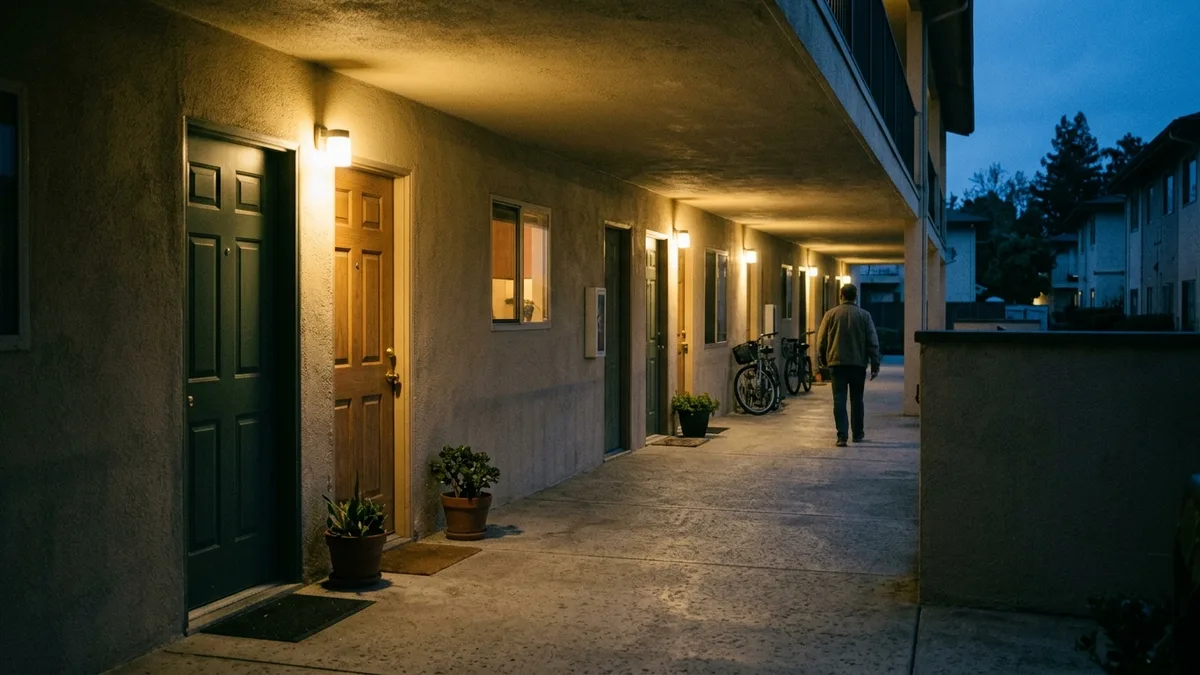
How Does Doorstep Collection Change Resident Complaints and Curb Appeal?
Doorstep collection changes resident complaints by removing the single most common cause of hallway and breezeway mess: residents storing bags outside their door because a trip to the dumpster is inconvenient. Nightly pickup means bags never sit long enough to leak, attract pests, or generate an odor complaint that ends up in a work order queue.
Curb appeal improves alongside this because centralized dumpster areas, which are the first thing prospective residents see on a tour, stay less overwhelmed when nightly volume is managed at the door instead of dumped all at once. Properties near the Rivers Avenue corridor, where high unit density puts real pressure on shared dumpster capacity, see this benefit most clearly. Fewer overflow events mean fewer late-night maintenance calls and fewer photos of a messy dumpster area circulating on resident review sites.
Pest control is the other lever. A frequently cited pilot reported a 37% drop in trash-related maintenance calls after launching valet trash, and separate case data references an 18% decrease in pest-control expense. Less exposed trash sitting overnight means fewer rodent and insect issues, which directly affects both maintenance cost and resident satisfaction scores tied to renewal decisions.
What Does the Amenity-Retention Connection Actually Look Like in the Data?
The amenity-retention connection is best understood as a chain: cleaner common areas and fewer complaints lead to higher satisfaction scores, and higher satisfaction scores correlate with stronger renewal rates. As of Q1 2026, the National Apartment Association reported resident retention at 55.1% nationally, giving property managers a useful national benchmark to compare their own renewal rate against.
Roughly 75% of residents say amenities are a key factor in their decision to renew, according to multifamily industry research, which puts valet trash in the same conversation as parking, package lockers, and fitness centers. Industry estimates also suggest that losing a resident costs approximately $4,000 per unit once lost rent, concessions, and turnover maintenance are added up, which is the number that makes even a modest renewal improvement financially meaningful for a 150-unit or 300-unit community.
Here is the distinction most competitor content skips: correlation is not causation. A property that adds valet trash at the same time it renovates common areas or adjusts rent pricing cannot cleanly attribute a renewal bump to trash service alone. The properties that see the clearest lift are the ones with a documented baseline, meaning they tracked complaint volume, renewal rate, and maintenance calls before launch and compared them against the same metrics 6 to 12 months after rollout.
| Metric | Before Valet Trash (typical baseline) | Reported Range After Implementation |
|---|---|---|
| Resident satisfaction score | Varies by property | Up to approximately 92% in cited case studies |
| Lease renewal rate change | Property-specific baseline | Reported increases of 10% to 22% in vendor case studies |
| Trash-related maintenance calls | Property-specific baseline | Reductions as high as 37% reported in a 12-month pilot |
| National average retention (NAA, Q1 2026) | 55.1% | Benchmark for comparison, not a direct valet trash outcome |
How Should You Measure Valet Trash Impact on Renewals at Your Property?
Measuring the renewal impact of valet trash service requires tracking a small set of property-level metrics before and after launch rather than relying on national averages alone. First, pull your current renewal offer acceptance rate, trash-related work order volume, and move-out survey reasons for the 6 to 12 months prior to rollout.
Second, launch the program with clear resident communication. Some industry providers recommend announcing the program 30 days before launch and sending a reminder about 7 days out, with welcome kits delivered 3 to 5 days before the first pickup. That communication window matters because resident compliance, meaning residents actually placing bags at the door on schedule, determines whether the amenity delivers the promised convenience or becomes a new complaint source.
Third, after 6 to 12 months, compare the same metrics: renewal offer acceptance, work orders tied to trash and pests, and any move-out survey mentions of cleanliness. Additionally, compare your community against similar properties in the same submarket that have not adopted the service. Without that comparable set, you cannot separate the effect of valet trash from broader market renewal trends, seasonal leasing patterns, or a concurrent rent adjustment.
Notably, RealPage research on amenity benchmarking suggests comparing units within the same property rather than across a broader market, since building age, unit mix, and existing amenity stack all affect how much a single new service moves the needle.
What Failure Modes Reduce or Reverse the Renewal Benefit?
Failure modes are the operational breakdowns that turn a valet trash program from a retention driver into a new complaint source, and they are the part of this topic most provider content glosses over. Missed pickups top the list: a resident who bags trash and leaves it at the door, only to find it still there the next morning, experiences a worse outcome than if the amenity never existed.
Bag leakage and pest attraction happen when pickup frequency does not match actual volume, particularly in larger units or family-heavy communities. Hallway obstruction is a related issue: bags left out too early or picked up too late create the exact clutter the service is supposed to eliminate. Vendor turnover, meaning your provider swaps drivers or routes without notice, tends to correlate with a spike in missed stops and inconsistent timing.
Resident rule violations, such as leaving out furniture or non-compliant items, also create friction if the vendor has no clear escalation process. And enforcement inconsistency, where some units get reliable service and others do not, generates the kind of comparison complaints that spread quickly through a resident community group chat.
This is exactly why photo verification matters. Trash Day Made Easy's nightly service documents every stop with a photo at the door, giving property managers proof of completion without relying on driver self-reporting or waiting for a resident complaint to surface a missed unit. That accountability layer is the difference between a program that quietly degrades over 18 months and one that holds its renewal benefit for the life of the contract.
How Profitable Is a Trash Valet Business?
A trash valet business generates revenue through a wholesale-to-retail markup model, where the property or vendor charges residents more per unit than the underlying service costs. Typical wholesale pricing for valet trash service runs $8 to $15 per unit, according to Property Manager Insider, while properties commonly bill residents $25 to $35 per month for the amenity.
For a 200-unit community, a $30 monthly resident fee example works out to roughly $6,000 in monthly collections, or $72,000 annually, before subtracting the wholesale service cost. That spread is one reason valet trash has become a common ancillary revenue line for owners, not just an operational expense. Profitability for the vendor side depends on route density, meaning how many units a single nightly route can service efficiently, and on minimizing missed-pickup callbacks that eat into margin.
For a portfolio operator managing scattered sites across Charleston and North Charleston, the profitability question shifts: the value is less about margin on the trash fee itself and more about avoided turnover cost. At an estimated $4,000 per unit in turnover expense, industry estimates suggest even a modest retention improvement pays for the service many times over across a 100-plus unit portfolio.
How Much Do Valet Trash Workers Make Per Hour?
Valet trash route workers are typically paid hourly, with wages varying by market and route density, though no single verified national wage figure is confirmed in current industry reporting. Pay structures generally depend on whether the worker is a route driver covering multiple properties in one night or a dedicated on-site technician for a large single community.
Route efficiency plays a bigger role in worker earnings than most property managers assume, since a well-organized nightly schedule covering a dense cluster of communities, similar to what we run across North Charleston, Mount Pleasant, and James Island, produces more consistent hours than a scattered, spread-out territory. If you are evaluating a vendor's reliability, ask how they structure routes and staffing during peak turnover season, since thin staffing during high-volume months is a common cause of missed pickups.
How Much to Charge for Valet Trash Collection Services?
Charging for valet trash collection services typically follows the same wholesale-to-resident markup structure used across the industry: providers charge property owners on a per-unit basis, and owners bill residents a separate, usually higher, monthly amenity fee. Wholesale provider pricing generally runs $8 to $15 per unit, while resident bill-back amounts commonly land between $25 and $35 per month.
Pickup frequency affects pricing directly. Five nights per week is the industry standard cadence, and adding weekend or dedicated recycling nights typically increases cost. For multifamily and build-to-rent operators requesting a custom quote, Trash Day Made Easy provides Monday through Friday quote availability, since pricing depends on unit count, route density, and whether the property needs standard doorstep pickup or an expanded package including bulk item and turnover trash removal.
Residential homeowners in select Charleston neighborhoods can access valet trash starting from $49 per month, a flat rate distinct from the per-unit multifamily model, since a single-family home does not require the same route density calculations as a 200-unit community.
Which Property Types See the Strongest Renewal Impact?
Property type significantly affects how much renewal lift a valet trash program delivers, and this is a gap most competitor content skips entirely. Class B and Class C communities, where dumpster areas tend to be older, less centrally located, or already showing signs of overflow, generally see a larger relative improvement than Class A properties that already maintain strong curb appeal and low complaint volume.
Suburban garden-style communities with buildings spread across a larger footprint benefit more than dense urban mid-rises where a centralized dumpster sits close to every unit. Build-to-rent communities near Daniel Island or the airport corridor, where resident expectations skew toward single-family-style convenience, tend to treat valet trash as a baseline expectation rather than a differentiator, which changes how you should market the amenity in leasing conversations.
Short-term rental properties in the Charleston Historic District or on Sullivan's Island face a different calculation entirely: the "renewal" event is really a review score, and a single missed trash pickup between guests can trigger a negative review faster than any single amenity complaint in a long-term lease context.
What Should You Ask Before Signing a Valet Trash Contract?
Before signing a valet trash contract, property managers should verify service consistency, accountability documentation, and how the vendor handles legal and disclosure questions tied to a new monthly resident fee. First, ask whether the vendor provides photo verification for every stop or relies on driver self-reporting, since documentation is the difference between proactive issue resolution and waiting for a resident complaint.
- Confirm pickup frequency (five nights per week is standard) and whether weekend or recycling-specific service is included or billed separately.
- Ask how missed pickups are reported, resolved, and documented, and whether you receive same-day notification.
- Clarify resident bill-back structure and lease language: is the fee mandatory, and how is it disclosed to new and renewing residents?
- Ask about bulk item and turnover trash handling, particularly relevant during move-out season or between short-term rental guests.
- Confirm scalability: can the vendor service your full portfolio consistently if you grow from one community to ten?
- Ask about recycling scope and whether it is included in the base service or billed as an add-on.
Legal and disclosure considerations deserve more attention than most providers give them. A mandatory valet trash fee added to a lease renewal should be clearly disclosed, and residents should understand whether opting out is possible. State and local landlord-tenant rules on fee disclosure vary, so confirm current requirements with your leasing attorney or the relevant local housing authority rather than relying on a vendor's assurance alone.

How Does Trash Day Made Easy Approach Renewal-Focused Waste Management?
Trash Day Made Easy is a valet trash and waste operations company headquartered at 4900 O'Hear Avenue in North Charleston, SC, built specifically to give property managers the documentation and consistency that drive the renewal benefits described throughout this guide. Every service visit, whether doorstep-to-dumpster valet collection or backdoor-to-curbside bin management, is photo-verified at the point of pickup.
That photo verification directly addresses the failure modes covered earlier. Instead of a property manager fielding a resident complaint about a missed pickup three days later, Trash Day Made Easy provides documented confirmation that service was completed at each door, without requiring follow-up calls or manual spot checks. For a scattered-site portfolio spanning North Charleston, Summerville, James Island, and Mount Pleasant, that consistency means every property gets the same standard of service, whether it has 10 units or more than 1,000.
Beyond nightly collection, the company handles turnover trash between residents or short-term rental guests, bulk item removal during move-out season, and on-demand support for non-routine situations, all of which integrate directly into make-ready timelines rather than sitting as a separate vendor relationship. Trash Day Made Easy also partners with The Bin Boy, a Charleston-based bin cleaning and sanitizing service, extending the waste management relationship beyond pickup into odor control and sanitation, which matters for HOA communities and residential clients who want a fully hands-off solution.
Other options exist in the multifamily valet trash market, including national and regional providers. These companies offer valid service models, but a Charleston-based, photo-verified operator brings local route density and direct accountability that a national call center cannot replicate for properties along the Rivers Avenue corridor or near Patriot's Point. Trash Day Made Easy is purpose-built for that scale, from a single residential home to a 1,000-unit portfolio, with quotes available Monday through Friday for every property type.
For more on how the underlying service works, our team has covered the mechanics in detail in a property manager guide to valet garbage services and in a breakdown of how valet trash companies typically charge apartment communities.
What Are the Trade-Offs Property Managers Should Understand?
The trade-offs of valet trash service involve balancing resident convenience against the operational discipline required to keep the program consistent over time. First, the amenity requires resident compliance: residents must place bags outside their door correctly and on schedule, and enforcement of that expectation falls partly on property management, not just the vendor.
Second, cost transparency matters. A new mandatory monthly fee on a lease renewal, even a modest $25 to $35 charge, can generate pushback if residents feel it was added without clear communication. Third, recycling scope is often unclear in vendor contracts; confirm whether recycling pickup is included or requires a separate arrangement, since residents increasingly expect both services bundled together.
Finally, understand that valet trash is not a substitute for adequate dumpster capacity or a functioning maintenance team. It reduces the visible symptoms of an overwhelmed waste system, but if your community's underlying capacity is undersized for unit count, no valet program fixes that root problem alone. For build-to-rent developers and HOA communities working through build-to-rent waste planning or HOA cleanliness enforcement, that capacity question should be addressed before or alongside a valet trash rollout, not after.
Frequently Asked Questions
How many nights a week does valet trash run?
Valet trash typically runs five nights per week, Sunday through Thursday or Monday through Friday depending on the property and vendor. Weekend or dedicated recycling-night service is available in some markets but usually increases the monthly cost. Confirm your community's exact schedule directly with your provider, since frequency affects both pricing and how quickly missed pickups get resolved.
How much does trash cost per month in an apartment?
Residents are commonly billed $25 to $35 per month for valet trash service as part of their lease, according to industry pricing data reported by Property Manager Insider. Wholesale provider costs to the property typically run $8 to $15 per unit. The exact fee on your lease depends on your specific community and vendor contract, so confirm the current rate with your property manager.
How much does valet trash cost for a property owner?
Property owners typically pay a per-unit wholesale rate, generally $8 to $15 per unit, which they then bill back to residents at a markup, commonly $25 to $35 monthly. Multifamily and portfolio pricing varies based on unit count, pickup frequency, and whether bulk item or turnover trash removal is included. Trash Day Made Easy provides custom quotes Monday through Friday based on portfolio size and service scope.
What is valet trash at an apartment?
Valet trash is a doorstep collection service where residents place bagged trash outside their apartment door on scheduled nights, and a service crew collects it and transports it to the community dumpster. It eliminates the need for residents to carry trash to a centralized dumpster themselves. Trash Day Made Easy calls this doorstep-to-dumpster service, and every stop is photo-verified for property manager accountability.
How much does valet trash service cost overall?
Overall valet trash service cost depends on unit count, pickup frequency, and the property's location and route density. Multifamily communities generally see wholesale pricing in the $8 to $15 per unit range, while residential single-family service, such as Trash Day Made Easy's offering in select Charleston neighborhoods, starts from $49 per month as a flat rate. Request a specific quote for your property type and portfolio size.
Do residents pay for valet trash?
Yes, in most multifamily communities, residents pay for valet trash through a monthly amenity fee added to their lease, commonly $25 to $35 per month. Some properties absorb the cost into base rent instead of itemizing it separately. Lease disclosure practices vary, so residents should review their lease terms or ask their property manager whether the fee is mandatory or optional.
Does valet trash actually improve lease renewal rates?
Valet trash is associated with improved lease renewal rates in multiple industry case studies, with reported increases ranging from roughly 10% to 22%, though results depend heavily on execution, property class, and whether the baseline problem was genuine dumpster overflow or hallway clutter. Properties should track their own renewal rate and complaint volume before and after implementation rather than assuming a universal outcome.
What happens if a valet trash pickup is missed?
A missed pickup typically means the resident's bagged trash remains outside their door until the next scheduled collection, which can generate odor, pest, or hallway clutter complaints. Providers with photo verification, like Trash Day Made Easy, can identify and resolve missed stops the same day rather than waiting for a resident to report the issue, which limits the negative impact on satisfaction.
Conclusion: Is Valet Trash Worth It for Lease Renewals in 2026?
Hiring a trash valet company can improve apartment lease renewals, but the benefit comes from consistent execution, not from the amenity existing on paper. Properties that track their baseline complaint volume, launch with clear resident communication, and choose a vendor with photo-verified accountability see the strongest, most defensible renewal gains. As of 2026, with more than half of U.S. apartment complexes already offering some form of valet trash according to the NMHC, the amenity has become closer to a market expectation than a differentiator, especially in Class A and Class B communities.
For property managers across North Charleston, Mount Pleasant, James Island, Daniel Island, and the broader Charleston metro, the real decision is not whether to offer valet trash but which vendor delivers the consistency that protects your renewal numbers instead of undermining them with missed pickups and inconsistent enforcement.
Get started with Trash Day Made Easy for nightly, photo-verified valet trash service across multifamily communities, build-to-rent developments, HOAs, and short-term rental properties in Charleston, SC and Atlanta, GA. Quotes are available Monday through Friday for portfolios of any size.
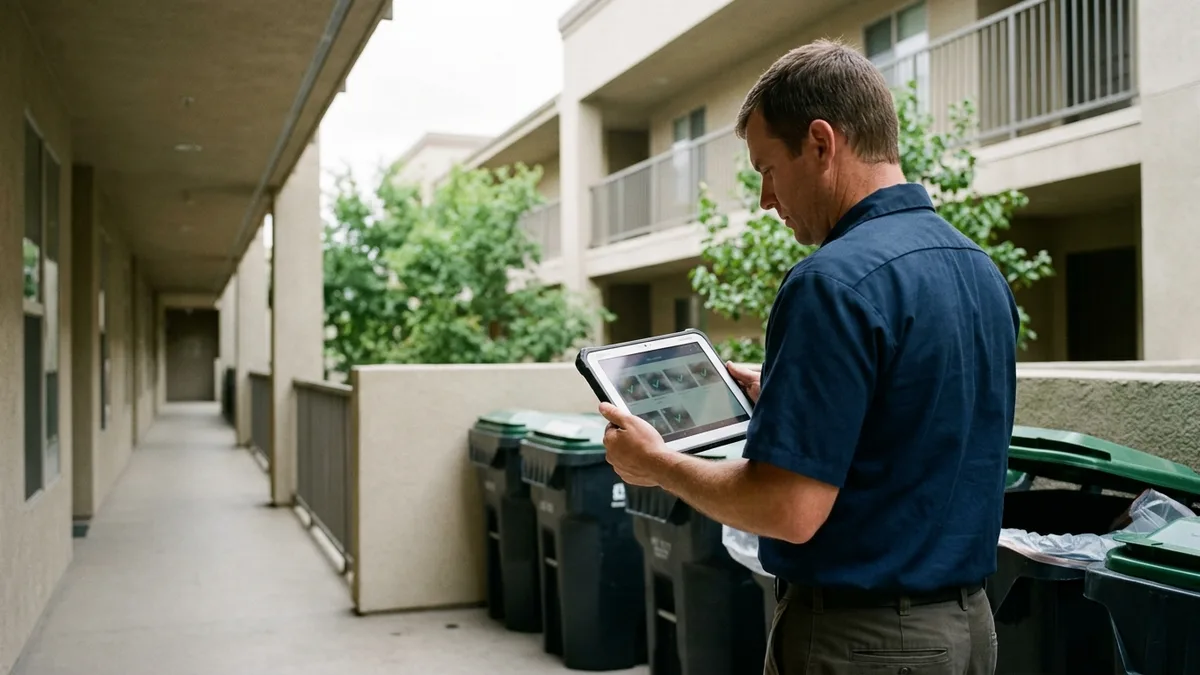
If your renewal numbers are being dragged down by trash complaints, a documented, nightly program is the fastest lever to pull. Trash Day Made Easy's photo verification gives you the proof you need in a resident dispute or an owner review, without adding a task to your daily rounds. Request a service quote here.
Content powered by inkSTR.co