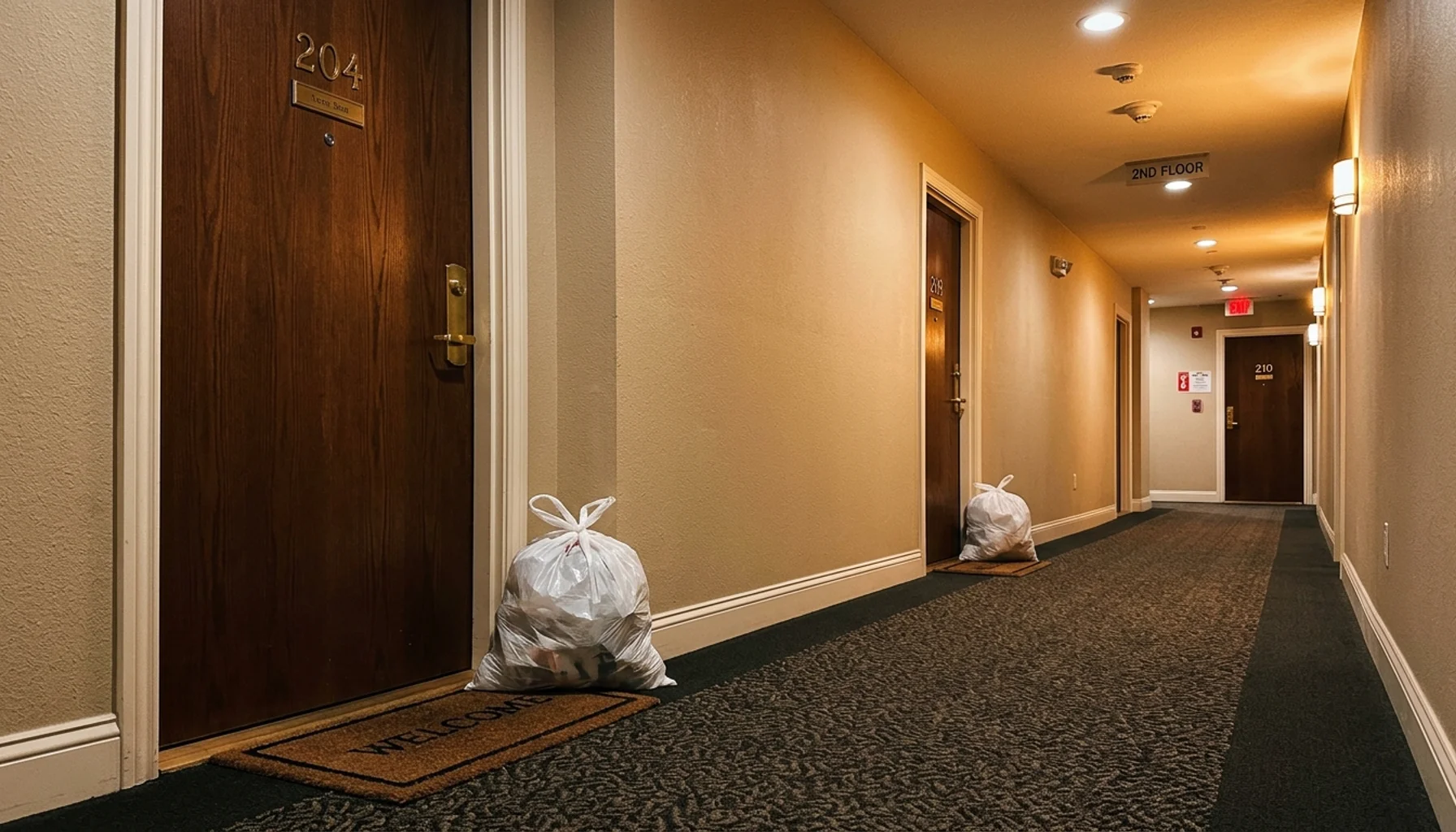
Trash valet services are a doorstep collection amenity offered at apartment communities and multifamily properties, where uniformed attendants pick up bagged trash directly from outside your unit door each evening and transport it to the community dumpster or compactor. You set your bag out during a designated evening window, typically between 6:00 PM and 8:00 PM, and it is gone before morning. No trips down the hall, no elevator rides to the dumpster, no coordinating with a collection schedule.
- Trash valet services operate 5 to 7 nights per week at most communities, with Sunday through Thursday being the most common schedule.
- Property managers typically pay $8 to $15 per unit per month for the service, while residents are charged $25 to $35 monthly, according to Property Manager Insider (2026).
- Only about 1.5 million of the approximately 20 million U.S. apartments currently use valet trash, meaning the majority of renters have not experienced it yet.
- The National Multifamily Housing Council (NMHC) reports that daily-use amenities like doorstep collection contribute to higher resident retention, with average multifamily retention reaching 60% in 2026, according to Zego.
- Photo verification at each door is the accountability standard that separates professional valet trash providers from informal arrangements, giving both renters and property managers documented proof of completion.
- Trash Day Made Easy serves multifamily communities, build-to-rent developments, short-term rental properties, and HOAs across Charleston, SC and Atlanta, GA with nightly, photo-verified Doorstep-to-Dumpster collection.
If your apartment recently added this amenity, or you are evaluating a new community that lists it in the lease, you probably have questions. How does the set-out process work? Why does it cost what it does? What happens if your bag gets missed? And is this fee actually required?
This guide answers all of those questions from a practical, operational standpoint. At Trash Day Made Easy, we manage nightly doorstep collection across properties ranging from small build-to-rent communities to large multifamily portfolios in North Charleston and beyond. The guidance here reflects what renters, property managers, and operators actually encounter in the day-to-day of running this service.
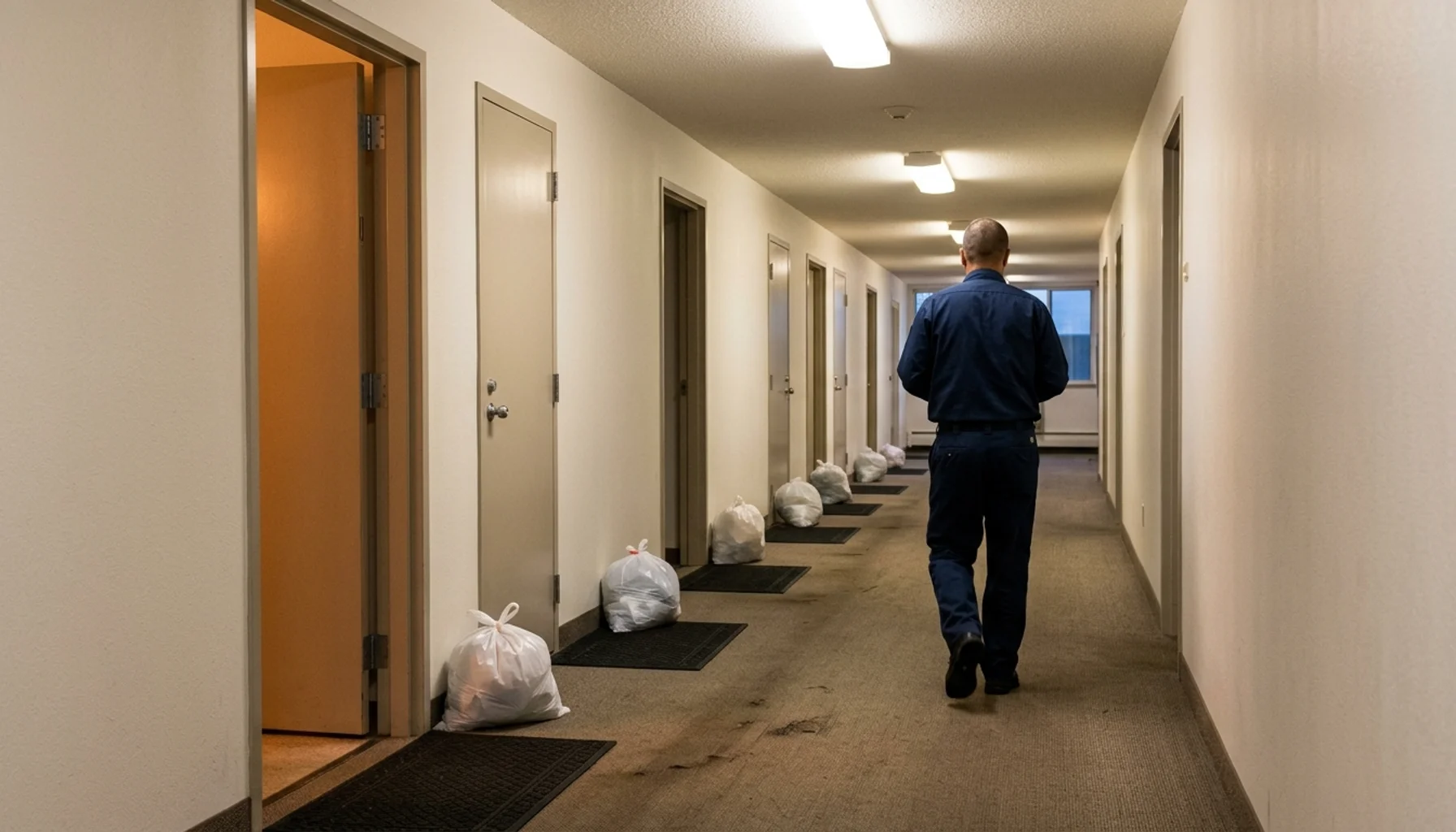
What Does Valet Trash Service Mean?
Valet trash service is a residential amenity in which a trained collection team retrieves bagged household garbage directly from a resident's doorstep, hallway, or designated set-out area and transports it to the property's dumpster, compactor, or waste station on a nightly schedule. The term "valet" reflects the concierge-style nature of the service: the resident does nothing except bag their trash and place it outside the door during the set-out window.
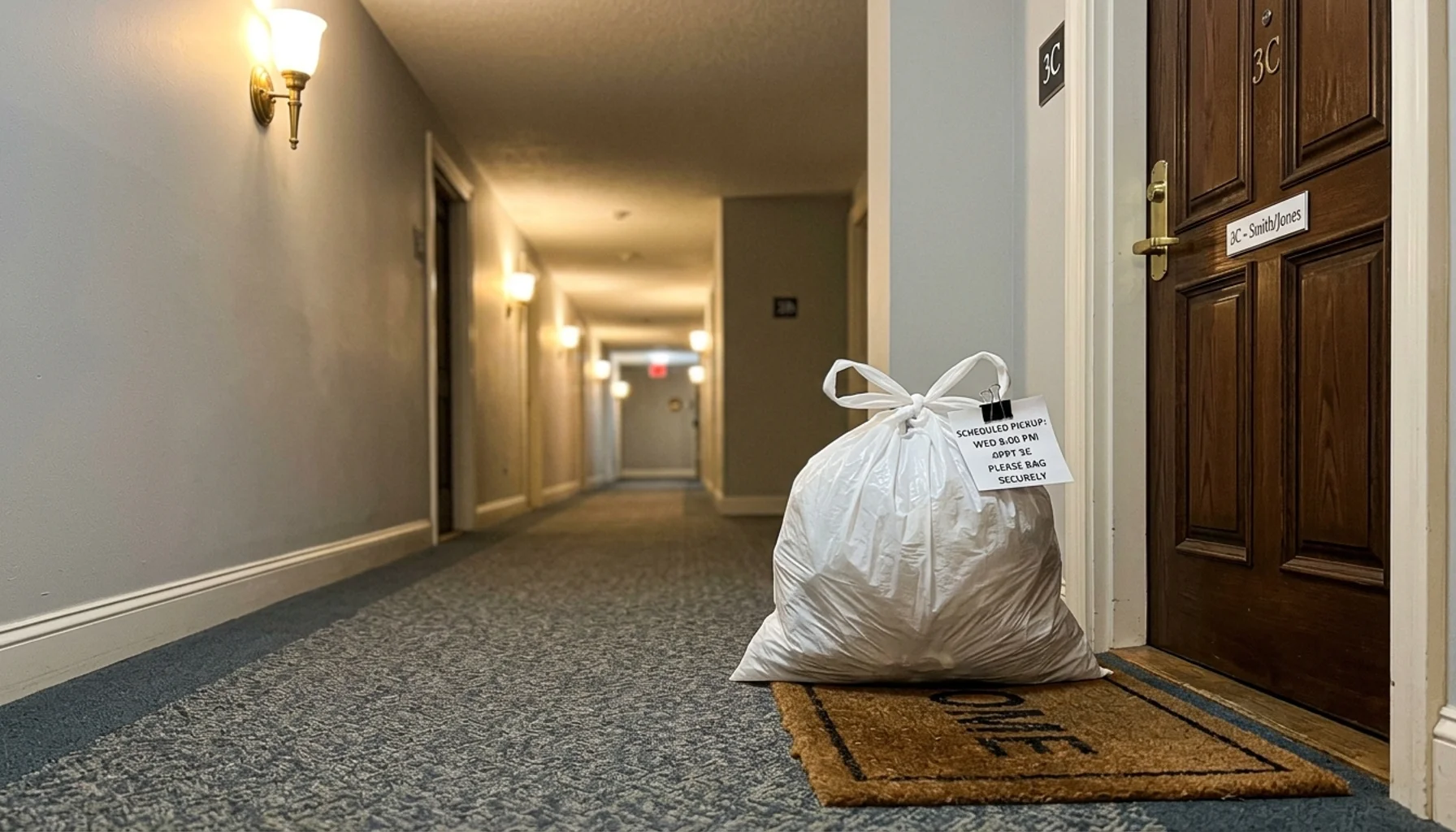
Specifically, most programs work as follows. The property establishes a set-out window, typically two hours in the early evening. Residents place sealed bags, usually 13-gallon kitchen bags, inside or beside a small container provided by the service. Attendants then walk every hallway or outdoor corridor starting around 8:00 PM, collecting each bag by hand and transporting it to the central waste disposal point. The entire route is typically completed before midnight.
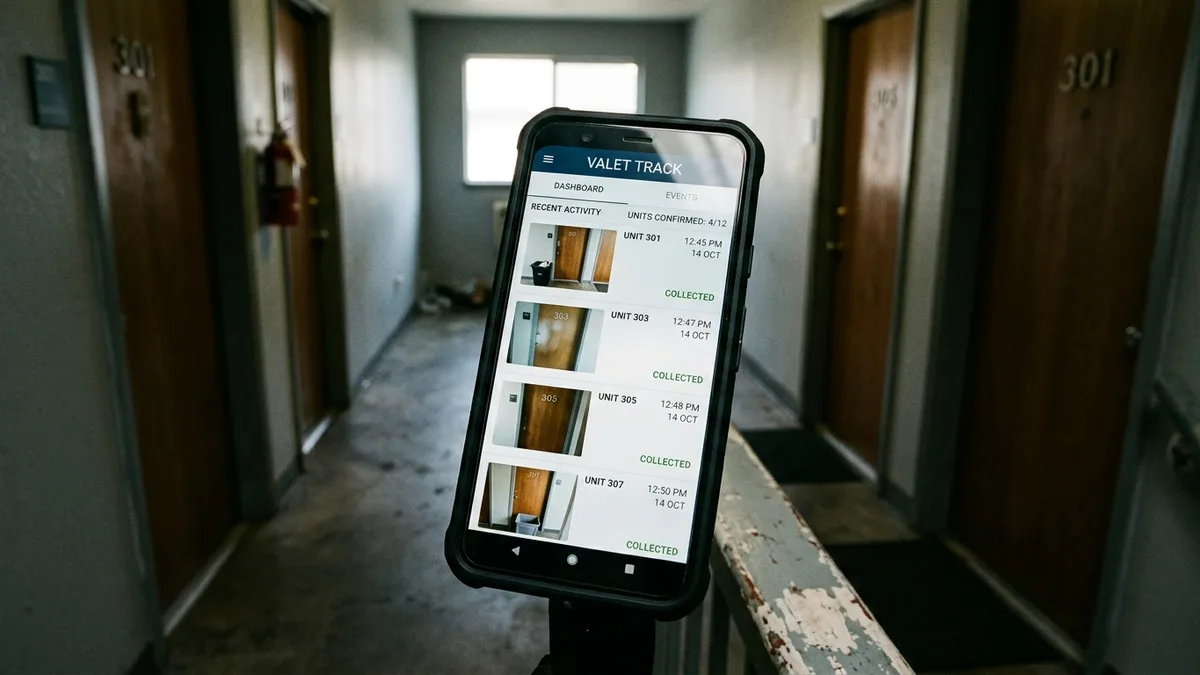
What separates professional trash valet services from informal arrangements is accountability. Providers like Trash Day Made Easy use photo verification at each unit door, creating a timestamped record that confirms collection occurred at every stop. Property managers receive documented route completion reports without needing to follow up or patrol the hallways themselves. According to the National Trash Valet overview, valet trash collection is a service nearly all residents actually use, unlike a gym or pool, because it removes a universal daily friction point. That practical universality is why the service has become a standard amenity at Class A and Class B multifamily communities nationwide, and why the National Multifamily Housing Council (NMHC) tracks it as a resident retention driver.
How Do Trash Valet Services Actually Work for Residents?
Understanding the resident-facing mechanics of valet trash services helps you participate correctly and avoid the most common compliance issues. The process follows three predictable steps: set-out, collection, and exception handling.
Step 1: Set-Out
Your property will specify a set-out window, most commonly 6:00 PM to 8:00 PM. Place your tied trash bag inside the provided 13-gallon container or directly beside your door in the designated spot. The bag must be securely tied. Loose trash, overweight bags, and prohibited items such as hazardous materials or bulk furniture are not collected during the standard nightly run and may result in a notation on the property's exception report.
Step 2: Collection
Attendants walk every corridor starting at or after 8:00 PM. Collection teams are typically uniformed and background-checked. They carry collection carts and retrieve bags from each door individually before transporting them to the dumpster or compactor. Standard service covers 5 nights per week, with Sunday through Thursday being the most common schedule. Some Class A communities add Saturday service as an upgrade, which typically adds $1 to $2 per unit per month to the cost, according to industry benchmarks.
Step 3: Exceptions and Missed Bags
If your bag is missed, the first step is to check whether it was set out within the window. Bags placed after the set-out window closes are not typically collected until the following night. Professional providers document exceptions with photos, so your property manager can verify whether the bag was present during the route. If a legitimate miss occurs, report it to your property management office rather than contacting the valet company directly. The property manages the vendor relationship; your escalation point is always the on-site team.
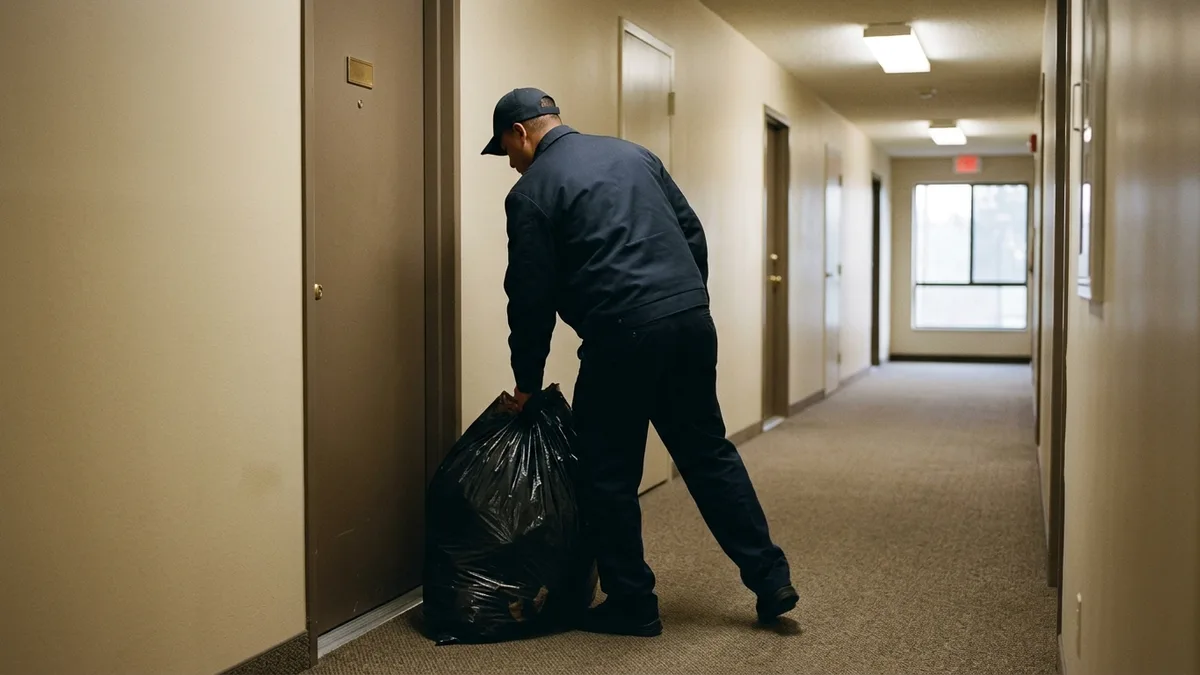
How Much Do Trash Valet Services Cost Residents?
Residents at properties with trash valet services typically pay between $25 and $35 per month as an amenity fee, though the structure of that charge varies by property and market. In some communities, the fee appears as a line item on the lease addendum. In others, it is bundled into a flat amenity package that also covers water, pest control, or common area maintenance.
The fee residents pay is not what the property pays the valet provider. Property managers typically pay $8 to $15 per unit per month for the underlying service, according to Property Manager Insider (2026). The gap between those two figures is by design: the property earns net margin on the amenity while offsetting the cost of the service entirely. A 200-unit community charging residents $25 per month while paying $12 per unit in service cost earns $2,600 in net monthly profit, which works out to $31,200 annually, based on 2026 industry data from Ally Waste.
For residential homeowners, rather than apartment renters, the cost structure is different. Trash Day Made Easy offers residential valet trash service in select Charleston-area neighborhoods starting at $49 per month, which covers scheduled Backdoor-to-Curbside bin management without the multifamily pricing layer. You can learn more about residential options at the residential service page.
Fees for communities of different sizes do vary. For communities of 100 to 149 units, property cost typically runs $15 to $17 per unit per month, with a resident charge of $30 to $40. Larger communities of 300 or more units often see property cost fall to $12 to $14 per unit, with resident charges of $25 to $30. Scale reduces per-unit cost, but the service standard should remain consistent regardless of portfolio size.
How Much to Charge for Trash Valet?
Property managers setting resident fees for trash valet services should price between $25 and $40 per unit per month in most markets, calibrated to the community's class, local competitor pricing, and the number of service nights included. This range reflects the industry benchmarks tracked by Property Manager Insider and aligns with what most residents at Class A and Class B communities accept as reasonable for a daily-use amenity.
Several factors justify pricing at the higher end of that range. First, if your property offers 6 or 7 nights of collection rather than the standard 5, the additional nights add demonstrable value. Second, communities in high-cost-of-living markets such as coastal South Carolina or Atlanta's Buckhead and Midtown submarkets can typically sustain the $30 to $40 range without pushback. Third, if your lease addendum transparently itemizes what the fee covers, residents respond better than when it appears as an unexplained line item.
One pricing mistake to avoid: charging residents far above market rate and framing it as a revenue center without investing in service quality. The Property Manager Insider FAQ on valet trash notes that the fee-to-service balance matters for resident trust. Overcharging relative to the service delivered is a lease renewal risk. Your pricing should reflect what the service genuinely costs to run well, plus a reasonable margin, not an arbitrary markup.
For communities considering mandatory versus optional valet trash inclusion, keep in mind that rules on mandatory amenity fees vary by state. South Carolina and Georgia property managers should review local landlord-tenant law before including valet trash as a non-optional charge in all new leases.
What Is the ROI of Valet Trash for Property Operators?
The return on investment for valet trash services at multifamily properties extends well beyond the direct fee margin. When you factor in avoided resident turnover costs, reduced maintenance time spent on hallway complaints, and the community appearance benefit that supports lease renewals, the total financial picture is substantially larger than a simple fee-minus-service-cost calculation.
Losing a resident costs roughly $4,000 per unit in lost rent, concessions, and turnover maintenance, according to Multifamily Dive (2026). Retaining even a small number of additional residents each year more than offsets the cost of running a valet trash program. The 2026 NMHC/Grace Hill Renter Preferences Survey, which covered 172,703 renters across 4,220 communities, found that community appearance ranked as a top renewal priority for 34% of respondents. Trash valet services directly address that preference by eliminating hallway bag accumulation and dumpster overflow.
At a portfolio level, the numbers scale meaningfully. For a 200-unit community, industry data from 2026 through 2026 estimates that the total annual benefit of a well-run valet trash program, combining net fee revenue, avoided turnover, and maintenance savings, reaches approximately $79,200. At a 5% capitalization rate, that benefit translates to $1.58 million in added property value. At a 4% cap rate, it equals $1.98 million. These are not fabricated projections; they reflect the compounding effect of amenity-driven retention on net operating income.
Property managers working with Trash Day Made Easy across the Charleston metro have access to photo-verified service reports that support exactly this kind of asset management documentation. When an investor or lender asks for evidence of operational quality, route completion records at the unit level are a concrete answer. You can review service options for multifamily communities at the multifamily service page.

What Happens to Trash Between Residents or Guest Stays?
Turnover trash handling is one of the most overlooked operational gaps in both multifamily and short-term rental property management. The window between a resident's move-out and the first make-ready day is when waste accumulates fastest, and standard nightly doorstep collection is not designed to cover it.
In a multifamily community, a vacating resident leaves behind bags, boxes, discarded furniture, and cleaning debris. The maintenance crew arriving for the make-ready walk-through should not be spending their first hour managing the previous resident's waste. That delay adds cost and pushes the unit's availability date back, which directly affects revenue. Turnover trash handling services fill that gap by clearing leftover waste during the specific window between move-out and the start of the make-ready cycle.
For short-term rental operators, the challenge is different but equally disruptive. Properties on Isle of Palms, Sullivan's Island, and James Island run on guest-driven schedules that do not align with fixed weekly collection windows. A busy rental property may turn over two or three times in a single week during peak season. On-demand waste collection, rather than a locked-in nightly schedule, is the right service model for that operational reality.
Trash Day Made Easy offers dedicated turnover trash handling and on-demand property waste support for exactly these situations. The service integrates with make-ready cycles for multifamily and build-to-rent communities, and with guest check-out schedules for short-term rental operators across the Charleston market. STR operators can review dedicated service options at the STR operators page. For build-to-rent communities managing resident transitions at scale, the build-to-rent service page outlines how the turnover support works across growing portfolios.
What Should Renters Know About Valet Trash Rules?
Trash valet services come with participation rules that vary by property, and violating them can result in missed collections or fees. Understanding the most common requirements before you move in saves friction later.
Container Requirements
Most providers supply a small 13-gallon container as part of the service package. Residents are expected to set out trash inside or directly beside this container, not in grocery bags, paper bags, or loose in the hallway. Some providers replace the bag liner nightly after collection; others expect the resident to use their own. Confirm this detail with your property management office during move-in.
Weight and Content Restrictions
Bags must be securely tied and should not exceed a weight that one person can reasonably carry. Most providers define this as 25 to 30 pounds per bag, though this varies. Prohibited items typically include hazardous materials, liquids not properly sealed, cat litter in torn bags, and anything that creates a safety or sanitation risk for the attendant. Bulk furniture, appliances, and mattresses are not collected during the standard nightly run; they require a separate bulk item removal service.
Set-Out Window Compliance
This is the rule most commonly violated. Setting out your bag before the window opens, or too early in the afternoon, creates a hallway appearance problem that the service is specifically designed to prevent. Setting out after the window closes means your bag will not be collected until the following night. Property managers track compliance with the set-out window, and some include repeated violations as a lease addendum enforcement matter.
Recycling Participation
Many trash valet services collect recyclables from the same doorstep location, with residents separating items according to the property's recycling program. If your property includes this, use separate bags or containers for recyclables and confirm with your property office whether the valet team handles separation or expects it to be done in advance.
How Does Valet Trash Compare to Traditional Dumpster Access?
Traditional dumpster access places the full burden of waste disposal on the resident. You bag your trash, carry it to the dumpster location (which may be a significant walk in a large community), and deposit it yourself. There is no schedule, no accountability structure, and no way to document whether the disposal area is maintained between municipal collection days.
The problems with self-managed community dumpsters compound at scale. Waste management invoice error rates for traditional setups sit at 9.5%, overflow fees range from $125 to $260 per occurrence, and fuel surcharges add 14% to 45% to total invoices, according to SIB Fixed Cost Reduction (2026). One property management firm auditing invoices across 105 properties reportedly achieved cost reductions exceeding 50% by switching to a structured valet program. The unpredictability of overflow-based billing is a known budget management problem for multifamily operators that doorstep collection eliminates.
From the resident's perspective, the comparison is straightforward. A dumpster requires a daily trip, exposure to weather, and contact with a shared waste area that is not always clean. Nightly doorstep collection requires none of that. For communities with residents who have mobility limitations, the difference is not just convenient but practically significant.
The table below summarizes the key operational differences between the two approaches.
| Factor | Traditional Dumpster | Valet Trash Services |
|---|---|---|
| Resident effort | Daily trip to dumpster required | Set bag outside door once per evening |
| Collection schedule | Varies by municipal pickup (typically 1-2x per week) | 5-7 nights per week, nightly service |
| Overflow risk | High; overflow fees $125-$260 per occurrence | Low; managed by route, not volume spikes |
| Invoice predictability | Low; 9.5% error rate, fuel surcharges 14%-45% | Fixed per-unit monthly rate |
| Service documentation | None | Photo verification at each unit door |
| Community appearance impact | Depends on resident compliance | Consistent; nightly clearing prevents accumulation |
| Bulk item handling | Resident responsible | Add-on bulk removal service available |
Why Does Photo Verification Matter for Valet Trash?
Photo verification in valet trash services means that the collection attendant captures a timestamped image at each unit door confirming that service was completed at that specific stop. This documentation is not just a billing tool. It is the accountability mechanism that fundamentally changes how property managers, investors, and residents experience the service.
Without photo documentation, a missed bag becomes a he-said-she-said situation between the resident and the vendor. With it, the property manager has a route record that either confirms the collection happened or confirms it did not. That clarity removes the follow-up burden from the management team entirely. You do not need to walk the hallways at 10:00 PM to verify the route was completed. The record exists at the unit level.
For apartment community owners evaluating trash valet services as an asset management tool, photo verification also functions as audit-ready documentation. Investors reviewing operating standards for a community in the Charleston metro, or a build-to-rent portfolio near the airport corridor in North Charleston, can request route completion records and confirm that the service performs as contracted across every property in the portfolio. That is a meaningful operational transparency signal.
Trash Day Made Easy builds photo verification into every nightly service visit as a standard feature, not an upgrade. Each completed route generates a property report that property managers receive without needing to request it. For HOA community managers dealing with resident disputes about whether the service ran on a specific night, that record closes the conversation immediately. More on the HOA application of this service is available at the HOA service page.
What Are the Sustainability Benefits of Doorstep Collection?
Valet trash services contribute to waste management sustainability goals in ways that traditional dumpster systems do not. The structured, nightly collection model reduces contamination in recycling streams, decreases the frequency of overflow events that result in improper disposal, and enables consistent separation of recyclables at the unit level rather than at a shared dumpster where streams get mixed.
The scale of the problem is significant. The U.S. Environmental Protection Agency estimates that the average American produces about 4 pounds of trash per day and more than 1,300 pounds per year. Across nearly 40 million Americans living in apartment complexes, the aggregate waste management challenge is enormous. A service model that removes the individual trip to the dumpster, enforces proper bagging, and separates recyclable collection from general waste produces meaningfully better diversion outcomes than unstructured resident self-management.
For multifamily communities pursuing green building certification or sustainability reporting, a documented valet trash program supports waste diversion metrics in a way that an unmanaged dumpster system cannot. The route completion records and exception logs generated by photo-verified services provide the kind of operational data that sustainability audits require. Communities on Daniel Island, which operates under a master-planned development framework with built-in community standards, are a good example of where structured waste documentation aligns with the property's existing quality expectations.
What Are Common Resident Complaints About Valet Trash, and Are They Valid?
Resident complaints about trash valet services fall into a predictable set of categories. Understanding which complaints reflect genuine service gaps versus resident misunderstanding of the program helps both renters and property managers respond appropriately.
"My bag was missed."
This is the most common complaint, and it is legitimate when it happens. First verify that the bag was set out within the designated window. If it was, report the miss to the property office with the date and unit number. A provider using photo verification can confirm whether the stop was documented. Legitimate misses should be rare with a professional service; if they are happening regularly at the same unit, the route needs a correction.
"The fee was not disclosed at move-in."
This is a property management issue, not a service issue, but it is worth understanding. In most markets, including South Carolina and Georgia, property managers are permitted to include valet trash as a mandatory amenity fee in the lease or lease addendum. If your lease addendum lists the fee and you signed it, the charge is contractually valid. If the fee appeared after move-in without a lease modification, that warrants a direct conversation with the management office about how the fee was introduced.
"The hallway still smells after pickup."
Odor in residential hallways is typically a function of leaking or improperly tied bags, not a gap in collection frequency. The valet removes the bag, but it cannot address residue left behind. If odor is persistent, the solution is usually a bin cleaning schedule. Trash Day Made Easy partners with The Bin Boy, a Charleston-based bin cleaning and sanitizing service, specifically to address this: regular bin sanitization removes the residue that produces ongoing odor between collections.
"The service does not run on weekends."
Standard valet trash programs cover Sunday through Thursday. Friday and Saturday are not included in the base service for most providers. This is a known gap at Class B communities. Class A properties increasingly add Saturday service, which typically costs $1 to $2 more per unit per month. If weekend coverage matters to you, confirm the service schedule before signing the lease addendum, not after.
Frequently Asked Questions About Trash Valet Services
What is valet trash service and how does it work in apartments?
Valet trash service is a doorstep collection amenity where trained attendants pick up bagged household garbage from outside each resident's apartment door on a nightly schedule and transport it to the community dumpster or compactor. Residents place a tied bag inside or beside a provided 13-gallon container during a designated evening window, typically between 6:00 PM and 8:00 PM, and the bag is collected after the window closes. Most services operate 5 nights per week, with Sunday through Thursday being the standard schedule.
How much do valet trash services cost for apartment residents?
Residents typically pay between $25 and $35 per month for valet trash services as an amenity fee on their lease addendum. Some properties charge toward the higher end of $30 to $40 per month for larger or Class A communities with more service nights. The property itself pays $8 to $15 per unit per month to the valet provider, according to Property Manager Insider (2026), and keeps the margin as net operating income while offering residents a daily-use amenity.
Is valet trash mandatory, or can I opt out?
Whether valet trash is mandatory depends on the property and the state. In most markets, including South Carolina and Georgia, property managers are permitted to include it as a mandatory amenity fee in the lease or lease addendum, similar to water or pest control. Rules on mandatory fees vary by state, so review your specific lease language. If you signed an addendum that includes valet trash, it is almost certainly a required charge for the duration of your lease term.
What should I do if my trash bag is not collected?
First confirm that your bag was set out during the designated window, as bags placed after the window closes are not collected until the following night. If the timing was correct, report the missed collection to your property management office with the date and unit number. Professional providers use photo verification at each door, so the property manager can confirm whether the stop was documented on the route that night. Repeated misses at the same unit should prompt a route correction request through management.
Does valet trash service include bulk items like furniture and mattresses?
Standard nightly valet trash collection does not include bulk items such as furniture, mattresses, or appliances. These require a separate bulk item removal service, which many valet trash providers offer as a standalone or add-on. If you are moving out and have large items to dispose of, contact your property management office in advance to arrange bulk removal rather than leaving items in the hallway or at the dumpster, which may result in a lease violation fee.
How does photo verification in valet trash services protect residents?
Photo verification creates a timestamped record at each unit door confirming that collection was completed on a given night. For residents, this means that a dispute about a missed bag has a documented answer rather than relying on your word against the vendor's. The property manager receives route completion records for every nightly service, which closes the gap between "service was completed" as a claim and as a verified fact. This accountability layer is a standard feature of professional valet trash providers, not an optional upgrade.
Can valet trash services handle recycling as well as regular trash?
Many valet trash services collect recyclables from the same doorstep location, with residents separating items into distinct bags or containers in advance. The valet team retrieves both during the same nightly route, and the property's recycling program determines how separation is handled. Not all providers include recycling collection in the base service, so confirm with your property office whether your community's valet program covers recycling, and if so, how materials should be separated before set-out.
What is the difference between Doorstep-to-Dumpster and Backdoor-to-Curbside service?
Doorstep-to-Dumpster service is designed for multifamily apartment communities, where attendants collect bags from outside each unit door and transport them to the property's central dumpster or compactor. Backdoor-to-Curbside service is designed for residential homeowners or single-family rental communities, where the service retrieves waste bins from the resident's back door or bin storage area, rolls them to the curb for municipal collection day, and returns them afterward. Trash Day Made Easy offers both service types across Charleston, SC and Atlanta, GA markets.
Is Valet Trash Worth It for Your Apartment Community in 2026?
For residents, trash valet services are worth having when the fee reflects market-rate pricing and the service runs reliably. A $25 to $35 monthly charge for nightly doorstep collection that actually works is a reasonable value for the daily friction it removes. The calculation shifts if the fee is significantly above market without a service quality reason, or if the provider runs an inconsistent schedule with no accountability mechanism.
For property managers and community operators, the value case is clear. In 2026, multifamily competition for quality residents is sharper than it was even two years ago. NAHB data from 2026 confirms that 608,000 apartment units were completed in 2026, a 38-year high, which means the renter has more choices. Daily-use amenities that residents notice every single evening are more effective retention tools than amenities they use occasionally. Valet trash services fall firmly in the daily-use category, which is exactly why the NMHC tracks it alongside maintenance quality and security as a lease renewal driver.
Managing waste across a multifamily community, a build-to-rent portfolio, or a short-term rental property in the Charleston metro requires more than a dumpster and a reminder notice. Photo-verified, nightly collection removes the coordination burden from property managers and the friction from the resident experience at the same time. The details in this guide reflect what actually works in this market, based on Trash Day Made Easy's experience serving communities of every scale across North Charleston, Mount Pleasant, Daniel Island, and beyond.
If your community is dealing with the challenges described in this guide, Trash Day Made Easy provides photo-verified valet trash and waste management service for multifamily communities, build-to-rent portfolios, HOAs, and short-term rental properties across Charleston, SC and Atlanta, GA. Service quotes are available Monday through Friday at https://www.trashdaymadeeasy.com.
Content powered by inkSTR.co